
Last Updated on September 27, 2026 by Caleb Warren
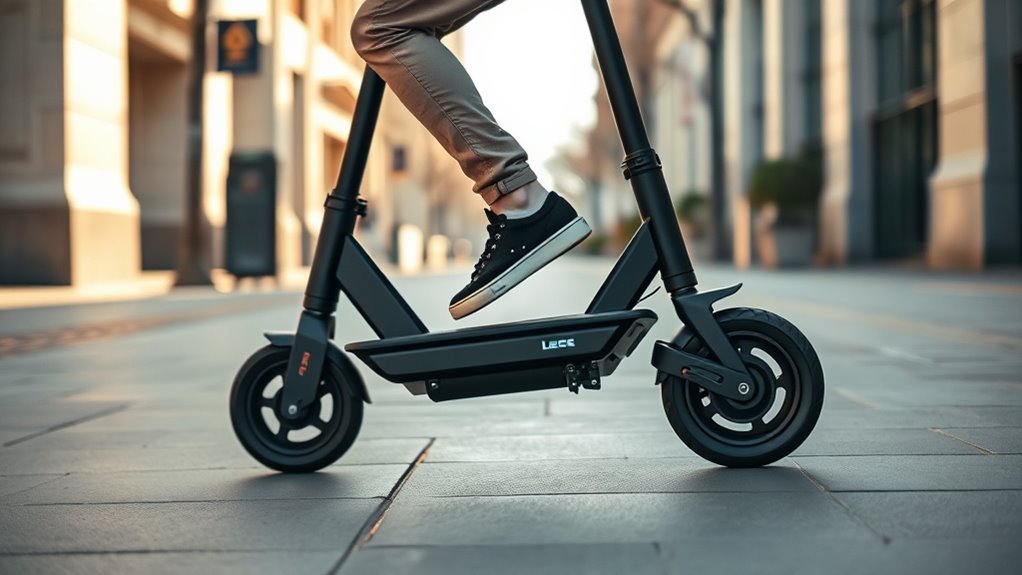
Can you use an electric scooter like a kick scooter when the battery runs out? Many models can roll without motor power, but pushing them takes more effort than riding a regular kick scooter. The important differences are weight, motor resistance, and how the brakes work when the scooter is turned off.
Quick Answer
Yes, many electric scooters can be used like regular kick scooters. You can push them manually when the motor is off, provided the wheels turn freely and the mechanical brakes work. However, the extra weight and possible motor resistance make long manual rides tiring. Check your model’s instructions before relying on this method.
Disclosure: As an Amazon Associate I earn from qualifying purchases. Some links on this page are affiliate links, at no extra cost to you.
Can You Use an Electric Scooter Like a Kick Scooter?
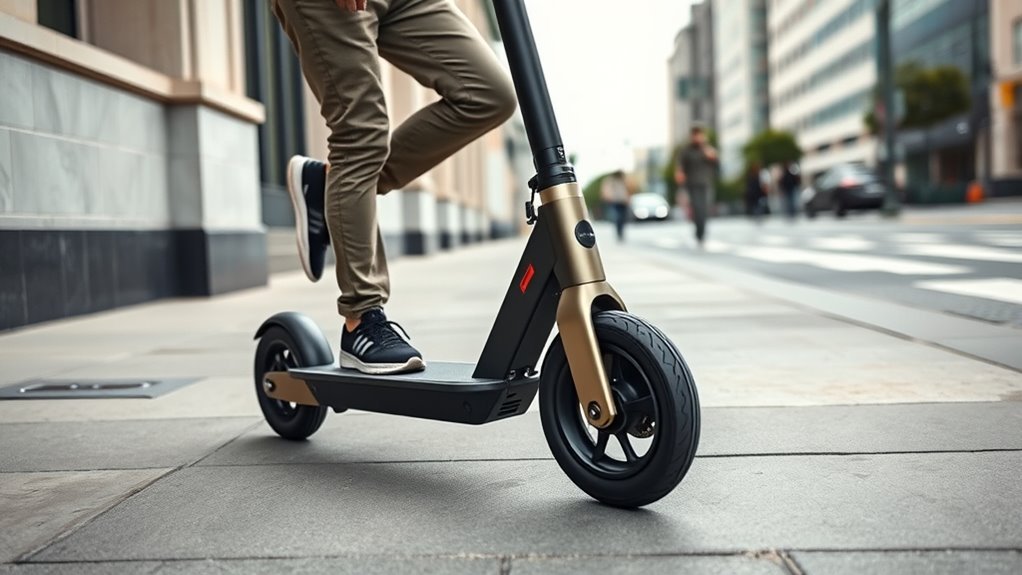
Most electric kick scooters can be moved by foot without using the throttle. However, how easily they roll depends on the motor, braking system, and electronic controls.
For example, Levy Electric confirms that its scooters can be manually kick-pushed when powered off. The manufacturer explains that the motor disengages, although riders may still notice slight drag.
Other scooters behave differently. Some have electronic motor locks or braking systems that create resistance even when you are not using the throttle.
Manual riding is useful when you:
- Run out of battery power during a trip.
- Need to move your scooter away from traffic.
- Want to cover a short, flat distance without motor assistance.
- Need to move the scooter to a safe charging or storage location.
Test the scooter at walking speed before stepping onto the deck. If its wheels do not roll normally, do not force it forward.
Key Differences Between E-Scooters and Kick Scooters
Electric scooters and traditional kick scooters have similar riding positions, but they are built for different types of propulsion. An electric scooter uses a battery and motor, while a regular kick scooter relies entirely on your leg power.
Electric models can reach much higher speeds and travel longer distances under motor power. However, those advantages do not make them easier to ride manually.
| Feature | Electric scooter | Regular kick scooter |
|---|---|---|
| Propulsion | Electric motor and optional manual kicking | Manual kicking |
| Weight | Generally heavier due to the battery and motor | Generally lighter |
| Rolling resistance | Depends on motor design, tires, and electronic controls | Primarily affected by wheels, bearings, and surface conditions |
| Braking | May combine mechanical and electronic brakes | Usually relies on mechanical or foot-operated braking |
| Maintenance | Battery, motor, electronics, tires, and brakes | Wheels, bearings, frame, and brakes |
| Manual travel | Possible on compatible models, but more demanding | Designed specifically for repeated kicking |
Many conventional electric scooters weigh around 25 to 50 pounds, while smaller kick scooters may weigh approximately 5 to 12 pounds. Actual weights vary considerably by model.
Electric scooters also tend to have larger tires and stronger frames. These features help support powered riding, but the additional weight can make repeated kicking less comfortable.
If you mainly want human-powered transportation, a regular kick scooter is usually more practical. An electric scooter makes more sense when you want motor assistance and only occasional manual use.
When Can You Push an Electric Scooter Manually?
You can manually push an electric scooter whenever its wheels can turn freely and it is safe to move. A dead battery does not necessarily prevent manual movement, but a mechanical fault or electronic motor lock might.
The safest approach depends on why the scooter stopped working.
| Situation | Manual use | Safety note |
|---|---|---|
| Dead battery | Usually possible | Test rolling resistance and brakes first |
| Flat surface | Preferred | Keep your speed low |
| Steep hill | Not recommended for manual riding | Walk the scooter only if you can control it |
| Flat tire | Limited movement only | Do not ride; arrange transport if necessary |
| Brake failure | Do not ride | Move away from traffic and arrange repair |
| Locked or jammed wheel | Do not force it | Identify the fault before moving |
If the battery dies while you are riding, release the throttle, slow down, and move to a safe location. Once stopped, check whether the scooter rolls normally.
Also check for a motor-lock feature. The Xiaomi Electric Scooter 6 Essential FAQ explains that its electronic motor lock can remain active after the scooter shuts down. It also identifies significant rear-wheel resistance as a possible motor problem.
That means a scooter that refuses to roll is not always experiencing ordinary motor drag. It may be locked or need service.
Warning: Never ride a scooter with a failed brake, flat tire, damaged wheel, or steering fault. If it cannot be moved safely by hand, arrange transport rather than forcing it to roll.
Why E-Scooters Are Harder to Push
Electric scooters are harder to kick manually because their motors, batteries, and frames add weight. Their decks and wheel systems may also be less comfortable for repeated foot-powered movement.
Several factors influence how much effort you need:
- Weight: A heavier scooter takes more energy to accelerate and control.
- Motor resistance: Some hub motors create noticeable drag when the wheel turns without power.
- Tire pressure: Underinflated pneumatic tires increase rolling resistance.
- Deck height: A higher deck requires your pushing leg to bend farther with every kick.
- Wheel and brake condition: Worn bearings or rubbing brakes can make movement harder.
A hub motor is an electric motor built into a wheel. Depending on its design and control system, it may add resistance when turned manually.
However, a powered-off motor does not always mean the wheel is actively braking. Some scooters roll freely, while others retain noticeable resistance.
On a flat surface, you should be able to tell whether your scooter moves smoothly or requires unusual effort. A wheel that suddenly becomes difficult to turn deserves inspection.
Can Manual Riding Damage Your Electric Scooter?
Manual riding does not automatically damage an electric scooter. Some manufacturers specifically allow it, while others may place restrictions on how their products should be used.
The main concern is forcing a scooter to move when a wheel, motor, brake, or electronic lock is not functioning normally.
Motor and Brake Strain
A freely rotating motor is not necessarily being damaged when you push the scooter. Normal resistance and a mechanical fault are two different things.
However, forcing a locked or jammed motor can place unnecessary stress on the affected components.
Braking also requires attention. Electric scooters may use mechanical brakes, electronic brakes, or both.
NIU’s brake troubleshooting guidance explains that its kick scooters use mechanical and electronic braking systems. It recommends checking the mechanical brakes when braking problems occur.
When the scooter has no electrical power, electronic braking may be unavailable. You must not assume it will stop in the same way as it does during powered riding.
Before attempting manual riding:
- Confirm the mechanical brake operates correctly.
- Check that neither wheel is dragging against a brake.
- Listen for grinding or unusual rubbing noises.
- Stop if resistance increases suddenly.
Weight, Balance, and Wear
The extra weight of an electric scooter places more physical demand on your legs during manual kicking. Its deck height and weight distribution can also make balancing less natural.
Normal rolling causes tire and bearing wear, whether you use motor power or push manually. There is no reason to assume occasional manual kicking will automatically destroy these components.
Repeated manual use on unsuitable surfaces can still increase wear, especially if you drag the wheels, ride with low tire pressure, or continue using damaged parts.
Warranty coverage depends on your manufacturer’s terms and the cause of any damage. Manually pushing a scooter does not automatically void every warranty.
Before making manual riding part of your routine, read your model’s instructions and warranty conditions.
How to Ride an Electric Scooter Manually Safely
To ride an electric scooter manually, first confirm that the scooter allows it and that the wheels and brakes work. Then use gentle kicks on level ground while keeping both hands on the handlebars.
Follow these steps in order.
1. Turn Off the Power
Stop the scooter completely before changing how you operate it.
- Release the throttle and bring the scooter to a controlled stop.
- Move away from traffic and find a flat surface.
- Switch off the power using the manufacturer’s normal procedure.
- Confirm that any electronic motor lock is disengaged.
- Walk the scooter forward slowly to check that both wheels turn.
- Test the mechanical brake before stepping onto the deck.
If the scooter does not roll freely, stop and investigate the cause. Do not attempt to overcome an electronic lock by kicking harder.
A powered-on scooter can also be moved without pressing the throttle on some models. However, switching it off helps prevent accidental acceleration when manual operation is supported.
2. Use Proper Kicking
Use smooth, controlled movements instead of trying to accelerate the scooter with powerful kicks. Your goal is to maintain balance and move safely, not match its powered speed.
- Stand with one foot securely on the deck.
- Hold both handlebars and look ahead.
- Push backward gently with your free foot.
- Keep your body centered over the scooter.
- Allow the scooter to roll between kicks.
- Use the mechanical brake to slow down gradually.
Start at walking speed. If the deck feels too high or your pushing leg becomes uncomfortable, stop and walk beside the scooter instead.
| Do | Why it matters |
|---|---|
| Kick lightly and evenly | Helps maintain balance |
| Keep the deck level | Reduces unwanted wobbling |
| Notice weight and balance | Helps prevent fatigue |
Avoid sudden turns, steep slopes, loose gravel, and wet pavement. Extra weight makes an electric scooter harder to recover if you lose balance.
3. Check Safety Gear
Wear suitable protective equipment even when riding without motor power. Falls can still cause serious injuries at low speeds.
The US Consumer Product Safety Commission recommends helmets, equipment inspections, and following manufacturer instructions when using electric scooters.
Use this checklist:
- A properly fitted helmet.
- Gloves that provide a secure grip.
- Knee and elbow pads for additional protection.
- Closed-toe shoes with suitable traction.
- Working mechanical brakes.
- Tires and wheels in good condition.
Remember that a scooter without battery power may also lack working lights or an electronic horn. Avoid riding in darkness or poor visibility if those features are unavailable.
Note: If you notice persistent wheel resistance, unusual motor noises, or unreliable braking, stop using the scooter and contact the manufacturer or a qualified repair technician. Do not attempt to bypass electronic safety systems.
Which E-Scooter Is Easier to Push?
A lightweight electric scooter with freely rolling wheels, a comfortable deck, and reliable mechanical brakes will generally be easier to push manually. Motor design matters just as much as the scooter’s weight.
If manual operation is important to you, compare these features:
- Lower weight: Makes the scooter easier to push and carry.
- Low deck height: Makes repeated kicking more comfortable.
- Low motor resistance: Allows smoother rolling without assistance.
- Mechanical brakes: Provide braking without relying entirely on electrical power.
- Suitable tires: Properly maintained tires help reduce unnecessary rolling resistance.
Some electric scooters also offer a walking mode. However, this feature is not the same as riding manually with the motor switched off.
For example, the Xiaomi Electric Scooter 5 walking mode limits powered speed to 6 km/h. It still uses the scooter’s electrical system and therefore requires sufficient battery power.
A walking mode can help with slow movement, but it does not guarantee that you can kick the scooter normally after the battery dies.
Likewise, do not confuse a mobility scooter’s freewheel lever with an electric kick scooter’s controls. These products have different braking and drive systems.
If you regularly travel without motor assistance, a conventional kick scooter will usually provide easier handling and lower physical effort.
Frequently Asked Questions
Are Scooters Good for Autistic Kids?
A suitable nonmotorized kick scooter can be an enjoyable activity for some autistic children. Choose a stable model that fits the child’s abilities, provide supervision, and use protective equipment. Individual sensory and motor needs vary, so an occupational therapist can help identify suitable activities when additional support is needed. Electric scooters have different safety and age requirements.
What Happens if You Get Caught on an Electric Scooter?
You may receive a warning, citation, or other penalty if you break local electric scooter regulations. The consequences depend on your location and the specific violation. Age limits, permitted riding areas, helmet requirements, and equipment rules vary. Using the scooter manually does not automatically exempt it from local restrictions.
What Are the Negatives of Electric Scooters?
Electric scooters are heavier than many regular kick scooters and require battery charging and additional maintenance. Their electrical systems can be costly to repair, and manual riding may be tiring. Braking performance also varies between models. Safe operation requires attention to the battery, tires, brakes, road conditions, and local riding rules.
What Is the Difference Between a Kick Scooter and an Electric Scooter?
A regular kick scooter moves entirely through human effort, while an electric scooter uses a battery-powered motor. Electric models generally offer higher powered speeds and longer travel distances but weigh more and need charging. Kick scooters are lighter and designed for repeated manual pushing, making them more practical when you do not need motor assistance.
For parents and caregivers, the American Academy of Pediatrics’ electric scooter safety guidance recommends that children under 16 should not ride motorized scooters. Its occupational therapy guidance also explains how individualized support can address motor and sensory challenges.
Conclusion
You can use many electric scooters like regular kick scooters, especially when you need to cover a short distance after the battery runs out.
However, manual riding is not equally practical on every model. Extra weight, motor resistance, and braking design affect how safely and comfortably you can move.
Before relying on manual operation, confirm that your scooter permits it, check that its wheels roll normally, and test the mechanical brake. If anything feels wrong, walk the scooter or arrange transport instead of forcing it forward.
Sources
- Levy Electric Support: Manufacturer guidance on manual kick-pushing with the motor off.
- Xiaomi Electric Scooter 6 Essential FAQ: Motor locking, wheel resistance, electronic controls, and troubleshooting.
- Xiaomi Electric Scooter 5 Riding Modes: Walking mode and its speed limit.
- NIU Support: Brake Troubleshooting: Mechanical and electronic braking systems.
- US Consumer Product Safety Commission: Electric scooter safety, inspections, protective equipment, and local regulations.
- American Academy of Pediatrics: Electric Scooter Safety: Children’s safety recommendations and age-related precautions.
- American Academy of Pediatrics: Occupational Therapy: Individualized support for children’s motor and sensory development.

