
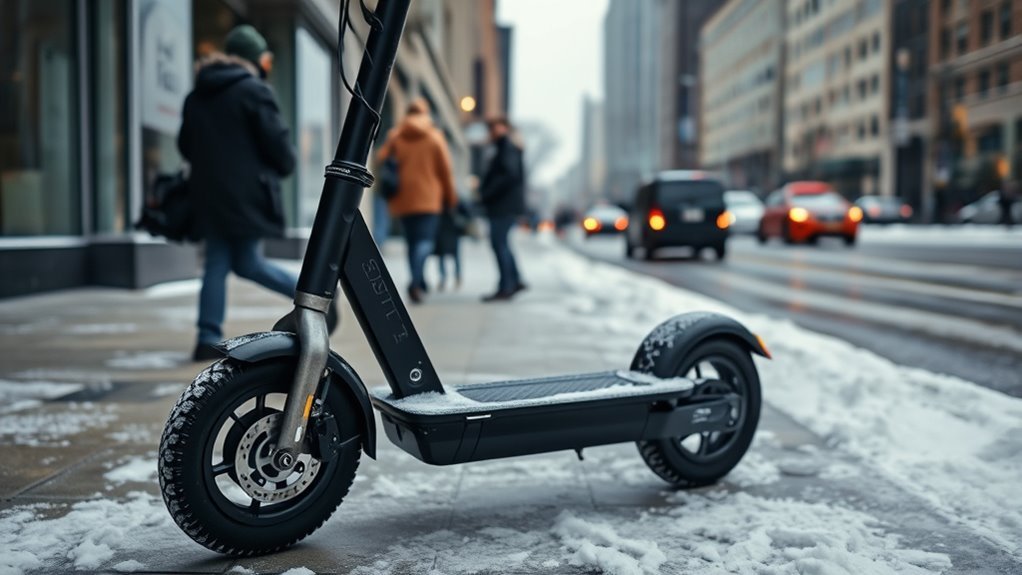
Last Updated on September 27, 2026 by Caleb Warren
You can use an electric scooter in winter, but cold temperatures, slippery roads, and moisture create risks you may not face in summer. Battery range falls, acceleration can weaken, and even a small patch of ice can cause a serious fall. The key is knowing when riding is reasonable, how to prepare your scooter, and when to leave it at home.
Quick Answer
Yes, electric scooters can work in winter when roads are clear and conditions meet the manufacturer’s operating limits. Expect shorter battery range, use suitable tires, and keep speeds low. Avoid ice, heavy snow, deep slush, and poor visibility. Store the scooter indoors and let its battery warm before charging.
Key Takeaways
- A scooter’s water-resistance rating does not guarantee safe handling on ice or snow.
- Self-healing tires seal small punctures; they are not automatically winter tires.
- Cold batteries may temporarily lose power or trigger low-temperature protection.
- Follow the manufacturer’s tire pressure and battery storage instructions rather than universal winter recommendations.
Disclosure: As an Amazon Associate I earn from qualifying purchases. Some links on this page are affiliate links, at no extra cost to you.
Can You Ride an Electric Scooter in Winter?
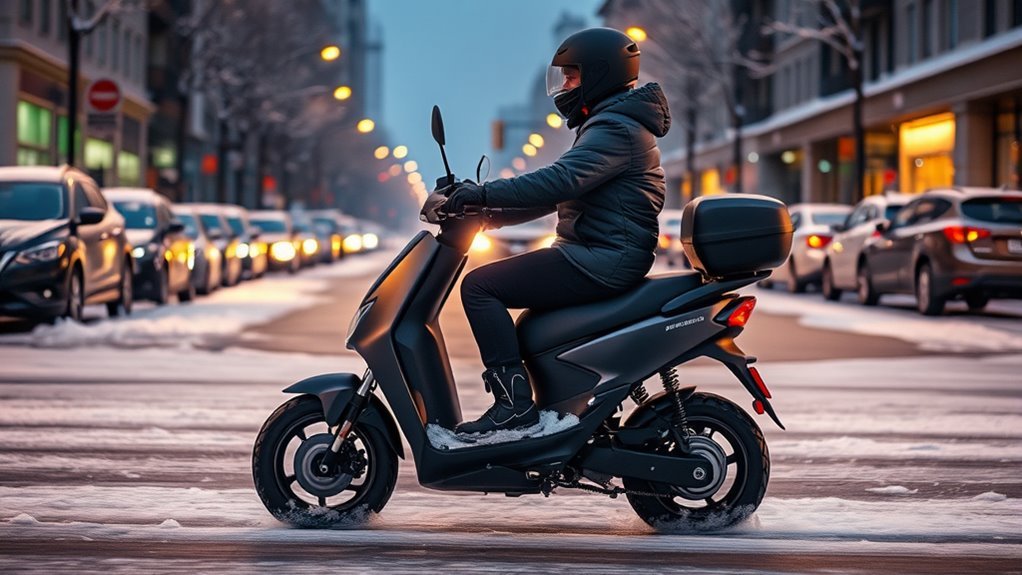
Yes, but riding conditions matter more than the season itself. A cold, dry road may be manageable with the right scooter, while an icy road can be dangerous even when the temperature is above freezing.
Before heading out, check your scooter’s operating temperature, water-resistance rating, and manufacturer restrictions. Some models are not recommended for snowy weather, even when they have protection against water splashes.
For example, Xiaomi’s Electric Scooter 6 Essential guidance advises against riding in rain or snow because of slippery surfaces, poor visibility, and prolonged moisture exposure.
For a safer winter trip:
- Choose clear, dry, and reasonably smooth routes.
- Start with a sufficiently charged battery and plan a shorter journey.
- Wear a properly fitted helmet, warm gloves, and reflective clothing.
- Use your front and rear lights when visibility is reduced.
- Keep both hands on the handlebars and avoid carrying items that limit control.
- Inspect your brakes, tires, lights, and folding mechanism before departure.
The U.S. Consumer Product Safety Commission recommends checking these components before riding and following local traffic rules.
If your route has visible ice, packed snow, deep slush, or freezing rain, choose another way to travel. A more powerful motor or better tires cannot eliminate the risk of losing traction.
How Winter Weather Affects Electric Scooter Performance
Winter affects your scooter through reduced battery performance, changing tire pressure, and increased resistance from wet or snowy surfaces. These effects can combine, making the scooter feel slower while reducing how far it travels.
The amount of performance loss depends on your model, battery temperature, road conditions, rider weight, and riding style.
Battery Range Drops
Cold weather slows the chemical reactions inside lithium-ion batteries. As a result, your scooter may deliver less usable energy and reach its low-battery warning sooner than expected.
Battery range can fall by 20–50% in cold conditions, although this is not a universal figure. The actual reduction depends on the battery, temperature, speed, wind, and terrain.
For a verified model-specific example, Xiaomi states that its Electric Scooter 4 Pro (2nd Gen) may deliver only half its room-temperature range, or less, at -20°C (-4°F).
| Temperature Condition | Expected Range | Recommended Action |
|---|---|---|
| Mild conditions | Closer to normal | Follow normal riding limits |
| Cold conditions | Potentially 20–50% lower | Shorten your route and keep a reserve |
| -20°C (-4°F), Xiaomi 4 Pro (2nd Gen) | Half or less of room-temperature range | Avoid riding outside the manufacturer’s limits |
These figures are not a temperature-to-range formula for every scooter. Xiaomi’s battery maintenance guidance also advises against using that model below 0°C (32°F).
Cold-related range loss is often partly temporary. Performance may improve after the battery returns to a suitable temperature, provided the pack has not suffered damage.
Store your scooter indoors before riding, avoid unnecessary full-throttle acceleration, and keep enough battery charge for the return trip.
Motors Feel Slower
Your scooter’s motor may feel weaker in cold weather because the battery cannot deliver its usual power. This is often more noticeable during acceleration and hill climbing.
Snow and slush also increase rolling resistance. The motor must work harder to move the scooter, which uses additional energy.
Some scooters have a battery management system that limits power when the pack becomes too cold. This protects the battery but can make acceleration weaker or prevent the scooter from operating.
If your scooter displays a temperature warning or unexpectedly loses power, stop somewhere safe. Follow the manufacturer’s instructions rather than repeatedly trying to force it to run.
How to Stay Safe on Ice and Slush
The safest approach is to avoid riding on ice and deep slush. Electric scooters have relatively small wheels, and losing traction can quickly cause a fall.
If conditions become slippery during a journey, reduce speed smoothly and find a safe place to stop. Walking the scooter through the hazardous section is safer than trying to ride through it.
Warning: Do not rely on traction control, studded tires, or electronic braking to make icy roads safe. If you encounter freezing rain, black ice, or an extended icy section, stop riding and use another travel option.
Slow Down Early
Reduce speed well before intersections, corners, crossings, and downhill sections. Slippery pavement can make stopping distances much longer and less predictable.
Leave extra room between yourself and other road users. Avoid approaching a corner at a speed that requires hard braking or sharp steering.
Watch especially for black ice, a thin layer of ice that can look like ordinary wet pavement.
The National Weather Service warns that bridges and shaded surfaces may freeze while nearby roads remain clear.
If you cannot confidently identify a safe surface ahead, do not continue riding.
Avoid Sudden Movements
Smooth steering, acceleration, and braking help your tires maintain traction. Sudden movements can cause the front or rear wheel to slide.
Use these techniques when riding on cold, damp pavement:
- Apply the throttle gradually rather than accelerating abruptly.
- Brake gently while the scooter is traveling straight.
- Slow down before entering a turn.
- Keep your weight centered and your knees slightly bent.
- Avoid leaning sharply or making sudden steering corrections.
If the scooter begins sliding, avoid grabbing the brakes or making a sharp correction. Ease off the throttle and try to maintain balance without forcing the scooter in another direction.
There is no reliable steering technique that guarantees recovery from a skid on ice, especially with small scooter wheels.
If your scooter offers adjustable regenerative braking, remember that strong automatic braking can also disturb traction. Use only settings recommended by the manufacturer for the conditions.
Use Grippy Tires
Tires are one of your most important winter safety features. The right tread and rubber compound can improve grip on suitable surfaces, but no ordinary scooter tire makes ice safe.
Pneumatic tires generally provide more compliance over uneven pavement than hard solid tires. However, actual traction depends on tread design, rubber compound, pressure, and road conditions.
Check your tires for:
- Worn or shallow tread.
- Cracks, cuts, or damaged sidewalls.
- Embedded stones or sharp objects.
- Incorrect inflation pressure.
- Loose or damaged valves.
Replace damaged tires before riding. Do not assume that a self-healing tire has special winter traction simply because it can seal small punctures.
How to Choose Winter Tires and Setup
Choose tires that fit your scooter and match the surfaces you expect to encounter. Pneumatic tires with suitable tread can help on clear, wet, or lightly contaminated pavement, while compatible winter-specific tires may offer additional grip.
For different conditions, consider the following options:
- Pneumatic tires: Provide cushioning and can improve contact with uneven pavement. Choose a suitable tread pattern.
- Self-healing tubeless tires: Help seal certain small punctures. Their winter grip still depends on the actual rubber and tread.
- Winter or studded tires: May improve traction on some snow or ice surfaces when designed for the scooter. They do not make hazardous roads safe.
Confirm wheel size, tire dimensions, clearance, and manufacturer compatibility before fitting different tires. An unsuitable replacement can affect handling or interfere with the frame and brakes.
Cold temperatures can also lower pneumatic tire pressure. Check it with a gauge before riding and inflate according to your model’s specification.
For example, Xiaomi recommends 45–50 PSI for the Electric Scooter 5 Max. Its tire maintenance guidance warns that incorrect pressure can reduce handling and stability.
Do not deliberately reduce pressure below the manufacturer’s recommended range to increase the contact patch. Excessively low pressure can increase tire wear, rolling resistance, and the risk of damage.
Also confirm that your brakes operate smoothly and that no cable, tire, or suspension component is damaged before winter riding.
How to Care for Your Electric Scooter Battery in Winter
The most important winter battery rule is to keep the pack within its specified operating and charging temperatures. Cold batteries may deliver less power, and charging them below their permitted temperature can cause permanent damage.
Follow the manufacturer’s instructions rather than relying on a universal charging temperature or storage schedule.
| Check | Action |
|---|---|
| Charge level | Charge sufficiently before departure |
| Storage | Keep indoors in a cool, dry location |
| Ride length | Allow for reduced winter range |
| Charging temperature | Follow the battery’s permitted range |
| Idle care | Check charge periodically and follow the storage schedule |
After a cold ride, bring the scooter indoors and let its battery warm naturally before connecting the charger. Avoid trying to warm it quickly with a heater, hair dryer, or other direct heat source.
Charging limits vary by model. For example, Xiaomi states that the Electric Scooter 6 Essential prevents charging when its battery temperature falls below 3°C (37.4°F).
Warning: Never charge a battery that is frozen, visibly damaged, swollen, leaking, unusually hot, or showing signs of water damage. Use only the manufacturer-approved charger, and never leave the scooter charging while you sleep or are away from home.
If you will not use the scooter for an extended period, follow its specific storage recommendations.
For the Xiaomi Electric Scooter 4 Pro (2nd Gen), the manufacturer recommends storing the battery at approximately 80% charge when it will be unused for more than 30 days, then recharging every 1–2 months.
Other models may require different charge levels or maintenance intervals. Avoid leaving the battery completely discharged for long periods.
The London Fire Brigade’s battery safety guidance also recommends warming cold batteries before charging and avoiding prolonged exposure to extreme temperatures.
Store the scooter away from flammable materials and keep exits clear. If the battery shows signs of damage or abnormal behavior, stop using it and contact the manufacturer or an authorized repair service.
How to Prevent Salt and Moisture Damage
Road salt and moisture can damage exposed metal, fasteners, brake components, connectors, and electrical parts. Cleaning the scooter after winter rides helps reduce corrosion and allows you to spot problems before they worsen.
Water resistance is useful, but it is not the same as waterproofing.
For example, an IPX5 rating indicates protection against water jets under specified test conditions. It does not mean a scooter is suitable for immersion, deep puddles, or unrestricted riding in snow.
Xiaomi’s water-resistance explanation confirms that its IPX5-rated Electric Scooter 5 is not fully waterproof.
After riding on wet or salted roads, follow this cleaning routine:
- Turn off the scooter and disconnect the charger.
- Wipe road salt and grime from the deck, frame, stem, and exposed hardware using a slightly damp cloth.
- Clean accessible areas around the wheels and brakes without forcing water into electrical components.
- Dry the scooter thoroughly with a clean microfiber cloth.
- Inspect exposed metal for rust, damaged paint, or loose fasteners.
- Allow the charging port to dry completely before connecting the charger.
Never use a pressure washer or submerge the scooter to remove salt. Water can enter seals, bearings, connectors, and electrical compartments.
You can apply a suitable anti-rust product to exposed metal where the manufacturer permits it. Keep lubricants and protective sprays away from brake discs, pads, tires, and electrical contacts.
If the scooter has been submerged, shows signs of internal moisture, or develops electrical faults after a wet ride, stop using it and arrange an inspection.
For routine storage, choose a dry indoor location. Avoid leaving the scooter outside overnight in freezing, damp conditions.
Frequently Asked Questions
What Electric Scooter Can Go in the Snow?
The NAVEE ST3 Pro is one model with features that may help in difficult conditions, including 10-inch self-healing tubeless tires, traction control, suspension, and IPX5 water resistance. However, these features do not establish that it is safe for snowy or icy roads. Follow the manufacturer’s restrictions and avoid hazardous surfaces.
Can Electric Scooter Batteries Freeze?
Extreme cold can seriously affect an electric scooter battery, even without its contents physically freezing. Usable capacity and power may fall, and the battery management system may prevent charging or operation. Repeated exposure to severe cold can also cause damage. Let the pack warm naturally before charging.
Can You Ride an Electric Scooter Below Freezing?
Some scooters can operate below 0°C (32°F), but others should not be used at that temperature. Check your specific model’s operating range and battery warnings. Even if the scooter can run, ice, reduced traction, and poor visibility may make riding unsafe.
How Long Should an Electric Scooter Warm Up Before Charging?
There is no universal warm-up time because battery temperature depends on the scooter, its size, and how cold it became. Bring it indoors and let it warm naturally until the battery reaches the manufacturer’s permitted charging range. Do not assume that a warm exterior means the battery is ready.
The NAVEE ST3 Pro specifications are available on the manufacturer’s official product page. Its published specifications confirm the 10-inch self-healing tires, suspension, traction control, and IPX5 rating.
Conclusion
You can use an electric scooter in winter, but clear roads, suitable equipment, and careful battery handling matter more than motor power alone.
One icy morning, a rider I know approached a slick corner as though it were dry pavement and slid out in seconds. It is a reminder that winter riding leaves little room for sudden movements.
Keep your speed low, protect the battery from extreme cold, and clean away road salt after wet rides. Most importantly, if your route is icy or conditions exceed your scooter’s limits, leave it at home.
Sources
- U.S. Consumer Product Safety Commission: Electric scooter riding, inspection, battery, and charging safety.
- Xiaomi Electric Scooter 4 Pro (2nd Gen) Battery Guidance: Cold-weather range reduction and long-term battery storage.
- Xiaomi Electric Scooter 6 Essential FAQ: Snow restrictions, charging temperature, and low-temperature protection.
- National Weather Service: Winter road hazards, black ice, and bridge freezing.
- Xiaomi Electric Scooter 5 Max Tire Guidance: Recommended tire pressure and handling considerations.
- Xiaomi Electric Scooter 5 Water-Resistance Guidance: IPX5 protection and water-exposure limitations.
- London Fire Brigade: Battery performance, cold-weather charging, moisture damage, and battery warning signs.
- NAVEE ST3 Pro Official Specifications: Tire size, suspension, traction control, and IPX5 water-resistance rating.
