
Last Updated on September 27, 2026 by Caleb Warren
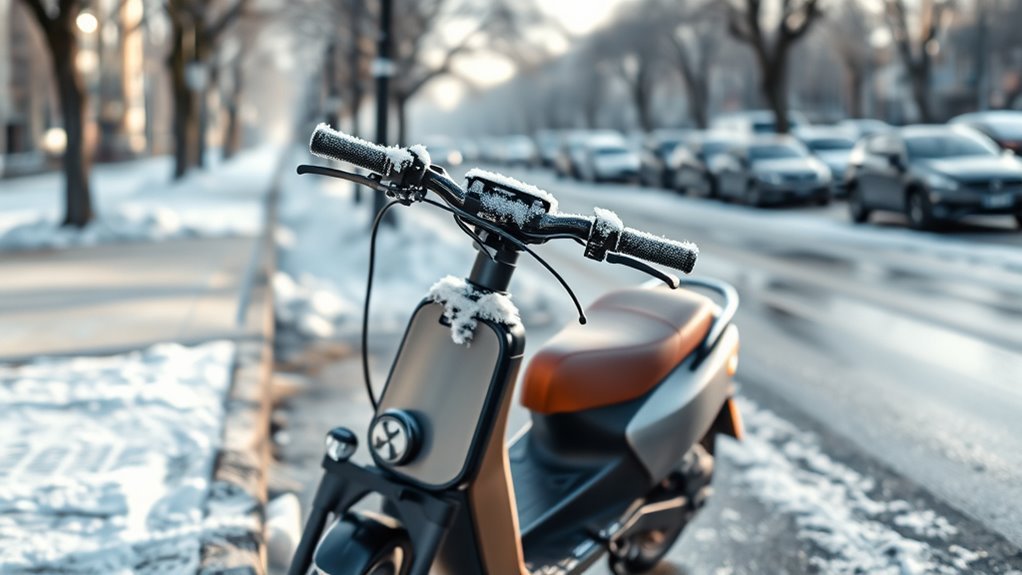
Can you leave an electric scooter outside in winter? You can park it outdoors temporarily, but prolonged exposure to freezing temperatures, snow, moisture, and road salt can damage the battery and other components. The biggest concern is charging a cold lithium-ion battery or allowing the scooter to remain wet for extended periods. Proper storage helps protect battery capacity, brakes, tires, and electrical connections.
Quick Answer
You can leave an electric scooter outside briefly in winter if the temperature stays within its manufacturer’s storage limits. However, dry indoor storage is safer for long periods. Never charge a battery below its approved charging temperature. If outdoor storage is unavoidable, protect the scooter from moisture, remove the battery if designed for removal, and inspect it regularly.
Disclosure: As an Amazon Associate I earn from qualifying purchases. Some links on this page are affiliate links, at no extra cost to you.
Can You Leave an Electric Scooter Outside in Winter?
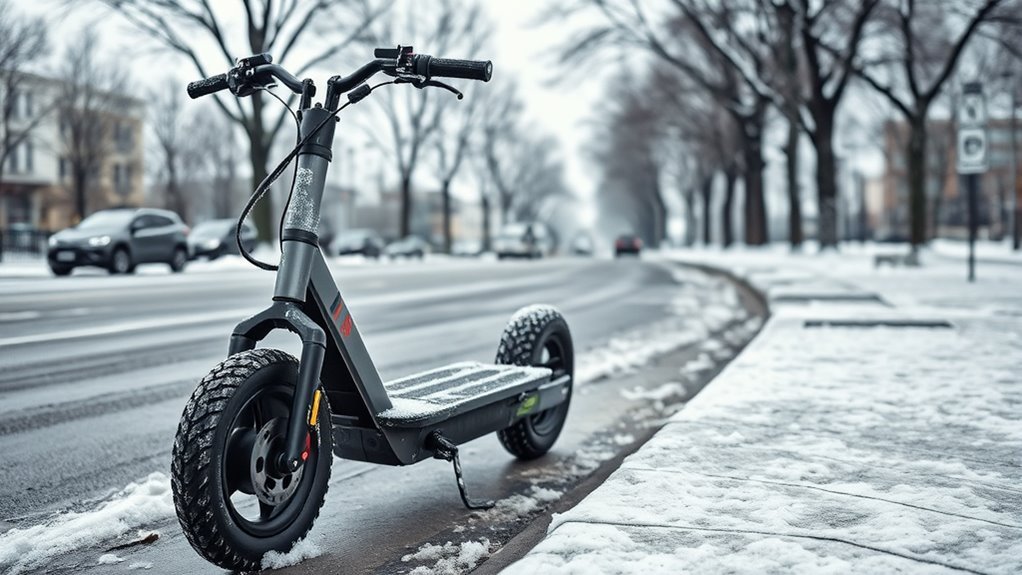
Yes, but leaving an electric scooter outside throughout winter is not recommended. Cold temperatures temporarily reduce battery performance, while moisture and road salt can cause longer-lasting damage to electrical connections, brakes, and exposed metal parts.
A single cold night does not automatically destroy a healthy battery. The actual risk depends on the temperature, exposure time, battery condition, and the storage limits specified for your scooter.
Some manufacturers permit storage below freezing. For example, Segway’s published scooter specifications include models with storage temperatures extending below 0°C, even though their charging temperature begins at 0°C.
This distinction matters: a battery may tolerate cold storage without being safe to charge at that temperature.
The rest of the scooter also needs attention:
- Electrical connections: Water and salt can corrode contacts or contribute to electrical faults.
- Brakes: Moisture in cables or moving brake parts can freeze and interfere with operation.
- Tires: Low temperatures change tire pressure and rubber flexibility. Long periods in one position can also contribute to flat spots.
- Frame and fasteners: Repeated moisture and salt exposure can accelerate corrosion.
- Seals: Winter exposure can reveal damaged or aging seals that allow moisture inside.
Water damage may also affect warranty coverage. Review your model’s warranty before relying on outdoor storage.
For occasional outdoor parking, choose a sheltered, dry location. For seasonal storage, move the scooter indoors whenever possible.
Why Cold Weather Damages Scooter Batteries
Cold temperatures slow the chemical reactions inside lithium-ion batteries. This increases internal resistance and reduces the energy and power available during a ride.
You may notice shorter range, weaker acceleration, or a battery indicator that drops more quickly than expected. Some of this performance loss can recover once the battery returns to a normal operating temperature.
However, repeatedly exposing batteries to extreme cold, charging them outside their approved temperature range, or allowing them to discharge too deeply can cause lasting damage.
What Happens at Different Battery Temperatures?
The following table explains common cold-weather effects. These are general conditions, not universal operating limits for every scooter.
| Condition | Effect | Risk |
|---|---|---|
| Near 0°C (32°F) | Slower battery reactions | Reduced power and range |
| Below 0°C (32°F) | Lower usable battery capacity | Cold-weather operating restrictions |
| Charging a battery below its approved temperature | Possible lithium plating | Permanent cell damage and increased safety risk |
| Long storage without charge checks | Gradual battery discharge | Possible irreversible over-discharge |
| Dry indoor storage | More stable conditions | Lower exposure-related damage risk |
How Cold Is Too Cold for Charging?
Many lithium-ion scooter batteries should not be charged below 0°C (32°F). Charging at excessively low temperatures can cause lithium plating, where metallic lithium builds up inside the cell instead of being stored normally.
This can permanently reduce battery capacity and increase the risk of internal failure.
Health Canada’s lithium-ion battery safety guidance recommends bringing batteries to room temperature before use and avoiding charging below freezing.
Always follow your manufacturer’s instructions, which may set a higher minimum temperature.
Warning: Never connect a charger to a frozen, wet, swollen, or visibly damaged battery. Move a cold, otherwise undamaged battery into a suitable indoor environment and let it warm naturally. Do not use direct heat, a radiator, or a hair dryer to speed up warming.
Does Cold Weather Permanently Reduce Scooter Range?
Not necessarily. Reduced range during a cold ride is often temporary, but damage from improper charging or prolonged extreme exposure can be permanent.
For a concrete example, Xiaomi’s Electric Scooter 4 Pro (2nd Gen) battery guidance states that range at -20°C (-4°F) may fall to half or less of its room-temperature range.
That figure applies to the specified model and conditions. It should not be treated as a guaranteed range reduction for every electric scooter.
How Snow and Salt Damage Your Scooter
Snow, melting ice, and road salt can damage a scooter even when the battery remains within its permitted storage temperature. Moisture can enter vulnerable connectors and mechanical parts, while salt accelerates corrosion.
Repeated exposure increases the chance of electrical faults, stiff controls, brake problems, and rust on exposed metal.
The London Fire Brigade’s guidance on weather and scooter batteries explains that water entering batteries or electrical components can cause corrosion, short circuits, and battery failure.
Can Snow Damage a Water-Resistant Scooter?
Yes. A water-resistant scooter is not necessarily suitable for prolonged exposure to snow or standing water.
An IP rating describes protection against specified levels of dust and water exposure. It does not automatically mean a scooter can safely remain outdoors through repeated snowstorms and freeze-thaw cycles.
Even scooters with substantial water resistance can have vulnerable charging ports, damaged seals, or exposed connections.
For example, Apollo’s winter riding guidance advises avoiding prolonged snow exposure despite the water-resistant construction of its scooters.
How Should You Remove Road Salt?
Clean salt residue before it builds up around the wheels, deck, fasteners, and brake components.
- Turn the scooter off and disconnect the charger.
- Wipe exposed surfaces with a soft, slightly damp cloth.
- Remove visible dirt and salt without forcing water into openings.
- Dry the frame, wheels, and accessible metal parts.
- Allow the scooter to dry in a ventilated location before storage.
Do not submerge the scooter or use a pressure washer. Follow the cleaning instructions for your exact model.
Xiaomi’s Electric Scooter 3 Lite cleaning and storage instructions specifically warn against pressure washing because water can enter the scooter and cause serious failures.
How to Protect a Scooter Outside
If you cannot store your electric scooter indoors, reduce exposure to precipitation, standing water, and freezing conditions. A cover and sheltered parking spot help, but they do not make outdoor storage equivalent to a dry indoor location.
Use the following steps for temporary outdoor protection.
1. Choose a Sheltered Parking Location
Park under a roof, covered porch, or other protected structure whenever possible.
Choose a stable surface away from roof runoff, puddles, and areas where snow or slush collects.
2. Use a Weatherproof Scooter Cover
Choose a waterproof or water-resistant cover designed for outdoor storage. Make sure it protects the deck, handlebars, and other exposed components.
Put the cover on only after the scooter is dry. Secure it against wind, but avoid sealing moisture underneath it.
A cover with suitable ventilation helps reduce condensation during changing temperatures.
3. Keep the Scooter Above Standing Water
Use a stable stand or raised storage surface if water or slush collects where you park.
Make sure the scooter cannot tip over. Avoid unstable pallets or supports that could damage the frame.
4. Remove the Battery if the Design Allows It
If your scooter has a manufacturer-approved removable battery, disconnect it according to the owner’s manual and store it indoors.
Choose a dry location away from direct heat, sunlight, and combustible materials. Keep exposed terminals protected.
Do not attempt to remove a sealed or built-in battery unless the manufacturer specifically permits user removal.
5. Inspect the Scooter Regularly
Check the scooter after snow, rain, or freezing weather, especially if it has remained outdoors overnight.
Look for:
- Water around the deck or charging port.
- White or green residue on accessible electrical contacts.
- Rust on bolts, brake components, or exposed metal.
- Cracked rubber, damaged seals, or peeling finishes.
- Unusual brake resistance or wheels that do not turn freely.
- Low tire pressure or visible tire damage.
If you find significant corrosion, water inside electrical components, or a brake that does not operate normally, stop using the scooter until it has been inspected.
Better Winter Storage Options for Electric Scooters
A dry indoor location is generally the best option for winter scooter storage. It protects the battery, wiring, controller, and mechanical parts from direct weather exposure.
However, not every indoor location provides the same conditions.
Which Winter Storage Location Is Best?
Compare your available spaces before putting the scooter away for several weeks or months.
- Dry indoor storage room: Offers more stable temperatures and protection from precipitation.
- Garage: Provides shelter, although an unheated garage may still reach freezing temperatures.
- Basement: Can work if it is dry, ventilated, and free from flooding or excessive humidity.
- Covered shed: Protects against direct snow but may expose the battery to outdoor temperatures.
- Outdoor parking: Offers the least protection and requires more frequent inspection.
For winter storage, keeping the scooter dry and the battery within its approved temperature range matters more than simply covering it.
What Battery Percentage Is Best for Winter Storage?
For many lithium-ion batteries, approximately 40–60% charge is a useful long-term storage target. However, the correct value depends on the scooter’s battery management system and manufacturer instructions.
For example, NIU’s battery care guidance recommends approximately 50% charge during extended storage.
Other manufacturers specify different targets, including higher storage-charge levels. Use your model’s documented requirement rather than applying one percentage to every scooter.
Do not leave the battery completely discharged for months. Gradual self-discharge can eventually reduce its voltage below the safe recovery level.
How to Prepare Your Scooter for Long-Term Winter Storage
Before putting your scooter away for the season, complete these steps:
- Clean the exterior. Remove dirt, salt, and other residue from accessible surfaces.
- Dry the scooter. Make sure the deck, charging port, and exposed parts are free from moisture.
- Inspect the battery. Look for swelling, damage, unusual odors, or signs of water entry.
- Set the storage charge. Follow the percentage specified in your owner’s manual.
- Remove the battery if permitted. Store it separately in a suitable indoor location.
- Check pneumatic tires. Inflate them to the manufacturer’s recommended pressure.
- Park securely. Use a stable surface and avoid prolonged contact with damp ground.
- Check the battery periodically. Recharge only when necessary and under approved charging conditions.
Never leave the charger connected throughout seasonal storage unless your manufacturer explicitly provides a suitable storage-charging procedure.
The U.S. Consumer Product Safety Commission’s micromobility guidance recommends using the approved charger, remaining present during charging, and disconnecting the device when charging is complete.
Note: Store and charge your scooter away from exits and flammable materials. If you suspect battery damage, water intrusion, or a mechanical fault, contact the manufacturer or a qualified scooter repair technician before using it again.
What Should You Check Before Riding Again?
After winter storage, inspect the scooter before returning to regular use.
Confirm that the battery has reached an approved charging temperature and that the charging port is dry. Check tire pressure, brakes, throttle response, lights, and the folding mechanism.
If the scooter was exposed to salt or moisture, inspect accessible connections and metal components for corrosion.
Test braking and steering in a safe, dry area before taking a normal ride. Do not ride on ice or snow simply to test whether the scooter works.
Frequently Asked Questions
How Cold Is Too Cold for an Electric Scooter?
There is no universal minimum temperature for every electric scooter. Many batteries cannot be charged below 0°C (32°F), but operating and storage limits vary by model. Check the manufacturer’s specifications for all three limits. Wind chill affects your comfort and exposed skin, but the battery’s actual temperature determines its cold-weather charging risk.
Can Electric Scooters Be Left Out in the Cold?
Yes, some electric scooters can tolerate short periods outdoors in cold weather if temperatures remain within their storage limits. However, repeated exposure to snow, moisture, and freezing conditions increases the risk of damage. A sheltered parking location and indoor battery storage offer better protection.
Can You Leave an Electric Scooter in the Garage in Winter?
Yes, a dry garage can be suitable for winter storage. An unheated garage may still fall below the battery’s approved temperature range, so monitor conditions. If your scooter has a removable battery, store it in a suitable indoor location. Keep the scooter away from standing water and maintain its tires.
What Happens if an Electric Scooter Is Not Used for a Long Time?
An unused scooter battery gradually loses charge and may suffer permanent damage if it becomes deeply discharged. Pneumatic tires can lose pressure or develop flat spots, while damp storage can cause corrosion. Set the recommended storage charge, inspect the scooter periodically, and recharge according to your owner’s manual.
Will One Freezing Night Ruin an Electric Scooter Battery?
One freezing night does not automatically ruin a healthy scooter battery. The outcome depends on its actual temperature, condition, and manufacturer-approved storage limits. However, charging it while excessively cold can cause lasting damage. Let the battery warm naturally to an approved charging temperature before connecting the charger.
How Often Should You Recharge a Stored Scooter Battery?
Recharge a stored scooter battery according to your manufacturer’s maintenance schedule. Some manufacturers recommend checking it every few months, while others require more frequent charging. Avoid allowing the battery to become fully discharged, and never charge it while frozen, wet, or damaged.
Conclusion
You can leave an electric scooter outside in winter temporarily, but prolonged outdoor storage increases the risk of battery problems, corrosion, and mechanical damage. Cold storage and cold charging are not the same: always respect your scooter’s separate temperature limits.
For the best protection, clean and dry your scooter, maintain the recommended battery charge, and store it in a suitable sheltered location. If the battery is removable, keeping it indoors can make winter storage considerably easier.
Sources
- Health Canada — Lithium-Ion Battery Safety: Charging temperatures, storage conditions, battery maintenance, and damage prevention.
- Segway — Scooter Support and Specifications: Model-specific operating, storage, and charging temperature limits.
- Xiaomi — Electric Scooter 4 Pro (2nd Gen) Battery Maintenance: Cold-weather range reduction and model-specific storage instructions.
- London Fire Brigade — Weather and Electric Scooter Battery Safety: Freezing exposure, moisture damage, and battery warning signs.
- Xiaomi — Electric Scooter 3 Lite FAQ: Cleaning, outdoor parking, battery storage, and maintenance.
- Apollo Scooters — Weather Conditions: Water resistance, snow exposure, and winter riding limitations.
- NIU — Battery Care Tips: Long-term storage charge and battery care.
- U.S. Consumer Product Safety Commission — Micromobility Safety: Safe charging, battery inspection, and approved replacement components.
