Last Updated on September 27, 2026 by Caleb Warren
Are electric scooters waterproof enough for everyday rain? Most are water-resistant, but their protection varies by model. An IP rating helps you understand what the scooter can withstand, while its owner’s manual explains where those limits apply. Knowing the difference can help you avoid expensive electrical damage and unsafe riding conditions.
Quick Answer
Most electric scooters are water-resistant, not fully waterproof. IPX4 and IP54 models resist splashes, while IPX5 and IP65 offer stronger protection against water jets. Even an IP67 rating does not guarantee protection in every wet condition. Avoid flooding, heavy rain, and deep puddles, and never charge a scooter while it is wet.
Disclosure: As an Amazon Associate I earn from qualifying purchases. Some links on this page are affiliate links, at no extra cost to you.
Are Electric Scooters Waterproof or Water-Resistant?
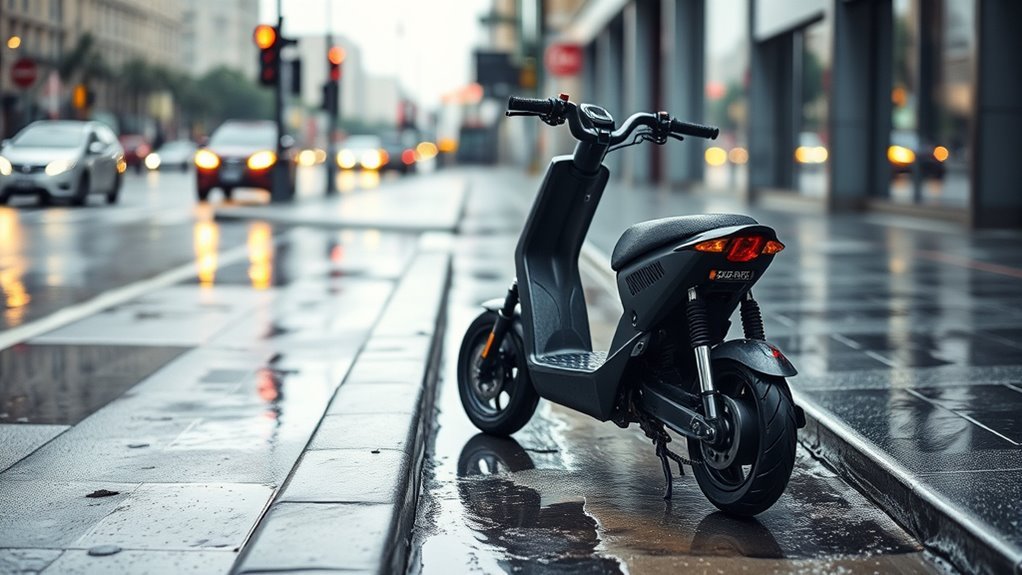
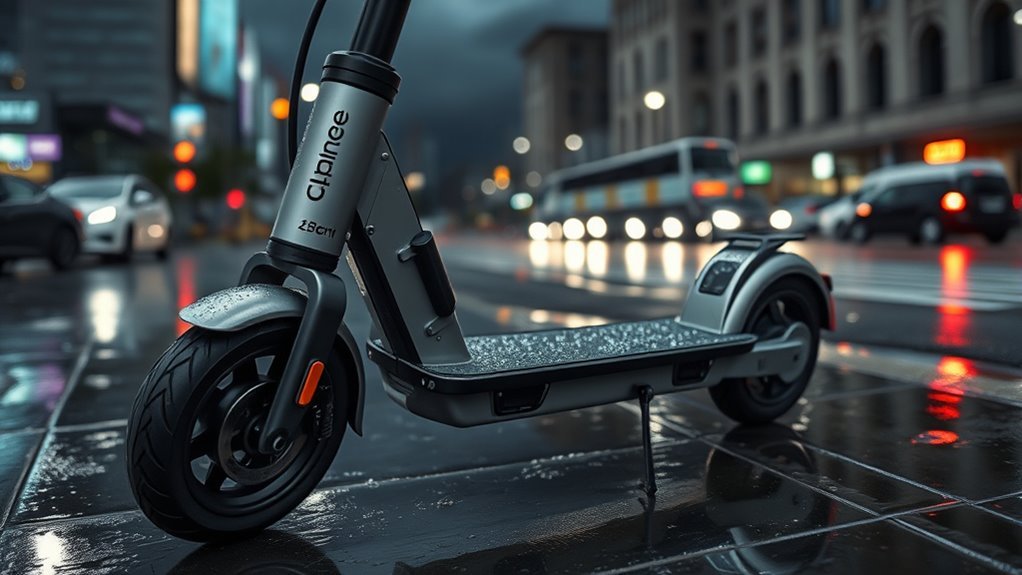
Most electric kick scooters are designed to resist limited water exposure rather than complete immersion. Their seals help protect sensitive parts from rain and splashes, but that protection has limits.
Water-resistant means the scooter can tolerate certain types of moisture. Waterproof is a broader marketing term that does not explain which conditions a product has passed testing for.
A scooter may have protection around its battery enclosure, motor, dashboard, and electrical connectors. However, the protection level can differ between components.
For example, a battery enclosure might have a higher IP rating than the complete scooter. That does not mean every electrical connection is equally protected.
The safest approach is to identify the rating of the complete scooter and read its manufacturer’s wet-weather instructions.
Remember these distinctions:
- Light splashes: Many rated scooters can tolerate them within their specified limits.
- Rain: Suitability depends on the scooter’s rating and manufacturer instructions.
- Standing water: Water can reach the underside of the deck and other vulnerable components.
- Submersion: Do not assume a scooter can survive being submerged, even if individual components have immersion ratings.
Water resistance can also become less reliable as seals age, hardware loosens, or the scooter suffers impact damage.
What Do IP Ratings Mean for Electric Scooters?
An IP rating describes how well an electrical enclosure protects against solid objects and water. IP stands for Ingress Protection.
The rating follows the international IEC 60529 standard.
The first digit describes protection against solid objects, including dust. The second digit describes protection against water.
For example, IP54 means:
- 5: Dust-protected. Some dust may enter, but not enough to interfere with normal operation under the test conditions.
- 4: Protected against splashing water from any direction.
The first digit ranges from 0 to 6, while the second ranges from 0 to 9. An X means no specific rating is stated for that category; it does not automatically mean the device has no protection.
Electric Scooter IP Rating Comparison
The table below explains common ratings and their practical limits.
| IP Rating | Water Protection | Practical Meaning |
|---|---|---|
| IPX4 | Splash protection | Resists splashing water, but not immersion or water jets. |
| IP54 | Splash protection | Adds dust protection to the same water-protection level as IPX4. |
| IPX5 | Water-jet protection | Offers stronger protection against water projected at the enclosure. |
| IP65 | Water-jet protection | Combines dust-tight construction with water-jet resistance. |
| IPX6 | Powerful water-jet protection | Resists more forceful water exposure under specified testing conditions. |
| IP67 | Temporary immersion protection | Protects against temporary immersion under standardized conditions, not unrestricted underwater use. |
These ratings describe controlled tests, not permission to use your scooter in every type of weather.
For a real example, Xiaomi confirms that its Electric Scooter 4 Lite (2nd Gen) carries an IPX4 rating. Xiaomi says that rating protects against splashes but not immersion or heavy rainfall.
Similarly, Segway describes the F2 series as IPX5-rated and warns against charging it while wet.
A higher rating provides stronger protection against the specific exposure tested. It does not automatically mean the scooter is safe to submerge or clean with a pressure washer.
Can You Ride an Electric Scooter in the Rain?
You may be able to ride an electric scooter in light rain if its manufacturer allows it. However, an IP rating alone does not guarantee that riding in rain is safe.
Rain affects both the scooter’s electronics and your ability to control it.
For example, Pure Electric’s IP65 water-resistance guidance permits rain use on its specified scooters while warning against heavy rain, deep puddles, and submersion.
Other manufacturers may place stricter limits on similarly rated products.
How to Ride More Safely on Wet Roads
If your scooter is approved for wet-weather riding, adjust your speed and braking before entering slippery areas.
- Ride more slowly than you would on dry pavement.
- Brake earlier and apply the brakes smoothly.
- Avoid sudden acceleration and sharp turns.
- Keep both hands on the handlebars.
- Stay away from flooded sections and puddles that hide road damage.
- Use appropriate lighting and visible clothing when rain reduces visibility.
Painted markings and metal surfaces deserve extra care. They can offer less grip than the surrounding road when wet.
The Texas Department of Transportation explains that pavement markings may have lower skid resistance, particularly for two-wheeled vehicles.
When possible, avoid braking or turning sharply while crossing these surfaces.
Warning: Never ride through floodwater or deep puddles. Water may reach the battery compartment, damage electrical components, or conceal holes and other hazards. An IP rating does not make flooded-road riding safe.
What Water Damage Can Do to an Electric Scooter?
Water entering an electric scooter can damage its battery, controller, motor, and electrical connections. Some failures happen immediately, while corrosion can cause problems long after the scooter appears dry.
The severity depends on how much water entered, where it reached, and how long the affected components remained wet.
Common Types of Water Damage
- Corroded battery terminals: Moisture can damage connections and interfere with power delivery.
- Electrical short circuits: Water can create unwanted electrical paths between components.
- Controller failure: Moisture can damage the electronics that manage motor operation.
- Motor problems: Water may affect internal connections or contribute to corrosion.
- Dashboard faults: Moisture can cause display problems, unreliable controls, or error messages.
- Mechanical corrosion: Exposed fasteners, bearings, and other metal components may deteriorate.
Condensation and trapped moisture inside the deck or stem can also contribute to electrical faults.
Signs Your Electric Scooter May Have Water Damage
Do not assume the scooter is undamaged simply because its display turns on. Watch for changes that appear after rain or accidental water exposure.
Possible warning signs include:
- Unexpected shutdowns or difficulty switching on.
- New dashboard errors or flickering lights.
- Unusual acceleration or reduced motor response.
- Charging problems.
- Visible corrosion or moisture around electrical connections.
- Unusual heat, odors, or sounds.
These symptoms can have other causes, but they deserve attention after significant water exposure.
What Should You Do if Your Electric Scooter Gets Soaked?
If your scooter enters deep water or experiences exposure beyond its rated limits, stop using it. Do not try to confirm that it still works by repeatedly switching it on.
- Move the scooter to a safe, dry location if you can do so without risk.
- Turn it off and disconnect any charger.
- Wipe visible water from the outside with a soft cloth.
- Leave the scooter in a ventilated location where moisture can escape naturally.
- Contact the manufacturer or an authorized repair technician if water may have entered the electrical compartments.
A dry exterior does not prove that the battery or controller is dry internally.
Warning: Do not charge or reuse a scooter with suspected internal water damage until it has been assessed. If the battery becomes unusually hot, swells, emits smoke, or develops a strong odor, stop using it and keep people away. Contact emergency services if there is an immediate fire risk.
The U.S. Consumer Product Safety Commission recommends using manufacturer-approved chargers, monitoring charging, and avoiding unapproved battery modifications.
How to Protect an Electric Scooter From Water?
The most effective protection is to stay within the manufacturer’s water-resistance limits and maintain the scooter’s existing seals. Additional accessories can help, but they should not interfere with electrical safety or normal operation.
Use the following steps to reduce unnecessary exposure and maintain your scooter.
1. Inspect the Charging Port Cover
Check that the charging port cover closes properly and sits firmly against its seal.
Look for cracks, deformation, or missing rubber parts. Replace damaged components with compatible parts recommended by the manufacturer.
Never insert a charger into a wet port.
2. Check the Deck and Electrical Seals
Inspect accessible seams, cable entry points, and exposed connectors for visible damage.
Loose covers, cracked rubber, or damaged gaskets may allow water into protected compartments.
If a seal needs replacement, use the correct manufacturer-approved component. Avoid opening the battery enclosure yourself unless the manufacturer specifically permits that procedure.
3. Use Suitable Covers and Mudguards
Compatible fenders or mudguards can help deflect road spray away from the deck and other exposed parts.
A manufacturer-approved dashboard cover may also provide additional splash protection.
Do not wrap the battery, motor, or charger in plastic. Improvised covers can trap moisture or interfere with cooling.
4. Avoid Unapproved Waterproofing Modifications
Silicone sealant, waterproofing sprays, and replacement bearings may sound like useful upgrades. However, they are not suitable for every scooter.
Adding sealant without understanding the scooter’s construction may block intended openings or make later repairs more difficult.
Likewise, spraying coatings into the motor housing or electrical compartments can introduce new problems.
Use only products and procedures approved for your specific model. Have damaged internal seals or bearings inspected by a qualified technician.
5. Dry the Scooter After Wet Rides
Wipe the deck, stem, dashboard, and charging-port area with a soft cloth.
Remove visible moisture from accessible surfaces and allow the scooter to air-dry in a clean, ventilated space.
Check the port and surrounding seals before charging or storing the scooter.
6. Clean Without High-Pressure Water
Use a slightly damp cloth for routine cleaning rather than spraying the scooter with a hose.
Avoid pressure washers, strong water jets, and prolonged soaking. Directing water into the charging port, bearings, or electrical openings can cause damage.
Do not assume that a scooter with an IP65 or IP67 rating can safely undergo pressure washing.
7. Store the Scooter in a Dry Location
Choose a sheltered location away from standing water, persistent dampness, and direct rainfall.
If you use a protective storage cover, make sure the scooter is dry first. A cover placed over a wet scooter can trap moisture.
For long-term storage, follow the manufacturer’s battery and storage instructions.
Does Water Damage Affect the Warranty?
Water damage may be excluded from an electric scooter’s warranty, even when the product has an advertised IP rating.
For example, NIU’s scooter warranty terms list water damage and water damage to electrical parts among the exclusions.
Unauthorized modifications may also affect warranty coverage.
Review the terms for your exact scooter model before applying sealant, replacing electrical parts, or making other waterproofing modifications.
Frequently Asked Questions
Can Electric Scooters Go in the Rain?
Yes, some electric scooters can handle light rain when their manufacturer permits it. Check the complete scooter’s IP rating and owner’s manual. Reduce your speed, brake gently, and avoid deep puddles or flooded roads. A water-resistance rating does not guarantee safe handling on slippery pavement.
Will Water Ruin an Electric Scooter?
Water can permanently damage an electric scooter if it enters sensitive electrical components. Possible problems include corrosion, short circuits, battery faults, and controller failure. If the scooter becomes soaked, stop using it and arrange an inspection before charging or operating it again.
How Do I Know if My Electric Scooter Is Waterproof?
Check the IP rating in your scooter’s specifications or owner’s manual. The second digit indicates its tested water resistance. Also confirm whether the rating covers the entire scooter or only individual components. Follow the manufacturer’s instructions rather than relying on a general waterproof marketing claim.
Are Scooters Good for Autistic Kids?
Scooters can provide enjoyable movement and opportunities to practice balance and coordination for some autistic children. However, each child’s sensory preferences, coordination, and abilities differ. Choose an age-appropriate, nonmotorized children’s scooter rather than an adult electric model, provide protective equipment, and supervise closely. The National Autistic Society’s motor-skills guidance explains why individual support matters.
Can I Wash My Electric Scooter With a Hose?
Avoid washing your electric scooter with a hose unless its manufacturer specifically permits it. Water can enter charging ports, seals, and electrical openings. Use a soft, slightly damp cloth instead. Never assume a high IP rating makes pressure washing safe, and ensure the scooter is dry before charging.
Conclusion
Most electric scooters are water-resistant rather than completely waterproof. Their IP ratings help explain what they can withstand, but manufacturer instructions determine how that protection applies to everyday use.
Check your scooter’s rating, protect its charging port, and avoid deep water. After a wet ride, dry the exterior and inspect accessible seals before charging. If you suspect internal water damage, stop using the scooter and arrange a professional inspection.
Sources
- International Electrotechnical Commission — IEC 60529: Official standard defining ingress protection classifications.
- Xiaomi — Electric Scooter 4 Lite (2nd Gen) Water-Resistance Guidance: IPX4 protection and its limitations.
- Segway — F2 Series: IPX5 rating, wet charging restrictions, and immersion limitations.
- Pure Electric — Is My Pure Scooter Waterproof?: IP65 water resistance, rain use, cleaning, drying, and storage recommendations.
- Texas Department of Transportation — Pavement Markings: Road-marking skid resistance and wet-weather considerations for two-wheeled vehicles.
- NIU — Scooter Warranty: Water-damage and unauthorized-modification exclusions.
- U.S. Consumer Product Safety Commission — Micromobility Safety: Scooter battery safety, charging practices, and approved replacement components.
- National Autistic Society — Autistic Children and Motor Skills: Individual differences in motor development and coordination.