
Last Updated on July 24, 2026 by Tyler Morgan
After years of delays, Boeing’s 777-9 completed one of its toughest certification demonstrations in 2026: a maximum brake-energy test conducted at high speed, maximum takeoff weight, and without help from thrust reversers. The result was an important success, but it did not certify the aircraft or guarantee its delivery schedule. As of July 2026, major testing and regulatory work still remained.
Quick Answer
The Boeing 777-9 successfully completed its maximum brake-energy test after accelerating to about 190 knots and stopping with worn brakes and no reverse thrust. Brake temperatures exceeded 2,500°F, or 1,371°C. The result supports certification, but Boeing reported in July 2026 that only about half of its planned certification testing was complete.
Key Takeaways
- The 777-9 passed its maximum brake-energy demonstration under intentionally severe test conditions.
- The first 777-9 fitted with a complete customer interior flew for Lufthansa on May 7, 2026.
- Boeing said on July 16, 2026 that the test fleet had logged about 4,800 flight hours and 1,700 flights.
- Only about 50% of planned certification testing was complete at that point, with further authorizations and ETOPS work still ahead.
- Boeing targets first delivery in 2027, but certification authorities control approval and can require additional work.
Disclosure: As an Amazon Associate I earn from qualifying purchases. Some links on this page are affiliate links, at no extra cost to you.
Boeing 777-9 Certification Status in July 2026
The 777-9 is making measurable progress, but it has not yet received an FAA type certificate and cannot enter normal passenger service. Boeing’s latest detailed program update, published on July 16, 2026, said the flight-test fleet had completed roughly 1,700 flights and more than 4,800 flight hours.
The same update said approximately 50% of planned certification testing was complete. Boeing had received most of the Type Inspection Authorizations needed for the program, while TIA 5 and authorizations connected with extended-range twin-engine operations, commonly called ETOPS, still remained.
| Aircraft status | Still in FAA certification testing |
| Testing reported by Boeing | About 1,700 flights and more than 4,800 flight hours by July 16, 2026 |
| Planned certification testing complete | Approximately 50% |
| Major work still identified | Remaining TIAs, ETOPS demonstrations, safety analyses, flight events, documentation, and final regulatory findings |
| First-delivery target | 2027, subject to certification |
Warning: Boeing’s 2027 delivery date is a company target, not a regulatory promise. The FAA can require more tests, design changes, analysis, or documentation before issuing approval.
Why the 777X Mattered From the Start
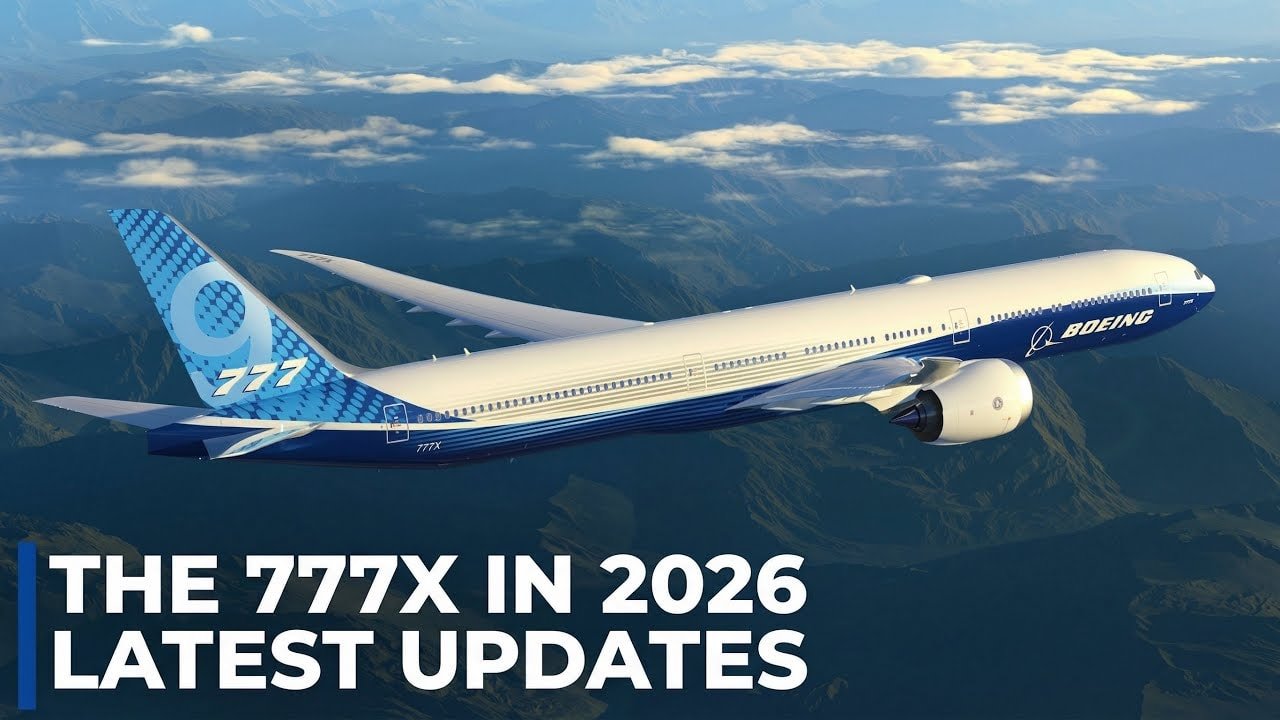
Boeing did not design the 777X as a routine cabin refresh. The program combines the established 777 platform with a new composite wing, folding wingtips, updated flight-deck technology, a wider cabin, and GE Aerospace’s GE9X engines.
The 777-9 is designed for airlines that need high capacity on long intercontinental routes. According to Boeing’s current 777X specifications, it can seat 375 to 450 passengers in a two-class layout and fly up to 8,000 nautical miles, depending on configuration and operating conditions.
- High passenger capacity: The 777-9 is the largest twin-engine passenger jet developed to date.
- Long-range capability: Boeing lists a maximum range of up to 8,000 nautical miles for the 777-9.
- Composite wing: The high-aspect-ratio wing is designed to improve aerodynamic efficiency.
- Folding wingtips: The tips reduce the wingspan while the aircraft is taxiing or parked.
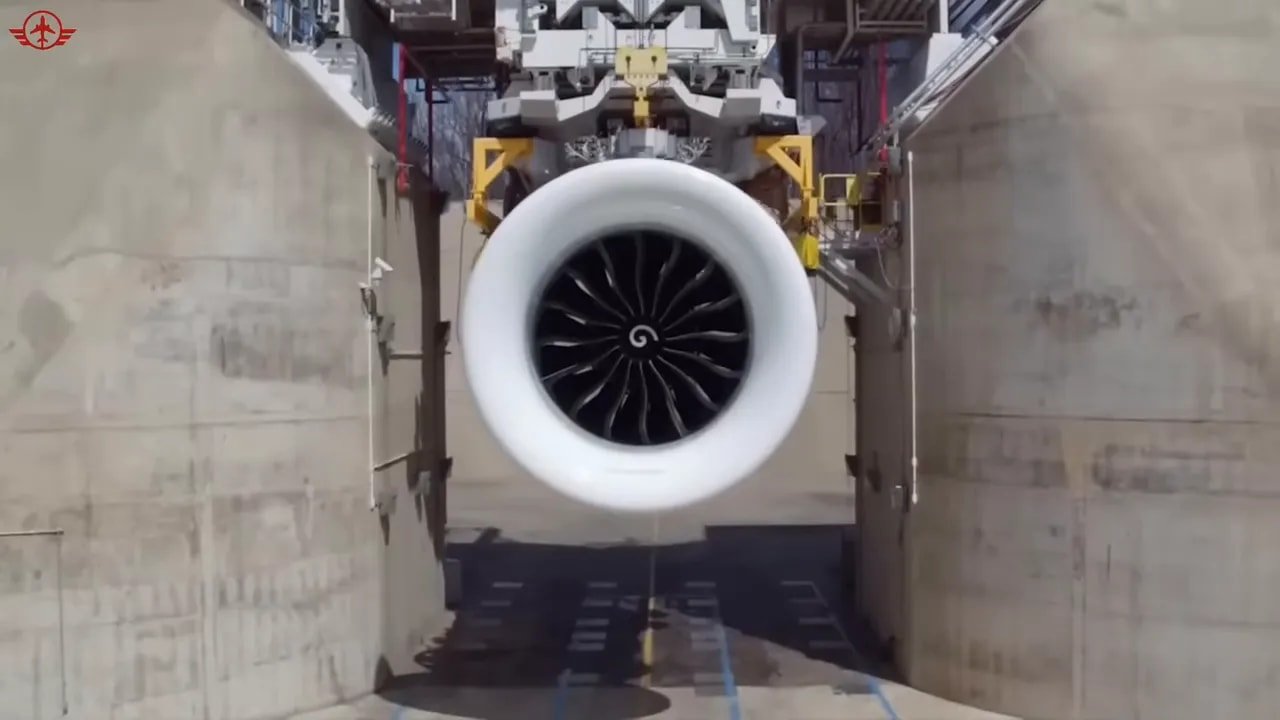
- GE9X engines: Both current passenger variants use engines developed specifically for the 777X family.
The folding tips remain the aircraft’s most visible feature. With the tips extended, the wing spans 71.8 meters, or 235 feet 5 inches. Folding them reduces the ground wingspan to 64.8 meters, or 212 feet 9 inches, helping the aircraft remain compatible with airport spaces used by existing 777 models.
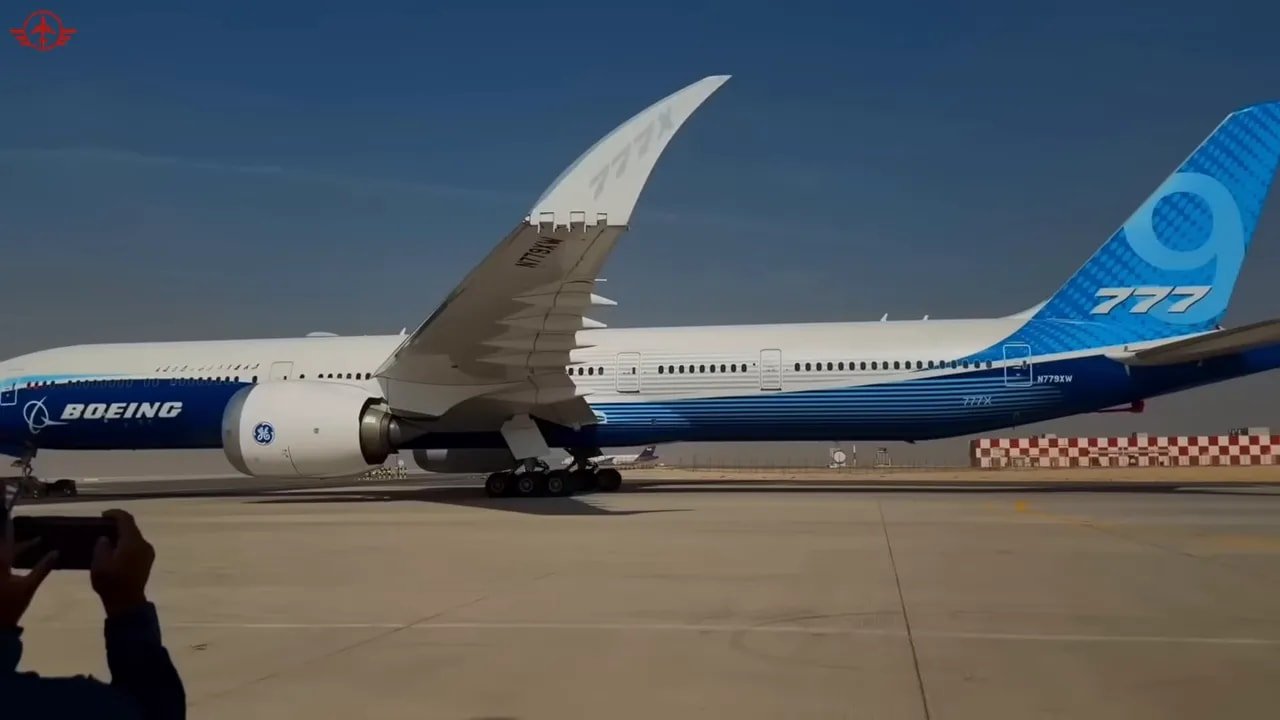
The tips are extended and locked before takeoff. The feature does not make the aircraft smaller in flight; it lets Boeing use a larger, more efficient wing without forcing every airport gate and taxi route to accommodate the full airborne span.
Why the 777X Program Fell Years Behind Schedule
Boeing launched the 777X in 2013 and originally expected the first aircraft to enter airline service around 2020. That schedule did not survive the program’s technical, regulatory, production, and external disruptions.
Early setbacks included GE9X development issues and a 2019 problem during structural load testing involving depressurization of the rear fuselage. Later disruptions included the COVID-19 downturn, changes to production plans, closer regulatory review, supply-chain constraints, and labor disruption.
The test program also encountered more recent technical findings. In 2022, Boeing paused and later resumed flight testing while GE Aerospace reviewed an engine issue found during post-certification engineering testing. In 2024, Boeing temporarily stopped 777-9 flight testing after finding damage in a thrust-link component associated with the engine mounting structure. Boeing replaced the component and returned the aircraft to testing.
In early 2026, GE Aerospace also investigated a possible GE9X seal-durability issue. Boeing maintained its 2027 delivery target while the investigation continued. These events do not mean that the aircraft cannot be certified, but they help explain why a development schedule can keep moving even after thousands of test hours.
Regulatory expectations also changed after the two fatal 737 MAX accidents. Congress passed certification reforms, the FAA increased scrutiny of Boeing programs, and manufacturers faced stronger requirements for human-factors evaluation, system-safety evidence, and development assurance.
The result was not one single delay with one simple cause. It was a chain of technical findings, certification work, production changes, external disruptions, and schedule revisions that moved the 777-9’s expected entry into service from 2020 to 2027.
Lufthansa’s Customer-Configured 777-9 Reached the Air
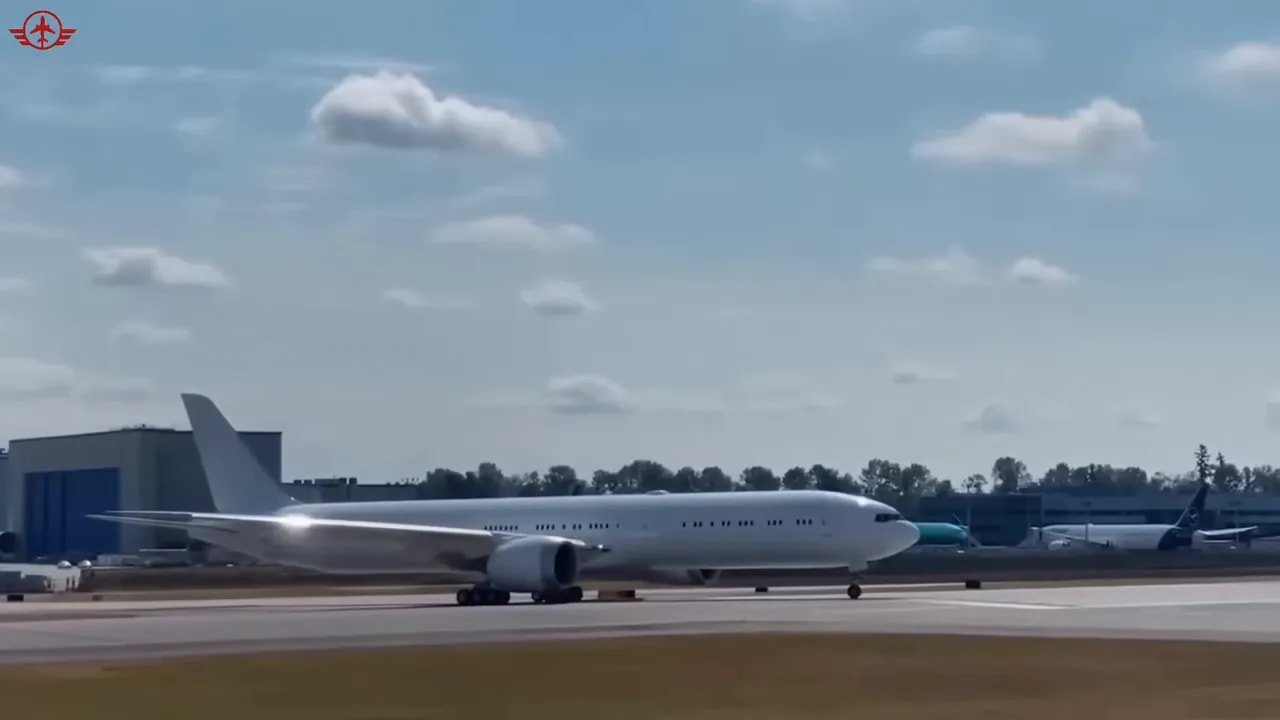
A major production milestone arrived on May 7, 2026, when the first 777-9 for Lufthansa completed its first flight. Boeing announced the flight the following day.
The aircraft was important because it carried Lufthansa’s complete customer interior rather than the instrumentation-heavy cabin used in a dedicated flight-test aircraft. Its equipment included passenger seats, cabin systems, and in-flight entertainment hardware intended to represent an airline configuration more closely.
The flight lasted three hours and 27 minutes over Washington and Oregon. It was the sixth 777-9 to fly and was scheduled to support cabin and systems testing as the certification campaign continued.
This milestone showed that Boeing had progressed beyond flying only its original development aircraft. It did not mean the Lufthansa jet was ready for delivery. The aircraft still depended on completion of the broader type-certification program, production conformity work, customer acceptance, and all required regulatory approvals.
How the Boeing 777-9 Brake Test Worked
The maximum brake-energy test is designed to recreate an unusually severe rejected takeoff. The aircraft accelerates to high speed, the crew aborts the takeoff, and the brakes must safely absorb the aircraft’s kinetic energy.
For the 777-9 test at Edwards Air Force Base, Boeing said the aircraft was loaded to its highest takeoff weight and accelerated to approximately 190 knots before the pilots rejected the takeoff.
The conditions were intentionally harsher than normal airline operations:
- The brakes had been machined to represent 100% wear.
- The crew did not use thrust reversers.
- The wheel brakes provided all of the stopping force.
- The aircraft was tested at its highest takeoff weight.
- Emergency crews waited five minutes before cooling the wheels, as required by the test scenario.
The brakes generated more than one billion foot-pounds of torque and reached temperatures above 2,500°F, or 1,371°C. Boeing said the aircraft stopped as planned.
The test forced worn brakes to stop a maximum-weight 777-9 from about 190 knots without assistance from reverse thrust.
At those temperatures, the wheel fuse plugs melted as designed. These plugs allow pressure to escape from overheated tires instead of letting pressure continue rising inside them. Tire deflation in this situation is therefore a protective response, not automatically evidence that the test failed.
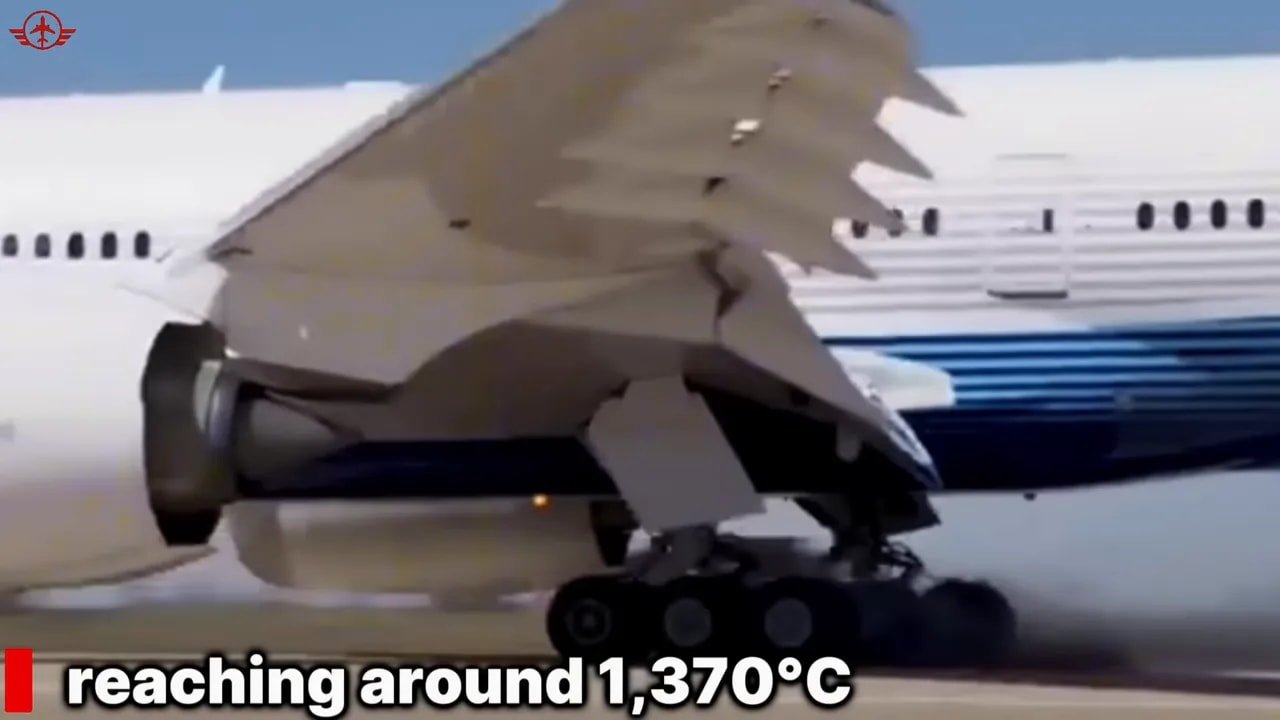
After the required five-minute waiting period, emergency crews sprayed water on the brakes and wheels. Boeing described the demonstration as successfully completed and said it formed part of the evidence being gathered for FAA certification.
What the Brake Test Proved and What It Did Not
The successful test showed that the 777-9’s braking system could meet the demonstrated maximum-energy stopping requirement under the tested configuration and conditions. It also produced data on brake temperatures, stopping performance, wheel behavior, landing-gear loads, and surrounding systems.
However, one test cannot prove that every aircraft system is ready for airline service. Type certification requires thousands of separate findings covering structures, flight controls, engines, software, electrical systems, handling qualities, evacuation, icing, fire protection, human factors, reliability, and many other areas.
Note: Passing the brake test does not mean the 777-9 has received its type certificate. It means Boeing completed one demanding compliance demonstration within a much larger certification program.
The test also does not confirm an airline’s final delivery date. A manufacturer can complete major flight demonstrations while still working through analysis, documentation, design changes, regulator comments, production conformity, and operational approvals.
What TIA 4a Means in the Certification Process
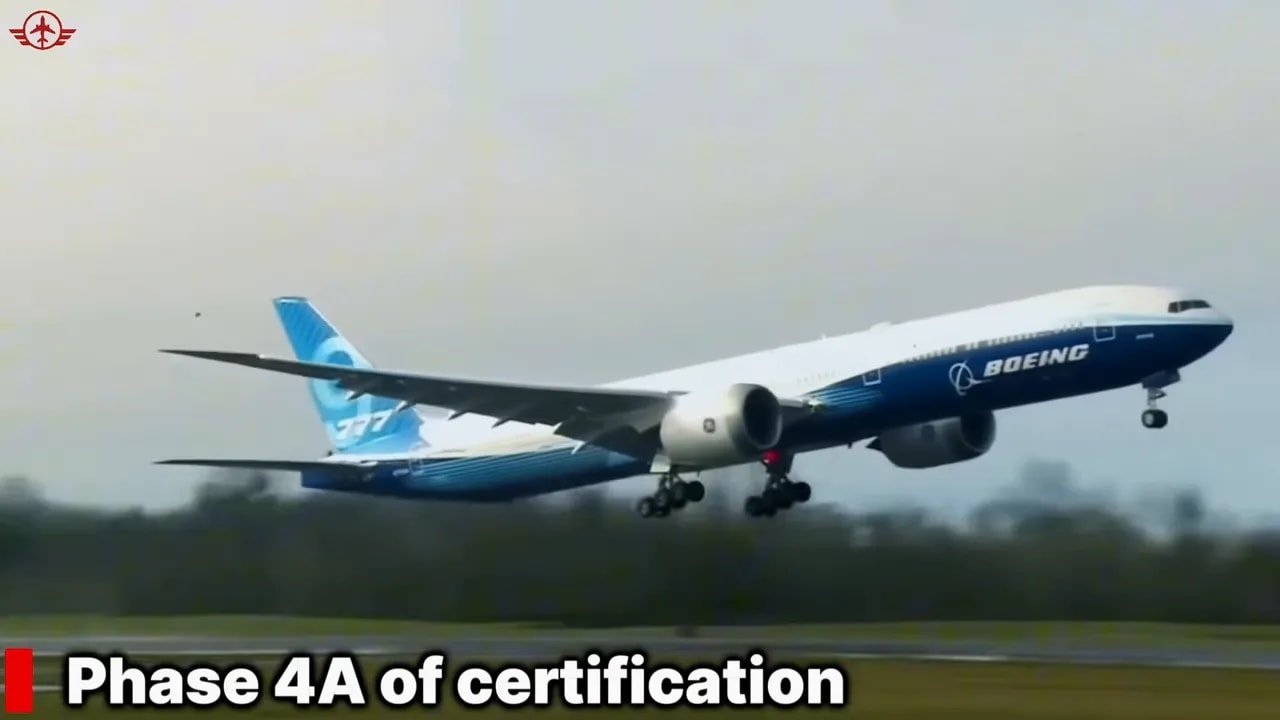
In the first quarter of 2026, Boeing said the FAA had approved the 777-9 program to begin the Type Inspection Authorization 4a portion of certification flight testing.
A Type Inspection Authorization, or TIA, allows specified inspections and tests to proceed after the regulator accepts the relevant test plans, configurations, and supporting information. It helps establish which compliance demonstrations can be conducted and credited toward certification.
TIA 4a should not be confused with a type certificate. The FAA issues a type certificate only after it determines that the aircraft’s design complies with the applicable standards. The FAA’s aircraft-certification overview describes a broader process that includes defining requirements, building conforming test articles, conducting inspections and tests, resolving findings, and approving the final design.
What Work Still Remains
Boeing’s July 2026 update identified several areas that still had to move forward:
- Securing the remaining Type Inspection Authorizations.
- Beginning and completing required ETOPS demonstrations.
- Finishing the remaining certification flight events.
- Closing development-assurance reviews and system-safety work.
- Submitting and closing certification deliverables with the FAA.
- Completing required production and customer-delivery preparation.
ETOPS approval is especially important for a long-range twin-engine aircraft. It involves demonstrating that the aircraft, its engines, systems, maintenance program, and operating procedures can support routes that may take the aircraft far from a suitable diversion airport.
Successful testing does not remove the need for documentation. Regulators must be able to trace each requirement to acceptable evidence and close any findings before granting approval.
Simulator Qualification Is Progress, Not Aircraft Certification
In February 2026, the FAA and EASA granted initial qualification to a 777-9 full-flight simulator and flight-training device at Boeing’s training campus in Gatwick, United Kingdom.
The devices were developed with CAE and reproduce the aircraft’s flight deck, systems, flight dynamics, and operating environment. Their initial qualification allows regulators to use the devices as they evaluate training material and prepare for future pilot-training approvals.
This milestone matters because airlines need approved training systems, courseware, instructors, maintenance preparation, and operating procedures before carrying passengers. It shows that the support system around the aircraft is developing alongside the airplane.
However, simulator qualification and aircraft type certification are separate approvals. A simulator can receive an initial qualification while the aircraft it represents is still completing certification tests. Boeing also said regulators needed to validate and approve the courseware before customer pilot training began.
A separate human-factors program used simulators to evaluate how airline pilots interacted with the 777-9 flight deck during normal and abnormal scenarios. Boeing said more than 200 customer pilots took part over four phases, with the resulting data intended to support the aircraft’s certification.
Why Airlines Continue to Commit to the 777X
The program’s delays have forced airlines to extend older aircraft leases, revise fleet plans, refurbish existing jets, and reconsider when new cabin products can enter service. Even so, several major carriers continue to treat the 777X as an important part of their long-term fleets.
Emirates is the largest customer. In November 2025, it ordered 65 additional 777-9s, taking its total 777X commitment to 270 aircraft. The airline said it expected its first 777-9 deliveries from the second quarter of 2027, although that timing remains dependent on Boeing completing certification and delivery preparations.
Korean Air has committed to 777-9 passenger aircraft and 777-8 Freighters as part of its long-term fleet modernization. Other customers include Lufthansa, Qatar Airways, Singapore Airlines, Cathay Pacific, British Airways, ANA, Etihad Airways, and China Airlines.

Airlines continue to wait for several practical reasons:
- Capacity: The 777-9 can carry more passengers than most other twin-engine aircraft.
- Airport compatibility: Its folded ground wingspan is similar to that of current large 777 models.
- Fleet commonality: Existing 777 operators may benefit from related operating experience and infrastructure, although differences training and approvals are still required.
- Limited direct alternatives: Airlines needing very high capacity and long range have few current twin-engine choices.
- Long planning horizons: Major airlines build fleet strategies many years ahead and cannot quickly replace hundreds of planned aircraft with a different model.
These commitments show strong demand, but they do not remove customer frustration. Each additional delay can increase the cost of retaining older aircraft and can postpone network growth, efficiency improvements, and new cabin installations.
777-8 vs. 777-9 vs. 777-8 Freighter
The 777X is now presented as a three-model family: the 777-8 passenger aircraft, the larger 777-9 passenger aircraft, and the 777-8 Freighter. Boeing’s published specifications can change as development continues, so older figures may differ from the current values below.
| Specification | 777-8 | 777-9 | 777-8 Freighter |
|---|---|---|---|
| Primary role | Long-range passenger aircraft | Higher-capacity passenger aircraft | Large widebody freighter |
| Two-class seating | 350–425 | 375–450 | Not applicable |
| Published range | Up to 9,500 nmi | Up to 8,000 nmi | 5,000 nmi with a 110-tonne payload |
| Length | 70.9 m | 76.7 m | 70.9 m |
| Maximum takeoff weight | 365,140 kg | 351,530 kg | 365,140 kg |
| Extended wingspan | 71.8 m | 71.8 m | 71.8 m |
| Ground wingspan | 64.8 m | 64.8 m | 64.8 m |
The 777-9 receives the most attention because it is scheduled to enter service first and is the aircraft used for the maximum brake-energy demonstration. The shorter 777-8 is intended to offer greater range, while the 777-8 Freighter is being developed for high-payload cargo operations.
Why the Program Matters Beyond One Brake Test
The maximum brake-energy test matters because it removed one demanding item from Boeing’s certification workload. The Lufthansa aircraft’s first flight, simulator qualification, human-factors evaluations, fatigue testing, and additional Type Inspection Authorizations also show that the program is moving.
Still, the most important fact is that the 777-9 remained uncertified in July 2026. Boeing had completed thousands of flight-test hours, but its own update said only half of planned certification testing was complete.
The aircraft is therefore neither a failed program nor a finished one. Its technical promise remains substantial, and airline demand remains strong. At the same time, the seven-year delay has increased costs, disrupted customer plans, and placed Boeing’s schedule credibility under close scrutiny.
The next decisive milestone will not be another dramatic video or isolated test. It will be the completion of the remaining compliance work, issuance of the required regulatory approvals, and delivery of an aircraft that can begin dependable airline service.
Frequently Asked Questions
What is the Boeing 777X?
The Boeing 777X is a new widebody family derived from the existing 777. It includes the 777-8 passenger aircraft, the larger 777-9 passenger aircraft, and the 777-8 Freighter. Major changes include a composite wing, folding wingtips, GE9X engines, updated flight-deck systems, and a wider cabin.
Did the Boeing 777-9 pass its brake test?
Yes. Boeing said the 777-9 successfully completed its maximum brake-energy demonstration after accelerating to about 190 knots at maximum takeoff weight. The test used fully worn brakes, no thrust reversers, and a required five-minute wait before emergency crews cooled the wheels.
How hot did the 777-9 brakes become?
Boeing reported temperatures above 2,500°F, or approximately 1,371°C. The heat caused the wheel fuse plugs to melt as designed, safely releasing tire pressure.
Does passing the brake test mean the 777-9 is certified?
No. The brake demonstration is one part of a much larger certification program. The aircraft must also complete testing and analysis involving structures, systems, engines, software, handling qualities, icing, fire protection, human factors, ETOPS, and other requirements.
How much 777-9 certification testing was complete in July 2026?
Boeing said on July 16, 2026 that approximately 50% of planned certification testing was complete. The test fleet had logged about 1,700 flights and more than 4,800 flight hours.
When will the first Boeing 777-9 be delivered?
Boeing targets its first delivery in 2027. Emirates has said it expects its first aircraft from the second quarter of 2027. These dates remain subject to certification, production readiness, and customer acceptance.
When did Lufthansa’s first 777-9 fly?
Lufthansa’s first 777-9 completed its first flight on May 7, 2026. It was the first 777-9 to fly with a complete customer interior and was scheduled to support cabin and systems testing.
Why do the 777X wingtips fold?
The extended wing improves aerodynamic efficiency in flight. Folding the tips reduces the ground wingspan from 71.8 meters to 64.8 meters, helping the aircraft use airport infrastructure designed for existing large 777 aircraft.
Why has the Boeing 777X been delayed?
The delay resulted from several factors rather than one failure. These included engine-development issues, structural-test findings, later test-aircraft component problems, certification changes, the COVID-19 downturn, production adjustments, supply-chain pressure, labor disruption, and the time needed to close regulatory requirements.
Sources
- Boeing 777X Family — current variant specifications, seating, range, dimensions, engines, and wingspan.
- Boeing: 777-9 Maximum Brake-Energy Test — test speed, aircraft weight, brake condition, temperature, fuse plugs, and emergency-response procedure.
- Boeing: Lufthansa’s First 777-9 Takes Flight — May 7 flight date, customer interior, flight duration, and intended testing.
- Boeing: July 2026 Certification Progress — flight hours, test flights, percentage complete, remaining TIAs, ETOPS work, and 2027 delivery target.
- Boeing: Initial 777-9 Training-Device Qualification — FAA and EASA simulator qualifications and remaining courseware validation.
- Federal Aviation Administration: How Aircraft Certification Works — regulatory testing, Type Inspection Authorization, design approval, and production approval.

