

Last Updated on July 24, 2026 by Ethan Caldwell
The best time to visit Route 66 depends on how much of the historic road you plan to drive. For a complete Chicago-to-Santa Monica journey, late April through May and late September through October usually offer the best balance of comfortable weather, manageable crowds, open attractions, and safer driving conditions. However, the route crosses eight states and several climate zones, so you still need to prepare for regional weather changes.
Quick Answer
The best time to visit Route 66 is generally late April through May or late September through October. These periods avoid the worst Midwest winter weather and Southwest summer heat while offering comfortable sightseeing conditions. Check local forecasts, attraction hours, road conditions, and event dates before each part of your trip.
Key Takeaways
- Late April through May is a strong choice for mild temperatures, spring scenery, and open attractions.
- Late September through October offers cooler desert weather and autumn color in parts of Illinois and Missouri.
- Summer requires careful heat planning, especially in Arizona and southeastern California.
- Winter is quieter but can bring snow, ice, delayed openings, and short daylight hours.
- Historic Route 66 has several alignments and limited signage, so carry a Route 66-specific map and an offline backup.
Disclosure: As an Amazon Associate I earn from qualifying purchases. Some links on this page are affiliate links, at no extra cost to you.
Best Time to Visit Route 66
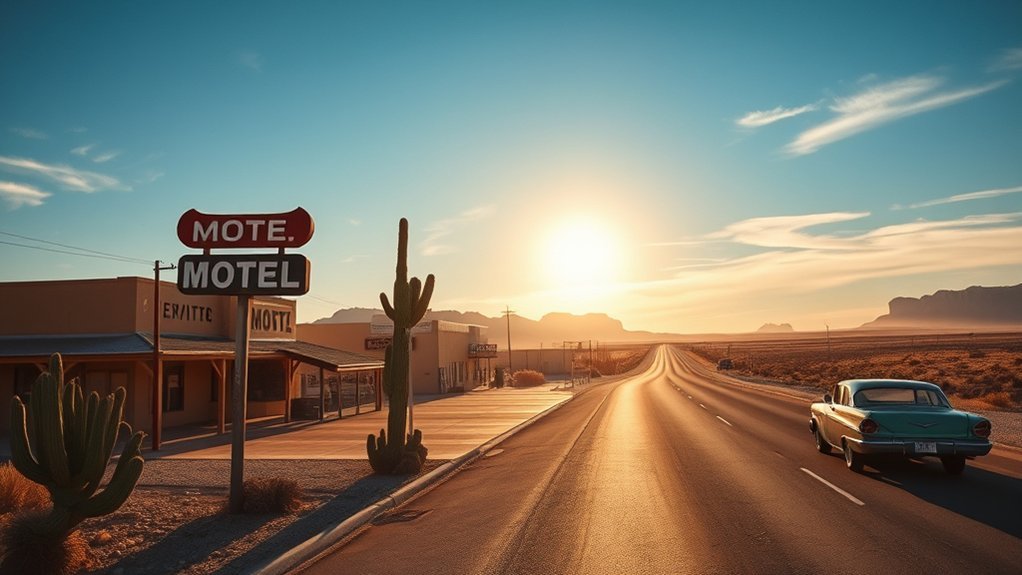
Historic Route 66 extends for roughly 2,400 miles through Illinois, Missouri, Kansas, Oklahoma, Texas, New Mexico, Arizona, and California. The National Park Service Route 66 overview shows why one weather forecast cannot represent the entire journey. You may leave cool, wet conditions in Illinois and reach hot, dry desert weather later in the same trip.
For most full-route travelers, the strongest overall windows are late April through May and late September through October. These periods generally avoid the coldest Midwest weather and the most intense Southwest heat. They also give you more daylight and a better chance of finding seasonal attractions open than you may have during winter.
| Season | Best For | Main Advantages | Main Drawbacks |
| Spring | Full-route trips and outdoor stops | Comfortable conditions, longer days, spring blooms, moderate crowds | Thunderstorms, strong winds, hail, and possible tornado warnings |
| Summer | Festivals and travelers limited to school holidays | Long daylight hours and a full schedule of attractions | Extreme desert heat, larger crowds, higher demand, and monsoon storms |
| Fall | Comfortable driving and fall scenery | Cooler Southwest weather and autumn color in the Midwest | Shorter days and reduced hours later in the season |
| Winter | Flexible travelers seeking quiet stops | Smaller crowds and possible lodging savings | Snow, ice, cold wind, closures, and limited attraction hours |
Best Months for a Full Route 66 Trip
May is often the best spring month for a full journey because most seasonal businesses are operating, daylight is generous, and the desert has not yet reached its most intense summer heat. However, travelers crossing the central states must watch for thunderstorms and tornado warnings.
October is often the best fall month. Temperatures are usually more comfortable in the Southwest, while parts of Illinois and Missouri may show autumn color. By late October, cold nights become more likely in high-elevation areas.
Best Season for Different Travel Goals
- Best overall weather: Late April through May and late September through October.
- Best for fewer crowds: Early spring, late fall, and winter outside major events.
- Best for festivals: Spring through early fall, with dates confirmed before booking.
- Best for desert sightseeing: Spring and fall.
- Best for autumn scenery: Mainly October in Illinois and Missouri.
- Best for lower lodging demand: Winter, except holidays and special-event weekends.
Route 66 in January to March
January through March is the quietest period on many parts of Route 66, but it is not consistently mild. Illinois, Missouri, Kansas, Oklahoma, northern Texas, New Mexico, and northern Arizona can experience freezing temperatures, snow, ice, and strong winds. High-elevation areas may remain cold even when lower desert sections feel comfortable.
Winter can still work well when you have a flexible schedule and are willing to use modern highways when historic alignments become unsafe. Museums, diners, and roadside attractions may operate on reduced schedules, so call or check official pages before making a long detour.
Desert areas can be pleasant during the day, but temperatures may fall quickly after sunset. Carry warm clothing, water, food, a flashlight, a charged power bank, and basic emergency supplies. Do not assume that a sunny afternoon guarantees an ice-free road the following morning.
Note: Winter is best for travelers who can change plans at short notice. Check forecasts, attraction hours, and state road reports every morning before leaving.
Route 66 in April to June
April through May is one of the most comfortable periods for exploring Route 66. Days become longer, seasonal businesses reopen, and outdoor stops are easier to enjoy than during midsummer. By June, the Southwest can become very hot, so early departures and air-conditioned midday breaks become more important.
Spring Weather Advantages
Spring gives you a useful balance of comfortable driving weather and longer daylight. In the Southwest, wildflowers may appear after sufficient winter rain or snow. The National Park Service identifies April and May as generally favorable months for wildflowers around Petrified Forest National Park, although each year’s display depends on moisture and temperature.
Spring weather can change quickly across the central states. Thunderstorms may produce heavy rain, hail, damaging wind, flooding, or tornadoes. Check the National Weather Service forecast and severe-weather outlook before starting each day.
Warning: A vehicle is not a safe tornado shelter. During a tornado warning, get off the road and enter a sturdy building when possible. Do not stop under an overpass. Follow current National Weather Service tornado guidance.
Scenic Stops Along Route 66
Spring weather makes it easier to spend time outside at historic downtowns, museums, roadside landmarks, state parks, and preserved road segments. You can also add national park detours without placing every outdoor stop in the hottest part of the day.
- Explore historic sites in Illinois, Missouri, Kansas, and Oklahoma before summer humidity increases.
- Look for spring color around Route 66 State Park and other green spaces in Missouri.
- Visit Petrified Forest National Park and its preserved Route 66 area while temperatures are moderate.
- Stop at classic roadside landmarks such as Cadillac Ranch near Amarillo.
- Plan the Grand Canyon as a separate Arizona detour rather than a direct Route 66 roadside stop.
Route 66 in July to September
July and August offer long daylight hours and busy attraction schedules, but they also create the most difficult heat conditions on the western half of Route 66. Desert sections in Arizona and southeastern California can become dangerously hot, especially during the afternoon.
Drive early, keep your fuel tank comfortably above empty, and carry more water than you expect to use. Schedule outdoor landmarks for morning or evening and use museums, restaurants, or lodging for midday breaks. Check for heat advisories and warnings through the National Weather Service heat-safety portal.
Summer also overlaps with the Southwest monsoon season. Brief storms can produce lightning, dust, strong wind, poor visibility, and flash flooding. Never drive through water covering a road, even when another vehicle has crossed it.
September is a transition month. The first half can still feel like summer in the desert, while late September often provides more comfortable travel conditions. Crowds may also ease after the main school-holiday period.
Warning: Never leave a child, adult who needs assistance, or pet inside a parked vehicle. A vehicle can reach dangerous interior temperatures quickly, even when the outside weather does not seem extreme.
Route 66 in October to December
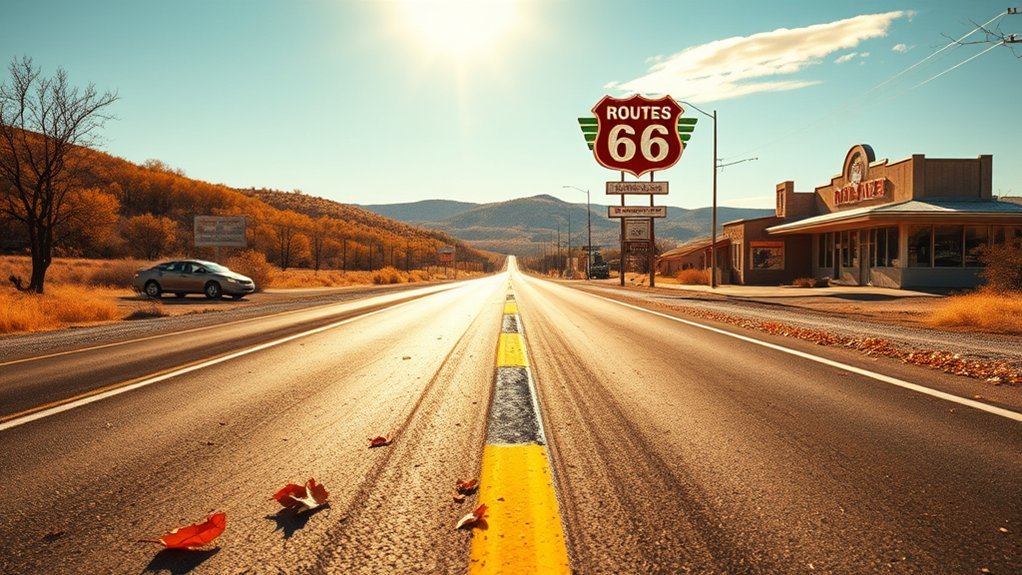
October is one of the strongest months for a Route 66 road trip. Desert temperatures are usually more manageable than in summer, while sections of Illinois and Missouri may display fall color. Crowds often become lighter after early autumn events and school holidays.
November and December require more caution. Daylight becomes shorter, nights become colder, and some attractions reduce their hours or close for the season. Snow and ice may affect the Midwest, high plains, New Mexico, and northern Arizona.
Autumn Scenery Highlights
Fall color is most relevant to the eastern part of Route 66. Peak timing changes each year with temperature, rainfall, and elevation, so avoid planning around one guaranteed foliage date.
- Look for autumn color in Illinois and Missouri, mainly during October.
- Use cooler weather for walking tours of historic downtowns and preserved road segments.
- Visit Southwest desert viewpoints after the worst summer heat has eased.
- Check sunset times so you do not arrive at remote attractions after dark.
Holiday Travel Planning
Holiday lights and local events can make late November and December memorable, but winter schedules vary widely. Confirm museum, diner, gift shop, visitor-center, and motel hours directly before traveling. A business shown as open on a map or old travel guide may have reduced seasonal hours.
Book lodging early around major holiday weekends and special events. Keep your itinerary flexible enough to use an interstate or delay a remote alignment when winter weather makes the historic road unsafe.
Route 66 Weather and Road Conditions
Weather and road conditions can change greatly during one Route 66 trip. Historic alignments may be narrow, rough, locally maintained, temporarily closed, or difficult to identify. Route 66 was removed from the U.S. Highway System in 1985, so you should not expect one continuous, fully signed highway.
The National Park Service planning guidance warns that historic-route signage may be limited and that GPS or mobile reception may not always be reliable. Carry a current Route 66-specific map or guidebook and save important directions for offline use.
- Check local forecasts before leaving each morning.
- Use state transportation websites or 511 services for closures, construction, crashes, and winter conditions.
- Download maps before entering areas with weak mobile service.
- Keep a paper map as a backup.
- Check fuel availability before following remote historic alignments.
- Avoid unpaved or damaged segments when your vehicle is not suitable for them.
- Do not enter flooded roads, closed roads, private property, or unsigned tracks.
Pro Tip: Use the National Park Service Route 66 map resources for historic context, then compare your chosen alignment with current state road information before driving it.
How to Plan Your Route 66 Itinerary
A successful Route 66 trip requires more than choosing a season. You must also decide which historic alignment to follow, how many roadside stops to include, and how much time you can spend away from the interstate.
How Many Days Do You Need?
- 10 to 14 days: Suitable for major highlights, but you will need to skip many museums, historic towns, and older alignments.
- Two to three weeks: A balanced choice for a full journey with regular roadside stops and occasional detours.
- Three to four weeks: Better for slower travel, local museums, national park detours, rest days, and unexpected discoveries.
Do not judge the trip only by mileage. A 150-mile Route 66 day may take much longer than a 150-mile interstate day because you will pass through towns, stop for photographs, and follow older road segments.
Should You Drive East to West or West to East?
Many travelers drive east to west because it follows the road’s traditional migration story from Chicago toward California. West-to-east travel is equally possible and may provide better flight, rental-car, or scheduling options.
Your direction does not remove the need to watch regional weather. Compare forecasts for the entire route before departure and adjust your pace when a heat wave, winter storm, wildfire, dust storm, or severe-weather outbreak affects the next section.
Route 66 Festivals and Events
Festivals, car shows, museum programs, parades, concerts, and community events can add local history and energy to a Route 66 trip. However, dates and locations change every year, so do not rely on an undated festival list.
Route 66 celebrates its centennial in 2026. The anniversary has produced events and projects throughout the eight-state corridor, which may increase lodging demand and traffic around host communities. Check the official Route 66 Centennial event calendar before booking your route.
When an event matters to your trip, verify its date through the organizer, reserve lodging early, and confirm whether road closures or parking restrictions will affect your planned alignment.
Route 66 Safety and Budget Tips
Route 66 includes busy city streets, rural two-lane roads, high-elevation sections, desert highways, and older alignments. A reliable vehicle and a flexible schedule are more valuable than trying to follow every historic mile regardless of conditions.
- Inspect your tires, brakes, coolant, battery, lights, and spare-tire equipment before departure.
- Carry water, food, a first aid kit, a flashlight, reflective markers, a basic tool kit, and charging cables.
- Keep enough fuel for unexpected detours or closed stations.
- Share your daily route with someone who is not traveling with you.
- Use the Federal Highway Administration’s explanation of 511 traveler-information services and locate each state’s current service before departure.
- Book popular or historic lodging early, especially during weekends, holidays, and centennial events.
- Confirm cancellation terms when your travel dates fall within severe-weather or winter-risk periods.
Route 66 Budget Planning
Your budget depends on trip length, vehicle choice, fuel use, lodging style, food, attraction fees, insurance, parking, and side trips. Separate fixed expenses from daily expenses before deciding whether a total budget is enough.
- Fixed expenses: Flights, vehicle rental, insurance, one-way fees, and major reservations.
- Daily expenses: Lodging, fuel, food, parking, admissions, and small purchases.
- Emergency reserve: Extra lodging, repairs, medical needs, weather delays, or route changes.
Pro Tip: Build at least one unplanned day into a two-week itinerary. A flexible day can absorb severe weather, vehicle trouble, an attraction closure, or a stop where you decide to stay longer.
Frequently Asked Questions
What are travel dead weeks on Route 66?
Travel dead weeks are quieter periods between major holidays, school breaks, and festivals. They may offer lower lodging demand and smaller crowds, but some attractions can have reduced hours. Check each important stop before choosing a quiet travel week.
Is $5,000 enough for a Route 66 trip?
A $5,000 budget may cover a moderate Route 66 trip for one or two travelers, but the answer depends on duration, flights, rental-car costs, one-way fees, lodging, fuel, and side trips. Prepare a daily budget and keep an emergency reserve rather than treating $5,000 as a guaranteed amount.
Is Route 66 the number-one road-trip destination in the world?
There is no official worldwide ranking that makes one road trip number one. Route 66 remains one of the best-known historic road trips because of its roadside architecture, transportation history, small towns, museums, neon signs, and connection to American popular culture.
What is the cheapest but nicest part of Route 66 to visit?
Smaller communities in Missouri, Kansas, Oklahoma, Texas, and New Mexico may offer better lodging and food value than major cities or famous resort areas. Prices still change by date and event, so compare several nearby towns instead of booking only at the best-known stop.
What month has the best Route 66 weather?
May and October are usually the strongest choices for a complete Route 66 trip. May offers long days and spring scenery, while October often brings cooler desert conditions and fall color in the eastern states. Neither month guarantees perfect weather across the entire route.
Can you drive Route 66 during winter?
Yes, but winter requires flexibility. Snow, ice, freezing temperatures, reduced attraction hours, and delayed openings can affect the Midwest, high plains, New Mexico, and northern Arizona. Use current road reports and switch to safer modern highways when necessary.
Do you need a special map for Route 66?
A Route 66-specific map or current guidebook is strongly recommended. The historic road has multiple alignments, incomplete signage, local road names, and sections replaced by interstate highways. Carry offline directions and a paper backup.
How long does it take to drive the full Route 66?
You can cover major highlights in about 10 to 14 days, but two to three weeks provides a more balanced experience. Three to four weeks is better when you want museums, historic alignments, national park detours, rest days, and time in smaller communities.
Conclusion
Late April through May and late September through October are generally the best times to visit Route 66. These periods offer a practical balance between Midwest cold, Southwest heat, daylight, attraction availability, and crowd levels. Summer can still work with strict heat precautions, while winter suits flexible travelers who are prepared for snow, ice, closures, and reduced hours.
Whatever season you choose, use a Route 66-specific map, check weather and road conditions daily, confirm attraction hours, and leave room for unexpected delays. Good preparation will help you enjoy the historic road without forcing unsafe travel decisions.
Sources
- National Park Service: Route 66 Overview — route history, distance, landscapes, and historic alignments.
- National Park Service: Travel Route 66 — official state-by-state historic-site itinerary.
- National Park Service: Route 66 Planning Tips — signage, maps, GPS limitations, and trip preparation.
- National Weather Service: Heat Safety — heat alerts, hydration, outdoor activity, and vehicle safety.
- National Weather Service: Tornado Safety — actions to take during a tornado warning.
- Route 66 Centennial Commission: Official Event Calendar — current 2026 centennial events and programs.

