Last Updated on July 28, 2026 by Ethan Caldwell
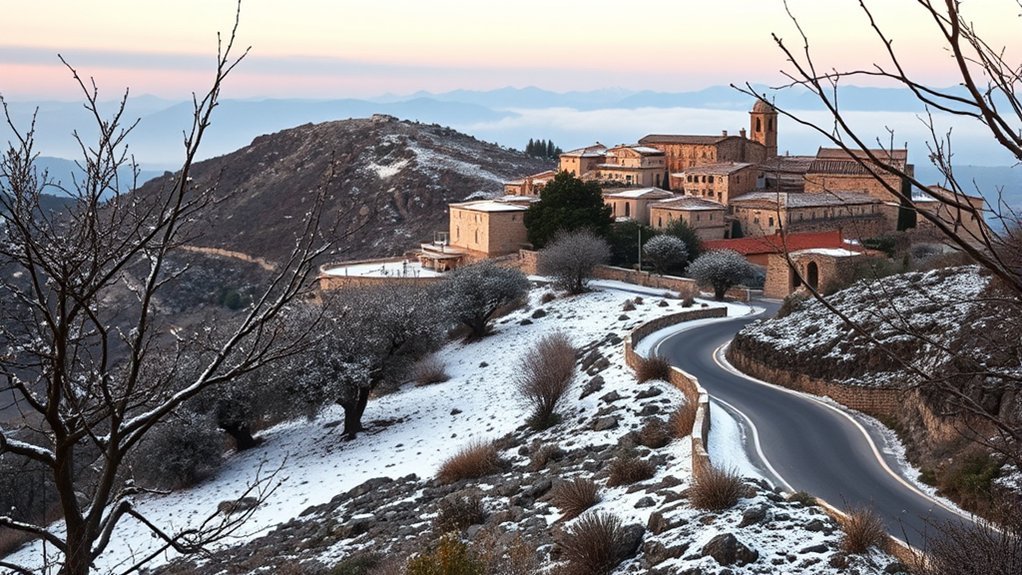
Yes, it does snow in Sicily, but the amount depends heavily on elevation. Mount Etna receives the island’s most dependable winter snow, while the Madonie and Nebrodi Mountains and elevated inland places such as Enna can turn white during strong cold spells. Palermo, Catania, Taormina, and most coastal towns usually remain mild and rainy rather than snowy. Travelers combining a winter trip with a coastal stay can compare the best hotels in Taormina, Sicily, but they should treat a snow excursion as a separate mountain trip with its own weather and safety checks.
Quick Answer
Yes. Snow falls most often on Mount Etna and the highest parts of the Madonie and Nebrodi ranges. Enna and other inland hill towns can also see snow during strong cold spells, while Palermo, Catania, and most coastal areas rarely do. The best odds for fresh snow are usually from January through March.
Key Takeaways
- Mount Etna is Sicily’s most reliable place for winter snow, especially at higher elevations.
- The Madonie and Nebrodi Mountains also receive snow, while Enna is more snow-prone than Sicily’s coastal cities.
- January through March generally offers the best chance of fresh snow, but snow can remain on Etna into April or May.
- Skiing, snowshoeing, cable-car service, and mountain-road access all depend on current snow, weather, and volcanic restrictions.
- Palermo, Catania, Taormina, and other low coastal areas receive snow only during unusual cold outbreaks.
Disclosure: As an Amazon Associate I earn from qualifying purchases. Some links on this page are affiliate links, at no extra cost to you.
Does It Snow in Sicily?
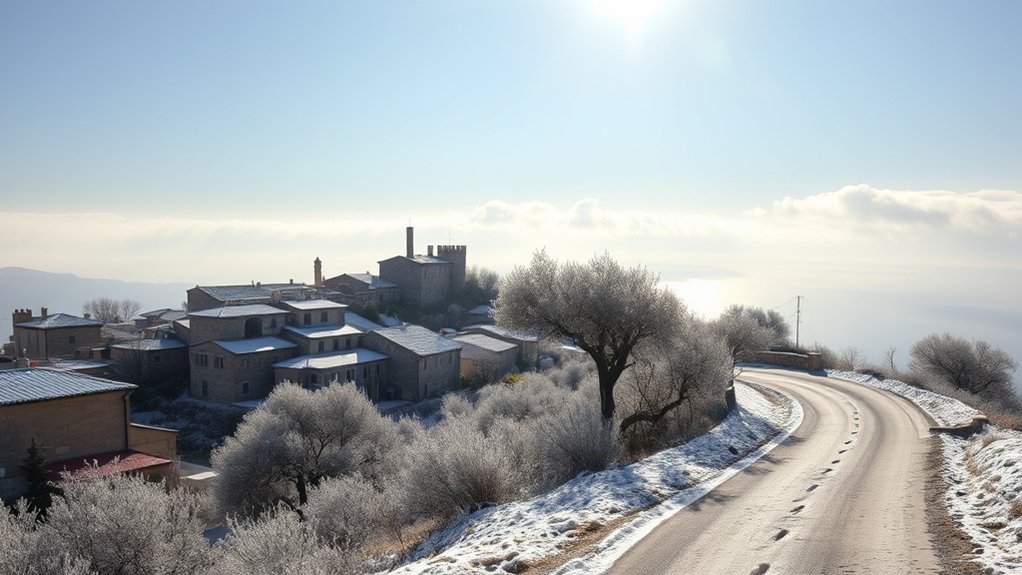
Yes, Sicily receives snow every winter somewhere on its highest terrain. The greatest and most dependable accumulation is found on Mount Etna, which rises to about 3,350 meters according to Italy’s Department of Civil Protection. Snow is much less dependable in Sicily’s towns and lowlands.
A traveler can therefore experience mild weather beside the sea and full winter conditions on Etna during the same day. Temperature, wind, visibility, and precipitation can change sharply as the road climbs, so a forecast for Catania or Taormina does not describe conditions near the volcano’s upper slopes.
The severe storm of February 2023 was an exceptional example. Local Etna operators reported several days of snowfall, blocked access, downed trees, and drifts several meters deep in exposed places. Those conditions were unusual and should not be treated as a normal description of every Sicilian winter.
Note: Snow and volcanic activity can occur at the same time. INGV reported that an Etna eruption began on December 24, 2025, and developed a new fissure on January 1, 2026. That is a dated example rather than a live status report. Always check current INGV Etna monitoring and Civil Protection notices before going uphill.
Where Does Snow Fall in Sicily?
Snow in Sicily is concentrated on mountains and elevated inland terrain. Mount Etna is the most dependable location, but the Madonie and Nebrodi ranges can also receive substantial winter snow. Enna and other hill towns may see accumulation during strong cold outbreaks, while low coastal communities generally receive rain.
Mount Etna Snowfall
Mount Etna has Sicily’s longest and most reliable snow season because its upper slopes rise far above the surrounding coast. Snow can begin during late autumn or early winter and remain at high elevation into spring. Italy’s national tourism agency notes that skiing may begin with December snow and can sometimes continue until May, with February through April often providing the strongest conditions.
Etna has winter recreation areas on both its southern and northern sides. Rifugio Sapienza is the main base on the south side, while Piano Provenzana serves the north side. Lift, slope, and road availability can vary from day to day, so the existence of a ski area does not guarantee that every facility will be operating.
The Funivia dell’Etna departs from Rifugio Sapienza and normally carries visitors from about 1,923 meters to 2,500 meters. The operator may use snowcats above the cable-car station in winter, but all services remain subject to weather, technical requirements, and the maximum altitude allowed by authorities.
| Location | Typical Snow Pattern | Best-known Activities |
|---|---|---|
| Upper Mount Etna | Sicily’s most dependable and longest-lasting snow | Guided winter excursions, ski touring, snow views |
| Rifugio Sapienza | Variable accumulation on Etna’s south side | Cable car and seasonal snow activities |
| Piano Provenzana | The north side often retains snow well | Seasonal skiing, snowboarding, guided outings |
Enna and Sicily’s Central Highlands
Enna’s high inland position makes it more likely to receive snow than Palermo, Catania, or other coastal cities. During a strong cold spell, its rooftops, streets, and surrounding hills may turn white. However, snowfall is irregular, and travelers should not expect dependable deep accumulation throughout the winter.
Other elevated communities in central Sicily can also receive brief snow or sleet when cold air reaches the island. The amount often changes over short distances because elevation, wind exposure, and precipitation intensity differ from one ridge or valley to another.
Madonie and Nebrodi Mountains
The Madonie and Nebrodi ranges are Sicily’s other important mountain snow zones. Peaks in both ranges rise high enough for winter storms to produce meaningful accumulation, even when nearby coastal areas receive only rain.
Piano Battaglia, between Pizzo Carbonara and Monte Mufara in the Madonie, is one of the island’s best-known winter recreation bases. The official Visit Sicily snowshoeing guide describes outings from December through March when snow is present. Skiing and other activities still depend on current snow depth, lift status, access, and local restrictions.
Why Does Sicily Sometimes Get Snow?
Sicily has a mainly Mediterranean climate, so winters are generally mild near sea level. Its mountains create a very different environment. As air rises over Etna and the northern ranges, it cools, and precipitation that falls as rain near the coast can become snow at higher elevation.
A common rule of thumb is that air temperature decreases by roughly 6°C to 7°C for every 1,000 meters of elevation gained. The actual change varies with humidity and weather conditions, but the difference is large enough for Catania to have cool rain while Etna’s upper slopes experience freezing wind and snow.
On the same winter day, Sicily can have mild rain beside the sea and freezing snow several thousand meters higher on Mount Etna.
- High elevation lowers temperatures.
- Northern and inland mountains are more exposed to cold winter air.
- Strong storms can briefly lower the snow line into Sicily’s hill towns.
- Sea-level warmth usually turns coastal precipitation into rain rather than snow.
Snowmelt also contributes to the water that infiltrates Etna’s porous volcanic rock and mountain soils. It should be described as one part of the island’s wider precipitation and groundwater system, not as the only source of summer water.
Long-term warming may affect how long mountain snow remains on the ground, but an individual snowstorm cannot automatically be blamed on climate change. Each event is primarily driven by its immediate combination of cold air, moisture, wind, and elevation.
How Often Does Sicily Get Snow?
Some part of Sicily’s highest terrain receives snow in many winters, but snow is not equally common across the island. Mount Etna can have repeated snowfall and persistent upper-elevation cover, while Enna and other towns may have only one or two brief events—or none at all—during a mild season. Coastal snowfall is far less frequent.
Snowfall Frequency by Elevation
There is no single island-wide snowfall average that accurately describes Sicily. Conditions at sea level, around 900 meters in an inland town, and above 2,000 meters on Etna are too different. Commercial ski-history pages can be useful for trip planning, but their weekly averages should not be presented as fixed official climate records.
- Upper Etna: Snow is a normal part of winter, although depth and timing vary.
- Madonie and Nebrodi peaks: Snow is recurring but less dependable than on Etna’s highest slopes.
- Enna and hill towns: Accumulation occurs during stronger cold outbreaks.
- Palermo, Catania, and the coast: Snow is an unusual event and normally melts quickly.
The February 2023 Etna storm remains a useful example of what an exceptional event can do, but it should not be used as the standard for an average winter.
High-Altitude Snow Zones
| Zone | Relative Snow Reliability | How Long It May Last |
|---|---|---|
| Upper Mount Etna | Highest in Sicily | Days, weeks, or longer at the highest elevations |
| Madonie and Nebrodi peaks | Moderate during favorable winters | Usually shorter and more storm-dependent |
| Enna and elevated towns | Occasional | Often brief, especially after roads are cleared |
| Coastal cities | Very low | Usually minutes or hours when it occurs |
Pro Tip: Check a forecast for the exact elevation you plan to visit. A Catania forecast may show rain and mild temperatures while Etna’s upper stations have snow, strong wind, poor visibility, or a wind chill well below freezing.
Rare Coastal Snow Events
Snow at or near sea level in Sicily is possible but too rare to build a trip around. Palermo, Catania, Taormina, Syracuse, and other coastal destinations generally have cool rain during winter cold fronts. Any flakes that do reach the coast usually melt quickly on relatively warm roads and pavements.
- Expect rain rather than snow in most coastal cities.
- Do not assume a white Etna means Catania is also snowy.
- Head inland or uphill for a realistic chance of accumulation.
- Allow extra travel time when a strong cold front affects the entire island.
Where Are Sicily’s Snowiest Spots?
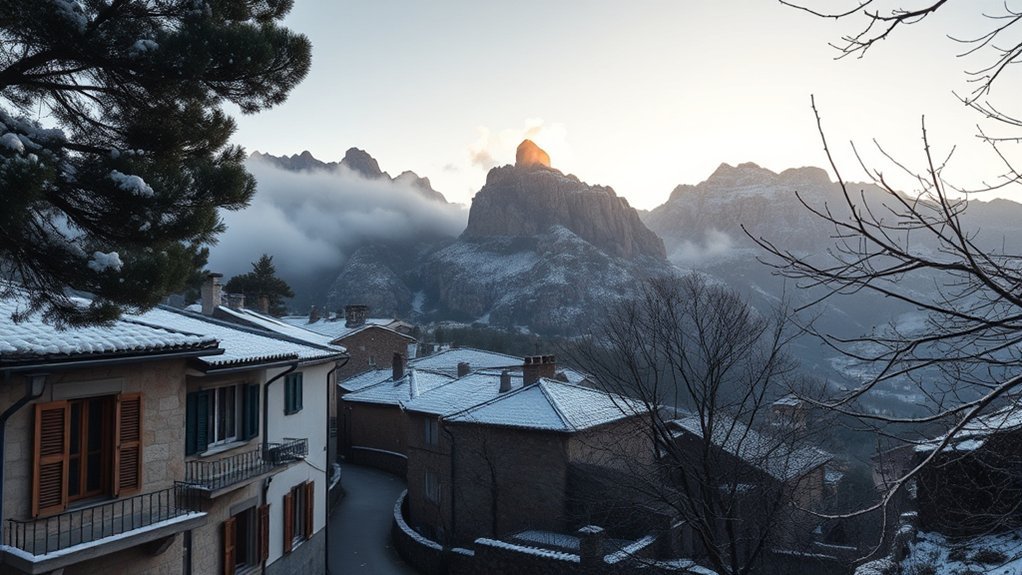
Mount Etna is Sicily’s snowiest and most dependable winter destination. The Madonie and Nebrodi ranges follow, while Enna is one of the best-known Sicilian cities for occasional town-level snowfall. Coastal areas rank last because their low elevation and maritime influence keep winter temperatures comparatively mild.
| Spot | Why Snow Falls There | Best Reason to Visit | Important Limitation |
|---|---|---|---|
| Mount Etna | Extreme elevation | Sicily’s best snow odds and volcanic scenery | Weather and volcanic restrictions can close access |
| Madonie Mountains | High northern peaks | Piano Battaglia snowshoeing and mountain scenery | Activities depend on actual snow coverage |
| Nebrodi Mountains | High, exposed northern terrain | Quiet winter landscapes and hiking | Remote roads may be difficult after storms |
| Enna | High inland location | A chance to see snow in a historic hill city | Snow is occasional rather than guaranteed |
| Coastal towns | Only exceptional cold outbreaks | A rare and memorable weather event | Flurries are uncommon and usually short-lived |
How Does Snow Affect Travel in Sicily?
Snow can disrupt travel quickly on Etna, around Enna, and through the Madonie and Nebrodi. Mountain roads may become icy, visibility can fall, trees may block routes, and parking areas or trails may close. Drivers who are comfortable on dry coastal roads may have little experience with snow and ice.
Warning: Do not continue uphill when a road is closed, untreated, or unsafe. The Etna cable car is not a substitute for an unsafe access road because visitors must first reach its Rifugio Sapienza departure station. Weather, technical problems, and volcanic restrictions can also suspend cable-car service.
- Check road closures and local Civil Protection notices before leaving.
- Obey all posted requirements for winter tires or approved snow chains.
- Confirm that chains fit the rental car before driving into the mountains.
- Reduce speed and increase following distance on wet, icy, or slushy roads.
- Do not stop in the traffic lane to photograph snow or install chains.
- Carry warm clothing, water, a charged phone, and enough fuel for delays.
- Postpone the trip when visibility is poor or authorities advise against travel.
Italian winter-equipment rules are applied through road ordinances and signs. The Italian State Police advises drivers to follow the signs identifying roads where winter tires or snow chains are required.
Volcanic activity creates a separate travel risk. Ash can affect roads, trails, cable-car operations, and flights at Catania Airport even when lower roads are free of snow. Before choosing whether to travel by boat or air, check the airline or ferry operator directly during active weather or volcanic events.
When Is the Best Time to See Snow in Sicily?
January through March generally offers the best balance of fresh snowfall and accessible winter activities. December can bring the first useful accumulation, while April and even May may retain snow on Etna’s upper slopes. No month guarantees open lifts, clear roads, or safe volcanic access.
| Month | Mount Etna | Enna and Other Inland Areas | Coastal Areas |
|---|---|---|---|
| December | First substantial snow is possible | Occasional during strong cold fronts | Very rare |
| January | Good chance of winter snow | One of the better months | Rare flurries only |
| February | Often among the strongest snow months | Good chance during cold outbreaks | Still very rare |
| March | Snow can remain excellent at elevation | Possible but less dependable | Almost always rain |
| April–May | Lingering upper-slope snow is possible | Town snow is unlikely | Snow is exceptionally unlikely |
What Should You Wear for Snow in Sicily?
Do not dress for the coastal temperature when visiting Etna or another Sicilian mountain. Wind and elevation can make the upper slopes much colder than Catania, Palermo, or Taormina.
- Waterproof hiking boots with good tread
- Warm socks and a dry spare pair
- Thermal base layers
- An insulating fleece or jacket
- A waterproof and windproof outer layer
- Gloves, a warm hat, and a neck covering
- Sunglasses and sunscreen for glare from snow
- Water and high-energy snacks
- Trekking poles or snowshoes when the route requires them
Visit Sicily’s guidance for Madonie snowshoeing recommends waterproof high-neck footwear, gaiters, warm layered clothing, a windbreaker, gloves, a hat or neck covering, sunglasses, water, food, and personal medication.
How to Check Snow and Access Conditions
- Check an elevation-specific forecast. Look at conditions for Etna’s south or north side rather than relying only on a Catania forecast.
- Check volcanic monitoring. Review the latest INGV update and the Civil Protection Etna page.
- Check the road. Look for closures, winter-equipment orders, and local authority notices.
- Check the facility directly. Confirm cable-car, lift, guide, or snowshoe-tour operations before leaving.
- Recheck on the morning of the trip. Mountain wind, snow, and volcanic restrictions can change overnight.
- Keep a backup plan. Visit a lower-elevation town or coastal attraction if mountain access is unsafe.
Note: A clear view of snow from the coast does not prove that mountain roads, lifts, or trails are open. Confirm each part of the trip separately.
Frequently Asked Questions
When was the last time it snowed in Sicily?
There is no single authoritative “last snowfall” date for Sicily because Mount Etna and the island’s other high mountains receive snow in many winters. February 2023 was an exceptional and widely reported Etna storm, while snow was also present during the 2025–2026 winter. Check a current mountain forecast for the latest accumulation.
Does volcanic activity affect winter travel to Sicily?
Yes. Etna’s volcanic activity can restrict trails, roads, cable-car excursions, and access to summit areas. Ash may also disrupt flights at Catania Airport. Check volcanic advisories separately from the snow forecast because safe snow conditions do not guarantee safe volcanic access.
Does Sicily ever get snow?
Yes. Snow is a normal winter feature on Mount Etna’s highest slopes and also occurs in the Madonie and Nebrodi Mountains. Enna and other inland hill towns can receive occasional accumulation, while coastal snow is rare.
Does it snow in Palermo or Catania?
Snow in Palermo or Catania is possible but very unusual. Both cities are close to sea level and normally receive rain during winter storms. Catania may have mild rain while snow is falling on Mount Etna above the city.
Can you ski in Sicily?
Yes, when snow and operations allow. Mount Etna has winter recreation areas around Rifugio Sapienza and Piano Provenzana. The Madonie also offers seasonal snow activities around Piano Battaglia. Confirm snow depth, lift status, road access, and volcanic restrictions before traveling.
What is the best month to see snow in Sicily?
February is often a strong choice, but January through March generally offers the best chance of fresh snow. Etna’s upper slopes may retain snow into April or May, while snow in Enna and other towns is less predictable.
When should you avoid visiting Sicily?
There is no single season everyone must avoid. Travelers who dislike intense heat and crowds may prefer not to visit during July, August, or major holiday periods. In winter, postpone a mountain excursion whenever roads are closed, visibility is poor, severe weather is forecast, or volcanic authorities restrict access.
Conclusion
It does snow in Sicily, but the experience changes dramatically with elevation. Mount Etna offers the island’s most dependable winter snow, followed by the Madonie and Nebrodi Mountains. Enna and other inland hill towns may receive occasional accumulation, while Palermo, Catania, Taormina, and most coastal areas rarely turn white.
For the best chance of seeing snow, plan between January and March but remain flexible. Check the mountain forecast, road status, lift or cable-car operation, and Etna’s volcanic advisories before leaving. Sicily’s snow can create a striking contrast with the Mediterranean coast, but safe access should always come before the view.
Sources
- Italian Department of Civil Protection — Mount Etna — supports Etna’s approximate elevation, volcanic-alert system, and the need to follow official risk notices.
- INGV Etna Observatory — January 2, 2026 eruption update — supports the December 24, 2025 eruption date and January 1, 2026 fissure activity.
- ENIT — Winter Tourism in Sicily — supports Etna’s winter sports season and the possibility of snow lasting into spring.
- Visit Sicily — Snowshoeing at Piano Battaglia and Madonie Park — supports Madonie snow activities, seasonality, location, and recommended winter equipment.
- Funivia dell’Etna — Tour 3000 — supports cable-car elevations, winter snowcat use, operating conditions, and equipment information.
- Italian State Police — Winter Tire and Chain Guidance — supports following posted road requirements for winter tires and anti-skid equipment.