
Last Updated on July 24, 2026 by Daniel Globe
KLM is generally considered a safe airline based on its long fatal-accident-free period, Dutch and European regulatory oversight, recurrent crew training, documented safety-management system, and current 7/7 AirlineRatings profile. Its most recent fatal accident was KLM Cityhopper Flight 433 in 1994. However, no airline or rating can guarantee that every future flight will be free from risk.
Quick Answer
Yes. KLM is generally a safe airline based on its long fatal-accident-free period, Dutch and European regulatory oversight, IOSA participation, recurrent crew training, and a current 7/7 AirlineRatings safety score. These signals support confidence, but no rating can guarantee that a future flight will be risk-free.
Accuracy as of:
Key Takeaways
- KLM’s most recent fatal accident was KLM Cityhopper Flight 433 on April 4, 1994.
- KLM and KLM Cityhopper hold separate Dutch Air Operator Certificates and operate under oversight from the Dutch aviation authority, ILT.
- European rules require recurrent pilot checks, line checks, emergency-equipment training, and integrated Crew Resource Management training.
- AirlineRatings currently gives KLM 7/7, but that private score is not a guarantee and is separate from its annual Top 25 ranking.
- KLM has a documented Safety Management System and Just Culture reporting policy designed to identify risks and apply corrective action.
What’s in This Article
- KLM’s Safety Record
- What Safety Measures Does KLM Use?
- How Does KLM Train Pilots and Maintain Aircraft?
- How KLM Responds to Safety Incidents
- How Does KLM Compare to Other Airlines on Safety?
- What Can a Safety Rating Tell You?
- KLM Mainline vs. KLM Cityhopper
- Why Do Passengers Trust KLM?
- How to Check KLM’s Current Safety Status
- What Can You Do to Stay Safer?
- Is KLM a Safe Airline?
KLM Royal Dutch Airlines has operated under its original name since 1919. The airline is based in Amstelveen, near Amsterdam, and operates within the Air France-KLM Group and SkyTeam alliance.
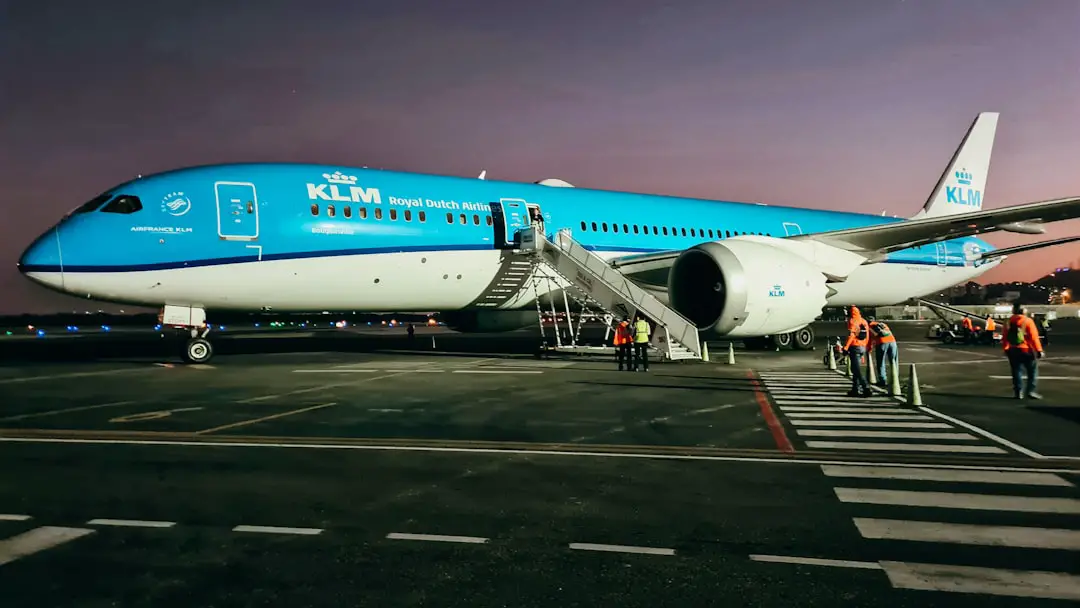
KLM’s summer 2026 schedule covers 164 destinations, including 96 in Europe and 68 intercontinental destinations. Its current fleet includes Airbus A330 and A321neo aircraft, Boeing 737, 777, and 787 aircraft, and Embraer 175, 190, and 195-E2 regional jets.
KLM is gradually replacing older aircraft as part of a major fleet-renewal program. The airline expects its first Airbus A350 at the end of August 2026 and has scheduled its first passenger service to Toronto in September. As of July 24, 2026, the A350 is not yet operating regular KLM passenger flights.
Disclosure: As an Amazon Associate I earn from qualifying purchases. Some links on this page are affiliate links, at no extra cost to you.
KLM’s Safety Record
KLM and its regional subsidiary have not recorded a fatal accident for more than three decades. The most recent was KLM Cityhopper Flight 433, which crashed near Amsterdam Schiphol Airport on April 4, 1994. Three of the 24 people aboard died.
The investigation found that the probable cause was inadequate use of the flight controls during an asymmetric go-around, which led to a loss of control. Contributing factors included limited crew understanding of the Saab 340B engine-oil system, failure to recognize the effect of leaving one engine at flight idle, and poor Crew Resource Management.
This is more accurate than describing the accident simply as the result of a faulty sensor. An oil-pressure warning started the sequence, but the investigation focused mainly on how the aircraft configuration and go-around were managed.
KLM was also involved in the Tenerife airport disaster on March 27, 1977. KLM Flight 4805 collided with Pan Am Flight 1736 on a fog-covered runway, killing 583 people. It remains the deadliest accident in aviation history.
The Tenerife investigation highlighted problems involving cockpit authority, radio communication, ambiguous takeoff language, and confirmation that the runway was clear. The accident became one of the events that accelerated stronger Crew Resource Management training and clearer aviation phraseology.
More than 32 years have passed since the last fatal KLM or KLM Cityhopper accident, but a long fatal-accident-free period does not mean that routine incidents can never occur.
Note: An incident, a nonfatal accident, and a fatal accident are not the same. Airlines report events ranging from minor technical returns to serious accidents. Safety should be judged by the severity of events, regulatory findings, reporting culture, and corrective response, not by the claim that an airline has never had any incident.
What Safety Measures Does KLM Use?
KLM operates under the European Union’s aviation rules, which are developed through the European Union Aviation Safety Agency. The Dutch Inspectie Leefomgeving en Transport, commonly called ILT, is the national authority that issues Dutch Air Operator Certificates and monitors certificate holders.
ILT states that its oversight can include management-system audits, inspections, checks of flight operations, reviews of pilot training, and unannounced ramp inspections. Its published AOC list identifies Koninklijke Luchtvaart Maatschappij N.V. as NL-AOC-3 and KLM Cityhopper B.V. as NL-AOC-2.
KLM is also an IATA member. IATA requires its member airlines to remain registered under the IATA Operational Safety Audit, commonly called IOSA. IOSA evaluates an airline’s operational management and control systems against a common international standard.
Safety Management System: KLM’s 2025 annual report says its Safety Management System covers operational safety, occupational safety, environmental safety, and operational security. It uses reporting, data analysis, hazard identification, risk assessment, and corrective action to manage safety risks.
Just Culture: KLM’s safety policy encourages employees to report errors and unsafe situations so the company can learn from them. A Just Culture does not excuse reckless behavior. Its purpose is to make honest reporting easier while preserving accountability.
Maintenance: AFI KLM Engineering & Maintenance provides services ranging from daily and weekly line checks to scheduled light and heavy maintenance. Its work covers KLM aircraft as well as aircraft operated by outside airline customers.
Pro Tip: Use the official IATA registry and the relevant national aviation authority when checking an airline. A travel blog or star score may offer useful context, but it should not replace regulator and audit information.
Warning: IOSA registration shows that an airline’s systems passed an established audit process. It does not certify that a specific flight will have no mechanical problem, turbulence event, diversion, or other operational incident.
How Does KLM Train Pilots and Maintain Aircraft?
| Training or Maintenance Area | Verified Details |
|---|---|
| Operator Proficiency Check | For commercial air transport, EASA rules generally give an operator proficiency check a validity period of six calendar months. |
| Line Check | Flight crew members complete a line check with a validity period of 12 calendar months. |
| Emergency Equipment | Emergency and safety-equipment training and checking have a 12-month validity period. |
| Crew Resource Management | CRM elements must be integrated into appropriate recurrent training, with major topics covered through modular training. |
| Simulator Facilities | KLM’s training center states that it uses nine full-flight simulators, all certified at EASA Level D and approved for Zero Flight Time Training. |
| Aircraft Maintenance | AFI KLM E&M performs line, light, and heavy maintenance, including daily, weekly, A, C, and D-level work where applicable to the aircraft and maintenance program. |
Level D full-flight simulators reproduce aircraft handling, cockpit systems, visual conditions, and normal and abnormal procedures to a high certification standard. Pilots can practise engine failures, rejected takeoffs, instrument approaches, go-arounds, system faults, severe weather procedures, and crew coordination without exposing passengers or an aircraft to training risk.
Maintenance follows an approved schedule rather than waiting for a visible problem. Inspections, component-life limits, reliability information, engine-health data, technical logs, and manufacturer instructions help determine when work is required. These systems reduce risk, but they do not mean that an unexpected fault can never occur.
How KLM Responds to Safety Incidents
When an aviation event meets the legal reporting or investigation threshold, the responsible national investigation authority determines the cause independently from the airline. KLM may preserve records, provide technical information, support access to the aircraft, interview personnel, and apply safety recommendations or internal corrective actions.
KLM’s annual report describes a safety-governance structure that includes a Safety Review Board, safety-action groups, risk monitoring, occurrence reporting, and corrective strategies. This structure is intended to identify hazards before they become accidents and to learn from events that have already occurred.
The historical lessons from Tenerife and Flight 433 should be kept separate:
- Tenerife: Highlighted authority gradients, communication ambiguity, runway awareness, and the need for stronger cockpit teamwork and standardized phraseology.
- Flight 433: Highlighted aircraft-system understanding, management of asymmetric thrust, go-around control, and weak Crew Resource Management.
A strong safety culture is not one in which nobody reports an error. It is one in which hazards and mistakes are reported, investigated, understood, and corrected before they are repeated.
How Does KLM Compare to Other Airlines on Safety?
AirlineRatings currently gives KLM a 7/7 safety profile. Its displayed factors include IOSA registration, fatal accidents in the previous 10 years, pilot-related incidents, operating standards, and European Union flight-ban status.
That result supports a positive assessment, but it should not be described as proof that KLM is safer than every comparable airline. AirlineRatings’ individual 7/7 profile and its separate annual Top 25 list use different presentations. KLM did not appear in the company’s 2026 Top 25 full-service ranking.
| Safety Signal | KLM Status | What It Means |
|---|---|---|
| Dutch AOC | KLM NL-AOC-3; KLM Cityhopper NL-AOC-2 | ILT recognizes the companies as authorized Dutch commercial air operators subject to continuing oversight. |
| IOSA | Registered status reported; IOSA is required for IATA members | Operational management and control systems are assessed against common audit standards. |
| AirlineRatings | 7/7 | A positive private rating, but not a government certificate or guarantee. |
| Fatal-accident history | No fatal KLM or KLM Cityhopper accident since 1994 | A strong long-term record, while not proving that future risk is zero. |
| Regulatory framework | EASA rules and ILT oversight | Training, operations, maintenance, certification, and reporting must meet European and Dutch requirements. |
The fairest conclusion is that KLM operates within the same mature regulatory system as other major European network airlines and shows several strong safety indicators. Available public evidence does not support claiming that it is definitively safer than every competing carrier.
What Can a Safety Rating Tell You?
A safety rating can summarize selected public information, audit status, accident history, operating standards, and other factors. This makes it useful for a quick comparison.
However, a rating usually cannot show you every audit finding, internal risk report, maintenance action, confidential investigation, or future hazard. Different rating companies may also use different time periods and scoring methods.
Note: A full rating does not mean “accident-proof.” It means the airline met the rating company’s published conditions at the time the profile was assessed.
KLM Mainline vs. KLM Cityhopper
KLM and KLM Cityhopper are closely connected but are not the same operating company. KLM mainline generally operates larger Boeing and Airbus aircraft on European and intercontinental services. KLM Cityhopper operates regional Embraer aircraft on shorter routes.
The Dutch aviation authority lists separate Air Operator Certificates:
- Koninklijke Luchtvaart Maatschappij N.V.: NL-AOC-3
- KLM Cityhopper B.V.: NL-AOC-2
This distinction matters because the 1994 fatal accident involved KLM Cityhopper. When booking, check the “operated by” line to see which company will operate your flight. Both operators remain within the Dutch and European oversight system.
Why Do Passengers Trust KLM?
Passenger confidence is better supported by objective evidence than by general online reviews. Relevant signals include KLM’s long period without a fatal accident, Dutch AOC status, EASA training requirements, IOSA participation, Level D simulator access, maintenance capability, and documented Safety Management System.
KLM also offers sustainable aviation fuel contributions and environmental-impact programs. These programs relate to emissions and environmental policy. They should not be treated as evidence that one airline is operationally safer than another.
How to Check KLM’s Current Safety Status
- Confirm the operating airline. Look for “operated by KLM” or “operated by KLM Cityhopper” in your booking.
- Check the IATA IOSA registry. Search the airline name or ICAO code and confirm that its status is registered.
- Check the ILT AOC list. This confirms whether the Dutch authority recognizes the operator’s certificate.
- Review the EU Air Safety List. This identifies airlines subject to full or partial operating bans within the European Union.
- Read ratings in context. Check the methodology and date instead of relying only on the displayed score.
- Check current travel alerts. Operational disruptions, airspace closures, weather, and security concerns can change quickly.
Pro Tip: Check the operating carrier again after a schedule change. A codeshare ticket may carry a KLM flight number even when another airline operates the aircraft.
What Can You Do to Stay Safer?
The airline controls most operational risks, but your actions can reduce the chance of injury:
- Keep your seat belt fastened whenever you are seated, even when the sign is off.
- Listen to the safety briefing and locate the nearest usable exit.
- Follow cabin-crew instructions during turbulence, an evacuation, or another abnormal event.
- Store heavy items securely and keep aisles and exit areas clear.
- Request mobility, medical, or accessibility assistance before travel when needed.
- Do not open overhead bins or collect baggage during an emergency evacuation.
Is KLM a Safe Airline?
Yes, the available evidence supports describing KLM as a safe airline. Its last fatal accident involving KLM or KLM Cityhopper occurred in 1994. It operates under European and Dutch rules, holds Dutch Air Operator Certificates, participates in the IOSA system, uses recurrent pilot training, and maintains a current 7/7 AirlineRatings profile.
The balanced conclusion is not that KLM is risk-free or unquestionably safer than every rival. It is that its accident history, regulatory status, training framework, maintenance system, and documented safety governance provide a solid basis for passenger confidence.
Frequently Asked Questions
Is KLM a safe airline?
Yes. KLM shows strong public safety indicators, including Dutch and European regulatory oversight, IOSA participation, recurrent pilot training, a documented Safety Management System, a 7/7 AirlineRatings profile, and no fatal KLM or KLM Cityhopper accident since 1994.
What safety measures does KLM have in place?
KLM operates under EASA rules and ILT oversight, uses a Safety Management System and Just Culture policy, participates in IOSA, conducts recurrent crew training, and uses AFI KLM Engineering & Maintenance for services ranging from line checks to heavy maintenance.
When was KLM’s last fatal accident?
The most recent fatal accident involving KLM or KLM Cityhopper was KLM Cityhopper Flight 433 on April 4, 1994. Three people died after the crew lost control during an asymmetric go-around near Amsterdam Schiphol Airport.
Was KLM involved in the Tenerife disaster?
Yes. KLM Flight 4805 collided with Pan Am Flight 1736 at Tenerife on March 27, 1977. The collision killed 583 people and remains the deadliest accident in aviation history.
Is KLM Cityhopper as safe as KLM?
KLM Cityhopper is a separate regional operator with its own Dutch Air Operator Certificate. It operates under the same broader Dutch and European regulatory framework, including ILT oversight and applicable EASA operating and training requirements.
Does KLM’s 7/7 rating mean it is accident-proof?
No. The 7/7 score is a positive private rating based on selected criteria. It does not guarantee that a future flight will have no technical fault, turbulence event, diversion, incident, or accident.
How does KLM compare with other European airlines?
KLM operates within the same mature EASA framework as other major European network airlines and is overseen nationally by ILT. Its long fatal-accident-free period and current 7/7 profile are positive, but public evidence does not justify claiming that it is safer than every competing airline.
Where can I verify KLM’s safety status?
Check the IATA IOSA registry, ILT’s Dutch AOC list, EASA operating rules, the EU Air Safety List, KLM’s annual report, and completed accident-investigation reports. Use private airline ratings as supporting context rather than as your only evidence.
Safety Disclaimer: This article is for general informational purposes and does not provide professional aviation or safety advice. Airline status, routes, operating carriers, airspace conditions, and regulatory information can change. Check current information from KLM, IATA, EASA, ILT, and other relevant authorities before travel.
KLM’s record spans more than a century of operation. Its long period without a fatal accident, continuing regulatory oversight, recurrent training, maintenance structure, and documented risk-management system provide meaningful reasons for confidence. For the most current fleet, operating-carrier, route, and disruption information, check KLM and the relevant regulator directly.
Sources
- KLM Annual Report 2025 — Safety Management System, risk governance, IOSA framework, and corrective-action processes.
- Dutch ILT Air Operator Certificate overview — AOC requirements, audits, inspections, pilot-training checks, and continuing oversight.
- ILT list of Dutch airlines — KLM and KLM Cityhopper Air Operator Certificate numbers.
- IATA Operational Safety Audit — IOSA purpose, audit framework, and IATA membership requirements.
- Netherlands Aviation Safety Board report on Flight 433 — Accident sequence, probable cause, contributing factors, and safety findings.
- FAA Tenerife Lessons Learned — Accident history, investigation findings, fatalities, and resulting aviation-safety lessons.
