
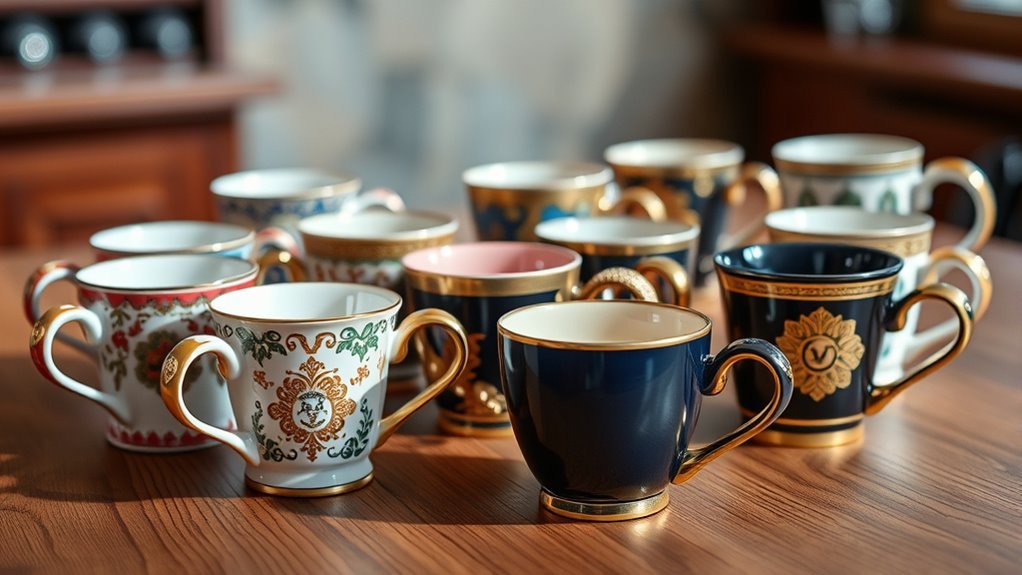
Last Updated on July 28, 2026 by Daniel Globe
If you’re looking to elevate your coffee experience with Italian-made espresso cups, the most important detail is not simply whether the brand is Italian — it is where the specific cup is actually manufactured. Ginori 1735, IPA Porcellane, selected Lavazza sets, and Guzzini offer verifiable Made-in-Italy options, while other famous Italian brands may manufacture individual cup lines elsewhere. Below, you’ll find the best verified choices, what makes an espresso cup perform well, and which popular names require a closer look at country of origin.
Quick Answer
For genuinely Italian-made espresso cups, start with Ginori 1735, IPA Porcellane, selected Lavazza sets produced by IPA, and Guzzini’s Made-in-Italy espresso collections. For traditional espresso service, favor ceramic or porcelain with roughly 50–100 mL capacity and a rounded interior. Italian brands such as Alessi and Bialetti require product-level origin checks.
Key Takeaways
- An Italian brand is not automatically Italian-made. Check the country of manufacture for the exact cup or set.
- The Istituto Espresso Italiano describes an ideal espresso cup as white ceramic with an elliptical shape and a capacity of 50–100 mL.
- Ginori 1735 and IPA Porcellane provide especially clear Made-in-Italy manufacturing information.
- Lavazza currently sells espresso sets made in Italy by IPA Porcellane, while Guzzini offers 50 cc porcelain espresso cups paired with colorful SAN components.
- Thick or thermally stable porcelain and a preheated cup help slow heat loss after extraction.
- Alessi, Pordamsa, KINTO, and Melitta should not be presented as blanket recommendations for shoppers specifically requiring Italian manufacture.
Disclosure: As an Amazon Associate I earn from qualifying purchases. Some links on this page are affiliate links, at no extra cost to you.
Why Choose Italian-Made Espresso Cups?
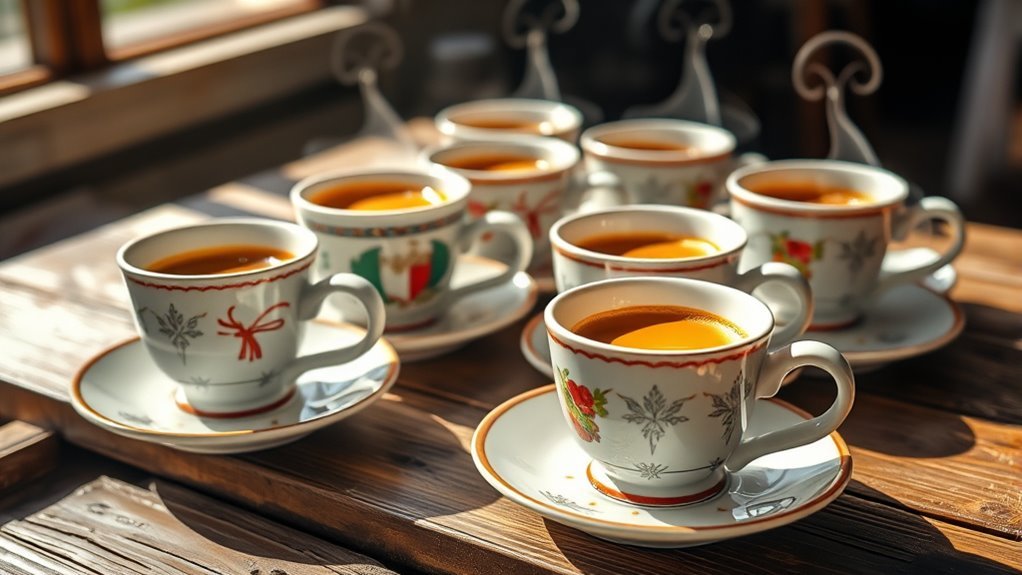
When you choose a genuinely Italian-made espresso cup, you’re buying into a manufacturing tradition closely tied to Italy’s café culture. The value is not simply the country name on the box. Established Italian porcelain makers have spent decades refining cup thickness, glaze, durability, and interior geometry for commercial coffee service.
The Istituto Espresso Italiano describes certified Italian espresso as about 25 mL of coffee in the cup. Its technical guidance describes the ideal vessel as white ceramic, free of interior decoration, elliptical in shape, and holding about 50–100 mL.
That distinction matters: the espresso itself is much smaller than the cup’s maximum capacity. The extra room provides space for the crema and makes the cup easier to handle without turning it into a full-size coffee mug.
Manufacturers such as IPA Porcellane specialize specifically in professional coffee porcelain. IPA states that its cups are made in Italy, fired at high temperature, and designed with thermal performance and an egg-shaped inner base that supports the coffee’s crema.
For traditional Italian espresso service, think 25 mL of coffee served in a ceramic cup with roughly 50–100 mL of total capacity — not a cup filled to the rim.
Key Features of High-Quality Espresso Cups
High-quality espresso cups combine thermal stability, useful geometry, durability, and comfortable handling. You do not need an expensive collector’s piece to get these basics right.
- Capacity: The Istituto Espresso Italiano’s traditional specification is 50–100 mL, or roughly 1.7–3.4 US fluid ounces. Many home espresso cups fall near the middle of that range.
- Material: Porcelain and ceramic are the traditional choices because they are durable, comfortable to drink from, and can offer good thermal stability. Double-wall glass is a modern alternative but is not the traditional IEI specification.
- Wall thickness: A thermally stable cup slows the rapid cooling that happens when hot espresso contacts a cold vessel.
- Interior profile: A rounded or egg-shaped base helps the espresso collect naturally and supports the visual presentation of the crema.
- Rim: A smooth, even rim makes sipping more comfortable and is one sign of good finishing.
- Handle: It should give your fingers enough clearance from the hot body of the cup.
Pro Tip: Preheat a porcelain espresso cup with hot water or on your machine’s cup warmer before pulling the shot. Illy’s own machine guidance recommends warming thick espresso cups so they do not pull heat away from the coffee immediately after extraction.
Verified Italian-Made Espresso Cups at a Glance
The following options have the strongest product- or manufacturer-level evidence for Italian production. Availability and individual collections can change, so origin should still be checked when ordering.
| Brand / Maker | Made-in-Italy Evidence | Best For |
| IPA Porcellane | Manufacturer states Made in Italy since 1955 | Traditional café-style and professional cups |
| Ginori 1735 | Current espresso products explicitly list Made in Italy | Luxury porcelain and collectors |
| Lavazza | Selected current sets list IPA Porcellane as producer and Italy as origin | Recognizable Italian coffee branding |
| Guzzini | Italian brand with Made-in-Italy Everyday espresso sets available | Colorful modern everyday use |
| Illy | IPA documents work on the Illy Art Collection; verify individual current sets | Art collections and iconic café styling |
Note: “Italian company,” “designed in Italy,” and “Made in Italy” are three different claims. For strict country-of-origin shopping, use the manufacturer field on the exact product page rather than relying on the brand’s nationality.
The Importance of Craftsmanship in Espresso Cups
Craftsmanship affects more than appearance. On a cup used every day, small details influence durability and the sensory experience of drinking espresso.
- Even glazing and smooth rims improve comfort and make the cup easier to clean.
- Thermally stable porcelain helps slow heat loss.
- A rounded interior gives espresso fewer sharp corners in which liquid and crema can collect unevenly.
- A well-proportioned handle keeps fingers away from the hot cup body.
- Consistent dimensions matter if you want to stack cups or fit them beneath a compact espresso machine.
Italian manufacturer IPA Porcellane is a useful example because it focuses specifically on professional coffee cups rather than general tableware. The company says its porcelain is fired at 1400°C and describes thermal properties, glaze, low porosity, and an egg-shaped base as functional parts of the cup design.
Illy: The Icon of Italian Espresso Culture
Illy is one of the most recognizable names in Italian espresso culture. Its classic porcelain espresso cup was created by designer Matteo Thun, and the company has used that form as the canvas for its long-running Illy Art Collection.
Illy’s Espresso Craftsmanship
Illy does not manufacture every cup itself. Instead, it works with specialist producers. Importantly, IPA Porcellane publicly lists the Illy Art Collection among its case histories, providing direct evidence that at least part of Illy’s cup production has involved an Italian porcelain manufacturer.
- The iconic espresso form is associated with architect and designer Matteo Thun.
- Current Illy logo espresso cups are porcelain and commonly sold in approximately 3-ounce formats.
- Illy Art Collection cups turn the same basic vessel into limited-edition artist pieces.
- Thick espresso cups can help slow cooling when they are properly preheated.
- Country of manufacture should still be checked for the exact collection because supplier and production details can vary.
Illy’s Art Collection
Illy’s Art Collection, launched in 1992, turns the company’s espresso cup into a canvas for contemporary artists. The series has included more than 100 artists over its lifetime and connects everyday coffee service with broader Italian design and art culture.
For buyers, the appeal is different from a plain café cup. An Illy Art Collection set can function as both practical drinkware and a collectible design object. For a strict Made-in-Italy purchase, however, verify the production information attached to the individual collection rather than assuming every Illy cup has the same origin.
Bialetti: Italian Heritage, but Check Cup Origin
Bialetti is unquestionably an Italian coffee brand, but brand nationality and product origin should not be treated as the same thing. Its history is deeply Italian; the exact manufacturing origin of individual accessories can vary.
Timeless Italian Coffee Heritage
According to Bialetti’s official history, Alfonso Bialetti opened his aluminum workshop in Crusinallo in 1919. In 1933, he introduced the Moka Express, which went on to become one of the most recognizable products in Italian coffee culture.
- Founded in Crusinallo, Italy, in 1919
- Moka Express introduced in 1933
- Distinctive design language associated with Italian home coffee
- Wide range of cups and accessories sold alongside moka pots and espresso equipment
- Country of manufacture should be verified on the exact cup set before buying if Made in Italy is essential
Common Bialetti Cup Features
Bialetti cup collections vary, so material and construction should be checked product by product. Depending on the range, shoppers may encounter ceramic, porcelain, glass, or double-wall designs.
| Feature | What to Check |
|---|---|
| Ergonomic Shaping | Enough finger clearance for comfortable everyday use |
| Double-Wall Options | Useful insulation in glass designs |
| Classic Motifs | Brand graphics and shapes inspired by Bialetti’s Italian coffee heritage |
| Country of Origin | Verify the exact product rather than assuming Italian manufacture |
Guzzini: Colorful Made-in-Italy Espresso Sets
Guzzini is a strong choice for shoppers who want Italian manufacture with a more colorful, contemporary look. Its current Everyday espresso set combines a porcelain drinking cup with SAN plastic components, rather than using an all-plastic cup.
The current Everyday cup is listed at 50 cc, placing it at the lower end of the Istituto Espresso Italiano’s 50–100 mL traditional cup-capacity range.
- Porcelain Cup: Gives the drinking surface a more traditional ceramic feel.
- Colorful SAN Components: Add Guzzini’s distinctive modern styling.
- 50 cc Capacity: Compact sizing suited to a traditional espresso.
- BPA-Free: The manufacturer identifies the relevant plastic material as BPA-free.
- Dishwasher-Safe: Designed for convenient daily cleaning.
Guzzini is a good fit when you want Made-in-Italy styling without the formal look or price of luxury porcelain.
Alessi: Italian Design, but Not Necessarily Made in Italy
Alessi belongs in a discussion of Italian design, but it should not be described as a blanket Made-in-Italy espresso-cup recommendation. Alessi’s own product listings explain that its products are designed, developed, and quality-controlled in Italy while selected manufacturing is entrusted to international partners.
Design Aesthetics and Innovation
Alessi is particularly strong if your priority is industrial design. Its coffee ware includes work by major designers and architects, with shapes intended to be useful objects as well as visual statements.
- Collaborations with internationally recognized designers
- Minimalist and sculptural cup shapes
- Porcelain used across many coffee-cup collections
- Dishwasher- and microwave-safe options
- Country of manufacture disclosed on individual official product pages
Quality and Country of Manufacture
The key distinction is origin. For example, Alessi currently lists its 2026 La Bella Tavola mocha cup as made in Germany, the KU mocha cup as made in Poland, and PlateBowlCup as made in Turkey. Other collections can have still different origins.
That does not make them poor cups. It simply means “Alessi” should be treated as shorthand for Italian design rather than proof that a specific espresso cup was manufactured in Italy.
Functional Espresso Experience
Alessi can still be an excellent choice when design takes priority over country of manufacture.
- Durable Materials: Porcelain is widely used across the coffee collection.
- Distinctive Shapes: Many cups emphasize restrained or sculptural industrial design.
- Designer Collaborations: Pieces often function as small design objects.
- Practical Care: Many current porcelain lines are dishwasher-safe.
- Origin Transparency: Official product pages make it possible to check where each item is made.
Richard Ginori (Now Ginori 1735): Luxury Made-in-Italy Porcelain
For luxury Italian-made porcelain, Ginori 1735 is one of the strongest fits in this guide. Marquis Carlo Andrea Ginori founded the porcelain manufactory in Doccia near Florence in 1735. The company later became Richard Ginori and changed its name to Ginori 1735 in 2020.
Ginori joined the Kering group in 2013. Its official site continues to identify porcelain production with its Italian manufactory, and current espresso-cup listings explicitly state Made in Italy.
For example, the current Florenza espresso cup is made from pure porcelain, decorated by hand, and measures approximately 2.82 fl oz — a practical size for espresso while still giving the drink room above its typical 25 mL serving volume.
Decorative collections range from restrained white porcelain to floral, colored, and gold-finished designs. For collectors or buyers who care as much about heritage and table presentation as heat retention, Ginori 1735 is one of the clearest premium choices.
Sambonet: Italian Company, but Check the Brand on the Cup
Sambonet has genuine Italian manufacturing heritage dating to 1856, particularly in flatware and holloware. The complication for espresso-cup shoppers is that porcelain coffee sets on Sambonet’s current store are often sold under other brands within the same group.
A Storied Design Heritage
Sambonet remains an important Italian tableware company, but its current coffee-cup category includes porcelain sets under the Arthur Krupp name. Sambonet itself describes Arthur Krupp porcelain as made in Germany.
- Italian Company: Sambonet itself has roots in Italy dating to 1856.
- Broad Tableware Group: Its family includes brands such as Arthur Krupp and Rosenthal.
- Porcelain Origin Varies: Do not assume a coffee set sold on the Sambonet store is Sambonet-branded or Made in Italy.
- Strong Metalware Expertise: Sambonet remains especially well known for stainless-steel and silver-plated table service.
- Product-Level Verification: Check the actual brand and origin before treating a set as Italian-made.
Elegant Design Aesthetics
Sambonet remains relevant for building a coordinated Italian-style coffee service, especially if you want matching metal accessories, trays, spoons, or coffee pots. For the porcelain cup itself, however, a shopper specifically seeking Italian manufacture will get a clearer country-of-origin match from Ginori 1735, IPA Porcellane, or a verified Lavazza set.
Lavazza: Verified Italian-Made Espresso Sets
Lavazza is one of the easiest mainstream coffee brands to verify at the product level. Its current Tablì espresso cups are described as designed and manufactured in Italy, while selected limited-edition espresso sets identify IPA Porcellane as the producer and Italy as the country of manufacture.
- Made in Italy: Explicitly stated on selected current Lavazza cup pages.
- IPA Production: Current limited-edition sets identify the specialist Italian porcelain maker.
- Porcelain Construction: Appropriate for traditional espresso service.
- Dishwasher-Safe Options: Practical for routine home use.
- Recognizable Branding: A good fit for buyers who want café-style Italian coffee branding without moving into luxury porcelain.
For a shopper who wants both an established Italian coffee name and verifiable Italian manufacturing, Lavazza is a stronger recommendation than assuming every accessory from every Italian brand is domestically produced.
Pordamsa: Stylish Porcelain, but Made in Spain
Pordamsa makes imaginative porcelain tableware, but it does not meet a strict Italian-made requirement. Its own corporate material lists its manufacturing facilities, offices, and showroom in La Bisbal, Girona, Spain.
The brand remains relevant as an alternative for shoppers who care more about sculptural European porcelain than Italian origin.
| Feature | Details |
|---|---|
| Material | Porcelain across many tableware collections |
| Company Location | La Bisbal, Girona, Spain |
| Aesthetic Style | Sculptural and contemporary |
| Italian-Made? | No — treat Pordamsa as a Spanish alternative |
Kinto: Japanese Minimalism, Not Italian-Made
KINTO makes attractive minimalist coffee and drinkware, but it does not have Italian roots. The company states that it was founded in Hikone, Shiga Prefecture, Japan, in 1972.
KINTO can still be a good alternative if you prefer contemporary Japanese design. Depending on the collection, its drinkware may offer:
- Double-wall glass construction
- Clean, minimalist silhouettes
- Ergonomic handles
- Durable everyday materials
- Modern coffee-focused design
For this article’s core search intent, however, KINTO should be considered an international alternative rather than an Italian-made espresso-cup recommendation.
Melitta: German Coffee Heritage, Not Italian-Made
Melitta has deep coffee-industry heritage, but it is a German company rather than an Italian espresso-cup maker. Melitta traces its business to Melitta Bentz’s filter invention in 1908, and the group is headquartered in Minden, Germany.
Melitta drinkware may still appeal to buyers looking for practical everyday coffee accessories, but it should not be included among verified Italian-made cups without product-specific evidence showing Italian manufacture.
For shoppers whose main requirement is origin, this is the simplest rule: choose Melitta for its German coffee heritage, not as a substitute for a Made-in-Italy porcelain specialist.
How to Tell Whether an Espresso Cup Is Really Made in Italy
Country-of-origin shopping becomes much easier when you ignore brand assumptions and check the actual item.
- Read the product specification: Look for “Made in Italy,” “Country of origin: Italy,” or equivalent wording attached to the exact SKU.
- Check the manufacturer: A product may carry a famous coffee logo but be produced by a specialist such as IPA Porcellane.
- Do not rely on “designed in Italy”: That describes design activity, not necessarily manufacturing.
- Check each collection separately: A single brand can source porcelain from several countries.
- Prefer primary sources: Manufacturer product pages are stronger evidence than marketplace titles or reseller descriptions.
Warning: Do not assume an Italian flag, Italian brand name, or phrases such as “Italian style” and “Italian design” mean the cup was manufactured in Italy. Check the exact item’s country-of-origin information.
Final Thoughts on Choosing the Best Italian Espresso Cups
Choosing the right Italian espresso cup starts with deciding whether you care most about actual Italian manufacture, classic café performance, luxury decoration, or modern design.
For the clearest Made-in-Italy choices, IPA Porcellane stands out for professional coffee porcelain, Ginori 1735 for luxury craftsmanship, Lavazza for recognizable branded sets with verified Italian production, and Guzzini for colorful everyday designs.
Illy is an important part of Italian espresso culture and has documented ties to IPA, but individual collections should still be verified. Bialetti is another authentic Italian coffee brand whose accessories require product-level origin checks. Alessi is a major Italian design name, yet current porcelain cup manufacturing spans several countries.
For the cup itself, concentrate on what affects the drink: ceramic or porcelain construction, useful thermal mass, a smooth rim, a rounded inner shape, and enough capacity for a roughly 25 mL espresso plus its crema. The traditional IEI range of 50–100 mL is a better guide than treating one exact ounce figure as mandatory.
Note: Dishwasher instructions vary by collection. Plain commercial porcelain is often dishwasher-safe, while hand-painted, gold-finished, or other decorated luxury pieces should be cleaned according to the manufacturer’s instructions. Ginori 1735, for example, provides care guidance for each specific collection.
Frequently Asked Questions
What are the best Italian-made espresso cups?
Strong verified choices include IPA Porcellane for professional café-style cups, Ginori 1735 for luxury porcelain, selected Lavazza sets manufactured by IPA, and Made-in-Italy Guzzini collections. For brands with international sourcing, check the country of manufacture for the exact product.
What cups do Italians use for espresso?
Traditional Italian espresso is commonly served in a small ceramic or porcelain cup. The Istituto Espresso Italiano describes an ideal white ceramic cup with an elliptical shape and 50–100 mL capacity, holding about 25 mL of prepared espresso.
What size cup is best for espresso?
A cup around 50–100 mL, or roughly 1.7–3.4 US fluid ounces, fits traditional Italian guidance. The espresso itself is much smaller — around 25 mL in the IEI specification — so the remaining space accommodates crema and makes the cup easier to use.
Is Alessi made in Italy?
Alessi is an Italian design company, but not every Alessi product is manufactured in Italy. Current official espresso and mocha-cup listings show production in countries including Germany, Poland, and Turkey. Check the “Made in” field for the specific collection you are buying.
What is the best Italian espresso machine brand?
Well-known Italian espresso-machine manufacturers include La Marzocco, Rancilio, Gaggia, and others. The best choice depends on budget, boiler design, workflow, service availability, and whether you want a prosumer or commercial machine; machine brand does not determine which espresso cup you need.
Which Italian coffee brand is the best?
There is no universal winner because roast preference matters. Illy, Lavazza, and other Italian roasters offer different flavor profiles. For espresso cups specifically, evaluate the cup’s material, capacity, shape, manufacturer, and country of origin separately from the coffee brand printed on it.
Conclusion
Choosing the right Italian-made espresso cup is easier once you separate Italian branding from actual manufacturing origin. Ginori 1735, IPA Porcellane, selected Lavazza sets, and Made-in-Italy Guzzini collections provide the clearest verified options in this group.
Beyond origin, the practical details matter most: ceramic or porcelain construction, good thermal stability, a rounded interior, a comfortable rim and handle, and roughly 50–100 mL of capacity for traditional espresso service. Preheat the cup, pull your shot, and let the vessel support the coffee rather than distract from it.
Sources
- Istituto Espresso Italiano — Certified Italian Espresso — espresso serving volume and certified espresso characteristics
- IPA Porcellane — Made-in-Italy porcelain production, thermal properties, cup geometry, and Illy Art Collection case history
- Ginori 1735 — Our History — founding history, manufacturing heritage, and 2020 brand transition
- Ginori 1735 — Florenza Espresso Cup — Made-in-Italy origin, porcelain material, capacity, and care information
- Lavazza — Espresso Set — IPA Porcellane production and Made-in-Italy origin
- Bialetti — Our History — 1919 founding and 1933 Moka Express history
