
Last Updated on July 23, 2026 by Daniel Globe
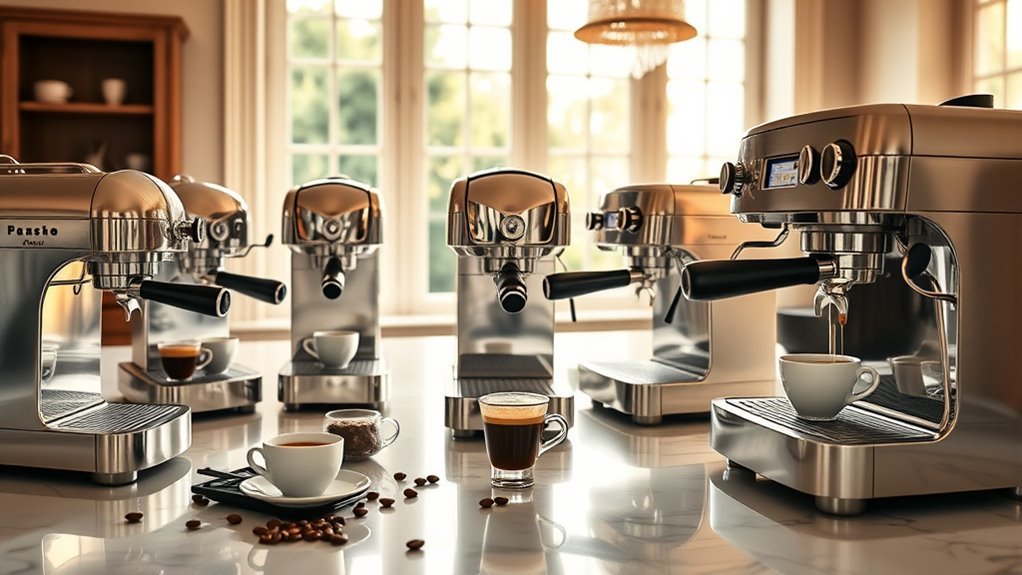
The best Italian coffee machine brands include De’Longhi, Gaggia, Rancilio, La Pavoni, Rocket Espresso, Lelit, Nuova Simonelli, SMEG, Bialetti, and Faema. Each brand suits a different type of coffee drinker, from beginners who want one-touch drinks to experienced home baristas who want to control temperature, pressure, grinding, and milk texture. The right choice depends more on your preferred workflow than on the logo alone.
Quick Answer
The best Italian coffee machine brand depends on how you brew. Choose De’Longhi for one-touch convenience, Gaggia or Rancilio for learning espresso, La Pavoni for true lever control, Rocket or Lelit for prosumer performance, Nuova Simonelli or Faema for commercial heritage, SMEG for design, and Bialetti for stovetop coffee.
Key Takeaways
- De’Longhi is usually the easiest starting point if you want automatic grinding, dosing, brewing, and milk preparation.
- Gaggia, Rancilio, La Pavoni, Rocket, and Lelit provide more hands-on control, but they also demand a capable grinder and more practice.
- An Italian brand name does not guarantee that every model is assembled in Italy. Check the exact model, manufacturing label, voltage, and warranty for your market.
- Water quality, cleaning, replacement parts, and local repair support can matter as much as the machine’s headline features.
Disclosure: As an Amazon Associate I earn from qualifying purchases. Some links on this page are affiliate links, at no extra cost to you.
What Makes Italian Coffee Machine Brands Special
Italian manufacturers have played a major role in espresso-machine development. Angelo Moriondo patented an early steam-driven machine in the nineteenth century, Luigi Bezzera developed a faster brewing system, Desiderio Pavoni helped commercialize it, and Achille Gaggia’s 1938 pressure-based system helped shape modern espresso with crema. You can read more about that development in Gaggia’s official history.
Heritage alone does not make every Italian machine the right choice. Modern brands now cover very different products, including manual lever machines, compact single-boiler machines, heat-exchanger machines, dual-boiler machines, super-automatic systems, and stovetop moka pots. Build quality, temperature management, repair access, and usability can also vary greatly between models from the same company.
Note: “Italian brand,” “designed in Italy,” and “made in Italy” do not always mean the same thing. Check the exact model’s identification plate and official product page if country of manufacture is important to you.
Best Italian Coffee Machine Brands by Use Case
This comparison considers each brand’s current product range, ease of use, brewing control, milk-drink workflow, maintenance needs, service support, and suitability for home or commercial use. It does not assume that one brand is best for every buyer.
| Brand | Best For | Common Machine Type | Main Trade-off |
|---|---|---|---|
| De’Longhi | Convenient everyday drinks | Super-automatic and assisted manual | Less direct control on automatic models |
| Gaggia | Learning traditional espresso | Single-boiler semi-automatic | Brewing and steaming require practice |
| Rancilio | Durability and skill development | Single-boiler and dual-boiler semi-automatic | Higher learning curve and setup cost |
| La Pavoni | Manual lever enthusiasts | Direct manual lever | Steep technique and temperature-learning curve |
| Rocket Espresso | Premium prosumer setups and milk drinks | Heat-exchanger and dual-boiler semi-automatic | Higher price and longer warm-up on many models |
| Lelit | Compact prosumer control | Heat-exchanger and dual-boiler semi-automatic | Features and controls vary sharply by model |
| Nuova Simonelli | Strong steaming and commercial-style workflow | Prosumer and commercial semi-automatic | Home models may be larger and more utilitarian |
| SMEG | Design-focused kitchens | Thermoblock manual and automatic machines | Specifications differ widely across the range |
| Bialetti | Affordable stovetop coffee | Moka pot | Produces moka coffee, not true pump espresso |
| Faema | Commercial heritage and statement machines | Commercial and premium home machines | Cost, size, power needs, and maintenance |
De’Longhi: Best for Easy Everyday Brewing
De’Longhi is a strong choice if you want fresh coffee without manually controlling every step. The company has industrial roots in the early twentieth century, but its official history places its entry into pump espresso machines in 1993 and the launch of the Magnifica super-automatic line in 2003.
Current machines such as the Magnifica Start combine a built-in grinder with automatic dosing and brewing. Depending on the version, you may also get an automatic milk carafe or a manual steam wand. This makes De’Longhi particularly useful for households where several people want different drinks without learning a full barista workflow.
- Best strength: Convenient bean-to-cup drinks and straightforward cleaning programs.
- Good fit: Beginners, busy households, offices, and people who value consistency over manual experimentation.
- Main drawback: Automatic brew groups and milk systems contain more moving parts and offer less direct control than a traditional portafilter machine.
De’Longhi also sells assisted manual machines, including the La Specialista range. These provide more involvement than a super-automatic machine but still simplify grinding, dosing, or tamping.
Gaggia and Rancilio: Classic Espresso Favorites
Gaggia and Rancilio are two of the most familiar Italian names for traditional home espresso. Both let you control the grind, dose, tamp, extraction, and milk texture. Neither removes the need for practice or a suitable espresso grinder.
Gaggia’s Home Espresso Legacy
Gaggia’s modern espresso story reaches back to Achille Gaggia’s 1938 patent for a hot-water pressure system that helped produce espresso with natural crema. The brand later introduced commercial and home machines that made this style of extraction more widely available.
The current Gaggia Classic E24 uses a 58 mm stainless-steel filter holder, a lead-free brass group and boiler, a professional steam wand, a three-way solenoid valve, and a 2.1-liter water tank. Model names and included baskets can differ by country.
- Choose Gaggia if: You want a compact, traditional machine with a large user community and a clear path for learning espresso.
- Consider the limitation: The Classic E24 is a single-boiler machine, so it cannot brew and steam at the same time.
- Plan for: A proper grinder, a scale, regular descaling, and practice with temperature and milk steaming.
Rancilio Silvia’s Enduring Appeal
Rancilio introduced the original Silvia in 1997. It became popular for its sturdy construction, simple controls, brass brewing components, and commercial-style workflow. The standard Silvia remains a hands-on single-boiler machine, while the Silvia Pro X moves into the prosumer category.
The Silvia Pro X has separate coffee and steam boilers, two PID temperature controllers, a digital display, a shot timer, soft infusion, a pressure gauge for the coffee boiler, and a built-in 2-liter reservoir. This allows you to brew and steam without waiting for one boiler to change temperature.
- Choose the standard Silvia if: You value a simple machine and are willing to learn temperature management.
- Choose the Silvia Pro X if: You regularly make milk drinks and want dual-boiler temperature control.
- Consider the limitation: Rancilio’s traditional workflow is less forgiving than a one-touch machine, and the Pro X requires a much larger total budget.
La Pavoni and Rocket: Best for Hands-On Espresso
La Pavoni and Rocket both appeal to coffee drinkers who want to participate in the brewing process, but the machines work differently. La Pavoni is known for true manual lever machines. Rocket’s popular home machines use electric pumps and semi-automatic brew controls.
Manual Lever vs. Semi-Automatic Control
The La Pavoni Professional Lusso uses a hand-operated lever. You raise the lever to fill the brew chamber and lower it to create extraction pressure. Your grind, dose, lever speed, and machine temperature directly affect the result.
The Rocket Appartamento TCA is not a manual-pressure lever machine. Its front lever activates an electric pump and controls the brew cycle. It uses a heat-exchanger system, allowing you to brew espresso and steam milk during the same session.
Steam and Pressure Control
La Pavoni’s Professional model has a 1.6-liter boiler and a boiler-pressure gauge. The gauge helps you monitor the boiler’s operating state, but it does not directly show pressure at the coffee puck. Brew pressure is created by your movement of the lever.
The Rocket Appartamento TCA focuses on semi-automatic consistency and steam capacity. Its temperature-control adjustment changes boiler-temperature behavior, but the standard machine should not be described as a pressure-profiling machine.
Skill-Focused Brewing Experience
- La Pavoni: Best for someone who enjoys a compact machine, a traditional ritual, and direct manual feedback.
- Rocket Espresso: Better for frequent cappuccinos, lattes, and multiple drinks where steam performance and workflow matter.
- Both: Require an espresso-capable grinder, fresh beans, correct water, regular cleaning, and time to develop repeatable technique.
Warning: Lever groups, boilers, steam wands, and exposed metal surfaces can become extremely hot. Never open a pressurized boiler cap, and always follow the manufacturer’s cooling, filling, and maintenance instructions.
Lelit and Nuova Simonelli: Best for Prosumers
Lelit and Nuova Simonelli suit buyers who want stronger temperature management, steam performance, and home-barista control than most entry-level machines provide.
The Lelit MaraX is a compact heat-exchanger machine with a 1.8-liter stainless-steel boiler, a 58 mm portafilter system, and temperature-management features designed to make heat-exchanger brewing easier at home. Its quiet pump and narrow body are useful when counter space is limited.
Nuova Simonelli has produced espresso machines since 1936 and is strongly associated with commercial equipment. The Oscar II brings a heat-exchanger boiler, programmable dosing, and strong steam output to a smaller machine. It is better suited to experienced home users or a modest office than to a high-volume café.
- Choose Lelit if: You want a compact prosumer machine with detailed controls and a broad home-machine range.
- Choose Nuova Simonelli if: Steam strength and a commercial-style workflow matter more than decorative styling.
- For a busy café: Select a purpose-built commercial machine with the correct group count, electrical supply, water connection, service plan, and daily capacity.
SMEG: Best for Style and Simple Espresso
SMEG is known for appliances that combine bold styling with accessible controls. However, you should compare individual models rather than assume every SMEG coffee machine uses the same brewing system.
The SMEG EGF03 is the model that supports the strongest home-barista comparison. It includes an integrated conical-burr grinder, a 58 mm portafilter, adjustable temperature and pre-infusion settings, a pressure gauge, and separate thermoblock heating circuits for brewing and steam.
- Best strength: A coordinated grinder-and-machine setup in a distinctive design.
- Good fit: Buyers who want more involvement than a fully automatic machine without purchasing a separate grinder immediately.
- Main drawback: The integrated grinder ties the grinder and brewer into one appliance. An owner who later wants a major grinder upgrade may still need another machine on the counter.
Note: Do not choose an espresso machine only because it advertises a 15-bar or 20-bar pump. The maximum pump rating does not by itself determine cup quality. Grind consistency, water temperature, flow, dose, and coffee freshness are more useful buying considerations.
Bialetti: Best for Stovetop Coffee
Bialetti’s Moka Express is one of Italy’s most recognizable coffee makers. The official Bialetti history dates the Moka Express to 1933, when Alfonso Bialetti introduced the octagonal stovetop brewer.
A moka pot pushes heated water through ground coffee using steam-generated pressure. It produces concentrated, aromatic coffee, but it does not reach the brewing pressure or cup style of a pump espresso machine. Calling it “espresso-like” is more accurate than calling it true espresso.
Stovetop Brewing Tradition
- Choose a size that matches the amount you normally serve because a moka pot is designed to brew its intended capacity.
- Use a grind finer than ordinary drip coffee but generally coarser than pump-espresso grind.
- Keep the heat controlled and remove the pot when brewing is nearly complete to reduce harsh, overheated flavors.
Bialetti sells aluminum and stainless-steel models. Stove compatibility varies, especially with induction cooktops, so check the exact product before buying.
Moka Pot Performance
A moka pot is affordable, portable, and easier to store than an electric espresso machine. It also requires no grinder capable of creating the extremely fine and tightly controlled grind used for pump espresso. However, it cannot steam milk, regulate brew temperature precisely, or produce café-style espresso pressure.
Follow the cleaning directions for your exact model. Avoid putting aluminum parts in a dishwasher unless the manufacturer specifically approves it, and replace the gasket or filter when it becomes worn or damaged.
Faema: Best for Commercial Heritage
Faema is a verified Italian espresso-machine manufacturer with a history beginning in Milan in 1945. The brand is closely connected with professional café equipment and the historic E61 machine introduced in 1961. You can review its current positioning and company history on Faema’s official website.
Faema is not the most practical starting point for an average beginner. Many of its best-known machines are large, powerful, expensive, and intended for professional service. The company also offers selected home-oriented machines, but buyers still need to check electrical requirements, dimensions, warm-up demands, installation, and local technician support.
- Best strength: Deep commercial heritage and professional workflow.
- Good fit: Cafés, hospitality businesses, collectors, and buyers building a premium statement setup.
- Main drawback: Higher ownership costs, larger dimensions, and more demanding maintenance than ordinary home appliances.
Best Italian Coffee Machines for Beginners
The best beginner machine depends on how much work you want to do.
- De’Longhi Magnifica Start: Best for one-touch grinding and brewing with minimal technique.
- De’Longhi Stilosa or another entry manual model: Best for a small budget and basic portafilter practice.
- Gaggia Classic E24: Best for someone who wants to learn traditional espresso and is ready to buy a separate grinder.
- SMEG EGF03: Best for a coordinated machine-and-grinder setup with a design-led appearance.
- Bialetti Moka Express: Best for strong stovetop coffee without the cost or maintenance of an espresso machine.
The La Pavoni Professional, Rancilio Silvia, Rocket Appartamento TCA, and Lelit MaraX can all produce rewarding coffee, but they are easier to appreciate after you understand grind adjustment, dosing, milk texture, water quality, and machine cleaning.
How to Choose the Right Italian Coffee Machine
Choose Your Brewing Workflow
- Manual lever: Maximum physical control and the steepest learning curve.
- Semi-automatic: You grind, dose, tamp, start, and stop the shot.
- Automatic volumetric: You prepare the coffee puck, but the machine can stop at a programmed water volume.
- Super-automatic: The machine grinds, doses, brews, and often prepares milk drinks.
- Moka pot: A simple stovetop method for concentrated coffee rather than pump espresso.
Budget for the Grinder
A traditional espresso machine cannot correct an uneven or poorly adjusted grind. A capable burr grinder should make fine, repeatable adjustments and produce a consistent dose. Super-automatic machines and integrated-grinder models include a grinder, but their adjustment range and upgrade options may be more limited.
Pro Tip: When buying a semi-automatic or lever machine, reserve a meaningful part of your total setup budget for the grinder, scale, tamper, milk pitcher, cleaning products, and suitable water.
Compare Heating Systems
- Single boiler: Compact and affordable, but you normally wait when switching between brewing and steaming.
- Heat exchanger: Supports brewing and steaming in the same session, but temperature management may require practice.
- Dual boiler: Uses separate boilers for espresso and steam, giving better control at a higher cost.
- Thermoblock: Heats quickly and works well for convenient daily use, although performance depends on the specific design.
Measure Space and Warm-up Needs
Check the machine’s width, depth, height, top-filling clearance, and access to the water tank. Traditional group heads and larger boilers may need more warm-up time than compact thermoblock machines. A machine that is inconvenient to fill or too slow for your morning routine may go unused, even if it produces excellent espresso.
Check Water and Maintenance Requirements
Mineral scale can reduce heating performance and damage valves or boilers. Follow the manufacturer’s water-hardness and descaling guidance. Depending on the machine, routine care may include wiping and purging the steam wand, rinsing the group, backflushing, washing milk components, emptying the drip tray, replacing water filters, and arranging professional service.
Verify Service, Warranty, and Voltage
Before purchasing, confirm that the exact model is supported in your country. Check voltage, plug type, warranty terms, authorized repair centers, replacement-part availability, and whether the seller is an approved dealer. Importing a machine designed for another electrical system can create safety, performance, and warranty problems.
Frequently Asked Questions
What Is the Best Italian Coffee Machine for Home Use?
There is no single best machine for every home. De’Longhi is a strong choice for automatic convenience, Gaggia suits beginners who want to learn traditional espresso, Rancilio and Lelit provide room to develop advanced skills, and Rocket works well for premium milk-drink setups. Your grinder, drink preferences, available space, and maintenance tolerance should decide the winner.
What Is the Most Famous Coffee Maker in Italy?
The Bialetti Moka Express is among the most recognizable Italian household coffee makers. It was introduced in 1933 and makes concentrated stovetop coffee. It does not produce the same pressure or cup profile as a pump espresso machine.
What Are the Top Italian Coffee Machine Brands?
Leading Italian coffee machine brands include De’Longhi, Gaggia, Rancilio, La Pavoni, Rocket Espresso, Lelit, Nuova Simonelli, SMEG, Bialetti, and Faema. Other respected Italian manufacturers also exist, especially in the commercial and prosumer markets.
What Brand Makes the Best Commercial Coffee Machines?
Nuova Simonelli and Faema are both established commercial-machine brands, while Rancilio also has a broad professional range. The correct commercial machine depends on expected drinks per hour, group count, steam demand, electrical supply, water treatment, technician availability, and staff training.
Are Italian Coffee Machine Brands Always Made in Italy?
No. An Italian company may design products in Italy while manufacturing different models or components in several countries. Some brands also produce certain ranges in Italy and others elsewhere. Check the exact model’s official specifications, product label, and packaging instead of relying only on the brand’s origin.
Do I Need a Separate Grinder for an Espresso Machine?
You need a separate grinder for most traditional semi-automatic and lever machines unless the machine includes one. The grinder should provide consistent grounds and fine adjustment. Super-automatic machines and models such as the SMEG EGF03 include a grinder, but an external grinder gives you more freedom to upgrade later.
Conclusion
The best Italian coffee machine brand depends on your preferred level of effort and control. Choose De’Longhi for convenient automatic drinks, Gaggia or Rancilio for traditional home espresso, La Pavoni for a true manual lever experience, Rocket or Lelit for prosumer performance, Nuova Simonelli or Faema for commercial heritage, SMEG for design-focused brewing, and Bialetti for simple stovetop coffee.
Compare the exact model rather than buying by brand reputation alone. A suitable grinder, correct water, manageable cleaning routine, dependable warranty, and local repair support will often have a greater effect on long-term satisfaction than decorative finishes or a high advertised pump-pressure number.
Sources
- Gaggia official history – Achille Gaggia’s patents and the development of modern espresso.
- Gaggia Classic E24 – Current features, materials, tank capacity, and regional manuals.
- Rancilio Silvia Pro X – Dual-boiler, PID, display, reservoir, and brewing specifications.
- La Pavoni Professional Lusso – Lever system, boiler capacity, materials, and boiler gauge.
- Rocket Appartamento TCA – Heat-exchanger system and temperature-control adjustment.
- Bialetti official history – Introduction of the Moka Express in 1933.
