

Last Updated on September 11, 2026 by Daniel Globe
Beach glass hunting turns an ordinary shoreline walk into a careful search for smooth, weathered pieces of glass. Lake Erie can be especially rewarding, but successful hunting depends on choosing a legal public beach, understanding the lake’s changing conditions, scanning the right shoreline features, and putting safety ahead of every find.
Quick Answer
To find beach glass on Lake Erie, search permitted public shorelines with pebbles, gravel bands, rock pockets, and freshly exposed debris lines. Go after waves have settled, not during dangerous weather. Look for rounded edges, natural irregularity, and a matte or softly frosted surface, then check local collecting rules before keeping anything.
Key Takeaways
- Lake Erie is considered non-tidal, so ocean tide tables are not useful for planning a hunt.
- Pebble lines, gravel pockets, erosion cuts, and areas where waves leave debris are productive places to scan.
- Genuine beach glass usually has softened edges, an irregular shape, and a matte or lightly frosted surface.
- Collecting rules vary by park, municipality, protected area, and private property.
- Never enter rough water or search beside dangerous piers, breakwalls, or river outlets.
At a Glance
| Time Required | About 30 to 90 minutes for a casual shoreline search |
| Difficulty | Easy, although rocky or muddy beaches can be physically demanding |
| Tools Needed | Sturdy footwear, gloves, a small collecting bag, and an optional mesh scoop where permitted |
| Cost | Usually free when you use gear you already own; optional equipment costs vary |
Disclosure: As an Amazon Associate I earn from qualifying purchases. Some links on this page are affiliate links, at no extra cost to you.
What Is Beach Glass?
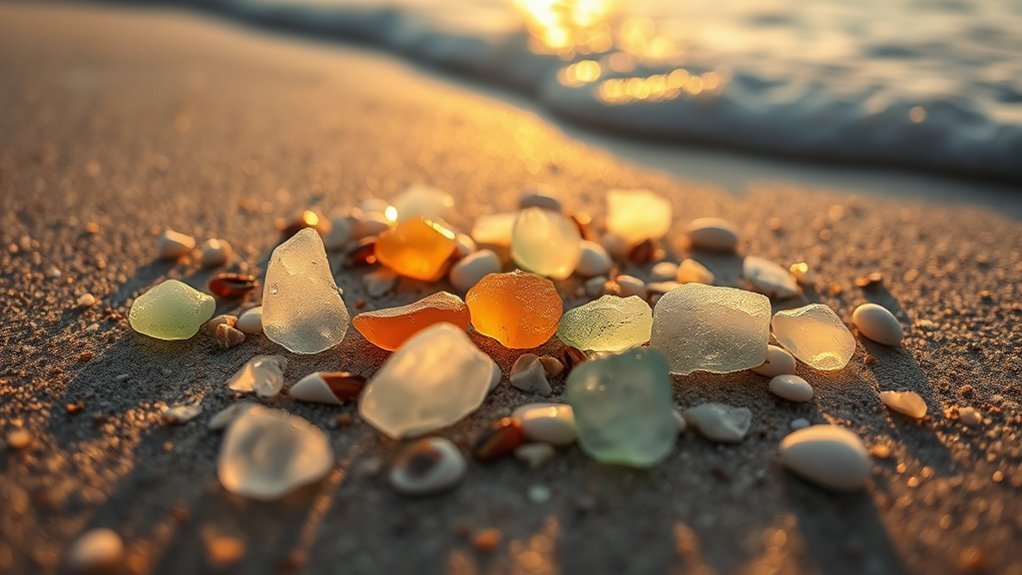
Beach glass begins as manufactured glass from bottles, jars, tableware, windows, or other objects. Waves move broken fragments against sand, gravel, and stones, gradually wearing down sharp edges and changing the surface. A well-weathered piece often feels smooth around the edges and has a matte or softly frosted appearance.
Collectors commonly use sea glass for pieces found along saltwater coasts and beach glass for pieces found around lakes and rivers. The terms often overlap in casual use. Lake Erie finds are freshwater beach glass, and some pieces may show lighter frosting than glass from a highly active saltwater shore.
There is no reliable visual formula for determining exactly how long a piece has been in the water. Wave energy, shoreline material, glass composition, freezing and thawing, and repeated burial can all affect its appearance. A heavily worn piece may be old, but frosting alone does not prove an age or historical origin.
Before You Collect, Check the Rules
Confirm that the shoreline is open to the public and that collecting is allowed before removing beach glass. Rules can differ between state parks, municipal beaches, national park sites, wildlife areas, tribal land, private property, and nature preserves.
Some protected shorelines prohibit removing stones or other natural and cultural material. For example, the National Park Service rules for Pictured Rocks National Lakeshore prohibit removing beach stones. That rule does not apply to every Lake Erie beach, but it shows why you should check the specific property rather than assume that public access includes collecting rights.
- Read signs at the entrance, parking area, and beach access point.
- Check the managing agency’s official website.
- Respect private-property boundaries and posted closures.
- Do not dig into dunes, bluffs, archaeological areas, or protected habitat.
- Follow daily beach hours and leave before the property closes.
Note: A piece of glass may look like litter, but the land manager can still restrict removal of objects from the shoreline. Ask the managing authority when the rule is unclear.
Where to Find Beach Glass
Lake Erie has long stretches of sandy, gravelly, and stone-covered shoreline across Michigan, Ohio, Pennsylvania, New York, and Ontario. Beach glass can appear almost anywhere that waves sort debris, but some shoreline features make it easier to spot.
Begin on a legal public beach with a mixture of sand, small stones, and gravel. Walk the accessible shoreline once at a normal pace before searching one small area closely. This first pass helps you identify where waves have gathered objects of a similar size and weight.
Beach glass often gathers with pebbles and other objects of a similar size, so the shoreline’s sorting patterns can guide your search.
- Pebble and gravel bands: Scan lines where small stones collect above or near the active waterline.
- Rock pockets: Look between larger stones where smaller fragments can become trapped.
- Fresh debris lines: Search lines of driftwood, shells, pottery, and other material deposited by recent waves.
- Erosion cuts: Examine the flat beach below a safe, stable cut, but never climb or dig into an unstable bluff.
- Wet-to-dry transition zones: Damp glass can stand out because light passes through it differently from surrounding stones.
Older populated, shipping, and industrial shorelines may have more historical glass in nearby sediments. However, never enter closed industrial property, contaminated areas, construction zones, or unsafe harbor structures to reach it.
Best Conditions for Beach Glass Hunting
Ocean beachcombing guides often recommend low tide, but that advice does not transfer directly to Lake Erie. According to NOAA’s explanation of Great Lakes tides, astronomical tides on the Great Lakes are so small that the lakes are considered non-tidal. Wind, air pressure, seasonal water levels, storm surge, and seiches create more noticeable shoreline changes.
For Lake Erie, look for a safe period when recent waves have rearranged pebbles but the wind and water have calmed. A lower exposed waterline can reveal new material, but it may change quickly when wind direction or atmospheric pressure shifts.
- Search during full daylight when colors and frosted surfaces are easier to see.
- Choose calm or improving weather rather than active storm conditions.
- Wait until beach warnings and hazardous wave conditions have ended.
- Try early in the day at busy beaches, when fewer people have walked the shoreline.
- Return after different wind directions because each wave pattern can sort the beach differently.
- Revisit productive areas throughout the year, subject to access and weather conditions.
Pro Tip: Stand with the brightest part of the sky behind or beside you, then scan each pebble band in overlapping strips. This reduces glare and helps translucent pieces stand out.
How to Spot Good Beach Glass
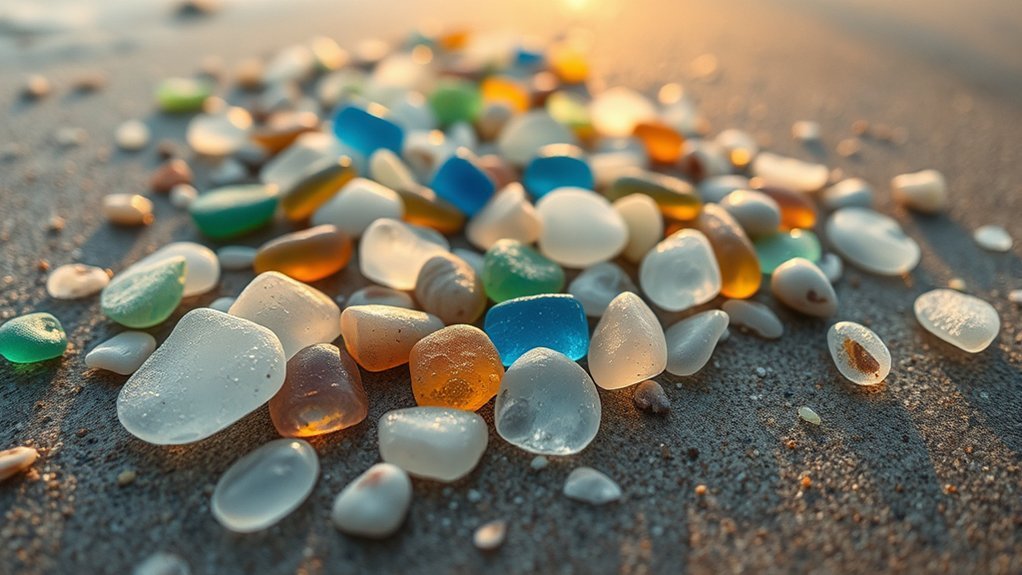
Good collector-grade beach glass usually has softened edges, natural irregularity, and a matte or lightly frosted surface. It should be safe to handle without a cutting edge. Freshwater pieces can vary widely, so a light frost does not automatically mean that the glass is artificial or too new.
- Check the edges: Rounded edges suggest repeated wear. A sharp edge usually indicates a recent break or later damage.
- Study the surface: Natural pieces may show uneven frosting, tiny pits, shallow curved marks, and small crevices.
- Look at the shape: Authentic pieces are often irregular rather than identical triangles, squares, or ovals.
- Hold it to the light: This can reveal the true color, internal bubbles, embossed lettering, seams, or curvature from a bottle.
- Check both sides: A single freshly chipped side can make an otherwise weathered piece unsafe for jewelry or loose display.
The International Sea Glass Association’s authenticity guidance notes that genuine glass often has a frosted patina, rounded edges, natural imperfections, and occasional markings from its original object. Artificially tumbled glass is more likely to have uniform shapes and textures, although no single clue is conclusive.
Common and Uncommon Colors
Clear or white, brown, and green glass are commonly associated with widely used bottles and containers. Aqua, pale blue, cobalt blue, amber, olive, and other shades may appear less often, depending on the shoreline’s history.
Red, orange, yellow, black-looking, and some purple shades can be uncommon, but color alone does not establish age, authenticity, or value. Artificial craft glass is often sold in bright unusual colors. Before assigning a historical source, look for supporting clues such as embossed letters, mold seams, bottle curvature, thickness, or a recognizable pattern.
Note: Collector value is subjective. Condition, size, markings, provenance, demand, and documented authenticity can matter as much as color.
How to Hunt for Beach Glass Step by Step
- Choose a permitted shoreline. Confirm access hours, parking rules, closures, and collecting policies.
- Check the forecast. Review wind, waves, lightning risk, temperature, and active Great Lakes beach hazard statements.
- Dress for the surface. Wear sturdy closed-toe footwear and use gloves when handling unknown or sharp debris.
- Find the sorting zones. Identify pebble bands, rock pockets, wet gravel, and fresh debris lines.
- Walk slowly in one direction. Scan a narrow strip rather than looking randomly across the entire beach.
- Turn around and rescan. A different viewing angle can reveal pieces hidden by glare or stones.
- Inspect before keeping. Check every edge, identify obvious plastic or fresh broken glass, and follow the property’s removal rules.
- Store finds separately. Put delicate pieces in a small pouch or divided container so they do not chip against each other.
- Record useful details. Note the date, general location, conditions, and any markings if you enjoy identifying the glass later.
Tools for Beach Glass Hunting
You do not need specialized equipment for a basic beach glass hunt. Sturdy footwear, gloves, a small bag, drinking water, and a charged phone are enough for many beaches. Scoops and lights are optional and should be used only where local rules allow them.
Essential Scooping Tools
A small mesh scoop can help sift loose gravel without forcing you to reach into sharp debris. A telescopic-handled scoop may also reduce bending on an accessible, open shoreline. However, scooping should remain light and shallow.
- Use a small mesh scoop only where digging and disturbance are permitted.
- Do not excavate dunes, bluffs, vegetation, nesting areas, or archaeological material.
- Refill any shallow depression you make in loose beach gravel.
- Rinse and dry the scoop after each trip to remove grit and reduce corrosion.
A reptile litter scoop may work as an inexpensive sifter, but it is not necessary. Avoid tools with sharp teeth that can damage habitat, scratch finds, or injure another visitor.
Lighting for Finds
Natural daylight is usually the most useful lighting. Bright but indirect light can reveal translucent color without creating harsh glare. A phone flashlight can help inspect a shaded rock pocket, but do not remain on a beach after closing time or search in conditions where darkness makes footing unsafe.
A 365-nanometer ultraviolet light may cause certain glass, minerals, plastics, or residues to fluoresce. Use it as an optional at-home inspection tool rather than proof that a piece contains uranium, is old, or is genuine beach glass. Fluorescence alone cannot confirm composition or authenticity.
Bags and Carry Gear
A mesh collecting bag allows sand and water to drain, while a small padded pouch protects fragile or heavily embossed pieces. A fanny pack or compact backpack can hold gloves, water, sunscreen, a phone, and a rigid container for hazardous shards.
- Use separate compartments so pieces do not strike each other.
- Carry only what you can comfortably manage over uneven ground.
- Bring a rigid, puncture-resistant container for sharp broken glass.
- Wear waterproof boots only when they provide stable traction and do not encourage you to enter unsafe water.
Beach Glass Safety Tips
Lake Erie can change quickly. Before leaving, check the National Weather Service Great Lakes Beach Hazards page for wind, waves, currents, water conditions, and active statements.
Warning: Do not hunt from a pier, breakwall, unstable bluff, ice-covered shore, or active surf zone. Stay dry when waves are high, leave immediately when thunder is heard, and keep away from river outlets and fast-moving water.
The National Weather Service Great Lakes safety guidance warns that dangerous currents and breaking waves can occur near piers, breakwalls, river outlets, sandbars, and other shoreline structures. A calm-looking gap in breaking waves may still contain a current.
- Wear sturdy closed-toe footwear with good traction.
- Use protective gloves when picking up unknown or sharp objects.
- Do not reach blindly between rocks.
- Keep children close and supervise them near the waterline.
- Avoid algae-covered stones, unstable logs, ice shelves, and undercut banks.
- Check for ticks after walking through grass, brush, or dunes.
- Give geese and other wildlife plenty of space.
- Carry water, weather protection, and a charged phone.
- Tell someone where you are going when visiting an isolated shoreline.
Ohio state-park rules also prohibit glass containers on beach areas because broken glass creates a safety risk. Review the applicable Ohio Administrative Code rule and the rules for the specific property you plan to visit.
How to Tell Quality From Trash

Collector quality is partly personal, but a desirable piece is normally safe to handle and shows clear evidence of natural wear. Look for rounded edges, an irregular shape, and a matte or softly frosted surface rather than a freshly broken shine.
- Weathered beach glass: Rounded edges, uneven frosting, natural pits, possible curves, bubbles, seams, or lettering.
- Fresh broken glass: Sharp points, flat reflective fracture surfaces, and little or no edge wear.
- Machine-tumbled glass: Repeated shapes, uniform satin texture, similar thickness, or many bright pieces that look almost identical.
- Plastic: Often lighter, warmer to the touch, easily scratched, and sometimes marked by a mold line.
- Slag or industrial glass: May contain swirls, bubbles, rough inclusions, or an irregular melted form. It can still be interesting but may not come from a bottle or jar.
- Pottery and ceramic: Usually opaque, with a clay-colored body, glaze, printed pattern, or curved dish surface.
- Quartz or stone: May resemble clear glass but usually shows a crystalline or mineral texture rather than glass fracture and frosting.
A piece can be genuine beach-found glass without being fully rounded. However, any sharp fragment should be treated as a hazard rather than a finished collector piece.
Beach Glass Hunting Etiquette
Share the shoreline with other visitors, anglers, swimmers, wildlife, and fellow collectors. Give people room to search and avoid blocking narrow access points.
- Leave dunes, plants, nests, driftwood structures, and erosion-control features undisturbed.
- Do not dig large holes or overturn heavy rocks.
- Pack out food wrappers, fishing line, plastic, and other litter.
- Do not publish directions to private, restricted, fragile, or unsafe access points.
- Respect local collectors who choose not to reveal a sensitive location.
- Keep only a reasonable amount when collecting is permitted.
Never throw sharp-edged glass back into the lake. Place it in a rigid, puncture-resistant container so it cannot cut through your bag, then follow the local waste authority’s instructions for safe disposal. This removes the immediate hazard instead of leaving it for someone else.
How to Care for Your Finds
Most beach glass needs only gentle cleaning, careful sorting, and dry storage. Avoid aggressive polishing because it can remove the natural surface that makes the piece distinctive.
Cleaning Your Finds
- Rinse each piece in fresh water to remove sand, mud, and loose debris.
- Soak dirty pieces in warm water with a small amount of mild dish soap for 10 to 15 minutes.
- Use a soft toothbrush, cloth, or non-abrasive brush around lettering and shallow crevices.
- Rinse thoroughly and dry with a soft towel.
- Allow pieces to air-dry completely before closing them in a container.
Avoid harsh acids, bleach, abrasive pads, powered polishing tools, and rock tumblers unless you intentionally want to alter the original beach-worn surface.
Sorting by Quality
Sort your collection according to the purpose you have in mind. A piece that is unsuitable for jewelry may still be useful for research, photography, mosaics, or a display jar.
- Display pieces: Attractive color, pattern, lettering, curvature, or historical interest.
- Jewelry candidates: Fully softened edges, suitable thickness, and no fresh chips or cracks.
- Study pieces: Embossed letters, mold seams, bottle bases, stoppers, handles, or unusual inclusions.
- Craft pieces: Common colors and shapes that are safe to handle but less distinctive individually.
- Hazardous pieces: Sharp edges, active cracks, contamination, or unknown residue that requires safe disposal.
Photograph both sides of an unusual piece beside a ruler before trying to identify it. Record the general area and date, but avoid sharing private or environmentally sensitive locations.
Storing Glass Safely
Store fully dry beach glass in divided boxes, padded trays, soft cloth bags, or jars that will not be knocked over. Separate delicate pieces so they cannot chip against thicker glass.
- Wrap fragile, embossed, or cracked pieces individually.
- Label compartments by color, location, object type, or date.
- Keep records and photographs with unusual finds.
- Avoid extreme heat, repeated impact, and damp closed containers.
- Check jewelry pieces periodically for new chips or cracks.
Sources
- NOAA National Ocean Service: Do the Great Lakes Have Tides? — explains why the Great Lakes are considered non-tidal and how weather and seiches affect water levels.
- National Weather Service: Great Lakes Beach Hazards — provides current wave, swim-risk, hazard, and water-condition resources.
- National Weather Service: Great Lakes Safety — covers waves, currents, piers, river outlets, and shoreline safety.
- National Park Service: Pictured Rocks Beaches — demonstrates that collecting and removal rules vary by protected shoreline.
- Ohio Administrative Code Rule 1501:46-3-14 — documents the prohibition on glass containers in Ohio state-park beach areas.
- International Sea Glass Association: Genuine vs. Artificial — describes common differences between naturally weathered and artificially altered glass.
Frequently Asked Questions
Does Lake Erie have tides for beach glass hunting?
Lake Erie has extremely small astronomical tides, but NOAA considers the Great Lakes non-tidal because wind, air pressure, seasonal levels, storm surge, and seiches create much larger changes. Use weather, wave, and observed shoreline conditions rather than an ocean tide table.
Is it legal to collect beach glass on Lake Erie?
It depends on the property. Municipal beaches, state parks, protected areas, private land, and national park sites can have different rules. Check signs and the managing authority’s official website before removing glass, stones, artifacts, or other shoreline material.
How can I tell whether beach glass is genuine?
Genuine weathered glass commonly has irregular rounded edges, uneven frosting, tiny pits, curved surface marks, and occasional bottle seams or lettering. Machine-tumbled glass is often more uniform in shape and texture. No single feature provides absolute proof, so consider the complete surface, shape, and provenance.
Why is some Lake Erie beach glass only lightly frosted?
Freshwater beach glass can develop a different surface from glass weathered in saltwater. Frosting also depends on wave energy, sediment, glass composition, burial, freezing, and how long the fragment has moved along the shore. Light frosting does not automatically mean a piece is fake.
What beach glass colors are rare?
Clear or white, brown, and green are common in many collections. Cobalt, aqua, amber, purple, red, orange, yellow, and black-looking glass may be less common, but frequency varies by location. A rare-looking color does not automatically prove age, authenticity, or high value.
Should I throw sharp glass back into the lake?
No. Returning sharp glass leaves an injury hazard in the water. Pick it up carefully with gloves or a tool, place it in a rigid puncture-resistant container, and follow local instructions for safe disposal.
When should I search after a storm?
Wait until the storm has completely passed, lightning is no longer a threat, waves have settled, and official beach hazard statements have ended. Recent waves may expose new pebble and debris lines, but no find is worth entering rough water or approaching an unstable shoreline.
Conclusion
Beach glass hunting on Lake Erie rewards patience and careful observation. Search legal public shorelines, follow the lake’s weather and wave conditions instead of ocean tide tables, and focus on pebble bands, rock pockets, and fresh debris lines. Genuine pieces often show rounded edges, natural irregularity, and a matte or softly frosted surface.
Safety and respect matter more than the number of pieces you collect. Stay away from dangerous water, piers, outlets, unstable banks, and storms. Follow local removal rules, carry sharp debris out safely, and clean and store your finds gently. Each well-documented piece can preserve a small part of the shoreline’s human history without putting the beach or its visitors at risk.
