
Last Updated on July 27, 2026 by Daniel Globe
Cancun offers much more than resort pools and white-sand beaches. A good trip can combine Maya archaeology, Caribbean snorkeling, an underwater art museum, Isla Mujeres, local food, nightlife, and easy day trips into the Yucatán Peninsula. The key is knowing which attractions are actually near Cancun and which experiences fit your time, weather, and travel style.
Quick Answer
The best things to do in Cancun include visiting Chichén Itzá or local Maya sites, relaxing at Playa Delfines, snorkeling protected Caribbean reefs, exploring MUSA, taking a day trip to Isla Mujeres, swimming in cenotes, enjoying the Hotel Zone nightlife, and tasting regional Mexican food.
Key Takeaways
- Chichén Itzá is the headline Maya day trip, while Museo Maya de Cancún and El Rey are much easier to visit from the Hotel Zone.
- For beaches, start with Cancun itself rather than automatically traveling south to Playa del Carmen or Tulum.
- Cancun’s snorkeling is in the Caribbean reefs around Punta Cancún, Punta Nizuc, Isla Mujeres, and MUSA—not Australia’s Great Barrier Reef.
- Isla Mujeres works well as a full or half-day trip for Playa Norte, Punta Sur, snorkeling, food, and island exploring.
- Check hurricane forecasts, beach flags, and current sargassum conditions before committing to water activities.
Disclosure: As an Amazon Associate I earn from qualifying purchases. Some links on this page are affiliate links, at no extra cost to you.
Explore Maya History Near Cancun
The Maya civilization left an extraordinary architectural and scientific legacy across Mexico and Central America. From Cancun, the most famous archaeological excursion is Chichén Itzá in Yucatán, a UNESCO World Heritage site whose monuments include El Castillo, the Great Ball Court, El Caracol, and the Temple of the Warriors.
El Castillo, also called the Temple of Kukulcán, is particularly famous for the pattern of light and shadow that forms a serpent-like shape along its northern stairway around the spring and fall equinox periods. It is an impressive example of the relationship between Maya architecture and astronomical observation, although the lighting effect is more complex than a phenomenon limited to one exact calendar date.
Plan Chichén Itzá as a full-day excursion from Cancun. Heat and sun exposure can be intense, so an early start, drinking water, comfortable walking shoes, a hat, and sun protection make the visit much easier. Current hours, access rules, and fees can change, so check INAH before leaving. Visitors should also respect barriers and never climb structures that are closed to public access.
Pro Tip: If you want Maya history without spending most of a day traveling, stay in Cancun and visit the museum and archaeological sites in the Hotel Zone.
Visit Museo Maya de Cancún and San Miguelito
The Museo Maya de Cancún is one of the easiest ways to add real historical context to a beach vacation. The museum holds an important collection of Maya artifacts from Quintana Roo and other Maya regions. Admission also connects visitors with the San Miguelito archaeological zone beside the museum.
This is especially useful for travelers who want to understand the region’s history but do not have enough time for a long-distance excursion to Chichén Itzá or Tulum.
See El Rey in the Hotel Zone
El Rey is another archaeological site directly in Cancun’s Hotel Zone. The settlement developed into an important coastal center connected with fishing and Caribbean maritime trade. Several structures remain visible, including plazas, foundations, and traces of mural decoration.
Note: Tikal is also one of the great cities of the ancient Maya, with jungle temples and remarkable biodiversity, but it is in Guatemala and is not a practical Cancun day trip. Save Tikal and Temple IV for a separate Guatemala itinerary.
Relax on Cancun’s Beaches
Cancun’s Caribbean shoreline is one of the main reasons people visit, so there is no need to leave the city every time you want a beach day. The Hotel Zone has several public beach access points with different wave conditions, facilities, and atmospheres.
Start With Playa Delfines
Playa Delfines is one of Cancun’s best-known public beaches. It sits along Boulevard Kukulcán and offers broad sand, open Caribbean views, and public access without requiring a resort stay. It is a good choice for travelers who want a classic Cancun beach experience away from tightly packed hotel loungers.
Because it faces the open Caribbean, waves and currents can be stronger than at more protected beaches. Pay attention to lifeguard instructions and the warning flags posted for swimmers.
Try Other Cancun Public Beaches
Depending on your hotel and the day’s sea conditions, other public beaches such as Chac Mool, Marlín, Ballenas, Las Perlas, and Coral may be more convenient. Conditions can differ noticeably from one part of the shoreline to another.
Pro Tip: During sargassum season, do not assume every Cancun beach will look the same. Check same-day beach conditions and ask your hotel which nearby stretch has been cleared most recently.
Consider Playa del Carmen or Tulum as a Day Trip
Playa del Carmen, south of Cancun on the Riviera Maya, combines a Caribbean beach with the restaurants, shops, and bars around Fifth Avenue. It can be a fun change of pace, but it should be treated as a separate town rather than as a Cancun beach.
Tulum is farther south and combines coastline with one of Mexico’s best-known seaside archaeological sites. Its Maya ruins stand above the Caribbean, creating a very different experience from Cancun’s resort-lined shoreline. Travelers who want history and beach scenery in the same day may find Tulum worthwhile, but the trip requires considerably more travel time than visiting a Cancun beach.
Snorkel or Dive Cancun’s Caribbean Reefs
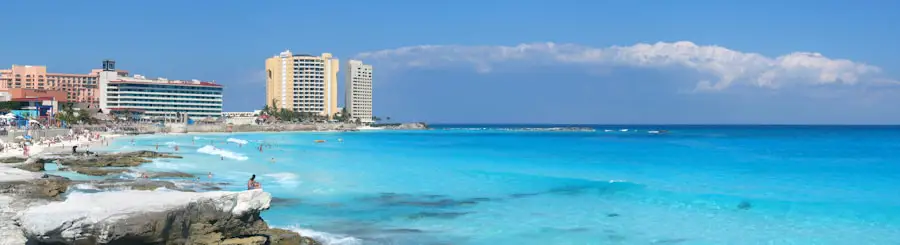
Cancun sits beside valuable Caribbean reef habitat rather than the Great Barrier Reef. The Costa Occidental de Isla Mujeres, Punta Cancún y Punta Nizuc National Park protects reefs, seagrass beds, mangroves, and other marine habitat around the Cancun and Isla Mujeres area.
Popular snorkeling and diving trips may visit areas around Punta Nizuc, Punta Cancún, Isla Mujeres, and Manchones. What you see changes with visibility, currents, season, and the exact site, but reef fish, corals, rays, turtles, and other Caribbean marine life may be encountered.
Beginners should choose a reputable operator that clearly explains swimming ability requirements, life-jacket use, current conditions, and whether scuba certification is required. Experienced divers have access to deeper reefs and wreck-style dives, while snorkelers can enjoy shallower sites.
Warning: Never stand on or touch coral, chase marine animals, or swim outside your ability level. Follow the guide and marine-park rules, and cancel or reschedule when currents or weather make the trip unsafe.
Important: Australia’s Great Barrier Reef and the Cod Hole near Lizard Island are thousands of miles from Cancun. They are excellent Australian dive destinations, but they do not belong in a Cancun itinerary.
Experience the Nightlife
Cancun is known for energetic nightlife, especially around Punta Cancún in the Hotel Zone. The right area depends on whether you want a large show venue, a traditional nightclub, casual drinks, or a more local evening.
| Area | Best For | Atmosphere | Good to Know |
| Punta Cancún / Hotel Zone | Big clubs and entertainment shows | High-energy and tourist-focused | Expect crowds and higher prices |
| Downtown Cancun | Food, casual bars, and local evenings | More relaxed and local | Good option when you want a break from resort nightlife |
| Playa del Carmen | Bars and nightlife around Fifth Avenue | Walkable and lively | It is a separate city, so plan transportation carefully |
Well-known Hotel Zone venues such as Coco Bongo combine music, dancing, acrobatics, projections, and stage performances rather than operating as a simple dance club. Travelers who prefer a quieter night can instead choose dinner, a casual bar, or an evening in downtown Cancun.
Warning: Keep control of your drinks and valuables, use trusted transportation, and stay in well-lit tourist areas after dark. Do not drive after drinking.
Visit the Underwater Museum
The Underwater Museum of Art, or MUSA, is one of the most distinctive activities around Cancun and Isla Mujeres. Hundreds of submerged figures and sculptural installations sit beneath the Caribbean, combining public art with an underwater environment that is gradually colonized by marine organisms.
One of the best-known installations is Jason deCaires Taylor’s The Silent Evolution, which uses large groups of life-size human figures. The museum’s official collection includes several artists and installations spread through different underwater areas.
How you experience MUSA depends on the site and tour. Some sections are suitable for snorkeling, while scuba divers can visit deeper installations. Glass-bottom or viewing options may also be available for travelers who do not want to enter the water.
MUSA is best understood as both an art attraction and part of a sensitive marine environment. Keep your distance from sculptures and coral growth, and follow the instructions of guides operating inside the protected waters.
Take a Day Trip to Isla Mujeres
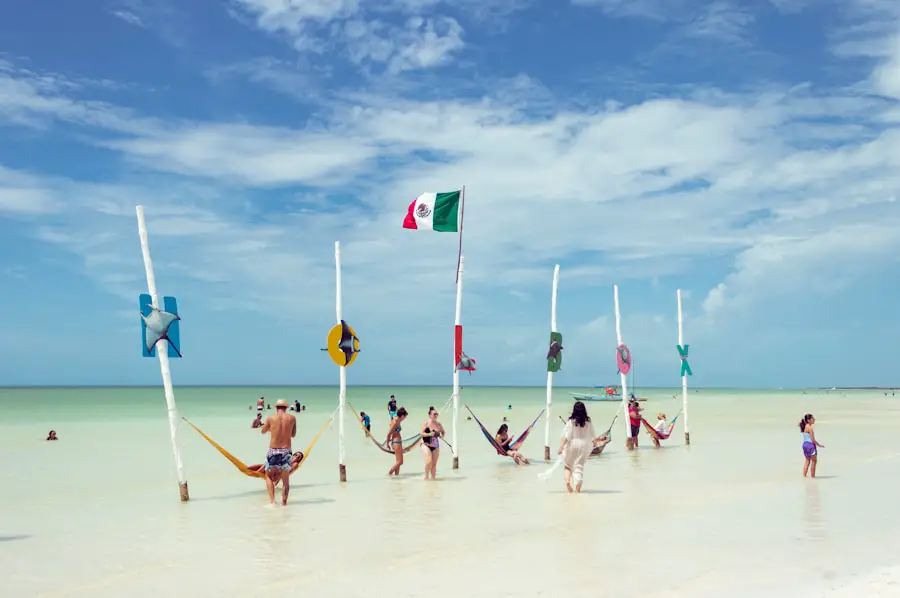
Isla Mujeres is a small Caribbean island just offshore from Cancun and one of the easiest escapes from the mainland. Passenger ferries connect the Cancun area with the island, making it practical for either a half-day visit or a full day.
Playa Norte is the classic first stop. Its sheltered turquoise water and soft sand create a different experience from many open-ocean Cancun beaches. Arrive earlier in the day when possible because the area becomes busier as ferries and tour boats bring more visitors.
Travelers who want to see more than the beach can rent a golf cart from a licensed provider and explore the island, including Punta Sur at the southern end. Local restaurants, shops, street food, and waterfront areas make it easy to combine sightseeing with a relaxed lunch.
Snorkeling around Isla Mujeres is another major draw. Tours may include reef sites or MUSA depending on the operator and weather.
Note: Older guides often recommend the Tortugranja turtle sanctuary. It has been closed for years, so do not build your day around that stop. Sea turtles still nest naturally in the region; observe wildlife only from a respectful distance and follow local conservation instructions.
Swim in Cenotes and Explore the Riviera Maya
Cenotes are natural limestone sinkholes filled with groundwater, and visiting one is a classic Yucatán Peninsula experience. They range from open pools surrounded by vegetation to cavern-like systems with rock formations and shafts of light.
Many Cancun excursions combine a cenote with Chichén Itzá, Tulum, zip lines, or other Riviera Maya activities. That can save transportation time, but check exactly how long the tour spends at each stop before booking. A trip advertising many attractions in one day can leave very little time at the places you care about most.
Warning: Cenotes can be deep, slippery, and difficult to exit in some areas. Use required flotation equipment, follow local rules, and never enter cave-diving passages without the training and certification required for overhead environments.
Enjoy Water Sports and Activities
Cancun offers jet skiing, parasailing, paddleboarding, kayaking, sailing, snorkeling, and scuba diving. The best choice depends on your swimming ability, comfort with heights or speed, and current sea conditions.
Jet skiing gives riders a fast-paced view of the coastline, while parasailing provides a much higher perspective over the Caribbean and Hotel Zone. Paddleboards and kayaks are better for travelers who want a slower activity, especially in calmer protected water.
Before booking, ask exactly what the quoted price includes. Confirm equipment, guides, marine-park fees, transportation, photographs, insurance requirements, and cancellation rules for unsafe weather.
Indulge in Local Cuisine and Culture
Mexican food should be part of the itinerary rather than something squeezed between excursions. Cancun offers everything from resort restaurants to neighborhood taquerías, seafood spots, markets, and casual street-food stands.
Tacos al pastor are made with seasoned meat cooked on a vertical spit and are commonly served with onion, cilantro, salsa, and often pineapple. Other easy foods to try include tamales, marquesitas, cochinita pibil, ceviche, grilled seafood, and elote.
For a more local atmosphere, spend some time away from the resort corridor. Markets and downtown food areas provide a different look at Cancun than the Hotel Zone alone.
Playa del Carmen also has a large restaurant and street-food scene around Fifth Avenue and the surrounding streets, making it an easy place to combine food with a Riviera Maya day trip.
Cultural experiences do not have to involve a formal show. Archaeological sites, museums, neighborhood markets, artisan work, regional cooking, and conversations with local guides can provide far more context than simply staying inside a resort.
Plan Around Cancun’s Weather and Seasons
November Through April
November through April is popular because rainfall is generally lower and temperatures are comfortable for beaches and archaeological excursions. The tradeoff is stronger demand, especially around holidays and spring break, which can mean higher hotel rates and busier attractions.
Summer and Hurricane Season
The Atlantic hurricane season officially runs from June 1 through November 30, according to the U.S. National Hurricane Center. A trip during these months does not mean a hurricane will occur, but travelers should monitor forecasts and use flexible booking arrangements where practical.
The Atlantic hurricane season officially runs from June 1 through November 30, with activity historically peaking later in the season.
Watch Sargassum Conditions
Sargassum is a natural floating seaweed that can accumulate along beaches in Cancun and elsewhere in the Mexican Caribbean. The amount can change rapidly with currents and wind. Mexican and local authorities continue active collection and monitoring efforts, but beach conditions may still differ substantially from day to day.
For beach-focused trips, check recent conditions immediately before choosing where to spend the day rather than relying on photos posted months earlier.
Getting Around Cancun
Most visitors divide their time between the Hotel Zone, downtown Cancun, ferry terminals, and organized day-trip pickup points. Hotel Zone buses can be useful for straightforward trips along Boulevard Kukulcán, while taxis, authorized transfers, and rideshare availability may be more convenient for specific journeys.
For Isla Mujeres, verify which ferry terminal best fits your hotel and confirm the last convenient return sailing before spending the day on the island.
Long-distance attractions such as Chichén Itzá and Tulum require more planning. Compare an organized tour with independent transportation based on total travel time, pickup schedules, admission arrangements, and how much freedom you want at the site.
Pro Tip: Do not judge a day tour only by the number of attractions listed. Fewer stops with more time at each place often make for a better day than spending hours collecting and dropping off passengers.
Keep Safety in Mind
Travel conditions can change, so check official guidance shortly before departure. The U.S. Department of State’s Mexico Travel Advisory currently advises travelers in Quintana Roo to exercise increased caution and specifically recommends paying attention to surroundings after dark and remaining in well-lit pedestrian and tourist areas.
At the beach, obey warning flags and lifeguards. On boats, wear the required flotation equipment. During thunderstorms or tropical-weather alerts, do not pressure an operator to run an excursion simply because you prepaid.
Normal precautions also matter: avoid displaying large amounts of cash, secure your passport and backup payment method, keep track of your drinks, and arrange dependable transportation after a late night.
Choose Current Family-Friendly Activities
Families do not have to rely only on beaches. The Interactive Aquarium Cancún remains a convenient indoor option in the Hotel Zone, with aquarium exhibits and educational activities.
For a larger full-day excursion, Xcaret and its related Riviera Maya parks combine natural, cultural, and water-based attractions, although they are south of Cancun and require additional travel time.
Older guides may recommend Ventura Park or its Wet’n Wild water area. The official Ventura Park website currently states that the park is closed indefinitely, so check its status rather than purchasing plans based on old articles.
Pack for a Full Day Out
Cancun excursions can involve long bus rides, heavy phone use for tickets and maps, and many hours away from your hotel. Bring drinking water where permitted, sun protection, appropriate footwear, a waterproof pouch for boat days, and enough battery power for transportation confirmations and digital reservations.
A portable battery can be particularly useful on Chichén Itzá, Tulum, cenote, or Isla Mujeres days. For more packing ideas, see 3 Portable Phone Chargers You Need for Your Next Getaway.
Frequently Asked Questions
What are the top things to do in Cancun?
Top choices include visiting Maya sites such as Chichén Itzá or El Rey, relaxing at Playa Delfines, snorkeling Cancun’s protected reefs, exploring MUSA, taking a ferry to Isla Mujeres, swimming in a cenote, enjoying Hotel Zone nightlife, and trying local Mexican food.
What water activities are popular in Cancun?
Snorkeling, scuba diving, sailing, parasailing, jet skiing, kayaking, paddleboarding, reef tours, and boat trips to Isla Mujeres are popular. Always choose an operator appropriate for your skill level and follow weather, current, and marine-park restrictions.
Are there cultural attractions in Cancun itself?
Yes. Museo Maya de Cancún and the San Miguelito archaeological area are in the Hotel Zone, while El Rey is another Maya archaeological site along Boulevard Kukulcán. Downtown markets and local food areas add a different cultural experience from the resort corridor.
What is the best time to visit Cancun?
November through April is popular for generally drier weather, but it is also a busy season. The Atlantic hurricane season runs from June 1 through November 30. Sargassum can affect beaches at various times, so check current seaweed and weather conditions shortly before traveling.
What are some family-friendly activities in Cancun?
Families can visit Playa Delfines, Museo Maya de Cancún, El Rey, the Interactive Aquarium Cancún, Isla Mujeres, and age-appropriate snorkeling or boat tours. Xcaret-area parks are another option for a full-day excursion south of Cancun. Ventura Park is currently closed indefinitely.
Is the Great Barrier Reef near Cancun?
No. The Great Barrier Reef is in Australia. Cancun’s snorkeling and diving take place in Caribbean reef areas around Isla Mujeres, Punta Cancún, Punta Nizuc, Manchones, and other sites in the Mexican Caribbean.
Is Isla Mujeres worth a day trip from Cancun?
Yes. Isla Mujeres is one of the easiest day trips from Cancun and works especially well for travelers who want Playa Norte, snorkeling, Punta Sur, local food, or a relaxed island drive. Check ferry schedules before leaving so you know your preferred return time.
Sources
- Instituto Nacional de Antropología e Historia — Chichén Itzá — archaeology, visitor information, chronology, and the Kukulcán light-and-shadow phenomenon.
- INAH — Museo Maya de Cancún — Maya museum collections and San Miguelito archaeological context.
- CONANP — Reefs of Isla Mujeres and Cancun — local protected reef ecosystems and conservation.
- MUSA — Underwater Museum of Art — official information about Cancun’s submerged artworks and installations.
- NOAA National Hurricane Center — Tropical Cyclone Climatology — official Atlantic hurricane-season dates and climatology.
- U.S. Department of State — Mexico Travel Advisory — current travel-safety guidance for Quintana Roo.
