
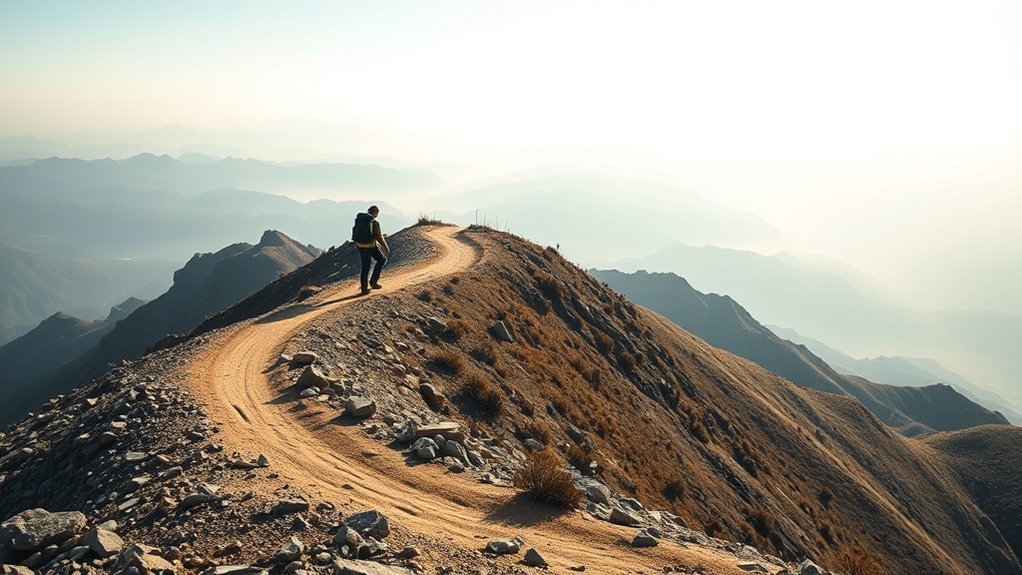
Last Updated on July 25, 2026 by Mason Reed
Switchbacks can make a steep mountain trail look longer, but the extra distance serves a purpose. By turning across a slope instead of heading straight uphill, the trail can use a more manageable grade, shed water more effectively, and protect nearby soil and plants. Your job is simple: follow every turn, pace yourself, and never cut across the bends.
Quick Answer
A switchback is a trail section that turns sharply back and forth across a steep slope. The zigzag route adds distance but reduces the directness of the climb, which can improve pacing and help trail builders manage runoff. Hikers should stay on the marked tread, avoid shortcuts, and usually yield to uphill traffic.
Key Takeaways
- Switchbacks trade a shorter, steeper route for a longer path with a more manageable grade.
- Good trail design also uses outsloping, grade reversals, stable tread, and drainage features to control water.
- Cutting a switchback damages vegetation, creates erosion channels, and may expose you to unsafe footing.
- Use short steps, a steady pace, regular hydration, and careful foot placement on the climb and descent.
- Follow posted trail rules. In general, descending hikers give uphill hikers room, and hikers yield to horses or pack stock.
At a Glance
| Time Required | Depends on trail length, elevation gain, weather, and your pace |
| Difficulty | Easy to strenuous; switchbacks can still be steep, rocky, exposed, snowy, or icy |
| Tools Needed | Trail map, water, weather-appropriate clothing, supportive footwear; trekking poles are optional |
| Cost | No special switchback gear is required, but park, permit, or parking fees may apply |
Disclosure: As an Amazon Associate I earn from qualifying purchases. Some links on this page are affiliate links, at no extra cost to you.
What Is a Switchback in Hiking?
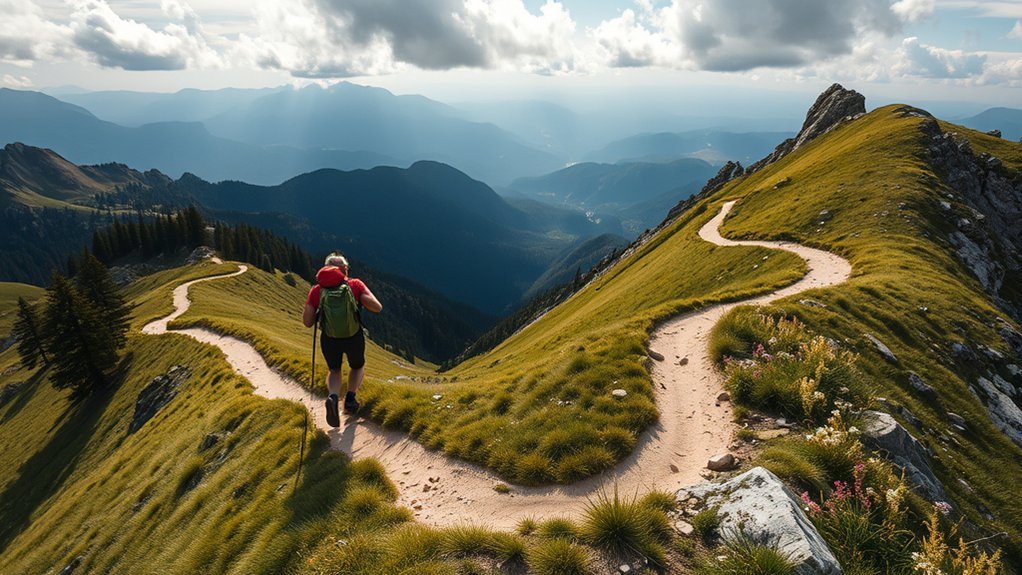
A switchback is a trail turn that reverses direction so the route can cross a steep hillside in a zigzag pattern. Instead of climbing directly up the fall line, you walk across the slope, turn, and cross it again in the opposite direction. The route is longer, but the effective climb usually feels more gradual.
Switchbacks are common on hiking, horse, bicycle, and mountain-access routes. They help trail designers fit a usable path onto difficult terrain while concentrating travel on a defined tread. They do not make every trail easy. A switchback can still be narrow, loose, exposed, icy, or extremely steep, so you must judge the actual conditions rather than the trail shape alone.
Switchback vs. Climbing Turn
Trail builders often separate a true switchback from a climbing turn. A switchback normally has a constructed turning platform or landing where the trail reverses direction. A climbing turn is a broader curve that continues to climb through the bend. Both change direction, but they are designed and drained differently.
Why Switchbacks Make Steep Trails Safer
A well-designed switchback can make movement more controlled by reducing the need to climb or descend straight down a steep slope. It gives you more room to use short steps, maintain balance, and choose secure foot placements. However, safety still depends on tread condition, weather, exposure, footwear, and your ability.
Erosion Control Benefits
A sustainable trail is not protected by zigzags alone. The route must also move water off the tread before it gains speed and cuts a channel. When switchbacks are paired with stable construction, outsloping, grade reversals, and protected vegetation, they can reduce the straight downhill flow that damages fall-line trails.
| Design Feature | Purpose |
|---|---|
| Contour-aligned route | Avoids a direct fall-line path where water can accelerate |
| Grade reversals | Create small rises and dips that encourage water to leave the tread |
| Outsloped tread | Lets sheet flow cross the trail instead of running down it |
| Protected vegetation | Keeps roots and ground cover intact beside the trail |
| Stable turn platform | Reduces tread failure and corner cutting at the reversal |
Safer Grade Management
Switchbacks spread elevation gain over more trail distance. That can reduce the direct steepness of the route and make pacing easier. On descents, the turns also break a long downhill run into shorter segments. Still, loose gravel, wet roots, ice, exposure, and crowded corners can create hazards. Slow down before each turn and keep your feet on the firmest part of the tread.
Warning: Never cut across a switchback, even when the shortcut looks harmless. The direct slope may be loose or unstable, and repeated shortcuts can create an erosion channel that damages the trail and increases fall risk.
How Switchbacks Reduce Trail Erosion
Switchbacks can reduce erosion when they are part of a complete drainage plan. A turn changes the direction of travel, but the trail still needs the correct grade, a durable surface, and places for water to exit. Poorly built or heavily shortcut switchbacks may erode badly.
How the Zigzag Route Helps
A fall-line trail points downhill in the same direction that water naturally wants to flow. Once runoff enters that path, it can gather speed, remove soil, and deepen the tread into a rut. A contour-based zigzag interrupts that direct route and gives trail crews more opportunities to send water across and off the trail.
| Trail Condition | Likely Effect | Hiker Result |
|---|---|---|
| Sustainable grade | Less water speed and soil movement | More consistent footing |
| Water exits often | Fewer long drainage channels | Fewer deep ruts |
| Users stay on tread | Less damage to adjacent soil and plants | A clear route to follow |
| Turns are reinforced | Less corner collapse and widening | Safer turning space |
| Shortcuts are closed | Damaged slopes can recover | Less route confusion |
Water Runoff Management
Trail crews use more than the turn itself to manage runoff. A grade reversal is a short rise followed by a dip that encourages water to leave the tread. An outslope is a slight tilt toward the downhill edge, which helps water cross the trail as sheet flow. Drainage dips, rockwork, and retaining structures may be added where the soil and slope require them.
- Water should leave the trail at frequent, stable points.
- Drainage outlets must stay clear of leaves, sediment, and loose rocks.
- Turns should not become bowls where water collects.
- Vegetation and roots beside the tread should remain undisturbed whenever possible.
Trail Surface Protection
Most hikers walk near the center of a trail, so foot traffic does not automatically spread evenly across the hillside. The benefit comes from keeping that traffic on a durable, constructed route rather than allowing many direct tracks to form. Stable tread, good drainage, retaining walls where needed, and regular maintenance protect the surface better than the zigzag shape by itself.
A switchback is only as sustainable as its grade, drainage, tread, turn construction, and the hikers who stay on it.
How to Hike Switchbacks Without Fatiguing
Do not attack the first turn at a pace you cannot maintain. Switchbacks reward steady effort. The goal is to keep breathing and movement controlled so you reach the upper trail with energy left for the return trip.
- Start slower than you think you need to. Give your breathing and leg muscles time to settle into the climb.
- Use short, even steps. Long steps demand more effort and can reduce balance on loose ground.
- Keep a rhythm. Match your pace to breathing you can sustain without gasping.
- Pause in a safe place. Step fully off the active tread only where the trail is wide and durable, and never block a blind corner.
- Drink and eat before you feel depleted. Follow the needs of the route, temperature, elevation, and your body.
- Save energy for the descent. Downhill travel can be hard on tired legs and requires careful foot placement.
Pro Tip: Look one or two turns ahead, not all the way to the top. A small target helps you keep a steady pace without feeling overwhelmed by the full climb.
Before a demanding hike, review the route, elevation gain, weather, water availability, and turnaround time. The National Park Service recommends planning for the full out-and-back distance, setting a turnaround time, carrying the essentials, and letting the slowest hiker set the group pace.
Switchback Etiquette: Stay on the Trail
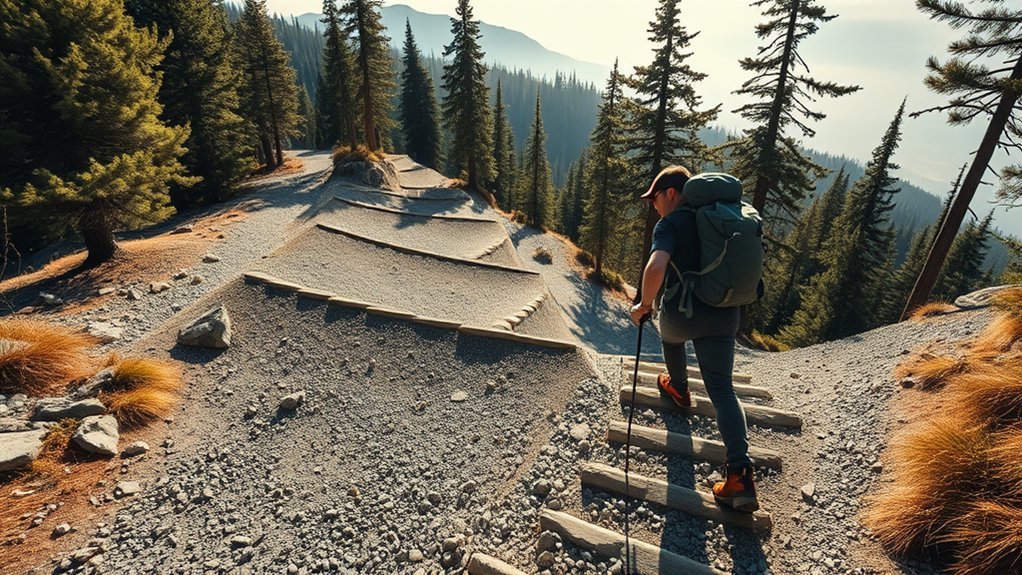
Stay on the marked tread through every bend. A shortcut can crush plants, loosen soil, and create a direct route for runoff. On popular trails, one set of footprints often encourages others, turning a small cut into a wide scar.
| Action | Why It Matters | Best Practice |
|---|---|---|
| Stay on the trail | Protects plants and limits new erosion paths | Follow the full turn, even when a shortcut is visible |
| Yield with care | Keeps traffic moving safely on narrow tread | Follow signs; descending hikers generally give uphill hikers room |
| Yield to stock | Horses and pack animals may react unpredictably | Follow the handler’s directions and move calmly to the instructed side |
| Pass politely | Prevents surprises near blind turns | Announce yourself and wait for a safe, wide section |
The National Park Service advises hikers to follow local signage because right-of-way rules can vary. Its general guidance says hikers coming uphill have the right of way, while hikers should yield to horses and other pack stock. Yosemite also warns that shortcutting switchbacks causes rapid erosion and can result in injuries.
Gear That Helps on Switchback Hikes
You do not need special equipment just because a trail has switchbacks, but normal hiking essentials matter more as the route becomes steeper, longer, or more exposed.
- Footwear with reliable traction: Choose shoes or boots that match the surface, weather, and load you are carrying.
- Trekking poles: Poles can improve balance and give you extra points of contact, especially on loose or uneven descents.
- Water and food: Carry enough for the route, temperature, elevation, and possible delays.
- Map or navigation tool: A trail map helps you track distance, junctions, elevation gain, and turnaround points.
- Weather layers and sun protection: Mountain conditions can change quickly, and exposed switchbacks may offer little shade.
- Traction devices when appropriate: Snow or ice can make steep turns dangerous. Check local guidance before using route-specific winter gear.
Keep your pack stable and avoid hanging items that can swing as you turn. On narrow trails, stay aware of poles, backpacks, and other gear that may catch vegetation or strike another hiker.
How Trails Are Built for Better Switchbacks
Trail building is site-specific work. There is no universal rule that switchbacks belong on hillsides within one fixed percentage range. Designers consider the sideslope, soil, rock, intended users, drainage, climate, vegetation, and maintenance capacity before choosing the route and turn locations.
The USDA Forest Service Trail Construction and Maintenance Notebook explains that durable contour trails use sustainable grades, grade reversals, outsloped tread, and stable bench construction. A full-bench trail cuts the entire tread into the hillside rather than relying heavily on loose fill at the downhill edge.
- Approach: The trail reaches the turn at a grade that can be drained and maintained.
- Turning platform: The reversal has enough stable space for the intended users.
- Exit: The trail leaves the turn without creating a water-catching bowl.
- Drainage: Grade reversals and outslope move water away before it gains speed.
- Reinforcement: Rock walls, steps, or other structures may support steep or unstable sites.
- Rehabilitation: Crews block and restore shortcut paths so plants and soil can recover.
Note: Do not build, reshape, drain, or close a public trail on your own. Trail work normally requires land-manager approval, trained crews, environmental review, and site-specific construction methods.
Famous Switchback Trails and Roads
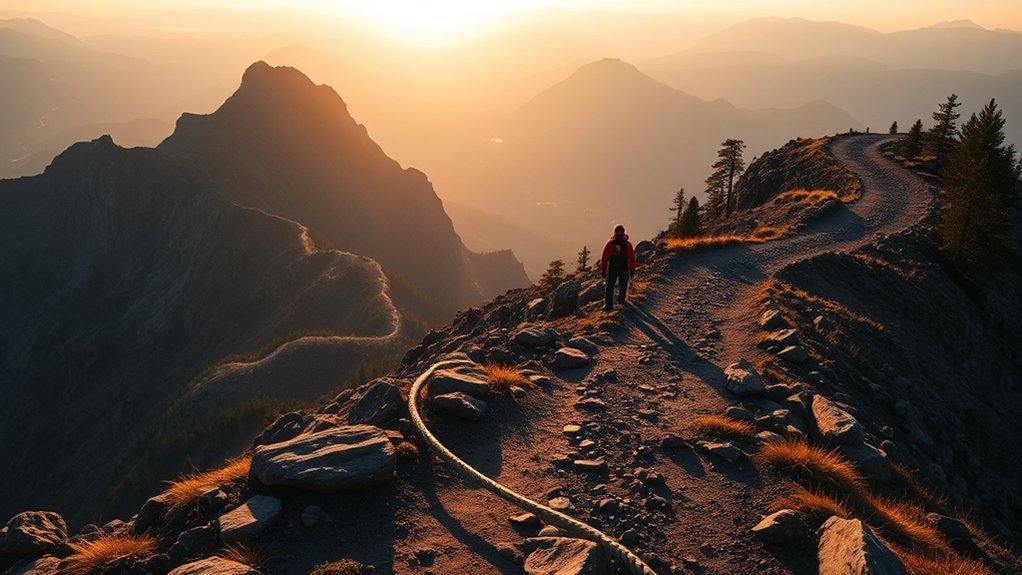
Some switchbacks are memorable enough to become landmarks. The examples below include both hiking trails and roads, so their rules and risks are different.
- Walter’s Wiggles, Zion National Park: The West Rim Trail to Scout Lookout includes a series of 21 short switchbacks. Continuing from Scout Lookout toward Angels Landing requires a permit.
- Trollstigen, Norway: The official Norwegian Scenic Routes site describes 11 hairpin bends on this mountain road. Seasonal and temporary closures can occur, so drivers should check current road information.
- Hana Highway, Maui: This scenic road is known for repeated curves, narrow sections, bridges, and changing conditions. It is a road-driving example, not a hiking switchback trail, and drivers should follow current Hawaiʻi Department of Transportation notices.
- Lombard Street, San Francisco: Its famous crooked block uses tight paved turns on a steep city street. It is better described as an urban hairpin road than a hiking trail.
- Pikes Peak Highway, Colorado: This mountain road uses many curves and switchbacks to reach high elevation. Drivers must use low gears, obey speed limits, and follow current mountain rules.
These routes show the same basic idea in different settings: change direction to gain or lose elevation within the limits of the terrain. Hiking etiquette does not apply to roads, and road-driving rules do not apply to trails.
How Switchbacks Became Trail Standard
Zigzag routes are older than modern recreational hiking. People, pack animals, roads, and engineered transport routes have long used repeated turns to cross steep terrain. However, the article’s earlier claim that hiking switchbacks began specifically as a mid-1800s railroad solution is too narrow and lacks reliable support.
Modern trail agencies formalized switchbacks as one tool within a larger sustainable-trail system. Current design guidance focuses on contour alignment, manageable grades, stable tread, drainage, durable turns, and maintenance. The goal is not merely to make a slope climbable. It is to create a route that serves its users while limiting long-term damage to the land.
Frequently Asked Questions
What does switchback mean in hiking terms?
A switchback is a trail turn that reverses direction across a slope. A series of these turns creates a zigzag route that gains or loses elevation over more distance than a direct climb.
What are switchback trails?
Switchback trails use one or more reversing turns to cross steep terrain. The turns are only part of the design. Sustainable trails also need appropriate grades, drainage, stable tread, and regular maintenance.
Why should you never cut a switchback?
Cutting a switchback tramples plants, loosens soil, and creates a direct downhill path that runoff can follow. It may also place you on loose, steep, or hidden terrain outside the maintained route.
Are switchbacks easier than walking straight uphill?
They often feel more manageable because the route spreads elevation gain over a longer distance. However, difficulty still depends on total elevation gain, trail grade, altitude, surface, exposure, weather, and your fitness.
Who has the right of way on a switchback trail?
Follow posted signs and local rules first. As a general hiking courtesy, descending hikers give uphill hikers room. Hikers and cyclists should yield to horses or pack stock and follow the handler’s directions.
What is Switchback Mountain?
Switchback Mountain is a place name, not a special type of switchback trail. More than one geographic feature may use similar names, so check the official map or land-management agency for the specific state, province, or route you mean.
Do switchbacks prevent trail erosion?
They can help reduce erosion, but they do not prevent it by themselves. Sustainable grades, outsloping, grade reversals, drainage, reinforced turns, maintenance, and hikers staying on the tread all matter.
Sources
- USDA Forest Service Trail Construction and Maintenance Notebook – sustainable trail grades, full-bench construction, outsloping, and grade reversals.
- National Park Service Hiking Etiquette – right of way, yielding to stock, staying on trail, and trail courtesy.
- National Park Service Yosemite Falls Trail – switchback safety, erosion, and injury risks from shortcuts.
- National Park Service Hike Smart – pacing, planning, turnaround time, and hiking essentials.
- National Park Service West Rim to Scout Lookout – Walter’s Wiggles and verified trail details.
- Norwegian Scenic Routes: Geiranger-Trollstigen – the road’s 11 hairpin bends and route information.
Conclusion
Switchbacks make steep terrain more manageable by trading a direct climb for a longer zigzag route. Their real value comes from the full trail system: sustainable grade, stable tread, drainage, reinforced turns, and responsible use. Keep a steady pace, watch your footing, follow local right-of-way rules, and stay on every marked bend. You will protect the slope while giving yourself the safest practical route up and down.
