
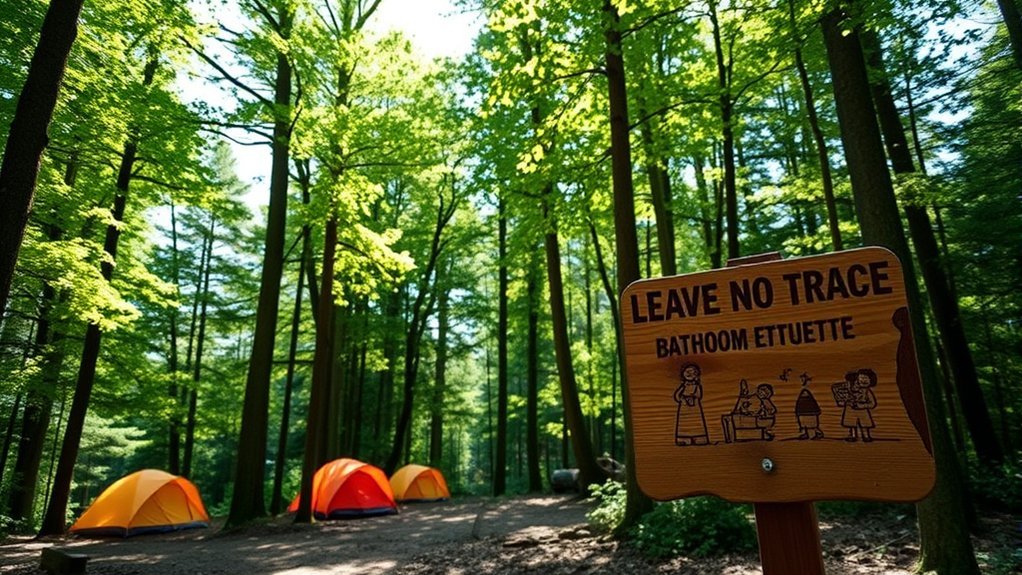
When camping near tent sites, always adhere to Leave No Trace bathroom rules. Use a cathole, digging it 6-8 inches deep and at least 200 feet away from water, trails, and campsites. Bury toilet paper or pack it out in a sealed bag. For menstrual products, dispose of them in a sealed bag and pack them out. Remember to wash dishes and dispose of wastewater at least 200 feet from water sources to protect local ecosystems. More practical tips await!
Understanding Leave No Trace Principles

Understanding Leave No Trace principles is essential for minimizing your impact on the environment while enjoying the outdoors. One key aspect of these principles is proper human waste disposal. When you’re camping, always dig a cathole 6-8 inches deep and at least 200 feet away from water sources, trails, and campsites. This simple eco-friendly practice helps prevent contamination and protects water quality. Make certain to bury your toilet paper deep in the cathole or pack it out with other hygiene products to avoid attracting wildlife.
If you’re camping with a group for multiple nights, spread out your cathole sites to lessen the impact on any single area. In sensitive locations, consider using EPA-approved pack-out systems for waste disposal. Finally, remember to pack out menstrual hygiene products, as they don’t decompose quickly and can harm local ecosystems. Following these guidelines guarantees a cleaner, healthier environment for everyone.
Importance of Proper Waste Disposal
Proper waste disposal is essential for maintaining the health of our natural environments. Over 100 pathogens, including Giardia and Hepatitis A, lurk in human waste, posing serious health risks to both humans and wildlife. You need to bury solid waste in catholes that are 6-8 inches deep and at least 200 feet away from water sources, campsites, and trails. This practice helps prevent pollution and disease spread. Inadequate disposal is a common problem, reported by 25% of National Park Service managers, so it’s vital to follow proper methods.
Don’t forget about toilet paper and menstrual products; pack them out or bury them in catholes. They decompose slowly and can disrupt ecosystems, attracting wildlife and contaminating the environment. Using EPA-approved pack-out systems during backpacking trips guarantees sanitary waste disposal, especially in sensitive or remote areas. By prioritizing proper waste disposal, you’re protecting both your health and wildlife safety.
Guidelines for Human Waste Management
When it comes to managing human waste, digging a cathole 6-8 inches deep and placing it at least 200 feet away from water sources, trails, and campsites is essential for preventing pollution. Remember to cover the cathole with natural materials after use and either bury or pack out your toilet paper to keep wildlife safe. If you’re camping in a group, spread out your catholes and always pack out any hygiene products to minimize your impact on the environment.
Proper Cathole Depth
To guarantee effective waste management while camping, it’s crucial to dig catholes with the right depth and dimensions. Aim for cathole construction that’s 6-8 inches deep and 4-6 inches in diameter. This promotes proper decomposition and minimizes environmental impact. Always locate your cathole at least 200 feet away from water sources, trails, and campsites to prevent contamination. After use, cover the cathole with natural materials to disguise it and promote soil recovery. If you’re camping with a group for multiple nights, disperse your cathole locations to avoid overuse of a single area. Remember, pack out toilet paper and hygiene products, as they decompose slowly and shouldn’t be buried in catholes. Enjoy your time outdoors responsibly!
Packing Out Waste
After digging catholes and managing your waste responsibly, you may encounter situations where packing out waste becomes necessary. In narrow river canyons, solid human waste must be packed out to guarantee proper waste containment and protect the environment. The EPA offers approved pack-out systems for sanitation solutions during backpacking trips, helping prevent pollution and disease spread. Always bury toilet paper deep in a cathole or pack it out with your hygiene products to avoid attracting wildlife. If camping with a group, disperse catholes to minimize impact. Remember to pack out menstrual waste, like tampons and pads, in sealable plastic bags, as they don’t decompose effectively. Your efforts in waste management contribute to preserving nature’s beauty for everyone.
Best Practices for Toilet Paper Disposal
While enjoying the great outdoors, it is vital to handle toilet paper disposal responsibly to protect the environment. When nature calls, you have two main options: bury your toilet paper in a cathole 6-8 inches deep, at least 200 feet from water, trails, and campsites, or pack it out in a sealed bag. This helps prevent wildlife attraction and contamination.
Consider using unscented toilet paper or eco-friendly options like leaves or biodegradable wipes to minimize your impact. If you decide to pack out your used toilet paper, sealable plastic bags are essential for containing odors and maintaining hygiene. Remember, toilet paper doesn’t decompose quickly, and improper disposal can lead to pollution and litter in our beautiful natural areas. By following these best practices, you contribute to the Leave No Trace principles and help keep the outdoors pristine for everyone.
Managing Menstrual Waste Responsibly
When you’re out in nature, managing menstrual waste responsibly is essential for maintaining the environment’s integrity. Tampons and pads must be packed out rather than buried, as they don’t decompose quickly and can harm wildlife if left behind. Use sealable plastic bags to contain your menstrual waste for sanitary packing out, guaranteeing that it doesn’t attract animals. If you’re using a menstrual cup, dispose of any waste in a cathole, following the same guidelines as solid human waste. Avoid scented menstrual products, as they can draw wildlife and pollute natural areas. Always adhere to Leave No Trace principles by carrying out all menstrual hygiene products. By practicing proper menstrual product disposal, you not only promote personal freedom but also protect the beauty of the wilderness for others to enjoy. Embrace these practices to maintain a sustainable and respectful relationship with nature.
Wastewater Disposal and Cleanliness
When you’re out in nature, proper wastewater disposal is essential for protecting water quality and local ecosystems. Always wash dishes and clean yourself at least 200 feet away from water sources, and pack out all kitchen waste and hygiene products in sealable bags. By following these guidelines, you’ll help maintain a clean and safe environment for everyone.
Proper Waste Disposal
Proper waste disposal is essential for preserving the environment, especially when it comes to managing wastewater and maintaining cleanliness. Always wash your dishes and dispose of grey water at least 200 feet away from water sources to protect aquatic ecosystems. Use biodegradable soap sparingly, and rinse your dishes in a pot or jug, allowing the soil to filter out contaminants before disposal. Remember to pack out all leftover food and kitchen waste, as even small amounts can cause wildlife attraction and disrupt their natural behaviors. Carry trash bags for collecting all waste, including food scraps, to avoid attracting animals and to keep your campsite clean. Following these practices guarantees a harmonious coexistence with nature.
Hygiene Product Management
Managing hygiene products effectively is crucial for maintaining cleanliness and protecting the environment during outdoor activities. Always pack out used menstrual hygiene products like tampons and pads, as they don’t decompose quickly and can attract wildlife. Use sealable plastic bags to prevent leakage and odor. Similarly, pack out or bury toilet paper in a cathole to avoid contamination. When cleaning, carry water at least 200 feet from any water source, using biodegradable soap sparingly. Dispose of wastewater away from these areas to protect local ecosystems. Consider eco-friendly alternatives, such as menstrual cups or reusable cloth pads, to minimize waste. Embracing these practices guarantees you enjoy your outdoor adventures without harming nature.
Water Quality Protection
To protect water quality while enjoying the outdoors, it’s essential to dispose of wastewater responsibly. Poor practices can lead to water contamination and harm aquatic ecosystems. Follow these guidelines to keep our waters clean:
- Wash dishes and clean up kitchen waste at least 200 feet away from water sources to prevent contamination.
- Use biodegradable soap sparingly; even these products can impact water quality negatively.
- Carry and dispose of grey water at least 200 feet from any water source to minimize pollution.
Avoid using soaps, lotions, or personal care products near water. Properly dispose of human waste in catholes located 200 feet from water, trails, and campsites to maintain water quality and protect local wildlife habitats.
Impact of Soaps & Lotions on Water Quality
While enjoying the great outdoors, it’s easy to overlook how the soaps and lotions we use can affect water quality. Even biodegradable soap can harm aquatic ecosystems if used improperly, so it’s best to minimize its use altogether. Always wash at least 200 feet away from shorelines to prevent contaminating freshwater sources.
Consider using the following table to understand the impact of personal care products:
| Product Type | Impact on Water Quality |
|---|---|
| Biodegradable Soap | Can still harm aquatic life |
| Lotions | May introduce harmful chemicals |
| Sunscreens | Can block sunlight essential for flora |
| Insect Repellents | Can be toxic to fish and insects |
| Body Oils | Contribute to water pollution |
Rinsing with water in a pot or jug allows soil to act as a natural filter, helping to protect our precious water resources. Stay aware and practice responsibility!
Engaging Others in Leave No Trace Practices
Engaging others in Leave No Trace practices is essential for preserving our natural spaces, especially when it comes to bathroom etiquette in the outdoors. You can foster community engagement and promote litter awareness by implementing a few simple strategies:
- Involve Kids: Organize scavenger hunts for litter, teaching children the importance of waste disposal in outdoor settings.
- Host Discussions: Facilitate group talks that highlight the significance of proper human waste management. This helps prevent pollution and the spread of harmful pathogens.
- Workshops: Set up educational events to discuss Leave No Trace principles, emphasizing the correct disposal of waste to protect our environment.
Resources for Further Learning on Waste Management
Understanding waste management is essential for anyone who enjoys the outdoors. To deepen your knowledge, explore these educational resources that focus on proper waste disposal, health implications, and conservation practices.
| Resource Type | Description | Link |
|---|---|---|
| Online Courses | Courses on Leave No Trace principles | [Leave No Trace Center](https://lnt.org) |
| Guides & Handbooks | Thorough guides on waste management | [US Forest Service](https://fs.usda.gov) |
| Workshops & Events | Local events focused on outdoor ethics | [Earth Day Network](https://earthday.org) |
| Community Forums | Discussions and tips from experienced campers | [Backcountry Forum](https://backcountry.com) |
Frequently Asked Questions
Can I Bury My Toilet Paper Instead of Packing It Out?
You can’t bury your toilet paper; it doesn’t decompose quickly. Instead, pack it out for proper waste management. This keeps the environment clean and respects nature, ensuring future campers enjoy the same beautiful surroundings you did.
What if There Are No Trees to Dig a Hole Near My Tent?
If there are no trees for digging, consider using alternative waste disposal methods like portable toilets. They’re convenient, environmentally friendly, and can be set up easily, ensuring your camping experience remains enjoyable and responsible.
How Deep Should I Dig My Waste Hole?
When you dig your waste hole, aim for at least six to eight inches deep. Think of it as planting a seed; proper digging techniques guarantee nature thrives, while responsible waste disposal keeps the wilderness flourishing.
What Should I Do if I Accidentally Contaminate a Water Source?
If you accidentally contaminate a water source, report it immediately to local authorities. To prevent contamination in the future, always use designated restroom facilities and keep waste at least 200 feet away from any water source.
Are There Biodegradable Options for Toilet Paper?
Like a gentle breeze rustling leaves, you can choose biodegradable toilet paper from eco-friendly brands. These alternatives break down naturally, ensuring your adventures leave nothing but footprints, embracing nature’s beauty without harming it.
Conclusion
By following these Leave No Trace bathroom rules, you help preserve the beauty of nature for everyone. Imagine stepping into a pristine campsite, free from the scars of human waste. It’s up to you to guarantee that future adventurers can enjoy the same experience. The next time you’re out in the wild, remember: your actions matter. So, will you commit to leaving no trace behind? The choice is yours, and the impact is profound.