
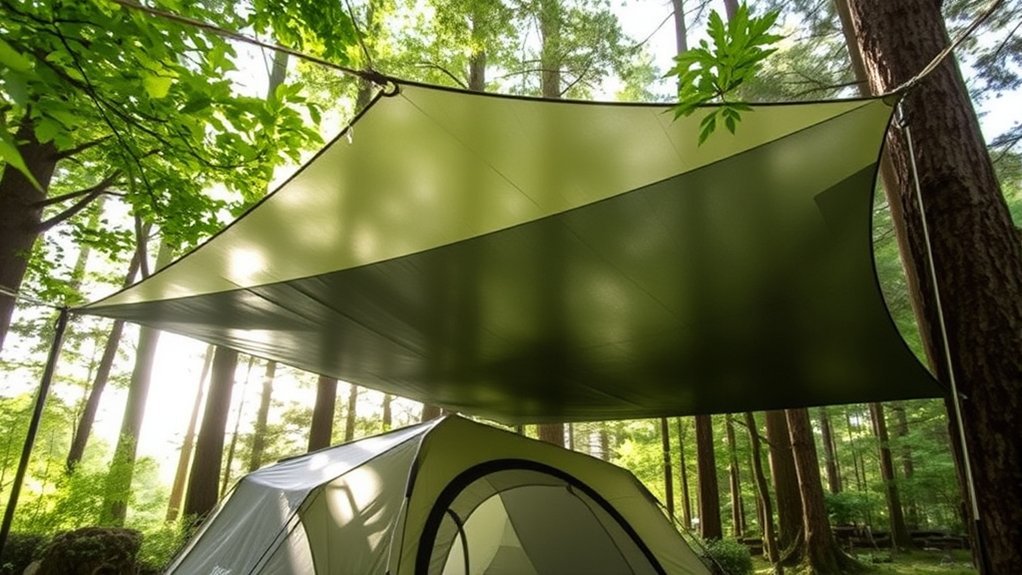
To use a tarp with your tent for rain and shade, first, set up a taut ridge line between two sturdy anchor points. Use taut line hitches for easy adjustment and secure the tarp corners with stakes. Position the tarp at an angle to direct rainwater away and create a shaded area for cooking or relaxing. Regularly check the tension and adjust as weather changes. There’s more to learn about effective tarp techniques and configurations for your camping adventures.
Benefits of Using a Tarp With a Tent

Using a tarp with your tent not only boosts waterproofing but also enhances your overall camping experience. A tarp provides an extra layer of protection against heavy rain, ensuring your tent stays dry inside. Additionally, it extends your living space outdoors, offering a shaded area for cooking or relaxing during hot days—perfect for those who crave freedom in nature.
By adjusting the height of your tarp, you can increase airflow around the tent, reducing condensation while still keeping rain at bay. This flexibility allows you to adapt your setup based on changing weather conditions.
Tarp materials vary widely, so choose one that best suits your needs. Incorporating this simple camping accessory not only shields your gear from moisture but also creates a comfortable environment, transforming your campsite into a cozy retreat. Embrace the liberation of outdoor living with the benefits a tarp provides!
Essential Knot Techniques for Tarp Setup
Mastering a few essential knot techniques can greatly improve your tarp setup and overall camping experience. Start with the taut line hitch; it’s crucial for adjusting the tension of your tarp along the ridge line, enabling quick repositioning in changing weather. Next, consider using Prusik knots, which act as friction hitches, letting you maintain adjustable tension while securely holding your tarp in place.
When you need to connect two ropes of the same diameter, the reef knot (or square knot) is your go-to for a semi-permanent attachment. Additionally, the girth hitch, or lark’s foot, is an easy way to attach a Prusik knot to the main line for simple adjustments.
Step-by-Step Tarp Configuration
Once you’ve got your knot techniques down, it’s time to set up your tarp for ideal protection and functionality. Start by establishing a ridge line between two sturdy anchor points; make sure it’s taut for a stable setup. Use taut line hitches at both ends of the tarp, allowing you to adjust easily based on weather considerations. Incorporate Prusik knots on the ridge line to create friction hitches that let you fine-tune the tarp’s position.
Position the tarp at an angle to effectively channel rainwater away from your tent while providing ample shade during sunny conditions. Choose tarp materials that are lightweight yet durable to withstand the elements. Finally, secure the tarp’s corners with stakes, ensuring all lines are taut and stable. This setup not only protects you from rain but also liberates you to enjoy the outdoors, no matter the weather.
Adjusting Your Tarp for Changing Weather
As weather conditions shift, adjusting your tarp becomes essential for maintaining comfort and protection. When rain approaches, lower the tarp height using taut line hitches to create a sloped surface that directs water away from your tent. This minimizes the risk of leaks and keeps you dry. Conversely, if you need shade, loosen the taut line hitch to raise the tarp and block direct sunlight effectively.
Utilize Prusik knots for quick repositioning along the ridge line, ensuring your tarp remains secure during changing weather. Remember to regularly check and tighten those taut line hitches after adjustments to keep tension high and prevent sagging. For ideal weather adaptability, consider configuring the tarp in various orientations based on the forecast—use a low setup for rain and a higher setup for sunny days. By staying proactive with these adjustments, you can enjoy a more liberated outdoor experience.
Securing the Tarp for Stability and Safety
Securing your tarp properly is essential for ensuring stability and safety in various weather conditions. Start by using stakes at each corner to anchor it firmly to the ground, giving you a solid defense against wind and rain. Employ taut line hitches along the ridge line for adjustable tension, letting you quickly reposition the tarp as the weather changes.
Here’s a quick reference for tarp securing methods:
| Securing Method | Purpose |
|---|---|
| Stakes | Anchor corners for stability |
| Taut Line Hitches | Allow adjustable tension |
| Girth Hitches | Secure connection to the main line |
| Prusik Knots | Create adjustable friction hitches |
| Height Adjustment | Change tarp height for rain/shade protection |
Frequently Asked Questions
Can I Use a Tarp of Any Size With My Tent?
You can use a tarp of any size with your tent, but tarp sizing matters for ideal coverage. Make sure it’s compatible with your tent’s dimensions to effectively protect against rain and provide shade.
How Do I Clean and Maintain My Tarp?
To clean your tarp, rinse it with water and mild soap. For tarp storage, keep it dry and folded to prevent mildew. If damaged, use tarp repair kits to patch holes and extend its life.
What Materials Are Best for a Camping Tarp?
For a reliable camping tarp, choose materials like ripstop nylon or polyethylene. These options guarantee durability against wear and weather, keeping you sheltered during unexpected storms. You’ll appreciate the freedom they provide during your adventures.
Can I Use a Tarp in Windy Conditions?
Yes, you can use a tarp in windy weather, but guarantee its stability. Secure it tightly with stakes or ropes to prevent flapping, and consider angling it to minimize wind resistance for better performance.
Is It Necessary to Use a Tarp With My Tent?
Sure, you might think a tarp’s just a fancy picnic blanket, but it’s not! Tarp benefits include extra tent protection, keeping you dry and shaded. Why risk soggy socks when you can be perfectly cozy?
Conclusion
Using a tarp with your tent enhances your camping experience by providing extra rain protection and shade. It keeps you dry during storms, cool in the sun, and adds versatility to your setup. By mastering essential knot techniques, adjusting for changing weather, and securing your tarp properly, you guarantee stability and safety. So, whether you’re seeking shelter from the rain or shade from the sun, remember: a well-placed tarp makes all the difference in your outdoor adventure.