
Last Updated on September 11, 2026 by Daniel Globe
Sore or swollen fingers after hiking are often caused by normal exercise-related hand swelling, tight rings or gloves, or gripping trekking poles too hard. The exact cause of exercise swelling is not fully understood, but heat, blood-vessel changes, and keeping your hands below heart level can all play a role. Pain, numbness, color changes, or one-sided swelling need closer attention.
Quick Answer
Your fingers may feel sore after hiking because your hands swell during exercise, tight gear presses on tissue, or repeated pole gripping strains the fingers and wrists. Remove rings, loosen gear, open and close your hands, and raise them briefly. Get medical help for severe pain, confusion, breathing trouble, persistent numbness, or color changes.
Key Takeaways
- Mild swelling in both hands during a hike is common and usually improves after you stop.
- Tight rings, gloves, cuffs, watchbands, backpack straps, and a hard trekking-pole grip can add pain or numbness.
- Swollen fingers alone do not prove dehydration or low sodium. Exercise-associated hyponatremia is more strongly linked to drinking beyond thirst during prolonged activity.
- Cold, pale, blue, waxy, or numb fingers may signal a cold injury or circulation problem rather than ordinary exercise swelling.
- Confusion, repeated vomiting, trouble walking, or shortness of breath at rest requires urgent help.
At a Glance
| Time Required | About 5 to 10 minutes for basic on-trail relief |
| Difficulty | Easy for mild, uncomplicated swelling |
| Tools Needed | No special tools; optional gloves, trekking poles, fluids, and a cold pack after the hike |
| Cost | Usually none |
Note: This article provides general information, not a diagnosis. Recurrent swelling or finger pain can have causes unrelated to hiking, including injury, arthritis, nerve compression, circulation problems, infection, medication effects, or an underlying medical condition.
Disclosure: As an Amazon Associate I earn from qualifying purchases. Some links on this page are affiliate links, at no extra cost to you.
Why Do Fingers Get Sore After Hiking?
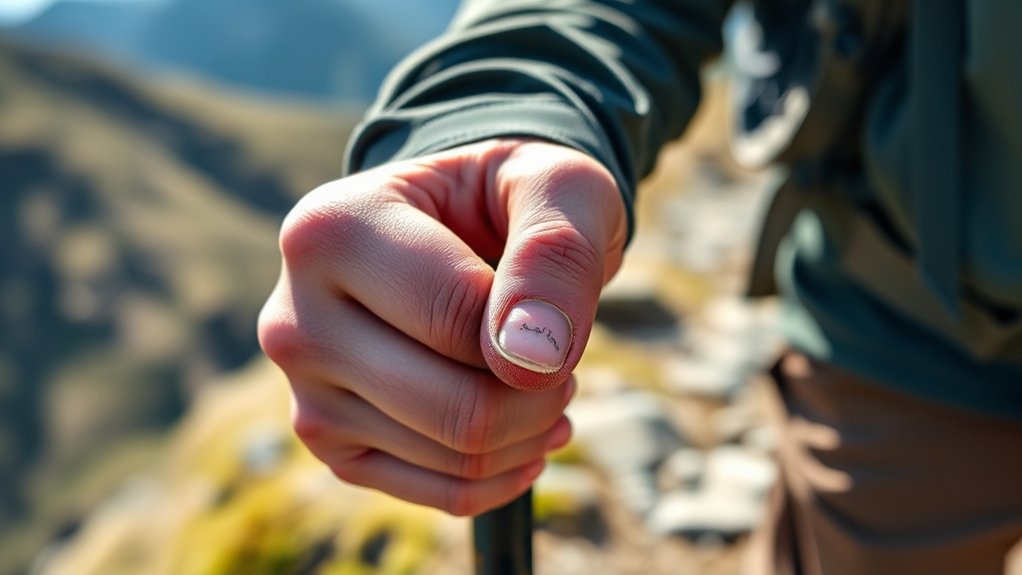
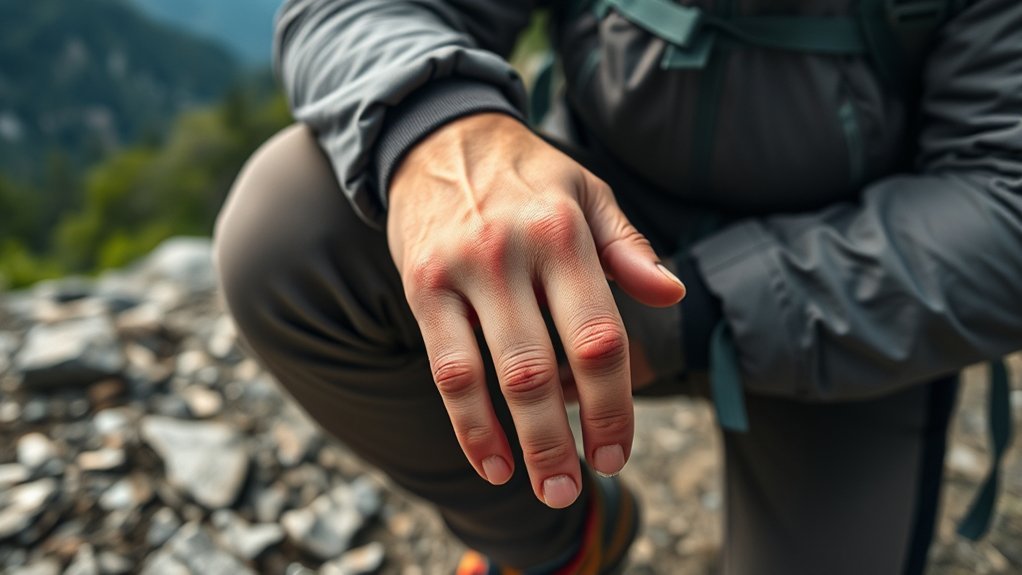
There are two different symptoms to separate: puffiness and pain. Mild puffiness in both hands can happen during walking, running, or hiking. According to Mayo Clinic, exercise-related hand swelling is common, although its exact cause is not completely clear.
Your fingers may feel sore when swelling makes rings or gloves tight. They can also hurt from forceful or repetitive gripping, especially if you squeeze trekking poles, scramble over rocks, or carry equipment with your hands. A recent jammed finger, arthritis, tendon irritation, or nerve compression may become more noticeable during a long hike.
| What You Notice | More Likely Explanation | First Step |
|---|---|---|
| Both hands feel puffy during a warm or long hike | Exercise-related hand swelling | Remove rings, move your fingers, and raise your hands briefly |
| Pain follows hard pole gripping | Muscle, tendon, or joint overuse | Relax your grip and take a break from the poles |
| One finger is sharply painful or deformed | Possible sprain, dislocation, or fracture | Stop using it and seek medical assessment |
| Fingers are pale, blue, waxy, or numb in cold weather | Cold injury or reduced circulation | Get warm and evaluate urgently if symptoms do not resolve |
Blood Flow Changes in Your Hands
During exercise, blood flow changes to meet the needs of your heart, lungs, working muscles, and skin. Your hand vessels may widen as your body releases heat. Your hands also spend much of the hike below heart level, which may allow fluid to collect in the fingers. These factors can make your hands feel tight or puffy.
The article should not present reduced circulation as the single proven cause. Exercise swelling has several possible mechanisms, and people respond differently. Warm weather, a long duration, and keeping the arms still may make the swelling more noticeable.
Exercise-related hand swelling is common, but the exact cause is not fully understood.
Keep your arms moving naturally. Every so often, spread your fingers, make a gentle fist, circle your wrists, and raise your hands above heart level for several seconds. Stop if a movement increases pain.
Tight Gear That Can Make Fingers Hurt
Rings, gloves, cuffs, and watchbands can become restrictive once your hands begin to swell. Remove rings before a long hike rather than waiting until they feel stuck. Gloves should feel secure without leaving deep marks, limiting finger movement, or causing tingling.
Backpack shoulder straps should not carry the whole load. Use the hip belt and adjust the sternum strap so the pack feels stable without digging into your shoulders. Very tight straps or poor pack fit can contribute to arm discomfort or nerve symptoms, but persistent numbness should not be dismissed as a simple fit problem.
Pro Tip: Take off rings before you start. Once a finger swells, removing a tight ring can become painful and may require medical help if circulation is affected.
Can Trekking Poles Make Your Fingers Sore?
Yes. Trekking poles can keep your arms moving and may help some people with exercise-related swelling, but gripping the handles too hard can strain the fingers, thumbs, wrists, and forearms. The problem is usually technique rather than the poles themselves.
- Use the wrist straps correctly so you do not have to squeeze the handles constantly.
- Keep a relaxed grip on flat or easy terrain.
- Change hand position during long climbs.
- Take short pole-free breaks if your fingers ache.
- Choose grips that fit your hands and gloves.
If one joint remains swollen or tender after the hike, treat it as a possible overuse injury rather than ordinary hand puffiness.
Can Dehydration and Low Sodium Swell Fingers?
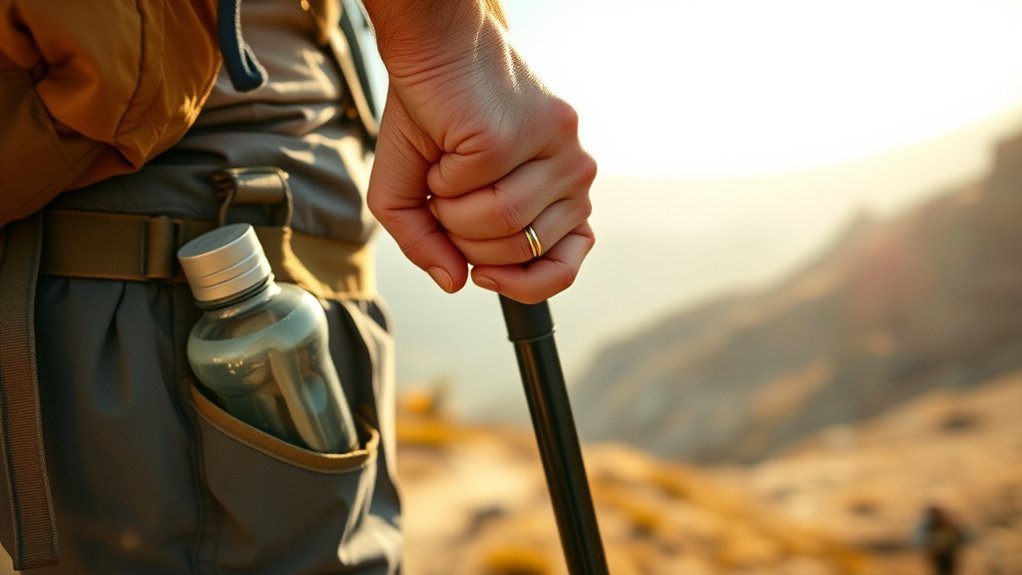
Swollen fingers by themselves do not tell you whether you are dehydrated or low in sodium. Ordinary exercise-related swelling can happen in a well-hydrated person. More importantly, dehydration and exercise-associated hyponatremia are different problems and should not be blended together.
Dehydration and Finger Swelling
Dehydration is not considered the main direct cause of exercise-related finger swelling. Heat, prolonged effort, blood-vessel responses, and arm position are more plausible contributors. Use thirst, urine output, the weather, your effort level, and your overall condition to guide hydration rather than using puffy fingers as a hydration test.
Do not force large amounts of water to prevent swelling. Drinking far beyond thirst can create a more dangerous problem during prolonged exercise.
Low Sodium and Hyponatremia
Exercise-associated hyponatremia means the blood sodium level becomes abnormally low during or soon after physical activity. The strongest preventable risk is drinking more fluid than the body can clear. Swollen hands can occur, but they are not enough to diagnose the condition. A blood test is required.
Symptoms can include headache, nausea, vomiting, bloating, unusual fatigue, confusion, agitation, seizures, or reduced consciousness. A 2025 review indexed by the National Library of Medicine reinforces drinking according to thirst rather than drinking ahead of thirst.
Warning: Confusion, repeated vomiting, seizures, severe headache, or unusual behavior during or after a long hike can signal severe hyponatremia or another emergency. Stop giving plain water and get urgent medical help.
Hydration Balance on Hikes
- Drink when you are thirsty. Avoid rigid rules that make you consume more than you want.
- Eat normally. On long outings, regular food can provide sodium and energy.
- Use electrolytes thoughtfully. An electrolyte drink may be useful during prolonged, hot, sweaty activity, but it does not make overdrinking safe.
- Watch your whole condition. Swelling with confusion, vomiting, or worsening headache is not normal.
Your needs vary with heat, pace, body size, sweat rate, duration, and food intake. People with kidney, heart, endocrine, or blood-pressure conditions should follow their clinician’s fluid and sodium advice.
Can Altitude Make Your Fingers Puffy?
Peripheral swelling of the hands, face, or feet can occur at altitude, but puffy fingers alone do not diagnose acute mountain sickness. The more important clues are recent ascent, sleeping altitude, rate of ascent, and symptoms such as headache, nausea, dizziness, unusual fatigue, or vomiting.
Altitude and Swelling
Any unacclimatized traveler sleeping at about 2,450 meters or 8,000 feet and above can develop altitude illness. The CDC Yellow Book advises gradual acclimatization and warns against ascending to sleep higher when symptoms of altitude illness are present.
Finger swelling may reflect fluid shifts, heat, exertion, or ordinary exercise swelling. Do not use it alone to decide whether you have adjusted safely to altitude.
Acclimatization and Circulation
| Factor | What It Means |
|---|---|
| Lower oxygen | Creates hypoxic stress and drives acclimatization |
| Rapid ascent | Raises the risk of acute altitude illness |
| Peripheral puffiness | Can occur but is not a reliable AMS test |
| Gradual ascent | Gives the body more time to acclimatize |
Stay at the same altitude if you develop mild symptoms. Do not keep ascending until they resolve. If symptoms worsen despite rest, descend and seek medical help.
Warning Signs to Watch
- Possible severe hyponatremia or high-altitude cerebral edema: confusion, unusual drowsiness, inability to walk straight, seizures, or loss of consciousness.
- Possible high-altitude pulmonary edema: shortness of breath at rest, chest congestion, worsening cough, marked weakness, or rapidly falling exercise ability.
- Possible injury or circulation problem: severe hand pain, weakness, persistent numbness, or blue, gray, white, or very pale fingers.
At altitude, descent is the most important response when serious symptoms appear or milder symptoms keep worsening.
Can PMS Cause Hand Swelling on Hikes?
Yes. Hormone-related fluid retention before a period can cause bloating and swelling of the hands or feet. The American College of Obstetricians and Gynecologists lists hand or foot swelling among possible physical symptoms of premenstrual syndrome.
| Sign | What It May Mean | What to Do |
|---|---|---|
| Puffy fingers before your period | Possible fluid retention | Remove rings before hiking |
| A repeated monthly pattern | Possible PMS-related timing | Track symptoms and your cycle |
| New or severe one-sided swelling | Less typical for PMS | Seek medical advice |
| Pain, redness, or warmth | Possible injury or inflammation | Do not assume hormones are the cause |
Cycle tracking can help you recognize a pattern, but it should not be used to explain away severe pain, redness, warmth, fever, or persistent numbness.
Cold, Numb, or Color-Changing Fingers Need Different Care
Cold or numb fingers are not always part of ordinary hiking swelling. Freezing temperatures can cause frostbite, while cold-triggered blood-vessel spasm can cause fingers to turn white or blue. The CDC lists numbness, white or grayish-yellow skin, and skin that feels firm or waxy as warning signs of frostbite.
- Get out of the cold and replace wet gloves.
- Warm the hands gently with body heat or warm, not hot, water if frostbite is suspected and refreezing is not possible.
- Do not rub, massage, or place numb skin against a heater.
- Seek medical care for persistent numbness, firm or waxy skin, blisters, or color that does not return.
How to Relieve Finger Soreness on the Trail
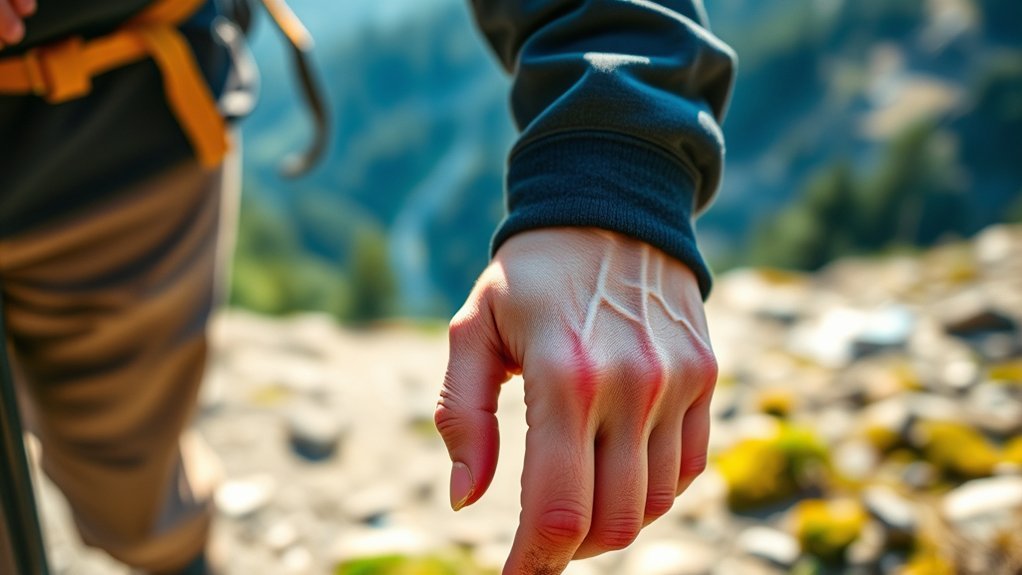
- Stop and check the hand. Look for a cut, sting, jammed finger, deformity, unusual color, or one-sided swelling.
- Remove restrictive items. Take off rings and loosen gloves, cuffs, watchbands, and backpack straps.
- Move gently. Spread your fingers, make a soft fist, circle your wrists, and let your arms swing.
- Raise your hands. Hold them above heart level for 30 to 60 seconds and repeat as needed.
- Relax your pole grip. Use the straps for support and stop using the poles for a while if gripping hurts.
- Drink according to thirst. Do not force water because your fingers look swollen.
- Rest or turn back. Stop the hike if pain, numbness, weakness, or swelling keeps increasing.
After the hike, a wrapped cold pack for up to 15 to 20 minutes may help a sore joint or soft-tissue strain. Do not put ice directly on the skin, and do not use cold treatment on a hand that may already have a cold injury.
How to Prevent Sore Fingers on Future Hikes
- Remove rings before long, hot, or high-altitude hikes.
- Choose gloves that allow a full fist without pressure points.
- Fit the backpack so the hip belt carries much of the load.
- Use trekking-pole straps and keep your grip light.
- Move your arms and hands regularly instead of holding one position.
- Protect your hands from cold, wind, and wet conditions.
- Drink to thirst and carry food suitable for the hike’s length and conditions.
- Reduce pole use and seek advice if the same joint hurts after every hike.
When to Get Finger Pain Checked
Mild puffiness that affects both hands and fades after rest is usually less concerning. Arrange a medical evaluation when pain keeps returning, lasts beyond several days, interferes with normal tasks, or comes with ongoing stiffness, tingling, numbness, weakness, or reduced grip.
The NHS finger-pain guidance recommends urgent assessment for severe pain, inability to move the finger or hold objects, a change in shape or color, loss of feeling after injury, or fever with finger pain.
Warning: Seek urgent help for sudden weakness, trouble speaking, severe confusion, breathing difficulty, a rapidly swelling hand, a finger that turns blue or white and stays that way, severe pain after injury, or swelling with fever, redness, and warmth.
Also get checked if only one hand repeatedly swells, a ring becomes trapped, symptoms wake you at night, or you have diabetes, circulation disease, kidney disease, heart disease, inflammatory arthritis, or another condition that can affect swelling and healing.
Frequently Asked Questions
Why do my hands hurt after hiking?
Your hands may hurt because exercise swelling makes gear feel tight, you gripped trekking poles too hard, or an existing joint, tendon, or nerve problem became irritated. Remove restrictive items, rest the hand, and seek care if pain is severe, one-sided, or persistent.
Is hiking 5 miles in 2 hours good?
That is an average pace of 2.5 miles per hour, which can be a solid pace on an easy trail. Steep climbs, rough ground, heat, altitude, pack weight, fitness, and rest stops can make a slower pace equally appropriate. Pace alone does not explain finger soreness.
How do I stop my fingers from swelling when I walk or hike?
Remove rings before starting, loosen restrictive gear, let your arms swing, open and close your hands, and raise them above heart level at intervals. Drink to thirst rather than forcing water. There is no guaranteed way to prevent ordinary exercise-related hand swelling.
How should finger capsulitis be treated?
Capsulitis means inflammation of a joint capsule, but finger pain after hiking should not be self-diagnosed as capsulitis. Reduce aggravating gripping, use a wrapped cold pack after a recent strain, and keep the finger moving gently within a comfortable range. Seek a clinician or hand therapist if swelling, stiffness, or pain persists.
Should I remove rings before hiking?
Yes, especially before a long, hot, or high-altitude hike. Fingers can swell during exercise, and a tight ring can become painful or restrict circulation. Store rings securely before you start rather than waiting for swelling to develop.
Conclusion
Sore fingers after hiking usually come from exercise-related swelling, tight gear, or repetitive gripping. Remove rings, loosen straps and gloves, move your hands, raise them briefly, and relax your pole grip. Do not assume swollen fingers mean dehydration, and do not force water. Severe pain, persistent numbness, color changes, confusion, breathing trouble, or worsening altitude symptoms need medical attention.
Sources
- Mayo Clinic: Hand swelling during exercise — exercise-related hand swelling, possible mechanisms, and practical relief measures
- National Library of Medicine: Pathophysiology and treatment of exercise-associated hyponatremia — overdrinking risk, symptoms, prevention, and treatment principles
- CDC Yellow Book: High-altitude travel and altitude illness — acclimatization, altitude warning signs, and descent guidance
- American College of Obstetricians and Gynecologists: Premenstrual syndrome — PMS-related hand and foot swelling
- CDC: Preventing frostbite — numbness, color changes, rewarming, and cold-injury warnings
- NHS: Finger pain — self-care limits and urgent assessment signs
