Last Updated on July 24, 2026 by Caleb Warren
Manitoba allows power-assisted bicycles on many roads, bicycle facilities, and approved trails, but your age and the bike’s design both matter. You must be at least 14 to operate one on a highway or bicycle facility. A legal e-bike must meet Manitoba’s motor, speed, pedal, and safety-control requirements, and every operator and passenger must wear an approved helmet.
Quick Answer
In Manitoba, you must be at least 14 to operate a legal power-assisted bicycle on a highway or bicycle facility. The bike must have working pedals, an electric-only motor rated at 500W or less, and motor assistance that stops above 32 km/h. Every rider and passenger must wear a properly fitted helmet.
Key Takeaways
- The minimum age to operate a power-assisted bicycle on a Manitoba highway or bicycle facility is 14.
- Helmet use is mandatory for e-bike operators and passengers of every age.
- The motor must have a continuous output of 500W or less and must stop providing power above 32 km/h.
- Most adult e-bikes cannot be ridden on ordinary sidewalks unless signs specifically allow cycling there.
- Manitoba provincial parks generally permit compliant e-bikes where mountain bikes are allowed, except in signed restricted areas.
Legal update: Manitoba passed broader personal-electric-vehicle amendments on June 1, 2026, but the legislation says those changes take effect only on a date fixed by proclamation. This guide follows the current consolidated Highway Traffic Act available in July 2026. Check the latest law before relying on it for a future trip.
Disclosure: As an Amazon Associate I earn from qualifying purchases. Some links on this page are affiliate links, at no extra cost to you.
Manitoba E-Bike Age Rules
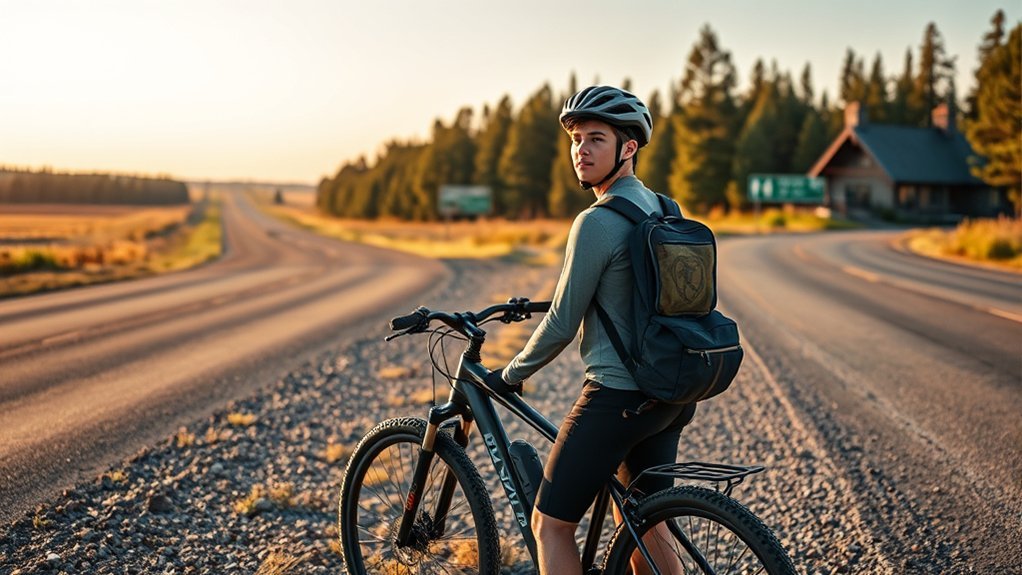
Under Manitoba’s Highway Traffic Act, you must be at least 14 years old to operate a power-assisted bicycle on a highway or bicycle facility. The owner must not allow a person under 14 to operate it in those locations.
You do not need a learner’s permit merely to operate a vehicle that legally qualifies as a power-assisted bicycle. The law also does not create a separate parental-consent document for riders who are 14 or older. However, parents and guardians should still confirm that a young rider can control the bike, brake safely, signal, and judge traffic before allowing independent road use.
Warning: A rider being old enough does not make every electric bike road-legal. The vehicle must also meet Manitoba’s complete power-assisted-bicycle definition. A high-powered, unlocked, gas-assisted, or improperly modified bike may not qualify.
What Makes an E-Bike Legal in Manitoba
Manitoba law uses the term power-assisted bicycle. A bike must meet all applicable parts of the legal definition, not only the 500W and 32 km/h limits.
| Requirement | Manitoba legal standard |
|---|---|
| Steering and pedals | It must have handlebars and operable pedals. |
| Number of wheels | It must be designed to travel on no more than three wheels in contact with the ground. |
| Pedal propulsion | The rider must be able to propel it by applying muscle power to the pedals. |
| Motor type | It may have an electric motor but no other type of motor. |
| Motor output | The motor’s continuous shaft-output rating must be 500W or less. |
| Motor speed limit | The motor must not provide motive power when the bike is travelling above 32 km/h. |
| Pedal-assist cut-off | When pedal assist is used, the motor must stop supplying motive power when the rider stops applying muscle power. |
| Throttle cut-off | When a throttle engages the motor, activating a brake must immediately stop the motor from providing motive power. |
| Motor control | It must have a rider-operated motor on/off mechanism, separate from the throttle when a throttle is fitted, or a mechanism that prevents motor engagement until the bike reaches at least 3 km/h. |
Check the motor label, owner’s manual, controller settings, throttle behaviour, and brake cut-off before riding. A manufacturer label is useful evidence of the specifications, but the former Manitoba provision requiring a particular permanent federal-compliance label has been repealed.
If the motor exceeds 500W, continues powering the bike above 32 km/h, uses gasoline, or no longer has working pedals, the vehicle does not qualify as a Manitoba power-assisted bicycle. Do not assume that it automatically becomes a street-legal motorcycle or moped. Its legal classification depends on its complete design and equipment. Contact Manitoba Public Insurance before using it on public roads.
Helmet Rules for Manitoba E-Bike Riders
Every person who operates or rides as a passenger on a power-assisted bicycle on a Manitoba highway or bicycle facility must wear a properly fitted and fastened protective helmet. This rule is not limited to riders under 18.
The separate under-18 helmet provision often quoted in Manitoba cycling guides applies to ordinary bicycles. Power-assisted bicycles have the stricter all-age requirement. Helmet standards are set through Manitoba’s Bicycle Helmets Regulation.
Wear the helmet level on your head, low enough to protect your forehead, with the side straps forming a V around each ear. Tighten the chin strap so it is secure without causing discomfort. Replace a helmet after a significant impact and follow its manufacturer’s replacement instructions.
Where You Can Ride in Winnipeg, Regina, and Saskatoon

Winnipeg and Other Manitoba Communities
In Manitoba, a power-assisted-bicycle operator generally has the same road rights and duties as a motor-vehicle driver. Obey traffic lights, stop signs, lane directions, and instructions from peace officers. Use bicycle lanes and bicycle facilities only where the route is open to your type of vehicle.
Manitoba’s sidewalk rule prohibits riding a bicycle with a rear-wheel diameter greater than 410 mm on an ordinary sidewalk. The restriction does not apply when a traffic-control sign or device permits bicycle use. Most adult e-bikes have wheels larger than 410 mm, so riders should normally use the roadway, a bike lane, or an authorized multi-use route rather than an ordinary sidewalk.
Local signs still control particular paths, parks, bridges, and construction areas. Dismount and walk when a route is marked for pedestrians only or when bicycle use is prohibited.
Regina and Saskatoon Comparison
Regina and Saskatoon are in Saskatchewan, so their rules do not replace Manitoba law. They matter only when you travel into Saskatchewan.
- Regina: The City of Regina says bicycles with tires smaller than 40 cm may use sidewalks. Larger bicycles may use sidewalks only in designated sidewalk-cycling areas.
- Saskatoon: The city allows children under 14 to ride bicycles on sidewalks. Saskatoon also states that e-bikes are treated as bicycles under its Bicycle Bylaw and may be used where bicycles are allowed.
Provincial definitions, helmet requirements, pathway rules, and municipal bylaws can change when you cross a provincial border. Check the destination city’s current official page before riding.
E-Bike Rules for Provincial Park Trails
Manitoba Parks says compliant e-bikes are generally allowed in provincial parks anywhere mountain bikes are allowed. Some trails or areas may allow mountain bikes but prohibit e-bikes. Those exceptions should be marked with signs.
Stay on designated routes, obey closures, control your speed, and yield to people walking or riding horses. When descending, give uphill trail users room. Do not use designated skiing-only or snowmobile trails unless current signs or park guidance specifically permit cycling.
Before entering a trail, check:
- Whether e-bikes or mountain bikes are allowed on that specific route.
- Whether seasonal closures or wet-trail restrictions are in place.
- Whether your battery has enough reserve for the return journey.
- Whether the brakes, tires, motor cut-off, and lights work correctly.
- Whether you have water, a map, basic repair supplies, and weather-appropriate clothing.
If you ride in a Saskatchewan provincial park, check Saskatchewan’s rules separately. Do not assume that Manitoba’s park policy applies across the border.
Road Equipment and Riding Rules
Motor specifications are only part of legal operation. Manitoba also requires bicycles and power-assisted bicycles to have the equipment required by the Highway Traffic Act and its regulations.
Lights and Reflectors
When vehicle lights are required, your e-bike must have a white front lamp and a rear lamp or reflector that shows red or amber. Under the Act, the front light must be visible from 90 metres in normal weather, while the rear light or reflector must be visible from 60 metres.
Use the required lights before sunrise, after sunset, and during poor visibility. Reflective clothing, spoke reflectors, and a second rear light can make you easier to see, but they do not replace required equipment.
Single File and Road Position
Ride predictably and follow current road-position rules. Manitoba generally prohibits riding beside another moped, bicycle, or power-assisted bicycle in the same traffic lane. Exceptions apply when turning, attempting a turn, overtaking, or passing.
Signal before turning or changing position. Do not hold a phone, carry an item that interferes with control, or attach yourself or the bike to a moving vehicle.
Passengers and Child Seats
Do not carry more people than the e-bike was designed and constructed to carry. A passenger must use a proper passenger position rather than sitting on a rack, frame, or other part not designed for a person.
When carrying a young child, use equipment designed for the child’s age and weight, follow the manufacturer’s installation instructions, and confirm that clothing, feet, and hands cannot contact moving parts. Every e-bike passenger must wear a properly fitted helmet.
Manitoba E-Bike Insurance and Registration
A vehicle that meets Manitoba’s definition of a power-assisted bicycle is excluded from the Highway Traffic Act’s definition of a motor vehicle. It does not require ordinary motor-vehicle registration, a number plate, or a driver’s licence merely because it is a compliant e-bike.
E-Bike Registration Rules
Provincial vehicle registration is different from an optional bicycle-theft registry. A community, police service, or private registry may let you record your serial number, but that record does not convert the bike into a provincially registered motor vehicle.
Keep the following information for theft recovery and insurance purposes:
- The frame serial number.
- The make, model, colour, and wheel size.
- The motor and battery serial numbers.
- Photographs of the complete bike and identifying marks.
- The purchase receipt and any modification records.
If the vehicle no longer meets the power-assisted-bicycle definition, stop using it as an e-bike on public roads or bicycle facilities until Manitoba Public Insurance or another appropriate authority confirms its classification and legal requirements.
Insurance Coverage Options
Manitoba does not require ordinary motor-vehicle liability insurance for a compliant power-assisted bicycle. However, that does not mean every loss is covered automatically by a homeowner’s or tenant’s policy.
Ask your insurer to confirm in writing:
- The maximum e-bike value covered.
- Whether theft away from home is covered.
- Whether the battery and accessories are included.
- Whether there is a special deductible.
- Whether personal liability applies while riding.
- Whether modified or higher-powered bikes are excluded.
- Whether commercial delivery or rental use is excluded.
Premiums and coverage limits vary, so a universal yearly price would be misleading.
Winter Riding Tips for Manitoba E-Bike Riders
Manitoba winters can reduce traction, visibility, braking performance, and usable battery range. Slow down, increase stopping distance, and check current route conditions before leaving.
Battery Performance in Cold
Lithium-ion battery performance temporarily drops as temperatures fall. The actual range loss varies by battery model, temperature, wind, tire pressure, terrain, rider weight, and assistance level. Avoid relying on a fixed percentage.
- Store a removable battery indoors when the bike is kept in an unheated area.
- Begin the ride with a battery that has been stored and charged within the manufacturer’s approved temperature range.
- After a very cold ride, let the battery warm naturally to the approved charging temperature before connecting the charger.
- Do not use a heater, hair dryer, open flame, or other direct heat source to warm the battery.
- Use only the charger approved for that battery system.
- Plan a shorter route and keep a larger battery reserve than you would in mild weather.
Pro Tip: Check your battery maker’s operating, storage, and charging temperature limits. Bosch and Shimano both recommend room-temperature storage or charging practices during cold-weather use, but the exact limits vary by system.
Winter Tire Traction
Use tires designed for the surfaces you expect. Winter or studded bicycle tires can improve grip on packed snow and ice, while wider tires may help on soft snow. Tire choice does not remove the need to slow down.
- Brake earlier and more gently than you would on dry pavement.
- Keep the bike upright while crossing polished ice, ruts, and metal surfaces.
- Avoid sudden steering, throttle, or pedal-assist changes.
- Use a pressure within the tire manufacturer’s permitted range.
- Check tread, studs, wheel security, and brake operation before each ride.
Safe Night Visibility
Snow, road spray, short daylight hours, and dirty lenses can reduce visibility. Clean your lights and reflectors before riding and confirm that the front white light and rear red or amber light or reflector remain visible.
- Carry enough battery reserve to power the lights for the entire trip.
- Wear reflective or high-visibility outer clothing.
- Choose a familiar, maintained route when possible.
- Slow down before dark corners, snowbanks, intersections, and driveways.
- Assume drivers may not see you until you have confirmed eye contact or vehicle movement.
Frequently Asked Questions
How old must you be to ride an e-bike in Manitoba?
You must be at least 14 to operate a power-assisted bicycle on a Manitoba highway or bicycle facility. An owner must not allow a person under 14 to operate one in those places.
Do adults have to wear an e-bike helmet in Manitoba?
Yes. Manitoba requires every operator and passenger on a power-assisted bicycle to wear a properly fitted and fastened protective helmet when riding on a highway or bicycle facility.
Can you ride an e-bike on a Manitoba sidewalk?
Most adult e-bikes should not be ridden on ordinary sidewalks. Manitoba prohibits sidewalk operation of a bicycle whose rear wheel exceeds 410 mm in diameter unless a traffic-control device permits bicycle use on that sidewalk.
Do Manitoba e-bikes need registration or a driver’s licence?
A vehicle that meets Manitoba’s power-assisted-bicycle definition does not require ordinary motor-vehicle registration, a licence plate, or a driver’s licence. A bike that exceeds the legal limits may fall into another vehicle category and should be checked with Manitoba Public Insurance.
Are throttle e-bikes legal in Manitoba?
A throttle can be compatible with Manitoba’s definition when the bike meets every other requirement. The motor must stop providing motive power when a brake is activated, and the bike must have the required motor-control or engagement-safety mechanism.
Is it illegal to ride a regular bicycle without a helmet in Canada?
Canada does not have one helmet rule for every rider. Provincial and territorial laws vary by age and vehicle type. In Manitoba, ordinary bicycle riders under 18 must wear helmets, while power-assisted-bicycle operators and passengers must wear helmets regardless of age.
How can you cycle safely on the road?
Wear the required helmet, obey signs and signals, use working lights, signal turns, ride predictably, leave extra braking distance, and avoid distractions. Check the brakes, tires, motor cut-off, battery mount, and wheel security before entering traffic.
Conclusion
You can operate a legal e-bike on Manitoba highways and bicycle facilities from age 14, but age is only one part of the rule. Confirm that the bike has working pedals, an electric-only motor rated at 500W or less, proper motor cut-offs, and assistance that stops above 32 km/h. Wear a helmet at every age, use the required lights, obey sidewalk and trail signs, and verify the current law before riding a modified bike or entering another province.
Note: This article provides general legal and safety information, not individual legal or insurance advice. Provincial laws, proclamations, municipal bylaws, trail rules, and insurance policies can change.
Sources
- Manitoba Highway Traffic Act — minimum age, legal power-assisted-bicycle definition, helmets, sidewalks, road operation, lights, and equipment.
- Manitoba Bicycle Helmets Regulation — approved helmet standards for bicycle and power-assisted-bicycle use.
- Manitoba Parks: Trails and Electric Bikes — provincial park access, e-bike specifications, trail restrictions, and etiquette.
- Manitoba Public Insurance: Cycling 101 — Manitoba cycling safety, visibility, road skills, and helmet guidance.
- Shimano: Looking After Your E-Bike Battery in Winter — cold-weather battery storage, range, and charging guidance.
- The Highway Traffic Amendment and Drivers and Vehicles Amendment Act, 2026 — enacted personal-electric-vehicle amendments and proclamation requirement.