

Last Updated on July 27, 2026 by Daniel Globe
Ticks should not keep you off the trail, but a little preparation can greatly reduce your chance of being bitten. The best approach combines protective clothing, an EPA-registered repellent, smart trail habits, a careful tick check after hiking, and prompt removal of any attached tick.
Quick Answer
To avoid ticks while hiking, wear long clothing, consider 0.5% permethrin-treated gear, apply an EPA-registered skin repellent, stay near the center of trails, and avoid brushing against tall grass. After hiking, check your body and gear, shower soon after coming indoors, and remove attached ticks promptly with fine-tipped tweezers.
Key Takeaways
- Wear long pants, long sleeves, closed shoes, and clothing that makes crawling ticks easier to spot.
- Use an EPA-registered repellent and follow the exact product label for application and reapplication.
- Products containing 0.5% permethrin can be used on certain clothing and gear but should not be applied directly to skin.
- Stay near the center of hiking trails and limit contact with tall grass, brush, and leaf litter.
- After hiking, check your body, clothes, gear, children, and pets, and remove attached ticks promptly.
At a Glance
| Time Required | A few minutes before the hike plus a careful head-to-toe check afterward |
| Difficulty | Easy |
| Tools Needed | Protective clothing, EPA-registered repellent, optional permethrin-treated gear, mirror, and fine-tipped tweezers |
| Cost | Varies; many prevention steps use clothing and basic supplies you may already own |
More than 89,000 Lyme disease cases were reported to CDC in 2023, while separate research methods suggest roughly 476,000 people may be diagnosed and treated for Lyme disease in the United States each year.
Disclosure: As an Amazon Associate I earn from qualifying purchases. Some links on this page are affiliate links, at no extra cost to you.
Understanding the Risks of Tick Bites
Ticks are more than an outdoor nuisance. In the United States, different tick species can spread bacteria, viruses, and parasites that cause illnesses including Lyme disease, anaplasmosis, babesiosis, ehrlichiosis, Rocky Mountain spotted fever, tularemia, and several other conditions. The diseases carried by ticks vary by tick species and geographic region.
Lyme disease is caused primarily by Borrelia burgdorferi in the United States and is transmitted through infected blacklegged ticks. Early symptoms can include fever, headache, fatigue, muscle or joint aches, swollen lymph nodes, and an expanding rash called erythema migrans. Untreated infection can sometimes affect the joints, heart, and nervous system.
Recent Lyme surveillance numbers also need context. According to the Centers for Disease Control and Prevention, more than 89,000 cases were reported in 2023. However, CDC changed the national Lyme disease surveillance definition in 2022, so recent reported totals should not be directly interpreted as a simple continuation of older trends.
Other tickborne diseases may produce fever, headache, fatigue, muscle aches, or rash. Because symptoms overlap and people do not always remember a tick bite, tell a healthcare professional about recent hiking, camping, gardening, or other possible tick exposure if you become ill.
Understanding Tick Habitats
Ticks are commonly encountered in grassy, brushy, wooded areas and places with leaf litter. Wildlife and pets can also carry ticks into places where people spend time. Many bites occur close to home rather than deep in the wilderness.
Tick exposure can occur throughout the year. According to CDC tick-prevention guidance, ticks are generally most active during warmer months, especially from April through September. Activity still varies by species, location, weather, and season, so hikers should not depend on a single temperature cutoff.
Choosing the Right Clothing for Tick Prevention
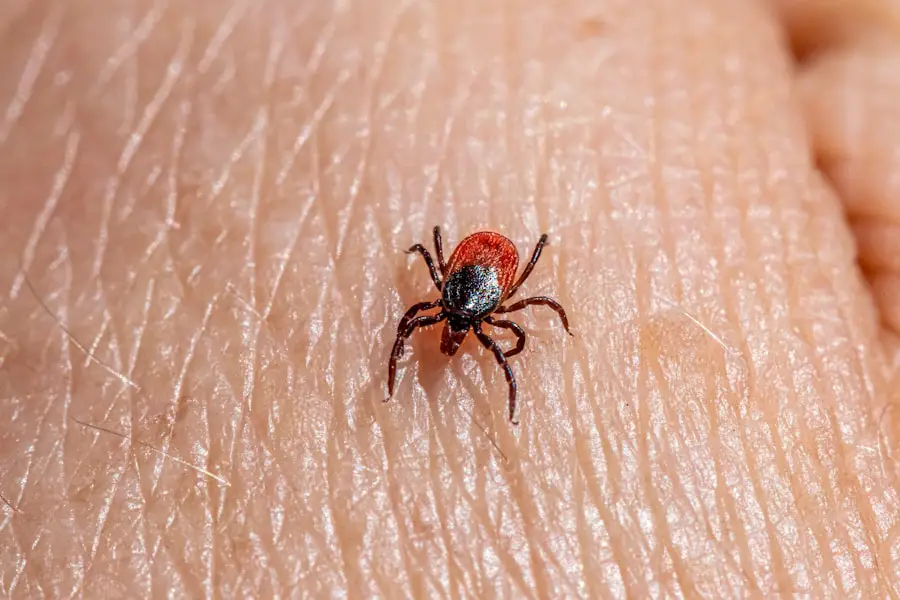
Clothing provides a simple physical barrier against ticks. Wear long pants, long sleeves, socks, and closed-toe shoes when hiking through areas where ticks may be present. Light-colored clothing can also make crawling ticks easier to notice before they reach your skin.
Tucking your shirt into your pants and your pant legs into your socks can reduce exposed openings. This is especially useful when walking near brush, tall grass, or dense ground vegetation.
For added protection, CDC recommends clothing and gear treated with products containing 0.5% permethrin. Depending on the product, permethrin can be used on boots, pants, socks, tents, and other gear. Factory-treated clothing is another option.
Warning: Do not apply permethrin products intended for clothing and gear directly to your skin. Follow the product label and allow treated items to dry as directed before wearing or handling them.
Using Insect Repellent for Tick Prevention
Skin-applied repellent is another important layer of protection. Choose an EPA-registered insect repellent labeled for protection against ticks.
| Active Ingredient | Where It Is Used | Protection Time | Important Guidance |
|---|---|---|---|
| DEET | Skin; some products may also be labeled for clothing | Varies by concentration and formulation | Follow the exact product label |
| Picaridin | Skin; uses vary by product | Varies by concentration and formulation | Use only as often as the label directs |
| Oil of Lemon Eucalyptus (OLE) / PMD | Skin when permitted by the label | Varies by product | Do not use OLE or PMD products on children under age 3 |
| IR3535 or 2-undecanone | Depends on the registered product | Varies by product | Check that the label specifically lists tick protection |
Apply repellent only as directed. Avoid spraying it into the eyes or mouth, and do not apply more often than the label allows. When using repellent on children, an adult should apply the product according to its age restrictions and directions.
Generic essential-oil mixtures should not automatically be treated as equivalent substitutes for EPA-registered repellents. Some products exempt from EPA registration have not been evaluated by EPA for effectiveness.
Pro Tip: Choose your repellent before the hike and keep it in an easy-to-reach pocket instead of burying it at the bottom of your pack. Check the label before leaving so you know when, or whether, reapplication is allowed.
Reducing Tick Exposure While You Hike
Your route and trail habits matter. When possible, walk near the center of established trails rather than brushing against tall grass, shrubs, or leaf-covered edges. Avoid sitting directly in brush or dense vegetation during breaks.
If you stop for lunch or a rest, choose a clear, dry area away from tall vegetation. Check exposed clothing periodically, especially after walking through narrow or overgrown sections of trail. Removing a crawling tick before it attaches is much easier than dealing with an attached tick later.
Checking for Ticks After Hiking
A post-hike tick check is one of the most useful prevention steps because ticks can remain on clothing or crawl around the body before attaching.
CDC recommends checking your clothing, gear, pets, and body after returning from a potentially tick-infested area. Pay particular attention to:
- Under the arms
- In and around the ears
- In and around the hair and scalp
- Inside the belly button
- Around the waist
- Between the legs
- Behind the knees
Use a full-length or hand mirror to inspect areas that are difficult to see. Parents should also check children carefully.
Showering within about two hours of coming indoors can help wash away unattached ticks and provides another opportunity to inspect your skin.
Ticks can also hitchhike indoors on clothing. CDC advises tumble-drying dry clothing on high heat for about 10 minutes when appropriate for the fabric. Damp clothing may require longer. If clothes need to be washed first, follow CDC guidance and the garment-care instructions because cool or medium-temperature water may not reliably kill ticks.
Note: Do not stop at a quick ankle check. Ticks often crawl to warm or protected areas before attaching, including the scalp, waist, groin, armpits, and backs of the knees.
Removing Ticks Safely and Effectively
If you find an attached tick, remove it as soon as possible. The CDC tickborne disease manual recommends the following method:
- Use clean, fine-tipped tweezers.
- Grasp the tick as close to the skin’s surface as possible.
- Pull upward with steady, even pressure.
- Do not twist or jerk the tick.
- If mouthparts break off and cannot be removed easily, leave them alone and allow the skin to heal rather than digging aggressively into the skin.
- Clean the bite area and your hands with soap and water, rubbing alcohol, or another appropriate antiseptic.
Do not use petroleum jelly, nail polish, heat, or similar folk remedies to try to make an attached tick release itself. The goal is prompt mechanical removal.
After removal, note when and where the bite likely occurred. A clear photo of the tick and bite area may also be useful if symptoms later develop.
When to Seek Medical Advice After a Tick Bite
Watch for symptoms during the following days and weeks. Contact a healthcare professional if you develop fever, chills, headache, unusual fatigue, muscle or joint pain, an expanding rash, or other concerning symptoms after a tick bite or possible tick exposure.
Tell the clinician where you were hiking and approximately when the exposure happened. Geography matters because different ticks and diseases occur in different regions.
For Lyme disease, a healthcare professional may consider a single preventive dose of doxycycline after certain high-risk blacklegged-tick bites. According to CDC Lyme disease treatment guidance, this is used only in specific circumstances and is not routine treatment after every tick bite.
Factors considered can include whether the tick was a blacklegged tick, whether the exposure occurred where Lyme disease is common, how engorged the tick was, how recently it was removed, and whether doxycycline is appropriate for the patient.
Warning: Antibiotics after a tick bite are not a general preventive treatment for every tickborne disease. Do not self-treat with leftover antibiotics. Seek medical care if symptoms develop or if you are concerned about a high-risk exposure.
Creating a Tick-Free Zone at Home
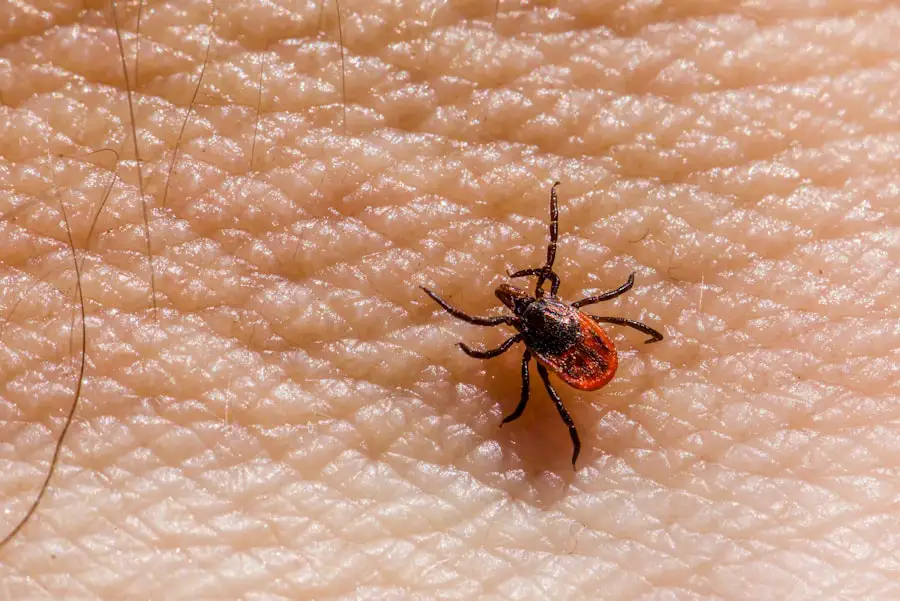
Tick prevention does not end at the trailhead. Ticks also live around homes, particularly where lawns meet wooded, brushy, or leaf-covered areas.
CDC recommends several landscaping steps that can reduce contact with blacklegged ticks:
- Mow grass regularly.
- Remove accumulated leaf litter.
- Clear tall grass and brush near frequently used areas.
- Trim shrubs and branches to increase sunlight where practical.
- Create a roughly 3-foot barrier of wood chips or gravel between lawns and wooded or brushy borders.
- Place playground equipment, patios, and seating areas away from wooded or brushy edges when possible.
These measures do not guarantee a tick-free property, but they can reduce favorable habitat and lower opportunities for people to brush against tick-prone vegetation.
Vaccination and Medication for Tick Prevention
There is currently no human Lyme disease vaccine available in the United States. CDC reports that new Lyme vaccine candidates are being studied, but an investigational vaccine should not be confused with a vaccine that is available for routine use.
Dogs are different. Canine Lyme vaccines are available, and veterinary groups recommend considering vaccination based on a dog’s location, travel, lifestyle, and exposure risk. Vaccination does not replace regular tick prevention because ticks can transmit diseases for which no vaccine is available.
Ask your veterinarian which tick preventive is appropriate for your pet. CDC specifically warns that cats can be highly sensitive to some chemicals, so do not apply a tick-control product to a cat unless it is specifically appropriate for cats and recommended or approved for that use.
Check pets for ticks after hiking because a tick can ride indoors on an animal and later attach to a person. Remove attached ticks promptly and keep veterinarian-recommended prevention up to date.
Educating Yourself and Others About Tick Prevention
Tick risk is not the same everywhere. Before hiking in an unfamiliar region, check current information from local or state health departments and CDC resources. Knowing which tick species are common in the area can help you understand which illnesses are relevant.
Teach children and hiking partners the same basic routine: avoid brush when possible, use appropriate repellent, look for crawling ticks during breaks, and complete a full tick check after the trip.
Simple preparation works best when everyone in the group follows it consistently.
Enjoying the Outdoors Without the Fear of Ticks
Ticks are a real health concern, but they do not have to ruin hiking, camping, or time in the backyard. The most practical defense is a layered routine: cover exposed skin where practical, use an EPA-registered repellent, treat suitable clothing or gear with permethrin, stay clear of brush, and check yourself carefully after returning indoors.
Prompt tick removal matters, and symptoms after possible tick exposure should not be ignored. With those habits in place, you can spend more time enjoying the trail and less time worrying about what might be hiding in the grass.
If you are planning a hiking trip and organizing your gear, this guide to 5 Must-Have Minimalist Travel Backpacks for Spring Adventures 2025 may also help with packing. Keep your repellent and fine-tipped tweezers somewhere easy to reach rather than buried at the bottom of your pack.
Frequently Asked Questions
What are ticks and why are they a concern while hiking?
Ticks are blood-feeding arachnids. Some species can transmit bacteria, viruses, and parasites that cause illnesses such as Lyme disease, anaplasmosis, babesiosis, ehrlichiosis, Rocky Mountain spotted fever, and tularemia. Hikers can encounter them in grassy, brushy, wooded, and leaf-covered areas.
How can I avoid ticks while hiking?
Wear long clothing, use an EPA-registered repellent, consider 0.5% permethrin-treated clothing or gear, stay near the center of trails, and avoid brushing against tall grass and dense vegetation. Complete a full tick check when you return indoors.
Should I shower after hiking in an area with ticks?
Yes. CDC recommends showering soon after coming indoors and notes that showering within two hours can help wash off unattached ticks while giving you another opportunity to check your body.
What should I do if I find an attached tick?
Use fine-tipped tweezers to grasp the tick close to the skin and pull upward with steady, even pressure. Do not twist, crush, burn, or cover the tick with petroleum jelly or nail polish. Clean the bite area and your hands afterward.
Do I need antibiotics after every tick bite?
No. Preventive antibiotics are not routinely recommended after every tick bite. A healthcare professional may consider doxycycline after certain high-risk blacklegged-tick exposures when specific criteria are met. Contact a clinician if you are unsure about your exposure or develop symptoms.
How can I protect my pets from ticks while hiking?
Use a veterinarian-recommended tick preventive and inspect your pet after outdoor trips. Do not assume a product made for dogs is safe for cats. Ask your veterinarian about Lyme vaccination for dogs that live in or travel to higher-risk areas.
What symptoms should I watch for after a tick bite?
Possible tickborne illness symptoms include fever, chills, headache, fatigue, muscle or joint aches, and rash. Symptoms differ by disease. Contact a healthcare professional if you become ill after a known tick bite or recent exposure in grassy, brushy, or wooded areas.
Sources
- CDC — Preventing Tick Bites — clothing, permethrin, trail habits, tick checks, showering, and post-hike clothing guidance.
- CDC — About Ticks and Tickborne Disease — tickborne illnesses and common symptoms.
- CDC — Lyme Disease Surveillance and Data — reported cases and national diagnosis estimates.
- CDC — Lyme Disease Vaccine — current human vaccine availability and vaccine research.
- CDC — Treatment and Intervention for Lyme Disease — treatment and post-exposure antibiotic guidance.
- U.S. EPA — Skin-Applied Repellent Ingredients — EPA-registered repellent active ingredients.

