
Last Updated on July 26, 2026 by Daniel Globe
Rattlesnakes usually want to avoid people, but a hidden snake may defend itself when a hiker steps too close, reaches into its shelter, or tries to move it. You can lower your risk by staying on clear trails, watching every hand and foot placement, using a light after dark, keeping pets close, and giving any snake a wide escape route.
Quick Answer
To avoid rattlesnakes while hiking, stay on open trails, scan several steps ahead, avoid reaching into brush or rock gaps, use a headlamp after dark, and keep children and pets close. If you see a rattlesnake, stop, back away slowly, and never touch, move, corner, or kill it.
Key Takeaways
- Rattlesnake activity changes with species, temperature, season, elevation, and weather, so stay alert at every time of day.
- Wear closed-toe boots or shoes and durable long pants, but do not assume normal clothing is bite-proof.
- Keep your hands and feet out of holes, brush, wood piles, rock gaps, and other places you cannot clearly see.
- If a snake blocks the trail, back away and wait or choose another route. Never use a stick to move it.
- Treat every suspected rattlesnake bite as an emergency and arrange immediate transport to medical care.
At a Glance
| Preparation Time | About 10 to 15 minutes before the hike |
| Difficulty | Easy precautions that require steady attention |
| Gear Needed | Closed-toe hiking footwear, long pants, headlamp, charged phone, map, water, and normal first-aid supplies |
| Cost | $0 if you already own basic hiking and emergency gear; otherwise the cost varies by equipment |
Warning: A suspected rattlesnake bite is a medical emergency. Call emergency services and arrange immediate evacuation. Do not wait for swelling or other symptoms, and do not use a suction kit, tourniquet, ice, electric shock, pressure wrap, or a cut-and-suck method.
Disclosure: As an Amazon Associate I earn from qualifying purchases. Some links on this page are affiliate links, at no extra cost to you.
Understand Rattlesnake Behavior
Rattlesnakes are pit vipers in the family Viperidae and subfamily Crotalinae. They are ambush predators that commonly feed on rodents and other small animals. They often remain still and depend on camouflage, which is one reason hikers may not notice a snake until they are close.
Most rattlesnakes do not chase hikers or seek conflict. A defensive bite is more likely when a person steps near a hidden snake, blocks its escape, tries to pick it up, or attempts to kill or relocate it. The safest response is always to create distance.
A rattle is a warning, but you should never depend on hearing one. A snake may remain silent, its rattle may be damaged, or a young snake may have only a small button at the tip of its tail. Wind, flowing water, headphones, and normal trail noise can also prevent you from hearing the sound.
Rattlesnake activity is strongly affected by ground temperature and local conditions. Some species are active around dawn and dusk. During very hot weather, snakes may become more active at night and rest in shade or underground during the day. In cooler weather, they may bask during daylight hours. The National Park Service’s Great Basin rattlesnake guidance explains this temperature-based behavior.
There is no reliably snake-free time of day. Weather, surface temperature, habitat, and species matter more than the clock alone.
Plan Before Hiking in Rattlesnake Country
Check the park or land-management website before leaving home. Look for recent trail closures, wildlife notices, extreme heat warnings, and emergency contact information. Learn which venomous snakes live in the area, but do not depend on being able to identify every snake in the field.
Download an offline map and tell someone where you are going and when you expect to return. Carry a charged phone, but remember that many canyons, deserts, forests, and remote trails have poor service. A satellite messenger or personal locator beacon can improve emergency communication on isolated routes.
- Save the park ranger or emergency dispatch number when one is available.
- Know the fastest route back to a trailhead or road.
- Note where cell service is likely to disappear.
- Carry enough water to avoid rushing or losing focus in hot weather.
- Bring a headlamp even when you expect to finish before sunset.
Pro Tip: Keep one ear free if you use audio on the trail. Seeing a snake is more dependable than hearing a rattle, but full awareness of nearby movement and warnings still helps.
Choose Appropriate Hiking Gear
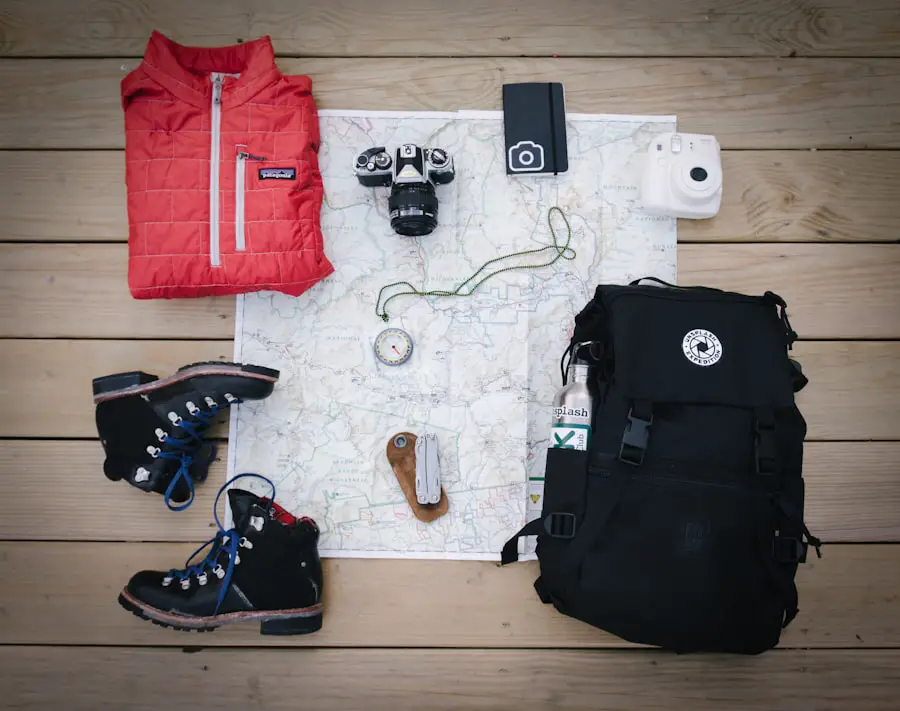
Wear closed-toe hiking shoes or boots with good traction. Heavy boots and durable pants may provide some protection if an accidental strike reaches your lower leg, but normal hiking clothing is not guaranteed to stop a bite. Do not take greater risks because you are wearing boots.
Long pants also protect against thorns, sharp plants, ticks, and sun exposure. Optional snake gaiters may add another barrier in high-risk work or backcountry conditions, but their effectiveness depends on construction, height, fit, and correct use.
Your first-aid kit should contain normal wound-care supplies such as clean dressings, gauze, medical tape, gloves, and soap or cleansing supplies. Do not depend on a commercial snakebite suction device. The 2026 Wilderness Medical Society pit-viper guideline advises against suction devices and several other traditional snakebite treatments because they provide no demonstrated benefit and may cause harm.
A hiking pole can improve balance and help prevent a fall. It should not be used to poke into brush, explore holes, touch a snake, pin a snake, or push one off the trail.
Stay on Designated Trails
Staying on a maintained trail lowers the chance that you will step into dense grass, brush, rock piles, or other cover where a rattlesnake may be difficult to see. It also protects fragile habitat and helps you avoid becoming lost during an emergency.
Walk near the center of the trail when conditions allow. Scan the path several steps ahead instead of looking only at your feet. Slow down near bends, shaded rocks, trail edges, fallen branches, and warm surfaces where a snake may rest.
Do not take shortcuts through tall vegetation. Avoid climbing over rock piles or wood piles when you cannot see where your hands and feet will land. Current Joshua Tree National Park safety guidance recommends remaining on marked paths, giving rattlesnakes space, and avoiding unseen holes, rocks, and dense vegetation.
Watch Every Hand and Foot Placement
Most prevention comes down to one habit: do not place any part of your body where you cannot first see. Rattlesnakes may shelter beside rocks, beneath shrubs, inside crevices, under steps, near logs, or along the shaded edge of a trail.
| Trail Situation | What to Watch | Safer Action |
|---|---|---|
| Fallen log | A snake resting on the far side | Step onto the log, look beyond it, and then step down only if the landing area is clear |
| Rock ledge or crevice | Hidden shelter that cannot be seen from above | Use visible handholds and never reach blindly into a gap |
| Tall grass or dense brush | A camouflaged snake beside the trail | Remain on the cleared path and do not push through vegetation |
| After dusk | Snakes on warm pavement, rocks, or trail surfaces | Use a bright headlamp and scan the full trail before each step |
| Rest stop | A snake under a bush, bench, rock, or pack | Inspect the ground before sitting or placing your gear down |
If you hear a rattle but cannot see the snake, stop moving. Do not jump, run, or step backward blindly. Look carefully without leaning into brush or moving rocks. Once you know where the snake is, back away along the clear route you already used.
When hiking in a group, leave enough room for each person to see the trail. Warn the people behind you about hazards without crowding the snake. Keep young children within arm’s reach in rocky, brushy, or low-visibility areas.
Know What to Do When You See a Rattlesnake
Encountering a rattlesnake can be startling, but quick or aggressive movements are not helpful. Follow these steps:
- Stop. Do not move closer for a photograph or identification.
- Locate the snake. If you only heard a rattle, identify its position without entering brush or stepping blindly.
- Back away slowly. Follow the open ground you already crossed.
- Give it an escape route. Do not stand on both sides of the snake or surround it with a group.
- Wait from a distance. Many snakes will leave when they no longer feel trapped.
- Reroute or turn around. If the snake remains on a narrow trail, do not try to push, lift, capture, or scare it away.
Never handle a rattlesnake, even if it appears injured or dead. A recently killed snake or separated head may still bite through reflex action. If a photograph can be taken from a safe distance without delaying evacuation after a bite, it may help experts, but identifying the exact species is less important than obtaining emergency care.
Note: Do not rely on a fixed “strike distance” to decide how close is safe. Terrain, the snake’s position, and its size vary. Create as much distance as the trail safely allows.
Understand Common Rattlesnake Habitats
Rattlesnakes live in deserts, grasslands, forests, scrubland, canyons, rocky hillsides, and other environments across much of the Americas. The exact habitat depends on the species.
Western diamondback rattlesnakes often use arid or semi-arid landscapes, while timber rattlesnakes are associated with forested and rocky environments. Other species may live in prairie, dune, mountain, wetland-edge, or woodland habitats.
Potential hiding or resting places include:
- Rock cracks and ledges
- Rodent burrows
- Dense shrubs and tall grass
- Fallen logs and wood piles
- Shaded spaces below steps, boardwalks, or structures
- Warm pavement or rocks after sunset
- Cool ground beneath bushes during hot weather
Shed skin or tracks can show that snakes use an area, but the absence of these signs does not mean the trail is snake-free. Do not approach or handle a shed skin if doing so requires reaching into a concealed area.
Choose Hiking Times Based on Conditions
No single hiking time prevents rattlesnake encounters. Instead, consider recent temperatures and the habitat you will cross.
- Hot summer weather: Snakes may shelter during the hottest hours and become active in the evening or at night.
- Mild spring or fall weather: Snakes may bask or travel during daylight.
- Cool mornings: A snake may remain slow and hidden, but it can still defend itself if disturbed.
- Warm nights: Use a headlamp because snakes may rest or travel on surfaces that retain heat.
Do not assume an inactive-looking snake is harmless. A cool or resting rattlesnake can still strike when threatened.
Store Food and Trash Properly
Food storage is important for general wildlife safety and Leave No Trace practices. Rattlesnakes are not normally attracted to a sandwich or wrapper in the same way that bears, rodents, or insects may be. However, repeated food waste can support rodent activity, and rodents are common prey for rattlesnakes.
Pack out every wrapper, crumb, and leftover. At camp, follow local rules for bear-resistant containers, food lockers, or vehicle storage. Keep the sleeping area free of food and inspect the ground around tents, packs, shoes, and cooking equipment before reaching or stepping.
The existing footwear guide, 5 Must-Have Waterproof Sneakers for Your Spring 2025 Travels, may help with wet-weather footwear choices. However, waterproofing alone does not make a shoe suitable for rattlesnake protection. Traction, coverage, durability, and secure fit also matter.
Keep Children and Pets Close
Children should not run ahead through brush, climb unattended on rock piles, or reach into holes and crevices. Teach them to freeze and call an adult if they see or hear a snake. Do not encourage them to approach for a closer look.
Keep dogs on a physical leash where required and anywhere rattlesnakes may be present. A curious dog may place its face into brush, investigate a hole, or approach a coiled snake before the owner sees the danger.
Use a leash short enough to prevent the dog from entering dense vegetation. A well-fitted harness may provide better control for a dog that pulls. Commands such as “leave it,” “come,” and “stay” are helpful, but training does not replace a leash.
If a pet is bitten, move away from the snake, keep the animal as calm as possible, and contact an emergency veterinarian immediately. Carry the pet if it is safe and practical. Do not apply ice, cut the wound, use suction, or try to catch the snake. The CDC wildlife safety guidance provides additional advice for snakebites involving people and pets.
First Aid for a Suspected Rattlesnake Bite
A rattlesnake bite requires immediate professional assessment, even when pain or swelling seems mild. Venom effects may progress after the bite, and early access to an antivenom-capable medical facility is the most important intervention.
What to Do
- Move beyond the snake’s reach. Do not attempt to capture or kill it.
- Call emergency services immediately. In the United States, you can also contact Poison Control at 1-800-222-1222.
- Keep the person calm and still. Avoid unnecessary walking or exertion.
- Remove rings, watches, tight footwear, and restrictive clothing. Swelling can develop quickly.
- Loosely immobilize the bitten limb at heart level. Do not bind it tightly or apply a pressure-immobilization wrap.
- Use the safest and fastest available evacuation. The bitten person should not drive because dizziness, weakness, or fainting may develop.
- Cover the area with a clean, dry dressing if available. Do not delay evacuation to perform extensive wound care.
- Follow instructions from emergency dispatch, Poison Control, or medical professionals.
What Not to Do
- Do not use a snakebite suction device.
- Do not cut, puncture, or burn the bite.
- Do not suck venom by mouth.
- Do not apply ice or immerse the limb in cold water.
- Do not apply a tourniquet.
- Do not use electric shock.
- Do not apply a tight pressure bandage for a North American pit-viper bite.
- Do not drink alcohol or caffeine as a treatment.
- Do not take aspirin, ibuprofen, naproxen, or another medicine unless a medical professional advises it.
- Do not wait for symptoms before seeking care.
- Do not risk another bite by catching or killing the snake.
The CDC/NIOSH venomous-snake guidance and the 2026 Wilderness Medical Society guideline both emphasize immediate medical attention and warn against common folk remedies.
Medical Safety Notice: This article provides general outdoor-safety information, not individual medical advice. Always follow emergency-dispatch, Poison Control, and treating-clinician instructions.
Report Sightings When Appropriate
You do not need to report every rattlesnake seen in natural habitat. In many parks, seeing native wildlife along a trail is normal. Follow the rules and instructions posted by the specific park, preserve, campground, or land-management agency.
Contact a ranger or site manager when:
- A snake remains in a busy visitor center, restroom, playground, campsite, doorway, or other developed area.
- The snake is injured or trapped in human-made material.
- Park signs or staff specifically request wildlife reports.
- The sighting creates an immediate hazard that visitors cannot safely avoid.
Report the location from a safe distance. Include the trail name, nearby landmark, approximate time, and direction the snake moved. Do not approach it to obtain coordinates or a close photograph.
Frequently Asked Questions
What are rattlesnakes?
Rattlesnakes are venomous pit vipers in the genera Crotalus and Sistrurus. They have heat-sensing facial pits and usually have a segmented rattle, although a rattle may be small, damaged, or missing.
Where are rattlesnakes commonly found?
Different species live in deserts, forests, grasslands, scrublands, rocky slopes, canyons, prairies, and other habitats across much of the Americas. Hikers should pay special attention near brush, rocks, logs, holes, ledges, and warm trail surfaces.
How can I avoid rattlesnakes while hiking?
Stay on cleared trails, scan ahead, keep hands and feet out of places you cannot see, use a light after dark, wear closed-toe footwear, supervise children, leash pets, and never approach or move a snake.
What should I do if a rattlesnake blocks the trail?
Stop and back away slowly. Wait at a generous distance or use another route. If the snake does not leave, turn around. Do not use a pole, rock, branch, or other object to move it.
Will a rattlesnake always rattle before striking?
No. A rattlesnake may remain still and silent, and its rattle may be damaged or too small to hear. Watch the trail instead of relying on an audible warning.
Should I carry a snakebite suction kit?
No. Current North American pit-viper guidance advises against suction devices because they do not provide a demonstrated benefit and may damage tissue. Carry normal first-aid supplies and a reliable way to request emergency evacuation instead.
What should I do after a suspected rattlesnake bite?
Move away from the snake, call emergency services, keep the person still, remove constricting items, loosely immobilize the limb at heart level, and arrange immediate evacuation. Do not use suction, ice, a tourniquet, cutting, electric shock, or a tight pressure wrap.
Sources
- Wilderness Medical Society Clinical Practice Guidelines for Pit Viper Envenomations: 2026 Update — field management, evacuation, first aid, protective clothing, and treatments to avoid
- CDC/NIOSH: Venomous Snakes at Work — bite prevention and emergency first-aid guidance
- CDC: Wildlife Safety — snakebite precautions for people and pets
- National Park Service: Joshua Tree Safety Guidelines — trail behavior, distance, and wildlife precautions
- National Park Service: Great Basin Rattlesnake — habitat, seasonal activity, temperature, and encounter guidance
- Poison Control: Snakebite Guidance — emergency actions and harmful remedies to avoid

