
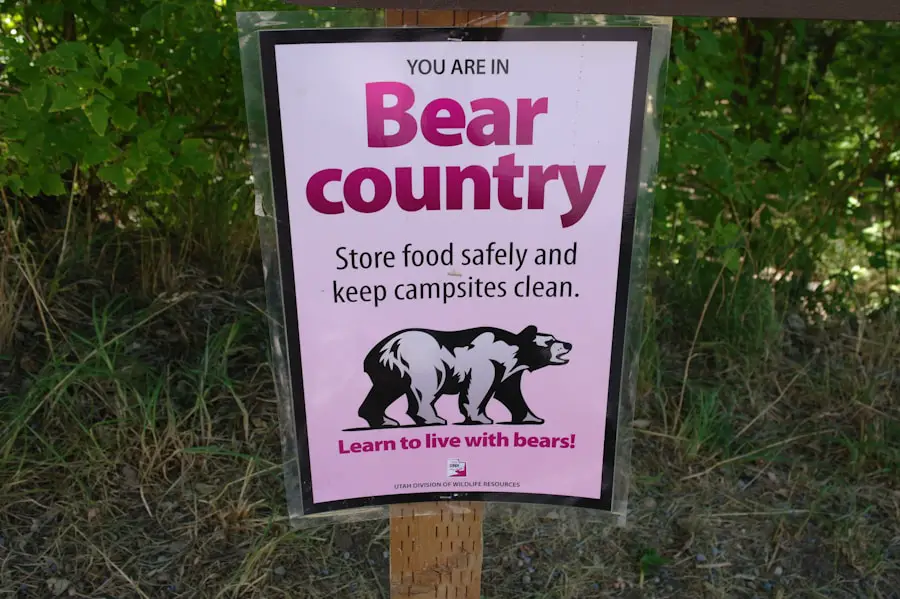
Last Updated on July 27, 2026 by Daniel Globe
Seeing a bear while hiking can be exciting, but a close encounter can become dangerous if you react the wrong way. The safest response depends on what the bear is doing, whether it has noticed you, and in some situations whether it is a black bear or a brown/grizzly bear. Preparation before the hike is just as important as your actions during the encounter.
Quick Answer
If you encounter a bear while hiking, do not run. Stay calm, keep your group together, speak calmly, and slowly create distance without blocking the bear’s escape route. Ready your bear spray. If the bear charges, stand your ground and use spray within its effective range. If contact occurs, your response depends on the bear’s behavior and species.
Key Takeaways
- Never approach a bear, even when it appears calm, and never run from one.
- Make your presence known on trails by talking, calling out, or clapping, especially near blind corners, dense vegetation, streams, and other noisy areas.
- Carry bear spray where it can be reached immediately if it is recommended or allowed where you are hiking.
- Do not identify a bear by color alone. Black bears can be brown or cinnamon, while brown/grizzly bears have more reliable features such as a shoulder hump and dished facial profile.
- A defensive brown/grizzly attack, a black-bear attack, and a predatory or stalking attack do not all call for the same response.
At a Glance
| Time Required | Allow a few minutes before the hike to check local bear rules and your gear; an actual encounter requires an immediate response. |
| Difficulty | Moderate. The steps are simple, but stress makes prior practice important. |
| Tools Needed | Bear spray where recommended or allowed, an accessible holster, current trail or park information, and approved food storage for overnight trips. |
| Cost | Varies by location and gear. Checking local regulations is free; bear spray and bear-resistant food-storage costs depend on the product or local rental program. |
Warning: Bear behavior is not completely predictable, and local agencies may use different encounter protocols. Check the current rules for the exact park, forest, refuge, or other land you are visiting before starting your hike. Never rely on one universal “play dead” rule.
Disclosure: As an Amazon Associate I earn from qualifying purchases. Some links on this page are affiliate links, at no extra cost to you.
Understanding Bear Behavior
Bears are intelligent, adaptable wild animals. Many bears try to avoid people when given enough warning and space, but an individual bear may react differently depending on whether it is surprised, protecting cubs, defending food, accustomed to human food, curious, or treating a person as possible prey.
Body language can provide clues. Huffing, jaw-popping, swatting the ground, lowering the head, or laying the ears back can indicate stress or defensive behavior. A bear that stands on its hind legs is not necessarily preparing to attack; it may simply be trying to see or smell you better.
A bear standing on its hind legs may simply be trying to identify you. Judge the whole situation rather than one posture.
Season, food availability, cubs, carcasses, and human activity can all affect where bears are found. For black and brown/grizzly bears, feeding activity changes through the year, so never assume an area is safe simply because you expect bears to be denning.
The National Park Service bear-safety guidance emphasizes keeping your distance, avoiding surprise encounters, and learning the rules for the specific place you are visiting.
Preparing for a Bear Encounter
Preparation starts before you reach the trailhead. Find out which bear species occur in the area, review current trail closures and bear alerts, and read the land manager’s current encounter and food-storage rules. Required wildlife distances vary by location, so do not assume that one distance applies everywhere.
Reduce the Chance of Surprising a Bear
- Hike in a group when practical and keep the group together.
- Stay alert for tracks, scat, digging, claw marks, overturned logs, and other bear sign.
- Talk, call out, or clap periodically so a bear can hear you coming.
- Make extra noise around blind corners, thick brush, ridgelines, streams, waterfalls, and during windy conditions.
- Avoid wearing headphones that prevent you from hearing wildlife or other hikers.
- Give carcasses a wide berth. A bear may be nearby and may defend the food source.
- Never approach cubs or place yourself between a mother and her young.
The NPS specifically notes that talking, calling out, and clapping are more effective than relying on bear bells.
Pro Tip: Practice drawing your bear spray from its holster before the hike. Keep the safety clip on during normal travel, and consider using an inert training canister if you want to practice spraying.
Carry Bear Spray Correctly
Where bear spray is recommended or permitted, carry an EPA-registered product specifically labeled for deterring bears. Keep it on your belt or chest where either hand can reach it quickly. A can buried inside a backpack may be useless during a sudden charge.
Check the expiration date and read the manufacturer’s directions before your trip. The Grand Teton National Park bear-spray guidance also warns that personal-defense pepper spray is not a substitute for a product designed for bears.
Identifying Different Types of Bears
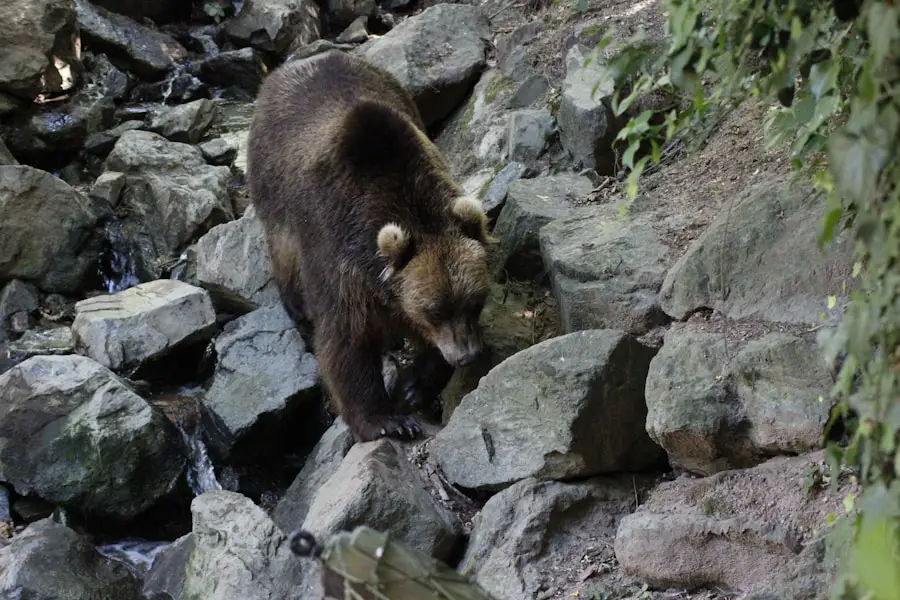
North America has American black bears, brown bears or grizzlies, and polar bears. Brown bears and grizzly bears are the same species, Ursus arctos; the names generally reflect geography and ecology.
Do not identify a bear by color alone. According to the National Park Service bear-identification guide, black bears can range from black to brown, cinnamon, gray, and other shades.
| Feature | American Black Bear | Brown / Grizzly Bear |
|---|---|---|
| Shoulders | No prominent shoulder hump | Distinctive shoulder hump |
| Face | Straighter facial profile | More dished facial profile |
| Ears | Taller and more oval | Shorter and rounder |
| Front claws | Shorter and more curved | Longer and less curved |
| Color | Variable; not a reliable identifier | Variable; not a reliable identifier |
Note: Polar bears require specialized Arctic safety procedures. If you will be traveling in polar-bear habitat, follow the U.S. Fish & Wildlife Service Polar Bear Interaction Guidelines. If a polar bear makes physical contact, USFWS guidance says to fight back rather than play dead.
Reacting to a Bear Sighting
| Situation | What It May Mean | What to Do |
|---|---|---|
| Bear has not noticed you | You may be able to avoid an encounter entirely | Do not approach or deliberately alert it. Quietly change course and increase your distance. |
| Bear sees you but stays in place | It may be assessing you | Stay calm, speak in a normal voice, group together, and slowly create more distance. |
| Bear slowly and persistently follows or approaches | The behavior may be curious, food-conditioned, dominant, or potentially predatory | Stand your ground, group up, become assertive and loud, ready bear spray, and move toward secure shelter if safely available. |
| Bear huffs, jaw-pops, lowers its head, pins its ears back, or charges after being surprised | Likely defensive behavior | Do not run. Stay calm, avoid challenging behavior, ready bear spray, and follow local defensive-encounter guidance. |
If the Bear Has Not Seen You
Keep it that way if you safely can. Do not move closer for a photograph. Quietly change direction and give the animal as much room as possible while monitoring its location.
If the Bear Knows You Are There
Stay calm. Pick up small children immediately and keep your group together. Speak in a calm, normal voice so the bear can identify you as a human. Slowly move away if the bear is not approaching.
Keep the bear in view, but avoid staring directly into its eyes. Do not turn and run, scream, or make sudden movements. Keep your backpack on rather than dropping it, and do not throw food to distract the bear.
If the Bear Keeps Approaching
A slow, persistent approach without obvious defensive behavior calls for a more assertive response. Stand your ground, group together, make yourself look larger, raise your voice, and prepare your bear spray. If a vehicle or building is safely reachable without running past the bear, move toward that secure shelter.
The newest Denali National Park bear guidance emphasizes reading whether a bear is defensive or non-defensive rather than assuming species alone determines the response.
Using Bear Deterrents
Bear spray is a last line of defense, not a replacement for keeping your distance, preventing surprise encounters, or securing food. It affects a bear’s eyes, nose, mouth, throat, and lungs and is designed to interrupt aggressive behavior long enough for you to leave the area.
How to Use Bear Spray
- Carry the canister where you can reach it immediately, not inside your backpack.
- Know how to remove the safety before an emergency occurs.
- If a bear charges and enters the spray’s effective range, stand your ground and deploy the spray according to the product label and local park guidance.
- Point slightly downward and create a cloud in the bear’s path rather than trying to make one precise shot.
- Account for wind so you do not unnecessarily spray yourself or your companions.
- If the bear turns away, leave the area promptly while walking rather than running.
Yellowstone’s current bear-spray instructions, for example, tell visitors to create a cloud in front of a charging bear and adjust for crosswind. Always follow the instructions on your own canister because effective ranges can differ.
Warning: Bear spray is a deterrent, not an insect-style repellent. Never apply it to your skin, clothing, tent, backpack, or other equipment.
Noise-Making Devices
For routine hiking, your voice is one of the simplest ways to reduce surprise encounters. Talk with companions, call out around blind corners, and clap when visibility is poor.
Do not depend on a bear bell as your primary warning system. Air horns and other loud noisemakers may be recommended for certain non-defensive encounters or camps, but their use should follow local guidance.
Store Food and Scented Items Properly
Food, trash, toiletries, cosmetics, sunscreen, pet food, cooking equipment, and other scented items can attract bears. Storage rules vary widely by destination.
The National Park Service food-storage guidance explains that some parks require approved bear-resistant food containers or lockers while others permit approved hanging methods. Follow the rule for the exact place you are visiting rather than assuming hanging food from a tree is always acceptable.
Never store food or scented items in your tent. Keep a clean camp, pack out food scraps and garbage, and keep approved bear-resistant containers correctly closed and secured.
Reacting to a Charging Bear
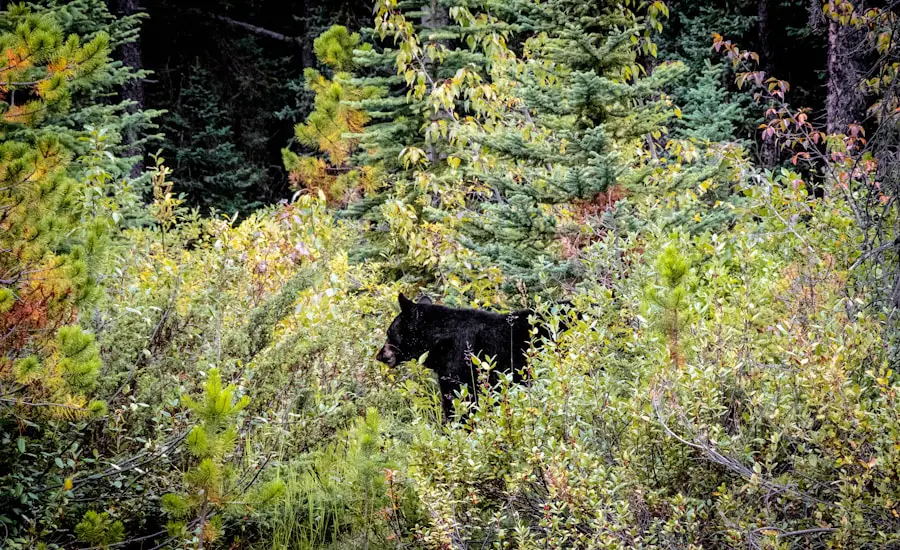
A charge is frightening, but running is one of the worst responses. Bears can move far faster than a person, and fleeing can trigger pursuit. Stand your ground and prepare your bear spray.
Defensive and Bluff Charges
A bear may charge because it was surprised, is protecting cubs, or is defending a carcass or other food source. Some charges stop short or veer away. Do not assume in advance that a charge is only a bluff; be prepared to protect yourself.
If the bear enters the effective range of your bear spray, deploy it as directed. Continue to stand your ground rather than turning and running.
If a Bear Makes Contact
This is where the original one-size-fits-all “play dead” advice becomes dangerous. General National Park Service guidance distinguishes among several situations:
| Attack Situation | General Response |
|---|---|
| Defensive brown/grizzly attack | Play dead. Lie face down, spread your legs for stability, protect the back of your neck with your hands and arms, and keep your backpack on for protection. If the attack continues for an extended period, switch tactics and fight back. |
| Black-bear attack | Under general NPS guidance, do not play dead. Try to reach secure shelter if possible; otherwise fight back vigorously, concentrating on the bear’s face and muzzle. |
| Predatory, stalking, tent, or prolonged attack by any bear | Fight back with everything available. Do not play dead. |
Read the National Park Service guidance on bear attacks before hiking in bear country, and always check the more specific instructions issued by the park or land manager you are visiting.
Note: Some current park guidance, including Denali’s, puts greater emphasis on whether the encounter is defensive or non-defensive. This is another reason to learn the current protocol for your destination instead of relying only on a rhyme or species shortcut.
Reporting Bear Encounters
Reporting can help wildlife managers identify dangerous patterns, food-conditioned animals, closed areas, carcass sites, or locations where other visitors need warnings.
Follow the reporting rules for the area you are visiting. In general, report attacks, physical contact, aggressive approaches, bears obtaining human food, bears entering camps or tents, and other conflicts as soon as possible. Some parks also ask visitors to report ordinary bear sightings.
Provide useful details such as:
- The exact location or trail.
- The approximate time.
- The number and apparent type of bears.
- Whether cubs, a carcass, food, or other attractants were present.
- What the bear did before, during, and after the encounter.
- Whether bear spray or another deterrent was used.
- Whether anyone was injured.
If the encounter involves an immediate emergency and cellular service is available, call 911. Do not remain near the bear merely to collect photos or additional information.
Seeking Medical Attention
A bear attack can cause deep puncture wounds, lacerations, crushing injuries, fractures, severe bleeding, and infection. Serious injuries require emergency medical care.
Warning: Call 911 or the local emergency number for uncontrolled bleeding, severe trauma, loss of consciousness, breathing problems, inability to move normally, exposed bone or muscle, or any other life-threatening injury. This article provides general first-aid information and is not a substitute for professional medical care.
Once you are safely away from the bear, control serious bleeding with direct pressure using clean material when possible. For a bite or scratch that may represent wildlife exposure, the CDC recommends promptly washing wounds with soap and water and obtaining medical or public-health advice about rabies risk.
Even a wound that appears small can require professional evaluation for infection, deeper tissue damage, tetanus protection, and possible rabies post-exposure treatment. Do not delay emergency treatment in order to photograph injuries or complete a wildlife report.
For more travel-related articles and practical outdoor tips, visit TakeTravelInfo.com.
Love travel? Join Our Facebook Community For More Tips.
Frequently Asked Questions
What should I do if I see a bear while hiking?
Do not approach it. If the bear has not noticed you, quietly change course and increase your distance. If it knows you are there, stay calm, speak normally, keep your group together, and slowly move away when it is safe to do so. Keep the bear in view without staring directly into its eyes.
Should I run if I encounter a bear while hiking?
No. Do not run from a bear. Running can trigger pursuit, and a bear can easily outrun a person. Stay calm, keep your group together, and create distance according to the bear’s behavior and local wildlife guidance.
What should I do if a bear approaches me while hiking?
Do not run. Ready your bear spray and assess the behavior. If the bear is defensive, remain calm and non-threatening. If it slowly and persistently follows or approaches without defensive behavior, group together, stand your ground, become more assertive and loud, and move toward secure shelter if that can be done safely.
Should I climb a tree if I encounter a bear while hiking?
No. Do not rely on climbing a tree to escape. Black bears are skilled climbers, and other bears can also climb. National Park Service guidance advises against trying to outrun or out-climb a bear.
What should I do if a bear charges at me while hiking?
Stand your ground and do not run. Ready your bear spray and use it when the bear enters the effective range specified by the product and local guidance. If contact occurs, the correct response depends on whether the attack is defensive or predatory and, under general NPS guidance, whether the animal is a black bear or brown/grizzly bear.
When should I play dead during a bear attack?
General NPS guidance recommends playing dead during a defensive brown or grizzly bear attack. Lie face down, protect your head and neck, spread your legs, and keep your pack on. Do not use this as a universal rule: black-bear attacks and predatory or stalking attacks generally call for fighting back. Follow the current guidance for your location.
Can I spray bear spray on my clothes to keep bears away?
No. Bear spray is an emergency deterrent, not a repellent. Do not spray it on your body, clothing, backpack, tent, or campsite. Carry it securely and use it only as directed when a bear poses an immediate threat.
Sources
- National Park Service — Bear Attacks — defensive, black-bear, grizzly/brown, and predatory attack responses.
- National Park Service — Bear Identification — physical differences between black and brown/grizzly bears.
- National Park Service — Hiking in Bear Country — preventing surprise encounters, trail noise, and group travel.
- National Park Service — Bear Safety: Storing Food — food, garbage, scented items, canisters, lockers, and destination-specific rules.
- Grand Teton National Park — Carry Bear Spray, Know How to Use It — bear-spray selection, accessibility, expiration, and safe handling.
- Centers for Disease Control and Prevention — Rabies Prevention and Control — wound washing and medical evaluation after possible wildlife exposure.

