
Last Updated on September 11, 2026 by Daniel Globe
Mosquitoes are part of travel throughout Borneo, but there is no single island-wide “mosquito season.” Rainfall and bite pressure vary across Sabah, Sarawak, Brunei, and Indonesian Kalimantan. Your risk also depends on whether you are staying in a city, visiting villages, trekking through forest, or sleeping in open accommodation. The safest approach is to prepare for bites year-round and adjust your precautions to your exact itinerary.
Quick Answer
Borneo has mosquitoes year-round. Bite pressure often increases after rain and near standing water, but seasonal patterns vary by location. Protect yourself throughout the day because dengue mosquitoes bite mainly by day, while mosquitoes that transmit malaria usually bite from evening through the night.
Key Takeaways
- There is no universal Borneo mosquito season; local rainfall patterns differ across the island.
- Dengue can be a concern in cities, towns, and villages, while malaria risk is more closely associated with certain rural and forested areas.
- Use a registered repellent, cover exposed skin, and choose screened or air-conditioned accommodation.
- Protection is needed during the day and at night because different mosquito species bite at different times.
- Ask a travel-health clinician whether you need malaria medicine or Japanese encephalitis vaccination for your itinerary.
Warning: This article provides general travel-health information, not personal medical advice. Seek itinerary-specific advice before traveling, especially if you are pregnant, immunocompromised, traveling with a young child, or planning extended rural or forest exposure.
Disclosure: As an Amazon Associate I earn from qualifying purchases. Some links on this page are affiliate links, at no extra cost to you.
When Mosquitoes Are Worst in Borneo
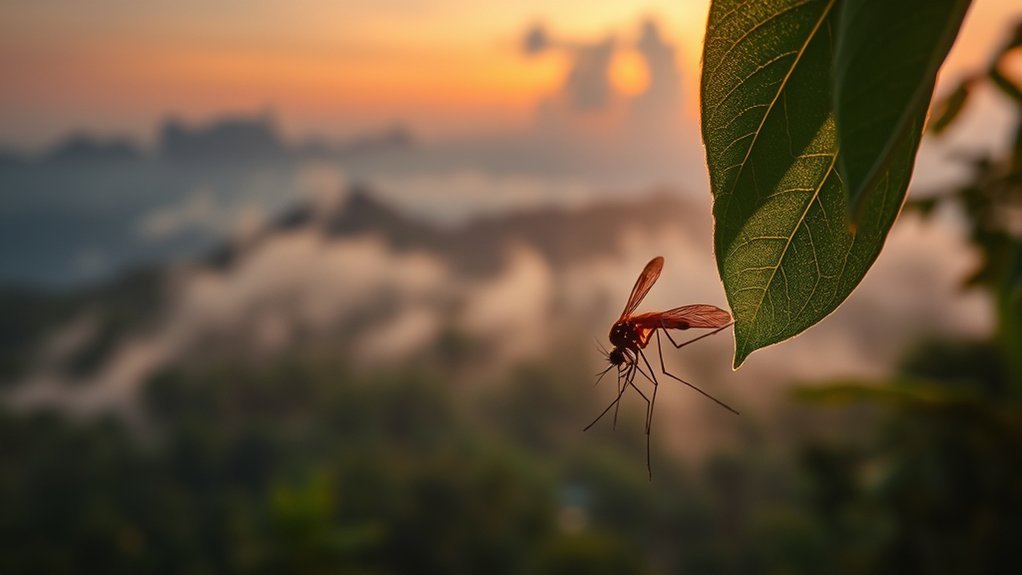
Mosquitoes can be active throughout the year in Borneo because temperatures remain warm and humidity is usually high. Local numbers often rise after rain creates puddles, blocked drains, water-filled containers, tree holes, and other breeding sites.
However, the wettest months are not the same everywhere. According to METMalaysia’s climate guidance, coastal Sarawak and northeast Sabah receive much of their rain during the northeast monsoon, while parts of northwest Sabah can have rainfall peaks around June and October. Inland areas may receive heavy or relatively even rainfall across much of the year.
Conditions also vary across Indonesian Kalimantan and Brunei. Short-term weather, flooding, drainage, altitude, and nearby land use can matter more than a simple calendar range. Check the forecast for your exact destination and assume that mosquitoes will be possible in every month.
Treat Borneo as a year-round mosquito destination, not an island with one fixed mosquito season.
Where Mosquitoes Are Most Common
You may encounter mosquitoes wherever they can find water, shade, warmth, and a suitable host. Common problem areas include forest edges, wetlands, rice-growing areas, riverbanks, village drains, gardens, construction sites, and containers that collect rainwater.
The type of risk changes with the setting. Rural forest and forest-edge travel is particularly important when assessing malaria exposure. In contrast, Aedes mosquitoes that spread dengue often live close to people and can breed in small artificial containers in cities and towns.
- Forest and jungle margins: Greater concern for evening and nighttime bites and for malaria in designated risk areas.
- Villages and farms: Risk depends on drainage, water storage, nearby vegetation, animals, and the quality of housing.
- Cities and towns: Malaria risk may be lower, but dengue mosquitoes can remain common around homes, gardens, drains, and construction areas.
- Wetlands and standing water: Mosquito numbers can rise after rain, although different species prefer different breeding habitats.
Why Borneo Mosquito Levels Vary
Borneo is the world’s third-largest island and contains several climate zones, mountain ranges, coastlines, river systems, cities, and large forested areas. These local differences prevent one seasonal rule from applying to every destination.
Mosquito levels can change because of:
- Recent rainfall and flooding
- Blocked drains or uncovered water containers
- Forest cover and shaded vegetation
- Temperature and humidity
- Local mosquito-control programs
- Building screens, air conditioning, and sanitation
- Nearby farms, wetlands, rice fields, or animal habitats
- El Niño, La Niña, and other year-to-year weather changes
A dry week does not guarantee that mosquitoes will be absent. Water stored in containers, drains, plant trays, or shaded natural cavities can continue supporting mosquito development after the rain stops.
Mosquito Risks in Cities, Villages, and Jungles
Your surroundings influence which mosquito-borne diseases deserve the most attention. Do not use a simple “city safe, jungle dangerous” rule. Urban accommodation may lower your exposure to forest-associated malaria, but dengue can spread in urban and semi-urban areas.
Urban Mosquito Levels
Borneo’s larger cities may have better drainage, screened hotels, air conditioning, and organized mosquito control. These features can reduce bites, especially inside well-maintained accommodation.
However, cities are not mosquito-free. Aedes mosquitoes can breed in small amounts of water held in buckets, roof gutters, discarded containers, plant trays, drains, and construction materials. The World Health Organization describes dengue as a major urban and semi-urban disease.
Use repellent during daytime sightseeing as well as during the evening. Check that your room has intact screens or reliable air conditioning, and avoid leaving balcony doors open.
Village Bite Risks
Mosquito exposure in villages varies widely. A village with good drainage and screened housing may have fewer mosquitoes than a poorly drained urban neighborhood. Risk can increase where water is stored in open containers or where homes sit close to forest, farms, wetlands, or slow-moving water.
- Check for open water containers near your lodging.
- Use repellent before leaving your room, including during daylight hours.
- Keep doors and windows closed unless they have intact screens.
- Use a properly tucked mosquito net when sleeping in an open room.
- Ask local hosts whether mosquito numbers have recently increased.
Jungle Mosquito Exposure
Forest and jungle travel may expose you to mosquitoes that are less common in developed city centers. In Malaysian Borneo, current CDC guidance identifies zoonotic Plasmodium knowlesi malaria transmission in rural forested areas. Rural parts of Indonesian Kalimantan are also listed as malaria-transmission areas.
On jungle treks, use repellent, long clothing, treated gear, and suitable sleeping protection. These precautions matter during the evening and night for malaria prevention, but daytime protection remains necessary because Aedes mosquitoes can transmit dengue, chikungunya, and Zika.
Pro Tip: Ask your lodge or trekking company whether rooms and camps have intact screens, bed nets, or enclosed sleeping areas. “Jungle lodge” can describe anything from a sealed air-conditioned room to an open shelter.
How to Prevent Mosquito Bites
The most reliable strategy combines repellent, clothing, protected accommodation, and itinerary-specific medical advice. No single measure provides complete protection.
Products Worth Considering

Non-greasy, fragrance free, odorless; dries quickly and won't damage plastics or synthetic coatings — safe for use on clothing, backpacks, watches, sunglasses, fishing line, firearm finishes, and more

REPELS MOSQUITOES: Repels mosquitoes, including those that may transmit the Zika, West Nile, Dengue and Chikungunya viruses.

Non-greasy, lightweight bug repellent spray dries quickly, not sticky
Use an Effective Repellent
Use an insect repellent with an active ingredient recommended by a recognized health authority. The CDC lists DEET, picaridin, oil of lemon eucalyptus or PMD, and 2-undecanone among effective options for mosquito protection.
Products containing 20% or more DEET can provide protection for several hours. A higher concentration generally extends protection time rather than making the repellent more powerful. Picaridin is another effective option and may feel less oily on the skin.
- Apply repellent to exposed skin according to the label.
- Do not spray it directly onto your face; apply it to your hands first.
- Do not apply it to cuts, irritated skin, eyes, or the mouth.
- Follow age restrictions and child-application instructions.
- Reapply only as directed by the product label and after swimming when required.
- When using sunscreen, apply sunscreen first and repellent second.
Wear Protective Clothing
Wear loose-fitting long sleeves, long trousers, socks, and closed footwear when practical. Mosquitoes may bite through very thin or tight fabric, so coverage alone is not always enough.
For extra protection, use clothing and gear that have been factory-treated with permethrin or treat eligible items according to the product instructions. Suitable items can include trousers, shirts, socks, boots, backpacks, and tents.
Warning: Never apply permethrin directly to your skin. It is intended for eligible clothing and gear. Let treated items dry completely before using them and follow the product label.
Lightweight, breathable fabrics can make full coverage more comfortable in humid weather. Clothing color is less important than coverage, fabric thickness, repellent use, and the quality of your accommodation.
Limit Bite Exposure
Choose accommodation with air conditioning or intact window and door screens whenever possible. If your room is open to the outdoors, sleep under a mosquito net that is in good condition and tucked securely under the mattress or sleeping mat.
- Close doors promptly instead of leaving them open after dark.
- Check screens for tears or gaps.
- Empty water from buckets, plant trays, and other containers when permitted.
- Use a bed net for open shelters, basic village stays, and some trekking camps.
- Pack enough repellent for the entire trip rather than depending on local stock.
Because different mosquitoes bite at different times, do not stop using protection after sunrise or assume that daytime travel is safe from mosquito-borne disease.
Best Repellents for Borneo Travel
The best product is a properly registered repellent that gives enough protection time for your planned activity and that you will apply correctly.
| Active Ingredient | Practical Use | Important Note |
|---|---|---|
| DEET | Reliable choice for city visits, rural stays, and jungle travel | Higher percentages generally provide longer protection; follow the label |
| Picaridin | Effective alternative that often feels less greasy | Check the concentration and stated protection time |
| OLE or PMD | Plant-derived registered option for eligible users | Do not use pure essential oil as a substitute; follow age restrictions |
| IR3535 | Another recognized mosquito-repellent ingredient | Protection time varies by concentration and product |
| 2-Undecanone | Plant-derived active ingredient found in some registered products | Use only according to the product label |
Citronella candles and short-acting sprays should not be your only protection in a destination where mosquito-borne disease is possible. They may cover a limited area or require frequent reapplication.
Products Worth Considering

Maximum DEET Formula: Ben's 100 tick repellent uses a maximum strength 100% DEET formula to keep biting insects at bay for up to 10 hours

REPELS MOSQUITOES: Repels mosquitoes, including those that may transmit the Zika, West Nile, Dengue and Chikungunya viruses.

Non-greasy, fragrance free, odorless; dries quickly and won't damage plastics or synthetic coatings — safe for use on clothing, backpacks, watches, sunglasses, fishing line, firearm finishes, and more
What to Wear After Dark
After dark, wear a loose-fitting long-sleeved shirt, long trousers, socks, and closed footwear. This is especially important in rural and forested locations because mosquitoes that transmit malaria commonly bite during evening and nighttime hours.
Choose breathable fabrics that are comfortable in high humidity but thick enough to reduce bites through the material. Tuck trousers into socks during heavy exposure and make sure your shirt does not ride up when carrying a backpack.
- Use permethrin-treated clothing or gear when appropriate.
- Apply skin repellent to uncovered areas such as the neck, hands, and ankles.
- Keep a light layer available for outdoor meals and nighttime bathroom trips.
- Inspect mosquito nets before sleeping and repair or report holes.
Do not limit these precautions to the evening. Dengue-carrying Aedes mosquitoes are active mainly during the day, so daytime repellent and clothing remain important.
Products Worth Considering

Permethrin spray bonds to fabric fibers for up to 6 weeks or through 6 washings (whichever comes first) won't stain or damage clothing, fabrics, plastics, finished surfaces, or outdoor gear; fragrance free

One Size Fits All Up To Adult Large. This package includes 1 Black Hat, 1 Black Length Adjustable 54 Inch Fabric Belt, 1 Pair of Black 7 Inch Long Leg Tick Gaiters, 1 Pair of Black 4 Inch Long Tick Gaiters / Sleeve Cuffs and 1 Black Tube Bandana. Registered to Repel MOSQUITOES, TICKS, FLIES & Other Insects.. Great as - gifts for women, gifts for men, gifts for mom and stocking stuffers!

Permethrin spray bonds to fabric fibers for up to 6 weeks or through 6 washings (whichever comes first) won't stain or damage clothing, fabrics, plastics, finished surfaces, or outdoor gear; fragrance free
Mosquito Tips for Jungle Treks
Prepare for mosquito exposure on every jungle trek, regardless of the month. Recent rain, dense shade, river crossings, overnight camps, and forest-edge routes can all influence the number and type of mosquitoes you encounter.
| Action | Purpose |
|---|---|
| Apply a registered repellent | Reduce daytime and nighttime bites |
| Wear long sleeves, trousers, and socks | Reduce exposed skin |
| Use treated clothing and gear | Add protection without applying permethrin to skin |
| Carry enough repellent for delays | Avoid running out in remote areas |
| Use a screened room or bed net | Reduce bites while resting and sleeping |
| Discuss malaria medicine before departure | Match prevention to the exact forest itinerary |
Visit a travel-health clinic four to six weeks before departure when possible. Take your route, accommodation plan, trip length, medical history, and planned activities. Even when departure is closer, it is still worth seeking professional advice.
Mosquito-Borne Diseases in Borneo
The diseases that matter most depend on where you go and what you do. Current recommendations can change, so review official destination guidance shortly before departure.
| Disease | Where or When It Matters | Main Precaution |
|---|---|---|
| Dengue | Cities, towns, villages, and other places where Aedes mosquitoes live near people | Prevent daytime bites and remove small water collections |
| Malaria | Certain rural and forested areas of Malaysian Borneo and rural Kalimantan | Avoid evening and nighttime bites and obtain itinerary-specific medicine advice |
| Japanese encephalitis | Long stays, repeated travel, rural activities, camping, and accommodation without screens or air conditioning | Discuss vaccination with a travel-health clinician |
| Chikungunya and Zika | Risk and outbreak status can change; both are spread by day-biting Aedes mosquitoes | Use daytime bite protection and review current advisories |
Malaysian Borneo
The CDC Malaysia Traveler View identifies zoonotic P. knowlesi malaria transmission in rural forested areas. Travelers entering those areas may be advised to take prescription malaria medicine. Dengue is also a concern, including in populated locations.
Indonesian Kalimantan
The CDC Indonesia Traveler View lists rural Kalimantan among malaria-transmission areas. Medicine selection depends on the traveler and itinerary, and it may need to be started before arrival and continued during and after the trip.
Brunei
The CDC Brunei Traveler View emphasizes dengue prevention and general protection from bug bites. Do not assume recommendations for rural Malaysia or Kalimantan automatically apply to Brunei.
Note: Japanese encephalitis vaccination is generally considered for longer stays, frequent travel, rural exposure, hiking, camping, or nights in accommodation without screens, air conditioning, or bed nets. It is not routinely recommended for every short urban visit.
If you are pregnant or could become pregnant, obtain current Zika advice before travel because recommendations can change. A clinician can also review whether any vaccine or medicine is unsuitable during pregnancy.
Warning: Seek prompt medical care for fever during or after travel to a malaria-risk area and tell the clinician exactly where you traveled. Severe abdominal pain, repeated vomiting, unusual bleeding, breathing difficulty, marked weakness, or worsening illness after a fever can be warning signs of severe dengue and require urgent assessment.
Frequently Asked Questions
Are mosquitoes a problem in Borneo?
Yes. Mosquitoes occur throughout Borneo, although the number, species, and disease risk vary by location. Use repellent, suitable clothing, screens, and bed nets where needed instead of relying on the month or assuming cities are mosquito-free.
What month has the most mosquitoes in Borneo?
There is no single peak month for the whole island. Rainfall patterns differ across Sabah, Sarawak, Brunei, and Kalimantan. Mosquito numbers commonly rise after local rain, so check recent conditions for your exact destination.
Are mosquito bites worse during the day or at night?
Both periods matter. Aedes mosquitoes that spread dengue, chikungunya, and Zika bite mainly during the day, often with early-morning and late-afternoon peaks. Anopheles mosquitoes that spread malaria generally bite during the evening and night.
Do mosquitoes prefer fat or skinny people?
Mosquito attraction is not determined by a simple fat-versus-skinny rule. Carbon dioxide, body heat, skin odor, movement, pregnancy, genetics, and individual skin chemistry can all influence how easily mosquitoes find a person.
When should I avoid Borneo because of mosquitoes?
You generally do not need to avoid the entire island during a particular month solely because of mosquitoes. Choose dates according to the exact region, rainfall, flood conditions, accommodation, planned activities, and any active disease notices.
Do I need anti-malaria tablets for Borneo?
Possibly. Current guidance recommends malaria medicine for certain rural and forested parts of Malaysian Borneo and rural Kalimantan, but not automatically for every Borneo itinerary. Ask a travel-health clinician to assess your exact route, trip length, accommodation, activities, medical history, and pregnancy status.
Conclusion
Borneo has mosquitoes throughout the year, and local rainfall can increase their numbers at almost any time. The most important distinction is not simply wet season versus dry season. It is where you are going, which mosquito species live there, what accommodation you will use, and whether your plans include rural or forest exposure.
Use effective repellent during the day and at night, cover exposed skin, choose screened accommodation, and seek itinerary-specific advice about malaria medicine and Japanese encephalitis vaccination. These steps greatly reduce your risk without forcing you to avoid an entire region or season.
Sources
- CDC Malaysia Traveler View — malaria, dengue, Japanese encephalitis, repellents, and traveler precautions
- CDC Indonesia Traveler View — malaria guidance for rural Kalimantan and other travel-health recommendations
- CDC Brunei Traveler View — dengue and mosquito-bite prevention guidance
- CDC: Preventing Mosquito Bites While Traveling — repellents, clothing, permethrin, lodging, and bed-net advice
- World Health Organization: Dengue — daytime Aedes activity, dengue symptoms, prevention, and warning signs
- METMalaysia: Malaysia’s Climate — regional monsoon and rainfall differences across Sabah and Sarawak
