

Last Updated on July 25, 2026 by Daniel Globe
London in January is cold, damp and changeable rather than relentlessly freezing. The most useful wardrobe is built around removable layers, a weather-resistant outer coat and comfortable shoes that can cope with wet pavements. You do not usually need expedition-level winter clothing, but you should be ready for chilly mornings, rain, wind and the occasional frost or cold snap.
Quick Answer
Wear easy-to-remove layers in London in January: a merino or synthetic base layer when needed, a sweater or fleece, and a warm water-resistant or waterproof coat. Add a scarf, gloves and hat for colder days. Choose comfortable water-resistant shoes with good grip, and check the forecast before deciding how much insulation you need.
Key Takeaways
- Use several removable layers instead of relying on one extremely heavy coat.
- Prepare for rain, but remember that London is not continuously wet throughout January.
- Prioritize comfortable, water-resistant walking shoes with reliable grip over heavy snow boots.
- Pack a scarf, gloves and a warm hat, especially if you will be outside early or after dark.
- Check London’s actual forecast shortly before your trip because mild, wet and genuinely cold spells can all occur.
Disclosure: As an Amazon Associate I earn from qualifying purchases. Some links on this page are affiliate links, at no extra cost to you.
London January Weather at a Glance
Before deciding what to pack, it helps to know what a normal January looks like. At Kew Gardens in London, Met Office 1991–2020 climate normals show an average January maximum of about 8.6°C (47°F), an average minimum of about 2.0°C (36°F), roughly 60 mm of precipitation and about 12 days with at least 1 mm of rain.
At a Glance
| Typical January High | About 8.6°C / 47°F at Kew Gardens |
| Typical January Low | About 2.0°C / 36°F at Kew Gardens |
| Rain | About 60 mm during January, with roughly 12 days receiving at least 1 mm |
| Best Clothing Strategy | Removable layers, weather-resistant outerwear and comfortable water-resistant footwear |
London’s January climate is usually cool rather than severely cold: the long-term Kew Gardens average is about 8.6°C (47°F) for the daily maximum and 2.0°C (36°F) for the minimum.
Note: Snow and sub-freezing weather are possible, but they are not London’s normal day-to-day winter conditions. Visit London’s weather guidance notes that temperatures do not often fall below freezing and that snow is uncommon. Pack for cold rain first, then adjust if your forecast shows snow or ice.
Layering Your Outfits for Changing Temperatures

Since temperatures can change during the day and heated museums, restaurants, shops and public transport may feel much warmer than the street, layering is the most practical approach.
Start with a comfortable base layer. For long periods outdoors or if you tend to feel cold, choose merino wool or a purpose-made synthetic fabric designed to move moisture away from your skin. An ordinary cotton shirt can work on a mild, mostly indoor day, but cotton absorbs moisture and should not be described as a technical moisture-wicking layer.
Add an insulating mid-layer, such as a wool sweater, fleece, cardigan or light insulated jacket. This gives you useful warmth without forcing you to wear a huge coat indoors.
Finish with a weather-resistant outer layer. A warm coat with wind resistance and a hood works well for most visitors; choose a fully waterproof shell or waterproof insulated coat when substantial rain is forecast.
Neutral colors make pieces easier to mix, but comfort and easy removal matter more than following a particular winter palette.
Pro Tip: Dress so you can remove one layer quickly before boarding a warm Tube train or entering a museum. A medium-weight coat plus adjustable layers is often more comfortable than wearing your warmest possible parka all day.
Choosing the Right Waterproof Outerwear
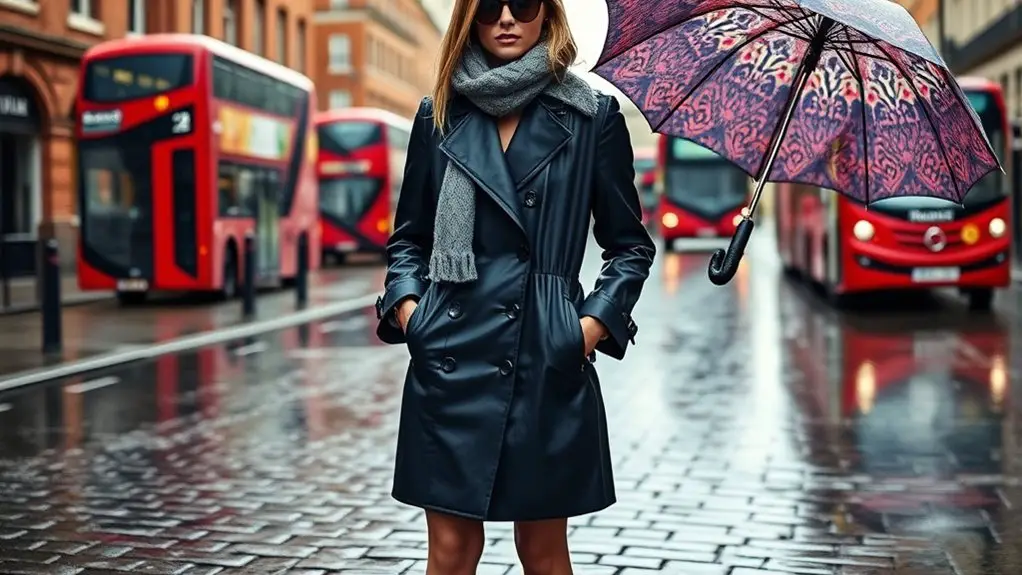
Good outerwear protects you from cold wind and rain without becoming uncomfortable when you walk. The Met Office’s winter outdoor guidance recommends suitable waterproof clothing, adequate footwear and warm layers when temperatures fall.
A jacket advertised as water-resistant can cope with brief showers, while a genuinely waterproof shell is a better choice for prolonged rain. Features such as a hood, sealed or taped seams, adjustable cuffs and enough room for a sweater underneath are more useful than focusing on a particular brand name.
Breathable outerwear can also reduce the clammy feeling that develops when you walk quickly while heavily layered.
| Feature | Why It Helps |
|---|---|
| Waterproof or water-resistant fabric | Helps keep clothing dry during showers |
| Breathable construction | Reduces trapped heat and moisture while walking |
| Adjustable hood and cuffs | Improves wind and rain protection |
| Room for a mid-layer | Lets you adapt the same coat to mild or colder days |
Essential Accessories for Cold Weather

The right accessories let you adjust your warmth without adding another bulky clothing layer. Current NHS Inform cold-weather guidance recommends several thin layers along with a hat and gloves when going outside in cold conditions.
Choose gloves that are comfortable enough to wear while using public transport or a phone. Touchscreen-compatible gloves are convenient but not essential. On particularly cold days, insulated or wind-resistant gloves are more useful than thin fashion gloves.
For your head, a beanie or other warm hat that covers the ears is the simplest choice. Berets, wool hats and similar styles can also work when the weather is milder.
A scarf adds adjustable warmth around the neck and can help block wind around a coat collar. Wool, cashmere and warm blends provide more insulation than lightweight silk or chiffon, which are better treated as style accessories.
Footwear Tips for Navigating London’s Wet Streets
London trips involve a lot of walking, so comfort should come before extreme winter insulation. Wet pavement is a more routine January issue than deep snow.
Look for walking shoes, leather shoes, sneakers or ankle boots with water-resistant uppers and a treaded sole. The NHS also recommends footwear with good grip when surfaces are slippery or icy.
Treated leather and suitable synthetic materials can both work well. Sustainability should be assessed separately using the specific manufacturer’s materials, sourcing and certifications; traction alone does not make a shoe environmentally friendly.
Bring shoes you have already worn for several hours at a time. January is a poor moment to discover that a new boot rubs your heel after the first mile of sightseeing.
Note: Full snow boots or countryside-style Wellington boots are usually unnecessary for central London unless your specific forecast calls for snow, ice or unusually severe weather.
Stylish Yet Practical Cold-Weather Clothing
You do not have to choose between warmth and looking polished. Wool, merino, fleece, cashmere and practical synthetic blends can all fit into a smart city wardrobe.
A tailored wool coat can work well on dry or lightly damp days, while a weatherproof coat is the safer all-purpose option when significant rain is expected. Underneath, wear a knit sweater, cardigan or turtleneck that can stand alone once you are indoors.
Dark jeans, thicker trousers or other comfortable long pants are practical for sightseeing. People who feel the cold strongly can wear thin thermal leggings underneath without changing the appearance of the outfit.
Finish with a scarf, gloves and hat as needed. London has no single winter “look,” so choose pieces that suit your own style and can be worn in several combinations.
What to Pack for Indoor and Outdoor Activities
January sightseeing often means moving repeatedly between cold streets and heated indoor attractions. Pack clothing that works in both environments rather than separate wardrobes for each one.
Layering Essentials for Comfort
A practical three-layer system consists of a comfortable base, an insulating middle layer and a rain- or wind-resistant outer layer.
- Merino or synthetic base layer for colder, active days
- Long-sleeve shirt, blouse or everyday top for milder days
- Wool sweater, cardigan or fleece
- Warm weather-resistant coat or jacket
- Packable extra layer for unusually cold forecasts
You do not have to wear every layer every day. Use the actual temperature, wind and your personal cold tolerance to decide.
Versatile Footwear Choices
Casual sneakers or supportive walking shoes work well for museums, shopping and long sightseeing days provided they can tolerate damp streets.
For restaurants, theatre or smarter evening plans, ankle boots, loafers or another polished but comfortable shoe can dress up an outfit without requiring formal footwear.
If you only want to pack one pair, choose a neutral, water-resistant walking shoe or boot that looks acceptable with both daytime and evening outfits.
A Practical 5- to 7-Day January Packing List
For a typical city trip, you can build many outfits from a relatively small capsule wardrobe:
- 1 warm water-resistant or waterproof coat
- 2 to 3 sweaters, fleeces or cardigans
- 3 to 5 tops suitable for layering
- 1 to 2 optional thermal base-layer tops for colder days
- 2 to 3 pairs of trousers, jeans or other long bottoms
- Optional thermal leggings for people who feel the cold strongly
- 5 to 7 pairs of socks, including a few warm wool-blend pairs
- 1 scarf
- 1 warm hat
- 1 pair of gloves
- 1 pair of comfortable water-resistant walking shoes or boots
- Optional second pair of shoes for evenings or to alternate after wet days
- Compact umbrella, preferably alongside a hooded coat
- Small backpack or crossbody bag for daily essentials
Warning: Climate averages are not a forecast. Check the Met Office London forecast shortly before departure and review any weather warnings before long outdoor days.
Dressing for London’s Historic and Modern Sights
Historic attractions such as the Tower of London or Westminster Abbey can involve outdoor queues, courtyards, stone floors and substantial walking. Wear removable layers and supportive shoes rather than dressing only for the indoor portions of the visit.
Modern attractions such as viewing platforms, galleries and newer commercial areas do not require a different weather strategy. A clean sweater, trousers or dark jeans, comfortable shoes and a smart coat work almost anywhere during daytime sightseeing.
For London sightseeing in January, choose your outfit for the walking and weather first; you can remove outer layers once you are indoors.
Useful sightseeing pieces include:
- A hooded rain-resistant or waterproof jacket
- Removable sweater or fleece
- Comfortable walking shoes with grip
- A scarf and gloves for exposed outdoor areas
- A small backpack or crossbody bag for essentials
Individual religious sites, restaurants, private clubs or special events can have their own dress expectations, so check the venue when you have a specific booking.
Warm Clothing Options for Evening Outings
Evenings feel colder once you stop moving as much, so keep one warm layer available even when your restaurant, theatre or bar is only a short walk away.
Layering With Cozy Sweaters
Wool, merino, cashmere and warm knit blends are useful because they can look polished indoors while still providing insulation outside.
A fitted sweater over a shirt or turtleneck works with trousers, jeans or a skirt, while a chunky knit gives a more casual look. Deep colors and neutrals are easy to rewear throughout a short trip.
For a dressier evening, a fine-gauge merino or cashmere-style knit fits easily beneath a tailored coat without excessive bulk.
Opt for Stylish Scarves & Wraps
A scarf or wrap adds warmth without forcing you to change the rest of your outfit. Wool and cashmere provide the most useful insulation, while silk and chiffon are better for visual interest once you are mainly indoors.
| Fabric Choices | Best Use |
|---|---|
| Wool, Cashmere | Outdoor warmth; works with plaids, stripes and solid colors |
| Silk, Chiffon | Mostly decorative indoor/evening layer rather than primary insulation |
Choose Warm, Waterproof Shoes
For evening outings, choose shoes that can handle damp pavements while still fitting the venue. Waterproof or water-resistant ankle boots are an easy solution, but clean leather shoes or weather-resistant sneakers may be perfectly adequate on a milder night.
Look for:
- Water-resistant or waterproof uppers when rain is forecast
- A stable sole with useful tread
- Enough room for comfortable socks
- A style you can walk in between stations, restaurants and theatres
Insulation is helpful for unusually cold weather but is not mandatory for every January evening.
Managing Wind and Rain in Your Wardrobe Choices
Wind and rain can make a modest winter temperature feel much less comfortable, which is why your outer layer matters as much as the thermometer.
A wind-resistant outer fabric reduces heat loss in exposed areas, while a waterproof or water-resistant finish keeps your insulating layers from becoming damp.
A coat with a secure hood is particularly useful during windy rain because umbrellas can become awkward in strong gusts. A compact umbrella is still useful for ordinary showers when winds are light.
Keep your insulating layers dry whenever possible. If you will be walking for a long period or tend to perspire easily, a merino or technical synthetic base layer is more appropriate than absorbent cotton next to the skin.
Before leaving your accommodation, check the Met Office warning service, which can issue alerts for rain, wind, snow and ice.
What to Wear on a Typical January Day
Daytime Sightseeing
Try a long-sleeve top, medium-weight sweater, weather-resistant coat, dark jeans or trousers, warm socks and supportive water-resistant shoes. Carry gloves and a scarf rather than wearing every accessory from the start.
Rainy-Day Outfit
Use a hooded waterproof shell or waterproof coat over your normal layers. Wear shoes that tolerate puddles and wet paving, and avoid delicate suede unless it has been properly weather-treated.
Restaurant or Theatre Outfit
A fine knit or smart shirt with trousers, dark jeans, a skirt or another polished base outfit works for many London evenings. Add a tailored coat or smart weatherproof coat and comfortable boots or shoes. Check the individual venue if it publishes a dress code.
What You Probably Don’t Need to Pack
A common mistake is packing for Arctic winter conditions instead of a cool maritime city.
- Heavy snow boots: usually unnecessary unless snow or prolonged freezing weather is forecast.
- Several bulky coats: one versatile outer coat plus removable layers is more efficient.
- Thick thermal underwear for every day: useful for cold-sensitive travelers or cold snaps, but often excessive indoors.
- Large umbrellas: harder to manage on busy streets and in wind than a compact umbrella plus hood.
- Delicate footwear as your only pair: January streets can be damp even when it is not actively raining.
Packing Smart for a Comfortable London Winter Experience
To pack efficiently, choose pieces that work in several combinations rather than planning a completely different outfit for every day.
Lightweight thermal layers can add warmth when needed, while sweaters and cardigans work both under your coat and on their own indoors.
Bring one reliable weather-resistant outer coat, plus a scarf, hat and gloves. Waterproof or water-resistant walking shoes are generally more useful than specialized winter boots.
A compact umbrella can handle ordinary showers, while a hooded coat provides better backup during wind. Warm socks add comfort without consuming much luggage space.
Most importantly, leave a little flexibility in your packing plan. Long-term averages describe a typical January, but your actual week may be considerably milder, wetter, windier or colder.
Frequently Asked Questions
What are the best fabrics for winter clothing in London?
Wool, merino, fleece, cashmere and practical synthetic blends work well. Merino or purpose-made synthetics are useful as base layers when moisture management matters. Ordinary cotton is comfortable for many indoor or mild-weather outfits but absorbs more moisture and is not the best technical base layer for long, cold outdoor days.
How can I stay stylish while dressing warmly?
Start with a simple base outfit, add one polished knit and finish with a coat that works with most of your wardrobe. Scarves, hats and gloves add color without taking much luggage space. Keeping the same neutral trousers, coat and shoes while rotating tops is an easy way to look put together without overpacking.
Are there specific color schemes suitable for January?
There are no special London rules. Navy, black, charcoal, camel and other neutrals are easy to mix, while burgundy, deep green, red or blue can add color through sweaters and accessories. Choose a palette that lets several pieces work together rather than packing around a seasonal trend.
What are some space-saving packing tips for winter gear?
Wear your bulkiest coat and shoes during travel, pack thin thermal layers instead of multiple thick sweaters and reuse a neutral outer layer throughout the trip. Rolling or neatly compressing soft clothing can help organize the suitcase, but avoid packing so tightly that you cannot bring anything home.
How can I adapt my wardrobe for both day and evening activities?
Use a neutral daytime base such as trousers or dark jeans with a knit or shirt. For the evening, remove practical daytime accessories and add a smarter sweater, blouse, shirt, scarf or jacket. One pair of polished, comfortable boots can often serve both purposes.
Do I need snow boots in London in January?
Usually not. Snow can occur, but it is not London’s normal everyday January condition. Comfortable water-resistant walking shoes or ankle boots with good grip are more versatile. Consider specialized snow footwear only if the forecast shortly before your trip shows significant snow or ice.
Should I bring an umbrella or a hooded coat?
Ideally, bring both a compact umbrella and a coat with a secure hood. The umbrella is convenient during ordinary showers, while the hood remains useful when streets are crowded or the wind makes an umbrella difficult to handle.
Conclusion
Dressing for London in January is mostly about flexibility. Start with removable layers, add a warm weather-resistant coat, and wear comfortable shoes that can handle damp pavement. Keep a scarf, gloves and hat available for colder periods, but do not assume you need heavy snow equipment every day. Check the forecast before your trip, adjust your layers to the conditions, and you will be ready for sightseeing, indoor attractions and evenings out without overpacking.
Sources
- Met Office — Kew Gardens Location-Specific Long-Term Averages — January temperature, rainfall, frost and precipitation-day climate normals.
- Met Office — Tips for Getting Out and About This Winter — waterproof clothing, adequate footwear and warm-layer guidance.
- Met Office — Weather Warnings Guide — official UK warnings for rain, wind, snow and ice.
- NHS Inform — How to Stay Safe in Cold Weather — multiple thin layers, hats, gloves and footwear with good grip.
- Visit London — London Weather Forecast and Seasonal Guide — general London winter temperatures and context on freezing conditions and snow.
