Last Updated on July 25, 2026 by Daniel Globe
London in October calls for clothes that can handle cool mornings, milder afternoons, rain, wind, and plenty of walking. The easiest approach is to dress in layers: wear a comfortable base, add a sweater or cardigan, and finish with a weather-resistant outer jacket. Comfortable shoes and a compact umbrella will cover most days without forcing you to pack a heavy winter wardrobe.
Quick Answer
For London in October, pack a mix of short- and long-sleeve tops, one or two warm mid-layers, a waterproof or water-resistant jacket, trousers or jeans, comfortable walking shoes, and an optional pair of ankle or Chelsea boots. Add a scarf and compact umbrella, then check the London forecast shortly before you leave.
Key Takeaways
- Use three adjustable layers: a comfortable base, a sweater or cardigan, and a rain-resistant outer layer.
- Expect cool October conditions rather than deep winter weather. London’s long-term Greenwich averages are about 15.8°C (60.5°F) for the daily maximum and 9.0°C (48.2°F) for the minimum.
- Bring a compact umbrella or hooded rain jacket, but do not assume it will rain all day. Long-term data show measurable rain on roughly 10 October days.
- Prioritize broken-in walking shoes with good grip. Waterproof boots are useful but not essential for every traveler.
- Pack pieces that mix easily so the same trousers, knitwear, jacket, and shoes can work for sightseeing and casual evening plans.
Disclosure: As an Amazon Associate I earn from qualifying purchases. Some links on this page are affiliate links, at no extra cost to you.
Understanding London’s October Climate
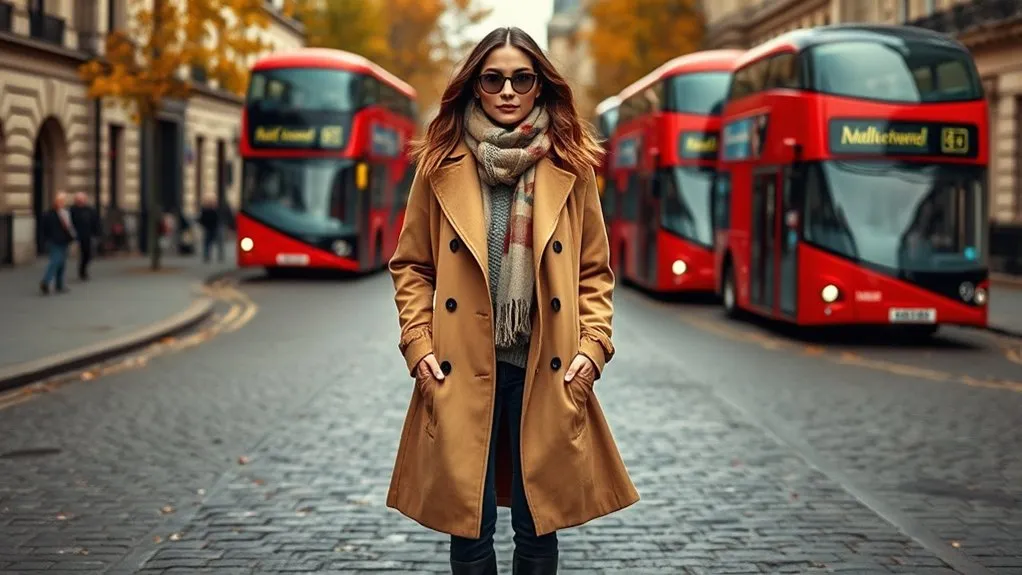
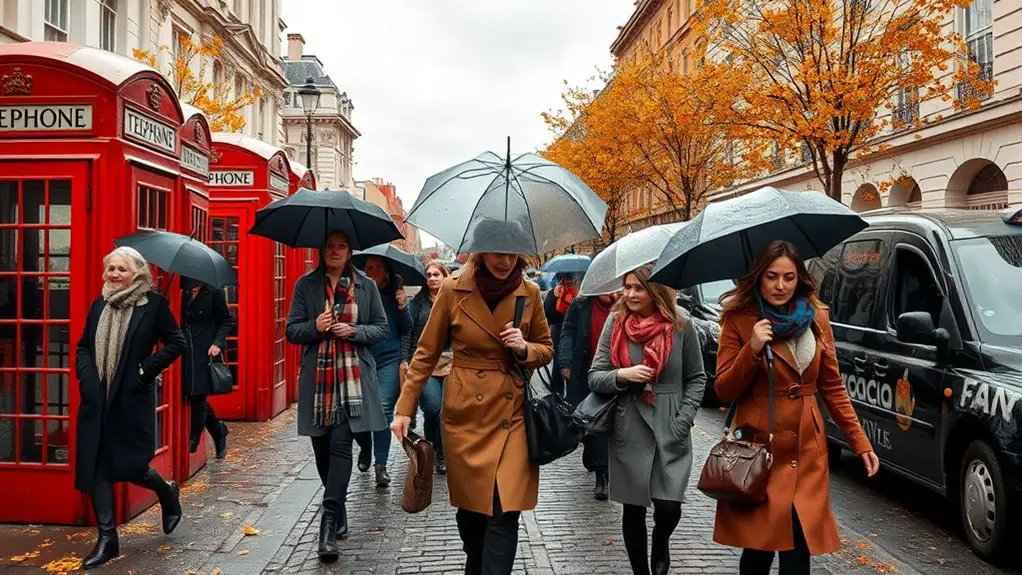
October is firmly autumn in London, but the weather is not usually severe. According to the Met Office’s 1991–2020 Greenwich climate averages, October has an average daily maximum of about 15.8°C (60.5°F) and an average minimum of about 9.0°C (48.2°F).
| October Weather Measure | Greenwich 1991–2020 Average |
|---|---|
| Average daily maximum | 15.8°C / 60.5°F |
| Average daily minimum | 9.0°C / 48.2°F |
| Average monthly rainfall | 58.3 mm / 2.3 in |
| Days with at least 1 mm of rain | About 10.3 days |
Those figures are climate averages, not a forecast for your particular trip. An October visit can include sunny afternoons, chilly evenings, drizzle, or a wetter spell. That is why Visit London recommends warm, waterproof clothing and comfortable footwear for October visitors.
There is also a noticeable difference between the beginning and end of the month. Early October often feels more like mild autumn, while late October usually requires a little more insulation after sunset.
Note: Daylight decreases quickly during October. The UK returns from British Summer Time to Greenwich Mean Time on the last Sunday in October, so evenings feel noticeably earlier after the clock change. Check GOV.UK for the date that applies to your travel year.
October also brings seasonal events, autumn color, Halloween activities, and busy half-term periods. If you plan to spend long stretches in parks, markets, queues, or outdoor attractions, a removable warm layer becomes especially useful.
Essential Layers for Changing Weather
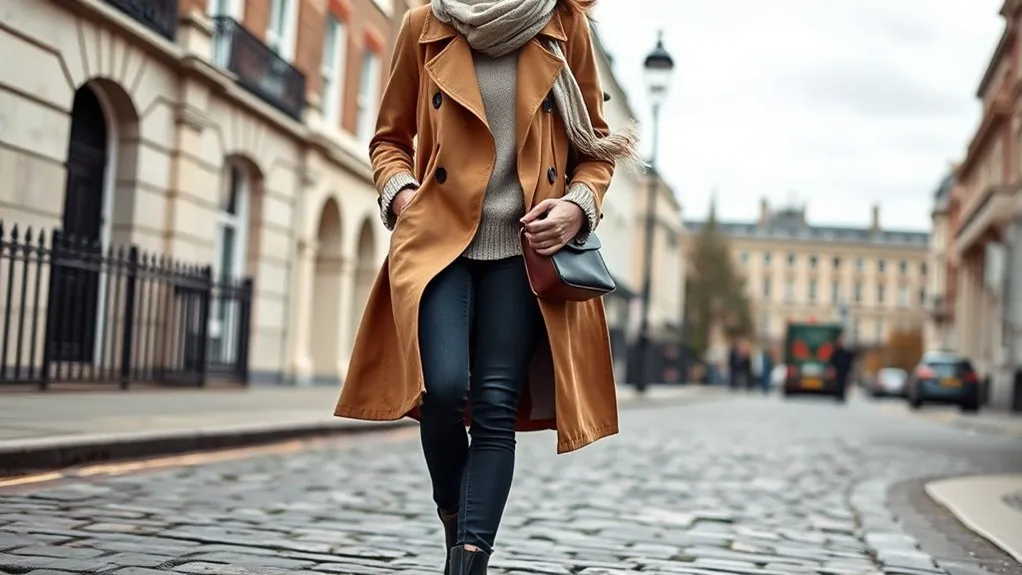
The easiest October outfit uses three simple layers that you can add or remove as the temperature changes.
1. Start With a Comfortable Base Layer
A T-shirt, lightweight long-sleeve top, blouse, or thin knit works well for most sightseeing days. Cotton is comfortable when conditions are mild and dry, but it absorbs moisture and dries more slowly. If the forecast is cool and wet, merino wool or a lightweight synthetic fabric is a better moisture-managing choice. The CDC’s cold-climate layering guidance recommends wool, silk, or polypropylene-type materials for a moisture-managing inner layer.
2. Add a Warm Middle Layer
A cardigan, sweater, fleece, overshirt, or lightweight wool layer gives you enough insulation for cool mornings and evenings without taking over your suitcase. Choose one or two pieces that work with nearly every bottom you pack.
3. Finish With a Weather-Resistant Outer Layer
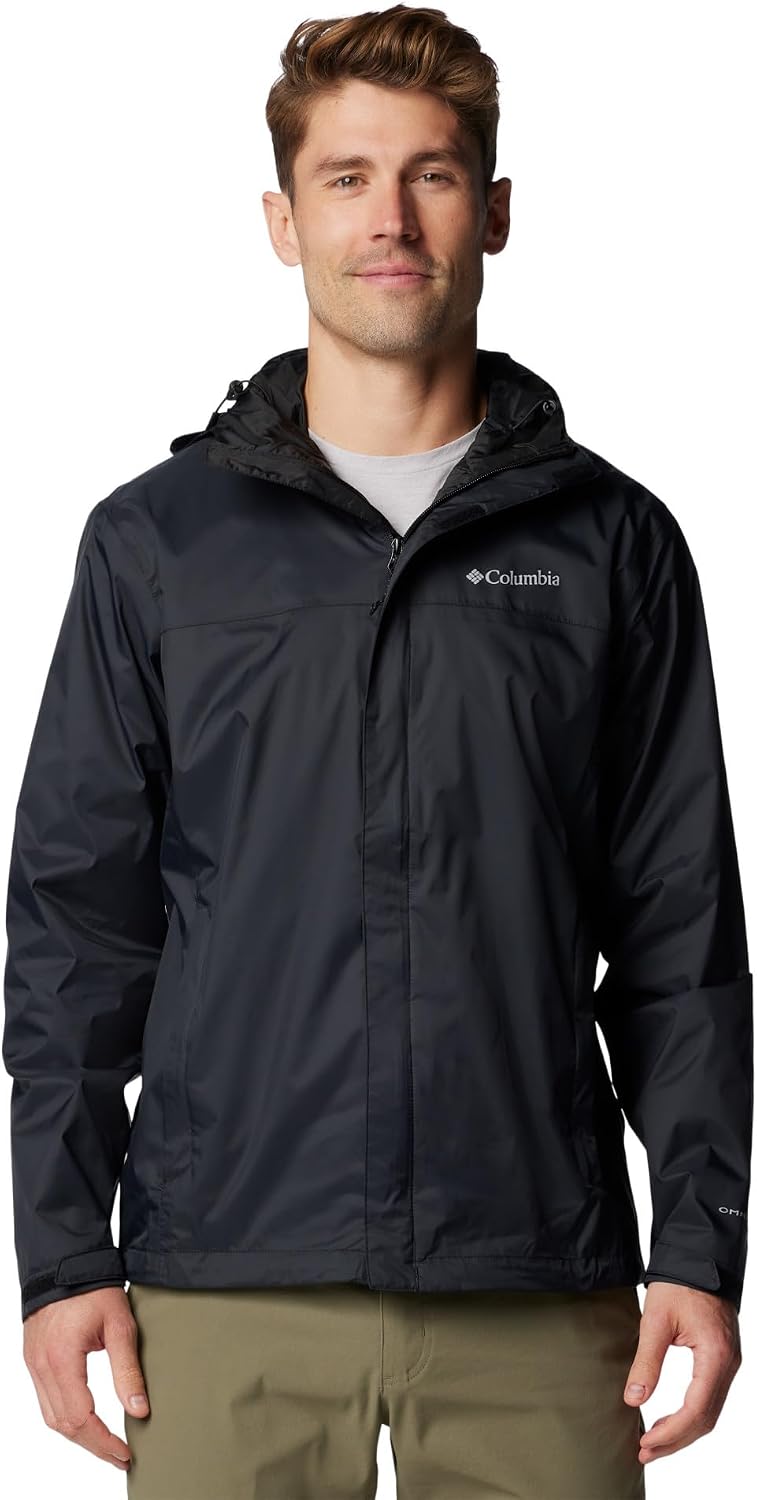
A lightweight waterproof jacket, lined raincoat, trench coat, or similar shell is more versatile than relying on a bulky coat alone. A hood is particularly useful when you do not want to open an umbrella on a crowded pavement.
You do not automatically need to avoid a heavy coat. If you run cold, travel in late October, or see colder weather in the forecast, a warmer coat may be the right choice. The goal is flexibility rather than following one fixed rule.
Pro Tip: Build every outfit around layers that also work separately. A long-sleeve top, cardigan, and waterproof jacket can cover a surprisingly wide range of October temperatures without filling your suitcase with bulky alternatives.
Waterproof Gear and Rain Accessories
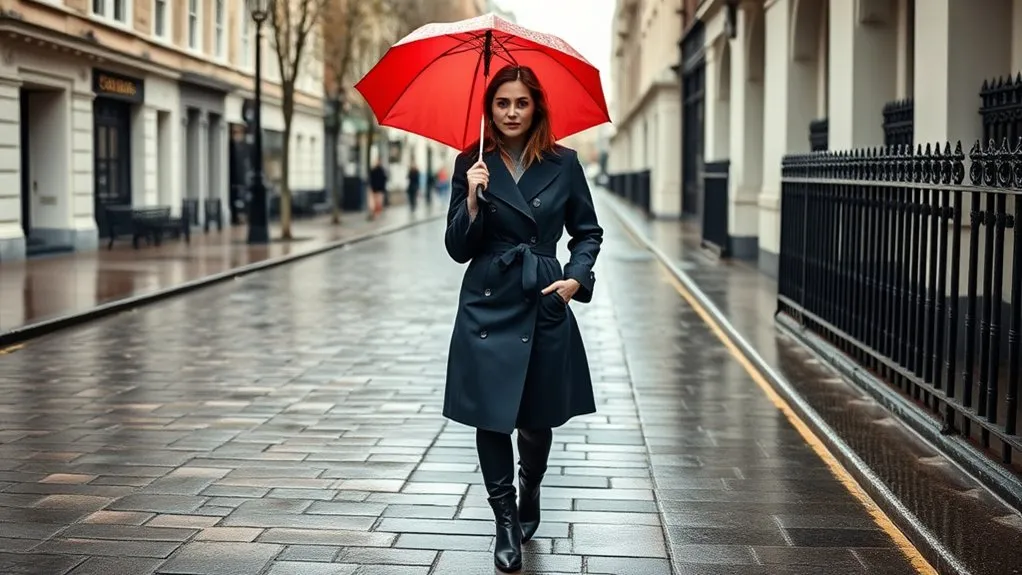
London’s October climate justifies rain protection, but you do not need expedition gear. A lightweight waterproof or water-resistant jacket is usually the most useful item because you can wear it while walking, sightseeing, and using public transport.
For stronger protection, choose a jacket with a hood, secure pockets, and enough room to fit over your sweater. A truly waterproof shell is more dependable during prolonged rain, while a water-resistant trench or jacket is often sufficient for lighter showers.
A compact umbrella is useful for quick showers and takes little luggage space. A sturdier model can be easier to manage than a very fragile travel umbrella, although any umbrella can become awkward on crowded streets or during strong wind.
Note: Climate averages tell you what October is usually like, not what will happen on your dates. Check the Met Office London forecast shortly before departure and again each morning before deciding which layers to wear.
Footwear Choices for Comfort and Style
Choosing the right footwear matters more than following a particular fashion trend. London sightseeing can involve long walks, stairs, stations, museums, cobbled areas, and wet pavements, so start with shoes you already know are comfortable.
Sneakers or trainers are an excellent everyday choice. Look for supportive cushioning, a secure fit, and an outsole with useful grip. Leather or water-resistant uppers are easier to manage in wet weather than thin canvas.
Ankle boots and Chelsea boots can provide a slightly smarter look for restaurants or evenings while still being practical during the day. Waterproof boots are useful if substantial rain is forecast, but they are not compulsory for a normal city trip.
The best London sightseeing shoe is one you can comfortably walk in for hours and that will not become miserable after a brief shower.
Useful options include:
- Broken-in sneakers or trainers with cushioned support
- Classic Chelsea boots that can work with jeans, trousers, skirts, or dresses
- Water-resistant or waterproof ankle boots for a wetter forecast
- Warm socks, especially for late-October evenings
Warning: Do not make a brand-new pair of boots your only sightseeing footwear. Break shoes in before your trip so rubbing, pressure points, or blisters do not spoil a full day of walking.
Stylish Outfits for Daytime and Evening
You do not need separate wardrobes for daytime and evening. London is well suited to mix-and-match outfits that can be dressed up with a smarter outer layer, boots, jewelry, or a scarf.
For daytime sightseeing, try a long-sleeve top with tailored trousers or jeans, a cardigan, and walking shoes. A skirt with tights and ankle boots also works well when the weather is dry.
For dinner, the theatre, or drinks, switch a casual layer for a blazer, trench, smart blouse, dress, or polished knit. A simple dress or jumpsuit can also work from afternoon to evening when paired with comfortable boots.
| Daytime Styles | Key Accessories | Evening Ensembles |
|---|---|---|
| Blouse + trousers | Scarf, compact umbrella | Dress or jumpsuit |
| Skirt + top + tights | Crossbody bag | Smart blouse + trousers |
| Sweater + jeans | Structured day bag | Blazer + boots |
This approach keeps your packing light while giving you enough flexibility for sightseeing, restaurants, shows, and evening walks.
Packing Tips for a September to October Transition
The change from September to October is noticeable. At Greenwich, long-term Met Office averages move from a September maximum of about 20.3°C (68.5°F) to an October maximum of about 15.8°C (60.5°F). The average minimum drops from about 11.6°C (52.8°F) to 9.0°C (48.2°F).
That does not mean every October day will be colder than every September day. It simply means you should give warmer mid-layers and rain protection a larger role as autumn progresses.
A Simple 5-to-7-Day October Packing List
For a typical week in London, a practical capsule wardrobe might include:
- 2–3 T-shirts or lightweight base tops
- 2 long-sleeve tops or blouses
- 2 sweaters, cardigans, fleeces, or other mid-layers
- 1 waterproof or water-resistant outer jacket
- 2 pairs of trousers, jeans, or other comfortable bottoms
- 1 optional skirt or dress, plus tights if you wear them
- 1 smarter top, blazer, or versatile evening layer
- 1 pair of comfortable everyday walking shoes
- 1 optional pair of ankle or Chelsea boots
- Enough underwear and socks for your laundry schedule
- 1 scarf
- 1 pair of lightweight gloves if you run cold or are visiting late in the month
- 1 compact umbrella
- 1 comfortable day bag or crossbody bag
If your accommodation has laundry facilities, you can pack even less. A simple neutral color palette also makes it easier to combine the same tops, bottoms, shoes, and outerwear in different ways.
Layering Essentials for Comfort
Effective layering lets you respond quickly when you move between cool streets, warmer museums, restaurants, shops, buses, and Underground stations.
A fitted base layer can sit beneath a sweater or cardigan, while a lightweight waterproof shell provides the final barrier against rain and wind. If you tend to feel cold easily, add a thermal or fine merino layer rather than packing several bulky sweaters.
A useful three-layer system is:
- A lightweight base layer, such as a long-sleeve top, merino top, or moisture-managing synthetic layer
- A warm middle layer, such as a sweater, cardigan, or fleece
- A waterproof or water-resistant jacket, trench, or shell
These layers can be added or removed as needed, making them much more adaptable than one very heavy outfit.
Versatile Clothing Choices
Versatile clothing is more useful than chasing a specific London look. A blazer, lightweight trench, dark trousers, simple knitwear, and neutral shoes can work in many combinations. Greys, navy, black, beige, olive, brown, and muted seasonal colors are easy to mix, but there is no requirement to dress in a particular palette.
| Layer Type | Key Items | Easy-to-Mix Colors |
|---|---|---|
| Base Layer | T-shirts, long-sleeve tops | Neutral or muted shades |
| Middle Layer | Light sweaters, cardigans | Earth tones, navy, grey |
| Outer Layer | Waterproof jacket, trench coat | Classic neutrals |
| Accessories | Scarves, hats, gloves | Neutral or seasonal accent colors |
| Footwear | Walking shoes, ankle boots | Black, brown, navy, grey |
Weather-Appropriate Accessories
Accessories can add warmth without using much luggage space. A scarf is particularly useful because you can wear it on a cool morning and put it in your bag when the afternoon warms up.
A compact umbrella provides quick rain protection. Lightweight gloves can be useful for early mornings or late evenings, especially for cold-sensitive travelers. Sunglasses are also worth packing because a cool October day can still be bright.
- A compact, reasonably sturdy umbrella
- A scarf that works with several outfits
- Lightweight gloves if you expect cooler conditions
- Sunglasses for bright autumn days
- A small day bag with room for a removed layer
What Not to Pack for London in October
Overpacking is easy when you are preparing for variable weather. In most cases, you can leave these items behind:
- Several bulky coats: One versatile outer layer plus adjustable mid-layers is usually easier to manage.
- Too many heavy sweaters: Two mix-and-match mid-layers are often enough for a week if you have suitable base layers.
- Multiple pairs of dress shoes: One comfortable walking pair and one optional smarter pair cover most trips.
- Only thin canvas shoes: They can become uncomfortable quickly if pavements are wet.
- Brand-new walking shoes: Break them in before traveling.
- Clothes that work with only one outfit: A small capsule wardrobe is more useful than multiple single-purpose looks.
A very heavy winter parka is also unnecessary for many October visits, but check your actual forecast and consider your own cold tolerance before leaving it at home.
Frequently Asked Questions
What Are the Top Outdoor Activities to Enjoy in London During October?
October is a good time for autumn walks in parks such as Hyde Park, Regent’s Park, Greenwich Park, and Richmond Park. You can also explore outdoor markets, walk along the Thames, or attend seasonal events. Hyde Park, for example, has extensive paths and open space in central London. Wear layers and take rain protection when you expect to spend several hours outside.
How Can I Adapt My Wardrobe for Unpredictable Autumn Weather?
Use a base layer, removable sweater or cardigan, and weather-resistant outer layer. Keep a compact umbrella in your day bag and choose shoes that remain comfortable on damp pavements. This lets you remove a layer in warmer indoor spaces and put it back on when temperatures fall.
Are There Specific Fashion Trends for October in London?
London style is varied, so there is no single October uniform. Trench coats, structured jackets, knitwear, ankle boots, sneakers, scarves, vintage pieces, and relaxed tailoring all fit naturally into an autumn wardrobe. Treat fashion trends as optional inspiration and prioritize clothes that suit your plans, comfort, and the actual forecast.
What Are the Best Indoor Attractions to Visit if It Rains?
Museums and galleries are the easiest rainy-day options. The British Museum and Tate Modern are major indoor choices. Borough Market is useful when you want food and shopping with substantial shelter, while Leadenhall Market offers both covered and outdoor areas rather than being a completely indoor attraction. A flexible itinerary makes it easy to swap outdoor sightseeing for museums when a wetter period arrives.
How Do I Stay Warm Without Sacrificing Style in October?
Choose thin layers that work together rather than one oversized warm item. A fitted long-sleeve top, fine-knit sweater, tailored trench or raincoat, scarf, and ankle boots can provide warmth while remaining polished. Neutral pieces make it easier to create several different outfits from a small suitcase.
Do I Need a Heavy Winter Coat in London in October?
Usually not. Many travelers are comfortable with a sweater or cardigan beneath a waterproof jacket, trench, or medium-weight coat. However, late-October weather can feel much cooler, and people who are sensitive to cold may prefer a warmer coat. Check the forecast shortly before departure instead of deciding from monthly averages alone.
Should I Pack an Umbrella or a Rain Jacket?
A rain jacket is the more versatile choice because it leaves your hands free and also helps block wind. A compact umbrella is a useful extra for lighter showers. If luggage space is limited, prioritize a hooded weather-resistant jacket and buy or carry a small umbrella only if you prefer one.
Conclusion
For London in October, the best wardrobe is flexible rather than bulky. Pack comfortable base layers, one or two warm sweaters or cardigans, a weather-resistant outer layer, and shoes you can walk in all day. Add a scarf and compact umbrella, then adjust the final choices to the forecast before you travel.
You can still dress well for restaurants, shows, and evening outings without packing a second wardrobe. Tailored trousers, a dress, smart knitwear, a blazer, or ankle boots can easily shift a daytime outfit into something more polished. With a small capsule wardrobe and reliable rain protection, you will be prepared for the cool, changeable conditions that make up a typical London October.
Sources
- Met Office — Greenwich Observatory long-term climate averages — October temperature, rainfall, rainy-day, and September-to-October climate data.
- Met Office — London weather forecast — current trip-time temperature, rain, and wind forecasts.
- Visit London — London in October — current October visitor guidance, including waterproof clothing and comfortable footwear.
- GOV.UK — When do the clocks change? — UK British Summer Time and October clock-change dates.
- CDC Yellow Book — Heat and Cold Illness in Travelers — evidence-based layering and fabric guidance.
- British Museum — Plan your visit — official information supporting the rainy-day indoor attraction recommendation.