
Last Updated on July 25, 2026 by Caleb Warren
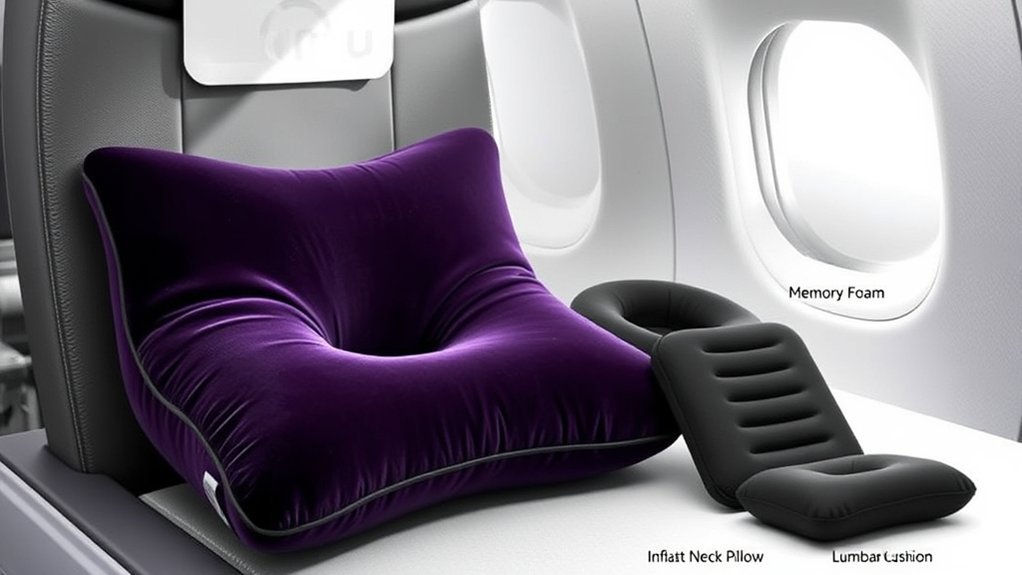
A travel seat cushion pillow is an ergonomic support accessory designed to alleviate body pressure, promote proper posture, and enhance comfort during long periods of sitting. Available in memory foam, inflatable, and gel-infused materials, these cushions redistribute weight away from sensitive areas like the tailbone and lower back. Whether navigating long flights, car road trips, or long hours in an office chair, choosing the right travel cushion can prevent discomfort and chronic sitting fatigue.
Quick Answer
A travel seat cushion pillow works by evenly distributing your body weight and reducing pressure on the ischial tuberosities (sit bones) and coccyx (tailbone). By elevating the pelvis slightly, it helps maintain the natural curvature of your spine, preventing slouching, relieving lower back strain, and improving circulation during long flights or drives.
Key Takeaways
- Pressure Distribution: High-density memory foam and gel cushions reduce peak pressure on the tailbone and hips.
- Spinal Posture: Contoured designs encourage proper pelvic tilt, preserving natural lumbar curve.
- Portability Matters: Inflatable cushions offer the highest packability, while memory foam provides superior long-term support.
- Travel-Specific Precautions: Underinflate air cushions slightly before takeoff to account for cabin pressure expansion.
Medical Disclaimer: The information provided in this article is for educational purposes only and does not substitute for professional medical advice. If you experience chronic sciatica, severe back pain, or vascular conditions, consult a healthcare professional before long-distance travel.
Disclosure: As an Amazon Associate I earn from qualifying purchases. Some links on this page are affiliate links, at no extra cost to you.
What Is a Travel Seat Cushion Pillow and How Does It Work?
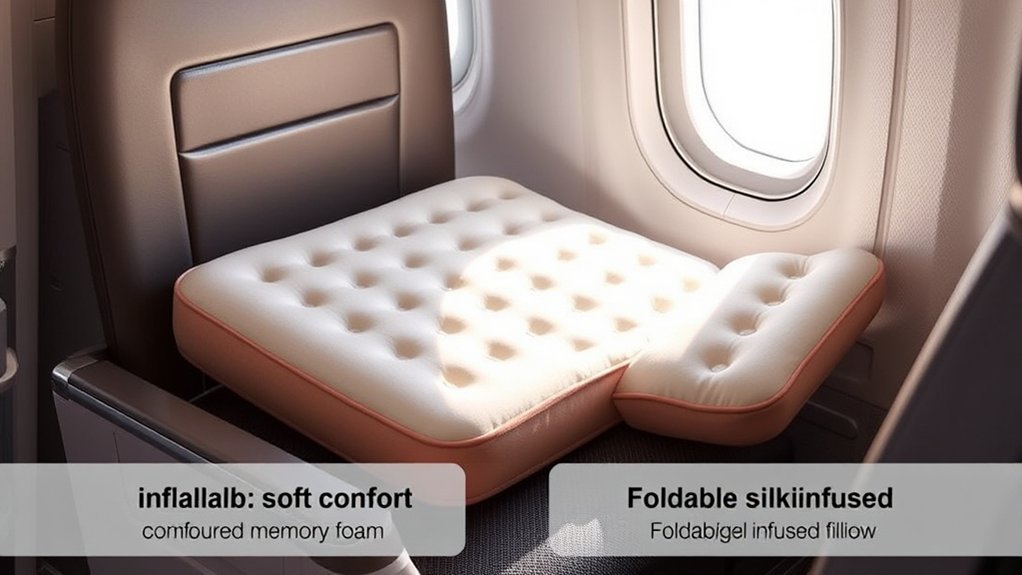
A travel seat cushion pillow is an ergonomic seating aid designed to support your body while sitting for extended periods in unsupportive environments like airplane economy seats, trains, or vehicles. Standard travel seats are often flat, firm, or poorly angled, forcing the pelvis to tilt backward. This unnatural angle flattens the lumbar curve and places excessive strain on the lower back muscles and intervertebral discs.
Travel cushions work by utilizing advanced materials—such as high-density memory foam, honeycomb gel matrices, or adjustable air chambers—to absorb impact and distribute body weight evenly. Ergonomic models often feature a U-shaped or wedge-shaped contour. The cut-out area suspends the tailbone (coccyx) so it does not press directly against the seat, while the raised side contours help stabilize the pelvis and encourage healthy posture alignment.
Top 5 Benefits of Travel Seat Cushion Pillows
Using a travel seat cushion pillow offers structural support that makes long journeys significantly more comfortable. Here are the top five benefits of incorporating a cushion into your travel gear:
1. Enhanced Pressure Relief and Sitting Comfort
Standard travel seats compress body tissues against bone, creating high-pressure points around the sit bones. Cushions constructed with memory foam or gel contour to your individual anatomy. This creates a broader surface area for weight distribution, reducing peak pressure points and minimizing overall physical fatigue during long-haul travel.
2. Improved Posture and Spinal Alignment
Sitting for long hours leads to slouching, which stresses the spinal ligaments. An ergonomic travel seat cushion raises the hips slightly above or level with the knees. This subtle tilt promotes the natural inward curve of the lower back (lumbar lordosis), reducing muscle fatigue and encouraging upright posture without strain.
3. Alleviation of Lower Back Pain and Sciatica
By preventing pelvic rotation and reducing spinal compression, a seat cushion helps alleviate strain on the lower back muscles. For travelers prone to sciatica, reducing direct contact pressure on the sciatic nerve path can prevent sharp pain, tingling, and numbness while sitting.
4. Targeted Tailbone and Coccyx Decompression
Many specialized travel cushions incorporate a rear U-shaped cutout. This structural opening leaves the tailbone suspended rather than compressed against hard seating surfaces. This specific design feature is essential for individuals recovering from coccyx injuries or experiencing inflammation from prolonged sitting.
5. Improved Blood Circulation in the Lower Limbs
Hard seat edges can cut off circulation behind the thighs, leading to leg stiffness, numbness, and increased lower limb swelling. A contoured cushion softens the edge transition and reduces pressure on major blood vessels, supporting healthier circulation throughout long flights or car trips.
“Prolonged static sitting on unyielding surfaces increases compressive force on lumbar discs. Ergonomic pelvic support helps distribute load and maintain natural spinal geometry.”
Discover the Different Types of Travel Seat Cushion Pillows
Choosing the best cushion depends on your priority: maximum support, weight, or compact storage. The three primary types include:
- Memory Foam Cushions: Best for support and pressure contouring. High-density viscoelastic foam reacts to body heat and weight, offering tailored cushioning. However, they are bulkier to pack.
- Inflatable (Air) Cushions: Ideal for ultralight travel and backpackers. They deflate into a compact pouch, making them easy to pack. Inflation levels can be customized to adjust firmness.
- Gel & Hybrid Cushions: Excellent for temperature regulation. Synthetic gel grids dissipate body heat while providing elastic support. Hybrid models blend a memory foam base with a top gel layer.
Pro Tip (Air Travel Inflation): If using an inflatable cushion on a commercial flight, inflate it to only 70% to 80% capacity on the ground. As the aircraft ascends and cabin pressure drops, air inside the cushion expands. Underinflating prevents the cushion from becoming overly hard at cruising altitude.
Choosing the Right Travel Seat Cushion: Key Factors
When evaluating different models, consider these core buying criteria:
- Material Density & Core: Look for high-density foam (at least 3 to 4 lbs/cu. ft.) to ensure the cushion won’t flatten completely under your body weight.
- Dimensions & Seat Compatibility: Airline seats vary from 17 to 18 inches in width. Ensure your cushion is wide enough for comfort but narrow enough to fit flat between airline armrests.
- Weight and Compressibility: If traveling with carry-on luggage only, prioritize lightweight air cushions or memory foam models that include dedicated compression straps.
- Cover Breathability & Washability: Opt for removable covers made of breathable mesh or velour that can be machine washed to maintain hygiene across multiple trips.
- Non-Slip Base: A rubberized non-slip bottom prevents the cushion from sliding forward on smooth leather or vinyl seats during transit.
Warning (TSA Gel Regulations): Full-liquid gel seat cushions may be flagged by airport security if they exceed standard liquid carry-on limits. Choose solid gel-matrix or gel-infused memory foam options when flying to pass security screening without issue.
When and Where to Use Your Travel Seat Cushion Pillow
Travel seat cushions are versatile ergonomic tools suitable for a wide range of environments:
- Long-Haul Flights: Counteract sagging, worn airplane seats and maintain comfort over 5 to 15 hour journeys.
- Road Trips & Driving: Elevate lower sightlines and reduce road vibration impact on your lower spine.
- Train & Bus Transit: Add cushioning over rigid, unpadded commuter seating.
- Office Chairs & Remote Work: Convert standard desk seating into an ergonomically supportive workstation when working from hotels or temporary spaces.
How to Keep Your Travel Seat Cushion Pillow in Tip-Top Shape
Proper maintenance extends the life of your travel cushion and keeps it clean across multiple trips. Follow these core care steps:
Cushion Maintenance Guidelines
| Maintenance Task | Best Practice Instructions |
| Clean Outer Cover | Unzip and machine wash cover on gentle cycle with cold water. Air dry to prevent shrinkage. |
| Spot-Clean Core Foam | Never submerge memory foam in water. Spot clean with a damp cloth and mild soap; air dry fully. |
| Proper Storage | Store uncompressed in a cool, dry place. Avoid leaving compressed in travel bags for months. |
| Sunlight Protection | Keep away from direct UV exposure, which degrades memory foam cellular structures over time. |
Debunking Myths About Travel Seat Cushion Pillows
Common misconceptions keep many travelers from using ergonomic seating aids effectively:
- Myth 1: Any standard bed pillow works just as well. Standard pillows flatten quickly under body weight and lack the structural firmness required to realign the pelvis or relieve coccyx pressure.
- Myth 2: Cushions are only for elderly travelers or those with chronic back pain. Preventative ergonomics benefit travelers of all ages by reducing tissue strain and preventing muscle stiffness before pain begins.
- Myth 3: Travel cushions are too bulky to carry onboard. Modern travel cushions fold, roll, or compress into carry-on clips, with inflatable options packing down to the size of a soda can.
Using Accessories to Enhance Your Travel Seat Cushion Experience
To maximize comfort on long journeys, pair your seat cushion with complementary ergonomic travel accessories:
- Lumbar Support Rolls: Place a dedicated lumbar pillow behind your lower back while using a seat cushion to support the entire spinal column simultaneously.
- Inflatable Footrests: Elevate your feet slightly to take pressure off the backs of your thighs and encourage optimal knee angles.
- Graduated Compression Socks: Combine proper seat cushioning with medical-grade compression socks to promote healthy venous blood return during long flights.
Frequently Asked Questions
Can children use travel seat cushion pillows?
Yes, children can safely use travel seat cushions. Ensure the cushion size allows their feet to rest comfortably on the floor or footrest without placing unnatural stress on their knees or lower back. Note that cushions should never replace required child car safety seats or booster seats in motor vehicles.
Are travel seat cushion pillows machine washable?
Most travel seat cushions feature removable, machine-washable fabric covers. However, the inner core (memory foam or gel) should never be placed in a washing machine. Always check manufacturer care labels before cleaning.
Do travel seat cushion pillows fit all types of seats?
Most travel cushions are designed with universal dimensions (roughly 16 to 18 inches wide) to fit standard economy airplane seats, car seats, and train chairs. Always check your cushion’s measurements against tight bucket seats or narrow regional jet seats.
How long do travel seat cushion pillows last?
A high-density memory foam or solid gel cushion typically lasts between 2 to 5 years depending on frequency of use and storage conditions. Inflatable options may have shorter lifespans if exposed to sharp objects or seam stress.
Can I use a travel seat cushion pillow while driving?
Yes, you can use a seat cushion while driving. Ensure the cushion elevates you slightly without compromising your distance to the pedals or vehicle controls, and verify that your head remains properly aligned with the seat head restraint for safe driving visibility.
Conclusion
Investing in the right travel seat cushion pillow can fundamentally transform your journey by providing essential pelvic support, preserving your spine’s natural curve, and relieving tailbone pressure. Whether you choose compact inflatable models for light packing or high-density memory foam for maximum support, selecting a cushion tailored to your body and travel style ensures you arrive at your destination refreshed, comfortable, and pain-free.
Sources
- Centers for Disease Control and Prevention (CDC) — Deep Vein Thrombosis and Travel Guidelines
- Occupational Safety and Health Administration (OSHA) — Ergonomics and Posture Support Standards
- National Center for Biotechnology Information (NCBI) — Study on Seating Ergonomics and Lumbar Load Reduction
- Transportation Security Administration (TSA) — Liquids, Gels, and Carry-on Rules
