
Last Updated on July 29, 2026 by Caleb Warren
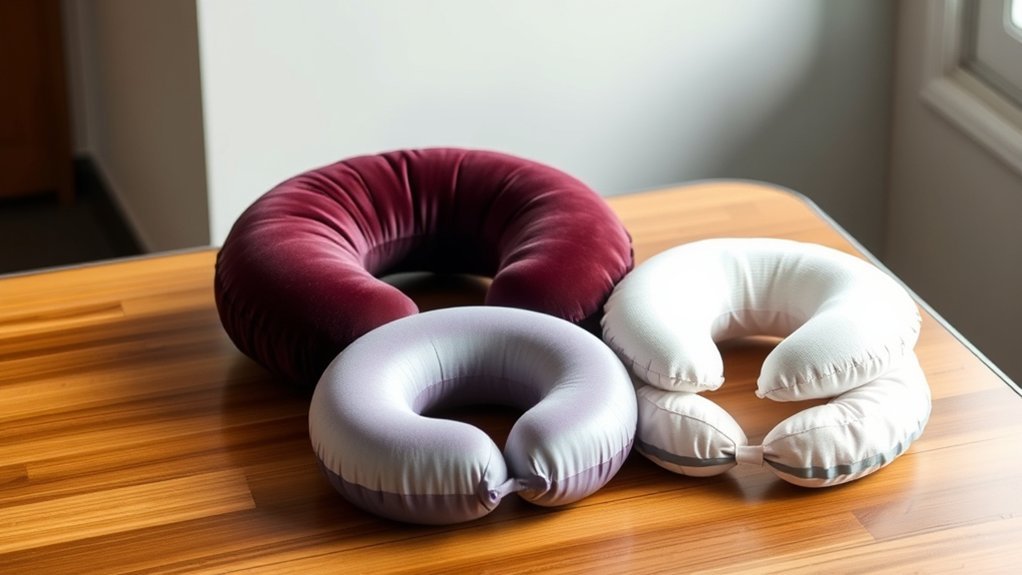
Travel pillows come in several shapes, fillings, and support levels. The right one can make an upright seat more comfortable, but no single design works for every traveler. Your best option depends on where your head tends to fall, the height of your neck, the shape of the seat, how warm you sleep, and how much luggage space you can spare.
Quick Answer
The main travel pillow types are memory foam, inflatable, microbead, wraparound or scarf-style, J-shaped or chin-support, and compressible rectangular pillows. Memory foam gives firmer contouring, inflatable models save the most space, and wraparound designs limit side movement. The best choice fits your neck, seat, sleep tendency, and packing needs.
Key Takeaways
- Pillow shape controls where the support sits; filling affects firmness, weight, warmth, and pack size.
- Memory foam usually feels more structured, while inflatable pillows are lighter and more adjustable.
- Choose for the way your head moves while seated—not only for your normal sleeping position at home.
- A good fit supports the neck without forcing the chin upward or pushing the head away from the seat.
- Always follow the care label because a washable cover does not mean the foam core or air bladder is machine washable.
Disclosure: As an Amazon Associate I earn from qualifying purchases. Some links on this page are affiliate links, at no extra cost to you.
Understanding the Benefits of Travel Pillows
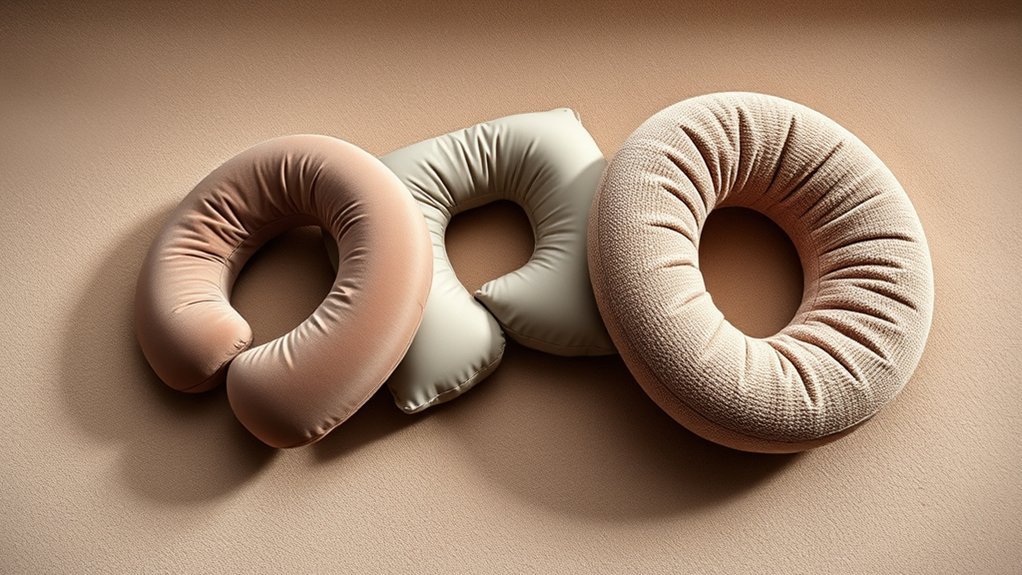
A travel pillow supports part of the weight of your head when you rest in an upright or slightly reclined seat. A well-fitted model may limit uncomfortable side-to-side movement, reduce forward head dropping, and give you a softer surface to lean against.
Research on ordinary sleeping pillows suggests that height, shape, and support can affect cervical positioning, waking symptoms, and comfort. However, those findings do not prove that every travel pillow prevents neck pain or improves sleep. Results vary with body size, seat design, pillow construction, and personal preference. See the 2021 systematic review of pillow designs and the review of pillow height and neck support for the evidence and its limits.
Travel pillows may also provide a clean, familiar surface during flights, train rides, bus trips, and long car journeys. Removable covers and carrying cases are useful features, especially for frequent travelers.
Note: A travel pillow is a comfort accessory, not a treatment for neck pain, a sleep disorder, or another medical condition. Stop using it if it causes pain, numbness, tingling, dizziness, breathing difficulty, or unusual pressure around your neck.
What Are the Different Types of Travel Pillows?
Travel pillows can be classified in two ways. The first is by material or construction, such as memory foam, microbeads, fiber fill, or an inflatable air bladder. The second is by shape, such as U-shaped, wraparound, J-shaped, chin-support, or rectangular. A single pillow may combine both categories—for example, a U-shaped memory-foam pillow.
Travel Pillow Types at a Glance
| Memory foam | Structured, contouring support. Often comfortable for travelers who want high sides or a secure fit, but usually bulkier and warmer than inflatable options. |
| Inflatable | Best for minimum pack size and adjustable firmness. It may feel hard when overinflated and can be vulnerable to valve problems, punctures, or leaks. |
| Microbead | Soft and moldable with a familiar U-shape. It can flatten with use, shift under pressure, and take up more space than an inflatable pillow. |
| Wraparound or scarf-style | Uses an internal support, padding, or fabric wrap along one or both sides of the neck. Compact and useful for side leaners, but placement takes practice. |
| J-shaped or chin-support | Supports the side of the head, jaw, or chin to reduce forward dropping. It may be less convenient to pack or switch from one side to the other. |
| Compressible rectangular | Feels more like a small bed pillow and works for window seats, hotels, camping, or lumbar support. It offers less wraparound stability in an upright seat. |
When Memory Foam Travel Pillows Work Best
Memory foam is a viscoelastic material that softens and changes shape under pressure, then gradually returns toward its original form. NASA describes early memory foam as an open-cell material that distributed pressure and slowly recovered after the load was removed. That behavior helps explain why memory foam can feel contouring, but the final comfort still depends on the pillow’s density, thickness, shape, and fit. You can read NASA’s account of the material in Forty-Year-Old Foam Springs Back With New Benefits.
A memory-foam travel pillow may suit you when you prefer firmer support, raised sides, or a front closure that holds the pillow close to your neck. Flat-back designs can be helpful in seats with thick headrests because they add less material behind your skull.
The trade-offs are bulk and warmth. Solid foam normally takes more luggage space than an air bladder, even when it compresses into a case. Dense foam may also retain warmth, although the cover fabric, ventilation panels, and room temperature can make a large difference.
Pro Tip: Sit in a firm chair and wear the pillow for at least 15 minutes before your trip. Lean slightly left, right, and forward. The pillow should support you without forcing your chin upward, pressing hard on your jaw, or pushing your head away from the seat.
The Pros and Cons of Inflatable Travel Pillows
Inflatable travel pillows are a strong choice for travelers who value low weight and small pack size. They also let you change the firmness by adding or releasing air. Their main weaknesses are a less cushioned feel, possible valve or bladder failure, and the need to reinflate them if air escapes.
Lightweight and Compact Design
An inflatable pillow can fold or roll into a small pouch after the air is released. This makes it useful for one-bag travel, backpacking, and trips where every inch of luggage space matters.
Check the packed dimensions rather than relying only on words such as “compact” or “ultralight.” Also consider whether the pillow has a separate cover, an integrated fabric surface, a carrying case, and a clip for attaching it to your luggage.
Adjustable Comfort Levels
Inflate the pillow until it supports your head, then release a small amount of air. A slightly underfilled pillow often conforms better than one inflated to maximum pressure. Too much air can make the pillow rigid, raise your shoulders, or force your neck into an awkward angle.
If the design has separate chambers or an adjustable front closure, set each part while seated. Recheck the fit after reclining because the angle between your head and seat will change.
Potential Durability Issues
Inflatable pillows can develop leaks around the valve, seams, or bladder. Thin construction saves weight but may be easier to puncture. Keep the pillow away from sharp zipper pulls, pens, pet claws, rough surfaces, and excessive heat.
| Weight and packing | Usually very light and compact, although the pouch and removable cover add some bulk. |
| Firmness | Easy to adjust, but excessive inflation can feel hard and create too much height. |
| Durability | The bladder, valve, or seams may leak if damaged. Inspect the pillow before a long trip. |
| Sound and temperature | Some bladder fabrics feel cool or make noise when you move, while others have quieter, padded covers. This varies by product. |
| Repair | Some bladders can be patched, but the repair method and compatible adhesive depend on the manufacturer. |
Benefits of Microbead Pillows for Flexible Neck Support
Microbead pillows contain many small beads that move as you change position. This gives them a soft, moldable feel. They are often sold in a traditional U-shape and can be easier to reposition than a solid block of foam.
- Flexible feel: The filling shifts around the neck and shoulders.
- Simple design: Most models do not require inflation, valves, or adjustment.
- Soft surface: The pillow may feel less rigid than dense memory foam.
- Moderate portability: It can clip to luggage but normally does not pack as small as an inflatable pillow.
- Variable support: The beads may move away from the area that needs support or flatten after repeated use.
Examine the outer seams before travel. Escaped beads are difficult to collect, and a damaged shell can quickly make the pillow unusable. Do not assume the whole pillow can go in a washing machine; check the sewn-in care label.
Other Travel Pillow Shapes to Consider
Wraparound and Scarf-Style Travel Pillows
A wraparound pillow uses fabric, padding, an internal support, or a combination of these features to hold one side of the head. It may be much slimmer than a thick U-shaped pillow and can work well for travelers whose heads consistently fall to one side.
Placement matters. If the support sits too far forward, it may press on the jaw. If it sits too far back, the head may still tip sideways. Practice wrapping and adjusting it before boarding.
J-Shaped and Chin-Support Pillows
J-shaped pillows support the side of the head and continue under the chin or along the front of the shoulder. Other front-support designs create a soft ledge beneath the chin. These options are useful for travelers whose heads drop forward as they fall asleep.
The shape can be harder to pack, and some designs mainly support one side. Check whether the pillow can be reversed and whether it crowds your face, headphones, glasses, or clothing.
Compressible Rectangular and Convertible Pillows
A small rectangular pillow feels closer to a home pillow. You can place it against a window, behind your neck, at your lower back, or on a hotel bed. Some models convert between a U-shape and a rectangle.
This style is versatile but does not surround the neck, so it may not stop side-to-side movement in an open aisle or middle seat. It is usually best when you have a wall, window, headrest wing, or other stable surface to lean against.
How to Choose the Best Travel Pillow for Your Sleep Style
For upright travel, focus less on labels such as back, side, or stomach sleeper and more on what happens when you begin to doze in a seat. The pillow should fill the unsupported space without forcing your neck away from a comfortable position.
Identify Your Seated Sleep Tendency
- Your head falls sideways: Look for high side walls, a wraparound support, a J-shaped pillow, or an adjustable side brace.
- Your chin drops toward your chest: Consider a chin-support design, a front closure, or a pillow with firm support at the front and sides.
- You stay mostly upright: A lower-profile U-shaped pillow may provide enough cushioning without surrounding your face.
- You change direction often: Choose a reversible, symmetrical, or easily adjustable design.
- You lean against a window: A rectangular compressible pillow or a U-shaped model with extra side padding may be comfortable.
Avoid using the cabin wall, tray table, or another hard surface as the only support for your face. A soft washable layer is more comfortable and easier to keep clean.
Evaluate Material Preferences
Choose memory foam when you prefer contouring and structure. Choose an inflatable pillow when pack size and firmness adjustment matter most. Choose microbeads or fiber fill when you prefer a softer, looser feel.
Also consider:
- Heat: Dense foam and plush fabric may feel warmer than ventilated mesh or thin fabric.
- Texture: Test the cover against your face and neck, especially if rough seams bother you.
- Odor: Some new foam or synthetic materials have a temporary smell. Air the pillow before travel according to its instructions.
- Noise: Beads, air bladders, hook-and-loop fasteners, and crisp synthetic fabric may make sound when you move.
- Sensitivity: Review the material list if you have known skin, latex, fragrance, or textile sensitivities.
Check Neck Height and Seat Fit
A pillow that is too tall can lift your shoulders or tilt your head. One that is too low may provide little support. Your jaw should rest naturally, your shoulders should remain relaxed, and you should be able to turn your head without the pillow pressing tightly against your throat.
Pay attention to the rear profile. A thick pad behind the head can push you forward when the seat already has a large headrest. A flat-back or open-back pillow may work better in that situation.
Consider Portability and Setup
Compare the pillow’s packed size, weight, carrying case, attachment clip, and setup time. A pillow that is comfortable but too bulky to bring will not help on the trip. Also check whether you can adjust it while seated without removing headphones, glasses, or a jacket.
How to Test a Travel Pillow Before Your Trip
- Use a firm chair. Choose a chair with a back and head position similar to an airplane, train, or bus seat.
- Wear your normal travel clothing. A hood, scarf, jacket collar, headphones, or glasses can change the fit.
- Set the pillow correctly. Adjust the front closure, wrap, inflation level, or side support according to the manufacturer’s directions.
- Relax your shoulders. The pillow should support your head without making you shrug.
- Lean in several directions. Check left, right, forward, and slightly reclined positions.
- Wait at least 15 minutes. Heat, pressure points, jaw discomfort, and slipping may not appear immediately.
- Practice packing it. Confirm that the pillow fits its case and attaches securely to your luggage.
Warning: Do not tighten a travel pillow, strap, or wrap so much that it restricts normal breathing, swallowing, or neck movement. Never allow it to interfere with your seat belt or safety instructions from the crew or driver.
Troubleshooting Common Travel Pillow Problems
The Pillow Pushes Your Head Forward
Reduce the amount of material behind your head. Try a flat-back model, reposition the opening if the manufacturer allows it, or use less air in an inflatable pillow. Reclining slightly may also improve the angle when permitted.
Your Chin Still Drops Forward
Tighten the front closure only enough to bring the sides closer together. If the pillow has no front support, try a chin-support, wraparound, or J-shaped design rather than forcing a loose U-shaped pillow to do a job it was not designed for.
The Pillow Feels Too Hot
Remove a hood or bulky collar, choose a thinner cover, or look for mesh panels and less material around the front of the neck. A removable washable cover can also help you switch to a lighter fabric when the manufacturer offers compatible options.
The Pillow Slides or Rotates
Check the closure, strap, and orientation. Smooth fabric may slide against a jacket or seat. A closer fit, textured cover, or design that attaches to the seat may stay in place better, provided the attachment is permitted and does not interfere with safety equipment.
An Inflatable Pillow Loses Air
Confirm that the valve is fully closed. Inflate the pillow and listen or feel for escaping air around the valve and seams. Use only a patch or adhesive approved for that product’s bladder material, and replace the pillow if a reliable repair is not possible.
Tips for Packing and Carrying Your Travel Pillow
- Use the included case to keep the pillow clean and prevent straps from snagging.
- Release all air from an inflatable model before folding it along the manufacturer’s recommended lines.
- Compress foam only as much and as long as the manufacturer permits.
- Close snaps, hook-and-loop tabs, and buckles before packing so they do not catch on clothing.
- Attach the pillow securely to your luggage rather than letting it drag or swing.
- Keep a small washable cover or clean cloth available if the pillow will touch a public surface.
- Check your carrier’s current baggage rules when the pillow will be carried separately from your personal item.
Maintenance and Care for Long-Lasting Travel Pillows
Care instructions vary widely, even among pillows that look similar. Read the sewn-in label and the manufacturer’s instructions before washing any part.
- Removable covers: Wash only at the allowed temperature and close zippers or fasteners first.
- Memory-foam cores: Do not assume they are machine washable. Many should be spot-cleaned with a damp cloth and air-dried.
- Inflatable pillows: Keep water out of the valve and bladder unless the manufacturer gives different instructions. Avoid tumble-dryer heat when it could damage the bladder.
- Microbead pillows: Inspect the seams and use a gentle cleaning method approved on the label.
- Storage: Make sure every component is completely dry. Avoid long-term tight compression unless the instructions specifically permit it.
For an example of component-specific care, Cabeau states that the removable cover on one of its memory-foam models can be machine washed, while the foam insert should only be wiped and air-dried. Sea to Summit instructs users to hand wash its Aeros inflatable pillow, air-dry it, and store it with the valve open rather than tightly compressed. See the Cabeau care directions and Sea to Summit inflatable-pillow care guide.
Note: Neck support does not replace movement on a long trip. The CDC advises travelers to move their legs frequently during long-distance travel and to discuss personal blood-clot risk with a healthcare professional when appropriate.
Frequently Asked Questions
Can travel pillows be used for regular home use?
Yes. A travel pillow can support your head while reading, watching television, relaxing in a chair, or resting away from home. It should feel comfortable and should not force your neck into an awkward angle. A compact travel pillow may not replace a properly fitted bed pillow for overnight sleep.
Are travel pillows machine washable?
Some are, but often only the removable cover can go in a washing machine. Memory foam, microbead filling, and inflatable bladders may require spot cleaning or hand washing. Follow the care label for every component.
How do I inflate an inflatable travel pillow?
Open the valve and inflate the pillow by mouth or with the approved pump. Close the valve securely, test the pillow while seated, and release a little air if it feels hard or raises your shoulders. Do not use a high-pressure pump unless the manufacturer permits it.
What materials are travel pillows typically made from?
Common fillings and structures include memory foam, polyester fiber, polystyrene microbeads, inflatable thermoplastic bladders, and internal plastic supports. Covers are often made from polyester, fleece, velour, cotton blends, mesh, or other synthetic fabrics.
How do I store my travel pillow when it is not in use?
Clean and fully dry the pillow before storage. Keep it in a breathable case or clean cabinet away from sharp objects, moisture, direct sunlight, and high heat. Avoid prolonged tight compression unless the manufacturer states that it is safe.
Which travel pillow is best for a long flight?
The best option is one that supports the direction your head normally falls without pushing it forward. Memory foam suits travelers who want firmer support, inflatable pillows suit light packers, and wraparound or chin-support designs help people whose heads fall sideways or forward.
Should the opening of a U-shaped travel pillow face forward or backward?
Follow the design instructions for your pillow. Many traditional U-shaped pillows are worn with the opening at the front, while some travelers rotate certain models to place more support under the chin. The correct position is the one approved for the design that supports your head without restricting breathing or movement.
Can a travel pillow prevent neck pain?
No travel pillow can guarantee that you will avoid neck pain. A properly fitted pillow may improve comfort and reduce unsupported head movement, but persistent or severe pain should be evaluated by a qualified healthcare professional.
Conclusion
The best travel pillow is not simply the softest or most expensive model. It is the one that fits the space between your head, neck, shoulders, and seat without creating new pressure. Memory foam provides structured contouring, inflatable pillows save space, microbeads feel flexible, and wraparound or chin-support designs control specific types of head movement.
Test the pillow in a chair before traveling, check that your shoulders and jaw remain relaxed, and confirm that you can pack and clean it easily. A good travel pillow can make an upright journey more comfortable, but it should never restrict breathing, interfere with safety equipment, or replace regular movement during a long trip.
Sources
- The Effects of Pillow Designs on Neck Pain, Waking Symptoms, Neck Disability, Sleep Quality and Spinal Alignment in Adults — systematic review and meta-analysis of pillow-design evidence.
- Ergonomic Consideration in Pillow Height Determinants and Evaluation — research review covering pillow height, body dimensions, pressure distribution, and cervical support.
- NASA Spinoff: Forty-Year-Old Foam Springs Back With New Benefits — history and viscoelastic behavior of memory foam.
- CDC: Understanding Your Risk for Blood Clots with Travel — long-distance travel, immobility, leg movement, and risk guidance.
- Cabeau Evolution Earth Deluxe Care Instructions — example of washing a removable cover without washing the memory-foam insert.
- Sea to Summit: How to Wash an Aeros Inflatable Pillow — hand washing, air drying, and storage guidance for an inflatable pillow.
