
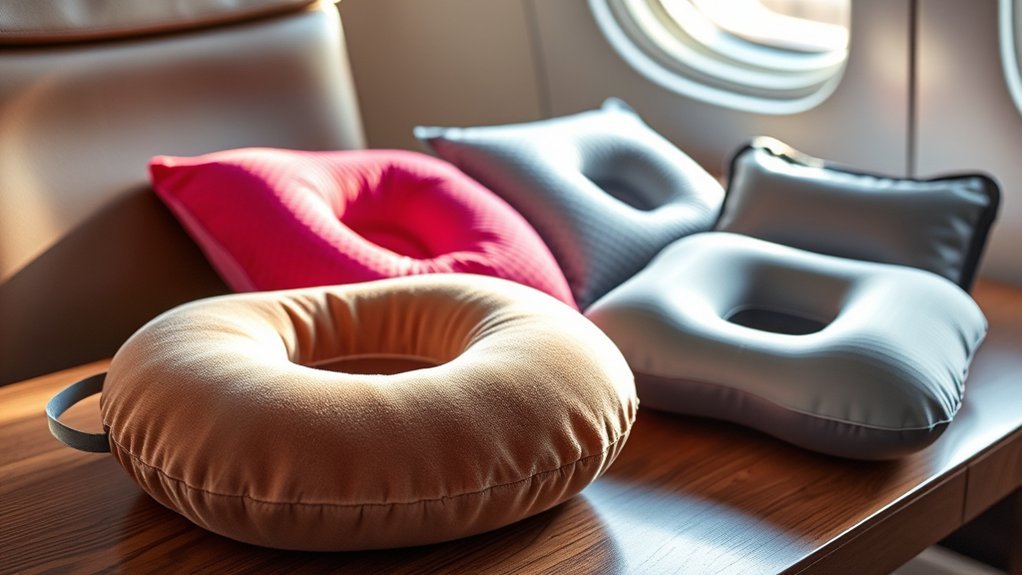
Last Updated on July 29, 2026 by Caleb Warren
A travel pillow supports your head or neck while you rest in a seated or partly reclined position. The right design can reduce uncomfortable head movement and make a plane, train, bus, or passenger seat easier to rest in. Its usefulness depends on its fit, firmness, shape, temperature, and how well it works with your seat.
Quick Answer
A travel pillow is a compact cushion or support designed to limit uncomfortable head movement while you rest during a trip. U-shaped, wrap-around, inflatable, J-shaped, and rectangular models suit different positions. Choose one that fills the gap around your head or neck without pushing your chin forward or restricting breathing, movement, or a seat belt.
Key Takeaways
- The best travel pillow is the one that matches your neck height, seat, preferred sleeping direction, and available luggage space.
- A pillow may improve comfort, but it cannot guarantee spinal alignment, prevent all neck pain, or replace medical care.
- Test the pillow at home for at least 10–15 minutes before taking it on a long trip.
- Check the care label before washing; removable covers, foam cores, air chambers, and internal supports often require different cleaning methods.
- Keep seat belts correctly positioned and move your legs regularly during long journeys.
Disclosure: As an Amazon Associate I earn from qualifying purchases. Some links on this page are affiliate links, at no extra cost to you.
What Is a Travel Pillow and Why Might You Need One?
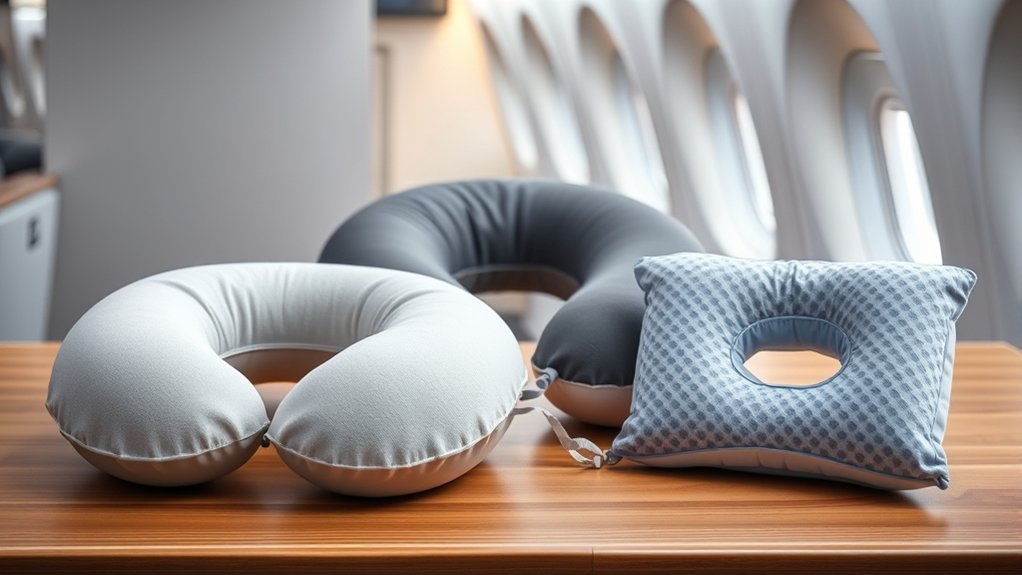
A travel pillow is a portable cushion or structured support made for resting away from a normal bed. Most models are designed for upright seats, where the head may tip forward or lean to one side as you fall asleep.
A well-fitted pillow can fill some of the space between your head, neck, shoulder, and seat. This may reduce the amount of unsupported head movement and help you maintain a more comfortable position. According to Mayo Clinic, keeping the head and neck aligned with the body and taking regular movement breaks can help reduce strain.
However, a travel pillow is a comfort accessory rather than a medical device. It cannot guarantee perfect posture or prevent every case of neck pain. Seat shape, pillow height, body size, existing injuries, and the length of time you remain in one position all affect the result.
The best travel pillow fills an uncomfortable gap without forcing your head, jaw, or neck into a new uncomfortable position.
When to Use a Travel Pillow
A travel pillow is most useful when you are a passenger and expect to rest in a seat that offers limited head or side support. Common situations include:
- Long flights: A supportive pillow may reduce side-to-side movement or forward head drop while you rest.
- Train and bus journeys: Compact or adjustable designs work well when the seat angle and headrest are unpredictable.
- Window seats: A rectangular, inflatable, or asymmetrical pillow can soften the space between your head and the wall.
- Road trips as a passenger: A pillow can provide additional comfort as long as it does not interfere with the vehicle head restraint or seat belt.
- Overnight travel: Adjustable firmness and a washable cover become more useful when you plan to sleep for several hours.
- Airports and stations: A compact pillow can support your neck while you wait, read, or sit in a lounge.
- Home use: Some travel pillows also work for reading, watching television, or adding light support in a chair.
Warning: Sleep-oriented travel pillows are for passengers. Do not use a pillow while driving if it limits your ability to turn your head, check mirrors, see traffic, or control the vehicle. A passenger’s pillow must not move the shoulder belt off the chest or interfere with the vehicle head restraint.
Types of Travel Pillows
Travel pillows are sold in many shapes, but category names are not standardized. Two U-shaped pillows, for example, can have very different heights, openings, firmness levels, and chin support. Treat the shape as a starting point and judge the actual fit.
Popular Travel Pillow Types
At a Glance
| U-Shaped | Good all-around side support for upright seats; can feel bulky or push the head forward if the back is too thick. |
| Wrap-Around or Scarf Style | Supports one or both sides with less bulk; fit depends on neck height and fastening tension. |
| J-Shaped or Asymmetrical | Useful when your head usually falls toward one side or your chin needs added support; may be awkward to pack. |
| Rectangular or Hourglass | Versatile for window seats, cars, camping, and lodging; usually requires a wall, headrest, or shoulder for support. |
| Inflatable | Packs very small and allows firmness adjustment; can feel less plush and may develop valve or seam leaks. |
Choosing a Shape for Your Sleeping Position
- If your head falls sideways: Look for enough side height to fill the space between your ear area and shoulder without lifting the shoulder.
- If your chin drops forward: Consider a design with front closure, chin support, or adjustable wrap tension. Make sure it does not press against your throat.
- If you lean against a window: A rectangular or asymmetrical pillow may create a broader padded surface.
- If you change sides: Choose a symmetrical or easily repositioned design.
- If you dislike pressure around your neck: Try a small rectangular, inflatable, or shoulder-supported pillow instead of a close-fitting wrap.
How the Right Travel Pillow May Improve Comfort
The main purpose of a travel pillow is to support a comfortable resting position. Depending on the design and fit, it may:
- Reduce unsupported side-to-side head movement.
- Limit repeated forward head drops.
- Fill a gap between your head and a window, shoulder, or headrest.
- Reduce the effort needed to hold your head upright while resting.
- Make a firm or uneven surface feel softer.
- Provide a familiar sleep accessory during travel.
Research has found that pillow design can affect comfort, waking symptoms, and sleep quality for some people. However, much of that research concerns ordinary bed pillows or people with chronic neck pain—not every type of travel pillow. A systematic review of pillow-design studies also found that results varied by pillow material and study conditions.
Note: Stop using the pillow if it causes new pain, numbness, tingling, dizziness, breathing difficulty, jaw pressure, or symptoms that spread into an arm. Persistent or severe symptoms need medical assessment rather than a different travel accessory.
Selecting Your Ideal Travel Pillow
Start with the way you travel and the direction your head normally moves when you become sleepy. Then compare fit, support, temperature, care, and packed size.
Consider Your Travel Context
- Airplane: Prioritize compact size, easy adjustment, a washable cover, and compatibility with the seat’s headrest wings.
- Car passenger: Make sure the pillow does not sit between your body and the seat belt or move the belt out of position.
- Bus or train: Choose a design that still works if the seat has no adjustable headrest.
- Window seat: Consider a pillow that creates a padded side surface rather than only wrapping around the neck.
- Backpacking or one-bag travel: Packed size and weight may matter more than thick cushioning.
- Overnight journey: Temperature control, support stability, and easy cleaning deserve more weight.
- Camping or lodging: A rectangular pillow may provide more uses than a neck-only model.
Test the Fit Before Travel
- Sit in a similar position. Use a dining chair, car passenger seat, or recliner that roughly matches your travel posture.
- Place the pillow as designed. Fasten straps or closures without pulling them tightly against your throat.
- Relax your shoulders. The pillow should support your head without forcing one shoulder upward.
- Close your eyes for 10–15 minutes. Notice whether your head falls forward, slips off the support, or feels pushed away from the seat.
- Check your chin and jaw. Your chin should not be forced sharply toward your chest, and the pillow should not press painfully under the jaw.
- Test both sides. Make sure you can change position without completely removing the pillow.
- Check breathing and heat. Loosen or reject the pillow if it feels restrictive or becomes uncomfortably warm.
- Practice packing it. Confirm that it fits in its pouch or attaches securely to your luggage.
Pro Tip: Wear the same jacket, hoodie, or headphones during your home test that you expect to use while traveling. A thick collar or over-ear headset can change the pillow’s effective height and fit.
Evaluate Pillow Materials
Do not choose a pillow by material name alone. Consider how the complete product behaves:
- Firmness: Does it hold your head up, or does it collapse immediately?
- Adjustment: Can you remove fill, change air pressure, reposition the support, or adjust a clasp?
- Heat: Dense foam and thick fleece may feel warm on long journeys.
- Noise: Some air chambers, microbeads, and hull fillings make noise when you move.
- Weight: Hull-filled and dense foam pillows are often heavier than inflatable or light fiber-filled models.
- Odor: New foam or synthetic fabric may have a temporary smell. Air the pillow according to the manufacturer’s directions before travel.
- Cleaning: A removable cover is easier to wash than a one-piece pillow.
- Skin feel: Seams, zippers, hook-and-loop fasteners, and mesh panels should not rub against your face or neck.
Assess Pillow Size and Shape
More cushioning is not always better. A thick section behind the neck can push your head forward when the seat already has a prominent headrest. A low pillow may not reach your head if you have a long neck or broad shoulders.
Check these details before buying:
- Support height at the sides, back, and front.
- Neck opening width and closure range.
- Whether the pillow can be rotated or reversed safely.
- How much pressure it places under the chin.
- Whether it stays in place against smooth seat fabric.
- Packed dimensions rather than only unpacked dimensions.
- Product sizing guidance for adults, children, and smaller travelers.
Travel Pillow Fillings: Benefits and Trade-Offs
The filling affects firmness, packability, weight, heat, and cleaning. No single filling is best for every traveler.
| Filling Type | Potential Benefits | Main Trade-Offs |
|---|---|---|
| Memory Foam | Contours under heat and pressure and usually provides steady support. | Can feel warm or bulky; many foam cores must not be machine washed. |
| Inflatable Air Chamber | Very compact and easy to adjust by adding or releasing air. | May feel firm or unstable and can leak at a valve, seam, or puncture. |
| Polyester Fiber or Shredded Foam | Soft, familiar feel; some complete pillows are washable. | May flatten, clump, or shift away from the area needing support. |
| Microbeads | Light and flexible, with a shape that can be repositioned by hand. | Often provides less stable support and may become noisy or compressed with use. |
| Buckwheat or Millet Hulls | Fill can be shifted to change the shape and may allow airflow between hulls. | Usually heavier, may rustle, and must be kept dry; cleaning instructions vary. |
| Natural-Fiber or Hemp Blends | May appeal to travelers who prefer plant-based materials. | Performance and environmental impact depend on processing, blends, construction, and durability. |
Comparing Travel Pillow Cover Materials
The cover sits against your skin, so its feel and care requirements matter as much as the filling.
- Cotton: Often soft and breathable, but it can absorb moisture and may dry slowly.
- Polyester: Durable, quick-drying, and widely used. Texture and breathability vary by weave and finish.
- Microfiber: Can feel smooth or plush, although thick microfiber may retain heat.
- Fleece: Soft and warm but may be uncomfortable in a hot cabin.
- Mesh panels: Can improve airflow in selected areas but may feel rough against sensitive skin.
- Rayon or viscose made from bamboo: Often feels smooth, but it should not automatically be described as natural bamboo fiber, antibacterial, or environmentally superior.
The Federal Trade Commission’s bamboo-fabric guidance explains that many soft products advertised as bamboo are actually rayon or viscose made using bamboo as the cellulose source. Check the fiber-content label rather than relying on front-of-package wording.
For easier care, look for a removable cover with a protected zipper or fastening. Confirm whether it can be machine washed, whether it must air dry, and whether the internal pillow can be cleaned separately.
Best Practices for Using a Travel Pillow
- Read the product instructions. Wrap-style, inflatable, and structured pillows may have specific positioning requirements.
- Start with a neutral seated posture. Sit back against the seat and relax your shoulders before placing the pillow.
- Fill the unsupported space. Position the thickest support where your head normally falls instead of assuming every pillow must face the same direction.
- Adjust gradually. Tighten clasps, straps, or wraps only enough to keep the support in place.
- Check the back thickness. If the pillow pushes your head forward, rotate it only when the design permits, reduce the air pressure, or choose a thinner rear section.
- Keep your airway clear. Nothing should press tightly across the front of your throat.
- Use the seat as part of the support. Reclining slightly or adjusting headrest wings may improve the pillow’s stability.
- Change position periodically. Even a comfortable pillow should not hold you in one position for the entire journey.
Pro Tip: If a U-shaped pillow does not work in its expected position, the problem may be the seat rather than the pillow. A thick airplane headrest can combine with thick rear padding and push your head forward. Try a thinner rear section, less inflation, or a design that concentrates support at the sides and front.
Travel Pillow Safety on Planes and in Vehicles
A travel pillow should add comfort without interfering with required safety equipment.
- Aircraft: Keep your lap belt fastened whenever instructed and consider leaving it visible over a blanket so crew members can confirm it is secured.
- Cars: Keep the lap belt low across the hips and the shoulder belt across the chest and shoulder. Do not place a pillow under the belt or use it to pull the belt away from its intended path.
- Head restraints: Do not place a thick pillow where it moves your head far in front of the vehicle head restraint.
- Drivers: Do not sleep or use a pillow that reduces head movement, visibility, alertness, or control.
- Children: Use a product sized for the child’s age and body dimensions. An oversized adult pillow may not provide the intended fit and should never obstruct the face or restraint system.
NHTSA advises that the shoulder belt should cross the chest and remain away from the neck without being moved off the shoulder.
A pillow also does not remove the effects of prolonged sitting. The CDC’s long-distance travel guidance recommends moving your legs frequently and taking suitable opportunities to stretch or walk. Travelers with a previous blood clot or other risk factors should ask a healthcare professional for individual advice.
Warning: Seek urgent medical help for sudden trouble breathing, chest pain, coughing blood, fainting, or unexplained one-sided leg swelling or pain. These symptoms are not ordinary travel-pillow discomfort.
Caring for and Maintaining Your Travel Pillow
Cleaning instructions depend on the pillow’s construction. Always follow its care label before using a washing machine, dryer, detergent, disinfectant, or heat.
- Removable fabric cover: Close zippers and fasteners before washing. Use the temperature and drying method on the label.
- Memory-foam core: Many manufacturers advise against machine washing or soaking. Spot clean only when allowed and let the foam dry fully before replacing the cover.
- Inflatable pillow: Close the valve before surface cleaning. Keep sharp objects and high heat away from the air chamber.
- Wrap pillow with rigid support: Remove the internal support when the instructions require it. Trtl, for example, directs users to remove its insert before a cool wash.
- Hull-filled pillow: Do not wet the filling unless the manufacturer specifically permits it. Wash the empty cover separately when possible.
- One-piece fiber-filled pillow: Machine wash only if the label approves it and the pillow fits freely in the washer.
Manufacturer instructions illustrate why the parts must be treated separately. Cabeau advises washing the fabric cover while wiping and air-drying the memory-foam insert. Trtl instructs users to remove the internal support before washing selected models.
Storage and Replacement
- Let every component dry fully before storage.
- Store the pillow in a clean, dry bag or ventilated space.
- Do not leave foam or inflatable pillows in a hot vehicle for long periods.
- Avoid prolonged compression unless the manufacturer says the pillow is designed for it.
- Inspect seams, valves, zippers, clasps, and hook-and-loop fasteners before each trip.
There is no universal one-to-three-year replacement rule. Replace the pillow when it no longer returns to shape, cannot hold the needed support, leaks repeatedly, has damaged fasteners or seams, develops an odor that remains after approved cleaning, or causes discomfort that adjustment cannot solve.
Troubleshooting Common Travel Pillow Problems
The Pillow Pushes My Head Forward
The rear section may be too thick for the seat. Reduce inflation, use a thinner model, adjust the seat headrest, or choose a pillow that places more support at the sides and front.
My Head Still Falls Forward
Try a front-closing, chin-support, wrap-around, or adjustable asymmetrical design. Do not tighten it so much that it presses against your throat or jaw.
The Pillow Slips Out of Place
Adjust its closure, use the nonslip side against the seat, reposition the thick section, or combine it with adjustable headrest wings. Avoid tying or attaching it in a way that could interfere with emergency movement.
The Pillow Feels Too Hot
Remove a hood or high collar, choose a thinner cover, look for mesh ventilation, or switch from dense foam and fleece to a lighter inflatable or smooth woven cover.
The Pillow Presses on My Jaw
Loosen the closure and move the support lower or farther to the side. If the pressure remains, the front height or neck opening is probably wrong for your body.
An Inflatable Pillow Loses Air
Check that the valve is fully closed and inspect the seams and surface for a puncture. Use only a repair method approved for the pillow’s material.
Frequently Asked Questions
Can I use a travel pillow for non-travel purposes?
Yes. A travel pillow may provide light support while reading, watching television, working in a chair, camping, or resting away from home. Use it only where it feels comfortable and does not hold your neck in an awkward position.
How do I clean my travel pillow?
Check the care label and identify the cover, filling, air chamber, and any removable support. Wash only the components approved for machine or hand washing. Spot clean other parts as directed, and let everything dry fully before reassembly or storage.
Are travel pillows machine washable?
Some are, but many are only partly washable. A removable cover may be machine washable while a memory-foam core, air bladder, hull filling, or plastic support is not. Follow the specific product label rather than assuming the complete pillow can go in the washer.
What is the best travel pillow for back sleepers?
For an upright traveler whose head tends to stay centered, look for moderate side support, a thin rear section, and optional front closure. The pillow should not push the head forward or force the chin toward the chest. Test the actual fit because shape names alone do not predict comfort.
Which way should a U-shaped travel pillow face?
Many classic U-shaped pillows place the curved section behind the neck and the opening at the front. However, some travelers rotate an adjustable pillow when their chin falls forward. Use only a position permitted by the design, and make sure it does not restrict breathing or create painful pressure.
Can a child use an adult travel pillow?
An adult pillow may be too tall or wide for a child. Use a product designed for the child’s size and age, supervise its use, and confirm that it does not cover the face, restrict breathing, or interfere with a vehicle or aircraft restraint.
How long should a travel pillow last?
There is no standard lifespan. Frequency of use, materials, washing, storage, and construction all matter. Replace it when it stays flattened, leaks, loses support, has broken seams or fasteners, retains odor after approved cleaning, or no longer feels comfortable.
Conclusion
A travel pillow can make a long journey more comfortable when its shape and height match your body, seat, and resting position. Focus on fit rather than marketing claims: the pillow should support your head without pushing it forward, pressing on your throat, lifting a shoulder, or interfering with a restraint.
Test the pillow before traveling, follow its care label, and change position during long journeys. A good model should be comfortable, stable, packable, and easy to maintain—not a promise of perfect sleep or guaranteed pain prevention.
Sources
- Mayo Clinic — Neck Pain: Symptoms and Causes — supports posture, neck-position, movement-break, and symptom guidance.
- Centers for Disease Control and Prevention — Blood Clots and Travel — supports long-trip movement and risk guidance.
- National Highway Traffic Safety Administration — Seat Belt Safety — supports correct vehicle shoulder-belt positioning.
- PubMed — Systematic Review of Pillow Designs — supports the limited, design-dependent evidence concerning pillows, neck symptoms, and sleep quality.
- Federal Trade Commission — Bamboo Fabrics — supports accurate descriptions of rayon or viscose made from bamboo.
- Cabeau — Evolution Cool Care Instructions — provides a manufacturer example showing that a washable cover and memory-foam core require different care.
