
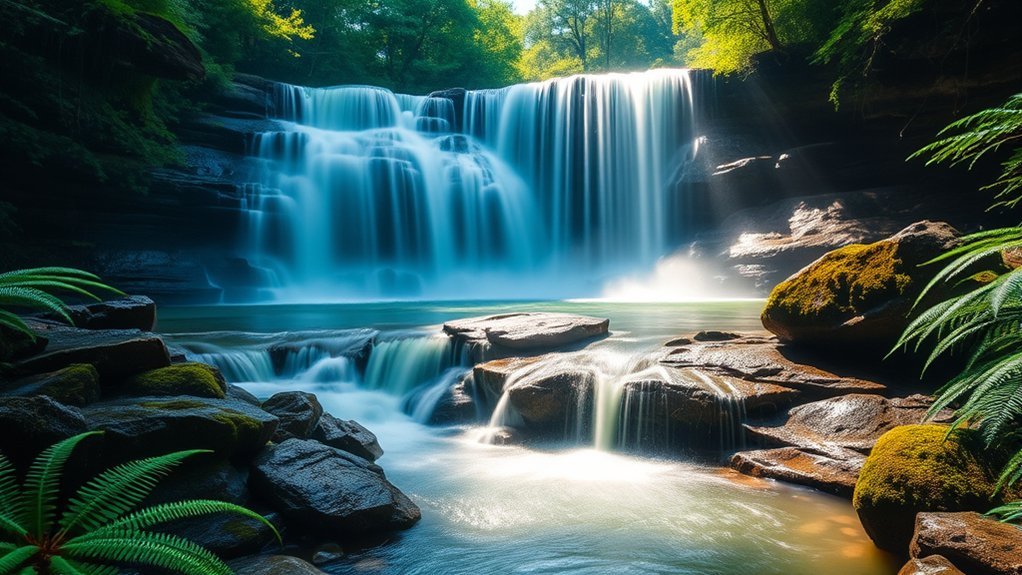
Last Updated on September 10, 2026 by Daniel Globe
Triple Falls in Arkansas is a short waterfall hike near Camp Orr and the Buffalo National River corridor. The walk itself is only about 0.5 mile roundtrip, but getting there takes more planning than the mileage suggests. The access road is steep and rough, cell service is unreliable, and Camp Orr is private property outside the recognized waterfall access. Come after settled wet weather for the best chance of seeing three distinct cascades, but avoid making the drive during active storms or unsafe road conditions.
Quick Answer
Triple Falls, often called Twin Falls at Camp Orr, is a short waterfall stop near Buffalo National River. Buffalo Outdoor Center lists the walk at about 0.5 mile roundtrip. A spring keeps water flowing in drier periods, while a wet-weather creek can create the third cascade. AWD or high clearance is strongly recommended for the steep access road.
Key Takeaways
- The short Camp Orr approach is about 0.5 mile roundtrip and is generally considered easy, though mud and wet rock can make it slippery.
- Camp Orr calls the waterfall Twin Falls; the common Triple Falls name refers to the third ribbon of water that appears when the wet-weather creek is flowing.
- The final road is steep and rough. AWD or a high-clearance vehicle is strongly recommended, especially after wet weather.
- Camp Orr is an active Scout camp and private property. Stay on the recognized waterfall route and follow all posted signs, gates, and staff directions.
- Pets are not allowed on this waterfall hike under local access guidance and Buffalo National River’s broader trail restrictions.
- Buffalo National River has no entrance or day-use fee, although fees apply at many developed campgrounds.
Disclosure: As an Amazon Associate I earn from qualifying purchases. Some links on this page are affiliate links, at no extra cost to you.
Why Triple Falls Is Worth the Trip
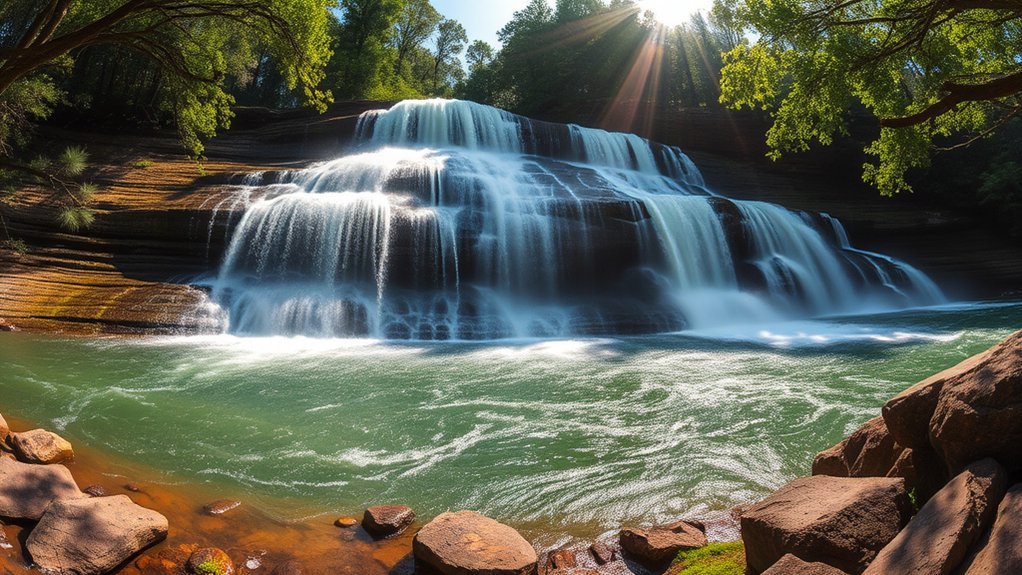
Triple Falls is worth the trip because it delivers a dramatic Ozark waterfall without requiring an all-day hike. Buffalo Outdoor Center lists the short approach at about 0.5 mile roundtrip and rates it easy.
The waterfall is commonly listed at about 48 feet tall. Its appearance changes with the weather: a spring supplies water even during drier periods, while a wet-weather creek can add another strong ribbon after enough rain. That changing flow is part of the reason you’ll see both the Twin Falls and Triple Falls names used for the same place.
The creek, layered rock, shaded forest, and short walking distance also make this a popular photography stop. You can take your time at the base without committing to the much longer and harder hikes found elsewhere in the Buffalo River country.
Where Triple Falls Is in Arkansas
Triple Falls is in Newton County in northern Arkansas, in the Camp Orr area east of Kyles Landing and within the broader Buffalo National River landscape. Camp Orr itself is an operating Scout camp, so it is important not to treat the property like an unrestricted public park.
The short waterfall approach uses the Camp Orr side of the area. Kyles Landing is a separate National Park Service campground, river access, and trailhead farther west. Do not assume that directions to Kyles Landing will put you at the short Triple Falls parking area.
Location Near Buffalo River
The falls sit in a wooded drainage near the Buffalo River corridor. Camp Orr identifies the site as Twin Falls, while Triple Falls is the common alternate name used when recent rainfall produces three clearly separated streams.
| Detail | Value |
|---|---|
| Area | Camp Orr / Buffalo National River corridor, Newton County |
| Falls height | Commonly listed at about 48 feet |
| Short-route access | Steep gravel road to Camp Orr waterfall parking |
| Short hike | About 0.5 mile roundtrip |
| NPS Camp Orr map reference | 36.056375, -93.257193 |
| Entrance/day-use fee | None for Buffalo National River |
Finding Camp Orr
From Ponca, Buffalo Outdoor Center’s current directions send you east on Highway 74 for about 9 miles, left onto gravel CR 2300 for roughly 1 mile, and then right onto CR 2306 for about 1.8 miles toward Camp Orr. The road becomes noticeably steeper as you descend.
Do not depend on phone navigation alone. The National Park Service warns that GPS can be unreliable in the Buffalo National River area and may send drivers onto unsuitable dirt roads. Save the written directions and an offline park map before leaving reliable service.
Trailhead Access Details
NPS publishes a Camp Orr trail map reference near 36.056375, -93.257193. Treat that coordinate as a navigation cross-check rather than an exact waterfall pin. Mapping services may use different pins for Camp Orr, Twin Falls, and Triple Falls.
Use the established visitor parking area associated with the waterfall route. Do not create roadside parking, block a gate, park in front of a private drive, or restrict emergency access. If a sign, gate, temporary closure, or Camp Orr staff instruction conflicts with an online guide, follow the conditions you find on site.
Note: Camp Orr is private property. Buffalo Outdoor Center states that the falls are open to visitors, but the functioning Scout camp beyond the recognized waterfall access is off-limits to the general public.
How to Get to Triple Falls
For the short waterfall approach from Ponca, follow Highway 74 east toward Jasper for about 9 miles. Turn left onto gravel CR 2300, continue about 1 mile, then turn right onto CR 2306. Follow that road downhill for about 1.8 miles toward the waterfall parking area.
The Camp Orr road is steep and can become rutted, muddy, or slick. Current Buffalo National River regulations list a 20 mph speed limit on Camp Orr Road. Drive well below that whenever surface conditions require it.
An AWD vehicle is recommended by Buffalo Outdoor Center. A high-clearance AWD or 4WD vehicle gives you a larger margin when the road is washed out or deeply rutted. Low-clearance 2WD vehicles may struggle, particularly after rain. Vehicle capability does not make a damaged or muddy road automatically safe, so turn around if conditions exceed your comfort or clearance.
Finding Camp Orr Access
Download directions before leaving Ponca or Jasper because service can disappear in the valleys. Keep a paper map or an offline copy of the NPS map as a backup. The NPS specifically advises visitors not to rely entirely on GPS in this part of the park.
When you reach Camp Orr, remember that you are entering an active Scout-camp area rather than an ordinary public recreation complex. Use only the recognized waterfall access. Do not wander into cabins, activity areas, maintenance areas, or other portions of camp.
Warning: Do not chase peak waterfall flow during an active thunderstorm. Heavy rain can improve the falls while also making the gravel road, creek crossings, rock ledges, and drainage channels more dangerous. Wait for severe weather to pass and reassess road and water conditions before entering the area.
Triple Falls Trail Length and Difficulty
The short Camp Orr route is about 0.5 mile roundtrip and is generally rated easy. The walk follows the wooded drainage toward the waterfall with little of the sustained climbing found on longer Buffalo River trails.
“Easy” does not mean paved or universally accessible. Roots, uneven ground, mud, shallow water, and slick rock may be present. Wet conditions can make the same short walk much more awkward than it is during dry weather.
At a Glance
| Time Required | About 30–60 minutes for the short walk and waterfall stop; allow extra time for the access road |
| Difficulty | Easy walking route; wet rock and mud can increase difficulty |
| Tools Needed | Grippy shoes, drinking water, offline map, basic first aid; AWD/high clearance strongly recommended for the road |
| Cost | No Buffalo National River entrance/day-use fee |
Short Camp Orr Route vs. Kyles Landing
One common source of confusion is the phrase “near Kyles Landing.” The short 0.5-mile waterfall visit starts from the Camp Orr side of the area, not from the main Kyles Landing campground.
Kyles Landing is a separate NPS campground, river access, and Buffalo River Trail trailhead. Longer hiking routes can connect the broader Kyles Landing and Camp Orr area, but they are a very different outing from the short roadside waterfall walk. Do not choose Kyles Landing simply because your map labels Triple Falls as being “near” it unless you actually want a longer hike.
Why It’s Called Triple Falls
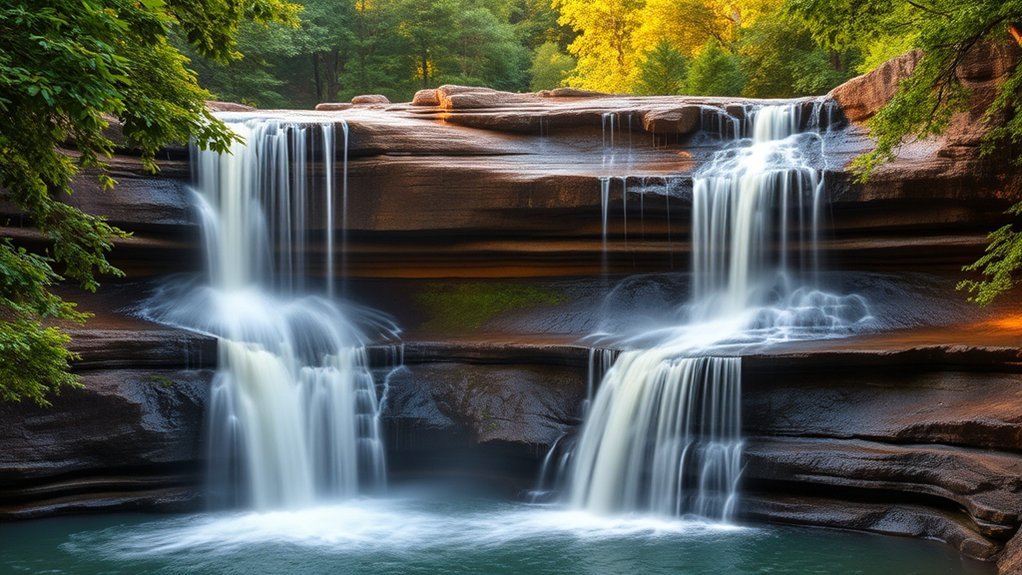
Camp Orr calls the waterfall Twin Falls. Buffalo Outdoor Center explains that the falls receive water from both a spring and a wet-weather creek. During drier periods, the spring can still create two visible flows. When rainfall activates the additional drainage, three distinct ribbons may appear.
That is why “Triple Falls” became the more familiar visitor name. It describes the waterfall’s wet-weather appearance and also helps separate it from several other Arkansas waterfalls called Twin Falls.
One waterfall, two common names: Camp Orr calls it Twin Falls, while wet weather can create the three-stream view that made “Triple Falls” popular.
Best Time to Visit Triple Falls
Spring is often a productive time to visit Triple Falls because the Ozarks typically receive enough moisture to keep the drainage active, but recent rainfall matters more than the calendar. After a settled period of rain, the seasonal creek has a better chance of producing the third cascade.
After a long dry spell, expect lighter flow and possibly only the spring-fed ribbons. Before making the drive, check the weather and avoid visiting during an active thunderstorm or immediately after flooding that may have damaged roads.
For photography, early morning, late afternoon, and cloudy conditions often work well because softer light reduces harsh contrast on the shaded rock face.
What the Hike to Triple Falls Is Like
At about a half-mile roundtrip, the short route is manageable for many casual hikers and families. It follows the creek through a wooded setting, and the sound of falling water becomes more obvious as you approach the bluff.
The ground can be muddy after the same rain that makes the waterfall look its best. Wear shoes with dependable traction and supervise children closely around slick ledges and water. There are no guardrails protecting every rock edge or drop.
You may see informal spurs around the falls. Do not assume every worn path is a safe or authorized route. Avoid unstable bluff edges, wet slabs, and steep scrambles beyond your ability.
Pro Tip: The best waterfall conditions and the slickest footing often occur at the same time. Slow down around wet rock and enjoy the main view from stable ground instead of climbing higher just for a different camera angle.
What to Bring
The walk is short, but Triple Falls is still a remote outdoor stop. Pack for the road and the environment rather than the mileage alone.
- Grippy hiking shoes: Mud, roots, and wet rock can be slick.
- Drinking water: Do not depend on facilities at the waterfall parking area.
- Offline map or printed directions: Cell service and GPS routing can be unreliable.
- Rain layer: Ozark weather can change quickly.
- Bug protection: Ticks, mosquitoes, and chiggers are common in the region.
- Basic first-aid supplies: Help can take time to reach remote park areas.
- Camera protection: Spray can reach lenses and electronics when the falls are running hard.
The National Park Service also recommends leaving a trip itinerary with someone who is not traveling with you. Buffalo National River’s 24-hour regional emergency dispatch number is 1-888-692-1162.
Photography Tips for Triple Falls
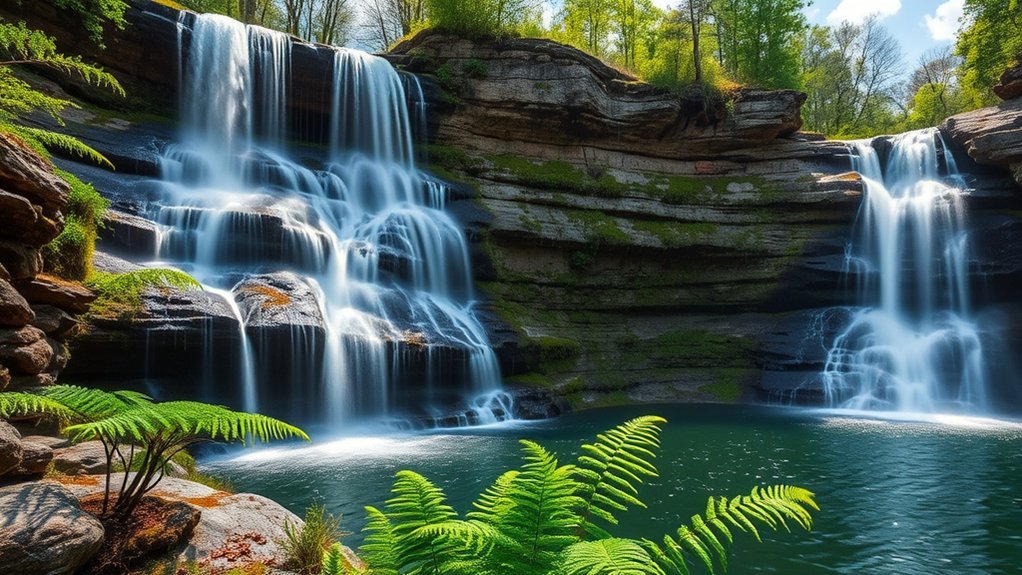
For the best shots at Triple Falls, aim for softer light and enough recent rain to separate the cascades. Cloud cover can be especially useful because the rock wall and surrounding forest create a high-contrast scene in direct sun.
Best Light Conditions
Early morning and late afternoon often keep the falls in softer light. Cloudy days can be even easier because the entire bluff receives more even illumination. That makes it easier to retain texture in both the white water and darker rock.
If you are trying to photograph three distinct cascades, check recent rainfall rather than relying on season alone.
Protecting Camera Gear
Heavy waterfall flow creates mist and spray around the base. Keep a rain sleeve, dry cloth, or waterproof case within reach. Wipe the lens frequently, but avoid changing lenses in the heaviest spray if you can.
| What to watch | What to do |
|---|---|
| Heavy spray | Use a rain cover or waterproof case |
| Misty air | Carry a clean lens cloth |
| Overcast skies | Use the soft light to control contrast |
| Early or late light | Look for even illumination across the falls |
| Wet rock | Choose a stable shooting position instead of scrambling |
After shooting, dry camera seams, inspect straps, and clean filters before packing the gear away.
Parking and Road Conditions
The drive deserves as much attention as the hike. The Camp Orr access is steep and rough enough that Buffalo Outdoor Center recommends AWD. Deep ruts, loose gravel, mud, and washouts can make conditions worse after storms.
Use established parking only. Do not park on narrow portions of the road, block gates, obstruct private camp operations, or reduce space needed by emergency vehicles.
NPS warns more broadly that many Buffalo National River access roads are unpaved and may require high clearance or four-wheel drive. The agency also cautions that GPS routing is unreliable in this terrain. Check weather before leaving pavement, download maps in advance, and be willing to turn around.
Warning: AWD and 4WD improve traction but do not make a washed-out, flooded, or badly rutted road safe. Never drive into moving water, around a closure, or past a point where you cannot safely return uphill.
Facilities and Restrooms
Do not plan on finding a public restroom, drinking-water station, visitor center, or other National Park Service facility at the short Camp Orr waterfall parking area. Camp Orr’s facilities serve the private Scout camp and should not be treated as public visitor amenities.
Kyles Landing is different. The separate NPS campground has restrooms and drinking water during its operating season. NPS currently lists water and flush restrooms from March 13 through November 15, 2026, with a vault toilet remaining available during winter with limited servicing.
Because Kyles Landing is a separate destination, use the restroom before beginning your Triple Falls visit rather than assuming you can quickly walk from the falls to campground facilities.
More Buffalo River Places to Explore
If you have more time after Triple Falls, the Buffalo National River region has hikes, paddling, fishing, wildlife viewing, and camping. Just match the next activity to your available time and fitness level; not every nearby waterfall is as easy to reach as Triple Falls.
| Place | What to know |
|---|---|
| Hemmed-In-Hollow Falls | A spectacular nearly 210-foot waterfall, but the land hike is steep, strenuous, and a major step up from Triple Falls. |
| Kyles Landing | NPS campground, river access, trailhead, paddling, and fishing area. |
| Lost Valley | Popular Buffalo National River hike with rock formations, Eden Falls, and a more developed trailhead. |
| Glory Hole Falls | Distinctive waterfall in the broader Ozark region that requires a separate drive and hike. |
NPS describes the Hemmed-In-Hollow land route as highly strenuous, with roughly 1,400 feet of climbing on the return. Do not treat it as another quick waterfall stop just because it is in the same region.
For an overnight stay, NPS campgrounds provide designated campsites rather than cabin rentals. Private cabins and lodging are available from businesses around Ponca and Jasper.
At nearby Kyles Landing, NPS currently lists 33 tent campsites at $20 per night during the 2026 operating season. The current NPS camping page states that reservations will become required there starting September 1, 2026, so check the latest campground page before your trip.
Frequently Asked Questions
Are dogs allowed on the Triple Falls trail?
No. Buffalo Outdoor Center lists pets as not allowed on the Triple Falls route, and current National Park Service rules prohibit pets on most Buffalo National River trails except specifically listed exceptions. Triple Falls is not among those exceptions. Trained service animals are treated separately under applicable accessibility rules.
Is camping available near Triple Falls?
Yes. Kyles Landing and other Buffalo National River campgrounds provide camping in the surrounding area. Kyles Landing is a separate NPS campground with 33 tent sites. NPS currently lists a $20 nightly fee during its 2026 operating season and says reservations will be required beginning September 1, 2026. Check the current NPS camping page before arrival because campground procedures can change.
Are there restrooms at the Triple Falls trailhead?
Do not count on a public restroom at the short Camp Orr waterfall parking area. Camp Orr is a private Scout camp. Separate Kyles Landing Campground has NPS restrooms and seasonal drinking water, but it is not the same trailhead as the short Triple Falls approach.
Can you swim near Triple Falls?
Do not treat the waterfall pool as a supervised swimming facility. Cold water, slick rock, submerged hazards, and changing flow can make entering the water risky. NPS advises swimming with a buddy, avoiding cliff diving, and using a personal flotation device around moving water. Also remember that glass is prohibited within 100 feet of water in Buffalo National River.
Does cell service work at Triple Falls?
Do not rely on it. NPS describes cell service as spotty across much of Buffalo National River, and deep valleys can make coverage worse. Download maps and directions before the trip and tell someone where you are going and when you expect to return.
Do you need AWD or 4WD to reach Triple Falls?
It is not presented as a universal legal requirement, but AWD is recommended by Buffalo Outdoor Center because the Camp Orr road is steep and rough. High clearance and 4WD provide more capability when the road is muddy or rutted. Low-clearance 2WD drivers should be especially cautious and turn around if conditions look unsuitable.
Is there an entrance fee for Triple Falls?
Buffalo National River does not charge an entrance or general day-use fee. Developed campground fees and other optional services are separate.
Conclusion
Triple Falls gives you a rewarding waterfall stop in the Buffalo River area without requiring a long hike. Time the visit for settled wet weather and you may see the three-stream view that gave the falls their popular name.
The harder part is the approach. Download directions before losing service, use a suitable vehicle, respect Camp Orr’s private property, park only where permitted, and stay cautious around wet rock and changing water. With that preparation, the short trail delivers plenty of scenery for the effort and still feels like a hidden gem once you reach the shaded falls.
Sources
- National Park Service — Getting Around Buffalo National River — Camp Orr map reference, rough-road guidance, and warning about unreliable GPS navigation.
- National Park Service — Buffalo National River General Regulations — current pet restrictions and Camp Orr Road speed limit.
- National Park Service — Fees & Passes — confirms there is no entrance or day-use fee.
- National Park Service — Camping — current Kyles Landing campground fees, facilities, season, and 2026 reservation information.
- Buffalo Outdoor Center — Triple Falls — short-route distance, driving directions, waterfall flow, photography guidance, private-property notice, and AWD recommendation.
- Camp Orr High Adventure Base — Twin Falls — first-party confirmation of the Twin Falls name and the three-flow appearance after rain.
