
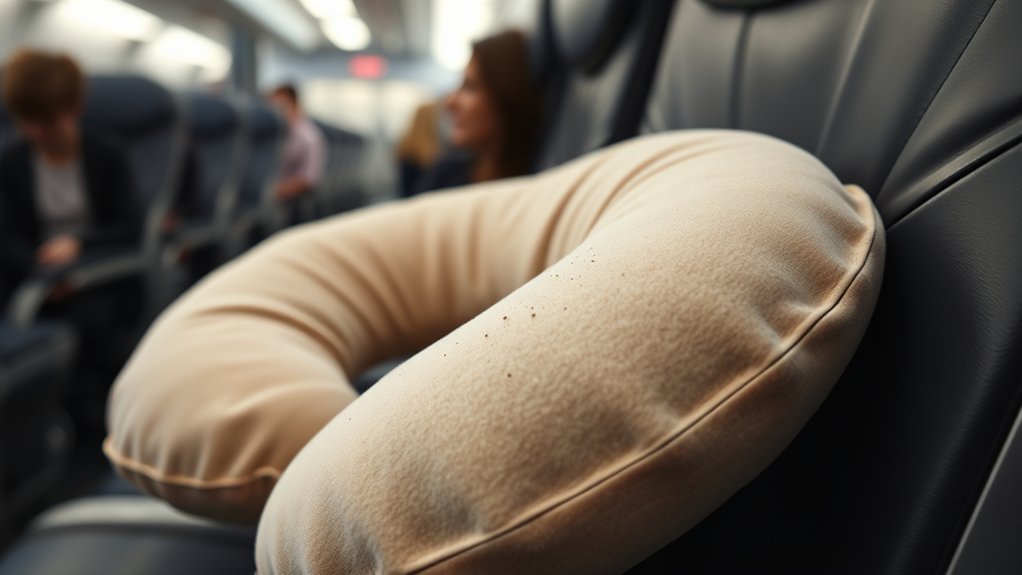
Last Updated on September 10, 2026 by Daniel Globe
A travel pillow does not automatically cause acne, but it can aggravate breakouts when it presses against acne-prone skin while holding heat, sweat, makeup, hair-product residue, and skin oil. The most useful prevention steps are simple: keep the cover clean, reduce rubbing, remove makeup before sleep, and use gentle, noncomedogenic skin care.
Quick Answer
Yes, a travel pillow may worsen acne in some people, especially where it rubs the cheeks, jaw, or neck. Friction, heat, trapped sweat, and product residue can irritate acne-prone skin. A washable cover, gentle cleansing, and noncomedogenic products are more important than choosing one “acne-proof” fabric.
Key Takeaways
- A travel pillow can aggravate acne, but it is rarely the sole cause of a breakout.
- Friction, pressure, heat, sweat, makeup, and hair-product residue matter more than fabric marketing claims.
- Use a clean, removable cover and wash it after a trip or sooner when it becomes sweaty, oily, stained, or visibly soiled.
- Cleanse gently up to twice daily and after heavy sweating; avoid scrubbing and use products labeled noncomedogenic or oil-free.
- Seek dermatology care for painful, deep, scarring, widespread, or persistent breakouts.
At a Glance
| Time Required | About 5 minutes for routine care, plus washing and drying time |
| Difficulty | Easy |
| Tools Needed | Removable cover, mild detergent, clean storage bag, and your usual gentle skin-care products |
| Cost | Usually no extra cost if the pillow already has a washable cover |
Disclosure: As an Amazon Associate I earn from qualifying purchases. Some links on this page are affiliate links, at no extra cost to you.
The Importance of Pillow Hygiene During Travel
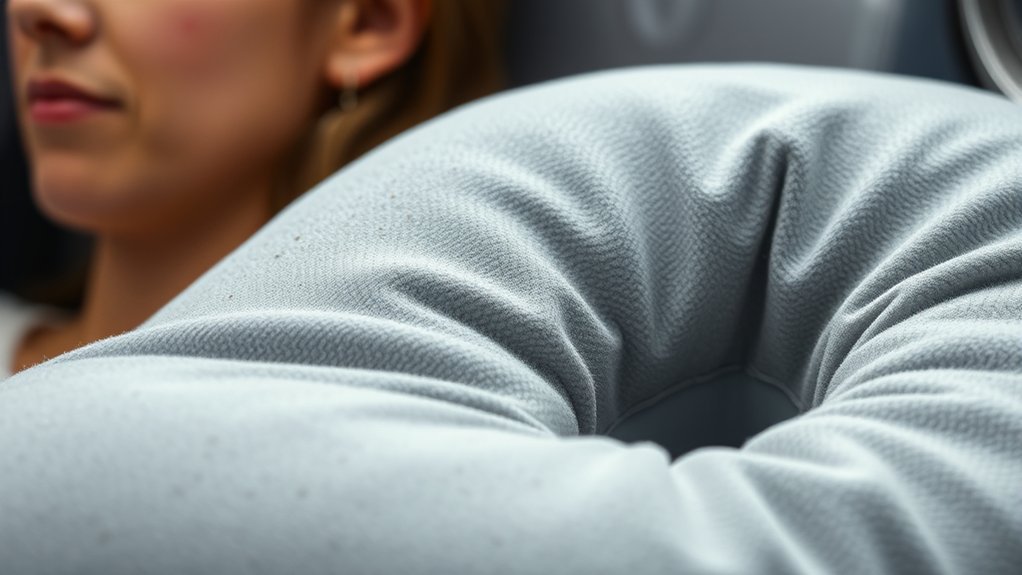
Travel pillows and hotel bedding can collect skin oil, sweat, makeup, dead skin, and residue from hair or skin-care products. Those materials do not mean that a pillow directly “creates” acne. However, repeated contact can add friction and transfer residue to the cheeks, jawline, or neck, which may aggravate acne-prone skin.
Acne is a condition in which hair follicles become clogged with oil and dead skin cells, with inflammation and normally occurring skin bacteria also playing a role. The National Institute of Arthritis and Musculoskeletal and Skin Diseases describes acne as a multifactorial condition, so pillow hygiene should be viewed as one supporting habit rather than a cure.
Note: Acne is not proof of poor hygiene. Overwashing or scrubbing can irritate the skin and make breakouts look worse.
Can Travel Pillows Cause Acne and Breakouts?
A travel pillow may contribute to a flare, especially if you already have acne-prone skin. The most likely mechanisms are friction, pressure, heat, sweat, and residue rather than the pillow acting as a single direct cause.
Friction, Pressure, and Acne Mechanica
When a pillow repeatedly rubs or presses the same area, it can irritate heated, sweaty skin. Dermatologists call breakouts triggered by rubbing, pressure, heat, and trapped sweat acne mechanica. A tight U-shaped pillow that pushes against the jaw or cheeks may create a similar environment during a long trip.
Sweat, Oil, and Product Residue
A cover can pick up makeup, sunscreen, hair oil, leave-in conditioner, and skin-care products. The American Academy of Dermatology notes that oily hair products can cause breakouts where residue contacts the skin, including through pillowcases and sheets. Keeping hair products away from the face and using a clean cover can reduce that exposure.
Heat and Occlusion
Some pillows fit closely around the neck and lower face. If the cover feels warm or does not dry quickly, it may hold sweat against the skin. This does not guarantee a breakout, but it can increase irritation in an area already prone to clogged pores.
A travel pillow is best understood as a possible acne aggravator—not a universal or stand-alone cause.
Choosing the Best Travel Pillow Cover for Acne-Prone Skin
The best cover is one that feels smooth, fits without bunching, can be removed easily, and can be washed according to its care label. No material is proven to be “acne-proof,” and fabric choice should not replace acne treatment.
| Cover Type | Possible Advantage | What to Check |
|---|---|---|
| Cotton | Often breathable, widely available, and easy to wash | Can absorb oil and product residue, so wash it when soiled |
| Silk or satin | A smooth surface may reduce rubbing | Acne-prevention evidence is limited; follow delicate-care instructions |
| Polyester or performance fabric | May dry quickly and resist wrinkling | Choose a soft weave that does not feel hot or rough against your skin |
| Lyocell | Often feels smooth and breathable | It may be marketed with terms such as “eucalyptus,” but it is not silk |
Small studies have examined silk-like pillow fabrics, and additional research has been registered, but that is not enough to promise that silk will prevent or treat acne. A clean, comfortable, washable cover is the more reliable practical choice.
Pro Tip: Pack one spare cover in a resealable clean pouch. You can switch covers during a long trip instead of continuing to use one that feels oily, sweaty, or damp.
Skincare Essentials for Clear Skin During Travel
Travel is usually not the best time to test several new products. A simple routine lowers the chance of irritation and makes it easier to tell whether a pillow, cosmetic, or skin-care product is contributing to a flare.
- Cleanse gently. Wash acne-prone skin up to twice daily and after heavy sweating. Use your fingertips, lukewarm water, and a mild cleanser rather than a scrub, brush, or rough washcloth.
- Remove makeup before sleeping. Makeup and oily products can transfer to a pillow cover. Choose products labeled “noncomedogenic,” “oil-free,” or “won’t clog pores.”
- Use a noncomedogenic moisturizer. Moisturizer can reduce dryness and irritation, especially if you use acne treatments that dry the skin.
- Keep hair products away from contact areas. Oils, pomades, and leave-in products can transfer to the cheeks, jaw, neck, pillowcase, and sheets.
- Avoid picking or rubbing. Touching and squeezing can worsen inflammation and raise the risk of dark marks or scars.
- Keep your routine consistent. Pack travel-size versions of products your skin already tolerates instead of relying on unfamiliar hotel toiletries.
The American Academy of Dermatology’s acne and makeup guidance supports gentle cleansing twice daily and after sweating, along with noncomedogenic products.
Warning: Do not scrub acne-prone skin or apply harsh disinfectant, essential oil, or fragranced spray to a pillow surface that will touch your face. Residue and friction can cause irritation or contact dermatitis.
Cleaning Your Travel Pillow Effectively
There is no universal medical rule requiring a travel pillow cover to be washed every three days. Cleaning needs depend on trip length, sweat, makeup use, skin oil, visible soil, and the manufacturer’s care instructions. For practical hygiene, wash the removable cover after each trip and sooner if it becomes sweaty, oily, stained, or damp.
Step-by-Step Cleaning Routine
- Read the care label. Confirm whether the cover and pillow insert are machine washable, hand washable, or spot-clean only.
- Remove the cover. Check seams and the zipper for makeup, sunscreen, hair products, or skin oil.
- Wash as directed. Use the recommended water temperature and a mild detergent. If your skin is sensitive, a fragrance-free and dye-free detergent may reduce irritation.
- Rinse thoroughly. Detergent residue can irritate sensitive skin, so do not overload the washer or use more detergent than directed.
- Dry completely. Do not store the pillow or cover while damp. Moisture can cause odor and may damage some fills.
- Clean the insert only as allowed. Memory foam and some inflatable pillows should not be soaked. Spot-clean them according to the manufacturer’s instructions.
- Store it clean and dry. Use a clean, breathable bag or a clean pouch that keeps the pillow away from shoes, floors, and dirty luggage surfaces.
Note: “Hypoallergenic” is not a guarantee that a detergent or fabric will suit every person. Stop using a product if it causes itching, burning, swelling, or a new rash.
Moisturizing and In-Flight Skin Care
Moisturizer can help maintain comfort and support the skin barrier during travel, but it should not be presented as a guaranteed way to prevent acne. Choose a product your skin already tolerates and that is labeled noncomedogenic or oil-free.
Hydration During Travel
The CDC Yellow Book notes that aircraft cabin air is usually about 10% to 20% humidity and can feel drying. Apply moisturizer when your skin feels dry, especially after cleansing. Drinking water supports general hydration, but there is not good evidence that simply drinking extra water prevents travel-related acne.
Pre-Flight Moisturizing Routine
Before boarding, cleanse only if needed, apply any prescribed acne treatment as directed, and follow with a light noncomedogenic moisturizer. Ingredients such as glycerin or hyaluronic acid can help attract water, but the overall formula and your skin’s tolerance matter more than one ingredient.
A sheet mask is optional, not essential. Use one only if you have tried it before without irritation. New fragranced masks or strong active ingredients can cause redness or a rash during a flight.
In-Flight Skin Care
Keep in-flight skin care simple. Avoid repeatedly touching your face, wiping it with rough napkins, or layering several unfamiliar products. If your skin feels dry, reapply a small amount of your usual moisturizer with clean hands.
| Action | Likely Benefit |
|---|---|
| Apply your regular noncomedogenic moisturizer before boarding | Helps reduce dryness and tightness |
| Use a familiar sheet mask only if desired | May temporarily improve hydration, but is not an acne treatment |
| Drink water according to thirst and your health needs | Supports general hydration; it is not a proven acne-prevention method |
| Reapply moisturizer if skin feels dry | Supports the skin barrier and comfort |
Additional Strategies to Avoid Acne When Traveling
- Position the pillow carefully. Adjust it so the edge does not rub one spot on your cheek or jaw for hours.
- Use a clean barrier. Put on a fresh removable cover before the trip rather than wrapping the pillow in a rough towel or clothing.
- Keep the pillow off dirty surfaces. Do not place the face-contact area on airport floors, tray tables, or the bottom of a bag.
- Avoid sleeping in makeup. Remove makeup when practical before an overnight flight, train ride, or hotel stay.
- Choose noncomedogenic products. This includes moisturizer, sunscreen, makeup, and hair products that may reach the face.
- Wash after heavy sweating. Gently cleanse when you can; do not scrub or use harsh wipes.
- Track the contact pattern. Breakouts limited to the exact area touched by the pillow may point to friction, product transfer, or contact irritation.
The AAD also advises washing residue from hair products off items that touch the head and face, including pillowcases and sheets.
When to See a Dermatologist
Travel-pillow hygiene may help with mild contact-related flares, but it will not treat every type of acne. Consider seeing a dermatologist when breakouts are painful, deep, widespread, leaving scars or dark marks, or not improving with appropriate over-the-counter care. A sudden itchy or burning rash may be contact dermatitis, while tender acne-like bumps can sometimes be folliculitis or another condition.
The American Academy of Dermatology explains that people do not need to wait for acne to become severe before seeking professional help. Early treatment can also lower the risk of lasting marks and scars.
Medical Disclaimer: This article provides general information and is not a diagnosis or a substitute for care from a qualified clinician. Seek prompt medical advice for severe swelling, spreading redness, drainage, fever, eye involvement, or a serious allergic reaction.
Frequently Asked Questions
How often should I replace my travel pillow?
There is no evidence-based rule that every travel pillow must be replaced after one or two years. Replace it when the fill no longer supports you, the cover or seams are damaged, it has persistent odor or stains, or it cannot be cleaned according to the care label.
Can using a travel pillow worsen existing acne?
Yes. A pillow can aggravate existing acne where it traps heat and sweat or repeatedly rubs the cheeks, jaw, or neck. A clean cover and a better fit may help, but persistent acne may still need standard acne treatment.
Are certain materials more acne-prone than others?
No single fabric causes acne in everyone. A rough, hot, tight, or hard-to-wash cover may be more irritating. Smoothness, breathability, fit, washability, and how often the cover becomes soiled are more useful considerations than claims that one fabric prevents acne.
What is the best way to store a travel pillow?
Make sure the pillow and cover are completely dry, then store them in a clean bag away from shoes, damp clothing, and dirty luggage surfaces. Follow the manufacturer’s instructions if the pillow must be deflated, rolled, or stored loosely.
Can wearing makeup affect my travel pillow’s cleanliness?
Yes. Foundation, sunscreen, concealer, and other products can transfer to the cover and later contact your skin. Remove makeup before sleeping when possible and wash the cover when you see or feel residue.
How often should I wash the travel pillow cover?
Wash it after each trip as a practical baseline, and sooner during a trip if it becomes sweaty, oily, stained, damp, or covered with makeup or hair-product residue. Always follow the fabric’s care label.
Should I spray disinfectant on my travel pillow?
Usually, washing a removable cover as directed is the safer skin-contact option. Do not use a disinfectant, essential oil, or fragranced spray unless the manufacturer specifically allows it and the product is intended for that material. Residue can irritate sensitive skin.
Conclusion
A travel pillow can be a comfortable companion without becoming the automatic villain behind every breakout. The realistic risk comes from repeated rubbing, trapped heat and sweat, and residue on a cover that touches acne-prone skin. Keep the cover clean, choose a smooth and washable fabric, use gentle noncomedogenic skin care, and adjust the pillow if it presses on one area. If acne is painful, scarring, or persistent, professional treatment matters more than changing pillow materials.
Sources
- National Institute of Arthritis and Musculoskeletal and Skin Diseases: Acne — explains how clogged follicles, oil, dead skin cells, bacteria, and inflammation contribute to acne.
- American Academy of Dermatology: Is Sports Equipment Causing Your Acne? — supports the discussion of acne mechanica, friction, heat, and sweat.
- American Academy of Dermatology: Acne and Makeup — supports gentle cleansing, makeup removal, and noncomedogenic products.
- American Academy of Dermatology: Hair-Care Products and Breakouts — supports cleaning product residue from pillowcases and sheets.
- CDC Yellow Book: Air Travel — documents the low humidity commonly found in aircraft cabins.
- American Academy of Dermatology: When to See a Dermatologist for Acne — supports seeking professional care for persistent or concerning acne.

