

Last Updated on July 24, 2026 by Caleb Warren
A poorly designed travel pillow can definitely cause neck strain, leading to persistent soreness, muscle fatigue, and stiffness during long journeys. Many commercial travel pillows lack adequate elevation and structural support, forcing your cervical spine into unnatural angles and placing continuous tension on your neck muscles. Understanding how common design flaws disrupt posture—and how to select a pillow suited to your anatomical dimensions—can make the difference between a painful arrival and a comfortable trip.
Quick Answer
Yes, a poorly designed travel pillow can cause severe neck strain by allowing your head to tilt excessively sideways or slump forward. This unnatural angle overextends cervical muscles like the levator scapulae. To prevent strain, choose a firm high-density memory foam or structural wrap pillow (typically 4 to 5 inches thick) that fills the gap between your shoulder and head to maintain neutral spinal alignment while seated.
Key Takeaways
- Spinal Alignment is Key: Inadequate pillow height causes lateral bending or forward head posture, overworking neck and upper back muscles.
- Avoid Collapsible Fillings: Low-density microbeads and cheap polyester fiberfill flatten under weight, failing to stabilize the head during sleep.
- Match Pillow Height to Anatomy: Select a pillow thickness (typically 3.5–5 inches) based on your neck length and shoulder-to-ear distance.
- Optimize Seat Dynamics: Adjust airplane headrest wings and utilize lumbar support to prevent overall spinal slumping.
Disclosure: As an Amazon Associate I earn from qualifying purchases. Some links on this page are affiliate links, at no extra cost to you.
How Poor Travel Pillow Design Causes Neck Pain
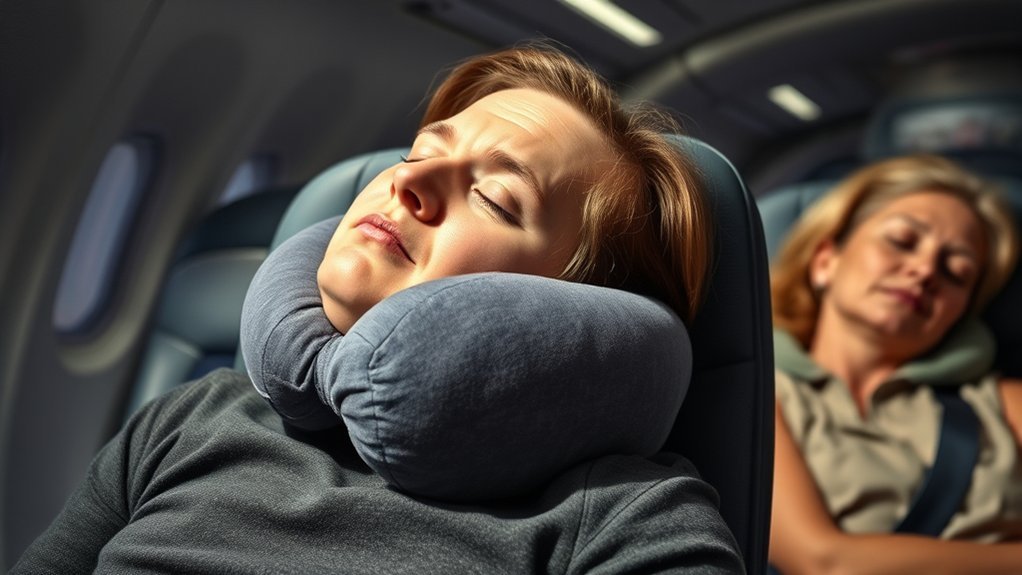
When you rely on a poorly designed travel pillow, you might not realize the impact it has on your musculoskeletal system until muscle spasms or stiffness set in. Inadequate pillow ergonomics frequently result in insufficient lateral support, causing your head to tilt sharply to one side when you fall asleep upright. This severe misalignment strains vital stabilizing muscles, including the levator scapulae, sternocleidomastoid (SCM), and upper trapezius.
According to research on cervical spine alignment and muscle activity, unsupported head tilt increases static muscle load exponentially. Without proper stabilization, your head slumps repeatedly as involuntary muscle relaxations occur during sleep cycles. Furthermore, pillows with overly thick rear sections push your neck forward into exaggerated Forward Head Posture (FHP). This forward displacement forces the posterior cervical muscles to work constantly against gravity to support the 10–12 pound weight of your head, leading to acute myofascial strain and tension headaches.
Warning: Continuous travel in a forward-slumped or sharply tilted position compresses the cervical facet joints and narrow neural foramina, which can trigger nerve impingement symptoms like tingling or numbness radiating down the arms.
Common Design Flaws to Avoid in Travel Pillows
Selecting an effective travel pillow requires identifying and avoiding several prevalent structural flaws found in standard retail options:
- Insufficient Lateral Height: Pillows under 3.5 to 4 inches in side height often leave too large a gap between the ear and shoulder, forcing the neck to bend excessively.
- Over-Bulky Back Collars: A thick rear cushion pushes your head forward away from the seat headrest, creating constant anterior neck shear. Look for pillows with a flattened or tapered rear profile.
- Instability and Lack of Fastening: Options without chin supports, front toggles, or seat-anchoring straps allow the pillow to slide open, causing sudden head drops during sleep transitions.
- Low-Density or Loose Fillings: Microbeads and low-grade polyfill shift away under pressure, leaving zero structural support beneath key weight-bearing points.
Why Pillow Height and Support Matter for Neck Health
Pillows must bridge the distinct anatomical space between your lateral neck border and the tip of your shoulder process (acromion). Maintaining neutral spine alignment reduces joint stress according to guidelines from the American Chiropractic Association. The table below outlines how pillow thickness and support design should match different traveler body profiles and seating environments:
Ergonomic Travel Pillow Selection Guide
| Pillow Type / Density | Ideal Side Height | Best Suited For |
| Contoured Memory Foam | 4.5 – 5.0 inches | Long-haul flight side-sleepers and travelers with broad shoulders. |
| Structural Wrap / Internal Rib | 3.5 – 4.5 inches (Adjustable) | Upright flight travelers prone to severe forward head drop. |
| Adjustable Dual-Core Inflatable | 3.0 – 5.0 inches (Custom) | Lightweight backpackers and travelers needing variable firmness. |
| Cervical Collar Style | 4.0 – 4.5 inches | Road trip passengers and train commuters seeking 360-degree chin support. |
How to Choose the Right Travel Pillow Based on Your Neck Shape
Because human anatomy varies widely, selecting an effective pillow requires matching structural attributes to your physical frame and personal sleeping style.
Neck Shape Considerations
Travelers with longer necks require taller side lobes (4.5 to 5 inches) to prevent excessive side-bending. Conversely, individuals with shorter necks or compact frames benefit from lower-profile designs (3 to 4 inches) to avoid forcing the head upward. If you have broad shoulders, your shoulder-to-ear distance is greater; thus, a wider pillow cushion is necessary to fill the gap fully when leaning against a wall or seat wing.
Support Level Preferences
Support level preferences generally fall into distinct design categories:
- U-Shaped Ergonomic Memory Foam: Best for general purpose use, provided it features raised side bolsters and a flattened back segment.
- Wrap-Around / Internal Support Structures: Utilizes an internal plastic rib wrapped in soft fleece to hold the head in a neutral vertical position without heavy bulk.
- Chin-Supporting Wraps: Wraps entirely around the neck like a soft brace, preventing the chin from dropping forward into chest compression during deep sleep phases.
Pillow Material Options
Material density governs how long a pillow maintains support under weight. Viscoelastic memory foam offers superior contouring and weight distribution, as highlighted by Cleveland Clinic sleep specialists. High-density viscoelastic foam yields gradually to body heat while preserving structural integrity. Inflatable pillows allow precise pressure adjustments, making them ideal for varying cabin pressures, provided they feature soft outer flocking. Microbeads, while lightweight, continuously shift away from high-pressure zones and are generally not recommended for chronic neck pain sufferers.
Tips for Preventing Neck Pain While Traveling
Pairing a supportive pillow with proactive ergonomic habits ensures comprehensive protection against travel-induced stiffness.
Choose Proper Pillow Height
To confirm your pillow height is correct, sit upright in your seat with the pillow positioned. Have a travel companion check—or take a self-portrait—to confirm your cervical spine forms a straight, continuous line with your thoracic spine. Your nose should align directly with the center of your sternum, without leaning left, right, or forward.
Take Regular Stretch Breaks
Immobility starves intervertebral discs of hydration and causes muscle stiffness. Every 45 to 60 minutes during long flights or car trips, perform gentle mobility exercises:
- Lateral Neck Stretches: Gently tilt your right ear toward your right shoulder for 15 seconds; repeat on the left side.
- Shoulder Retractions: Roll your shoulders backward in smooth circles 10 times to reset upper back alignment.
- Gentle Cervical Rotations: Slowly turn your head side to side within a pain-free range of motion.
Maintain Good Posture
Your neck alignment is directly dependent on pelvic and lower back posture. If you slump at the waist, your upper spine rounds and forces your neck into compensatory forward extension. Place a rolled sweater or lumbar cushion at the small of your lower back to maintain your natural lumbar curve, automatically keeping your shoulders back and neck aligned.
Pro Tip: On commercial airplanes, check if your seat features adjustable headrest wings. Bending both side wings inward by 90 degrees creates built-in lateral head support that works synergistically with your travel pillow to prevent sudden head drops.
Why Good Posture Matters When You Travel
Maintaining neutral postural alignment during travel protects your entire kinetic chain. Essential biomechanical benefits include:
- Reduces Disc Compression: Upright, supported posture evenly distributes axial loads across cervical intervertebral discs, minimizing nerve root compression risk according to medical insights from Spine-health.
- Optimizes Blood Circulation: Eliminating severe neck kinks keeps vertebral arteries and jugular veins uncompressed, reducing tension headaches and sluggishness.
- Prevents Secondary Thoracic Fatigue: Proper head positioning stops upper back postural fatigue, preventing painful trigger points in the rhomboids and mid-trapezius muscles.
Adjusting Your Travel Pillow for Comfort
If you experience discomfort mid-flight, refine your pillow placement with these adjustments:
- Reverse the Orientation: If your head keeps falling forward, wear traditional U-shaped memory foam pillows backward (with the thick gap behind your neck and the wide opening under your chin).
- Tighten Front Straps: Secure front drawstrings or toggles firmly to pull the side bolsters snug against your jawline, creating a solid platform for your head.
- Adjust Seat Recline: Recline your seat slightly (roughly 10–15 degrees if permitted) to shift gravity’s vector backward into the headrest rather than forward toward your chest.
When to Seek Help for Travel-Related Neck Pain?
While standard muscle soreness from long trips typically resolves within 24 to 48 hours, certain clinical red flags require professional medical evaluation:
- Extended Duration: Pain that persists or worsens beyond 3 to 5 days despite rest, heat, and gentle movement.
- Neurological Symptoms: Sharp, shooting pain, numbness, tingling, or localized weakness extending down into your shoulder, arm, or fingers.
- Severe Range of Motion Loss: Complete inability to rotate your head horizontally or touch your chin to your chest due to sharp pain or stiffness.
Frequently Asked Questions
Can different sleeping positions affect travel pillow effectiveness?
Yes. Upright seated sleeping requires firm side and chin support to resist gravity. If you lean against a window, a asymmetrical contoured memory foam pillow works best. If you sleep leaning forward on a tray table, a dedicated forward-leaning wedge pillow is far more effective than a neck collar.
How often should I replace my travel pillow?
You should replace memory foam travel pillows every 2 to 3 years. Over time, foam cells breakdown and lose their supportive resilience, resulting in inadequate neck elevation. Inflatable pillows should be replaced whenever seam fatigue or micro-leaks compromise firmness.
Are foam or inflatable pillows better for neck support?
High-density memory foam provides superior ergonomic pressure relief and consistent structural stability. Inflatable pillows offer ultra-compact packability and customizable inflation levels, but lack the uniform, pressure-relieving feel of quality foam.
Can using a travel pillow improve sleep quality on flights?
Yes. By stabilizing your head and preventing involuntary micro-arousals caused by sudden head slumps (the ‘bobblehead effect’), a proper travel pillow allows your body to progress into deeper, more restorative NREM sleep cycles during transit.
What materials are best for travel pillows to avoid neck strain?
Viscoelastic memory foam and internal structural thermoplastic ribs provide the highest protection against neck strain. Pair these with breathable, moisture-wicking covers (such as bamboo rayon or cool-mesh polyester) to prevent overheating.
Conclusion
In the quest for comfortable travel, a poorly designed travel pillow can turn an exciting trip into a painful ordeal. The discomfort of muscle spasms and neck strain should never overshadow your journey. By selecting an ergonomically structured pillow tailored to your unique neck measurements, placing lower back support, and keeping active with regular stretches, you can eliminate transit pain entirely. Prioritize your cervical health so you can arrive at your destination refreshed and ready to explore.
Sources
- National Center for Biotechnology Information (NCBI) — Research on pillow height, cervical spine alignment, and electromyographic muscle activity.
- American Chiropractic Association (ACA) — Postural ergonomics and cervical strain prevention during prolonged sitting.
- Cleveland Clinic — Clinical guidelines for pillow selection, material density, and neck pain relief.
- Spine-health — Medical insights into cervical spine anatomy and support pillow mechanics.
