
Last Updated on September 10, 2026 by Daniel Globe
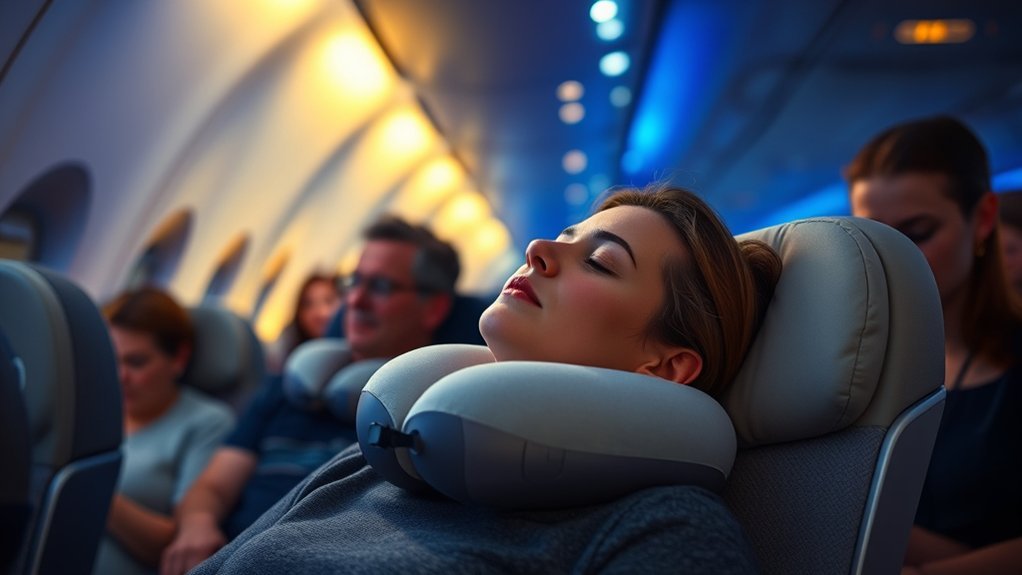
A high-quality travel pillow prevents head bobbing by filling the void between your cervical spine and seat back, providing continuous neck support during transit. With ergonomic contours, memory foam cores, and chin-restraint features, these travel accessories hold your head in neutral alignment to eliminate sudden jerks, muscle strain, and stiffness. Selecting the right pillow architecture can transform exhausting long-haul flights into restful, restorative journeys.
Quick Answer
A travel pillow prevents head bobbing by securing the cervical spine, supporting the jaw to stop forward dropping, and stabilizing the head against side-to-side tilting. Pillows featuring 360-degree wrap designs, high-density memory foam, or seat-attachment straps offer optimal neck alignment to keep you resting undisturbed throughout long journeys.
Key Takeaways
- Anterior (Chin) Support is Essential: Forward head bobbing occurs when muscles relax and the jaw drops; full 360-degree support stops this motion.
- Material Density Matters: High-density memory foam maintains form under head weight better than air-filled or microbead alternatives.
- Seat Strap Anchoring: Tethering your pillow directly to the headrest wings eliminates involuntary slumping.
- Adjust Seat Angle: Reclining 15–20 degrees transfers head weight to the backrest, aiding cervical spinal stability.
Disclosure: As an Amazon Associate I earn from qualifying purchases. Some links on this page are affiliate links, at no extra cost to you.
How to Prevent Head Bobbing While Traveling?
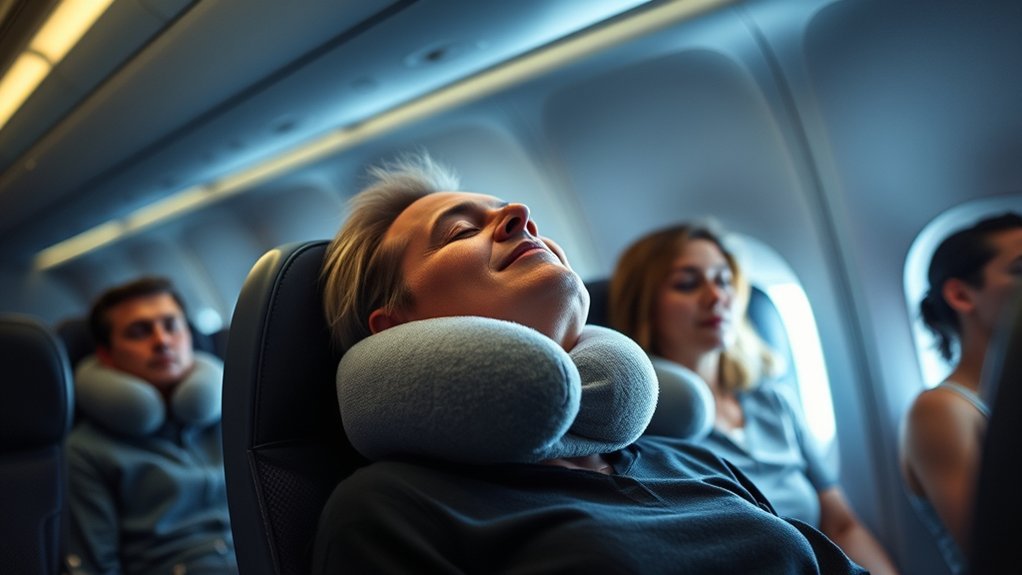
When traveling on long-haul flights or road trips, preventing head bobbing is the single most effective way to protect your neck from injury and avoid jarring awakenings. Head bobbing occurs when the neck flexor and extensor muscles relax during deep sleep stage transitions. Without external physical resistance, gravity pulls the heavy human head (weighing 10 to 12 pounds) forward or sideways.
To maintain proper cervical spine alignment, use a specialized travel pillow engineered with internal structural supports or perimeter cushioning. These accessories anchor your head to your seat back or stabilize your chin. Select models with adjustable toggle straps so you can tailor the compression around your neck, preventing unwanted forward drops or lateral tilting.
Pro Tip: Recline your seat slightly (15 to 20 degrees) if space permits. Micro-reclining shifts your center of gravity backward, allowing the seat headrest and travel pillow to absorb your head’s weight naturally through gravity.
The Biomechanics: Why Head Bobbing Causes Neck Strain
Understanding why head bobbing happens helps in selecting the correct protective pillow architecture. When you fall asleep sitting upright, your brain suppresses muscle tone (atonia). As muscle control drops, your head sags forward into extreme cervical flexion.
This rapid displacement creates a stretch reflex in the spinal erector muscles, causing them to contract violently to pull the head back up. This constant cycle of falling and snapping back creates micro-trauma in the neck ligaments, sternocleidomastoid muscles, and upper trapezius. Over several hours, this leads to tension headaches, acute stiffness, and nerve compression.
“Flexing the neck forward at a 60-degree angle increases the effective force on the cervical spine from 10 pounds to nearly 60 pounds, accelerating muscle fatigue during upright sleep.”
How Travel Pillows Help Stabilize Your Head and Neck
Ergonomic travel pillows act as a external collar, absorbing kinetic forces and filling empty spaces around your neck. By cradling the occipital bone and resting against the shoulders, a proper pillow redistributes weight evenly across surrounding skeletal structures.
Enhanced Neck Support
Modern neck supports incorporate lateral bolsters and raised rear cushions that hold your neck in a neutral anatomical position. Options such as seat-tethered Cabo-style pillows feature attachment straps that fix directly to airplane headrest wings. Structured wrap designs allow you to tighten fabric layers around your throat and chin to create a rigid yet comfortable resting surface.
| Pillow Type | Primary Benefit | Best Sleeping Position |
| Seat-Tethered Pillow | Anchors directly to headrest; completely eliminates forward slumping. | Upright / Fully Back |
| Structured Wrap Support | Internal ergonomic ribs support jaw weight; customizable tightness. | Side / Upright Leaning |
| Forward-Lean Inflatable | Supports chest and face on tray table; removes pressure from neck completely. | Forward Tray Table Sleeper |
| High-Density U-Shape | Provides basic lateral cheek support; wide availability. | Slight Recline |
Improved Sleep Stability
Stabilizing your head translates directly into uninterrupted sleep architecture. According to research published by the National Sleep Foundation, preventing movement-induced awakenings helps travelers remain in restorative slow-wave sleep longer. By holding the jaw in place and eliminating sudden neck drops, travel pillows keep your brain from triggering emergency reflex arousal states.
Why Neck Support Is Essential for Comfortable Travel
Proper neck support does more than prevent pain—it preserves spinal posture and circulatory flow. Sitting upright with an unsupported, bent neck compresses vertebral arteries and surrounding nerve bundles, which can lead to arm numbness, chronic stiffness, and fatigue upon landing.
Investing in anatomical support ensures your airway remains unblocked. When your head bobs forward, your throat partially restricts air intake, worsening snoring and oxygen saturation levels during flight sleep. A supportive travel pillow maintains open respiratory passages so you wake up refreshed.
Choosing the Right Travel Pillow to Prevent Head Bobbing
Not all travel pillows are built to prevent forward dropping. To stop head movement effectively, prioritize structural design and material composition over basic aesthetic appeal.
Pillow Materials: Memory Foam vs. Microbeads vs. Inflatables
The internal filling material directly determines how well a pillow resists the downward weight of your head:
- High-Density Memory Foam: The gold standard for anti-bobbing. Viscoelastic foam contours precisely to your jawline and shoulders, providing firm, shock-absorbing resistance that will not collapse under pressure.
- Microbeads (Polystyrene): Lightweight and soft, but prone to shifting. Microbeads push away from pressure points, offering weak resistance against heavy forward head drops.
- Inflatable Air Cores: Excellent for packing space, but requires careful pressure calibration. Over-inflating creates a hard surface that pushes your neck forward, while under-inflating causes your head to sink completely through.
Warning: Avoid standard low-density polyfill or plush novelty U-pillows for long-haul travel. These soft pillows lack the structural integrity needed to counteract gravity and typically fail to prevent head bobbing.
Pillow Design Matters
Look for pillows with raised side walls and reinforced chin bridges. If you tend to sleep facing straight ahead, select asymmetrical wrap designs or forward-lean tray table pillows with face cutouts that keep the neck in line with the thoracic spine.
Adjustable Support Features
Customization is critical for proper fit. Look for features such as:
- Front Locking Clasp / Toggles: Connects the two front ends together, creating a continuous chin cup that catches your head before it bobs forward.
- Seat Attachment Straps: Loops that secure around your airplane seat headrest, locking the pillow in place so it cannot slide down your back.
- Multi-Angle Contour Zones: Thinner rear neck walls that allow your head to rest flat against the seat back without pushing your neck forward.
Personal Comfort Preferences
Align your choice with your natural sleep position:
- Back Sleepers: Seek thin rear profiles with firm lateral support and chin straps.
- Side Sleepers: Look for extra-tall lateral bolsters that fill the gap between the shoulder tip and jaw.
- Forward Sleepers: Choose tray-table forward-lean inflatable supports with ergonomic breathing ventilation.
Comparing Travel Pillows: Which Offers the Best Neck Support?
Comparing designs helps identify which model suits your specific travel habits:
- Structured Wrap Supports (e.g., Trtl style): Exceptional for forward bobbing prevention. Uses internal ribbing to hold the weight of the head like a gentle neck brace.
- Seat-Anchored Memory Foam (e.g., Cabeau / Cabo style): Highly versatile. Combines plush memory foam contours with headrest straps to prevent lateral and anterior movement.
- Tray-Table Inflatable Torso Supports: Best for forward sleepers who prefer resting their weight over their knees or tray table rather than leaning back.
- Basic Soft U-Shaped Pillows: Satisfactory for quick naps on short commutes, but lack the firm chin resistance necessary for overnight flights.
Maximize Comfort With These Travel Pillow Tips
Optimize your travel setup with these practical ergonomic steps:
- Position the Pillow Reversed: If using a traditional U-shaped pillow that lacks front clasps, flip it backward so the thickest cushion sits under your chin to block forward head drops.
- Adjust the Seat Headrest: Many airplane seats feature flexible headrest wings. Fold these wings inward to sandwich your travel pillow and secure your position.
- Pair with Sleep Accessories: Use a contoured 3D sleep mask and noise-canceling earplugs to reduce startle reflexes caused by light and sound.
- Hydrate and Stretch: Drink plenty of water during transit and perform gentle seated shoulder rolls to prevent muscular tightness.
Top Mistakes Travelers Make When Selecting a Travel Pillow
Avoid these common errors when purchasing and using a travel pillow:
- Buying Based Solely on Portability: Super-compact pillows often trade away essential neck support. Ensure the cushion maintains sufficient height to support your head.
- Ignoring Rear Cushion Thickness: Pillows that are too thick behind the head force your neck forward into a strain-inducing position.
- Neglecting Chin Support Features: Focusing only on side support leaves your head vulnerable to dropping straight forward when deep muscle relaxation hits.
- Over-Inflating Air Pillows: Over-inflated air cushions become hard and push the head away from the seat rather than cradling it comfortably.
What Else Can Improve Travel Comfort?
Enhance your overall transit experience with these additional ergonomic and physiological measures:
- Graduated Compression Socks: Promote venous blood flow back to your heart, reducing lower leg swelling during extended sitting.
- Lumbar Support Cushion: Place a rolled sweater or lumbar pillow at the small of your back to maintain your natural lumbar curve, which supports upright cervical alignment.
- Hydration Maintenance: Sip water regularly to keep intervertebral discs hydrated, preserving their shock-absorbing capacity.
- Loose, Tiered Clothing: Wear breathable, non-restrictive layers to prevent restricted circulation around your neck, shoulders, and waist.
When to Seek Help for Travel-Related Neck Pain?
While temporary stiffness after travel is common, persistent symptoms require professional medical evaluation. Consult a physical therapist or healthcare provider if your post-travel neck pain lasts longer than 3 to 5 days.
According to Mayo Clinic clinical guidelines, seek prompt medical care if neck discomfort radiates down your arms or shoulders, or is accompanied by numbness, tingling, or loss of muscular strength in your hands.
Note: Travelers with preexisting cervical spinal conditions—such as herniated discs, spinal stenosis, or radiculopathy—should seek personalized recommendations from a physical therapist prior to using rigid cervical support devices.
Frequently Asked Questions
Can travel pillows be used effectively in cars or trains?
Yes. Travel pillows work well across all modes of transportation. In cars and trains, choose memory foam or wrap-style pillows that absorb road vibrations and sudden movements, keeping your head steady against the headrest.
Are inflatable travel pillows effective for preventing head support issues?
Inflatable travel pillows are effective if properly adjusted. Inflating them to about 70–80% capacity provides adequate firm support without creating an overly rigid surface that pushes your neck forward into strain.
How do I clean and maintain my travel pillow?
Remove the outer fabric cover and machine wash it on a gentle cycle with cold water, then air dry. Never submerge memory foam cores in water; instead, spot-clean memory foam with a mild detergent and dampened cloth.
Do travel pillows come in different shapes and sizes for varied body types?
Yes. Travel pillows come in contoured U-shapes, asymmetrical wraps, forward-leaning torso shapes, and compact cylinder shapes. Select a height and circumference that matches your neck length and shoulder width.
Can I use a travel pillow for activities other than sleeping on planes?
Absolutely. You can use travel pillows as lower back lumbar support while working at an office desk, as a chin rest while reading on a couch, or as an elbow cushion when relaxing at home.
Conclusion
Stopping forward head bobbing comes down to choosing a travel pillow engineered for complete cervical stabilization. By selecting firm materials like high-density memory foam, utilizing chin support features, and anchoring your setup to your seat back, you can protect your spine and wake up fully rested. Avoid generic soft cushions and invest in a pillow tailored to your sleep style to ensure comfort throughout your next trip.
Sources
- National Sleep Foundation — Ergonomic Sleep Science & Pillow Support Guidelines
- Cleveland Clinic — Spine Health, Posture Maintenance, and Neck Care Principles
- Mayo Clinic — Cervical Strain Symptoms, Causes, and Medical Evaluation Criteria
- National Center for Biotechnology Information (NCBI/PubMed) — Cervical Spine Biomechanics During Upright Sitting
