
Last Updated on September 10, 2026 by Daniel Globe
Commercial airlines trace their modern beginning to a short scheduled flight across Tampa Bay on January 1, 1914. One pilot, one paying passenger, and a small flying boat demonstrated that aircraft could provide regular public transportation. Airmail contracts, better aircraft, wartime technology, jet engines, deregulation, and digital systems later turned that experiment into the global airline network you use today.
Quick Answer
The first widely recognized scheduled passenger airline began on January 1, 1914, when Tony Jannus flew former St. Petersburg mayor Abram Pheil about 18 miles across Tampa Bay. The 23-minute trip proved that an aircraft could carry paying passengers on a published route and schedule, although the airline itself survived for only three months.
Key Takeaways
- First scheduled service: The St. Petersburg–Tampa Airboat Line began carrying passengers across Tampa Bay on January 1, 1914.
- Airmail built the network: Government mail contracts gave early US airlines steady revenue and helped establish routes, airports, navigation aids, and operating experience.
- Aircraft became profitable: The Douglas DC-3 showed that an airline could earn money primarily by carrying passengers rather than depending entirely on mail subsidies.
- Jets expanded access: The de Havilland Comet introduced commercial jet travel in 1952, while the Boeing 707 helped make long-distance jet service practical on a larger scale after 1958.
- Deregulation changed competition: The 1978 Airline Deregulation Act removed federal control over most domestic fares, routes, and market entry while leaving safety oversight in place.
- The next challenge is decarbonization: Airlines are investing in Sustainable Aviation Fuel, efficient aircraft, and new propulsion systems, but low-carbon fuel still supplies only a small share of aviation’s needs.
What’s in This Article
- What Counts as the First Commercial Airline?
- The Dawn of Commercial Flight
- The 1920s and 1930s: How Major Airlines Were Born
- How the World Wars Transformed Aviation
- The Jet Age: Faster, Higher, Farther
- Regulation, Deregulation, and Competition
- Modern Technology and Global Alliances
- How September 11 Changed Air Travel
- COVID-19 and the Industry’s Recovery
- Sustainability and the Future of Flying
- Frequently Asked Questions
- What More Than a Century of Aviation Tells Us
- Sources
Disclosure: As an Amazon Associate I earn from qualifying purchases. Some links on this page are affiliate links, at no extra cost to you.
What Counts as the First Commercial Airline?
People paid for balloon rides, exhibition flights, and privately arranged aircraft trips before 1914. However, those flights did not provide regular public transportation on a published route and schedule.
For that reason, aviation historians usually identify the St. Petersburg–Tampa Airboat Line as the first scheduled passenger airline. It sold tickets to the public, followed a timetable, and operated repeatedly between two cities.
Note: The phrase “first commercial flight” can mean different things. In this article, it refers to the first scheduled airline service that regularly carried paying passengers, not the first occasion when anyone paid to ride in an aircraft.
The Dawn of Commercial Flight
On January 1, 1914, pilot Tony Jannus took off from St. Petersburg, Florida, in a Benoist Model XIV flying boat. His passenger was Abram C. Pheil, a former mayor of St. Petersburg.
Pheil paid $400 at an auction for the honor of taking the inaugural trip. After that first flight, the regular one-way fare was $5. The aircraft could carry only one passenger beside the pilot in its open cockpit.
The flight crossed about 18 miles of Tampa Bay and reached Tampa in approximately 23 minutes. Traveling between the cities by rail took many hours, so the air route showed a clear practical advantage. You can view information about the historic aircraft through the Smithsonian National Air and Space Museum.
The airline safely carried 1,204 passengers, but its success was brief. Tourist demand declined, public financial support ended, and the service closed at the end of March 1914. The company failed as a long-term business, but it proved that scheduled passenger aviation was possible.
The 1920s and 1930s: How Major Airlines Were Born
Products Worth Considering

Authentic Design: Officially licensed by British Airways and decorated with accurate colors and logos true to the real A350 aircraft.


Funny design. Enjoy a laugh with the amusing "Things I Do In My Spare Time Airplanes Aviation Pilot" design tailored for aviation enthusiasts, pilots, and spotters. This humorous take on spare time activities is sure to impress and entertain.
Airmail Gave Early Airlines Reliable Income
Passenger demand alone could not support most early airlines. Aircraft carried few people, operating costs were high, and many travelers still viewed flying as dangerous.
The US government helped the industry develop by paying aircraft operators to carry mail. The Contract Air Mail Act of 1925, often called the Kelly Act, allowed the postmaster general to hire private companies for domestic airmail routes. By 1927, private carriers were operating an effective commercial airmail network.
Companies such as Varney Air Lines and Western Air Express gained routes, aircraft experience, and dependable mail income. Some also carried passengers when space allowed. Federal policy changed again in 1930 to give airlines stronger incentives to build passenger operations.
Airlines and Passenger Cabins Became More Established
Several long-lived airlines appeared during this period. KLM Royal Dutch Airlines was founded in 1919 and remains the oldest airline operating under its original name. Qantas was founded in the Australian outback in 1920.
Passenger service also became more organized. In 1930, Ellen Church became the first female airline stewardess after proposing that trained nurses work aboard Boeing Air Transport flights. Early flight attendants handled passenger comfort while also helping travelers feel safer.
The Douglas DC-3, introduced during the mid-1930s, became another turning point. It carried more passengers comfortably and operated efficiently enough to earn money from passenger service without depending entirely on government subsidies.
How the World Wars Transformed Aviation
World War I accelerated the development of aircraft engines, airframes, pilot training, and navigation. After the conflict, trained military pilots and surplus aircraft became available for mail delivery, passenger experiments, mapping, and other civilian work.
World War II produced advances on a much larger scale. Manufacturers built aircraft in enormous numbers, governments expanded airports, and engineers improved radar, radio communication, weather forecasting, navigation, engines, and high-altitude flight.
Many military transports were based on civilian designs or later adapted for commercial work. Airlines also gained access to trained pilots, mechanics, dispatchers, and air traffic specialists.
After 1945, aircraft such as the Lockheed Constellation and Douglas DC-6 carried more passengers over longer distances. Pressurized cabins let aircraft fly higher and avoid some bad weather, while larger fleets connected more cities across national borders.
Rising incomes, economic growth, and improved aircraft encouraged more people to fly. These changes prepared the industry for commercial jet travel.
The Jet Age: Faster, Higher, Farther
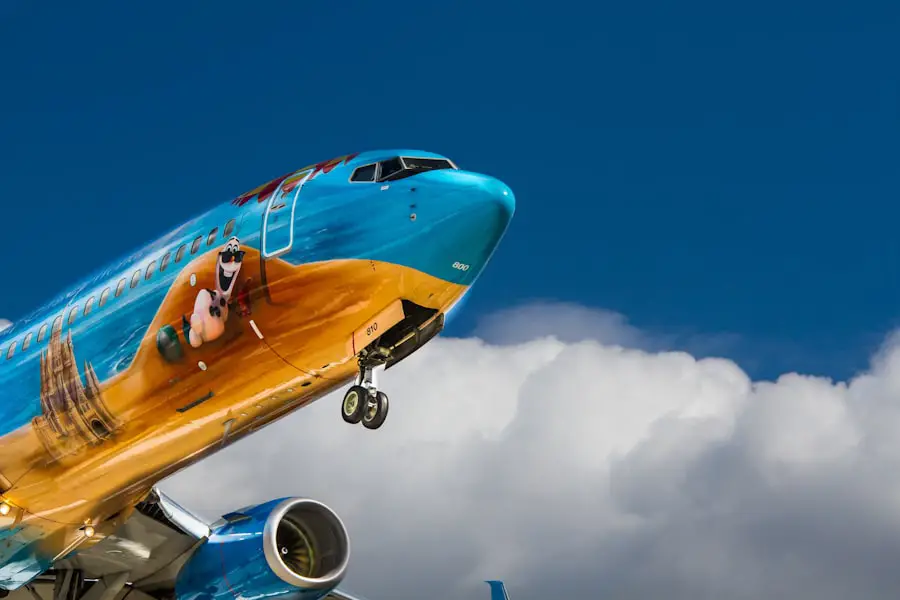
Commercial jet service began in May 1952 when the de Havilland Comet entered service with BOAC, a predecessor of British Airways. Its pressurized cabin and jet engines offered a smoother and faster journey than contemporary propeller aircraft.
However, several early Comets suffered catastrophic structural failures. Investigators identified metal-fatigue and pressurization-related weaknesses, leading to major testing and design improvements. Those lessons influenced later aircraft certification and structural testing.
In October 1958, Pan American World Airways began international Boeing 707 service between New York and Paris. The 707 carried more passengers over long distances and helped establish large-scale transatlantic and transcontinental jet travel.
Jet aircraft cut travel times dramatically. Airlines could operate more flights with each aircraft, while larger cabins and greater productivity gradually helped make long-distance travel available to a wider public.
Products Worth Considering

Used Book in Good Condition


Wide-Body and Supersonic Travel
The wide-body era began around 1970 with aircraft such as the Boeing 747. Its two aisles and much larger passenger capacity changed airport operations and allowed airlines to carry hundreds of travelers on busy international routes.
Concorde began scheduled supersonic passenger service in 1976 and could cross the Atlantic in far less time than a conventional jet. However, high operating costs, limited seating, noise restrictions, and environmental concerns prevented supersonic service from becoming the industry standard. Concorde retired in 2003.
Pro Tip: Think of the Boeing 707 as one important part of mass air travel, not the only cause. Larger aircraft, improved fuel efficiency, higher incomes, competition, airport expansion, and later deregulation all helped reduce the real cost of flying.
Regulation, Deregulation, and Competition
For much of the mid-20th century, the US federal government controlled which interstate routes airlines could operate and what fares they could charge. This system offered stability, but it also limited price competition and made it difficult for new airlines to enter many markets.
The Airline Deregulation Act of 1978 gradually removed federal economic control over domestic fares, routes, and market entry. Airlines could decide where to fly and how much to charge based more directly on demand and competition.
Note: Deregulation did not eliminate aviation safety rules. The government continued regulating aircraft certification, maintenance, crew qualifications, operating procedures, and other safety requirements.
Competition gave passengers a wider range of schedules, service levels, and ticket prices. Low-cost carriers expanded, while established airlines reorganized their networks around major connecting hubs.
Southwest Airlines became a leading example of a low-cost carrier using a simpler operating model. Other airlines adopted hub-and-spoke networks, loyalty programs, restricted discount fares, and increasingly complex pricing systems.
Deregulation also produced mixed results. Many communities gained more choices and lower fares, while some smaller cities lost unsubsidized service. Bankruptcies and mergers later made parts of the market more concentrated. The Essential Air Service program was created to preserve a minimum level of scheduled service for eligible communities.
| Year | Milestone | Why It Mattered |
|---|---|---|
| 1914 | St. Petersburg–Tampa Airboat Line begins | Established the model for scheduled passenger airline service. |
| 1925–1927 | Private airmail contracts expand | Provided reliable income and helped create national airline routes. |
| 1930s | Flight attendants and the DC-3 arrive | Improved passenger confidence, comfort, capacity, and airline economics. |
| 1952 | de Havilland Comet enters service | Introduced scheduled commercial jet travel. |
| 1958 | Boeing 707 begins Pan Am service | Expanded practical long-distance jet travel. |
| 1970 | Boeing 747 enters airline service | Brought high-capacity wide-body travel to major international routes. |
| 1978 | US Airline Deregulation Act | Opened domestic fares, routes, and market entry to greater competition. |
| 2001 | Post-September 11 security reforms | Reshaped screening, airport security, and airline operations. |
| 2020 | COVID-19 travel collapse | Created the industry’s deepest modern financial and demand crisis. |
| 2025 | Global passenger demand reaches another record | Confirmed that overall demand had moved beyond the pandemic recovery phase. |
Products Worth Considering


Modern Technology and Global Airline Alliances
Technology changed both airline operations and the way passengers buy tickets. Computerized reservation systems allowed airlines and travel agents to check schedules and seat availability quickly. Revenue-management software later helped airlines adjust fares based on demand, booking time, route conditions, and seat availability.
Electronic tickets, mobile boarding passes, self-service check-in, automated baggage systems, and airline apps removed much of the paper-based process. Modern aircraft also use advanced avionics, satellite navigation, real-time weather information, and maintenance-monitoring systems.
The passenger experience has changed through in-flight Wi-Fi, seatback entertainment, streaming systems, improved cabin lighting, and quieter aircraft. However, features still vary widely by aircraft, airline, route, and fare class.
How Airline Alliances Work
Global alliances make it easier for airlines to coordinate schedules, sell connecting itineraries, share airport facilities, and recognize selected frequent-flyer benefits. The three largest alliance groups are Star Alliance, Oneworld, and SkyTeam.
An alliance does not make every member airline operate as one company. Baggage rules, seat selection, upgrade eligibility, lounge access, and disruption support can still depend on the operating airline, ticket type, status level, and specific itinerary.
How September 11 Changed Air Travel
The terrorist attacks of September 11, 2001, caused another major transformation in commercial aviation. Governments and airlines introduced stronger screening procedures, reinforced cockpit security, expanded passenger and baggage checks, and increased intelligence sharing.
In the United States, the Aviation and Transportation Security Act became law on November 19, 2001, creating the Transportation Security Administration. Federal screening officers gradually replaced private checkpoint screeners at US commercial airports.
Security systems have continued to evolve through advanced imaging, explosive-detection equipment, identity verification, risk-based screening, and better coordination among airports, airlines, law-enforcement agencies, and international authorities.
COVID-19 and the Industry’s Recovery
The COVID-19 pandemic caused the sharpest worldwide airline downturn of the modern era. Border closures, quarantine rules, health concerns, and government restrictions removed much of the demand for passenger travel during 2020.
According to revised IATA figures, airlines recorded an industry-wide net loss of approximately $137.7 billion in 2020. Global passenger traffic measured in revenue passenger kilometers fell by roughly two-thirds compared with 2019.
Airlines grounded aircraft, retired older fleets early, cut schedules, reduced staffing, and depended on government assistance or new financing. Cargo operations became especially important because passenger aircraft normally carry substantial freight in their lower holds.
Recovery occurred unevenly. Domestic markets generally returned first, followed by international travel as border restrictions eased. Contactless check-in, mobile document handling, flexible booking policies, and biometric processing expanded during and after the crisis.
By 2024, total global passenger demand had moved above 2019 levels. The recovery continued in 2025, when IATA reported that total passenger demand rose another 5.3% and the full-year passenger load factor reached a record 83.6%.
Global passenger demand grew by 5.3% in 2025, showing that the industry had moved from pandemic recovery back toward longer-term growth patterns.
Sustainability and the Future of Flying
Aviation provides economic and social benefits, but aircraft also produce carbon dioxide and other climate effects. Airlines, aircraft manufacturers, fuel producers, airports, and governments face pressure to reduce those impacts while meeting rising demand.
IATA member airlines have adopted a goal of reaching net-zero carbon emissions by 2050. The proposed pathway includes more efficient aircraft, improved operations, Sustainable Aviation Fuel, carbon capture, offsets, and new propulsion technologies.
Sustainable Aviation Fuel
Sustainable Aviation Fuel, commonly called SAF, can be made from approved waste materials, renewable feedstocks, or synthetic processes. Depending on the feedstock and production method, SAF can reduce lifecycle carbon emissions substantially compared with conventional jet fuel.
SAF can be blended with conventional fuel and used in existing aircraft under approved specifications. However, supply remains limited and production costs are high. IATA expects global SAF production to reach about 2.4 million tonnes in 2026, equal to only about 0.8% of total airline fuel consumption.
Note: SAF is already used on commercial flights, but it is not yet available at the scale required to replace conventional jet fuel. Reaching the industry’s 2050 target depends on much faster fuel production, supportive policy, investment, and continued aircraft improvements.
Electric and Hydrogen Aircraft
Electric aircraft may become useful for training, very short routes, and small passenger operations. Battery weight currently limits their range and capacity, making battery-electric power unsuitable for replacing long-haul jets with current technology.
Hydrogen could power aircraft through fuel cells or combustion, but it requires new aircraft designs, storage systems, airport infrastructure, and a large supply of low-carbon hydrogen. These aircraft remain under development rather than routine airline service.
Digital tools will also continue changing how you travel. Airlines and airports are expanding automated customer service, biometric identity systems, predictive maintenance, and real-time disruption management. If you travel often, our guide to the best power bank for international travel can help you keep essential devices charged during long journeys.
Frequently Asked Questions
What year did commercial airlines start?
The first widely recognized scheduled passenger airline began on January 1, 1914. The St. Petersburg–Tampa Airboat Line carried passengers across Tampa Bay in Florida on a published route and schedule.
Who was the first paying scheduled-airline passenger?
Abram C. Pheil, a former mayor of St. Petersburg, was the passenger on the inaugural scheduled flight. He paid $400 at an auction for the first seat. Regular tickets afterward cost $5 each way.
What was the first commercial airline route?
The route crossed approximately 18 miles of Tampa Bay between St. Petersburg and Tampa, Florida. The inaugural journey took about 23 minutes.
How long did the first scheduled airline survive?
The St. Petersburg–Tampa Airboat Line operated for about three months and closed at the end of March 1914. It safely carried 1,204 passengers before tourist demand and financial support declined.
What helped early airlines become financially stable?
Government airmail contracts gave early airlines dependable revenue while passenger demand was still weak. More efficient aircraft, especially the Douglas DC-3, later allowed airlines to earn more of their income from passengers.
When did the Jet Age begin?
Commercial jet service began in 1952 with the de Havilland Comet. The Boeing 707 entered international service with Pan Am in 1958 and helped expand long-distance jet travel on a much larger scale.
How did airline deregulation affect ticket prices?
The 1978 Airline Deregulation Act allowed US airlines to set most domestic fares and choose routes without the previous level of federal economic control. Competition generally expanded fare choices and helped lower inflation-adjusted prices, although results differed by route and community.
Did deregulation remove airline safety oversight?
No. Deregulation primarily changed economic controls over fares, routes, and market entry. Federal agencies continued regulating aircraft certification, maintenance, crew qualifications, operating procedures, and aviation safety.
What More Than a Century of Aviation Tells Us
Commercial aviation did not grow from one invention alone. The 1914 Tampa Bay service demonstrated scheduled passenger travel, airmail contracts created reliable networks, the DC-3 improved airline economics, wartime research accelerated technology, and jet aircraft made long-distance flight much faster.
Deregulation, computer systems, airline alliances, stronger security, and digital services then reshaped how airlines compete and how passengers travel. The pandemic showed how vulnerable that network can be, while the rapid recovery showed how strongly people and economies continue to value air connections.
The industry’s next chapter will depend on whether it can expand while reducing its climate impact. More efficient aircraft and SAF can help now, while electric, hydrogen, and other technologies may play larger roles over time. Every flight you take is part of a transportation system that began with one passenger crossing Tampa Bay.
Sources
- Smithsonian National Air and Space Museum: Early Airlines You Might Not Have Heard Of — first-flight distance, duration, fare, passenger count, and operating history.
- Smithsonian National Air and Space Museum: Evolution of the Commercial Airliner — aircraft development from early airliners through the Jet Age.
- British Airways: De Havilland Comet Heritage — the first commercial jet airliner and its service history.
- US Department of Transportation: Airline Rules and Fares — economic deregulation of domestic airline fares.
- IATA: Strong 2025 Passenger Demand — 2025 demand growth and passenger load-factor data.
- IATA: Sustainable Aviation Fuel — SAF use, lifecycle-emissions potential, production limits, and the net-zero pathway.
