
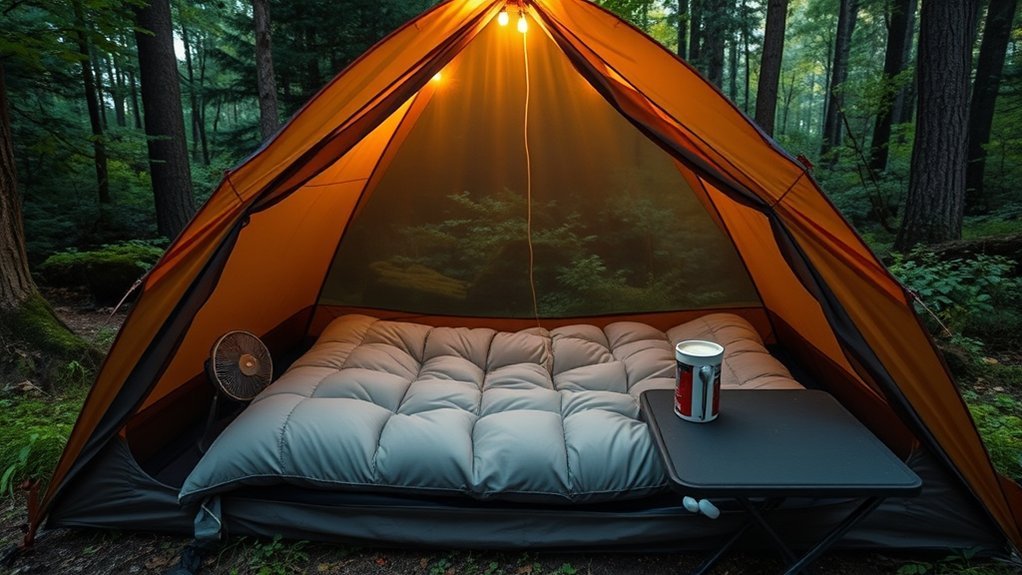
Last Updated on August 26, 2026 by Mason Reed
Sleeping comfortably in a tent comes down to four things: choosing a safe, dry campsite, insulating yourself from the ground, matching your sleep system to the overnight temperature, and controlling light, noise, moisture, and clutter. A few small changes to your setup can make the difference between tossing all night and waking up rested.
Quick Answer
To make tent camping more comfortable, pitch on level, well-drained ground, use an insulated sleeping pad matched to the conditions, choose an appropriate sleeping bag, bring a supportive pillow, ventilate the tent, keep dry sleep clothes handy, and control light and noise. Keep food and fuel-burning equipment out of your sleeping area.
Key Takeaways
- Your sleeping pad is important for both cushioning and insulation from the ground.
- Choose your sleeping bag and pad as a complete sleep system rather than relying on one temperature number.
- A level campsite should also be dry, well drained, and clear of falling-limb, flood, and wildlife hazards.
- Ventilation helps reduce condensation; a floor mat adds comfort but does not remove humidity from tent air.
- Earplugs, a sleep mask, a real pillow, dry sleep clothes, and a simple bedtime routine can make unfamiliar surroundings easier to sleep in.
- Never use a charcoal grill, portable gas stove, or other fuel-burning appliance inside a tent for cooking or heat.
At a Glance
| Time Required | About 20–30 minutes to choose the site and prepare your sleep area before dark |
| Difficulty | Easy |
| Tools Needed | Tent, sleeping pad or other suitable sleep surface, sleeping bag or bedding, pillow, headlamp, and weather-appropriate sleep clothing |
| Cost | Varies widely; many comfort improvements use gear you may already own |
Disclosure: As an Amazon Associate I earn from qualifying purchases. Some links on this page are affiliate links, at no extra cost to you.
Choosing the Perfect Campsite
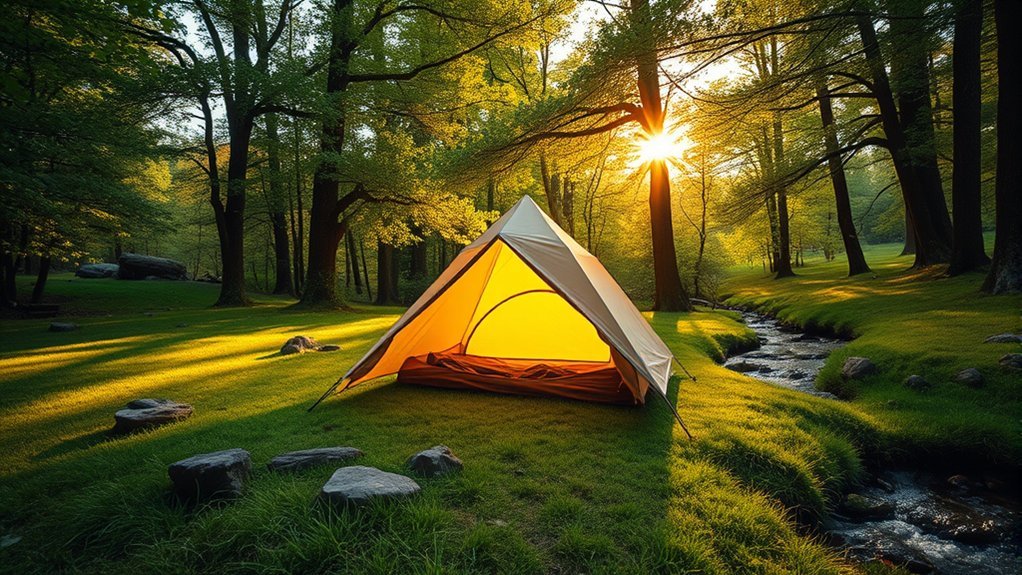
When you’re choosing the perfect campsite, comfort and safety should come before the view. In a developed campground, use the designated tent pad or campsite. In the backcountry, follow the land manager’s rules and choose an established or durable surface whenever possible.
Start with level ground that is free of sharp rocks, large roots, pinecones, and other pressure points. A water bottle placed on the ground can give you a rough sense of slope, but also look at the wider site. Avoid depressions and low spots where rain could collect. The National Park Service recommends level ground that is not a low place and warns campers to avoid ravines that may flood, damaged trees that could fall, cliff edges, and other obvious hazards. See the NPS campsite selection guidance.
Quiet can matter, too. If you have a choice, a site away from bathrooms, parking areas, generators, group areas, and busy paths may make nighttime sleep easier. For dispersed camping, confirm that camping is legal before setting up rather than simply looking for a free site away from tourist areas.
Wildlife considerations are also important. In applicable backcountry settings, Leave No Trace guidance commonly recommends camping about 200 feet from lakes and streams, but designated campsites and local rules always take priority. Avoid areas with obvious signs of wildlife activity and follow all food-storage requirements. In bear country, some parks require bear-resistant containers, lockers, or specific separation between sleeping and cooking areas.
Pro Tip: Set up your bed before sunset. You will have enough light to spot an uncomfortable slope, leaking air mattress, missing tent stake, or damp sleeping bag while the problem is still easy to fix.
Essential Sleeping Gear for a Good Night’s Rest
A comfortable night starts from the ground up. A quality sleeping pad provides cushioning, but its insulation can be just as important. Sleeping-pad insulation is expressed as an R-value: higher numbers indicate greater resistance to heat loss through the ground. Current guidance from REI’s sleeping-pad guide recommends considering both the expected temperature and the rest of your sleep system when selecting a pad.
For warm-weather car camping, comfort and thickness may matter more than packed size or weight. Backpackers usually have to balance warmth and cushioning against weight and bulk. In colder conditions, an insulated pad becomes increasingly important. A closed-cell foam mat under an inflatable or self-inflating pad can provide extra insulation and also serve as a backup if the inflatable pad is damaged.
Choose the Right Sleeping Bag
Do not rely on a universal rule that a bag must be rated exactly 10 or 20 degrees below the forecast. Instead, check the expected overnight low, your personal tendency to sleep warm or cold, your sleeping pad, and the bag’s rating system.
Many modern sleeping bags use standardized ISO or EN testing. A comfort rating is more useful for someone who tends to sleep cold, while a limit rating is intended for a warmer sleeper. Ratings still are not guarantees because humidity, wind, clothing, shelter, ground temperature, pad insulation, and individual differences affect real-world warmth. REI’s temperature-rating guide explains these distinctions in more detail.
Pad, Air Mattress, or Cot?
- Sleeping pad: Usually the best balance of insulation, compactness, and versatility. Backpackers should pay particular attention to weight, packed size, and R-value.
- Air mattress: Can feel familiar and spacious for car camping, but check its insulation as well as its thickness. A thick uninsulated air mattress can still feel cold in cool conditions.
- Cot: Makes it easier to get on and off the bed and can be comfortable for campers who dislike sleeping close to the ground. It is bulkier and still needs suitable bedding or insulation in cold weather.
Don’t forget a camping pillow. Inflatable and compressible models save space, while car campers can simply bring a pillow from home if the tent has room. The best choice is one that supports your normal sleep position without forcing your neck upward.
Finally, keep a dedicated set of dry sleep clothes. Wool or synthetic layers work well in cool conditions because they manage moisture better than damp daytime clothing. On hot nights, choose lightweight, breathable sleepwear and avoid overdressing.
A warm sleeping bag cannot fully compensate for an inadequately insulated sleeping pad; think of the bag, pad, and sleep clothing as one system.
Adjust Your Setup for Hot, Cold, and Wet Nights
Comfort is not only about staying warm. Summer tents can become stuffy, while cool ground can make an otherwise mild night surprisingly uncomfortable.
For Cold Nights
Eat adequately, change out of damp clothing, use a properly insulated pad, wear dry layers, and keep your head and feet comfortably covered if needed. If you are still cold, adding a compatible foam pad beneath your main pad is generally safer than trying to heat the inside of the tent with a combustion appliance.
For Hot Nights
Use the tent’s mesh panels and vents, choose lightweight bedding, and open the sleeping bag or use a lighter liner when conditions allow. Positioning the tent to take advantage of a gentle breeze may improve airflow, provided the site is otherwise safe and the tent is properly secured.
For Rain and Humidity
Choose higher, drier ground and keep wet boots, rain gear, and other soaked items out of the sleeping area when practical. Open compatible vents and opposing mesh panels to promote airflow while still keeping rain out. Condensation cannot always be eliminated, especially in humid weather, but ventilation and moisture management can reduce it. See REI’s tent-condensation guidance.
Creating a Cozy Tent Atmosphere
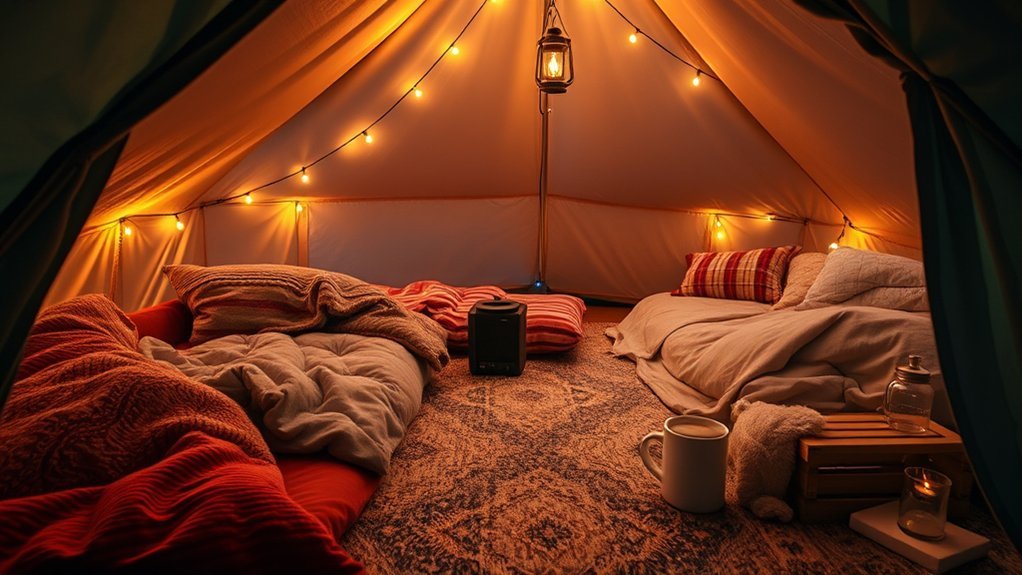
Once the essentials are handled, a few comfort touches can make the tent more inviting. Battery-powered ambient lighting, such as a small lantern or string lights designed for camping, provides enough light to get ready for bed without relying on a harsh flashlight.
A foam mat, rug, or suitable tent-floor mat can add cushioning and protect the sleeping area from dirt. A yoga mat can serve as a simple extra floor layer if you already own one, but it should not be expected to reduce the humidity in the tent. Manage moisture with dry-site selection, ventilation, and by keeping wet gear out of the sleeping compartment when possible.
If your tent has manufacturer-provided loops, a lightweight clothesline or gear loft can help keep small personal items off the floor. Do not overload loops that were not designed to support substantial weight.
For roomy car-camping tents, compact portable furniture or storage totes can make clothing and essentials easier to reach. Keep bulky objects away from tent walls and floors if they could abrade or puncture the fabric. Built-in pockets are particularly useful for glasses, medication, a headlamp, and other items you may need during the night.
Note: Car campers can prioritize thick bedding, larger pillows, cots, and extra organization. Backpackers usually need to prioritize low weight and packed size, so comfort improvements should earn their space in the pack.
Organizing Your Tent for Maximum Comfort
An organized tent is easier to move around in after dark and reduces the chance that someone steps on glasses, electronics, or fragile gear. Use built-in pockets, a lightweight gear loft if the tent supports one, and separate bags or totes for sleep clothing and frequently used items.
A basket or small container near the entrance is convenient for shoes and sandals. If conditions and tent design allow, leave muddy footwear in the vestibule rather than bringing it into the sleeping area.
When a tent includes suitable interior loops, a light clothesline can hold small, lightweight items. Avoid hanging heavy or soaking-wet gear over your bed because it adds moisture and may stress the tent. Dry wet clothing outside when weather permits.
In a large family or car-camping tent, collapsible tables and chairs may create a more familiar living area, but keep enough open floor space to enter and exit without tripping. Storage totes can double as simple bedside tables and keep frequently used equipment contained.
Keep Nighttime Essentials in One Place
Before going to sleep, put your headlamp, shoes, water, glasses, phone, and any other genuinely necessary nighttime items where you can reach them without searching through the entire tent. This is especially useful if you need to leave the tent in darkness.
Tips for Managing Sleep Disruptions Outdoors
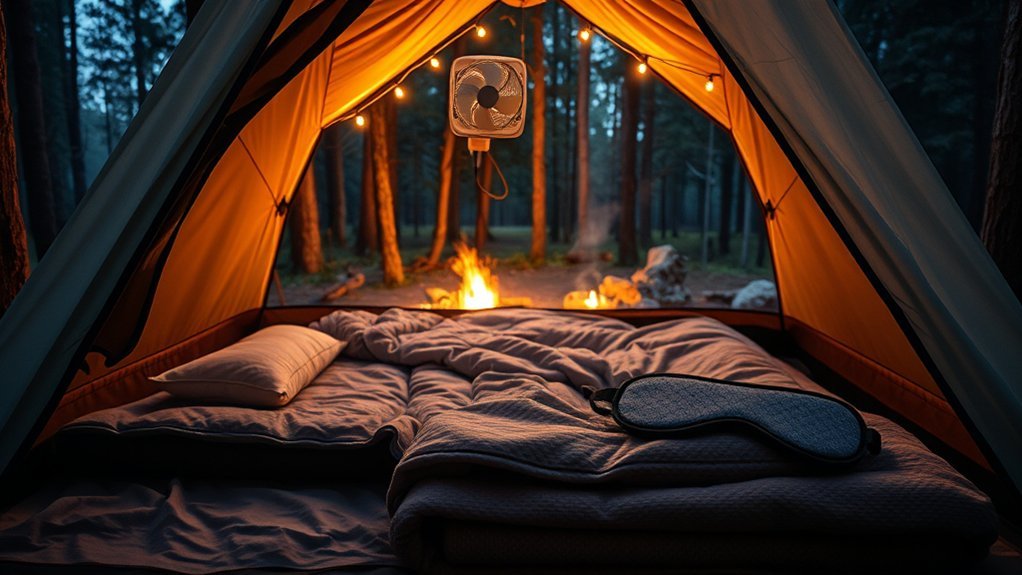
Even with an organized tent, unfamiliar noises, early sunrise, temperature changes, and a different sleeping surface can interrupt sleep.
Earplugs can reduce campground conversations, snoring, and routine nighttime noise. A small battery-powered white-noise machine can provide a consistent sound if you prefer it. However, use hearing-blocking devices with judgment when conditions require you to remain aware of weather, wildlife, children, or other hazards.
A sleep mask can help with early sunrise, campground lighting, or nearby campers’ lights. Keep a headlamp within reach so you can safely move around if you wake during the night.
Maintain ventilation appropriate for the weather. Tent vents and mesh openings can help reduce moisture buildup and overheating. Check them before bed instead of waiting until condensation has already formed.
Stay normally hydrated throughout the day. If repeated bathroom trips disturb your sleep, avoid unnecessarily large amounts of fluid immediately before bed rather than deliberately dehydrating yourself.
Use a Familiar Bedtime Routine
Camping is exciting, which can make it harder to switch from activity to sleep. Give yourself a short wind-down period after the day’s final chores. Change into dry sleep clothes, organize your gear, brush your teeth, lower the lights, and spend a few quiet minutes reading or relaxing. Families with children may find it helpful to keep the same basic bedtime sequence they use at home.
Warning: Never use a charcoal grill, portable gas camp stove, fuel-burning lantern, or similar combustion appliance inside a tent to cook or provide heat. These devices can produce carbon monoxide, an odorless and colorless gas that can cause sudden illness or death. Opening tent doors or vents does not make indoor use safe.
Keep Food, Bugs, and Wildlife From Disturbing Your Night
Food odors can attract animals and insects, so avoid treating the sleeping area like a pantry. Follow campground and land-manager food-storage rules. In some locations, that means using a bear-resistant container, locker, or another approved storage method away from the tent.
Keep tent doors zipped and inspect mesh panels for holes before your trip. For protection against mosquitoes and ticks, the CDC recommends EPA-registered insect repellents used according to label directions. Depending on the product and destination, active ingredients may include DEET, picaridin, IR3535, oil of lemon eucalyptus/PMD, or 2-undecanone. Do not assume that an unregistered essential oil provides dependable protection.
Crumbs and spilled drinks also make the tent less pleasant, so clean them promptly. Where wildlife rules require food and scented items to be stored outside the sleeping area, follow those requirements even if storing them inside seems more convenient.
Comfort Checklist Before You Go to Sleep
- Confirm the tent is secure and the rainfly and guylines are properly set for the conditions.
- Check that vents are open as appropriate for airflow and rain protection.
- Make sure your sleeping pad is fully inflated or correctly positioned.
- Keep your sleeping bag and sleep clothes dry.
- Place your pillow, sleep mask, and earplugs where you can find them easily.
- Put a headlamp and shoes within reach.
- Remove food and follow local wildlife-storage rules.
- Keep all fuel-burning cooking and heating equipment outside the tent.
- Clear the main exit path so nobody has to climb over loose gear at night.
Frequently Asked Questions
What Are the Best Types of Tents for Camping Comfort?
For car camping, a tent with enough floor space to avoid crowding, good standing or sitting height, useful storage pockets, a vestibule, and generous ventilation is often the most comfortable. Backpackers usually need a lighter tent, so balance interior room against packed weight. In humid or warm conditions, mesh panels and adjustable vents are particularly useful.
How Can I Keep Insects Out of My Tent?
Keep the tent door zipped, repair damaged mesh, avoid leaving the entrance open under bright lights, and remove food scraps. For personal protection from mosquitoes and ticks, use an EPA-registered insect repellent according to its label. Clothing that covers exposed skin can provide additional protection.
What Food Should I Bring for Camping Comfort?
Choose foods that fit your cooking setup and storage capacity. Trail mix, fruit, granola bars, sandwiches, pre-portioned meals, pre-cooked ingredients, and simple foil-packet meals can reduce campsite preparation. Store all food according to campground and wildlife rules rather than keeping snacks loose inside the tent.
Are There Specific Campgrounds Known for Comfort Amenities?
Yes, but the best option depends on your destination. When comparing campgrounds, look for level tent pads, potable water, clean restrooms, showers, quiet-hour enforcement, electrical hookups if you need them, shade, fire-ring rules, food lockers in wildlife areas, and enough separation between sites. Private campgrounds and glamping properties often provide more amenities, while public campgrounds may offer a simpler setup.
How Can I Stay Warm in Cold Weather While Camping?
Use a sleeping pad with enough insulation for the expected conditions, an appropriately rated sleeping bag, and clean, dry insulating layers. A closed-cell foam pad can be added beneath another pad for extra insulation. Keep damp clothing out of your sleep system, and never use a fuel-burning stove or charcoal device inside the tent for warmth.
Is a Sleeping Pad, Air Mattress, or Cot More Comfortable?
There is no single best choice. Sleeping pads offer a strong balance of insulation and portability, air mattresses provide a broad cushioned surface for car camping, and cots make getting in and out of bed easier. Check insulation as well as softness, especially in cool weather, because a thick sleep surface is not automatically a warm one.
Why Do I Have Trouble Sleeping the First Night in a Tent?
An unfamiliar mattress, different temperature, outdoor sounds, early sunlight, and excitement can all make the first night feel unusual. Improve the physical setup first, then use a familiar bedtime routine, sleep mask, suitable earplugs, comfortable pillow, and dry sleep clothes to make the environment feel more predictable.
Conclusion
Comfortable tent camping does not require turning a campsite into a bedroom. Focus first on the details that affect sleep the most: a safe and level site, an insulated sleep surface, appropriate bedding, dry clothing, ventilation, and a supportive pillow. Then manage smaller disruptions such as light, noise, clutter, insects, and an unfamiliar bedtime routine.
Before each trip, check the overnight forecast and local campground or backcountry rules rather than relying on the same setup everywhere. With a sleep system matched to the conditions and a few well-chosen comfort items, you are far more likely to wake up rested and ready for the next day outdoors.
Sources
- U.S. National Park Service — Finding and Setting Up a Campsite — campsite location, drainage, wildlife, and hazard guidance.
- REI Co-op — How to Choose a Sleeping Pad — sleeping-pad R-values, insulation, and sleep-system considerations.
- REI Co-op — Understanding Sleeping Bag Temperature Ratings — ISO/EN comfort and limit ratings and their limitations.
- REI Co-op — How to Prevent Condensation in a Tent — ventilation, campsite selection, and moisture management.
- Centers for Disease Control and Prevention — Preventing Mosquito Bites — EPA-registered insect-repellent guidance.
- Centers for Disease Control and Prevention — Carbon Monoxide Poisoning Basics — hazards from charcoal and portable gas camp stoves in enclosed spaces.
