
Last Updated on July 27, 2026 by Daniel Globe
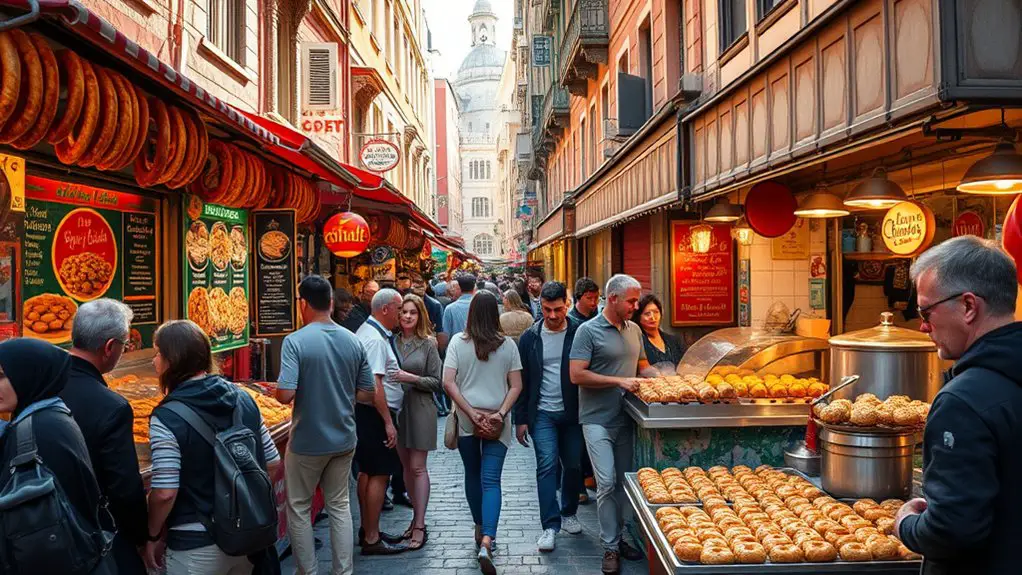
Istanbul is one of those cities where eating well does not require a formal restaurant reservation. Sesame-crusted breads appear on morning carts, döner turns on spits inside tiny büfes, mussels are sold from trays after dark, and grilled fish sandwiches draw crowds along the waterfront. A good Istanbul street-food tour is less about trying everything at once and more about knowing which foods, neighborhoods, and times of day are worth your appetite.
Quick Answer
For a first Istanbul street-food tour, start with simit, döner, balık ekmek, midye dolma, kumpir, lahmacun, börek, meatless çiğ köfte and dondurma. Eminönü and Karaköy are excellent for waterfront snacks, Ortaköy is famous for kumpir, while Kadıköy offers one of the city’s broadest mixes of quick local foods.
Key Takeaways
- Simit is Istanbul’s classic sesame-coated bread ring and pairs naturally with Turkish tea, cheese or ayran.
- Döner, lahmacun and börek are filling choices, so share portions if you plan to make several food stops.
- Try balık ekmek around the waterfront, kumpir in Ortaköy and a broader mix of foods around Kadıköy, Beşiktaş and central Beyoğlu.
- Modern commercially sold çiğ köfte is generally a spicy meatless bulgur dish, despite the literal meaning of its name.
- Street-food prices change quickly. Check the current posted price before ordering instead of relying on an old online price guide.
- For food safety, favor food that is freshly cooked and served hot, and use extra care with shellfish and foods that depend on reliable refrigeration.
Disclosure: As an Amazon Associate I earn from qualifying purchases. Some links on this page are affiliate links, at no extra cost to you.
Simit: Istanbul’s Sesame-Crusted Bread Ring
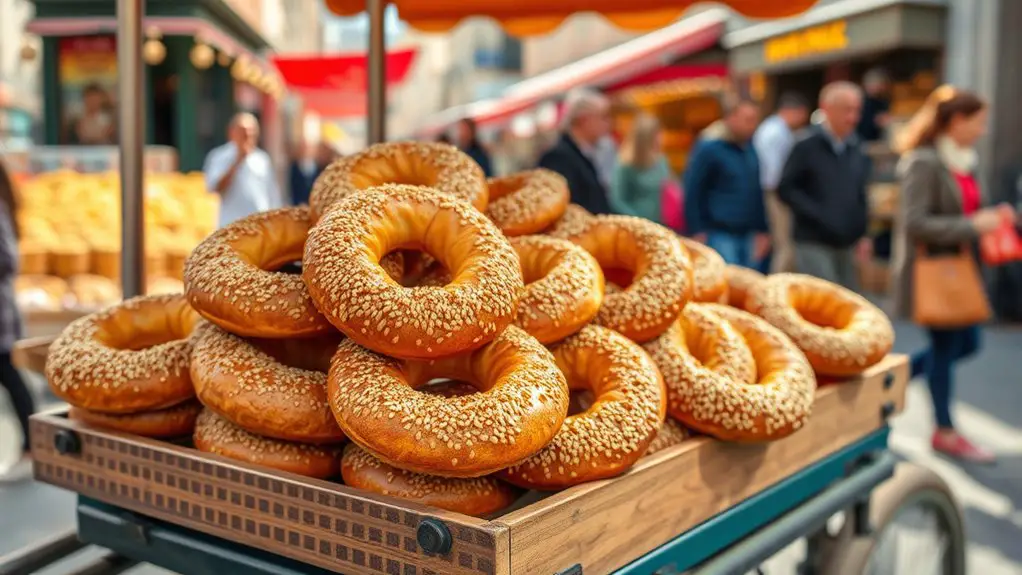
As you walk through Istanbul in the morning, simit is difficult to miss. The ring-shaped bread has a browned crust covered in sesame seeds, with a chewy interior that makes it more substantial than it first looks.
It is sometimes described to visitors as a “Turkish bagel,” but simit is its own bread with its own preparation and history. Türkiye’s Culture Portal notes that simit has a long history and appears in sources reaching back centuries.
For an easy first taste of Istanbul street food, buy a fresh simit in the morning and eat it with a glass of hot çay.
Simit is good plain, but you may also find it paired with white cheese, olives, jam or other breakfast foods. It also works well with ayran later in the day.
Because it is inexpensive, portable and available from bakeries and carts across the city, simit is one of the easiest foods to work into a sightseeing day.
Döner Kebab: A Flavorful Classic
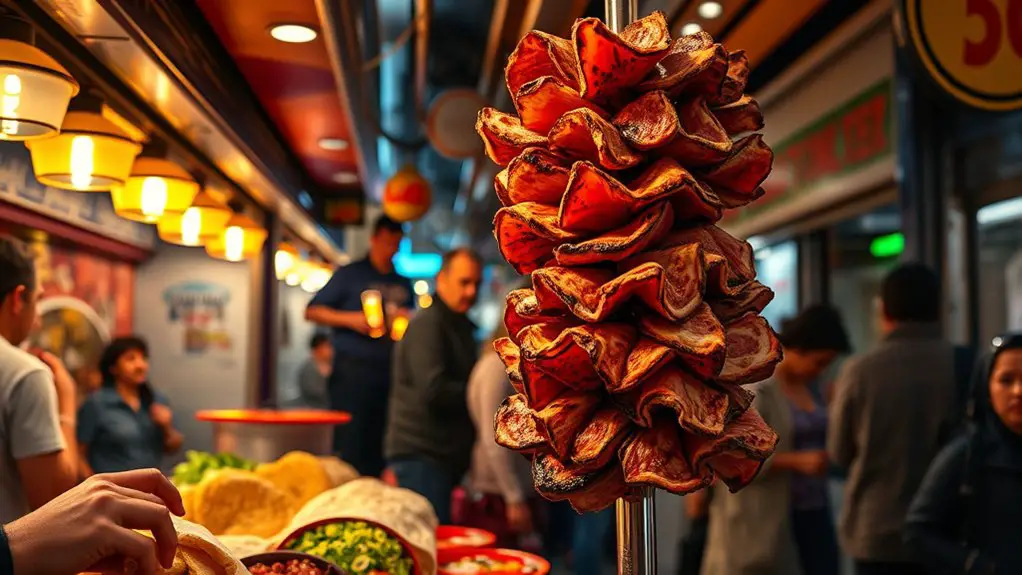
Döner is one of Istanbul’s best-known quick meals. Seasoned beef, lamb or chicken cooks on a rotating vertical spit before thin slices are shaved from the browned exterior.
The official GoTürkiye Istanbul street-food guide identifies döner as one of the city’s most popular street foods and highlights districts including Sultanahmet, Eminönü, Beşiktaş and Üsküdar.
You will commonly encounter döner in several forms:
- Dürüm: Thinly sliced meat rolled in flatbread for an easy meal on the move.
- Sandwich: Meat tucked into bread, often with tomato, lettuce, pickles or other simple additions.
- Plate: A larger sit-down serving that may come with rice, vegetables or bread.
- Regional or shop variations: Sauces and garnishes vary, so do not expect every Istanbul döner to resemble heavily sauced versions sold abroad.
Pro Tip: If you are doing a multi-stop food tour, order a smaller döner or share one. A full plate can end your food crawl much earlier than planned.
Balık Ekmek: The Famous Fish Sandwich
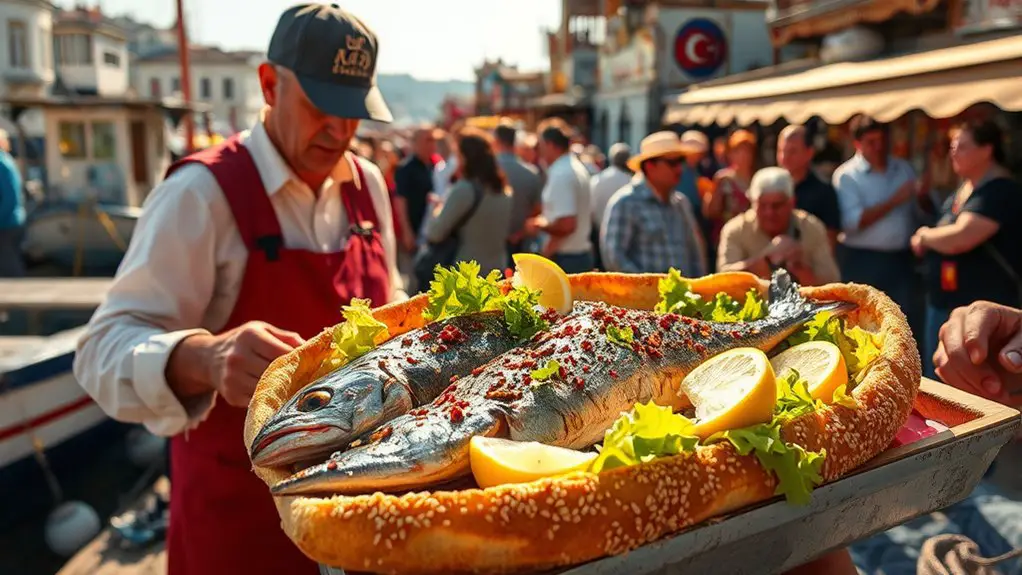
Balık ekmek literally means “fish bread,” but the simple name hides one of Istanbul’s classic waterfront meals. Grilled fish is tucked into bread with ingredients such as onion, tomato, greens and lemon, depending on the seller.
You will find the sandwich around waterside districts including Eminönü and Karaköy, while Kadıköy’s market and waterfront area offer plenty of seafood choices on the Asian side. GoTürkiye specifically identifies balık ekmek with Istanbul’s harbor districts and Bosphorus setting.
The appeal is partly the setting: you can eat beside the water while ferries, fishing boats and commuters move through one of the busiest parts of the city.
Do not assume, however, that fish sold beside the Bosphorus was caught locally that morning. Fish species and sourcing vary by seller and season.
Midye Dolma: Stuffed Mussels
Midye dolma are cooked mussels filled with seasoned rice and served in their shells. Recipes can include onion, herbs, spices and sometimes dried fruit. Vendors usually finish each mussel with a squeeze of lemon.
They are designed for snacking one by one, which makes it surprisingly easy to eat far more than you planned. GoTürkiye notes that midye dolma is widely associated with Istanbul street stalls and is especially common as a late-night snack around areas such as Taksim.
What makes them worth trying:
- Distinctive filling: The seasoned rice balances the briny mussel.
- Easy portioning: You can try one or several instead of committing to a full meal.
- Strong local identity: Trays of stuffed mussels are a familiar sight in busy nightlife and pedestrian districts.
- Simple serving style: A squeeze of lemon is usually all they need.
Warning: Shellfish requires careful handling and temperature control. The CDC Yellow Book advises travelers that raw or undercooked shellfish carries additional foodborne-illness risk and that freshly cooked food served hot is generally safer when sanitation is uncertain.
Kumpir: The Loaded Baked Potato
Kumpir takes a large baked potato and turns it into a customizable meal. After baking, the soft interior is mixed until creamy with butter, cheese and salt before toppings are piled on.
Depending on the stall, choices may include pickles, olives, corn, vegetables, sausage, salads and sauces. The combinations can become enormous.
For the classic Istanbul experience, head to Ortaköy. The city’s official tourism guide specifically points to the neighborhood’s row of kumpir sellers near the Bosphorus waterfront.
Note: Kumpir can be vegetarian, but toppings, sauces and shared utensils vary by shop. Ask about ingredients if you avoid meat, dairy or specific allergens.
Lahmacun: Thin Flatbread With Spiced Topping
Lahmacun is sometimes nicknamed “Turkish pizza,” although its thin texture and preparation are quite different from pizza. A thin round of dough is topped with a finely chopped or minced mixture that commonly includes meat, tomato, pepper, onion, herbs and spices, then baked quickly.
It is often served with fresh parsley, onion and lemon. Many diners add the herbs, squeeze lemon over the top, roll the lahmacun and eat it by hand.
Popular additions include:
- Fresh parsley: Adds a clean herbal note.
- Sliced onion: Gives the soft flatbread extra crunch.
- Lemon: Brightens the rich topping.
- Chili or pepper flakes: Adds heat if you prefer it spicy.
Lahmacun is filling without being as heavy as a large döner plate, which makes it a useful stop on a longer food crawl.
Börek: Savory Pastry Layers
Börek covers a broad family of savory pastries made with thin layers of dough and fillings such as cheese, spinach, minced meat or potato.
Styles vary by bakery. Some are rolled, some are layered in trays and cut into portions, and others have crisp, flaky edges surrounding a softer center.
Freshness matters. Börek is at its best when it has not been sitting around long enough for the pastry to lose its crispness, so a busy bakery in the morning can be an excellent place to try it.
Cheese or spinach versions can work for vegetarians, while meat-filled versions make a more substantial breakfast or lunch.
Çiğ Köfte: Spicy Meatless Bulgur
The name çiğ köfte literally refers to “raw köfte,” and older versions of the dish could contain raw meat. That history creates confusion for travelers because the commercially sold version you encounter today is generally a meatless mixture based on fine bulgur.
Türkiye’s Ministry of Agriculture and Forestry states that food-service businesses may not sell prepared mixtures containing raw meat in an uncooked state. That is why modern street and shop versions of çiğ köfte are normally meat-free.
Ingredients and Flavor
Recipes vary, but contemporary çiğ köfte commonly combines fine bulgur with pepper or tomato paste, spices, herbs and seasonings. Pomegranate molasses, lemon and other additions may also be used depending on the shop.
The result is savory, spicy and slightly chewy rather than meat-like. It is commonly served with lettuce and lemon or rolled into a dürüm.
| Element | What It Adds |
|---|---|
| Fine bulgur | The main body and chewy texture |
| Pepper or tomato paste | Color, savory depth and heat |
| Spices | The characteristic warm, peppery flavor |
| Herbs, lemon or pomegranate molasses | Freshness, acidity and sweetness depending on the recipe |
How Çiğ Köfte Gets Its Texture
The traditional technique relies on prolonged kneading rather than fermentation. Fine bulgur is worked with paste, spices and seasonings until it softens and the ingredients form a cohesive mixture.
The mixture is then squeezed into its familiar ridged portions or spread inside flatbread with lettuce, herbs and lemon.
Künefe: Crisp Pastry, Melted Cheese and Syrup
Künefe is popular across Türkiye and the eastern Mediterranean. It combines fine strands of kadayıf pastry with a mild melting cheese, then cooks until crisp before being finished with sweet syrup.
What makes künefe memorable is the contrast between textures:
- Kadayıf: Thin pastry strands form a crisp golden exterior.
- Cheese: Mild cheese melts into a soft, stretchy center.
- Syrup: Sweet syrup soaks into the hot pastry after cooking.
- Pistachios: Crushed nuts are a common finishing garnish.
Künefe is richer than most foods on this list, so it works best as the final stop rather than the beginning of a long tasting route.
Dondurma: Traditional Turkish Ice Cream
Dondurma vendors are famous for the playful serving routine in which cones are flipped, stretched and briefly pulled away from customers with long-handled paddles.
The texture is the more important part. Traditional Maraş-style dondurma is unusually dense, elastic and slow to melt.
Why Maraş-Style Dondurma Is Different
Türkiye’s official Culture Portal entry for registered Maraş Dondurması describes the traditional product as being made from goat’s milk, salep and sugar. Salep, produced from orchid tubers, contributes to the characteristic body and elasticity.
That distinction matters because not every tourist-shop ice cream sold under the general label “Turkish ice cream” necessarily follows the protected Maraş formulation.
Flavor Varieties Available
Vanilla, chocolate and pistachio are easy flavors to encounter, while shops may offer fruit, nut or regional varieties. Selection varies considerably from one seller to another.
For the most traditional experience, focus less on finding an unusual flavor and more on the dense, chewy texture associated with good Maraş-style dondurma.
Best Areas for Street Food in Istanbul
Istanbul is too large for a single “street-food district.” Different neighborhoods are better for different experiences.
- Eminönü: A natural stop for balık ekmek, simit and snacks around the ferry docks and streets near the Spice Bazaar.
- Karaköy: Good for waterfront food, bakeries and easy access to both Galata and ferry connections.
- Kadıköy: One of the best areas for variety, with markets, bakeries, casual eateries and quick foods close together.
- Ortaköy: The classic neighborhood for an overloaded kumpir beside the Bosphorus.
- Beşiktaş: Busy throughout the day, with plenty of döner, bakeries, breakfast foods and late-night choices.
- Taksim and İstiklal: Convenient for döner, midye dolma, kokoreç, sweets and late-night food.
Pro Tip: Build your food tour around neighborhoods rather than chasing individual dishes across Istanbul. For example, combine Eminönü and Karaköy on one outing, then explore Kadıköy separately after taking the ferry to the Asian side.
More Istanbul Street Foods Worth Trying
The foods above are only the beginning. Official Turkish tourism guides also highlight several other quick meals and snacks that are easy to encounter around the city.
Kestane
Roasted chestnuts appear on carts throughout Istanbul, especially when the weather turns cold. They are simple, warming and easy to share while walking.
Tavuk Pilav
Tavuk pilav combines rice with chicken and often chickpeas. It is a straightforward, filling meal commonly sold from small carts and takeaway counters.
Tantuni
Tantuni is a thinly chopped meat filling served in bread or a dürüm with vegetables and seasonings. It originated outside Istanbul but is now easy to find in the city.
Kokoreç
Kokoreç is a distinctive late-night favorite made from carefully cleaned sheep offal and intestines cooked over heat, chopped, seasoned and commonly served in bread. It has a stronger flavor than döner and is one of the more adventurous choices on an Istanbul food crawl.
How to Plan an Istanbul Street-Food Crawl
The easiest mistake is ordering full meals at every stop. Begin with foods that are naturally shareable, then save heavier dishes for later.
- Start light: Try simit, a few midye dolma or a small pastry.
- Add one substantial savory dish: Share a döner, lahmacun or kumpir rather than ordering one per person.
- Cross neighborhoods deliberately: Use ferries and tram routes to combine sightseeing with food instead of spending the day in taxis.
- Leave sweets until the end: Künefe and dondurma make a natural finish.
- Drink water: Salty breads, grilled meats and pastries add up quickly during a long tasting day.
Street-Food Prices and Payment in 2026
Old Istanbul price guides become inaccurate quickly, so there is no useful citywide promise that a simit, döner or fish sandwich will cost a particular amount. Tourist districts, portion size, meat type and the style of establishment can all change the price substantially.
Check the current menu or price board before ordering. Türkiye’s Ministry of Commerce consumer guidance requires restaurants, cafés, pastry shops and similar establishments to make their price lists visible.
A further January 2026 Ministry of Commerce rule change states that restaurants and similar food-service businesses may not impose mandatory service, table or cover charges. Voluntary tipping remains voluntary.
Cards are useful at established shops and restaurants, but keeping some Turkish lira available is still practical for small carts or vendors where payment options may be more limited.
Street-Food Safety Tips
Street food can be one of the highlights of Istanbul, but no visual clue can guarantee that a particular stall is safe. A queue of locals may suggest popularity and turnover, but it does not replace proper food handling.
The CDC Yellow Book recommends extra care with raw or undercooked meat, fish, shellfish and eggs and notes that fully cooked food served hot is generally a safer choice when sanitation is uncertain.
- Choose meat that is thoroughly cooked and served hot.
- Use extra caution with shellfish such as midye dolma if storage conditions look questionable.
- Avoid food that appears to have been sitting unrefrigerated when it should be kept cold.
- Look for clean serving utensils and food protected from obvious contamination.
- Wash your hands before eating or use alcohol-based sanitizer when soap and water are unavailable.
Vegetarian Options and Common Allergens
Vegetarian travelers have plenty to work with. Simit, roasted chestnuts, vegetarian kumpir toppings, spinach or cheese börek and modern meatless çiğ köfte are among the easiest choices.
Still, confirm ingredients when dietary restrictions matter. Foods may share grills, counters, fryers or utensils.
- Gluten: Simit, börek, lahmacun, döner bread and most dürüm wraps contain wheat.
- Sesame: Simit is heavily coated in sesame.
- Dairy: Kumpir, cheese börek, künefe and dondurma commonly contain milk or cheese.
- Shellfish: Midye dolma contains mussels.
- Nuts: Pistachios and other nuts are common in Turkish desserts and may appear as garnishes.
Frequently Asked Questions
Where can I find the best street food in Istanbul?
Start with Eminönü and Karaköy for waterfront food, Kadıköy for variety, Ortaköy for kumpir, Beşiktaş for busy local eateries and Taksim/İstiklal for late-night choices. The streets around the Spice Bazaar are useful for food, but the bazaar itself is better known for spices, sweets and specialty products than for every street-food dish in this guide.
What are typical street-food prices in Istanbul?
There is no dependable citywide price range because prices change quickly and vary by district, portion and establishment. Check the current posted price before ordering rather than relying on older online figures. Tourist-heavy waterfront and historic areas may cost more than neighborhood shops.
Are vegetarian street-food options available?
Yes. Good options include simit, roasted chestnuts, vegetable-topped kumpir, spinach or cheese börek and modern meatless çiğ köfte. Ask about sauces, broths, fillings and shared cooking surfaces when strict vegetarian preparation matters.
What is the best time to enjoy street food in Istanbul?
There is no single best time. Simit and börek are excellent in the morning, döner and lahmacun work throughout the day, while midye dolma and kokoreç are strongly associated with evening and late-night eating. Roasted chestnuts are especially appealing during colder months.
How do I know if street food is safe to eat?
No single sign guarantees safety. Favor food that is freshly cooked and served hot, look for clean utensils and sensible food storage, and be more cautious with raw or undercooked meat and shellfish. If cold food is sitting warm or a stall looks poorly maintained, choose another seller.
Does çiğ köfte contain raw meat?
The traditional name refers to a dish that historically could contain raw meat, but commercially sold çiğ köfte in Türkiye today is generally meatless. The version found in Istanbul shops is typically based on fine bulgur, pepper paste, spices and seasonings.
Should I carry cash for Istanbul street food?
A payment card is useful at established shops and restaurants, but carrying some Turkish lira is sensible for small carts and vendors. Check the price before ordering and confirm the payment method when you are unsure.
Conclusion
Istanbul street food is best enjoyed as part of the city rather than as a checklist. Have simit with tea in the morning, eat balık ekmek beside the water, split a kumpir in Ortaköy, explore Kadıköy’s food streets and save dondurma or künefe for dessert. The dishes matter, but so do the ferries, markets, bakeries, late-night crowds and neighborhoods around them. Pace yourself, check current prices, choose food with sensible handling, and let the route leave room for something you did not plan to order.
Sources
- GoTürkiye — Istanbul Street Food — supports Istanbul street-food traditions, dishes and key neighborhoods.
- GoTürkiye — Taste the Marmara Region — supports additional Istanbul foods including kestane, tantuni, tavuk pilav and çiğ köfte.
- Republic of Türkiye Culture Portal — Simit/Gevrek — supports simit’s long historical record and regional preparation differences.
- Republic of Türkiye Ministry of Agriculture and Forestry — Meat and Meat Products Communiqué — supports the restriction relevant to uncooked raw-meat köfte mixtures.
- Republic of Türkiye Culture Portal — Maraş Dondurması — supports the traditional goat’s milk, salep and sugar formulation and elastic texture.
- CDC Yellow Book — Food and Water Precautions for Travelers — supports traveler food-safety recommendations.
