
Last Updated on August 26, 2026 by Daniel Globe
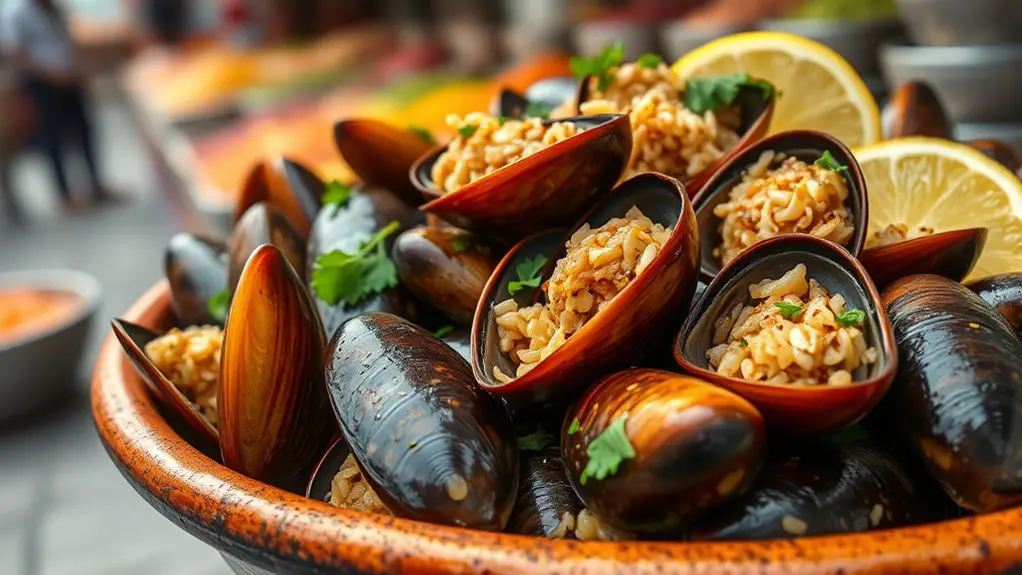
Most street food impresses you once. Midye dolma can make it surprisingly easy to reach for another. These Istanbul-style stuffed mussels combine mussel meat with seasoned rice inside the shell, usually finished with a squeeze of lemon. This guide explains what goes into them, where to look for them, how to eat and order them, and the food-safety points worth knowing before your first plate.
Quick Answer
Midye dolma are mussels stuffed with seasoned rice, cooked in their shells, and usually served with lemon. In Istanbul, look around Kadıköy, Beşiktaş, Taksim/İstiklal, Eminönü, and Karaköy or visit a dedicated mussel shop. Ask the price first, choose a well-managed seller, and remember that lemon adds flavor—it does not make unsafe shellfish safe.
Key Takeaways
- Traditional midye dolma combine mussels with seasoned rice; common ingredients include onion, olive oil, allspice, black pepper, cinnamon, herbs, currants, and pine nuts.
- You can find them at street stands and dedicated mussel shops across Istanbul, especially in busy central and waterfront districts.
- Use one half of the shell like a small scoop, add lemon if you like, and eat the mussel and rice together.
- Ask how the vendor charges before you start. Some sell by the piece, while some counters may keep track of the shells you have eaten.
- Clean presentation and high turnover are useful signs, but they do not guarantee safe sourcing or temperature control.
What’s in This Article
Disclosure: As an Amazon Associate I earn from qualifying purchases. Some links on this page are affiliate links, at no extra cost to you.
The History Behind Midye Dolma
Midye dolma is more than a quick snack. Its history reflects Istanbul’s long mix of communities, cuisines, and street-food traditions.
An academic review of Ottoman culinary sources notes references to stuffed mussels in the 19th century, including an 1888 mention in Bizans Salnamesi describing the dish among Istanbul’s Armenian community. The same research also records stuffed mussels in wider Istanbul cooking during the 19th century. Research on midye dolma in Ottoman culinary culture further describes how migrants from Mardin became increasingly important in preparing and selling the dish from the 1960s onward.
That history helps explain why there is no single filling that every Istanbul vendor follows. Recipes can differ in spice level, sweetness, herbs, and the use of pine nuts or currants while still staying recognizably midye dolma.
Key Ingredients of Midye Dolma
Midye dolma combines mussel meat with a seasoned rice filling. Official Turkish recipes show a richer ingredient list than rice and mussels alone.
Rice and Spices
A traditional recipe published by Türkiye’s Culture Portal uses rice, onion, olive oil, pine nuts, currants, cinnamon, black pepper, allspice, mint, parsley, and dill. Individual cooks and vendors adjust those proportions, so one batch may taste sweeter, more herbal, or more peppery than another.
Pine nuts and currants are traditional additions, but not every commercial version contains them. If you have a nut allergy or another dietary restriction, ask before eating because the filling is not always visible.
Warning: Midye dolma contains shellfish and is not suitable for anyone who needs to avoid mussels because of a shellfish allergy. Fillings can also contain pine nuts or other ingredients that vary by seller.
How Midye Dolma Is Typically Prepared
Preparation varies, but a traditional method starts by cleaning the shells, preparing the seasoned rice, opening the mussels without separating the two shell halves, adding the filling, closing the shells, and cooking the stuffed mussels in a covered pot. The Turkish Culture Portal recipe cooks the filled mussels over low heat for about 20 minutes.
For anyone preparing live mussels at home, the U.S. Food and Drug Administration’s shellfish guidance says to discard cracked or broken shells. A live mussel that is slightly open should close when tapped; if it does not, it should not be selected for cooking.
Warning: Appearance alone cannot prove that ready-to-eat stuffed mussels were safely harvested, cooked, cooled, stored, and handled. Microbiological studies of stuffed mussels sold in Turkey have found contamination in some samples, with poor handling and warm storage conditions identified as important concerns. Lemon should be treated as a flavoring, not a way to make questionable shellfish safe.
Note: A 2020 Food Bioscience study also detected microplastics in ready-to-eat stuffed mussels purchased from vendors in five Turkish cities. That finding concerns environmental and food-chain contamination; it should not be confused with the bacterial hygiene of one particular cart or restaurant.
Where to Find Midye Dolma in Istanbul
The official Visit Istanbul tourism guide describes midye dolma as a common street food found on busy streets across the city. Instead of looking for one supposedly perfect cart, choose the district that fits your itinerary and then compare how the food is being displayed and served.
Popular Neighborhoods to Check
- Taksim Square and İstiklal Caddesi: Central, busy areas where visitors commonly encounter Istanbul street food and late-opening food businesses.
- Kadıköy: One of the strongest food districts on the Asian side, with street-food counters, seafood businesses, markets, and dedicated mussel shops.
- Beşiktaş: A busy restaurant and nightlife district with established mussel specialists.
- Eminönü: A major transport and waterfront area where street-food options are easy to combine with sightseeing.
- Karaköy and the Galata area: Convenient for visitors exploring the historic waterfront; you can combine a snack stop with a Karaköy walking route.
- Ortaköy: Another waterfront neighborhood where food stalls and casual eating fit naturally into an evening walk.
How to Choose a Seller
Street carts change, move, and vary in quality, so it is better to use practical checks than depend on an unnamed “must-try” vendor. Look for a clean work area, protected food, organized handling, and steady turnover. Avoid trays that appear to have been sitting in strong heat for a long period.
Those checks reduce obvious risk but do not guarantee safe sourcing or storage. If food safety is your main concern, a dedicated shop with an established premises may make it easier to assess cleanliness and ask questions about preparation.
Traditional Flavor Differences
Midye dolma recipes genuinely vary, but the most defensible differences are much simpler than novelty fillings:
- More or fewer currants: Changes the sweet-savory balance of the rice.
- Pine nuts: Add richness and a light crunch when included.
- Herb level: Dill, parsley, and mint can make one filling taste noticeably fresher than another.
- Spice level: Black pepper, allspice, cinnamon, and other seasonings vary by cook.
- Mardin-influenced styles: Historical research describes later Mardin-associated versions as generally spicier than earlier Armenian-style preparations.
Dedicated Mussel Shops in Istanbul
If you prefer a fixed storefront instead of a street cart, several dedicated mussel businesses currently operate around greater Istanbul. Listings, menus, and hours can change, so check the venue on the day you plan to visit.
| Shop | Area | What to Know |
|---|---|---|
| Midyeci Ahmet | Beşiktaş | Established dedicated mussel shop with a current Beşiktaş branch page. |
| Midyeci Selim | Tuzla | Current official site lists its Tuzla location and midye dolma among its specialties. |
| Midyeci Şükrü | Sancaktepe | Currently listed as a restaurant serving midye dolma and other street-food dishes. |
| Kadıköy Midyecisi | Kadıköy | A dedicated seafood and mussel stop in central Kadıköy. |
Pro Tip: If a mussel shop also serves midye tava, try it alongside midye dolma. Midye tava is a separate Turkish preparation of fried mussels, commonly served with tarator sauce, so it gives you a very different texture from the rice-stuffed version.
Variations and Midye Tava
There is room for variation without turning every unusual mussel dish into a traditional Istanbul specialty. The core identity of midye dolma remains mussel meat and seasoned rice cooked together in the shell.
- Sweeter filling: More currants or a touch of sugar can move the rice toward the sweeter side of the traditional sweet-savory balance.
- Nuttier filling: Pine nuts may be more prominent in some recipes and absent from others.
- Herb-forward filling: Dill, parsley, or mint can be emphasized.
- Spicier filling: Some versions use a stronger pepper and spice profile.
- Midye tava: Fried mussels are a separate classic preparation rather than rice-stuffed midye dolma.
You may occasionally see restaurants experiment with nontraditional ingredients. Treat quinoa, cheese, extra seafood, or elaborate sauces as modern reinterpretations rather than standard Istanbul midye dolma unless the menu clearly describes them that way.
Pairing Midye Dolma With Traditional Drinks
There is no required drink pairing, but the salty mussel, warm spices, rice, and lemon work with several familiar Turkish beverages.
Midye dolma is usually at its best when the drink stays simple and lets the lemon, mussel, and seasoned rice remain the focus.
Raki is one option for adults who drink alcohol, particularly in a longer seafood meal. For an alcohol-free choice, ayran gives you a cool, salty yogurt drink, while şalgam offers a sharper fermented flavor. Water is also a perfectly good choice when you are eating several mussels in succession.
Tips for Enjoying Midye Dolma in Istanbul
- Ask the price first: Confirm whether the shop charges per mussel, by portion, or in another format before eating.
- Look beyond crowd size: High turnover can be useful, but also pay attention to cleanliness, food protection, handling, and how long the product appears to have been sitting out.
- Be more cautious in hot weather: Research on stuffed mussels has linked poor sanitary practices and higher ambient temperatures with greater microbiological risk.
- Use lemon for taste: A squeeze of lemon brightens the rice and mussel, but it cannot rescue shellfish that was unsafely sourced, stored, or handled.
- Know your allergens: Mussels are shellfish, and fillings may also contain pine nuts or other ingredients depending on the recipe.
- Do not rely on smell alone: An unpleasant sour, rancid, strongly fishy, or ammonia-like odor is a reason not to eat seafood, but normal smell does not prove that it is safe.
How to Order and Eat Midye Dolma
Midye dolma is casual, hands-on food. Once the shell is opened, use one half like a small spoon to lift the mussel and rice from the other half. Add lemon if you want it, then eat the filling together so you get the seafood, rice, herbs, and spices in one bite.
| What to Do | Why |
|---|---|
| Ask the price before starting | Ordering and billing systems vary between carts and shops. |
| Use the upper shell as a scoop | It is the easiest traditional way to lift the filling. |
| Keep shells nearby until you pay | Some vendors count empty shells to track how many pieces you ate. |
| Tell the vendor when you have enough | At counters that serve mussels one at a time, service may continue until you stop. |
| Use lemon to suit your taste | It is a classic finishing flavor, not a food-safety treatment. |
Shell counting is common enough to know about, but it is not a rule at every seller. When in doubt, ask before the first mussel is opened. That also prevents surprises when prices are changing quickly.
Finding Midye Dolma Beyond Istanbul
Midye dolma is strongly associated with Istanbul, but it is not confined to the city. Turkish culinary sources describe it in other coastal areas, and research on ready-to-eat stuffed mussels has sampled vendors in several Turkish cities.
- İzmir: One of the best-documented centers for stuffed mussels outside Istanbul, with a long street-food and home-cooking tradition.
- Bodrum: Stuffed mussels are sold here as part of the broader Aegean seafood scene; Bodrum was also included in a 2020 study of commercially sold midye dolma.
- Çeşme: You may encounter midye dolma around busy food and visitor areas, but recipes vary by seller rather than following one proven city-specific filling.
- Antalya: Availability depends on the venue; there is no authoritative basis for assuming that Antalya midye dolma follows a standard sweeter recipe.
- Trabzon: Mussel dishes may appear, but a distinctive “Black Sea herb” midye-dolma recipe should not be treated as a regional standard without evidence from the individual seller.
- Marmaris: You may find stuffed mussels in tourist and seafood areas, but grilled mussels should be treated as a separate preparation rather than a defining Marmaris form of midye dolma.
The dish also travels beyond coastal destinations. A 2020 market study sampled ready-to-eat stuffed mussels in Istanbul, Ankara, İzmir, Bodrum, and Adana, showing that commercial availability extends well beyond one city or coastline.
Frequently Asked Questions
What is the best time to try midye dolma in Istanbul?
There is no reliable citywide “best hour.” Street-cart schedules vary, and dedicated shops can stay open for long periods. Focus more on how actively the seller is serving food, how the mussels are protected and handled, and whether they appear to have been sitting in warm conditions for a long time.
Can midye dolma be vegetarian or vegan?
Traditional midye dolma cannot be vegetarian or vegan because the dish contains mussels. Restaurants can create plant-based imitations using a similar seasoned rice filling, but those are adaptations rather than traditional mussel dolma.
How much does midye dolma cost in Istanbul?
There is no dependable citywide price because vendors, sizes, neighborhoods, and restaurant menus differ, and prices can change quickly. Ask for the current per-piece or portion price before the vendor begins serving you.
Are there food-safety concerns with street-vendor midye dolma?
Yes. Published studies of ready-to-eat stuffed mussels in Turkey have found microbial contamination in some samples, particularly where sanitary handling or temperature control was inadequate. Choose a clean, well-managed seller and avoid food that appears to have spent a long time exposed to heat. Lemon improves flavor but does not make contaminated shellfish safe.
How should I dispose of the shells after eating?
At a cart or counter, leave the shells where the vendor directs until you have paid because some sellers use them to count your order. Away from the shop, use the local waste system. Do not assume mussel shells belong in household compost unless your local composting service specifically accepts shellfish shells.
How do you eat midye dolma correctly?
Open the shell, squeeze on lemon if you want it, and use one shell half like a spoon to scoop the mussel and rice from the other. Eating the filling together in one bite gives you the intended balance of seafood, rice, herbs, spices, and lemon.
What is the difference between midye dolma and midye tava?
Midye dolma are mussels filled with seasoned rice and cooked in the shell. Midye tava are fried mussels and are commonly served with tarator sauce. They use the same shellfish but deliver very different textures and flavors.
Your Next Step
Midye dolma is at its best when you treat it as both food and part of Istanbul’s street culture. Start with a seller that looks organized, ask the price before the first shell opens, and try only a few pieces until you know which spice balance you prefer. Kadıköy, Beşiktaş, Taksim, Eminönü, and Karaköy all give you plenty of other food and sightseeing options nearby, so there is no need to chase one supposedly perfect cart across the city.
Once the mussel is in your hand, the ritual stays simple: open, add lemon if you like, scoop with the shell, and eat the rice and mussel together. That combination—not an invented topping or a particular address—is what makes midye dolma such a recognizable Istanbul snack.
Sources
- Visit Istanbul — Midye Dolma — official Istanbul tourism overview of the dish, its preparation, and its street-food presence.
- Türkiye Culture Portal — Midye Dolma — traditional ingredients and preparation method from the Çanakkale Provincial Directorate of Culture and Tourism archive.
- Stuffed Mussels in Turkish Culinary Culture: Ottoman Empire Period — academic review supporting the historical discussion, including Armenian and Mardin-linked traditions.
- The Microbiological Quality of Stuffed Mussels Sold in Istanbul — 2008 British Food Journal research on microbiological quality of ready-to-eat midye dolma.
- U.S. Food and Drug Administration — Selecting and Serving Fresh and Frozen Seafood Safely — shellfish selection, tap-test, cooking, odor, and handling guidance.
- Stuffed With Microplastics: Microplastic Occurrence in Traditional Stuffed Mussels Sold in the Turkish Market — 2020 Food Bioscience study separating environmental microplastic findings from ordinary vendor-hygiene claims.
