
Last Updated on July 25, 2026 by Daniel Globe
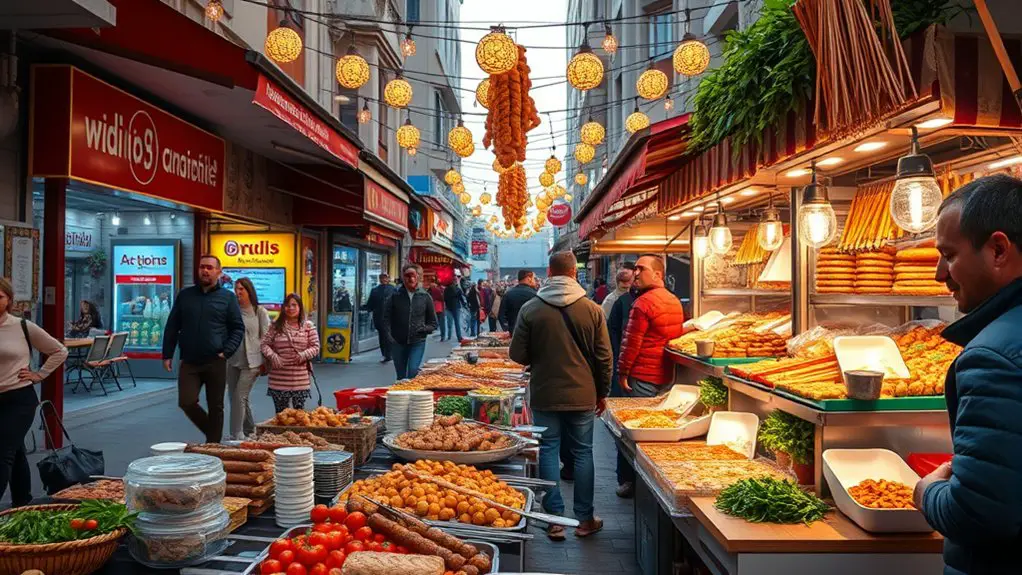
Şişli is one of Istanbul’s busiest urban districts, so it is a convenient place to sample everyday Turkish street food between shopping, sightseeing, and metro stops. You can find classics such as simit, döner, köfte, börek, çiğ köfte, stuffed mussels, pilav, and sweets. Just remember that a few famous Istanbul foods, including balık ekmek and kumpir, are more strongly associated with other districts even though versions may be available around Şişli.
Quick Answer
For street food in Şişli, start with simit, döner, köfte, börek, meatless çiğ köfte, midye dolma, and tavuklu nohutlu pilav. Balık ekmek and kumpir are worth trying too, but they are citywide favorites rather than signature Şişli foods. Choose busy, clean vendors and favor food that is freshly cooked and served hot.
Key Takeaways
- Simit, döner, köfte, börek, çiğ köfte, pilav, and midye dolma are easy foods to look for while exploring busy parts of Şişli.
- Commercial çiğ köfte is typically a meatless bulgur preparation even though traditional regional versions historically used raw meat.
- Balık ekmek is more closely associated with Istanbul’s waterfront areas, while Ortaköy is especially famous for kumpir.
- Street-food hours, prices, and payment methods vary by vendor, so check before ordering and keep some Turkish lira available.
- For safer eating, favor food cooked thoroughly and served hot, and be especially selective with shellfish and other foods held after cooking.
Disclosure: As an Amazon Associate I earn from qualifying purchases. Some links on this page are affiliate links, at no extra cost to you.
Where to Find Street Food in Şişli
Street food in Şişli is less about one famous food street and more about following busy commercial and transit areas. Mecidiyeköy, Osmanbey, Feriköy, Harbiye, Teşvikiye, and the wider Nişantaşı area all see heavy pedestrian traffic, so you may encounter bakeries, small döner shops, büfe-style counters, dessert sellers, and mobile food carts as you explore.
Weekly neighborhood markets can also be useful places to experience local shopping culture. The Şişli Municipality market list currently includes the Mecidiyeköy market on Sunday and Feriköy’s neighborhood market on Monday and Thursday, along with several markets in other Şişli neighborhoods. Market schedules and vendors can change, so check the municipality’s current listing before making a special trip.
Note: A food can be common across Istanbul without being a specialty of Şişli. This guide focuses on foods you may reasonably encounter while staying in or exploring the district and points out when another neighborhood is more famous for a particular dish.
Simit: The Iconic Sesame Bread Ring
Simit is one of the easiest Turkish foods to eat on the move. The ring-shaped bread is coated generously with sesame seeds and usually has a crisp exterior with a pleasantly chewy center.
Rather than looking for elaborate variations, start with a freshly baked plain simit. It works as a light breakfast, snack, or quick bite between stops. Some bakeries and cafés also serve it with cheese, olives, or other breakfast accompaniments.
Pairing simit with a glass of çay, or Turkish tea, is a simple way to enjoy it. Freshness matters: a recently baked simit should have more crunch and aroma than one that has been sitting out for hours.
Pro Tip: For simit, a busy bakery or cart with frequent turnover is usually a better bet than choosing based on toppings. The basic bread is the attraction.
Köfte: Savory Turkish Meatballs
Köfte is a broad family of Turkish meatball dishes rather than one single recipe. Versions commonly combine ground meat with seasonings, and preparation varies by cook and region.
For a street-style meal, köfte is at its best when it is cooked through, served hot, and paired simply with bread, onions, peppers, pickles, or salad.
In Şişli, you are more likely to encounter köfte from a small grill, takeaway counter, or casual restaurant than from a roaming cart. Grilling gives the outside a browned surface while keeping the center moist when cooked properly.
Köfte ekmek, in which the meatballs are tucked into bread with simple accompaniments, is particularly convenient when you want a filling meal without sitting down for a long lunch.
Döner: A Flavorful Wrap Experience
Döner is one of Istanbul’s most recognizable quick meals. Its name is linked to the turning cooking method: seasoned meat is stacked on a vertical rotating spit, browned by heat, and shaved from the cooked exterior.
According to GoTürkiye’s guide to Istanbul street food, döner may be prepared with beef, lamb, or chicken and served in bread, thin flatbread, or on a plate.
For a portable meal, dürüm-style döner wraps are especially convenient. Fillings vary, so you may get lettuce, tomato, onion, pickles, or sauce depending on the shop.
Avoid judging döner only by the number of toppings. Freshly shaved meat, a hot serving temperature, and bread that is not soggy usually matter more than an oversized list of sauces.
Balık Ekmek: Istanbul’s Fish Sandwich
Balık ekmek literally means “fish bread.” The familiar Istanbul version places grilled or fried fish inside bread with simple additions such as onion, greens, and lemon.
Fish provides protein, and oily species such as mackerel can also provide omega-3 fatty acids. The exact nutrition of a balık ekmek depends on the species, portion, cooking method, bread, and toppings.
Note: Balık ekmek is an Istanbul classic, but it is more strongly associated with waterfront areas such as Eminönü than with Şişli. Keep it on your food list, but do not feel that you missed an essential Şişli specialty if you eat it elsewhere in the city.
Presentation can vary considerably by vendor:
| Style | What to Expect | Common Extras |
|---|---|---|
| Classic grilled | Grilled fish in crusty bread | Onion, greens, lemon |
| Fried | Fried fish served in bread | Lemon, cabbage, salad |
| Spicy | A standard sandwich with extra heat | Chili or pepper, where offered |
| Extra salad | More vegetables than the basic version | Onion, tomato, greens, pickles |
| Restaurant-style | A more dressed-up interpretation | Vendor-specific sauces and garnishes |
Börek: Delicious Savory Pastries
Börek is one of the most practical choices when you want something quick but more substantial than simit. These layered or rolled pastries can be crisp at the edges while staying soft around the filling.
Three common fillings worth looking for are:
- Spinach and Cheese: A savory combination that works well for travelers looking for a meat-free option.
- Ground Meat: A richer version with seasoned minced meat inside the pastry.
- Potato: A mild, filling option wrapped in layers of pastry.
Börek is often easiest to find at bakeries and börek shops in the morning and around lunchtime. A slice with tea or ayran makes an inexpensive-feeling, straightforward meal without needing a full restaurant experience.
Midye Dolma: Stuffed Mussels
Midye dolma consists of cooked mussels filled with seasoned rice. Traditional preparations can include ingredients such as onion, pine nuts, currants, herbs, and warm spices. The Turkish Ministry of Culture’s Culture Portal documents a version made with rice, onion, pine nuts, currants, cinnamon, herbs, and olive oil.
They are normally served in the shell, often with lemon squeezed over the top. The briny mussel and aromatic rice make midye dolma one of Istanbul’s most distinctive handheld snacks.
Because shellfish requires careful handling and temperature control, vendor selection matters more here than it does for a dry food such as simit.
Warning: Be more cautious with street-vended shellfish than with food cooked in front of you and served steaming hot. If the mussels appear to have been sitting for a long time, the display is exposed or dirty, or you are especially vulnerable to foodborne illness, choose another food.
Çiğ Köfte: Spicy Bulgur Wraps
Çiğ köfte literally carries the idea of “raw köfte,” and traditional regional recipes historically included raw meat. However, the version a visitor is most likely to encounter from modern takeaway counters is a meatless bulgur mixture flavored with pepper paste, spices, herbs, and other seasonings.
That distinction matters because describing today’s common street-food version simply as “raw meatballs” is misleading. Turkish food rules also restrict food-service businesses from selling raw meat and raw prepared meat mixtures directly to final consumers.
Ingredients and Preparation
Recipes vary, but a meatless street-style çiğ köfte commonly centers on fine bulgur that is kneaded with strongly flavored ingredients until it becomes cohesive.
- Fine Bulgur: Provides the body and characteristic texture.
- Pepper and Spices: Pepper paste, chili, cumin, or other seasonings may create anything from mild warmth to serious heat.
- Oil, Herbs, and Acid: Olive oil, herbs, lemon, or pomegranate-based sauces can add richness, freshness, and tartness depending on the seller.
The mixture is kneaded thoroughly rather than cooked like conventional meatballs.
Popular Serving Styles
A common way to eat çiğ köfte is wrapped in thin lavash with lettuce and herbs. Another is to eat individual portions in lettuce leaves.
Lemon and pomegranate molasses or pomegranate sauce may be offered for extra acidity and sweetness. Pickles can provide a crisp contrast.
Pro Tip: Çiğ köfte is one of the easiest substantial street-food choices for vegetarians, but ask about sauces and accompaniments if you follow a strict vegan diet.
Kumpir: Loaded Baked Potatoes
Kumpir turns a large baked potato into a customizable meal. The hot potato is split open, and its soft interior is usually mixed with butter and cheese before toppings are added.
Kumpir is a famous Istanbul street food, but Ortaköy—not Şişli—is the neighborhood most closely associated with rows of kumpir sellers.
You can build a simple or heavily loaded version depending on what the vendor offers. Three familiar topping directions are:
- Cheese and Butter: The classic creamy base.
- Olives and Pickles: Adds salt, acidity, and crunch.
- Sausage and Corn: A more filling combination for meat eaters.
Vegetarians can skip sausage and choose from vegetable, olive, corn, pickle, and similar toppings. If kumpir is high on your Istanbul food list, the official GoTürkiye Istanbul street-food guide specifically recommends experiencing it in Ortaköy.
Kokoreç: A Late-Night Istanbul Classic
Kokoreç is one of Istanbul’s more adventurous street foods. It is made from carefully cleaned sheep intestines cooked over heat, chopped, seasoned, and commonly served in bread.
Seasonings can include salt, black pepper, chili, and herbs. The result is rich, strongly flavored, and quite different from döner or köfte.
GoTürkiye describes kokoreç as especially popular as a late-night food. In Şişli, look for established kokoreç shops or busy takeaway counters rather than assuming every street cart will carry it.
Tavuklu Nohutlu Pilav: Chicken, Chickpeas, and Rice
Tavuklu nohutlu pilav is a simple but satisfying Istanbul street meal built around rice, chickpeas, and pieces of cooked chicken. It is often sold from compact counters or recognizable pilav carts.
The appeal is its simplicity: warm rice provides the base, chickpeas make it more filling, and chicken adds extra protein. Some sellers offer pickles, ayran, or other sides.
For food safety, choose a seller where the rice and chicken are being kept properly hot rather than sitting lukewarm for long periods.
Dondurma: Traditional Turkish Ice Cream
Dondurma is the Turkish word for ice cream, but the especially stretchy style associated with Maraş is known for a dense, elastic texture.
Traditional versions can use salep, a powder produced from orchid tubers. Research from Kahramanmaraş Sütçü İmam University describes salep as a traditional ingredient and natural stabilizer in the ice-cream industry. The same research notes conservation concerns surrounding unsustainable collection of some wild orchid species.
Not every ice cream marketed to visitors will contain genuine salep, so it is better to describe this as a feature of traditional Maraş-style dondurma rather than a guarantee for every cone.
Some vendors also turn serving into a performance, using long-handled paddles to stretch, spin, or briefly pull the cone away before finally handing it over.
Lokma: Sweet Fried Dough Treats
Lokma consists of small pieces of fried dough finished with syrup. Fresh batches offer the best contrast between a lightly crisp exterior and soft center.
You may encounter several presentations:
- Classic Lokma: Fried dough coated or soaked in syrup.
- Chocolate-Topped Lokma: A modern dessert-shop variation with chocolate sauce.
- Nut-Topped Lokma: Finished with crushed nuts for extra texture.
Lokma is best treated as a fresh fried sweet rather than a dessert to carry around for hours—the texture is most appealing soon after frying.
How to Choose Street Food More Safely
Street food can be one of the highlights of Istanbul, but no neighborhood or vendor type can guarantee that food is risk-free. The CDC Yellow Book advises travelers to be cautious with street-vended food and notes that thoroughly cooked food served hot is generally a safer choice than raw or undercooked food.
The World Health Organization’s street-food safety guidance also emphasizes clean equipment, handwashing, potable water, and separation of raw and cooked foods.
- Prefer food cooked in front of you. Döner, köfte, kokoreç, or other hot foods should arrive properly hot rather than lukewarm.
- Look at the work area. Clean utensils, covered ingredients, and orderly handling are better signs than a messy counter.
- Be selective with shellfish. Midye dolma deserves extra caution because it is cooked before being displayed and served.
- Favor turnover. A busy operation that constantly prepares fresh batches is generally preferable to food that appears to have been sitting for an unknown period.
- Use your judgment. If food smells wrong, looks poorly stored, or the vendor’s handling makes you uncomfortable, skip it.
Frequently Asked Questions
Where can I find good street food in Şişli?
Start around busy commercial and transit areas such as Mecidiyeköy, Osmanbey, Feriköy, Harbiye, and the wider Nişantaşı/Teşvikiye area. Rather than searching only for carts, include bakeries, büfe-style counters, döner shops, pilav sellers, and small takeaway businesses. Şişli Municipality also publishes the current days and locations of neighborhood markets.
What are the operating hours for street-food stalls in Şişli?
There is no single schedule. Bakeries may open early, lunch-focused counters are busiest during the day, and some döner or kokoreç businesses stay open much later. Mobile carts can also change location or hours. Check the individual vendor before making a special trip rather than assuming every stall operates until midnight.
Are vegetarian street-food options available in Şişli?
Yes. Useful choices include simit, spinach-and-cheese or potato börek, meatless çiğ köfte, and kumpir with vegetable toppings. Ingredients vary, so ask about cheese, butter, sauces, and cooking fats if you follow a vegan or otherwise strict diet.
How safe is it to eat street food in Şişli?
Food safety varies by vendor, so no blanket guarantee is appropriate. Favor clean, busy businesses; choose food that is thoroughly cooked and served hot; and be more cautious with shellfish, raw ingredients, and foods that appear to have been sitting at room temperature. CDC travel guidance specifically recommends greater care with street-vended food.
What payment methods do street-food vendors in Şişli accept?
Payment options vary. Fixed shops and larger kiosks may accept cards or contactless payments, while small carts may prefer or require cash. Carrying some Turkish lira in smaller denominations is useful, and it is smart to confirm payment options before ordering.
Is balık ekmek a Şişli specialty?
Not especially. You may find fish sandwiches around Şişli, but balık ekmek is much more strongly connected with Istanbul’s waterfront food culture, particularly Eminönü. Likewise, kumpir is especially famous in Ortaköy. You can enjoy both during an Istanbul trip without treating them as foods you must specifically eat in Şişli.
Conclusion
Şişli gives you plenty of opportunities to sample everyday Istanbul flavors without turning every meal into a restaurant stop. Start with simple staples such as simit, döner, köfte, börek, çiğ köfte, and pilav, then branch out to midye dolma, kokoreç, dondurma, and lokma. Keep the geography in perspective: foods such as balık ekmek and kumpir are famous across Istanbul but have stronger associations with other neighborhoods. Wherever you eat, freshness, clean handling, and proper serving temperature matter as much as the dish you choose.
Sources
- GoTürkiye — Istanbul Street Food — official tourism guidance on Istanbul street foods including döner, midye dolma, pilav, and kumpir.
- T.C. Şişli Belediyesi — Pazar Yerleri — current Şişli neighborhood market locations and market days.
- Republic of Türkiye Ministry of Agriculture and Forestry — Meat and Meat Products Regulation Guidance — rules concerning raw meat and prepared raw meat mixtures in food-service settings.
- World Health Organization — Food Safety in Street Food Vending — hygiene, potable water, clean equipment, and separation of raw and cooked food.
- CDC Yellow Book — Food and Water Precautions for Travelers — current travel food-safety guidance.
- Kahramanmaraş Sütçü İmam University — Salep: The Name of the Plant, Powder, Hot Beverage, Food Ingredient — salep’s traditional use in ice cream and orchid-conservation considerations.
