
Last Updated on July 25, 2026 by Daniel Globe
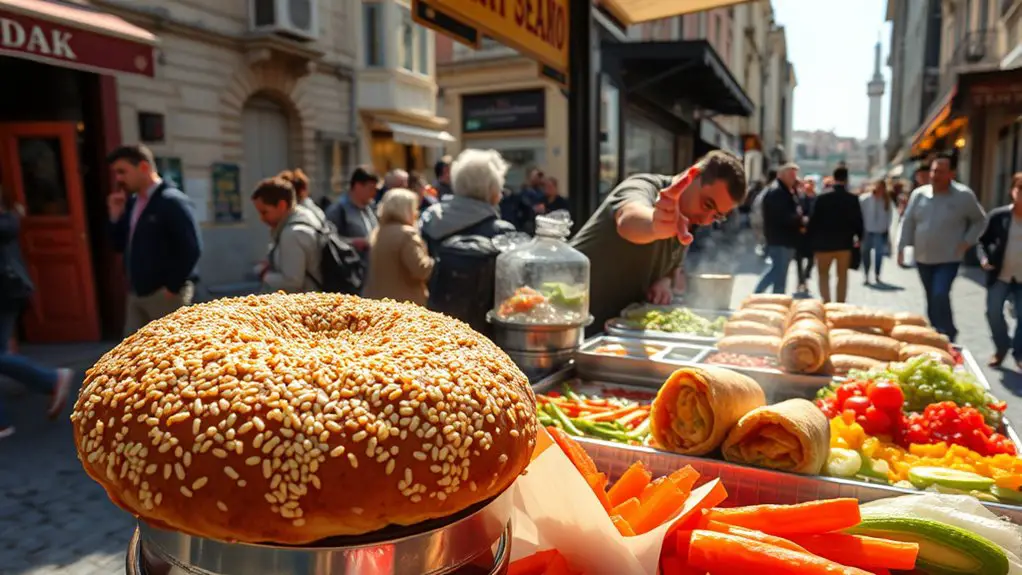
Karaköy is one of Istanbul’s easiest neighborhoods for sampling quick Turkish food while exploring the waterfront, Galata Bridge, ferry area, and surrounding backstreets. Start with a crisp sesame-coated simit, then move on to balık ekmek, freshly shaved döner, midye dolma, lahmacun, or flaky börek. Not every dish is literally sold from a cart—many of Istanbul’s best “street foods” come from small bakeries, counters, and fast-moving local shops.
Quick Answer
The best street foods to try in Karaköy include simit, balık ekmek, döner, midye dolma, lahmacun, börek, and meatless çiğ köfte. Start near the waterfront for fish, then explore the backstreets for bakeries and quick-service shops. Kumpir is also worth trying, although it is more closely associated with Ortaköy.
Key Takeaways
- Simit is the easiest traditional snack to grab on the go and one of Istanbul’s most recognizable foods.
- Balık ekmek is especially fitting around the Karaköy waterfront and Galata Bridge area.
- Döner, lahmacun, and börek are filling choices when you want a quick meal rather than a small snack.
- Midye dolma is a classic seafood snack, but choose a busy, reputable seller and pay attention to food handling.
- Commercial çiğ köfte is usually meatless, made mainly from bulgur, pepper paste, spices, and other plant-based ingredients.
- Prices vary sharply by portion, seller, and location, so check the displayed price before ordering.
Disclosure: As an Amazon Associate I earn from qualifying purchases. Some links on this page are affiliate links, at no extra cost to you.
Where to Find Street Food in Karaköy
The waterfront is the natural place to start. Official Turkish tourism guidance specifically identifies the waterside around Karaköy and Eminönü as a well-known area for balık ekmek. Around the ferry connections and Galata Bridge, fish sandwiches and other quick seafood options are easy to spot.
From there, walk into the streets behind the waterfront. This is where bakeries, döner counters, börek shops, çiğ köfte sellers, casual eateries, and dessert counters broaden the experience beyond food carts.
Pro Tip: Do not judge a place only by whether it has a street cart. In Istanbul, many foods visitors call “street food” are served from tiny fixed shops and takeaway counters. Look for steady customer turnover, food prepared in front of you, and clearly displayed prices.
Simit: The Iconic Turkish Sesame Bread Ring
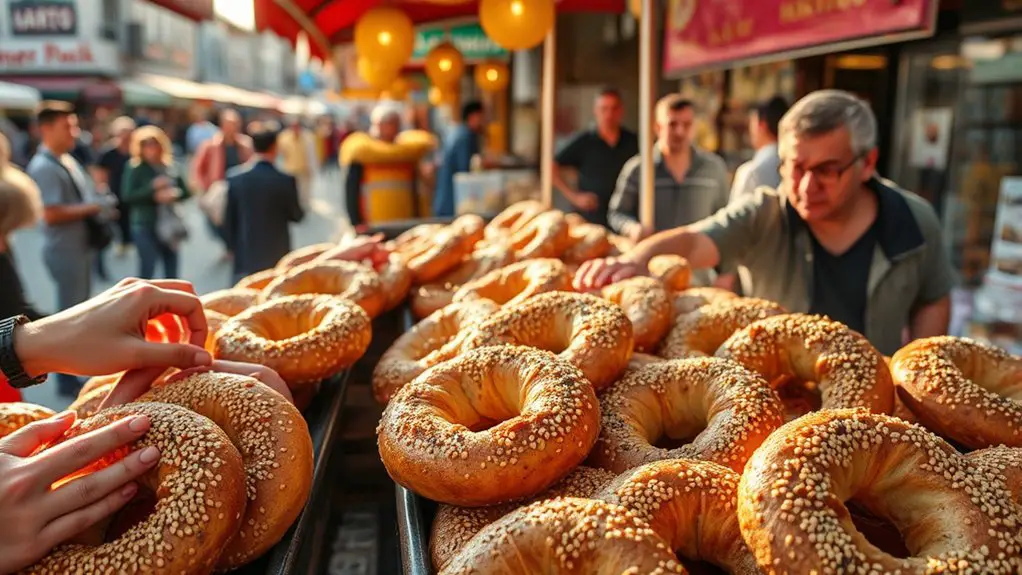
Simit is one of the simplest and most recognizable foods you can eat in Karaköy. Rather than a true bagel, it is a ring-shaped Turkish bread with a browned exterior and a generous sesame coating. Many versions are dipped in a molasses mixture before baking, which helps create their characteristic color and flavor.
Its connection with Istanbul goes back centuries. The Istanbul Governor’s street-food history notes a record of simid-i halka from 1593, making simit more than a convenient modern snack.
Simit has been documented in Istanbul for more than four centuries, with a recorded reference to simid-i halka dating to 1593.
You will see simit sold from bakeries, counters, and carts. The classic Istanbul version is sesame-coated. Some sellers turn it into a more substantial breakfast by adding cheese, while others serve it alongside olives, tea, or sweet spreads.
For a quick start to the day, order one fresh and pair it with Turkish tea. It is inexpensive compared with most full meals, easy to carry, and gives you a genuine taste of everyday Istanbul food culture.
Balık Ekmek: Grilled Fish Sandwich
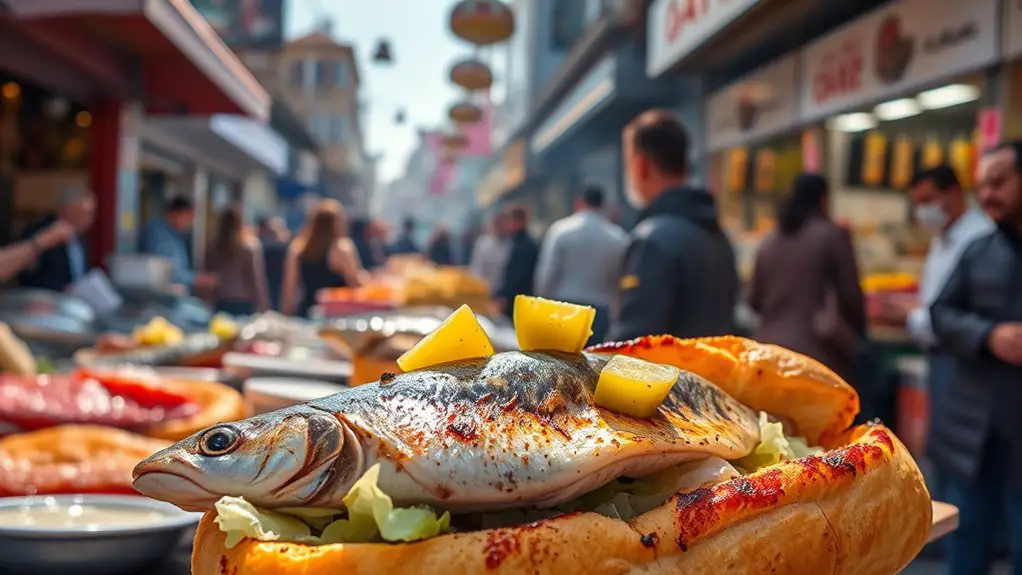
Balık ekmek, literally “fish bread,” is one of the most natural foods to seek out near Karaköy’s waterfront. GoTürkiye lists it among Istanbul’s best-known street foods and specifically points to the Karaköy and Eminönü waterfronts.
The basic idea is straightforward: freshly cooked fish goes into bread with simple vegetables and seasonings. Tomato, onion, salad greens, and lemon are common companions. The fish species can vary by seller and supply, so do not assume every sandwich contains the same type of fish.
A good balık ekmek should let the fish remain the main flavor. Lemon adds acidity, while onions, greens, or pickled vegetables provide crunch. Some vendors also offer chili or other sauces, but these are optional rather than essential to the traditional experience.
Eat it while it is hot. Part of the appeal is the contrast between freshly cooked fish, crisp vegetables, and bread while you are standing only steps from the Golden Horn and Bosphorus connections.
Döner: The Classic Rotating Kebab
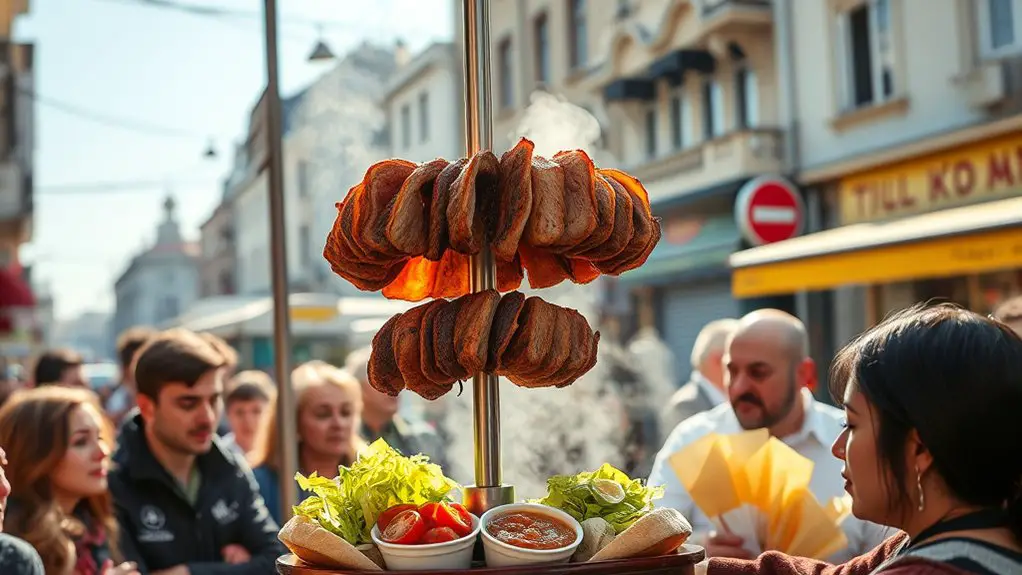
Döner is one of Türkiye’s best-known quick meals. Meat is stacked on a vertical rotisserie, slowly browned as the spit turns, then shaved from the cooked outer surface. GoTürkiye describes döner as meat and spices cooked on a vertical rotisserie and sliced as the exterior roasts.
In Karaköy, you may see beef, lamb, chicken, or combinations depending on the shop. A döner sandwich or dürüm is a practical choice when you need something more filling than simit or mussels.
Meat Selection and Preparation
Döner recipes differ from shop to shop. Some use layered slices of meat, while others use mixtures permitted for particular döner styles. Seasonings and marinades also vary, which is why two neighboring shops can taste quite different.
The defining feature is the cooking method. Only the browned exterior is shaved for serving while the remaining stack continues cooking. When choosing a shop, look for meat being actively cooked and sliced rather than portions sitting lukewarm for long periods.
Serving Styles and Toppings
You can order döner inside bread, wrapped in a dürüm, or served on a plate with rice or other sides. Bread and dürüm versions are the easiest to eat while exploring Karaköy.
Common accompaniments can include tomato, onion, pickles, peppers, or greens. Sauces vary by business. Garlic and chili sauces may be available, but they are not required for a traditional Istanbul-style döner.
For your first order, keep the toppings fairly simple so you can taste the meat itself. You can always add more spice afterward.
Midye Dolma: Stuffed Mussels
Midye dolma are cooked mussels filled with seasoned rice and served in their shells. They are especially easy to eat while standing: open the shell, squeeze over lemon, and use one half of the shell to scoop out the filling.
GoTürkiye describes midye dolma as an İzmir specialty that became popular across Türkiye, especially Istanbul. They are now one of the city’s most recognizable quick seafood snacks.
Warning: Shellfish deserves extra care. Choose a busy, reputable seller with good turnover and clean handling practices. General CDC travel guidance recommends choosing fully cooked foods served hot and being cautious with raw or undercooked shellfish and food that has been held at unsafe temperatures.
Preparation and Ingredients
The filling is based on rice seasoned with herbs and spices. Recipes vary and may include onion, parsley, allspice, black pepper, and other aromatics. The filled mussels are then cooked until the rice is tender and has absorbed the surrounding flavors.
If you are making midye dolma yourself, fresh mussels need careful cleaning and proper shellfish handling. For travelers in Karaköy, however, buying from an established seller is far more practical than trying to reproduce the preparation.
Serving Suggestions and Pairings
Fresh lemon is the classic finishing touch. Its acidity cuts through the seasoned rice and briny mussel flavor without hiding it.
Ayran works well as a refreshing nonalcoholic drink. Some diners may prefer Turkish wine with seafood, while others simply pair the mussels with water or another cold drink.
Crusty bread can turn the snack into something more substantial, although many people simply eat midye dolma one after another straight from the shell.
Lahmacun: Thin Turkish Flatbread
Lahmacun is sometimes called “Turkish pizza” as a quick comparison, but it has its own preparation and eating style. A very thin piece of dough is topped with a finely minced mixture containing meat, vegetables, herbs, and seasonings, then baked until the base is crisp around the edges.
GoTürkiye describes lahmacun as thin dough covered with mincemeat and herbs. Beef or lamb may be used depending on the recipe.
It is commonly finished with parsley, lemon, and sometimes other fresh vegetables. Roll it up before eating and pair it with ayran for a quick, satisfying meal.
Lahmacun is particularly useful when you want something freshly baked and more filling than a snack but do not want a long restaurant meal.
Börek: Savory Pastry Delights
Börek brings flaky pastry into the Karaköy food crawl. Rather than one fixed recipe, the name covers a family of pastries prepared in different shapes and with different fillings.
Common savory fillings include cheese, spinach, minced meat, or potato. Some versions are rolled, while others are layered in large trays and sliced into portions.
The ideal piece combines crisp or flaky outer layers with a soft filling. Börek is especially good at breakfast or as a mid-morning snack, and yogurt or tea can make it more substantial.
You may encounter sweet pastries elsewhere in Istanbul, but syrup-soaked pastries filled with nuts belong more naturally to the baklava tradition than to the standard savory börek you are likely to order for breakfast or lunch.
Kumpir: Loaded Baked Potatoes
Kumpir turns a large baked potato into a customizable meal. The hot potato is opened and its center is mashed with butter and cheese until creamy. Then you choose from a wide range of toppings such as olives, corn, pickles, vegetables, salads, sausage, mayonnaise, ketchup, or other sauces.
You may come across kumpir in different parts of Istanbul, including areas around central tourist districts, but there is an important geographic distinction.
Note: Kumpir is an Istanbul street-food classic, but official Turkish tourism guidance identifies Ortaköy as its iconic destination. Try it in Karaköy if you find a good version, but go to Ortaköy if kumpir itself is a priority.
The appeal is customization. One potato can be mild and vegetable-heavy while the next is loaded with sausage, pickles, sauces, and rich salads. Because the toppings add up quickly, ask about the price structure before building an especially elaborate one.
Çiğ Köfte: Spicy Bulgur Bites
The name çiğ köfte literally refers to “raw köfte,” and traditional recipes historically included raw meat. That description, however, can mislead modern visitors deciding what to buy from an Istanbul fast-food counter.
The commercial version you are most likely to encounter is meatless. GoTürkiye notes that meat-free versions became widespread for health and food-safety reasons.
Modern versions are generally built around fine bulgur kneaded with pepper or tomato pastes, spices, herbs, and other seasonings. The mixture can be quite spicy and has a dense, slightly chewy texture.
Order it in lettuce leaves or wrapped in thin lavaş with greens, lemon, and sometimes pomegranate sauce. It is also one of the easier substantial choices for travelers avoiding meat, although you should still confirm ingredients and cross-contact if you follow a strict vegan diet.
Other Istanbul Street Foods to Look For
Karaköy’s offerings change by season and street, so do not limit yourself to the headline dishes. Istanbul’s official street-food guide also highlights several simple foods that appear across the city.
- Roasted chestnuts: Especially appealing in cooler weather, when chestnut carts become more common.
- Boiled or roasted corn: A simple snack sold around busy squares and pedestrian areas.
- Tavuklu or nohutlu pilav: Rice with chicken and/or chickpeas, often served from quick counters or glass-fronted carts.
- Tantuni: Thinly chopped seasoned meat wrapped in bread or lavaş; availability varies by shop.
- Kokoreç: A strongly flavored grilled offal specialty for adventurous eaters. Choose an established shop with active turnover.
- Lokma or baklava: For something sweet after the savory dishes. These are more often bought from dessert shops or counters than conventional street carts.
Karaköy Street Food Prices in 2026
Istanbul food prices change quickly, and Karaköy is a central visitor area where the same dish can cost much more at one business than another. There is no useful single “average street-food price.”
As a practical 2026 planning snapshot, published Istanbul price guides have placed simit around ₺15–20 or slightly higher, midye dolma around ₺12–18 each, balık ekmek roughly around ₺150–250, and döner roughly around ₺120–350 or more depending on portion, meat, and location.
Treat those figures as a dated planning range, not a guaranteed tariff. Check the displayed menu before ordering, particularly at waterfront and heavily touristed locations.
Fixed shops commonly provide clearer menus than roaming sellers. Card acceptance is widespread at established businesses, but keeping some Turkish lira available is useful for small purchases. Ask before ordering when payment options are unclear.
Food Safety and Choosing a Street-Food Vendor
Street food can be one of the highlights of Istanbul, but no vendor or neighborhood can be declared universally safe. The condition and handling of the individual food matter more than a blanket reputation.
The CDC Yellow Book recommends favoring fully cooked food served hot and warns that raw or undercooked meat, fish, and shellfish carry greater foodborne-illness risk.
- Favor busy businesses where food turns over quickly.
- Choose döner, fish, meat, and baked foods that are served freshly cooked and hot.
- Avoid food that should be hot but has been sitting lukewarm.
- Look for clean preparation areas, utensils, and serving surfaces.
- Be especially selective with shellfish such as midye dolma.
- Wash or sanitize your hands before eating.
Pregnant travelers, young children, older adults, and people with weakened immune systems should be more conservative with higher-risk foods, particularly shellfish and anything that appears undercooked or poorly refrigerated.
Vegetarian, Vegan, and Allergen Notes
Karaköy is not limited to meat-heavy food. Simit, many vegetable or cheese böreks, meatless çiğ köfte, corn, chestnuts, and selected kumpir combinations can work for vegetarian travelers.
Strict vegans should confirm butter, cheese, yogurt sauces, mayonnaise, and preparation methods before ordering. A meatless çiğ köfte recipe may be plant-based, but sauces or cross-contact can vary.
Common allergens also deserve attention:
- Simit: wheat/gluten and sesame.
- Börek: wheat/gluten; many versions contain dairy and some contain egg.
- Lahmacun: wheat/gluten plus meat; recipes vary.
- Midye dolma: shellfish.
- Döner: ingredients and marinades vary; ask if you have dairy or other serious allergies.
- Kumpir: usually contains dairy in the potato base unless prepared differently.
Frequently Asked Questions
What are the best times to enjoy street food in Karaköy?
Different foods suit different times. Simit and börek are excellent in the morning, while döner and lahmacun work well at lunch. The waterfront remains lively later in the day, and quick-service food is also popular in the evening. Individual vendor hours vary, so check current opening times for any specific shop you plan to visit.
Are there vegetarian options for street food in Karaköy?
Yes. Simit, cheese or spinach börek, corn, chestnuts, meatless çiğ köfte, and vegetable-topped kumpir are common possibilities. Strict vegetarians or vegans should still ask about butter, cheese, sauces, broths, and cross-contact.
How can I find popular street-food vendors in Karaköy?
Start around the Karaköy waterfront for fish, then explore the streets behind the ferry area for bakeries and quick-service shops. Look for steady local turnover, food being cooked or assembled in front of you, visible prices, and recent reviews rather than choosing solely by tourist signage.
Is street food in Karaköy safe to eat?
There is no blanket guarantee, but you can lower your risk by choosing busy, clean sellers and food that is cooked thoroughly and served hot. Be more cautious with shellfish, lukewarm food, and anything that appears poorly refrigerated. Travelers at higher risk of foodborne illness should take extra precautions.
What does street food cost in Karaköy in 2026?
Prices vary widely. As a rough 2026 planning range, simit may be around ₺15–20 or more, midye dolma around ₺12–18 each, balık ekmek around ₺150–250, and döner around ₺120–350 or more depending on the portion and business. Check posted prices because Istanbul food costs change quickly.
What should a first-time visitor try first?
Start with simit if you want a light introduction. For something distinctly tied to the waterfront, choose balık ekmek. If you are hungry enough for a full meal, döner or lahmacun is the better first choice.
Is kumpir a Karaköy specialty?
Not specifically. You can find loaded baked potatoes around Istanbul, but Ortaköy is the neighborhood most famously associated with kumpir and its rows of potato stands. In Karaköy, prioritize simit, fish, baked goods, döner, and other foods that fit the area more naturally.
Conclusion
Karaköy makes it easy to taste several sides of Istanbul in a relatively small area. Begin with a sesame-crusted simit, follow the waterfront toward a hot balık ekmek, then explore the backstreets for döner, börek, lahmacun, meatless çiğ köfte, or a few lemon-squeezed midye dolma. The best experience comes from mixing famous dishes with whatever looks fresh, busy, and well prepared that day.
Just keep the neighborhood context in perspective: not every famous Istanbul street food originated in Karaköy, and dishes such as kumpir are more closely associated with other districts. Treat Karaköy as a convenient tasting ground for Istanbul’s wider food culture rather than a checklist of foods unique to one neighborhood.
Sources
- T.C. İstanbul Valiliği — İstanbul’un Sokak Lezzetleri — Istanbul street-food history, including simit, balık ekmek, chestnuts, corn, and pilav.
- GoTürkiye — Istanbul Street Food Experience Guide — balık ekmek and its association with the Karaköy and Eminönü waterfronts.
- GoTürkiye — 10 Iconic Street Foods in Türkiye — simit and döner descriptions and serving traditions.
- GoTürkiye — Mussels in Turkish Cuisine — midye dolma history and preparation context.
- CDC Yellow Book — Food and Water Precautions for Travelers — food-temperature, street-vendor, meat, fish, and shellfish safety guidance.
