
Last Updated on July 27, 2026 by Daniel Globe
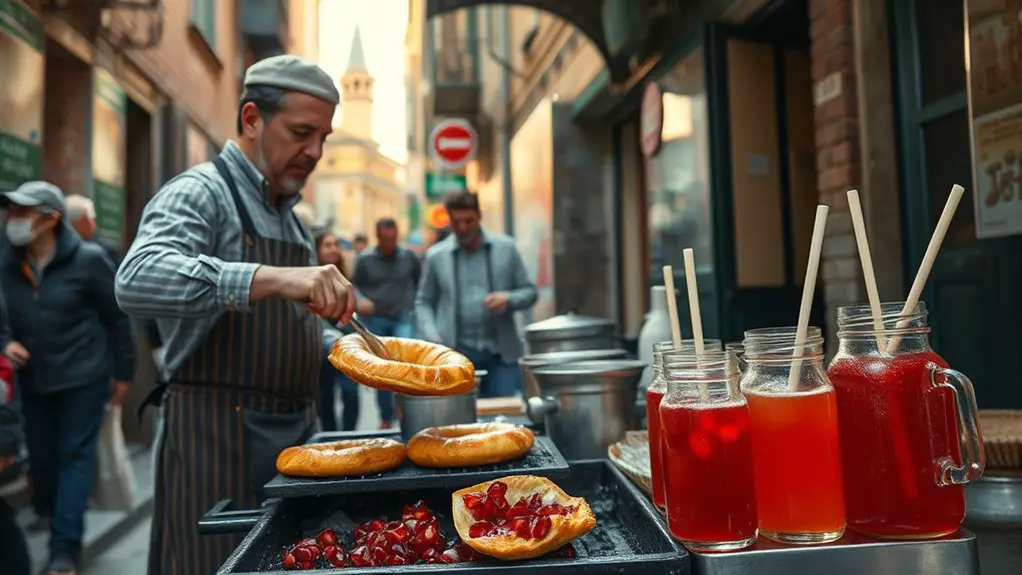
Galata is one of Istanbul’s easiest places to turn sightseeing into a food crawl. Around the tower, downhill through Karaköy, and toward the Galata Bridge, you can snack on sesame-crusted simit, döner, börek, stuffed mussels, grilled fish sandwiches, spicy çiğ köfte and chewy Turkish ice cream. The key is knowing which foods are truly local to this part of the city, which are better found nearby, and how to choose a good vendor.
Quick Answer
The best street foods to try around Galata are simit, döner, börek, midye dolma, çiğ köfte and dondurma. Walk downhill into Karaköy or toward the Galata Bridge for balık ekmek. Kumpir is also worth trying, although Istanbul’s most famous baked-potato stalls are in Ortaköy rather than Galata.
Key Takeaways
- Simit is the easiest grab-and-go breakfast or snack: a crisp, sesame-coated bread ring often paired with Turkish tea or cheese.
- Balık ekmek is best sought near the waterfront around Karaköy, Galata Bridge and Eminönü rather than beside Galata Tower itself.
- Döner and börek are reliable choices when you want something filling and easy to eat while exploring.
- Midye dolma is one of Istanbul’s signature street snacks, but shellfish deserves extra care when choosing a vendor.
- Çiğ köfte sold as street food is commonly a meat-free bulgur preparation served with lettuce, lemon and pomegranate molasses.
- Do not rely on old online price lists. Prices in Türkiye have been changing quickly, so check the displayed menu or ask the price before ordering.
Disclosure: As an Amazon Associate I earn from qualifying purchases. Some links on this page are affiliate links, at no extra cost to you.
Where to Find Street Food Around Galata
Galata itself is compact, so a good food walk naturally spreads into neighboring Karaköy and the streets leading toward the Galata Bridge. Around the tower and its downhill lanes, bakeries, döner shops, dessert counters and small takeaway businesses are easier to find than large clusters of traditional carts.
For balık ekmek, keep walking toward the waterfront. Karaköy and Eminönü are particularly associated with Istanbul’s fish sandwiches, while the Galata Bridge connects the two sides of this busy food-and-ferry area. Türkiye’s official tourism guide also highlights Karaköy and Eminönü for balık ekmek. GoTürkiye’s Istanbul street-food guide provides broader context on these dishes and where they are commonly found.
Pro Tip: For an easy one-hour food crawl, start near Galata Tower with simit or börek, walk downhill through Karaköy for döner or çiğ köfte, then finish near the Galata Bridge with balık ekmek or dondurma.
Simit: The Classic Turkish Sesame Bread
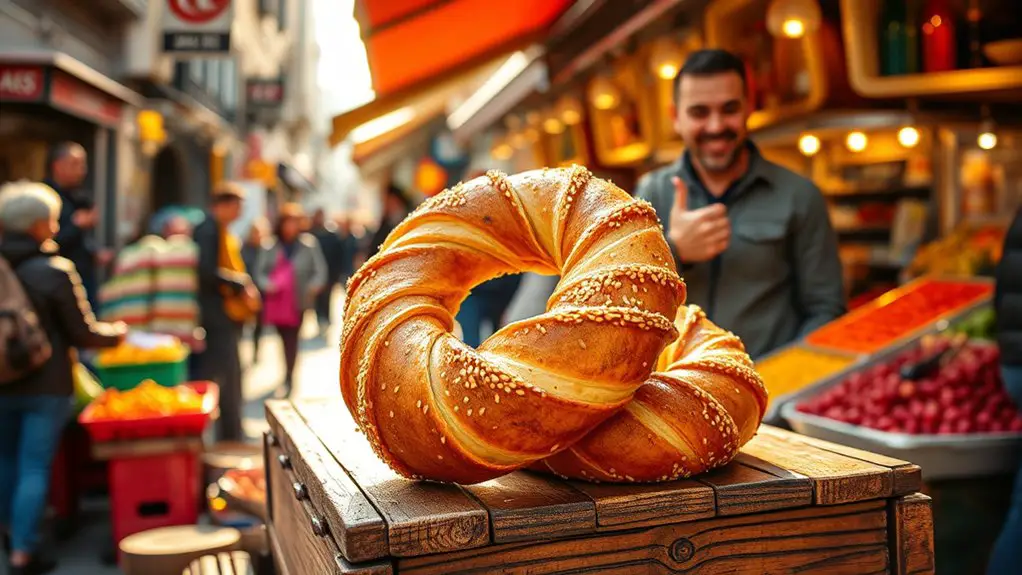
Simit is one of the simplest and most recognizable foods to grab while walking around Galata. Instead of thinking of it as a Turkish bagel, picture a crisp, ring-shaped bread coated heavily with sesame seeds. The outside has a toasted crunch while the center remains pleasantly chewy.
Simit has deep roots in Turkish food culture and has long been part of everyday breakfasts and snacks. It is commonly eaten plain, with white cheese, or alongside a glass of Turkish tea. GoTürkiye lists simit as a standard part of a traditional Turkish breakfast. Its Turkish breakfast guide also describes the bread as being dipped in molasses and topped with sesame seeds.
For the best texture, look for simit that has not been sitting uncovered for hours. Fresh ones should have a crisp crust rather than feeling leathery or unusually soft.
Balık Ekmek: Istanbul’s Fish Sandwich
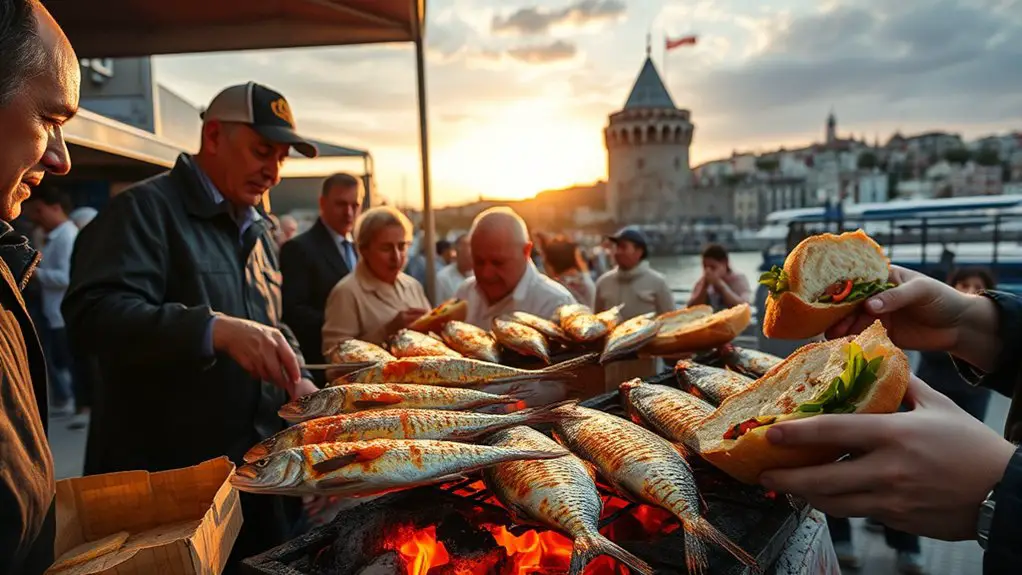
Balık ekmek literally means fish and bread, and it is one of the foods most closely associated with Istanbul’s waterfront. From Galata, walk downhill through Karaköy toward the Galata Bridge rather than expecting the classic fish-sandwich scene directly beside the tower.
The basic version is intentionally simple: grilled fish, commonly mackerel, is placed in bread with ingredients such as onion, lettuce or other greens. Lemon is a common finishing touch. Exact ingredients and fish sourcing vary between sellers, so do not assume that every sandwich is made from fish caught locally that morning.
Balık ekmek is less about elaborate toppings and more about hot grilled fish, fresh bread, sharp onion and the waterfront setting.
Eat it soon after it is handed to you. The bread stays crisper, the fish is warmer, and the contrast between the grilled filling and fresh toppings is at its best.
Döner: A Flavorful Meat Experience
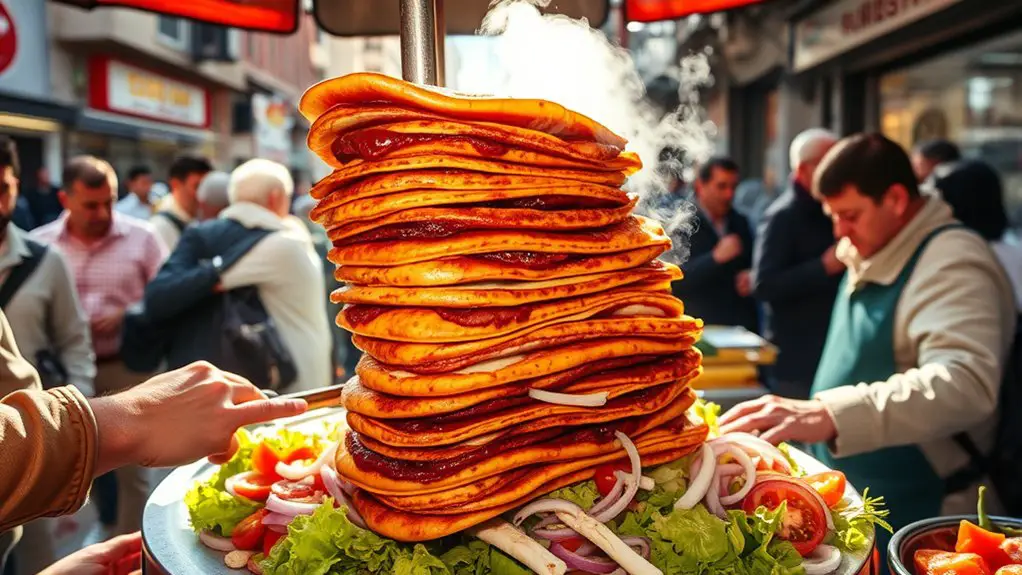
Döner is one of Istanbul’s most familiar fast meals. The name refers to meat turning on a vertical rotating spit, where the outside browns before thin slices are shaved away for serving. Beef, lamb and chicken versions are all common.
On the street, you may get döner wrapped in a thin flatbread as a dürüm, tucked into bread as a sandwich, or served on a plate. Türkiye’s official tourism guide describes street döner as thinly sliced meat served in flatbread or bread with additions such as lettuce, tomato and sauce. GoTürkiye’s Istanbul street-food page lists döner among the city’s best-known quick meals.
| Type | What to Expect |
|---|---|
| Beef or lamb | Rich, savory flavor with browned outer edges |
| Chicken | Milder flavor and often a slightly lighter meal |
| Dürüm | Döner wrapped in thin flatbread for easy eating while walking |
A busy shop where meat is being sliced regularly is usually a better bet than a nearly empty place where cooked surfaces have been sitting for a long time.
Börek: Savory Pastry Perfection
Börek is a broad family of layered or rolled savory pastries found throughout Türkiye. It was already an important food during the Ottoman period, and today there are many regional and shop-specific versions.
Common fillings include white cheese, spinach, minced meat and potatoes. Some varieties are crisp and flaky, while others, such as su böreği, are softer between the layers. GoTürkiye describes börek as flaky pastry filled with ingredients including cheese, spinach, meat or potatoes.
A warm slice makes a practical breakfast or midday snack because it is filling without requiring a sit-down meal. Cheese börek is a good starting point, while spinach-and-cheese versions work well for travelers avoiding meat.
Midye Dolma: Stuffed Mussels
Midye dolma is one of Istanbul’s most distinctive street snacks. Mussel shells are filled with seasoned rice, usually with ingredients such as onion, herbs, spices and sometimes currants or pine nuts. The shell itself becomes a handy scoop, and a squeeze of lemon adds brightness just before eating.
Preparation and Ingredients
The mussels are cooked and filled with the seasoned rice mixture before being sold from trays, counters or small stalls. Unlike the original article’s description, traditional street-style midye dolma does not depend on a breadcrumb topping for crunch.
GoTürkiye describes Istanbul’s midye dolma as mussels filled with rice, onion, salt and spices and served with plenty of lemon. It also notes that the snack is widely sold around Istanbul rather than being unique to Galata.
Flavor Profile and Experience
Expect a combination of briny mussel, fragrant rice, warm spices and sharp lemon. Depending on the recipe, the filling may have a slight sweetness from currants or deeper richness from nuts and spices.
Warning: Be more selective with mussels and other perishable seafood. CDC travel guidance notes that street-vendor food can carry increased foodborne-illness risk and recommends fully cooked foods served hot when hygiene is uncertain. Skip seafood that appears poorly protected or handled, and use extra caution if you are pregnant, immunocompromised, elderly, or otherwise at higher risk from foodborne illness.
Kumpir: Loaded Baked Potatoes
Kumpir is a giant baked potato opened while hot and mixed with butter, salt and melting cheese until the inside becomes creamy. You then choose from a long counter of toppings, which may include olives, pickles, corn, salads, sauces, mushrooms and sausage.
It is a famous Istanbul street food, but there is an important location detail: Ortaköy is the city’s best-known kumpir destination. GoTürkiye specifically points travelers toward the rows of kumpir stalls near the Bosphorus there. If you see a good version around Galata, there is no reason not to try it, but visitors planning a dedicated kumpir stop should know that Ortaköy has the stronger tradition.
Note: Kumpir is extremely customizable, so ask about meat, dairy or mayonnaise-based toppings when you have dietary restrictions.
Çiğ Köfte: Spicy Bulgur Patties
The name çiğ köfte is often translated as “raw meatballs,” but that description can confuse travelers. The version commonly sold as a quick snack is usually a meat-free mixture based on fine bulgur, tomato or pepper paste, herbs and strong seasonings.
The mixture is kneaded until it becomes soft enough to shape into small ridged portions. It is commonly served in lettuce leaves or wrapped in flatbread with parsley, lemon and pomegranate molasses.
GoTürkiye includes çiğ köfte among its vegetarian Turkish dishes and describes it as seasoned bulgur served with lettuce, pomegranate molasses and lemon. Its Marmara food guide also lists çiğ köfte among Istanbul’s notable street foods.
If you like chili heat and tart flavors, this is one of the easiest meat-free street foods to add to a Galata food crawl.
Dondurma: Traditional Turkish Ice Cream
Dondurma is Turkish ice cream, but the dense, stretchy version visitors often associate with Istanbul is especially connected with Maraş-style dondurma. Traditional Maraş ice cream is known for a thick, chewy texture created in part by salep, an ingredient made from orchid tubers.
Unique Serving Techniques
At tourist-oriented ice-cream stands, serving the cone can become part of the entertainment. Vendors may use long metal paddles to stretch the ice cream, spin the cone, hand it over and pull it away again before finally letting you keep it.
- Watch the serving show: Stretching and flipping highlight the unusually elastic texture.
- Expect a playful handoff: The familiar cone trick is entertainment, not a required part of buying dondurma.
- Ask before ordering: A quieter shop may simply scoop and serve it without the performance.
Flavor Varieties Available
Pistachio, chocolate, vanilla and fruit flavors are common choices, although the exact selection depends on the shop. Some vendors offer more experimental flavors, but those should not be treated as universal Turkish traditions.
For the most distinctive texture, look specifically for Maraş-style ice cream. GoTürkiye’s guide to Maraş dondurma explains the role of salep and traditional regional ingredients in creating its characteristic consistency.
Other Street Foods to Look For Near Galata
The original list covers many of the best-known foods, but Istanbul’s street-food scene goes further. Depending on the season and the streets you explore, you may also come across:
- Kestane: roasted chestnuts sold from carts, especially appealing in cool weather.
- Mısır: roasted corn on the cob or boiled corn, a simple snack from mobile vendors.
- Kokoreç: chopped, seasoned grilled sheep intestine, usually served in bread. It has a much stronger flavor than döner and is especially popular as a late-night snack.
- Tavuk pilav: rice with chickpeas and chicken, often served from compact street carts.
These are recognized Istanbul street foods in Türkiye’s official tourism material, so they are worth watching for even if they are not available on every Galata street.
How to Choose a Street-Food Vendor
A crowded stall is not an automatic guarantee of safety, but high turnover can mean food spends less time sitting around. Use your eyes before ordering.
- Favor food that is cooked thoroughly and served hot.
- Look for a clean preparation surface and utensils that are not being used interchangeably for raw and cooked foods.
- Be cautious with meat or seafood that has been sitting at room temperature.
- Make sure cold ingredients appear properly chilled.
- Skip a vendor if food is exposed to obvious contamination or handling looks careless.
- Use extra caution with mussels, seafood, dairy and other highly perishable foods.
The CDC Yellow Book food and water guidance notes that street-vendor food can increase travelers’ risk of illness and that fully cooked food served hot is generally the safer choice.
Prices, Payment, and Timing
Do not build your food budget around an old blog post that gives one fixed Turkish-lira range. Prices in Türkiye have changed quickly. According to the Turkish Statistical Institute, consumer prices in June 2026 were 32.11% higher than a year earlier, while the food and non-alcoholic beverages category was up 35.45%.
That does not mean every street-food price rises at exactly the same rate. It does mean that an old claim such as “everything costs 10–30 TRY” becomes unreliable very quickly. Check a posted menu or ask the price before ordering, especially in heavily visited areas.
Operating hours vary just as much. Bakeries and simit sellers may be active early in the day, while döner, midye dolma, kokoreç and dessert sellers can continue into the evening. Independent carts do not share a guaranteed citywide schedule.
Vegetarian, Vegan, and Allergy Notes
Vegetarian travelers have several easy choices around Galata. Plain simit, meat-free çiğ köfte and some spinach, cheese or potato börek varieties are widely suitable depending on their ingredients. Roasted chestnuts and corn are other simple options.
Vegans should ask more questions. Börek may contain butter, cheese, egg or milk, and even vegetable dishes can be prepared with dairy. Ingredient lists also vary from shop to shop.
People with food allergies should be especially cautious because small street-food kitchens can have substantial cross-contact. Common ingredients include:
- Sesame: simit and some breads
- Gluten/wheat: simit, börek, dürüm, döner sandwiches and balık ekmek
- Dairy: cheese börek, kumpir and some breads or sauces
- Shellfish: midye dolma
- Tree nuts: some midye dolma rice mixtures and desserts
When an allergy is severe, do not assume a dish is safe simply because the main ingredient does not contain your allergen.
Frequently Asked Questions
Where can I find the best street food in Galata?
Start around Galata Tower and walk downhill toward Karaköy. The lanes and main streets along the way have bakeries, döner shops, takeaway counters and dessert sellers. For classic balık ekmek, continue toward the waterfront and the Galata Bridge area.
What are the typical prices for street food in Galata?
There is no reliable single 2026 price range for all Galata street food because dishes, serving sizes and tourist-zone pricing vary, and prices in Türkiye have been changing quickly. Check the displayed menu or ask the price before ordering rather than relying on an older travel guide.
Is street food in Galata safe to eat?
Street food is not automatically safe or unsafe. Choose vendors with clean handling practices and favor food that is cooked thoroughly and served hot. Be more careful with shellfish and other perishable foods. CDC travel guidance notes that food from street vendors can carry increased foodborne-illness risk.
Are there vegetarian options available in Galata’s street-food scene?
Yes. Good options can include plain simit, meat-free çiğ köfte, cheese or spinach börek, roasted chestnuts and corn. Ask about butter, cheese, eggs and cooking methods if you are vegan rather than vegetarian.
What are the operating hours for street-food vendors in Galata?
Hours vary by vendor and food type. Bakeries and simit sellers may open in the morning, while döner, mussel, kokoreç and dessert sellers can remain active later. Independent street carts do not follow one standard schedule, so check current hours for any specific shop you plan to visit.
What should I try if I only have one hour in Galata?
Choose two or three foods rather than trying everything. A practical route is simit or börek near Galata, döner or çiğ köfte while walking through Karaköy, then balık ekmek near the Galata Bridge. Finish with dondurma if you still have room.
Conclusion
The best street-food experience around Galata is not limited to one block or one famous dish. Start with a fresh simit or warm börek near the historic streets, follow the hill down through Karaköy for döner or çiğ köfte, and head toward the Galata Bridge when you are ready for balık ekmek. Midye dolma and dondurma add two very different Istanbul experiences, while kumpir is worth saving for an Ortaköy detour if you want the city’s most famous version.
Keep the approach simple: check the price before you order, choose carefully handled food, favor hot freshly cooked dishes, and leave enough room to try more than one specialty. That gives you a much better taste of Istanbul than rushing through a checklist.
Sources
- GoTürkiye — Istanbul Street Food — supports the city’s döner, midye dolma, kumpir and wider street-food traditions.
- GoTürkiye — Taste the Flavors of Marmara — supports the list of notable Istanbul street foods including simit, balık ekmek, midye dolma, kumpir and çiğ köfte.
- GoTürkiye — Traditional Maraş Ice Cream and Its History — supports the description of Maraş dondurma and salep.
- CDC Yellow Book — Food and Water Precautions for Travelers — supports the street-food and food-safety precautions.
- Turkish Statistical Institute — Consumer Price Index, June 2026 — supports the inflation data and the warning against stale fixed price guides.
