
Last Updated on July 25, 2026 by Daniel Globe
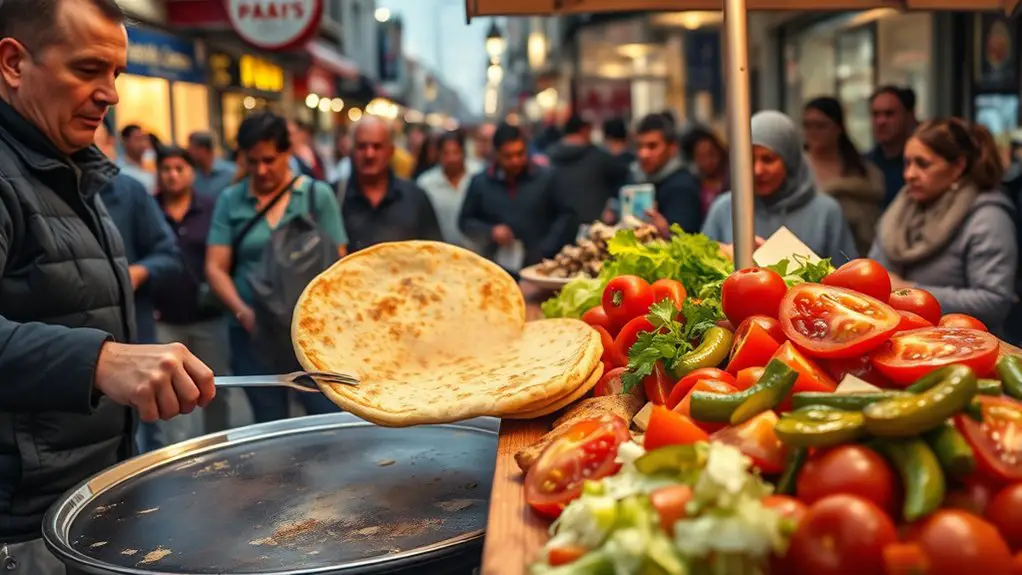
Kadıköy is one of Istanbul’s easiest neighborhoods for building a food crawl around classic Turkish snacks, seafood, pastries, desserts, tea, and coffee. Start near the market and waterfront, then work toward Caferağa and Moda. Along the way, look for freshly baked simit, grilled fish sandwiches, stuffed mussels, börek, lahmacun, kokoreç, baklava, and traditional drinks.
Quick Answer
Kadıköy’s must-try street foods include simit, balık ekmek, midye dolma, börek, lahmacun, and kokoreç, followed by baklava and Turkish tea or coffee. Start around the Traditional Bazaar and waterfront, then continue toward Caferağa and Moda. For safer street eating, favor food that is thoroughly cooked and served hot.
Key Takeaways
- Start with simit for a simple Istanbul snack: a ring-shaped bread dipped in molasses and coated with sesame.
- Try balık ekmek near the water, where grilled fish is served in bread with simple vegetables and seasonings.
- Midye dolma combines mussels with seasoned rice and a squeeze of lemon, but shellfish deserves extra food-safety care.
- Börek and lahmacun are filling choices commonly found at bakeries, takeaway counters, and casual food shops as well as street-food stops.
- Kokoreç is a bold late-night favorite made from grilled, seasoned offal or intestine and commonly served in bread.
- Finish with baklava, çay, or Turkish coffee for a classic sweet-and-drink pairing.
Disclosure: As an Amazon Associate I earn from qualifying purchases. Some links on this page are affiliate links, at no extra cost to you.
Where to Find Street Food in Kadıköy
A good place to begin is the central Kadıköy market area near the ferry terminals. Istanbul tourism material highlights the Kadıköy fish-market area as one of the places where visitors can look for balık ekmek and other local foods.
From the waterfront and Rıhtım area, continue into the Traditional Bazaar and surrounding streets. From there, Caferağa leads toward Moda and has one of Kadıköy’s densest mixes of food, drink, cafés, and entertainment.
Pro Tip: Do not treat every dish on this list as something that must come from a pushcart. Simit and midye dolma are easy to encounter as grab-and-go snacks, while börek and lahmacun are often best bought from busy bakeries, specialty shops, or casual restaurants.
Simit: The Turkish Sesame Bread
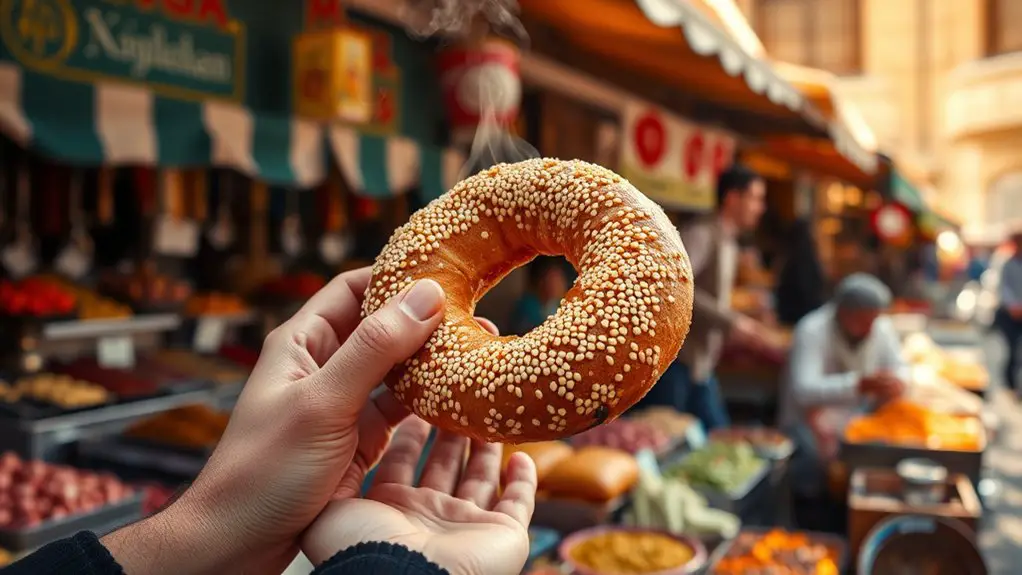
Simit is one of the easiest Turkish foods to recognize. The classic version is a ring-shaped bread with a chewy interior and a browned, sesame-covered crust. GoTürkiye describes simit as dough dipped in molasses and coated with sesame before baking.
It is sold from street carts, bakeries, transport hubs, and ferry snack counters throughout Istanbul. You can eat it plain or pair it with cheese, jam, ayran, or a glass of hot çay.
Simit styles vary around Türkiye, so texture, thickness, color, and sesame coverage are not identical everywhere. In Istanbul, however, a fresh sesame-coated ring with a crisp exterior and pleasantly chewy middle is the version most visitors are likely to encounter.
For a simple breakfast on the move, simit and tea are hard to beat. Because it travels well and does not require utensils, it is also one of the easiest foods to carry while exploring Kadıköy.
Balık Ekmek: Fish Sandwiches by the Waterfront
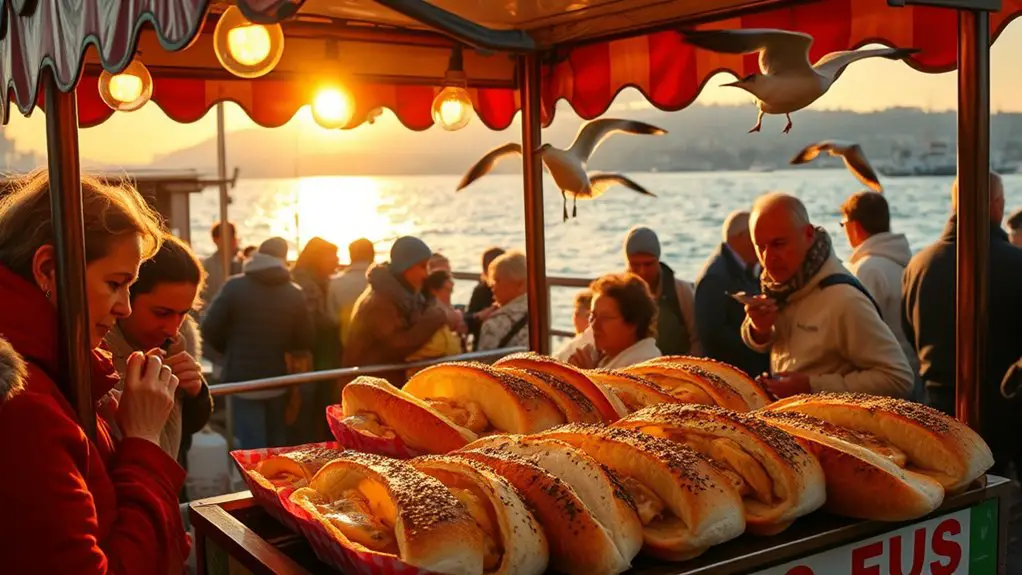
Balık ekmek literally means “fish bread” and is one of Istanbul’s best-known quick seafood meals. The basic idea is simple: grilled fish goes into bread with additions such as onion, tomato, greens, or salad.
Kadıköy’s market and waterfront area lets you combine a fish sandwich with one of the neighborhood’s defining experiences: eating close to the Bosphorus and ferry traffic.
The exact fish and accompaniments can change with the vendor, season, and supply, so there is no need to seek one rigid recipe. Official Istanbul tourism guidance specifically points visitors toward the Kadıköy fish-market area when looking for balık ekmek on the Asian side.
A typical serving has four simple parts:
- Grilled fish: cooked until ready to eat and served hot.
- Bread: sturdy enough to hold the fish and vegetables.
- Fresh additions: often onion, tomato, greens, or salad.
- Acid and seasoning: lemon and simple seasoning brighten the fish.
Balık ekmek works particularly well as a quick lunch or early-evening meal while exploring the market and waterfront.
Midye Dolma: Stuffed Mussels With Seasoned Rice
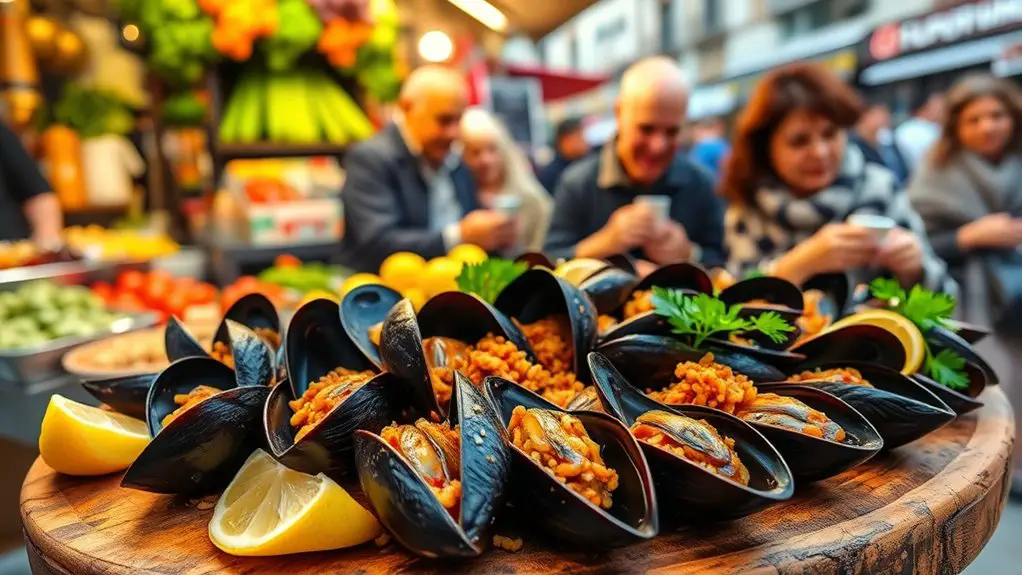
Midye dolma is one of Türkiye’s recognizable seafood snacks: mussels filled with seasoned rice or pilaf and served in their shells. Vendors commonly finish each one with a squeeze of lemon.
The flavor combines the briny taste of mussels with aromatic rice and spices. Some fillings can also include ingredients such as currants or other seasonings, so recipes vary from seller to seller.
Midye dolma is usually eaten one mussel at a time. The top shell can be used almost like a small spoon to help lift the filling from the lower shell.
Because it is easy to keep eating them one after another, decide roughly how many you want before you start rather than treating the tray as a single serving.
Warning: Shellfish requires extra food-safety care. CDC travel guidance notes that raw or undercooked shellfish can carry pathogens and that street-vendor food can present added risk. Choose reputable food businesses, avoid shellfish that seems improperly stored, and be especially cautious if you are pregnant, immunocompromised, older, or otherwise at increased risk from foodborne illness.
Börek: Savory Pastries With Different Fillings
Börek is a large family of Turkish pastries rather than one single recipe. Depending on the style, thin sheets of dough may be layered, rolled, folded, baked, or fried and filled with cheese, greens, potato, minced meat, or other ingredients.
For a quick Kadıköy breakfast or snack, a börek shop can be as useful as a street cart: point to the style you want, order a portion, and pair it with tea or ayran.
Common styles include:
- Su böreği: soft layered börek made with dough sheets that are briefly cooked in boiling water before being drained, layered with butter and filling, and baked. The Türkiye Ministry of Culture and Tourism recipe commonly uses cheese and parsley.
- Sigara böreği: slim rolls of pastry, commonly filled with white cheese and parsley before frying.
- Kol böreği: a long rolled börek that may contain cheese, spinach, minced meat, or other fillings.
- Tepsi böreği: layered börek baked in a tray and cut into portions.
These styles show why “börek” on a menu does not tell you everything you need to know. Ask about the filling if you avoid meat, dairy, egg, or other allergens.
Lahmacun: Thin Flatbread With Seasoned Meat
Lahmacun is sometimes called “Turkish pizza” as a quick comparison, but it is better understood as a thin flatbread covered with a finely chopped or minced savory mixture.
A traditional meat version combines minced meat with ingredients such as onion, tomato, pepper, parsley, and spices. The Türkiye Ministry of Culture and Tourism’s lahmacun recipe includes ground meat, tomato, green pepper, parsley, onion, garlic, pepper paste, and spices.
What Lahmacun Tastes Like
The flatbread is thin, while the topping adds savory meat, vegetables, herbs, and spice without creating the heavy layer of cheese associated with many pizzas.
Seasoning varies by region and shop. Black pepper, red pepper, parsley, tomato, pepper paste, and other regional flavors may all appear.
How to Eat Lahmacun
Lahmacun is commonly served with fresh parsley, greens, onion, and lemon. Squeeze lemon over the top, add the fresh accompaniments you like, then roll or fold the flatbread so it is easier to eat by hand.
Crushed red pepper or sumac may be available as extra seasoning. Start with a small amount, taste, and add more if you want extra heat or acidity.
Kokoreç: Grilled, Spiced Offal
Kokoreç is one of the bolder choices on Istanbul’s street-food menu. It is made from carefully cleaned sheep or goat offal and intestine wrapped around a skewer, roasted or grilled, then chopped and seasoned.
It is especially associated with late-night eating and is commonly served inside bread as a hot sandwich.
How Kokoreç Is Prepared
Preparation begins with cleaned offal and intestine arranged tightly around a skewer. The roll is cooked over heat, similar in visual appearance to meat turning on a spit.
After cooking, a portion is chopped on the griddle or work surface and mixed with seasoning before being packed into bread. Some versions may also include cooked tomato or pepper.
GoTürkiye’s Istanbul street-food guidance describes kokoreç as cleaned sheep intestine cooked over heat, seasoned, and commonly served between bread.
Common Kokoreç Seasonings
Seasoning may include black pepper, chili flakes, thyme or oregano, salt, and sometimes cumin. The exact mixture changes between cooks.
The result is rich, savory, smoky, and strongly seasoned. If you are unsure about offal, sharing a smaller portion is an easy way to try it without committing to a full sandwich.
Tatlılar: Sweet Treats and Baklava
After savory street food, Kadıköy’s pastry and dessert shops provide an easy change of pace. Baklava is one of the most recognizable choices.
Traditional baklava is built from very thin layers of pastry, butter, nuts, and sweet syrup. The Türkiye Ministry of Culture and Tourism’s baklava recipe uses a syrup of sugar, water, and lemon juice rather than relying on honey as the defining sweetener.
For a first taste, choose pistachio or walnut baklava before moving on to modern chocolate-filled or flavored interpretations.
Four versions you may encounter include:
- Pistachio baklava: thin pastry layers with pistachios and syrup.
- Walnut baklava: a classic alternative with a deeper, earthy nut flavor.
- Other regional nut versions: shops may use different nuts or pastry shapes while keeping the layered-and-syrup structure.
- Modern flavored baklava: some contemporary pastry shops sell chocolate or other creative variations alongside traditional styles.
Baklava contains several common allergens in its standard form, especially wheat, tree nuts, and dairy from butter.
Çay and Turkish Coffee: What to Drink With Your Food
Çay and Turkish coffee are not simply drinks to wash down a meal. Both are closely tied to hospitality and social life.
Turkish çay is usually strong black tea served hot in a small, curved glass. Sugar is commonly offered separately. UNESCO recognizes tea culture in Türkiye as a social practice connected with hospitality and maintaining social ties.
Turkish coffee uses very finely ground roasted coffee. According to UNESCO’s description of Turkish coffee culture, coffee, cold water, and sugar when desired are slowly brewed to create foam, then served in small cups. The grounds remain in the cup rather than being filtered out.
| Beverage | What to Expect | Good Pairing |
|---|---|---|
| Çay | Hot black tea in a small glass; sugar may be offered separately | Simit or börek |
| Turkish coffee | Small, strong, unfiltered coffee with fine grounds settling at the bottom | Baklava or another small sweet |
Vegetarian, Gluten-Free, and Allergen Tips
Kadıköy offers meat-free food, but not every food traditionally described as vegetarian is automatically suitable for every diet.
- Simit: commonly meat-free but made with wheat and sesame.
- Börek: cheese, spinach, potato, or other vegetable fillings may be vegetarian; many versions contain wheat, dairy, and sometimes egg.
- Lahmacun: the classic version contains meat and wheat.
- Balık ekmek: contains fish and wheat bread.
- Midye dolma: contains shellfish; the rice itself does not make the dish vegetarian.
- Kokoreç: contains animal products.
- Baklava: commonly contains wheat, dairy, and tree nuts.
- Plain çay and Turkish coffee: normally contain no wheat, although added ingredients and cross-contact can vary by business.
Note: Türkiye requires allergen information to be available to consumers at covered food-service businesses, including qualifying restaurants and food-service stands. If you have celiac disease or a serious food allergy, still ask specifically about ingredients, shared fryers, work surfaces, utensils, and other sources of cross-contact before ordering.
Street-Food Safety Tips
Street food is part of the experience, but appearance alone cannot prove that food is safe. The CDC notes that street-vendor food can carry greater foodborne-illness risk and recommends choosing carefully while traveling.
- Favor meat, fish, and other cooked foods that are thoroughly cooked and served hot.
- Be cautious with raw or undercooked seafood and shellfish.
- Avoid food that appears to have been sitting at an unsafe temperature for a long period.
- Pay attention to clean utensils, food handling, and separation between raw and cooked ingredients.
- If you have serious food allergies, verify ingredients rather than relying only on appearance.
For more detailed traveler guidance, see the CDC Yellow Book food and water precautions.
Frequently Asked Questions
Are street foods in Kadıköy suitable for vegetarians?
Some are. Simit is commonly meat-free, and börek may have cheese, spinach, potato, or other vegetarian fillings. Classic lahmacun, kokoreç, balık ekmek, and midye dolma are not vegetarian. Ask about the filling before ordering because recipes vary.
What are the best times to try street food in Kadıköy?
There is no single best hour. Simit works especially well in the morning, market-area foods suit daytime exploring, and kokoreç is strongly associated with late-night eating. Opening hours vary by stall, bakery, and restaurant, so build your route around the foods you want rather than one claimed “peak” time.
How hygienic are street-food stalls in Kadıköy?
Hygiene varies from business to business, so it is better not to make a neighborhood-wide guarantee. Favor properly handled food that is thoroughly cooked and served hot, and take extra care with seafood, shellfish, and foods held at uncertain temperatures.
Can I find gluten-free street food in Kadıköy?
Some individual foods may not contain wheat, but many classics in this guide do. Simit, börek, lahmacun, baklava, and the bread used for balık ekmek and kokoreç contain gluten in their standard forms. People with celiac disease should ask about ingredients and cross-contact rather than assuming a dish is safe.
Which dishes should a first-time visitor try?
Start with simit, then try either balık ekmek or lahmacun for something more filling. Add börek if you enjoy savory pastry, midye dolma if you eat shellfish, and kokoreç if you are comfortable trying offal. Finish with pistachio or walnut baklava and çay or Turkish coffee.
Where should I start a street-food walk in Kadıköy?
Start near the ferry terminals and central market, explore the Traditional Bazaar and fish-market streets, then continue through Caferağa toward Moda. This route puts seafood, bakeries, dessert shops, cafés, and late-night food within a relatively compact area.
Which common allergens appear in these foods?
Wheat appears in simit, börek, lahmacun, baklava, and most sandwich breads. Börek and baklava commonly contain dairy, baklava usually contains tree nuts, balık ekmek contains fish, and midye dolma contains molluscan shellfish. Ingredients and cross-contact vary, so confirm them with the food business if you have an allergy.
Sources
- GoTürkiye — Istanbul Street Food — supports Istanbul street-food traditions, midye dolma, balık ekmek, lahmacun, börek, and the Kadıköy fish-market context.
- GoTürkiye — Turkish Breakfast in Istanbul — supports the standard description and serving culture of simit.
- Türkiye Ministry of Culture and Tourism — Water Pastry — supports the preparation of su böreği.
- UNESCO — Turkish Coffee Culture and Tradition — supports Turkish coffee preparation and cultural significance.
- Türkiye Ministry of Agriculture and Forestry — Allergen Information — supports current allergen-information requirements for covered food-service businesses.
- CDC Yellow Book — Food and Water Precautions for Travelers — supports street-food, seafood, and food-safety guidance.
Conclusion
Kadıköy is a strong place to explore Istanbul through food because you can move from a ferry-side snack to market seafood, pastries, late-night dishes, desserts, and traditional drinks within one neighborhood. Begin with an easy classic such as simit, try a more substantial dish such as balık ekmek or lahmacun, and leave room for baklava and tea or coffee. Knowing what each food actually contains—and taking sensible care with allergens, shellfish, and food handling—makes the experience both easier and more rewarding.
