
Last Updated on July 25, 2026 by Daniel Globe
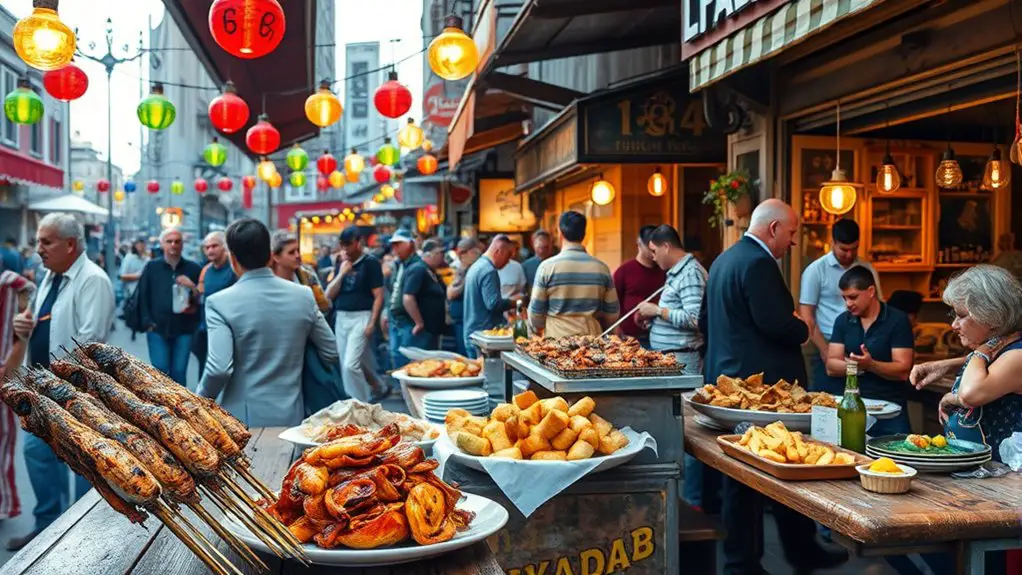
Arnavutköy is a waterfront neighborhood in Istanbul’s Beşiktaş district, set between Kuruçeşme and Bebek on the European side of the Bosphorus. It is better known for seafood restaurants, meze, cafés, bakeries, and scenic dining than for a dense market of street-food carts. Still, you can enjoy classic Istanbul snacks and quick meals here—or find even more choices in nearby Beşiktaş and Ortaköy.
Quick Answer
The best casual foods to try in Bosphorus-side Arnavutköy include simit with Turkish tea, döner or dürüm, grilled fish and seafood, meze, baklava, and künefe. For the most reliable experience, use busy bakeries, cafés, kebab shops, and seafood restaurants rather than expecting every dish from a street cart.
Key Takeaways
- This guide covers the Bosphorus-side Arnavutköy neighborhood in Beşiktaş, not the larger Arnavutköy district near Istanbul Airport.
- Seafood, fish restaurants, meze, breakfast, cafés, and desserts are especially suited to the neighborhood’s waterfront setting.
- Simit, döner, dürüm, börek, and çiğ köfte are practical quick bites, but availability changes by street, time, and season.
- Choose food that is cooked thoroughly and served hot, especially when buying from a cart or small takeaway counter.
- Carry Turkish lira as a backup and check the menu price and payment method before ordering.
Note: Istanbul has two places commonly called Arnavutköy. This article refers to Arnavutköy Mahallesi in Beşiktaş, along the Bosphorus. The separate Arnavutköy district is farther northwest and includes Istanbul Airport.
Disclosure: As an Amazon Associate I earn from qualifying purchases. Some links on this page are affiliate links, at no extra cost to you.
Must-Try Kebabs and Quick Meat Dishes
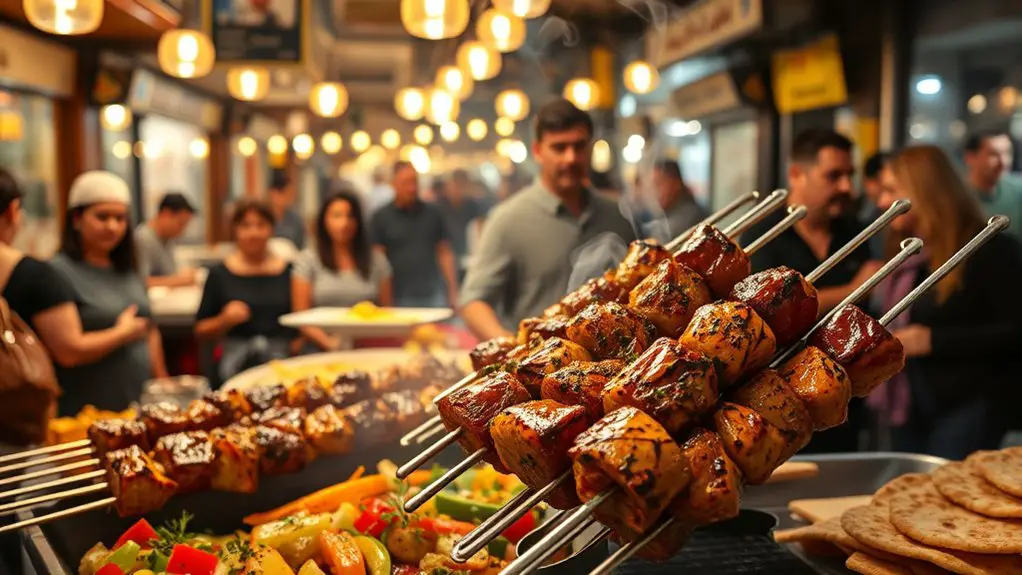
The aroma of grilled meat is part of Istanbul’s food scene, but not every kebab is truly street food. In Arnavutköy, you are more likely to find these dishes at a small kebab shop, restaurant, or takeaway counter.
- Döner: Thin slices of seasoned meat cooked on a vertical rotisserie and served in bread, dürüm flatbread, or on a plate.
- Dürüm: A portable wrap filled with döner, grilled meat, chicken, or köfte, often with onion, tomato, parsley, and sauce.
- Adana kebab: Spiced minced meat formed around a skewer and grilled. It is usually a sit-down kebab-house dish rather than something sold from a roaming cart.
- Şiş kebab: Cubes of marinated meat or chicken grilled on skewers and commonly served with bread, rice, vegetables, and salad.
For a balanced order, add grilled peppers, onions, parsley, salad, or yogurt. Ask whether the listed price is for a wrap, sandwich, or full plate because portions and prices can differ sharply.
Pro Tip: For a fast meal, choose döner or dürüm. For Adana or şiş kebab, sit down at a busy kebab shop where the meat is grilled to order and served hot.
Delectable Meze Plates
Meze are small dishes served for sharing. In Arnavutköy, they are more closely tied to seafood restaurants and meyhanes than to street carts. A mixed selection can turn a waterfront meal into a relaxed tasting experience.
Traditional Turkish Meze Varieties
Common choices may include:
- Haydari: Thick yogurt mixed with herbs, garlic, and sometimes cheese.
- Hummus: Chickpeas blended with tahini, lemon, and garlic.
- Dolma or sarma: Vegetables or grape leaves filled with seasoned rice; some versions include meat.
- Patlıcan salatası: Smoky eggplant salad, sometimes served with yogurt.
- Acılı ezme: A finely chopped, spicy mixture of tomato, pepper, herbs, and seasoning.
- White cheese and seasonal vegetables: Simple staples that pair well with bread and seafood.
Ask the server which items are made that day. Meze displays can change with the season, the catch, and the kitchen’s specialties.
Must-Try Local Ingredients
Tomatoes, cucumbers, eggplant, peppers, herbs, yogurt, olive oil, lemon, sumac, and red pepper appear across many Turkish meze. Their quality matters more than elaborate presentation. Fresh bread is usually brought to the table, making it easy to sample several dips and salads.
Vegetarians should still ask whether a dish contains meat stock, fish, or seafood. Dolma, beans, eggplant dishes, and yogurt-based meze can look meat-free even when the recipe varies by kitchen.
Irresistible Simit
Simit is one of Istanbul’s most recognizable street snacks: a ring of dough coated with sesame seeds, with a crisp exterior and chewy center. It is easy to eat while walking and works well for breakfast or a light snack.
Origin and History
Simit has a long association with Istanbul’s bakeries, ferries, street carts, and breakfast tables. Its exact early history is described differently across popular accounts, so it is safer to treat it as a long-standing Ottoman and Turkish food tradition rather than assign it to one disputed origin story.
Perfect Pairings
The classic pairing is simit with a glass of strong Turkish tea. It also works with white cheese, labneh-style spreads, olives, tomatoes, or ayran. Honey, tahini, or jam can make it sweeter, although cheese and tea are the more familiar everyday combination.
How to Choose a Simit Vendor
Look for a bakery or cart with steady turnover. Fresh simit should smell toasted and nutty, with sesame seeds that are golden rather than burnt. The crust should be crisp, not hard or stale.
Morning is usually the best time for the freshest batch. Fixed bakeries and cafés may also offer filled simit sandwiches with cheese, tomato, or other ingredients.
Flavorful Fish and Seafood
Arnavutköy’s Bosphorus setting makes seafood one of the neighborhood’s most natural food experiences. The area is known more for seafood restaurants, grilled fish, meze, and stuffed mussels than for a single signature fish-sandwich stall.
According to GoTürkiye’s Istanbul street-food guide, a classic balık ekmek is grilled fish served in bread with onion, tomato, greens, and lemon. It is strongly associated with waterfront areas such as Eminönü, Karaköy, and Kadıköy, but you may also find fish sandwiches or similar quick seafood meals around the Bosphorus.
At a restaurant, ask which fish is in season and how it is priced. Fish may be listed by portion, plate, or weight. Do not assume that “catch of the day,” local sourcing, or sustainable fishing is guaranteed unless the business explains the species and source.
Warning: Raw or undercooked fish and shellfish carry a higher foodborne-illness risk. Choose seafood that is stored cold, cooked fully, and served hot. People who are pregnant, older, very young, or immunocompromised should take extra care.
Arnavutköy is best approached as a waterfront food neighborhood: come for seafood, meze, cafés, and a Bosphorus walk, then add classic Istanbul street snacks as you find them.
Other Istanbul Street Foods Worth Looking For
Arnavutköy may not have every famous Istanbul snack on every corner. If you see a busy, clean-looking counter or cart, these are also worth considering:
- Börek: Flaky pastry filled with cheese, spinach, potato, or minced meat.
- Çiğ köfte: The widely sold meat-free version is a seasoned bulgur mixture served in lettuce or wrapped in flatbread with herbs, lemon, and pomegranate sauce.
- Midye dolma: Mussels filled with seasoned rice and served with lemon. Buy only from a vendor with good turnover and proper cold holding.
- Kestane: Roasted chestnuts, especially common in cooler weather.
- Kumpir: A baked potato mixed with butter and cheese, then loaded with toppings. Nearby Ortaköy is especially well known for it.
- Tavuk pilav: Chicken and rice sold as a filling meal at some carts and takeaway counters.
Sweet Pastries and Desserts
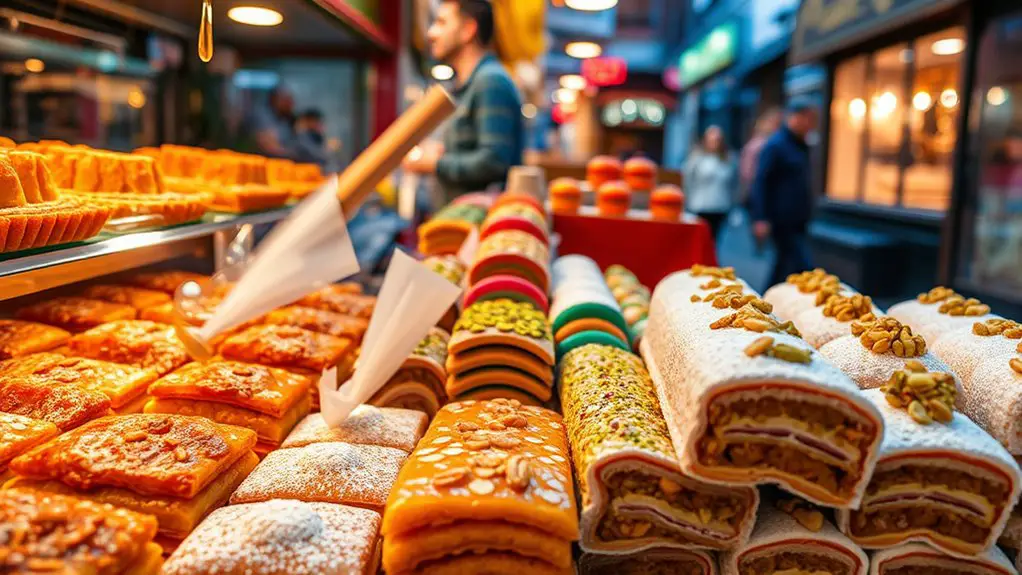
Arnavutköy’s cafés, bakeries, and restaurants make it easy to end a meal with something sweet. Three familiar choices are:
- Baklava: Thin layers of pastry filled with pistachios or walnuts and sweetened with syrup. A good piece should be crisp rather than soggy.
- Künefe: Shredded pastry layered with melting cheese, baked until crisp, soaked with syrup, and often topped with pistachios. It is best eaten hot.
- Simit with a sweet spread: Simit can be paired with honey, tahini, or jam for a simple breakfast-style treat, though it is not a substitute for a pastry-shop dessert.
Other options may include sütlaç, a baked rice pudding; dondurma, Turkish-style ice cream; and seasonal fruit desserts. Portions can be rich, so sharing is practical after a full seafood or kebab meal.
Refreshing Beverages to Cool Down
Instead of relying on generic smoothies or street cocktails, try drinks closely tied to Turkish food culture:
- Turkish tea: Served hot in a small, tulip-shaped glass and enjoyed throughout the day.
- Ayran: A cold, savory yogurt drink that pairs especially well with kebab, dürüm, and spicy food.
- Şalgam: A salty, tangy fermented drink commonly paired with kebab. It may be mild or spicy.
- Turkish coffee: A strong, unfiltered coffee often served after a meal with water.
- Lemonade or fresh juice: A refreshing café option in warm weather; choose places that prepare and store it hygienically.
Restaurants and bars may serve rakı, wine, beer, or cocktails, but cocktails are not a defining Arnavutköy street-food tradition. Treat alcohol as a venue drink rather than a typical cart purchase, and drink responsibly.
Where to Look and When to Go
Start near Arnavutköy Square and the Bosphorus waterfront, then walk the side streets toward bakeries, cafés, small restaurants, and takeaway counters. The seafront is especially appealing near sunset, but popular venues can be busy in the evening and on weekends.
- Morning: Best for simit, börek, breakfast plates, tea, and coffee.
- Lunch: Good for döner, dürüm, köfte, çiğ köfte, and quick takeaway meals.
- Evening: Best for seafood, meze, desserts, and a longer waterfront meal.
- Late night: Choices vary. Busier parts of Beşiktaş may offer more late-night street food than residential Arnavutköy.
Menus, opening hours, and vendor locations can change. Check the displayed price before ordering, especially when seafood is priced by weight.
Ordering, Payment, and Useful Food Words
Fixed restaurants and cafés are more likely to accept cards, while carts and very small counters may prefer cash. Carry some Turkish lira in small denominations, ask about payment before ordering, and keep your card in sight.
- Bir tane, lütfen: One, please.
- Ne kadar? How much?
- Acısız: Not spicy.
- Acılı: Spicy.
- Etsiz: Without meat.
- Hesap, lütfen: The bill, please.
At table-service restaurants, review the menu before accepting extras if you are unsure whether they are complimentary. Tipping practices vary by venue, so check whether a service charge is already included.
How to Choose Safer Street Food
No city’s street food can be guaranteed safe. The CDC advises travelers that fully cooked food served hot is generally the safer choice. Use these steps to lower your risk:
- Choose busy vendors with frequent turnover.
- Prefer food cooked in front of you and served steaming hot.
- Avoid raw or undercooked meat, fish, shellfish, and eggs.
- Check that cold foods, dairy, seafood, and desserts are kept properly chilled.
- Use clean utensils and wash or sanitize your hands before eating.
- Choose factory-sealed water when you are uncertain about the water source.
Frequently Asked Questions
What are the best times to enjoy food in Arnavutköy?
Go in the morning for fresh simit, börek, and breakfast; at lunch for döner and quick meals; or in the evening for seafood, meze, and dessert. Sunset and weekend evenings are scenic but often busier.
Are vegetarian options available in Arnavutköy?
Yes. Look for simit, cheese or spinach börek, çiğ köfte, hummus, haydari, eggplant salad, beans, vegetable meze, and meat-free dolma. Ask whether stock, meat, fish, or seafood is used because recipes differ.
Where can I find the most famous street-food vendors?
Arnavutköy has bakeries, cafés, takeaway counters, and waterfront restaurants, but it is not Istanbul’s largest street-food hub. For denser clusters, explore central Beşiktaş, nearby Ortaköy for kumpir, or Eminönü and Karaköy for balık ekmek.
Is street food in Arnavutköy safe to eat?
It can be enjoyable, but safety cannot be guaranteed. Choose busy, clean-looking vendors; buy food cooked thoroughly and served hot; and avoid raw or poorly chilled meat, fish, shellfish, dairy, and salads when hygiene is uncertain.
How should I pay for food in Arnavutköy?
Many fixed businesses accept cards, but small counters and carts may prefer cash. Carry Turkish lira as a backup, confirm the price and payment method before ordering, and ask whether seafood is priced by portion or weight.
Which Arnavutköy does this guide cover?
It covers the historic waterfront neighborhood in Beşiktaş between Kuruçeşme and Bebek. It does not cover the larger Arnavutköy district near Istanbul Airport and the Black Sea.
Conclusion
Arnavutköy rewards visitors who match the food to the neighborhood. Start with fresh simit and tea, choose döner or dürüm for a quick meal, and save time for seafood, meze, and dessert beside the Bosphorus. Keep expectations realistic: this is a scenic dining area with some classic Istanbul snacks, not a single street lined with every famous food cart. Check prices, choose busy venues, and enjoy the waterfront at an unhurried pace.
Sources
- Turkish Airlines Blog: Streets That Embrace the Bosphorus—Arnavutköy — neighborhood location, waterfront character, and seafood dining.
- GoTürkiye: Istanbul Street Food — döner, dürüm, midye dolma, kumpir, roasted chestnuts, and balık ekmek.
- GoTürkiye: Taste the Flavors of Marmara — recognized Istanbul street foods and regional dishes.
- GoTürkiye: Traditional Turkish Drinks — Turkish tea, coffee, ayran, şalgam, boza, and rakı.
- CDC Yellow Book: Food and Water Precautions for Travelers — safer food choices and street-vendor risk guidance.
