
Last Updated on July 25, 2026 by Daniel Globe
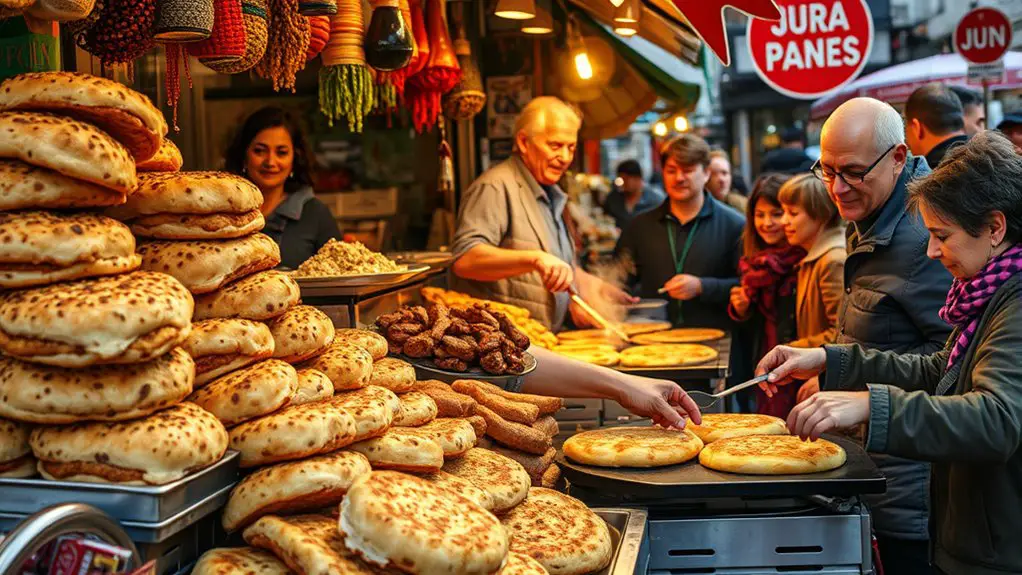
Cihangir is a great place to sample Istanbul’s casual food culture, but “street food” here does not always mean a cart on the pavement. You are just as likely to pick up a hot simit from a neighborhood bakery, grab döner from a small counter, order börek by the slice, or walk toward Taksim and wider Beyoğlu for late-night favorites. Kebabs, simit, börek, midye dolma, and dondurma are all worth knowing before you start eating your way around the area.
Quick Answer
The best Cihangir street-food picks include fresh simit, savory börek, döner or grilled kebabs, rice-stuffed midye dolma, and Turkish dondurma. Cihangir mixes bakeries and takeaway shops with casual food counters, while nearby Taksim and Beyoğlu add more choices such as ıslak hamburger, gözleme, lahmacun, and çiğ köfte.
Key Takeaways
- Simit: Start with a fresh sesame-crusted bread ring, especially in the morning, and pair it with Turkish tea, cheese, or ayran.
- Börek: Look for crisp, flaky pastry filled with cheese, spinach, potato, or minced meat.
- Kebabs and döner: Choose a busy grill or takeaway counter where the meat is cooked fresh and served hot.
- Midye dolma: Stuffed mussels with seasoned rice and lemon are a classic Istanbul snack, but shellfish deserves extra attention to safe handling.
- Dondurma: Traditional Maraş-style Turkish ice cream gets its distinctive elastic texture from ingredients including salep; modern shops may offer many other styles and flavors.
Disclosure: As an Amazon Associate I earn from qualifying purchases. Some links on this page are affiliate links, at no extra cost to you.
What Street Food in Cihangir Is Really Like
Cihangir sits within Beyoğlu, close to Taksim, İstiklal Avenue, Galata, and other busy central districts. That makes it easy to combine neighborhood cafés and bakeries with Istanbul’s wider grab-and-go food scene.
Do not expect every classic dish to come from a pushcart. In Cihangir, a quick local meal might come from a bakery window, a small döner shop, a casual kebab counter, a pastry shop, or a takeaway restaurant. Walk toward Taksim and the busier parts of Beyoğlu and the variety grows even further.
The Istanbul Governorate’s guide to the city’s street foods highlights long-established favorites such as simit and other foods sold throughout Istanbul. That broader definition is the most useful way to approach eating around Cihangir.
Pro Tip: For bakery foods such as simit and börek, freshness matters more than fancy presentation. Choose pieces that have recently come from the oven rather than bread or pastry that has been sitting uncovered for hours.
Kebabs: A Turkish Classic
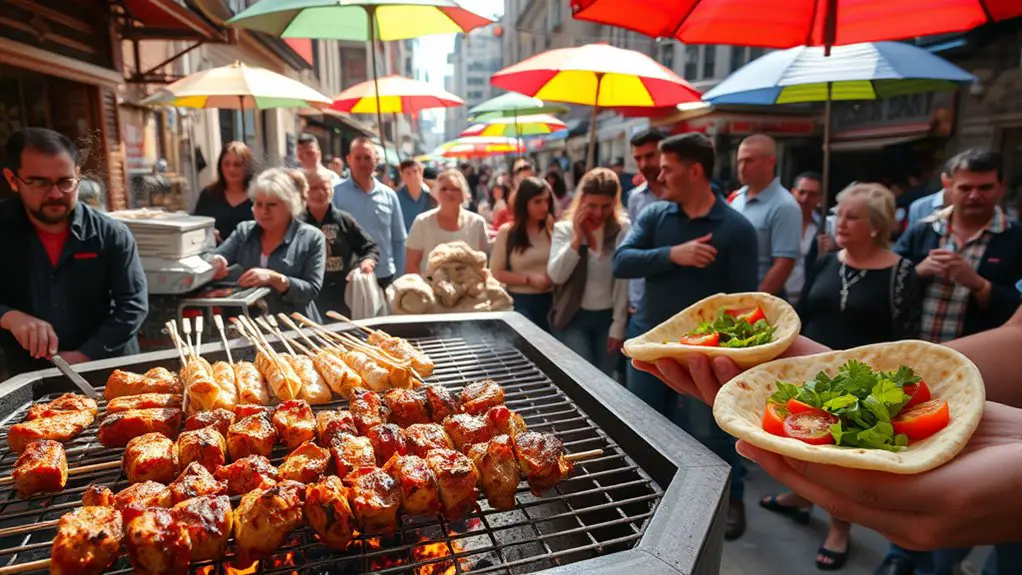
When you walk around Cihangir and nearby Beyoğlu, grilled meat is an easy option for a filling lunch or dinner. The word kebab covers many different preparations, so it helps to know what you are ordering.
Adana kebab is a specific regional preparation rather than simply any spicy minced-meat skewer. The registered Adana Kebabı geographical indication describes a mixture based on sheep meat, tail fat, red pepper, and salt, formed onto long skewers and cooked over glowing embers.
Şiş kebab, by contrast, generally refers to pieces of meat placed on skewers and grilled. Depending on the shop, you may see lamb, beef, or chicken versions.
For the best quick meal, focus less on the word “kebab” and more on what is being cooked fresh in front of you.
Fresh flatbread, grilled peppers and tomatoes, onions, herbs, yogurt-based accompaniments, or salad often round out the meal. Exact sides vary from one kitchen to another.
Döner Is Often the More Practical Grab-and-Go Choice
If you want something easier to eat while exploring, döner is often more convenient than a full kebab plate. Meat cooks on a vertical rotisserie and is sliced to order. You may find it served in bread, rolled in lavash, over rice, or on a plate.
Döner shops are common across central Istanbul, and the format fits Cihangir especially well because many small neighborhood restaurants offer quick counter service rather than formal dining.
Simit: Istanbul’s Iconic Sesame Bread Ring
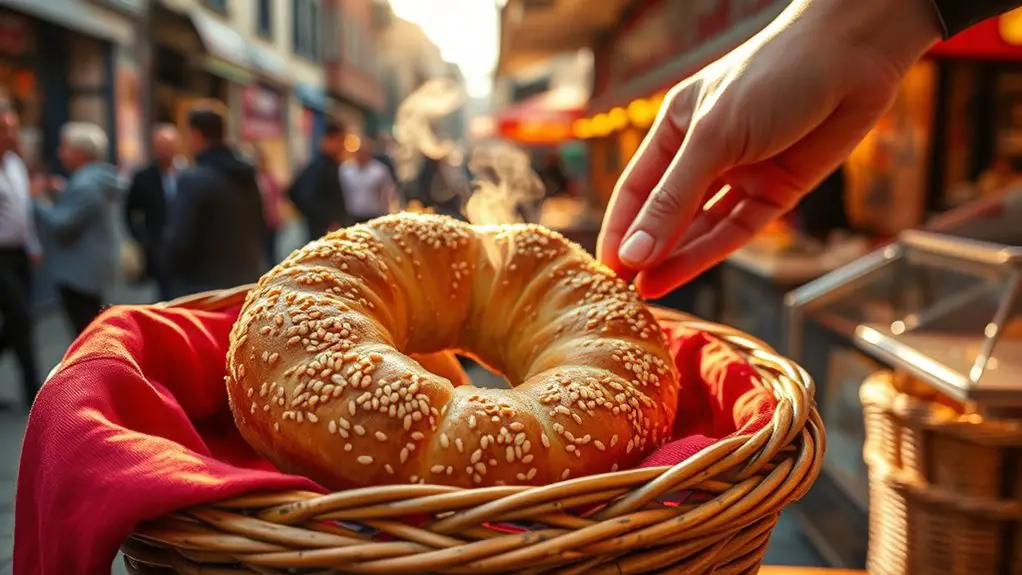
Simit is sometimes described in English as a Turkish bagel, but a sesame-crusted bread ring is a better description. Istanbul-style simit is known for its browned exterior, generous sesame coating, and chewy bread inside.
Its place in Istanbul is not a recent tourism trend. The Istanbul Governorate notes a written record of simid-i halka from 1593, making simit one of the city’s best-documented long-running street foods.
The basic Istanbul version is more important than a list of novelty flavors. According to the Istanbul Commodity Exchange’s description of Istanbul simit, the traditional product uses ingredients including flour, water, salt, yeast, molasses, and sesame and is shaped into a braided ring.
| How to Eat Simit | What to Expect | Good Pairing |
|---|---|---|
| Plain and fresh | Crisp sesame crust with a chewy center | Turkish tea |
| With white cheese | Salty, creamy contrast to the toasted sesame | Tomato or cucumber |
| With breakfast foods | A simple bread for olives, cheese, eggs, and spreads | Tea |
| On the go | Portable and easy to eat while walking | Ayran |
Morning is an especially good time to buy simit because bakeries are turning out fresh batches. A good one should smell toasted and feel crisp rather than stale or rubbery.
Börek: Savory Pastry Delights
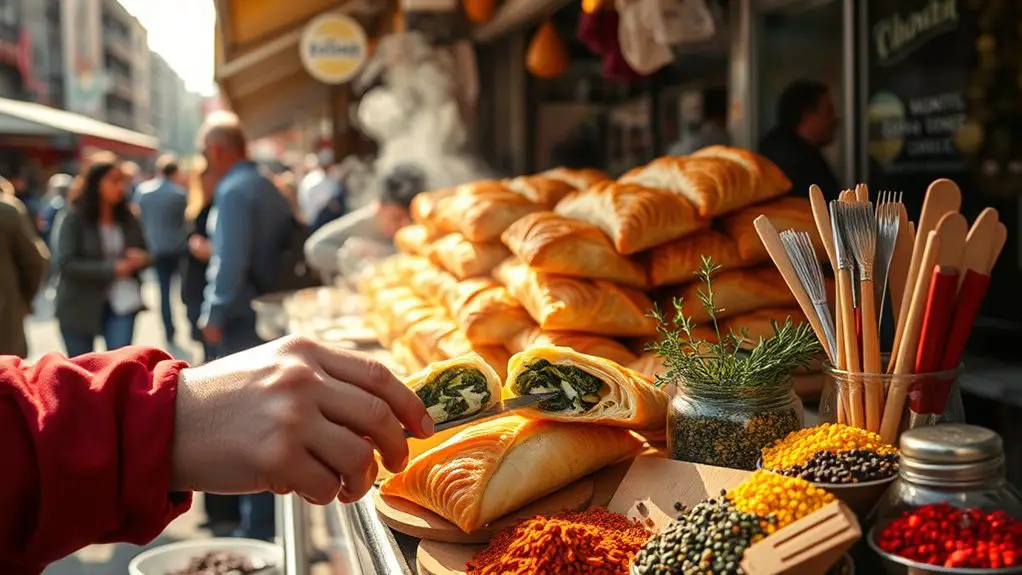
Börek is one of the easiest Turkish foods to build into breakfast, a light lunch, or an afternoon snack. The broad family includes pastries made in different shapes and layers, but the versions most useful to travelers are usually savory.
Common fillings include white cheese, spinach, potato, and minced meat. Istanbul also has its own documented börek traditions; the Turkish Ministry of Culture’s Sarıyer Böreği, for example, uses a savory filling based on minced meat and onions.
Börek can be rolled, layered in a tray, coiled, or cut into portions. Texture varies too. Some versions are shatteringly crisp on the outside, while others are softer and more layered.
Turkish cuisine certainly has sweet pastries, but a visitor ordering ordinary börek should expect savory fillings rather than assume that cinnamon-apple or nut-filled versions are the standard.
Midye Dolma: Stuffed Mussels
Midye dolma is one of Istanbul’s most recognizable seafood snacks. Each mussel shell contains mussel meat and seasoned rice, commonly flavored with onion, herbs and warm spices. Lemon is squeezed over the top just before eating.
A Turkish academic review published in 2022 describes midye dolma as an Ottoman-era street food strongly associated with Istanbul, while official regional recipes also document rice, herbs, spices, pine nuts, currants and lemon among common ingredients.
The usual eating method is simple: open the shell, squeeze on lemon, and use the empty half of the shell to scoop the filled mussel from the other half.
Warning: Take extra care with shellfish. Choose a clean, reputable seller with food protected from contamination and properly held at safe temperatures. CDC travel guidance recommends favoring thoroughly cooked food served hot and warns that raw or undercooked shellfish can carry foodborne-illness risks.
High customer turnover can be a useful sign that food is moving quickly, but a crowd alone does not guarantee safe storage or preparation. Skip mussels that have been sitting in questionable conditions or if you are not comfortable with how they are handled.
Dondurma: Turkish Ice Cream
After something salty or spicy, dondurma makes an easy dessert. The famous stretchy Turkish style is especially associated with Maraş dondurması from Kahramanmaraş.
Traditional Maraş dondurması is made with milk, sugar, and salep, an ingredient produced from orchid tubers. Salep contributes to the dense, elastic texture that separates this style from ordinary soft ice cream.
In Istanbul, however, the word dondurma can cover more than one style. Some shops specialize in traditional chewy ice cream, while others sell modern scoop ice cream, sorbet, or gelato-style flavors. Pistachio, chocolate, vanilla, fruit, and nut flavors are common possibilities, although selections change from shop to shop.
The playful routine in which a seller spins a cone or briefly pulls it away from the customer is associated with some Turkish ice-cream stands. It is entertainment rather than a requirement, so do not expect every Cihangir ice-cream shop to perform it.
Other Street Foods to Try Around Cihangir and Beyoğlu
The original five foods are a good starting point, but limiting yourself to them leaves out several quick bites found across central Istanbul.
- Lahmacun: A thin, crisp round of dough topped with a finely minced meat mixture, usually eaten with parsley, greens, and lemon.
- Gözleme: Thin dough cooked on a hot griddle with fillings such as cheese, spinach, potato, or meat. Vegetarian versions are easy to find.
- Çiğ köfte: The widely sold meat-free version combines fine bulgur, pepper pastes, spices, and herbs and is often wrapped in lavash with lettuce and lemon.
- Islak hamburger: A small, soft burger coated in garlicky tomato sauce and kept warm with steam. It is especially associated with the Taksim area.
- Roasted chestnuts and corn: Simple cart snacks seen around Istanbul’s busier pedestrian areas, particularly when foot traffic is heavy.
Availability changes street by street, so think of Cihangir as a base rather than a sealed-off food district. A short walk toward Taksim, İstiklal Avenue, or other parts of Beyoğlu can open up far more choices.
When to Eat What
Morning is best for bakery foods. Fresh simit and börek make an easy breakfast with tea or ayran.
Lunch and early evening work well for döner, kebabs, lahmacun, and other hot savory dishes because grills and takeaway shops are fully active.
Evening brings more snack-style eating around central Beyoğlu. Midye dolma, desserts, and late-night foods become especially appealing when people are moving between restaurants, cafés, bars, and transport stops.
Opening hours vary by business and season, so check the current listing or posted hours before making a special trip for one particular food.
Vegetarian and Allergen Tips
Vegetarian travelers have several good options. Simit is often suitable depending on the recipe, while cheese, spinach, or potato börek and many versions of gözleme can be meat-free. Modern çiğ köfte sold by specialist shops is also commonly made without meat.
Ask about ingredients when allergies matter. Simit contains gluten and sesame. Börek usually contains gluten and may contain dairy, eggs, or meat. Dondurma commonly contains milk and may contain nuts depending on the flavor. Midye dolma contains shellfish, and some recipes include pine nuts.
Preparation methods vary by shop, and cross-contact can happen in small kitchens, so anyone with a serious food allergy should confirm ingredients directly with the seller rather than rely only on the dish name.
What Does Street Food Cost in Cihangir?
There is no useful single “average street-food price” for Cihangir. A plain bakery item and a full meat meal sit in completely different price ranges, while boutique cafés and tourist-heavy streets can charge more than simple neighborhood counters.
Note: Avoid planning your food budget around old Turkish-lira figures found in travel articles. Prices can change quickly. Check the current menu or posted price before ordering, especially for meat, seafood, and sit-down service.
For better value, compare a few nearby menus and pay attention to portion size. A basic simit or small pastry is naturally a different purchase from a kebab plate, seafood order, or specialty dessert.
Simple Food-Safety Tips
Street food can be one of the highlights of Istanbul, but use the same judgment you would anywhere else. The CDC Yellow Book’s food and water guidance for travelers recommends fully cooked food served hot when hygiene conditions are uncertain.
- Choose hot foods that are cooked thoroughly and served hot rather than lukewarm.
- Look for clean serving surfaces, utensils, and hands.
- Prefer food that is protected from dust, insects, and repeated handling.
- Be more cautious with shellfish, raw foods, and foods that require refrigeration.
- Walk away if the storage, smell, appearance, or handling makes you uncomfortable.
Frequently Asked Questions
What are the best times to enjoy street food in Cihangir?
Morning is excellent for fresh simit and börek. Lunch and early evening suit döner, kebabs, and lahmacun, while evening is a good time to explore snacks and desserts around Cihangir, Taksim, and wider Beyoğlu. Exact opening hours vary by business.
Are there vegetarian street-food options in Cihangir?
Yes. Look for simit, cheese or spinach börek, potato-filled pastries, vegetarian gözleme, and meat-free çiğ köfte. Ingredients vary, so confirm fillings if you avoid dairy, eggs, or other animal products.
How can I find the most popular street-food vendors?
Ask neighborhood residents, check recent map listings, and compare several nearby shops instead of relying on a single viral recommendation. Fresh preparation, clear pricing, clean handling, and steady local customers are more useful signals than social-media popularity alone.
What is the average cost of street food in Cihangir?
There is no dependable single average. A plain bakery snack costs far less than a döner or kebab meal, and prices in Turkish lira can change quickly. Check the current posted menu before ordering rather than relying on old online price guides.
Are there food-safety tips for eating street food?
Favor food that is thoroughly cooked and served hot, and look for clean preparation areas and protected ingredients. Take extra care with mussels and other seafood. A busy shop can indicate quick turnover, but crowds do not guarantee safe storage or handling.
Is Cihangir mainly a street-cart food neighborhood?
No. Cihangir’s casual food scene includes traditional bakeries, small restaurants, takeaway counters, cafés, and dessert shops as well as foods associated with street eating. Walking toward Taksim and other parts of Beyoğlu gives you an even wider selection.
Conclusion
Cihangir gives you an easy starting point for exploring Istanbul’s casual food culture. Begin with a fresh simit or börek, move on to döner or grilled kebab when you want something more filling, try midye dolma with sensible shellfish precautions, and finish with dondurma. Then keep walking toward Taksim and wider Beyoğlu for lahmacun, gözleme, çiğ köfte, ıslak hamburger, and other quick local favorites. The best approach is simple: follow freshness, clear prices, clean handling, and food that is being prepared well in front of you.
Sources
- Istanbul Governorate — İstanbul’un Sokak Lezzetleri — Istanbul street-food culture and the historical record for simit.
- Turkish Patent and Trademark Office — Adana Kebabı — registered preparation and geographical-indication details.
- Türkiye Culture Portal — Sarıyer Böreği — documented Istanbul börek preparation.
- Türkiye Culture Portal — Maraş Dondurması — traditional ingredients and texture of Maraş-style dondurma.
- CDC Yellow Book — Food and Water Precautions for Travelers — guidance on cooked food, shellfish, food temperature, and travel food safety.
