
Last Updated on July 25, 2026 by Caleb Warren
Setting up your travel pillow correctly in an economy seat is the single best way to prevent neck strain and get meaningful rest during a long flight. By adjusting the pillow’s position to support your chin and maintaining proper cervical alignment, you can transform an uncomfortable airplane seat into a supportive rest zone.
Quick Answer
To use a standard U-shaped travel pillow correctly on a flight, position the thickest part under your chin with the opening facing backward. This prevents your head from snapping forward when you drift off. For inflatable models, inflate to only 70–80% capacity to account for cabin pressure expansion at cruising altitude.
Key Takeaways
- Reverse the Pillow: Wearing a U-shaped pillow forward (clasp under the chin) provides vital front support and stops bobbing.
- Mind Cabin Pressure: Never fully inflate air pillows on the tarmac; expanding cabin air at high altitude will make them rock-hard.
- Align Your Spine: Support your lower back with a jacket or blanket to keep your neck resting naturally against the neckrest.
- Block External Stimuli: Combine your neck support with an eye mask and noise-canceling headphones to protect REM sleep cycles.
At a Glance
| Setup Time | 2–3 minutes |
| Skill Level | Beginner |
| Gear Needed | Travel Pillow (Memory Foam or Inflatable), Eye Mask, Earplugs/Headphones |
| Primary Benefit | Prevents forward head drops, neck strain, and flight fatigue |
Disclosure: As an Amazon Associate I earn from qualifying purchases. Some links on this page are affiliate links, at no extra cost to you.
How to Properly Use Your Travel Pillow for Maximum Comfort

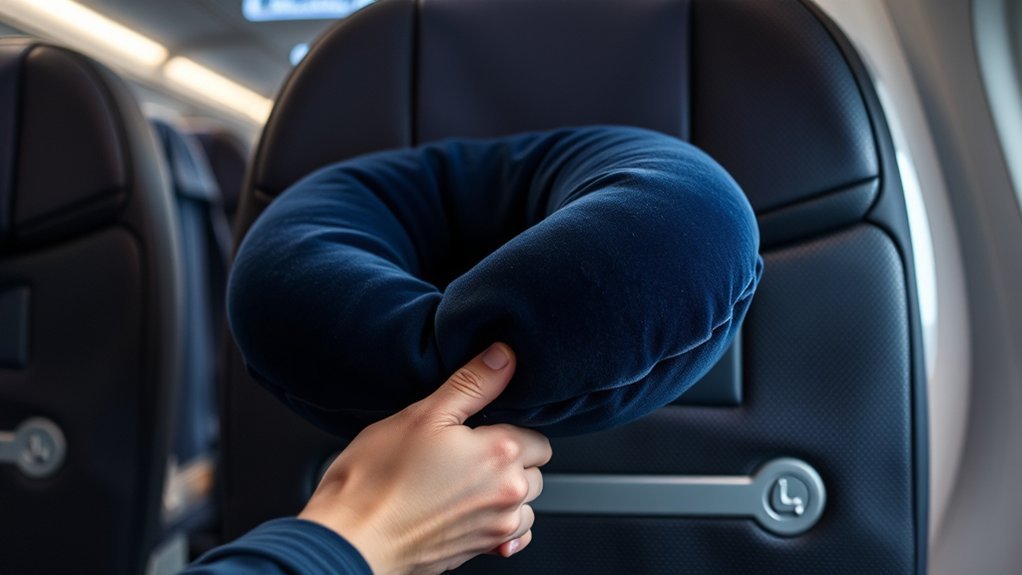
To maximize your comfort during a flight, using your travel pillow in alignment with human neck anatomy is essential. Most travelers place their U-shaped pillow around the back of their neck. However, placing the thickest part of the U-shaped neckrest under your chin creates a bridge that catches your head when your neck muscles relax during sleep. This posture prevents involuntary forward head drops—the leading cause of sudden awakenings and cervical muscle strain during travel.
If you are a side sleeper, rotate the pillow slightly so the bulk of the cushion rests between your collarbone, jaw, and ear. This fills the void between your shoulder and head, keeping your spinal column straight. If you prefer leaning forward toward your tray table, rest the pillow flat on top of the tray and lean your forehead down onto it to take full weight off your lower spine.
Pro Tip: Turn your U-shaped pillow so the opening is behind your neck. Secure the front toggles or Velcro straps under your jaw. This keeps the pillow firmly in place and stops your head from tilting forward without pushing your head away from the airplane seat rest.
Step-by-Step Guide to Inflating Your Travel Pillow
If you use an inflatable air pillow, proper inflation technique dictates how much neck support you receive. Air expands as environmental pressure drops, making altitude management crucial for inflatable travel gear.
- Unpack and Inspect: Remove the pillow from its travel pouch and inspect the air valve and seams for dust, lint, or defects.
- Open the Air Valve: Release the primary seal valve or press the quick-inflation button mechanism.
- Inflate to 75% Capacity: Fill the pillow with air using your breath or the built-in pump. Stop when it feels soft-firm rather than fully rigid.
- Test Cervical Pressure: Rest your head against the pillow. It should yield slightly under your weight to cradle your neck contours.
- Seal the Valve: Press the safety cap tightly into the valve body to prevent gradual air leaks during long rest cycles.
Warning: Commercial airplane cabins are pressurized to an altitude equivalent of 6,000 to 8,000 feet. According to FAA cabin pressure guidelines, trapped air inside an inflatable pillow expands during climb. Over-inflating your pillow on the ground can make it excessively hard or pop the air valve at cruising altitude.
Adjusting Your Pillow for Optimal Support
Achieving healthy spinal posture in an upright economy seat requires balancing your neck position with your lower body posture. Selecting the right pillow material and adjusting seat angles ensures your spine remains in neutral alignment throughout the flight.
Matching Pillow Type to Your Sleeping Style
- Memory Foam Pillows: Best for high-density neck stabilization. High-density foam conforms to heat and weight, offering pressure-point relief for travelers susceptible to stiffness.
- Inflatable Air Pillows: Ideal for light packers and adjustable firmness. You can release small amounts of air via the bleed valve during the flight to adjust support levels.
- Wrap-Around / Ergonomic Scarf Pillows: Best for upright upright sitters. These use internal ribs or wraps to hold the neck at a stable 45-degree angle without bulky rear padding.
When seated in an aisle or middle seat without a window to lean against, support your lumbar curve first. Place a rolled jacket or lumbar pad behind your lower back. This prevents your upper spine from slouching, allowing your travel neck pillow to support the head effortlessly without forcing your neck into an unnatural bend.
How to Create a Cozy Flight Atmosphere
Physical support is only half of the flight sleep equation. To fall asleep faster in a noisy cabin environment, you must manage temperature, lighting, and sound surrounding your seat space.
- Dress in Breathable Layers: Airplane cabin temperatures fluctuate rapidly. Wear soft cotton, merino wool, or fleece layers so you can adapt quickly.
- Block Artificial Light: Use a contoured 3D eye mask that covers your eyes without putting direct pressure on your eyelids. Blocking overhead lights signals your brain to release melatonin naturally.
- Dampen Ambient Engine Noise: Pair active noise-canceling (ANC) headphones or silicone earplugs with ambient white noise.
Note: If you wear bulky over-ear noise-canceling headphones, ensure your travel pillow’s side cushions do not push upward against the earcups. Excessive pressure against your earcups can break the acoustic seal or cause jaw joint (TMJ) discomfort.
Essential Tips for Improving Sleep Quality on Flights
To achieve uninterrupted rest at 30,000 feet, integrate sound posture practices with foundational travel sleep hygiene guidelines recommended by health professionals.
“Proper neck stabilization during vertical sitting reduces involuntary micro-awakenings caused by lateral muscle strain, allowing travelers to complete full light and deep sleep cycles while flying.”
| Optimization Tip | Actionable Sleep Benefit |
|---|---|
| Chin-First Pillow Position | Cradles the jaw and prevents head bobbing when cervical muscles relax. |
| Slight Seat Recline | Transfers torso weight off the lumbar spine onto the seat back cushion. |
| Hydration & Avoidance | Drinking water and skipping caffeine/alcohol maintains stable heart rates and REM sleep quality according to the Sleep Foundation. |
| Compression Gear | Graduated compression socks promote lower-leg blood circulation and prevent swelling on long-haul flights. |
Frequently Asked Questions
Can I use my travel pillow on different types of seats?
Yes, travel pillows work effectively on airplane, train, bus, and car passenger seats. Adjust the pillow orientation depending on your seat’s recline angle and wing support. For flatter seats, use the pillow turned forward under your chin to compensate for upright posture.
How do I clean my travel pillow after use?
Check your pillow’s care tag first. For memory foam pillows, unzip and machine-wash the fabric cover in cold water, but never submerge the internal foam core in water. For inflatable plastic/vinyl pillows, spot-clean the surface using warm water and a mild antibacterial soap, then air dry completely before packing.
What materials are travel pillows typically made from?
Most modern travel pillows use high-density visco-elastic memory foam, inflatable TPU/PVC air bladders, or microbead fillings wrapped in plushvelour or moisture-wicking synthetic fabric covers. High-density memory foam provides the best ergonomic support, while inflatable designs offer compact portability.
Are travel pillows suitable for individuals with neck issues?
Yes. Travel pillows help maintain neutral cervical alignment and reduce muscular fatigue for people with neck vulnerability. According to clinical guidance on neck pain management from Mayo Clinic, keeping the cervical spine aligned during rest prevents acute muscle spasms and joint stiffness.
How do I store my travel pillow when not in use?
For inflatable pillows, open the air valve, deflate completely, fold neatly, and store inside its dust pouch. For memory foam pillows, compress the foam into its travel compression sack during transit, but uncompress and store it unrolled at home to maintain foam resiliency and shape over time.
Conclusion
By making a few simple adjustment steps—such as turning your U-shaped travel pillow forward under your chin and managing air pressure levels—you can transform your economy seat into a restful personal space. Proper neck support stabilizes the head, prevents cervical strain, and protects sleep quality during long air journeys. Combine these ergonomic pillow techniques with a dark eye mask and quiet audio to land at your destination refreshed and ready to explore.
Sources
- Sleep Foundation — Travel and Sleep Hygiene Practices
- Federal Aviation Administration (FAA) — Cabin Altitude Pressure and Physiology Standards
- Mayo Clinic — Neck Pain Prevention and Cervical Posture Care
- National Institutes of Health (NCBI) — Biomechanical Studies on Cervical Spine Support During Upright Sitting

