
Last Updated on July 28, 2026 by Daniel Globe
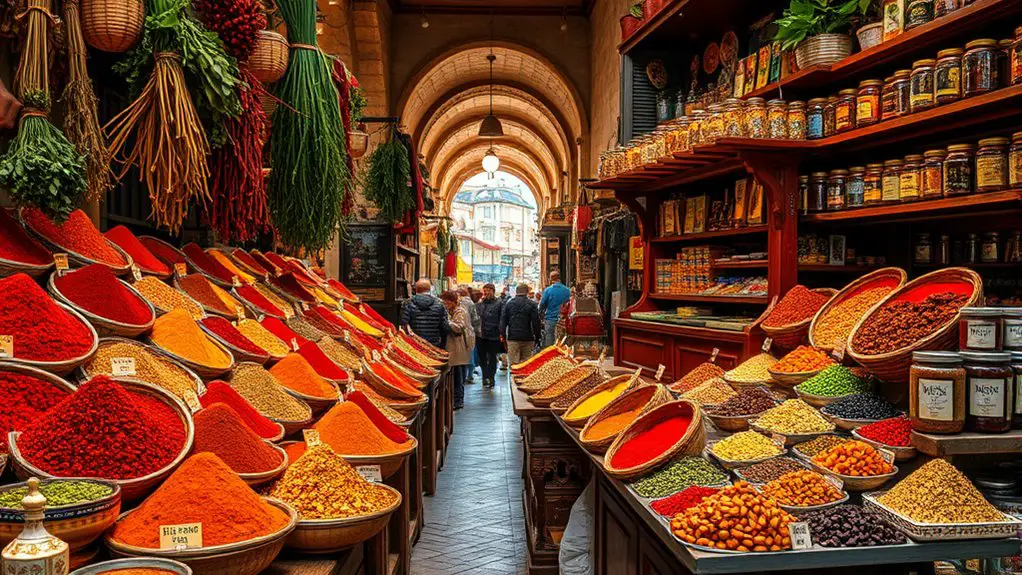
Step into Istanbul’s Spice Bazaar (Mısır Çarşısı) and the first things you notice are the aromas, bright displays, and steady flow of shoppers through its vaulted passages. The historic market in Eminönü is especially good for spices, Turkish delight, nuts, dried fruit, tea, coffee, and compact souvenirs. The best visit comes from knowing the current hours, what is worth comparing, and how to buy without rushing.
Quick Answer
Istanbul’s Spice Bazaar is a historic covered market in Eminönü selling spices, Turkish delight, teas, nuts, dried fruit, coffee, textiles, jewelry, and souvenirs. As of July 2026, its official website lists opening hours of 8:00 AM to 7:30 PM, seven days a week. Entry is free, and the T1 tram stops at nearby Eminönü.
Disclosure: As an Amazon Associate I earn from qualifying purchases. Some links on this page are affiliate links, at no extra cost to you.
Spice Bazaar at a Glance
| Official Name | Mısır Çarşısı, also called the Egyptian Bazaar or Spice Bazaar |
| Current Hours | 8:00 AM–7:30 PM daily, according to the official bazaar website as of July 2026 |
| Admission | Free; no general sightseeing ticket is required |
| Location | Eminönü, Fatih, beside the New Mosque |
| Best Public Transport | T1 tram to Eminönü; ferries and the T5 tram also connect with the Eminönü transport area |
| Time to Allow | About 45–90 minutes for browsing and shopping, longer if you explore the surrounding market streets |
Key Takeaways
- The official bazaar website currently lists hours of 8:00 AM–7:30 PM, seven days a week; recheck shortly before holiday visits.
- For Turkish cooking, look beyond generic spice blends to sumac, pul biber, isot pepper, dried mint, cumin, and good-quality saffron.
- Compare the price, origin, grade, and weight at several stalls before making a large spice or sweet purchase.
- Bargaining is more natural with some souvenirs, textiles, and unmarked goods than with clearly priced food.
- The T1 tram’s Eminönü stop is the simplest rail approach, with ferry connections nearby.
- U.S.-bound travelers should declare spices and other agricultural products on return, even when the item is normally admissible.
A Quick Bit of History and Where to Find It
The Spice Bazaar sits beside the New Mosque (Yeni Cami) in Eminönü on Istanbul’s historic peninsula. The present bazaar was completed in 1664 as part of the New Mosque complex, although the wider construction story of the complex stretches back to the late 16th century.
Official Turkish sources connect the name Mısır Çarşısı, or Egyptian Bazaar, with the market’s historic links to Ottoman Egypt. Taxes and trade connected with Egypt helped support the complex, while spices and other goods also arrived through Egyptian trade routes. The market later became especially associated with spice and herbal merchants.
The building has a distinctive L-shaped plan and six historic gates. Today its shops sell much more than spices, including tea, coffee, dried fruit, nuts, sweets, breakfast foods, jewelry, textiles, and handicrafts. The Istanbul Provincial Directorate of Culture and Tourism provides additional historical detail on the market and its architecture.
For the simplest trip by rail, take the T1 Kabataş–Bağcılar tram to Eminönü. Metro Istanbul also lists Eminönü as an interchange with the T5 tram and City Lines ferry services. From the transport area, walk toward the New Mosque and the bazaar entrances.
Note: As of July 2026, the official Mısır Çarşısı website lists working hours of 8:00 AM–7:30 PM and says the bazaar is open seven days a week. Special-event or holiday schedules can change, so check the official site again if your visit falls near a major holiday.
Must-Try Spices and Herbs
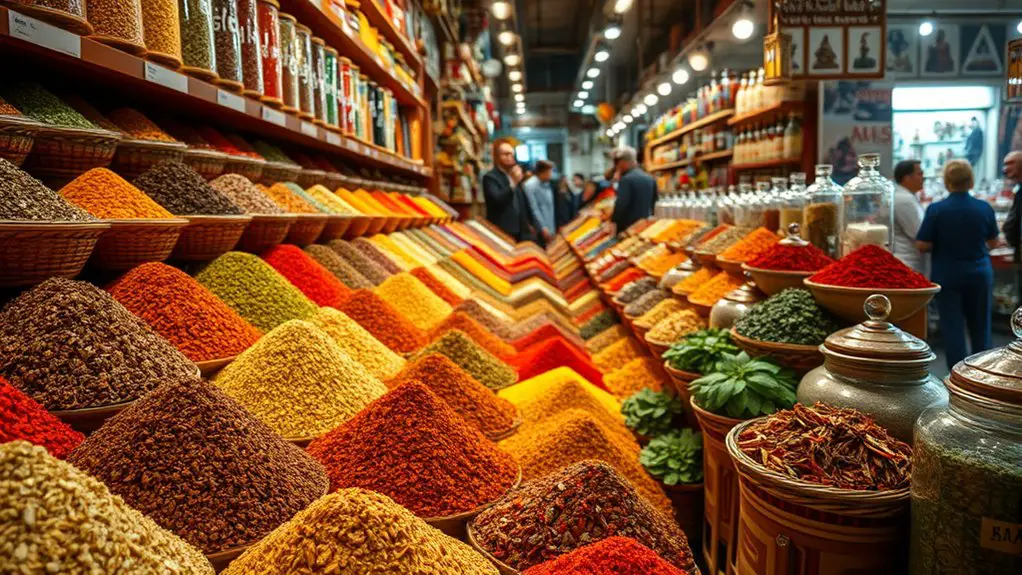
The spice stalls are the market’s signature attraction, but it helps to arrive with a shortlist. Sumac brings a tart, lemon-like note to salads, onions, and grilled food. Pul biber, or Turkish red-pepper flakes, adds warmth without always being intensely hot, while dark isot pepper from southeastern Türkiye has a deeper, smoky-sweet character.
Dried mint, cumin, cinnamon, black pepper, sesame, and mixed seasonings are also easy to find. Za’atar-style herb mixtures may appear too, but the exact blend can differ by seller, so ask what is actually in the mixture before buying.
Saffron deserves more caution because it is costly and food fraud is a documented global problem. A 2026 systematic review of saffron adulteration describes substitution with materials such as safflower and other plant matter. That does not mean a particular Spice Bazaar vendor is selling fake saffron, but it is a good reason to buy from an established shop, favor clearly labeled whole threads over anonymous powder, and ask about origin and weight before paying.
Pro Tip: For spices sold by weight, compare at least two or three shops. Ask for the price per 100 grams or kilogram, the product’s origin, and the final packed weight. Smell the product and ask whether a small sample is available before committing to a large bag.
Exquisite Turkish Delights and Sweets
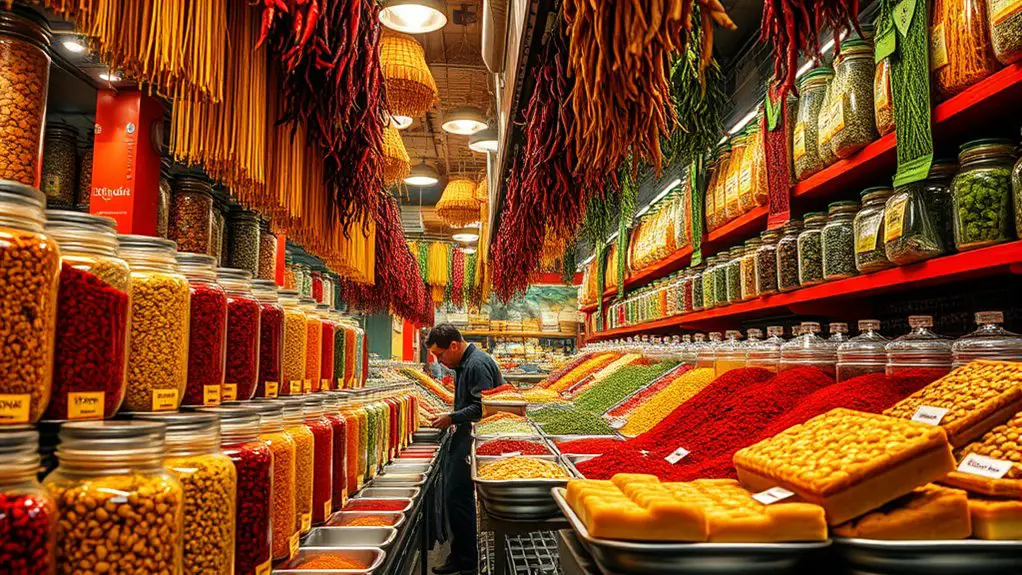
Turkish sweets are another major reason to browse the bazaar. Classic lokum, or Turkish delight, comes in versions flavored with rose, citrus, pomegranate, pistachio, hazelnut, and other ingredients. Texture and freshness vary, so sampling can be useful when a shop offers it.
Baklava is made from thin layers of filo or phyllo pastry, butter, nuts such as pistachios or walnuts, and a sweet syrup. You can find baklava in and around Eminönü, although a busy specialist bakery may be a better choice when freshness matters most.
Muhallebi, a milk pudding, is also worth trying while exploring Istanbul, but it is more naturally found at a café or dessert shop than packed into a spice stall for travel. For gifts, lokum, packaged nuts, coffee, and other shelf-stable sweets are easier to carry.
Before buying a large box, confirm whether the quoted price is for the whole box or by weight. For prepacked gifts, check the ingredient list and best-before date, especially when the product contains nuts, dairy, or gelatin.
Unique Souvenirs and Handicrafts
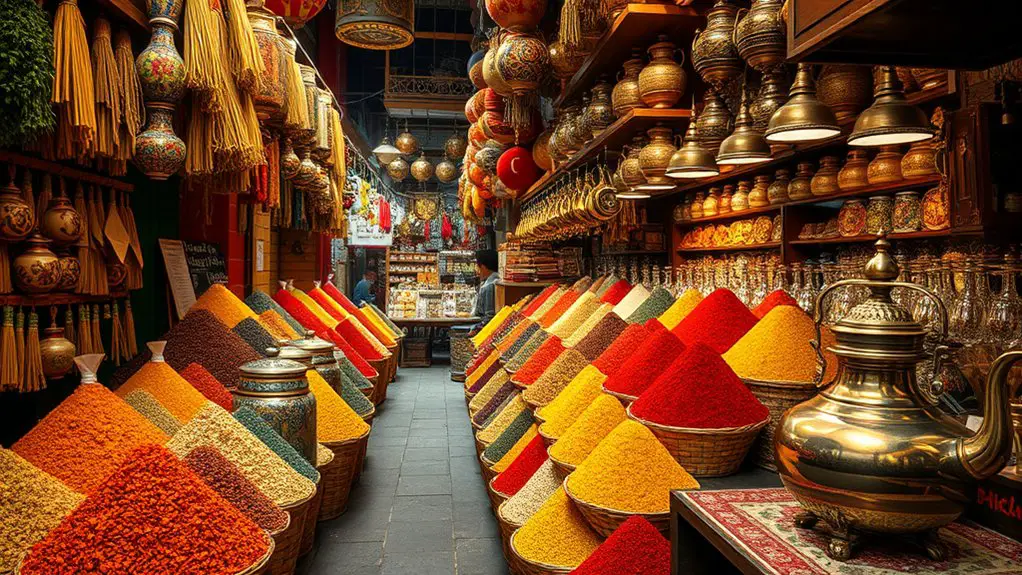
Beyond food, the bazaar has ceramics, textiles, jewelry, decorative objects, soaps, and other souvenirs. You may see patterned bowls and plates, woven scarves, kilim-style textiles, tea glasses, coffee sets, and small gift items.
Quality ranges from handmade work to mass-produced souvenir stock, so do not assume every decorative item is locally handmade. Ask where an item was made and what material it uses, then compare details such as glazing, stitching, finish, and weight before paying a premium.
For fragile ceramics, ask for protective wrapping and leave enough room in your luggage to prevent pressure on the piece. For textiles, check dimensions and fiber content rather than judging only from the display.
Bringing Spices and Food Home
International food-import rules vary by destination, so buying something in Istanbul does not automatically mean it can enter your home country.
For travelers returning to the United States, USDA APHIS guidance says travelers must declare agricultural and wildlife products. Most dried spices are generally admissible, but restrictions apply to items such as citrus leaves and seeds and many fruit or vegetable seeds. U.S. inspectors make the final decision at entry.
Keep spices in their original or clearly labeled packaging where practical, save receipts, and know what ingredients are in mixed teas or spice blends. Dried fruit, nuts, meat products, seeds, and herbal mixtures can fall under different rules.
Note: Declaring an agricultural product is not the same as saying it is prohibited. For U.S. entry, declare it and let the agriculture specialist decide whether it is admissible.
Navigating the Bazaar Like a Local
The bazaar’s L-shaped layout is smaller and easier to understand than the Grand Bazaar, but the main passage can still become congested. Slow down, browse a few stalls before buying, and keep track of quoted prices rather than accepting the first offer.
| Local Custom | Shopping Strategy |
|---|---|
| Greet shopkeepers with “Merhaba” | Browse before committing to a large purchase |
| Ask whether sampling is available | Compare origin, weight, quality, and price |
| Negotiate politely where appropriate | Confirm the final total before goods are packed |
For a quieter experience, arriving near opening time is usually easier than squeezing through the busiest part of the day. The lanes around the covered bazaar, including the Hasırcılar side, are worth exploring too. They contain more food merchants and give you additional products and prices to compare.
Payment methods vary by shop. Cards are common at many established businesses, but do not assume every vendor will take one. Carry some Turkish lira for smaller purchases and confirm the amount shown on the card terminal before approving the transaction.
Warning: Keep bags closed and valuables secure in dense crowds. Current UK travel advice for Türkiye says street robbery and pickpocketing are common in Istanbul’s major tourist areas.
Prices, Bargaining, and Shopping Etiquette
A friendly “Merhaba” is a better opening than immediately demanding a discount. Bargaining still occurs in Istanbul markets, but it is not equally appropriate for every transaction.
Souvenirs, textiles, jewelry, decorative goods, and products without clearly marked prices may leave more room for negotiation. Clearly labeled food prices can be firmer, especially when products are sold by a defined weight.
Rather than starting with an unrealistically low offer, first establish exactly what you are buying. Ask whether the quoted figure is per 100 grams, per kilogram, per box, or for the entire item. Then compare a similar grade at another shop. For saffron, nuts, dried fruit, and sweets, two products that look similar can have different origins or quality levels, so price alone is not enough.
If you make a counteroffer, keep it reasonable and friendly. A seller can decline, and you can politely thank them and continue browsing. Do not feel obligated to buy simply because you accepted a taste of Turkish delight or a cup of tea.
Before paying, repeat the final price and quantity. For card transactions, check the terminal amount and currency yourself. For cash, count your change before walking away.
The most useful bargaining tool is comparison shopping: know the product, weight, origin, and price at more than one stall before deciding what a “good deal” actually is.
Frequently Asked Questions
What are the opening hours of the Spice Bazaar?
As of July 2026, the official Mısır Çarşısı website lists opening hours of 8:00 AM–7:30 PM, seven days a week. Special-event or holiday schedules can change, so check the official website again shortly before a holiday visit.
Do I need a ticket or reservation for the Spice Bazaar?
No general sightseeing ticket or advance reservation is required to walk through the Spice Bazaar. It is an active shopping market rather than a ticketed museum. Guided food or sightseeing tours are optional commercial services.
Is the Spice Bazaar wheelchair accessible?
The main covered market is largely on one level and is generally manageable for many wheelchair users, but crowds can make movement difficult and some surrounding streets have uneven paving. Metro Istanbul states that T1 stations are designed for low-floor tram operation with ramps for disabled access. Visiting earlier in the day can make the market easier to navigate.
Are there any nearby attractions to visit?
Yes. The New Mosque sits beside the bazaar, while the Galata Bridge and Eminönü waterfront are nearby. Rüstem Pasha Mosque is another worthwhile stop in the surrounding market district. To reach the Grand Bazaar without relying on a walking-time estimate, use the T1 tram from Eminönü to Beyazıt-Kapalıçarşı or walk uphill through the historic commercial streets. If you continue toward Sultanahmet, this Turkish breakfast café guide covers another local food stop.
Can I find halal products at the Spice Bazaar?
Many staples such as plain spices, tea, nuts, dried fruit, and coffee do not contain meat ingredients, but halal status should still be checked product by product when it matters to you. For sweets and processed foods, ask about gelatin, flavorings, alcohol-based ingredients, and whether the product carries halal certification rather than assuming every item has the same status.
Is there parking available near the Spice Bazaar?
Eminönü is a busy central district, so driving is rarely the simplest way to reach the market. Public transport is usually more convenient: the T1 and T5 trams serve Eminönü, and ferry services connect the waterfront with other parts of Istanbul. Travelers who need to drive should check a current navigation or parking service for available facilities on the day of the visit rather than relying on street parking.
Can I bring spices from Istanbul back to the United States?
Most dried spices are generally admissible for personal use, but U.S. travelers must declare agricultural products to Customs and Border Protection. USDA notes restrictions for products such as citrus leaves and seeds and many fruit or vegetable seeds. Keep packaging and receipts, declare what you have, and let the agriculture specialist make the final entry decision.
Conclusion
The Spice Bazaar is at its best when you treat it as both a historic market and a place to comparison-shop rather than rushing to buy at the first colorful display. Start with distinctly Turkish ingredients such as sumac, pul biber, isot, dried mint, and lokum, compare weights and prices, and ask questions about origin and quality before buying premium products such as saffron.
Arrive early if you prefer more room to browse, keep valuables secure in the crowds, and explore the surrounding Eminönü streets as well as the covered arcade. With the current hours checked before you go and a little care over what you purchase and pack, the market can be one of Istanbul’s most enjoyable food-shopping stops.
Sources
- Official Mısır Çarşısı Website — current opening hours, location, history, product categories, and bazaar information
- Istanbul Provincial Directorate of Culture and Tourism — Historic Bazaars — construction history, L-shaped plan, gates, restoration history, and historical trade
- Metro Istanbul — T1 Kabataş–Bağcılar Tram Line — Eminönü station, transport connections, operating information, and station accessibility
- USDA APHIS — International Travelers: Coffee, Tea, Honey, Nuts, and Spices — U.S. declaration requirements and restrictions affecting spices and plant products
- UK Foreign, Commonwealth & Development Office — Türkiye Safety and Security — current tourist-area theft and personal-security guidance
- PubMed — Combating Saffron Fraud: A Systematic Review — evidence on saffron adulteration methods and authenticity concerns
