
Last Updated on July 25, 2026 by Daniel Globe
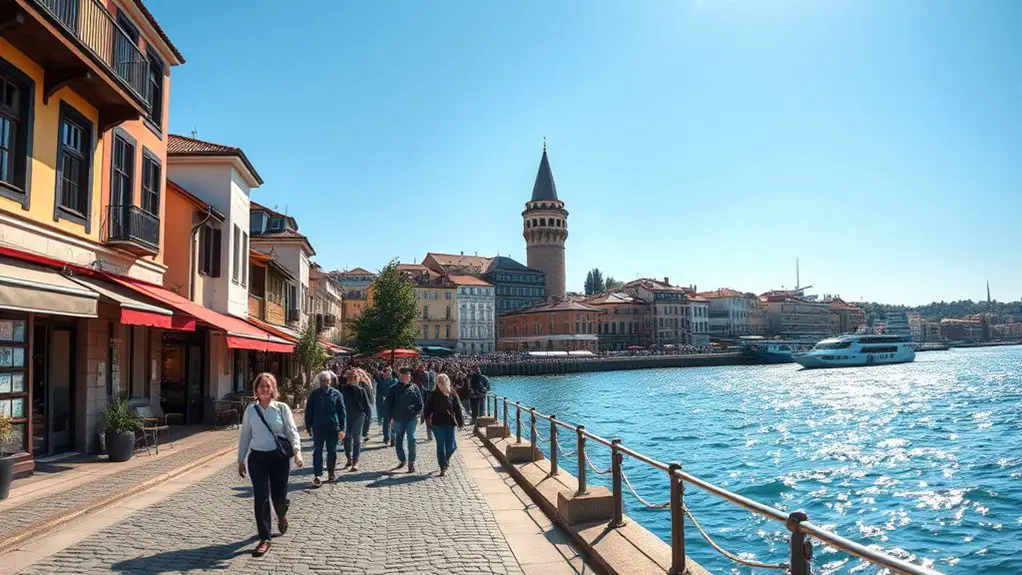
Exploring Istanbul’s Golden Horn waterfront on foot takes you through several layers of the city’s history, from Byzantine-era neighborhoods and fortifications to Ottoman mosques, working markets, ferry piers, churches, and residential streets. A practical route can begin around Eminönü and Galata Bridge, continue through Fener and Balat, and finish with an optional extension to Eyüpsultan. Along the way, you get Golden Horn views rather than a continuous Bosphorus panorama; the Bosphorus meets the Golden Horn near the eastern end of the route.
Quick Answer
The best Golden Horn walking tour starts around Eminönü and Galata Bridge, follows the waterfront toward Fener and Balat, then continues or uses the ferry to Eyüpsultan. Allow at least half a day if you plan to enter mosques and churches. Expect hills, busy market streets, working neighborhoods, and some of Istanbul’s strongest Byzantine and Ottoman heritage.
Key Takeaways
- Start near Eminönü and Galata Bridge for markets, waterfront views, and easy transport connections.
- Fener and Balat offer the strongest concentration of churches, colorful streets, neighborhood shops, cafés, and religious heritage on a compact walking route.
- Süleymaniye Mosque is worth seeing, but it is an uphill inland detour, not a structure directly on the water.
- Use a Golden Horn ferry to shorten the walk or extend the trip to Eyüpsultan without retracing every step.
- Wear comfortable shoes, dress respectfully for active places of worship, watch your belongings in crowded areas, and allow extra time for hills and unplanned stops.
At a Glance
| Time Required | About 3–4 hours for a focused Fener/Balat visit; allow roughly half a day for a broader route with Eminönü, interiors, food stops, and Eyüpsultan. |
| Difficulty | Moderate. The waterfront is generally straightforward, but Fener, Balat, and the Süleymaniye detour include steep streets, stairs, and uneven surfaces. |
| Tools Needed | Comfortable walking shoes, water, a phone map, sun or rain protection, and clothing suitable for entering active religious sites. |
| Cost | Walking the neighborhoods is free. Budget separately for public transport, food, guided tours, and any attraction that charges admission; prices and opening arrangements can change. |
Disclosure: As an Amazon Associate I earn from qualifying purchases. Some links on this page are affiliate links, at no extra cost to you.
The Historical Significance of the Golden Horn
While you stroll along the shores of the Golden Horn, you are moving beside the natural harbor that forms the northern edge of Istanbul’s Historic Peninsula. The UNESCO World Heritage Centre describes the Historic Peninsula as bordered by the Golden Horn to the north, the Bosphorus to the east, and the Sea of Marmara to the south.
That distinction matters when planning a walking tour. The Golden Horn is connected to the Bosphorus, but the two names are not interchangeable. From the waterfront you will often be looking across the Golden Horn toward neighborhoods on the opposite shore, while broader Bosphorus views become more obvious around its mouth near Galata Bridge and Karaköy.
For centuries, the sheltered inlet played an important role in the commercial and defensive life of Constantinople and later Ottoman Istanbul. Merchants, ships, workshops, religious communities, and residential districts grew around its shores. Today, the harbor still links areas with markedly different architectural and cultural histories.
The Golden Horn is best understood not as a single attraction, but as a historic harbor connecting markets, neighborhoods, religious sites, ferry piers, and monuments from different periods of Istanbul’s history.
Recommended Golden Horn Walking Route
A practical self-guided route begins around Eminönü and Galata Bridge, continues west toward Fener and Balat, and then either finishes there or extends to Eyüpsultan. Trying to visit every landmark mentioned in this guide in three hours will feel rushed, especially if you enter mosques or churches.
- Eminönü and Galata Bridge: Start at the mouth of the Golden Horn and take in the ferry traffic, fishermen, and skyline.
- Spice Bazaar and Rüstem Pasha Mosque: Make a short inland detour through Eminönü’s commercial streets.
- Optional Süleymaniye detour: Climb inland for one of Istanbul’s major Ottoman mosque complexes, then return toward the Golden Horn.
- Fener waterfront: Continue toward St. Stephen Church and the Fener Greek Orthodox Patriarchate.
- Fener and Balat backstreets: Climb into the neighborhood for historic houses, cafés, small shops, and St. Mary of the Mongols.
- Balat waterfront: Return downhill to the shore.
- Optional Eyüpsultan extension: Continue on foot if you have time or use the Golden Horn ferry to reduce the amount of backtracking.
Pro Tip: Do not force the entire Golden Horn into one continuous walk. A good compromise is to walk the historic streets between Eminönü, Fener, and Balat, then use the ferry for the Eyüpsultan leg or the return journey.
Architectural Marvels Along the Waterfront
As you move along and above the Golden Horn waterfront, you encounter architecture from several periods rather than one uniform historical district. Ottoman mosques dominate parts of the skyline, Byzantine and later Orthodox Christian heritage survives in Fener and nearby areas, and modern infrastructure such as the present Galata Bridge occupies historically important crossing points.
This mix is one reason the Golden Horn is more rewarding when explored slowly. Some landmarks stand beside the water, while others require short but steep climbs into the historic neighborhoods.
Ottoman Era Structures
Ottoman architecture around the Golden Horn ranges from monumental imperial complexes to smaller mosques embedded in commercial streets. The Süleymaniye Mosque is one of Istanbul’s defining Ottoman monuments, but it sits on elevated ground above the waterfront rather than directly beside it.
| Landmark | Why It Matters | Route Note |
|---|---|---|
| Süleymaniye Mosque | A major 16th-century Ottoman mosque complex associated with architect Sinan and part of UNESCO’s Historic Areas of Istanbul. | Uphill detour from the waterfront. |
| Rüstem Pasha Mosque | A Sinan-designed mosque especially noted for its İznik tile decoration. | Convenient inland stop near Eminönü’s market streets. |
| Eyüp Sultan Mosque | One of Istanbul’s most important Islamic religious sites and the focal point of the Eyüpsultan district. | Best treated as the western extension of the walk. |
| Galata Bridge | The crossing has deep historical associations, although the bridge standing here today is a modern structure. | Excellent starting point at the mouth of the Golden Horn. |
UNESCO identifies the Süleymaniye Mosque complex as one of the architectural masterpieces contributing to the Outstanding Universal Value of historic Istanbul. The mosque also gives you a useful visual lesson in the city’s geography because its elevated position looks over the dense quarters surrounding the Golden Horn.
Byzantine Influences Evident
The Golden Horn route also reveals the legacy of the Eastern Roman, or Byzantine, city. Not every surviving Byzantine site is directly on the waterfront, so it helps to separate the main walking route from optional inland extensions.
The Theodosian land walls, for example, protected the western side of the Historic Peninsula. Their northern sections approach the Golden Horn around the Ayvansaray and former Blachernae area, but the walls should not be described as something you continuously follow beside the water. UNESCO treats the land-wall zone as a distinct component of the Historic Areas of Istanbul.
In Fener, the Church of St. Mary of the Mongols is an especially unusual survivor. Current Istanbul heritage information notes that the church remained in Greek Orthodox use instead of being converted into a mosque after the Ottoman conquest. Its location is uphill from the waterfront, and access can be more limited than at major tourist monuments.
The point of visiting is not simply to photograph an old building. The church helps explain how religious communities continued to exist within a city that changed political, cultural, and architectural identity many times.
Note: Small churches and active places of worship may not operate like conventional tourist attractions. Do not assume that a door will be open simply because a map lists the site. Respect posted rules and accept that access can change for services, security, or community needs.
Exploring the Vibrant Markets and Bazaars
The market experience changes as you move along the Golden Horn. Around Eminönü, the streets are intensely commercial, with food sellers, spice shops, coffee, sweets, household goods, and constant pedestrian traffic.
The most obvious named stop is the Spice Bazaar, also known as the Egyptian Bazaar or Mısır Çarşısı. Its location makes it an easy addition near the beginning of the route. Rather than expecting every Golden Horn neighborhood to resemble a grand covered bazaar, treat Eminönü as the major market zone and Fener/Balat as a different kind of shopping experience.
As you move west, small cafés, neighborhood businesses, vintage shops, antiques, and newer visitor-oriented stores become more common. In Balat, the pleasure is often in browsing side streets rather than searching for one giant market hall.
Food is equally useful as a way to pace the walk. You may encounter simit, börek, sweets, Turkish coffee, tea, meze, soups, grilled food, and other everyday options. Stop when you are hungry rather than trying to turn every food recommendation into another compulsory attraction.
Cultural Landmarks and Religious Sites
The Golden Horn’s religious buildings make the route especially rich, but they are not museum sets. Many remain active places of worship, so modest behavior matters just as much as architectural appreciation.
The Süleymaniye Mosque combines monumental Ottoman architecture with an elevated setting above the Golden Horn. If you enter an active mosque, dress modestly, remove your shoes where required, keep your voice low, and avoid disrupting prayer.
On the waterfront in Balat, the Bulgarian St. Stephen Church is one of the area’s most distinctive buildings. The present church, completed in the late 19th century, is popularly known as the Iron Church because its structure was assembled from prefabricated iron elements.
Nearby in Fener, the Patriarchal Church of St. George stands within the Fener Greek Orthodox Patriarchate. Visit Istanbul’s Balat guide identifies the Patriarchate, St. George, St. Stephen Church, and other religious buildings as key landmarks in this historically diverse district.
Farther uphill, St. Mary of the Mongols adds another layer of Byzantine and Greek Orthodox history. Together, these sites show why Fener and Balat deserve more than a quick stop for colorful-house photographs.
Warning: Check the entrance before photographing interiors or worshippers. During services, prayer times, or private religious events, visitor access may be restricted. Never block an entrance, ceremony, or residential doorway for a photo.
Hidden Gems and Local Favorites
Many visitors come to Balat for its colorful facades, but the neighborhood is more interesting when treated as a lived-in district rather than a photography set. Residents use the same steep streets, doorways, shops, churches, and cafés that visitors are exploring.
You may find the aroma of freshly baked simit, small cafés, older shopfronts, quiet courtyards, and sudden views back toward the Golden Horn. The atmosphere changes quickly once you leave the busiest photo streets.
Slow down in Fener and Balat. The most memorable part of the walk is often the transition between waterfront, steep residential lanes, religious landmarks, cafés, and everyday neighborhood life.
Three worthwhile areas to explore are:
- Balat’s Colorful Streets: Walk beyond the best-known photo corners and notice the mix of restored facades, older homes, workshops, cafés, and local businesses.
- Süleymaniye’s Narrow Lanes: If you make the uphill detour earlier in the route, allow time for the surrounding streets rather than entering the mosque and immediately leaving.
- Fener’s Side Streets: Walk between the waterfront and the hills around the Patriarchate and St. Mary of the Mongols for a better sense of the district’s religious and residential history.
Be considerate in residential streets. Keep voices down, avoid photographing people at close range without permission, and do not use private doorsteps as photo props.
Using the Golden Horn Ferry
You do not have to walk every kilometer in both directions. Istanbul’s municipal ferry network can turn the route into a much easier one-way exploration.
Current Şehir Hatları Golden Horn service includes stops such as Fener, Balat, Ayvansaray, Sütlüce, and Eyüpsultan. Schedules can change, so check the official timetable on the day of your trip rather than relying on an old blog post or screenshot.
A useful strategy is to walk from Eminönü through Fener and Balat, then board a ferry for Eyüpsultan or use the ferry for the return leg. This gives your feet a break and lets you see the shoreline from the water.
Tips for an Unforgettable Walking Tour Experience
The Golden Horn rewards preparation, but the route does not need to be rigid. Plan the important landmarks first, then leave enough time to wander through the smaller streets without rushing.
Plan Your Route Wisely
Efficient route planning prevents unnecessary backtracking, especially because several landmarks sit uphill from the waterfront.
- Choose Your Priorities: Decide whether your main goal is Ottoman architecture, Fener/Balat neighborhood history, religious heritage, photography, markets, or a longer walk to Eyüpsultan.
- Use a Live Map: Streets can be steep and indirect. A map app helps you return to the waterfront after inland detours.
- Check Ferry Service: Verify the current municipal schedule before depending on a boat for the return journey.
- Allow for Worship: Build flexibility into the schedule because active religious buildings may temporarily limit visitor access.
Morning is often comfortable for a long walk because you can cover more ground before the busiest part of the day. Late afternoon can provide excellent light across the Golden Horn, but do not plan a complicated route so tightly that you are rushing to beat sunset or transport connections.
Capture Scenic Moments
Your Golden Horn walking tour offers plenty of opportunities for street and waterfront photography. Around Galata Bridge and Eminönü, the combination of ferries, fishermen, mosques, and the harbor creates one of the route’s most recognizable views.
Farther west, photograph the Golden Horn itself, the opposite shore, historic facades, and the steep geometry of Fener and Balat’s streets. From higher ground, the waterfront opens beneath you and makes the relationship between the neighborhoods and harbor easier to understand.
At sunset, minarets and waterfront buildings can form striking silhouettes. Remember, however, that the most photogenic streets are still homes and working neighborhoods.
Prepare for Hills, Weather, and Accessibility
Flat waterfront sections can make the route look easier on a map than it feels in practice. Balat, Fener, and the Süleymaniye area include steep climbs, steps, broken or uneven paving, and narrow sidewalks.
Comfortable shoes are more important than formal touring gear. Carry water in warm weather and some rain protection when the forecast is uncertain.
Travelers with limited mobility should plan each landmark individually rather than assuming the entire route is step-free. Using ferries or road transport between sections can make the day far more manageable.
Stay Aware in Crowded Areas
Golden Horn neighborhoods attract visitors, commuters, worshippers, shoppers, and local residents. Around transport hubs and busy markets, normal big-city precautions are sensible.
As of July 2026, the U.S. Department of State advises travelers to exercise increased caution in Türkiye and specifically recommends awareness in crowded public spaces, transportation hubs, markets, tourist locations, and places of worship.
Keep phones and wallets secure in dense crowds, avoid demonstrations, pay attention to local instructions, and use official transportation. For a serious emergency in Türkiye, the national emergency number is 112.
Frequently Asked Questions
What Is the Best Time of Year to Visit the Golden Horn?
Spring and autumn are often comfortable choices for a long urban walk because conditions are generally milder than at the height of summer or winter. Istanbul weather can still change quickly, so check the forecast before setting out and plan your clothing around the actual conditions.
Are There Guided Walking Tours Available in Multiple Languages?
Yes. Istanbul tour operators commonly offer private and group walks in more than one language, but the language choices vary by guide, company, and date. Confirm the exact language, itinerary, group size, inclusions, and cancellation policy before booking rather than relying on a general percentage or popularity claim.
How Long Should I Plan to Spend on the Walking Tour?
Allow about 3–4 hours for a focused Fener and Balat walk with a few stops. A broader Golden Horn itinerary beginning around Eminönü and including mosque or church interiors, food stops, uphill detours, and Eyüpsultan is better treated as a half-day outing. Your pace and the amount of time spent inside landmarks will make the biggest difference.
Are There Any Safety Concerns for Tourists in the Area?
Use normal big-city precautions and stay especially aware in crowded markets, ferry areas, transport hubs, and tourist streets. Keep valuables secure, avoid demonstrations, and follow local instructions. Current official travel guidance should take priority over old crime statistics or blanket statements that an area is completely safe.
Can I Find Vegetarian or Vegan Food Options Along the Route?
Yes. You can usually find vegetarian choices such as simit, vegetable dishes, lentil soup, salads, meze, and some varieties of börek. Vegans should ask about butter, yogurt, cheese, eggs, meat stock, or other animal ingredients because preparation varies from one restaurant or bakery to another.
Where Should I Start a Golden Horn Walking Tour?
Eminönü near Galata Bridge is the most practical starting point for a first visit because it combines ferry and tram connections with waterfront views, the Spice Bazaar area, and easy access to the western Golden Horn. From there, continue toward Fener and Balat.
Can I Use a Ferry Instead of Walking the Whole Route?
Yes. Şehir Hatları operates Golden Horn services with stops including Fener, Balat, and Eyüpsultan. A ferry is useful for extending the trip without adding a long return walk. Always check the current official timetable before depending on a particular departure.
Conclusion
A walk along the Golden Horn works best when you treat the waterfront as a connected series of neighborhoods rather than a checklist of isolated monuments. Begin amid the ferries and market streets of Eminönü, make selective Ottoman detours, explore the churches and steep lanes of Fener and Balat, and use the ferry if you want to continue toward Eyüpsultan without exhausting yourself.
The reward is not simply a collection of photographs. You see how a natural harbor, Byzantine and Ottoman heritage, active religious communities, markets, transport, and everyday neighborhood life overlap in one part of Istanbul. Give the route enough time, respect the places you enter, and leave room for the unplanned stops that make a walking tour memorable.
Sources
- UNESCO World Heritage Centre — Historic Areas of Istanbul — Golden Horn geography, Historic Peninsula, Byzantine walls, and Süleymaniye’s heritage significance.
- Visit Istanbul — Balat — Fener/Balat religious landmarks including the Patriarchate, St. George, and St. Stephen Church.
- Visit Istanbul — Church of St. Mary of the Mongols — historical background and continued Greek Orthodox use.
- Digital Istanbul — Sveti Stefan Church — construction history of the Bulgarian Iron Church.
- Şehir Hatları — Golden Horn Ferry Service — current municipal ferry stops and timetable information.
- U.S. Department of State — Türkiye Travel Advisory — current travel-safety precautions and emergency guidance.
