
Last Updated on July 25, 2026 by Daniel Globe
Step off the ferry at Heybeliada and you can explore one of Istanbul’s greenest Princes’ Islands largely on foot. A good Heybeliada walking tour combines the waterfront, historic wooden streets, the Halki Theological School, İsmet İnönü House and a stretch of pine-covered coastline. The island is compact, but its hills mean a relaxed half-day works better than trying to rush from one landmark to the next.
Quick Answer
For a rewarding Heybeliada walking tour, arrive by ferry, explore the waterfront and old residential streets, climb toward the Halki Theological School, continue toward Değirmenburnu or İsmet İnönü House, then return to the pier for a meal. Allow about 3–5 hours because the island is hillier than it first appears.
Key Takeaways
- Check the ferry timetable on the day you travel because journey times and stopping patterns vary by service and season.
- Heybeliada is easy to explore without a car, but several useful routes involve steady uphill walking.
- Do not confuse the historic Halki Palace building with the Halki Theological School on the Hill of Hope.
- For history, prioritize the Halki Seminary complex and İsmet İnönü House; for nature, add Değirmenburnu or Çam Limanı.
- Electric public transport can shorten the day if the hills, heat or distance become tiring.
At a Glance
| Time Required | About 3–5 hours for a relaxed half-day route; longer if you add beaches, Çam Limanı or lengthy meal stops. |
| Difficulty | Easy to moderate overall, with hills and occasional uneven surfaces making some sections more demanding. |
| Tools Needed | Comfortable walking shoes, water, sun protection, a charged phone with maps, and an İstanbulkart or other accepted transport payment method. |
| Cost | Low to moderate. Budget for ferry transport, food and drinks, plus optional museum, beach or park charges where applicable. |
Disclosure: As an Amazon Associate I earn from qualifying purchases. Some links on this page are affiliate links, at no extra cost to you.
Getting to Heybeliada Island
Heybeliada is the second-largest of Istanbul’s Princes’ Islands and is reached by passenger ferry. One useful option is the Şehir Hatları Kabataş–Adalar service, which includes Heybeliada on many departures.
Do not plan around a fixed 45-minute crossing. Journey time from Kabataş varies according to the service and its intermediate stops; current schedules can put the trip at roughly 55–90 minutes. Other ferry connections are available from the Asian side and from other Istanbul piers.
Schedules change seasonally, so check the operator’s timetable shortly before leaving. Şehir Hatları also publishes its current ferry fare information. Arriving earlier than your chosen departure is wise on sunny weekends and public holidays, when the islands attract more day-trippers.
Pro Tip: Save or screenshot your intended return sailings before starting the walk. It is much easier to relax over lunch when you already know which ferries can get you back to Istanbul.
A Practical Self-Guided Heybeliada Walking Route
There is no single mandatory route around Heybeliada. For a first visit, the most useful approach is a flexible loop that combines the town, one major historic landmark and one nature stop.
- Start at Heybeliada Ferry Pier. Spend a few minutes along the waterfront, where cafes, boats and the town center give you an easy introduction to the island.
- Walk through the old residential streets. Leave the busiest waterfront blocks and look for the wooden houses, balconies, gardens and quieter lanes that give Heybeliada much of its character.
- Climb toward the Halki Theological School. The seminary stands on the Hill of Hope and is one of the island’s most important historic sites. Access to parts of the complex can depend on current conditions, religious events and opening arrangements.
- Choose Değirmenburnu or İsmet İnönü House. Değirmenburnu gives the route more trees and coastline, while the İnönü House adds modern Turkish history.
- Return toward the waterfront. Finish with coffee, tea or a meal near the pier, or extend the outing toward Çam Limanı if you still have time and energy.
Warning: Heybeliada looks small on a map, but the island is not flat. Summer heat and repeated climbs can turn a short-looking route into a tiring walk. Carry water and shorten the route rather than pushing on when conditions are uncomfortable.
Exploring the Waterfront
As you step off the ferry, Heybeliada’s waterfront unfolds around the pier, with cafes, restaurants, shops and views over the Sea of Marmara. It is the easiest part of the island to explore and a useful place to orient yourself before climbing into the residential streets.
| Waterfront Activity | What to Look For |
|---|---|
| Take a leisurely walk near the pier | Ferries, shoreline views and the island’s compact town center |
| Stop for coffee, tea or breakfast | A convenient rest before tackling the hills |
| Watch the ferry traffic | Views across the Marmara and toward Istanbul |
| Return for an evening stroll | Softer light and a relaxed end to the walking tour |
The waterfront is pleasant, but do not spend your entire visit there. Walk a few blocks inland and the atmosphere becomes noticeably quieter, with residential streets, gardens and older houses replacing the busiest restaurant frontage.
Discovering Heybeliada’s Architectural Gems
Heybeliada’s architectural character comes from a mixture of wooden houses, historic religious buildings, civic structures and institutions connected with the island’s multicultural past.
The most important correction to make when exploring is that Halki Palace and the Halki Theological School are not the same place. Halki Palace is a separate historic building. The Holy Theological School of Halki stands on the Hill of Hope within the Holy Trinity monastery complex.
The Ecumenical Patriarchate records that the theological school was established in 1844. After the 1894 earthquake damaged the earlier buildings, the present complex was rebuilt and inaugurated in 1896. The school ceased theological instruction in 1971, although the complex remains an important religious and historical institution.
The Halki Theological School is one of Heybeliada’s defining landmarks, but its significance comes from its own Orthodox educational and monastic history—not from the nearby Halki Palace.
As you walk, also look beyond famous buildings. Bay windows, wooden facades, shutters, balconies and garden walls make the residential streets part of the architectural experience rather than simply a route between attractions.
A Stroll Through the Island’s Quaint Neighborhoods
The residential streets reveal a more intimate side of Heybeliada than the busy ferry pier. Wooden and masonry houses stand behind garden walls, while narrow lanes climb gradually away from the sea.
Some homes are carefully restored, while others show their age. That mix is part of the island’s real streetscape, so approach the neighborhoods as lived-in residential areas rather than an outdoor museum.
Colorful shutters, balconies and greenery make excellent subjects for photography, but respect gates, gardens and private homes. Avoid blocking entrances or photographing residents at close range without permission.
The quieter streets also show why walking suits Heybeliada so well. Once you leave the pier area, the pace slows and the island’s architecture, trees and sea views become easier to notice.
Uncovering Heybeliada’s Rich History
Heybeliada’s story cannot be reduced to a single period. Orthodox religious institutions, Ottoman-era island life, naval education and the history of modern Türkiye all left visible traces here.
The theological school and Holy Trinity monastery represent an especially important part of the island’s Greek Orthodox heritage. Heybeliada also developed strong links with Ottoman and later Turkish naval education.
The large waterfront naval-school buildings are therefore an important part of the island’s identity. They should not be described as the “Haydarpaşa Naval Academy.” Official Turkish naval history instead records the development of the Naval Academy and Naval High School at Heybeliada during different periods.
A later chapter of the island’s history can be explored at İsmet İnönü’s former home. The İnönü Foundation preserves the property as the Heybeliada İsmet İnönü House. Because museum schedules and admission arrangements can change, check the foundation’s current visitor information before building your route around an interior visit.
Visiting the Island’s Iconic Landmarks
If you only have a few hours, focus on a small number of meaningful stops instead of trying to photograph every historic building.
Halki Theological School and Aya Triada
The theological-school complex on the Hill of Hope is the island’s standout historical destination. The monastery’s Aya Triada, or Holy Trinity, church forms part of the same religious complex. The hill also rewards the climb with a wider sense of Heybeliada’s landscape.
Heybeliada’s Naval-School Heritage
The prominent naval buildings near the waterfront testify to the island’s long association with Turkish naval education. Appreciate the complex from permitted public areas and obey any access restrictions around institutional property.
İsmet İnönü House
This preserved house connects Heybeliada with İsmet İnönü, Türkiye’s second president. It is a particularly worthwhile stop for visitors interested in the early Republic and turns an otherwise scenic walk into a more rounded historical tour.
Değirmenburnu
Değirmenburnu offers a change of pace from architecture and museums, with trees, shoreline scenery and space to rest. It is an easy way to include nature without committing to the longest possible circuit of the island.
Enjoying the Local Cuisine and Drinks
Food is easiest to arrange around the waterfront, where you will find restaurants and cafes serving Turkish dishes, meze, fish and other seafood depending on the venue and season.
Rather than searching for a single “famous” island dish, use lunch as a chance to slow down. A meal of grilled fish or another seafood dish with salad and meze suits the seaside setting, while bakeries and cafes make quick stops for pastries, tea or Turkish coffee.
The best food stop is often the one that fits your ferry and walking schedule: save a long waterfront meal for after the steepest part of your route.
You can also look for familiar Turkish drinks such as ayran and tea. Şıra may appear at some venues, but availability should not be treated as guaranteed across the island.
Menus and prices can vary considerably between waterfront venues, so checking the displayed menu before ordering is a simple way to avoid surprises.
Finding Peace and Serenity in Nature
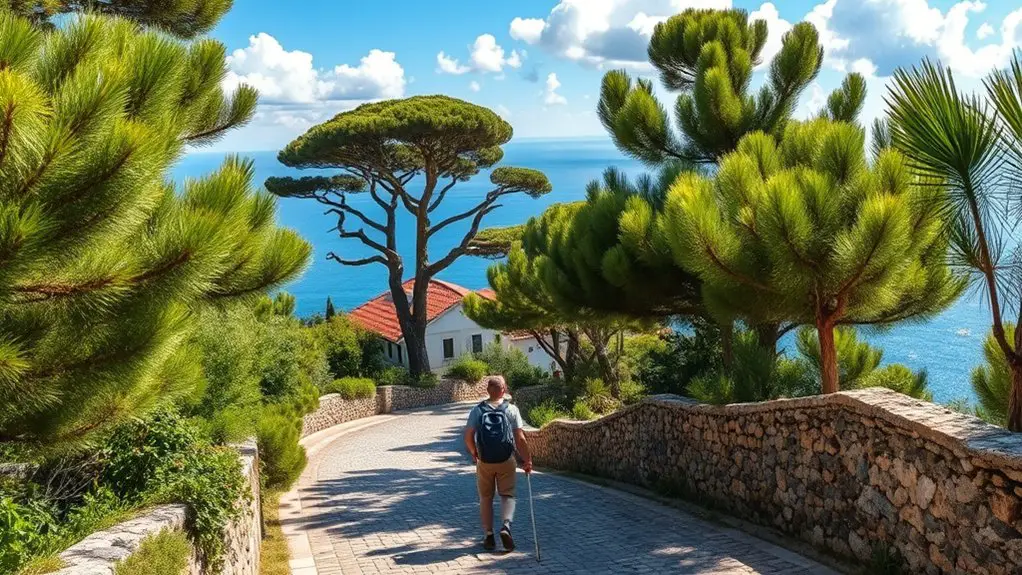
Heybeliada is especially rewarding when you leave the busiest streets and spend time among its pine-covered slopes and coastal sections.
Değirmenburnu is one of the easiest nature additions to a walking tour. A longer outing can continue toward Çam Limanı, where the setting becomes quieter and more removed from the ferry area.
These sections are better suited to an unhurried walk than a race around the island. Stop when you find a shaded viewpoint, listen to the birds and ferry traffic in the distance, and enjoy the contrast with central Istanbul.
If swimming is part of your plan, treat it as a separate activity rather than assuming every stretch of coast is an equipped public beach. Access rules, admission fees, facilities and seasonal opening arrangements vary by beach.
Note: IETT currently operates electric island transport on Heybeliada. Published routes include stops around Değirmenburnu, İsmet İnönü Museum and Çam Limanı, making public transport useful when you want to walk only part of the island.
Best Time to Walk Heybeliada and What to Bring
Spring and autumn generally make long walks more comfortable than the hottest summer afternoons. Summer is excellent for combining a walk with the coast, but start earlier in the day if high temperatures are expected.
Weekdays usually give you the best chance of a calmer ferry pier and quieter central streets. On weekends and public holidays, an early departure lets you experience more of the island before the busiest part of the day.
- Walking shoes: choose shoes with reliable grip for slopes and uneven pavement.
- Water: carry enough for the sections between cafe stops.
- Sun protection: bring sunscreen and a hat in warmer months.
- Phone and offline map: useful when exploring the quieter lanes.
- Transport card or payment method: useful for ferries and for shortening the route with public transport.
- Light layer: ferry decks and evening crossings can feel cooler than central Istanbul.
Frequently Asked Questions
Are There Any ATMs or Currency Exchange Offices on the Island?
Do not make your day depend on finding a particular ATM or exchange office after arrival because businesses and services can change. Bring a working bank card and some Turkish lira for smaller purchases. If you need to exchange foreign cash, doing so in central Istanbul before boarding the ferry is the safer plan.
Can I Bring My Pet With Me on the Walking Tour?
You can walk with a suitable pet on the island, but the ferry operator’s transport rules matter. On Şehir Hatları services, current rules require dogs to wear a muzzle and a leash of no more than 50 cm, while cats must travel in an appropriate carrier. Check the latest Şehir Hatları pet rules before traveling, and bring water and waste bags for your animal.
Are There Any Restrooms or Public Facilities Available?
Facilities are easiest to find around the ferry area, restaurants, cafes and managed visitor areas. Do not assume that every forest or coastal section will have an immediately accessible restroom, so take advantage of facilities before starting a longer walking section.
Can I Purchase Souvenirs or Gifts on the Island?
Yes. Shops in and around the center sell gifts and souvenirs, although the exact selection changes. Take time to compare smaller local shops rather than assuming that every item is made on Heybeliada.
Is the Walking Tour Suitable for People With Mobility Issues?
Only in part. The ferry area and some central streets are comparatively straightforward, but Heybeliada has hills, slopes and uneven surfaces. Visitors with limited mobility should plan a shorter waterfront route and consider electric public transport for longer sections. Verify the accessibility of individual vehicles, museums and venues before relying on them.
How Long Does a Heybeliada Walking Tour Take?
Allow about 3–5 hours for a comfortable first-time route with sightseeing and short breaks. A quick waterfront-and-seminary visit can be shorter, while adding Değirmenburnu, Çam Limanı, a museum, swimming or a long lunch can easily turn the visit into a full day.
Do I Have to Walk Everywhere on Heybeliada?
No. Walking is one of the best ways to experience the island, but electric public transport can shorten the route. IETT publishes Heybeliada services, including routes that connect the central area with locations such as Değirmenburnu, İsmet İnönü Museum and Çam Limanı.
Conclusion
A Heybeliada walking tour works best when you resist the urge to race around the entire island. Start at the waterfront, climb into the historic streets, give the Halki Theological School the time it deserves, then choose between more history at İsmet İnönü House or a greener detour toward Değirmenburnu and Çam Limanı. Heybeliada is not itself a UNESCO World Heritage property, but its wooden streetscape, religious heritage, naval history and pine-covered hills give it a character that is easy to appreciate on foot. Check your return ferry, leave time for a waterfront meal, and let the island set the pace.
Sources
- Şehir Hatları — Kabataş–Adalar Timetable — current ferry stops and scheduled journey times.
- Şehir Hatları — Ferry Fare Tariffs — current public-ferry fare information for the Princes’ Islands.
- Şehir Hatları — Frequently Asked Questions — current rules for traveling with dogs, cats and other pets.
- Ecumenical Patriarchate — Theological School of Halki — history, location and status of the seminary and Holy Trinity monastery complex.
- İnönü Foundation — Heybeliada İsmet İnönü House — museum history and current visitor information.
- IETT — Heybeliada Çarşı–Çam Limanı Route — current electric public-transport stops on Heybeliada.
