

Last Updated on July 24, 2026 by Ethan Caldwell
Paying for a hotel using your checking account is common and achievable, but navigating authorization holds, debit policies, and bank processing times requires planning. While most travelers rely on credit cards, a checking account—accessed through a linked debit card—allows you to settle your stay directly from your cash balance. Understanding how hotels process checking account transactions helps you avoid surprise overdraft fees, frozen funds, and unexpected check-in hurdles.
Quick Answer
Yes, you can pay for a hotel with your checking account by using a linked debit card. Hotels do not accept raw checking account and routing numbers at check-in. When using a debit card, hotels place a pre-authorization hold of $200 to $300 per night for incidentals, which freezes those funds in your checking account for 5 to 10 business days after checkout.
Key Takeaways
- Most hotels accept Visa or Mastercard debit cards linked directly to a checking account, but front-desk policies vary by property.
- Hotels place a pre-authorization hold for both the total room charge and a daily incidental deposit ($50–$100 per night, up to $300+ total).
- Funds placed on hold are immediately deducted from your available checking balance, increasing the risk of bank overdrafts.
- Debit card releases take 5 to 10 business days to clear through banking networks after checkout.
- Routing and account numbers (ACH) cannot be used at check-in, though extended-stay properties or third-party booking sites may accept direct transfers in advance.
Disclosure: As an Amazon Associate I earn from qualifying purchases. Some links on this page are affiliate links, at no extra cost to you.
Can You Pay for a Hotel With a Checking Account?
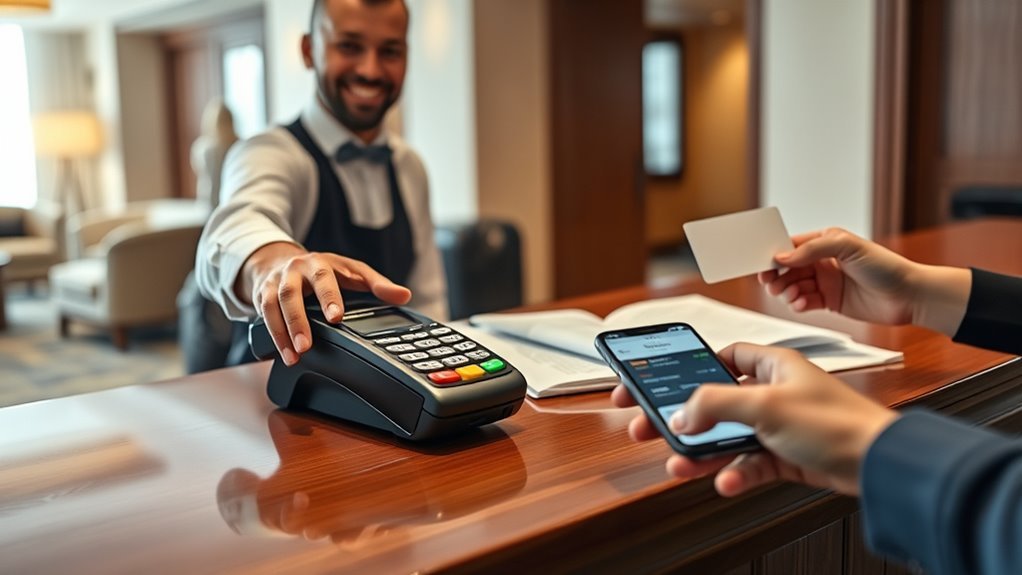
You can pay for a hotel stay with a checking account, but you generally cannot hand the front desk a paper check or give them your bank routing and account numbers. Hotels require a payment method that guarantees instant authorization. According to the Consumer Financial Protection Bureau (CFPB), the standard way to access liquid funds in a checking account is through a debit card bearing a major payment network logo, such as Visa or Mastercard.
When you swipe, insert, or tap your debit card at check-in, the hotel communicates with your bank to verify that you have sufficient funds available. Rather than billing your account immediately for incidentals, the hotel places a pre-authorization hold on your checking balance. This hold locks a portion of your money so it cannot be spent elsewhere until final settlement occurs upon checkout.
Can You Use Mobile Wallets (Apple Pay / Google Pay) Linked to Checking?
Many modern hotels feature contactless payment terminals that support mobile wallets like Apple Pay, Google Pay, and Samsung Pay. If your mobile wallet is linked to a checking account debit card, you can often use it at check-in or checkout.
However, key caveats apply when paying with a mobile wallet linked to a checking account:
- Physical Card Requirements: Many hotel property management systems (PMS) still require inserting a physical chip card at check-in to process temporary incidental holds securely.
- Name Verification: Front desks must match the physical cardholder’s name to your government ID. Digital wallets do not always display the full name on the physical card to the clerk.
- Best Use Case: Mobile wallets linked to checking accounts are best used for settling final room charges at checkout or paying at on-site restaurants and gift shops, rather than initiating the initial check-in security hold.
Can You Use Routing and Account Numbers (ACH) Directly?
In standard hotel operations, front desks do not accept direct bank transfers, e-checks, or ACH routing numbers for daily room reservations. Bank transfers can take several business days to settle, making them unsuitable for front-desk point-of-sale systems that require immediate verification of payment and incidentals.
However, there are specific exceptions where direct checking account transfers are permitted:
- Extended-Stay Properties: Hotels catering to long-term guests (30 days or longer) often accept ACH or direct bank transfers for monthly rent payments.
- Corporate & Group Bookings: Event organizers booking large room blocks can often pay via direct bank wire or ACH transfers arranged through the hotel sales department prior to arrival.
- Third-Party Booking Services: Select online travel agencies (OTAs) allow guests to pay online using PayPal, Klarna, or bank-linked options before travel, effectively deducting funds from a checking account before check-in.
Note: Even if you prepay your room online using a direct bank transfer or PayPal, the hotel front desk will still require a physical card (debit or credit) upon arrival to hold for room security and incidental charges.
Checking Account Debit Card vs. Credit Card Holds
Understanding how a checking account debit card hold differs from a credit card hold is essential for budgeting your trip expenses safely.
At a Glance: Debit vs. Credit Card Hotel Holds
| Feature | Checking Account Debit Card | Standard Credit Card |
| Funds Frozen | Actual Cash: Drained directly from checking balance. | Credit Limit: Reduces available line of credit only. |
| Release Timeline | 5 to 10 business days after checkout. | 1 to 3 business days after checkout. |
| Overdraft Risk | High: Scheduled bills may bounce if balance drops. | None: No direct connection to bank checking balance. |
| Daily Limit Impact | Subject to bank daily debit purchase limits. | Subject only to total credit limit. |
Use a Debit Card Linked to Your Account
Using a debit card linked to your checking account lets you pay directly from your available balance, avoiding credit card debt and interest charges. It offers convenience while maintaining strict budget control.
Before booking, call the property directly to confirm its debit card policy. While major hotel chains widely accept debit cards, individual franchises or boutique inns may impose specific restrictions.
Debit Card Acceptance Rules
Hotels treat debit cards differently than credit cards because debit cards tap directly into cash balances. To ensure a smooth check-in process when using a debit card, follow these steps:
- Call the specific property front desk to confirm debit card acceptance before making non-refundable reservations.
- Ensure your card is co-branded with a major card network (Visa or Mastercard) rather than an ATM-only card.
- Maintain an extra financial buffer in your checking account above the total cost of the room.
- Enable real-time transaction alerts through your mobile banking app to monitor authorization charges immediately.
- Save all paper itemized folios and digital receipts at checkout to reconcile with your bank statement.
Pro Tip: Ensure your daily debit card purchase limit set by your bank is higher than the combined room total and incidental deposit. If your daily purchase limit is $500 and the hotel attempts to authorize $600 at check-in, the transaction will decline even if you have thousands in your checking balance.
How Holds and Refunds Work
When you present a debit card at check-in, the hotel requests a pre-authorization hold from your financial institution. As noted by the FDIC’s consumer financial education guides, this hold covers the full estimated room charge, applicable taxes, plus a daily incidental deposit (typically $50 to $100 per night, or up to $300 total for the stay).
“Unlike credit card authorizations, which temporarily reduce your available credit limit, a debit card hold freezes actual cash in your bank account, rendering those funds completely inaccessible for daily expenses.”
When you check out, the hotel calculates the final charge (room rate plus actual room service, minibar, or service fees used) and submits the final billing to your bank. According to the CFPB guidance on debit transactions, the initial pre-authorization hold is then released, but processing times depend on banking networks, often taking between 5 and 10 business days for funds to return to your available balance.
Warning: If auto-pay bills (such as rent or utilities) hit your checking account while a hotel incidental hold is active, your available balance may not cover them, resulting in bank overdraft fees.
Pre-Travel Checklist: Protecting Your Checking Account
To avoid frozen cash and payment issues, complete this pre-travel checklist before arriving at the hotel:
- 1. Notify Your Bank: Place a travel notice on your checking account via your mobile banking app so anti-fraud systems do not block check-in transactions in a new city.
- 2. Request Hold Figures in Advance: Call the hotel front desk to ask for the exact per-night incidental hold dollar amount.
- 3. Calculate Total Frozen Cash: Add (Room Rate × Nights) + (Incidental Deposit × Nights) + Taxes to calculate the total cash amount that will be frozen at check-in.
- 4. Pause Auto-Pay Bills: Temporarily reschedule recurring ACH bill payments that might clear during your travel dates to avoid overdraft fees.
What Hotel Hold Policies Mean for Your Account
Understanding the difference between your total balance and your available balance is crucial when using a checking account at a hotel. A two-night stay at a room rate of $150 per night with a $100 nightly incidental hold will freeze $500 of real cash at check-in ($300 room + $200 deposit).
To manage hotel hold policies effectively:
- Request the exact daily incidental charge amount from the front desk prior to swiping your card.
- Inquire whether the hold is processed immediately or updated upon check-out.
- Keep a dedicated buffer in your checking account equal to at least double the expected incidental deposit.
- Review your online banking portal during your stay to track pending versus posted transactions.
Confirm Total Charges Before Booking
Before confirming any reservation, request a complete cost breakdown in writing or via digital confirmation. Hidden charges can quickly consume your checking balance if you do not account for them in advance.
Always verify the following fees upfront:
- Local lodging taxes and municipal tourism surcharges.
- Mandatory resort fees, facility charges, or Wi-Fi connectivity fees.
- Overnight parking or valet charges.
- Early check-in or late check-out penalties.
- Cancellation policy timelines (usually 24 to 72 hours prior to arrival).
Pay at Check-In and Keep Funds Available
When arriving at the hotel, present your government-issued ID alongside the physical debit card. The name on the card must match the primary name on the reservation and your ID exactly; hotels will reject debit cards belonging to third parties unless an authorized credit card authorization form was submitted prior to check-in.
Maintain careful management of your checking balance throughout your stay:
- Confirm at check-in whether you can pay the incidental hold via cash or settle the room balance with debit while using another method for incidentals.
- Log into your mobile banking app daily to observe how authorization holds appear on your pending ledger.
- Keep sufficient funds reserved for food, emergency travel expenses, and return transit.
- Obtain a final printed folio at checkout showing a zero balance after final charges process.
What Happens If the Hotel Declines Your Debit Card
If your debit card is declined at check-in, it does not necessarily mean you lack funds. Declines can occur due to daily card spending caps, anti-fraud triggers from traveling out of state, or insufficient funds to cover the full incidental hold.
If your card is declined, consider these alternative solutions:
- Pay the Security Deposit in Cash: Some properties allow guests to pay for the room with a debit card while leaving a cash security deposit (typically $100–$200) for incidentals, which is refunded in cash upon inspection at checkout.
- Contact Your Bank: Call the number on the back of your card to authorize the transaction and temporarily increase your daily spending limit.
- Use a Prepaid Travel Card: Prepaid Visa or Mastercard options can sometimes be used for room balances, provided they support manual authorizations.
- Split Payment Methods: Pay for the room charges up front via debit and place the incidental deposit on a credit card to avoid freezing checking funds.
Track Holds, Refunds, and Reversals
Monitoring your account after checkout ensures that temporary holds convert into correct final charges without lingering errors. While the front desk releases the hold upon checkout, merchant processor clearing cycles mean banks take anywhere from 3 to 10 business days to return the funds to your available cash pool.
If a hold remains active past 10 business days, contact your bank’s customer service department with your checkout receipt. The bank can manually review the authorization release code provided by the hotel to unlock your funds.
Frequently Asked Questions
What is the best way to pay for a hotel without a credit card?
A debit card linked to a checking account and co-branded with Visa or Mastercard is the most widely accepted alternative. Keep extra buffer cash available in your account to absorb the temporary incidental authorization hold placed by the property.
How long does a hotel hold last on a debit card?
Most hotel holds release within 5 to 10 business days after checkout. While the hotel initiates the release at checkout, your bank controls when the pending hold drops off and updates your available balance.
Do hotels take payment at check-in or check-out?
Hotels typically authorize funds (place a hold for room rate plus incidentals) at check-in and finalize the transaction charge upon checkout. Prepaid online bookings charge your card at the time of booking, though an incidental hold is still required upon arrival.
Can a hotel require a credit card even if I have a debit card?
Yes. Independent hotel policies dictate payment acceptance. Some luxury, boutique, or resort properties require a credit card for incidental holds to minimize risk, declining debit cards for security deposits even if accepted for room charges.
Can I use Apple Pay linked to my checking account at check-in?
Yes, provided the hotel terminal supports contactless payments and their PMS allows digital wallet authorization holds. However, many hotels still require inserting a physical chip debit card alongside a physical ID during check-in.
Financial Disclaimer: This article is for informational purposes only and does not constitute formal financial advice. Always verify payment requirements directly with your hotel property and banking institution prior to travel.
Conclusion
Paying for a hotel with your checking account using a linked debit card is an accessible, debt-free way to travel. By confirming hotel payment policies before booking, maintaining a cash buffer to account for incidental holds, and tracking your bank statements after checkout, you can avoid overdraft surprises and manage your travel expenses seamlessly.
Sources
- What Is a Debit Card? — Consumer Financial Protection Bureau (CFPB)
- How Do I Get a Refund If I Paid by Debit Card? — Consumer Financial Protection Bureau (CFPB)
- Money Smart: Understanding Your Checking Account — Federal Deposit Insurance Corporation (FDIC)

