
Last Updated on July 23, 2026 by Daniel Globe
Italy’s volcanoes offer some of Europe’s most memorable landscapes, from Mount Etna’s lava fields in Sicily to Mount Vesuvius above Naples and Stromboli’s glowing nighttime activity. You can also hike Vulcano’s fumarole-lined crater or explore the broad Campi Flegrei caldera. Access can change quickly, however, so a good visit depends on choosing the right destination, checking official updates, and respecting every closure.
Quick Answer
The best volcanoes to visit in Italy are Mount Etna for varied lava landscapes, Vesuvius for an easy pairing with Pompeii, Stromboli for distant nighttime explosions, Vulcano for a crater hike, and Campi Flegrei for geology and Roman history. Always check official alerts and access rules before leaving.
Key Takeaways
- Mount Etna offers the widest range of volcanic scenery, but its upper trails can close without much notice.
- Mount Vesuvius is the easiest volcano to combine with Naples, Pompeii, or Herculaneum, and Gran Cono tickets must be purchased online.
- Stromboli is best viewed after dark, but legal hiking limits depend on current volcanic activity and local ordinances.
- Vulcano has an accessible crater landscape, although heat, fumes, and volcanic gases require caution.
- Campi Flegrei is a large, restless caldera rather than one mountain. It is currently monitored at yellow alert, so follow local instructions.
Warning: Volcano access is never guaranteed. Eruptions, earthquakes, gas emissions, ash, landslides, wildfire, strong wind, or heavy rain can close a trail, ferry route, or entire area. Check official information on the morning of your visit and obey barriers even when other people ignore them.
Disclosure: As an Amazon Associate I earn from qualifying purchases. Some links on this page are affiliate links, at no extra cost to you.
The Best Volcanoes to Visit in Italy
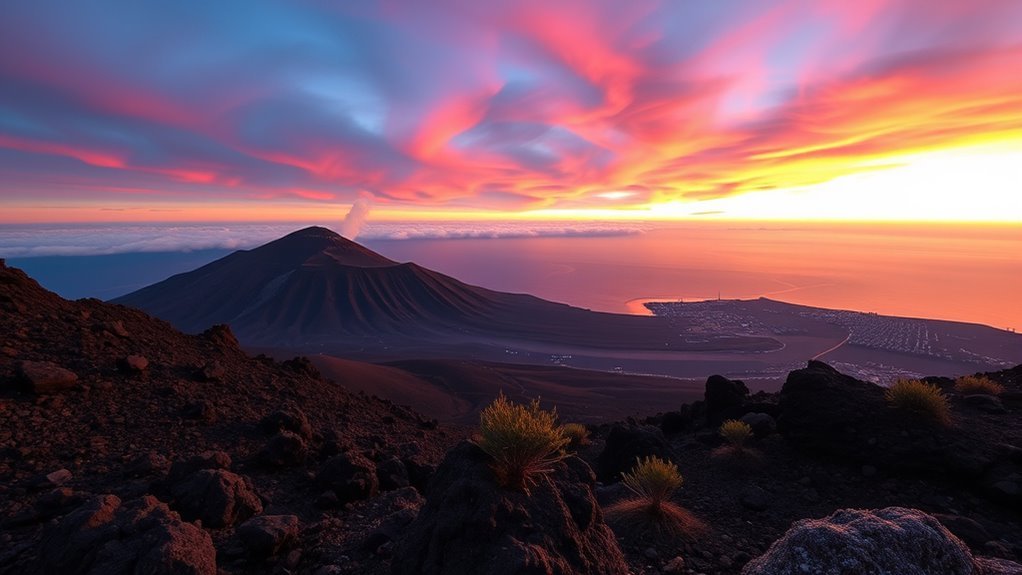
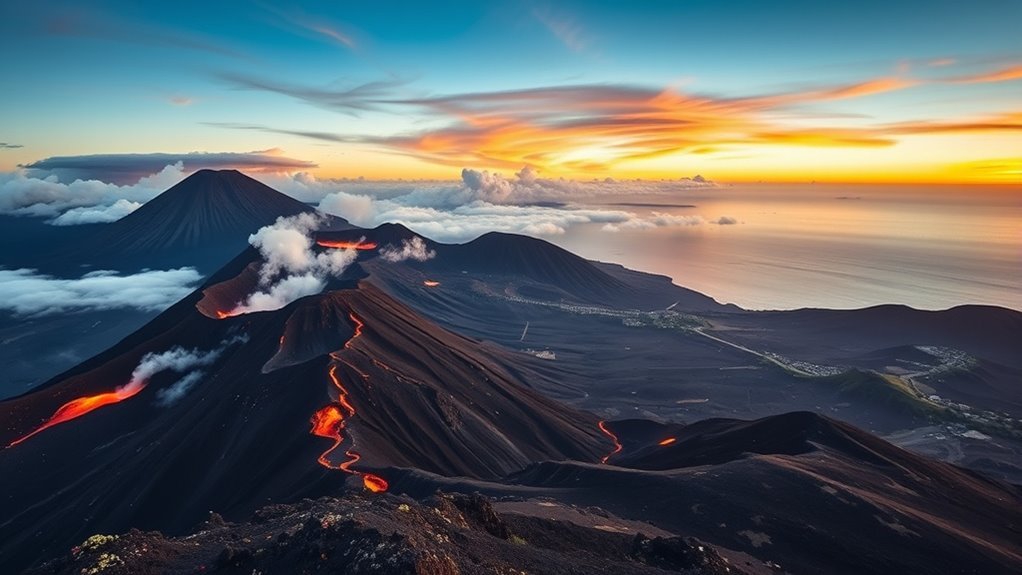
The best Italian volcano for you depends on where you are staying and what you want to experience. Etna gives you the greatest choice of short walks, cable-assisted excursions, lava fields, and higher guided routes. Vesuvius provides a shorter crater visit near major archaeological sites. Stromboli is known for frequent explosive activity, while Vulcano combines a crater walk with an island stay. Campi Flegrei offers a mix of volcanic geology, coastal scenery, ancient ruins, and modern urban life.
| Volcano or Area | Location | Best For | Typical Visit | Important Access Note |
|---|---|---|---|---|
| Mount Etna | Eastern Sicily | Lava landscapes and varied excursions | Half day to full day | Upper access changes with weather and volcanic activity |
| Mount Vesuvius | Near Naples | Pompeii and crater combination trips | About 1.5–3 hours at the park | Gran Cono entry requires an online ticket |
| Stromboli | Aeolian Islands | Nighttime volcanic viewing | One day or overnight | Altitude limits are controlled by local ordinances |
| Vulcano | Aeolian Islands | Crater scenery, fumaroles, and island views | Half day to overnight | Trail and geothermal-area access may change |
| Campi Flegrei | West of Naples | Geology, Roman ruins, and bradyseism | Half day to full day | Some fumarole and crater areas are closed or restricted |
Active Versus Quiescent Volcanoes
The word active is used differently by different organizations. Italian Civil Protection classifies Etna and Stromboli as active because they have erupted in recent years. It classifies Vesuvius, Vulcano, and Campi Flegrei as quiescent because they are resting but have erupted within the last 10,000 years and may erupt again. That does not make the quiescent systems extinct or harmless.
Note: An alert level describes the overall condition of a volcano. It is not a promise that every trail, road, beach, or viewpoint is safe. Sudden rockfall, gas releases, small explosions, and weather hazards may occur even at a low alert level.
How to Choose the Right Volcano for Your Trip
Choose Vesuvius if you are based in Naples and want a straightforward day trip with Pompeii or Herculaneum. Choose Etna if you are staying near Catania or Taormina and want several excursion levels. Choose Stromboli if seeing glowing explosions after dark is your priority and you can allow time for ferry delays. Vulcano works well for a shorter Aeolian Islands visit, while Campi Flegrei suits travelers interested in geology, Roman history, and modern volcanic monitoring.
- Best first volcano: Vesuvius, because the visitor route is clearly organized and easy to combine with other sights.
- Best overall scenery: Etna, thanks to its lava fields, cones, forests, and changing summit area.
- Best after dark: Stromboli, viewed only from a legally accessible viewpoint or authorized boat position.
- Best island crater walk: Vulcano, when the La Fossa trail is officially open.
- Best geology and history combination: Campi Flegrei, Pozzuoli, Baia, Cumae, and Monte Nuovo.
Mount Vesuvius: Italy’s Most Famous Volcano
Rising above the Bay of Naples, Mount Vesuvius reaches 1,281 meters and forms part of the larger Somma-Vesuvius volcanic complex. Its most famous eruption occurred in AD 79, when ash, pumice, pyroclastic currents, and earthquakes devastated Pompeii, Herculaneum, Stabiae, and surrounding settlements. The precise death toll remains unknown, although the remains of more than 1,000 victims have been found at Pompeii alone.
Vesuvius last erupted in 1944. It is now quiescent and continuously monitored by the Vesuvius Observatory. Visitors normally approach the lower rim of the Gran Cono on an authorized park trail. The loose volcanic gravel and steady incline can feel strenuous, especially in hot weather, but you do not need technical climbing skills.
Entry to the Gran Cono trail must be booked online through the official system. Tickets can sell out, and access may close because of weather, wildfire, maintenance, or Civil Protection alerts. Read the latest rules on the Vesuvius National Park website before arranging your transport.
Pro Tip: Book your Gran Cono ticket before paying for a shuttle or parking. The park advises visitors to secure crater entry first because tickets are limited to timed slots.
A combined Pompeii and Vesuvius day is possible, but it can feel rushed. Pompeii deserves several hours, and the volcano involves transfers, a timed entrance, and a steep walk. Herculaneum is smaller and often easier to combine with Vesuvius in one day.
Mount Etna: Italy’s Most Active Volcano
Mount Etna rises to approximately 3,350 meters on Sicily’s eastern coast, although eruptions can change the summit’s exact height. It is Europe’s largest active volcano and one of the world’s most closely monitored volcanic systems. Its activity is frequent but irregular, ranging from gas and ash emissions to Strombolian explosions, lava fountains, and lava flows.
You do not need to reach Etna’s summit to appreciate it. Lower excursions can include old craters, solidified lava flows, lava caves, pine and birch woodland, and viewpoints over the Valle del Bove. Higher excursions may require an authorized guide and can be restricted or canceled with little notice.
Etna’s elevation creates rapid weather changes. A warm morning near Catania can become cold, windy, foggy, or snowy higher on the mountain. Bring layers even in summer, and do not leave a legal route to approach fresh lava or a smoking vent.
Etna’s summit is not the only attraction. Many visitors get a better, safer view of its volcanic history on lower craters and established lava-field trails.
Etna’s mineral-rich volcanic soils also support vineyards, pistachio groves, citrus orchards, and other agriculture. A volcano excursion can therefore be combined with an Etna wine area, a village visit, or a trip to Catania or Taormina.
Stromboli: The Lighthouse of the Mediterranean
Stromboli rises about 926 meters above the sea, with most of the volcanic structure hidden underwater. Its persistent activity earned it the name “Lighthouse of the Mediterranean.” Small to moderate explosions can occur several times per hour, but the frequency and intensity are not fixed. Larger explosions, lava flows, landslides, ash, and tsunami hazards are also possible.
Older travel guides often describe a full summit climb. Do not assume that route is available. At the time of this update, Italian Civil Protection states that ascent above 290 meters is prohibited. The Mayor of Lipari can change permitted routes and altitude limits according to activity, so check current ordinances and use an authorized guide whenever one is required.
- Check the latest volcanic bulletin and Lipari municipal rules before boarding a ferry.
- Use only an open trail, approved viewpoint, or authorized boat excursion.
- Carry a flashlight for any legal evening walk and wear closed shoes with good grip.
- Learn the island’s tsunami siren and evacuation procedures before going to the coast at night.
Stromboli’s glow is often easiest to see after sunset from a legal viewpoint or from the sea at a distance approved by the Coast Guard. Visibility depends on cloud, wind, sea conditions, volcanic activity, and the direction of ash or gas.
Warning: If you hear a tsunami or volcanic siren on Stromboli, follow signs and official instructions immediately. Move away from the shore and toward a marked waiting area. Do not stop to photograph the sea or eruption.
Vulcano: Mud Baths and Sulfur Craters
On Vulcano, the cone of La Fossa rises above Porto di Levante and offers wide views across the Aeolian Islands. The volcano last erupted from 1888 to 1890 and is currently quiescent. Its fumaroles, hot ground, microseismicity, and volcanic gases show that the system remains active below the surface.
The current alert level is green, but Italian Civil Protection warns that carbon dioxide, hydrogen sulfide, sulfur dioxide, and other gases may still create dangerous conditions. Trail access is regulated by Lipari municipal ordinances and may change because of heat, gas, landslides, or monitoring results.
Gran Cratere Views
The trail toward Gran Cratere, also called the La Fossa crater, crosses exposed volcanic ground with almost no shade. When the route is open, the climb provides views of Lipari, Vulcanello, the coast, and neighboring islands. The surface can be loose and dusty, and fumes may become stronger near fumarole areas.
- Start early in warm weather and avoid the hottest part of the day.
- Carry enough water because the route is fully exposed.
- Stay on the authorized path and do not cross barriers near fumaroles.
- Turn around if officials close the trail or if gas, wind, or visibility becomes uncomfortable.
Do not touch yellow sulfur deposits or lean over active vents. Fumarole temperatures can be high, and apparently solid ground may be fragile.
Sulfurous Mud Baths
Vulcano’s sulfurous mud pool has long been one of the island’s best-known attractions, but it has also experienced closures, safety investigations, and changes in operating status. Confirm that the managed area is officially open before entering. Do not climb over a barrier or enter an unmanaged hot pool.
| Experience | What to Expect | Safety Note |
|---|---|---|
| Managed mud pool | Warm mud, sulfur odor, and uneven temperatures | Enter only when officially open and follow time limits |
| Geothermal shoreline | Bubbles and locally heated seawater | Temperatures can change sharply around vents |
| Sulfur fumes | Strong odor and possible respiratory irritation | Leave immediately if you feel dizzy, weak, nauseated, or short of breath |
The mud should be treated as a recreational geothermal experience, not a cure for a medical condition. Avoid immersion if you have open wounds, recent burns, or a condition that may be affected by heat or volcanic gases. Anyone who is pregnant or has heart, lung, or circulation problems should seek medical advice before using a hot geothermal pool.
Steam Vents and Fumaroles
Steam and volcanic gas escape through fractures around La Fossa, Porto di Levante, and other parts of the island. Carbon dioxide is especially dangerous because it is colorless, odorless, heavier than air, and able to collect in depressions or enclosed spaces.
- Do not enter fenced fumarole zones or low enclosed spaces near gas-emitting ground.
- Never assume that a cloth or dust mask protects you from volcanic gas. It does not.
- Move into fresh air immediately if you develop breathing difficulty, headache, nausea, confusion, or unusual weakness.
- Call Italy’s emergency number, 112, if symptoms are severe or do not improve promptly.
Vulcano’s dramatic landscape is worth seeing, but the sulfur smell is not a reliable measure of danger. Some hazardous gases are difficult or impossible to detect without instruments.
Lipari and the Aeolian Islands
Lipari is the largest Aeolian Island and the archipelago’s main transport and service hub. The UNESCO-listed island group includes Lipari, Vulcano, Salina, Stromboli, Filicudi, Alicudi, and Panarea. Together, they preserve an exceptional record of volcanic island formation and ongoing geological activity.
| Island | Main Appeal | Good Base For |
|---|---|---|
| Lipari | Museum, town, restaurants, and transport connections | First-time island visitors |
| Vulcano | La Fossa crater and geothermal scenery | A shorter volcanic island stay |
| Stromboli | Frequent explosive activity and Sciara del Fuoco | An overnight volcanic-viewing trip |
Ferries and hydrofoils connect the islands with ports such as Milazzo and with one another, but strong wind and rough seas can delay or cancel services. Avoid building an essential flight or long-distance train connection immediately after an island ferry. An overnight stay also gives you more flexibility than a tightly timed day trip.
Pro Tip: Keep one flexible day in an Aeolian Islands itinerary. Sea conditions can change even when the weather looks clear from shore.
Campi Flegrei: Naples’ Volcanic Field
Campi Flegrei, or the Phlegraean Fields, is a broad caldera roughly 12–15 kilometers across, located west of central Naples. It is not one cone that you climb. The system contains numerous craters, fumaroles, hot springs, submerged features, archaeological sites, towns, and coastal areas.
Campi Flegrei is currently at yellow alert because monitoring shows volcanic parameters above their normal background values. The area is also experiencing bradyseism, a cycle of ground uplift, subsidence, and shallow earthquakes. Yellow alert does not mean that an eruption is imminent, but it does require strengthened monitoring and preparedness.
Volcanic Origins
Campi Flegrei formed through repeated eruptions and collapses rather than the growth of one classic volcanic mountain. Large eruptions occurred in the distant past, while smaller events created many of the craters and cones visible today. Monte Nuovo formed during the eruption of 1538 and is often described as Europe’s youngest volcanic cone formed in historical time.
- Visit Monte Nuovo for a recognizable cone and a manageable walk when the path is open.
- Explore Cumae, Baia, or Pozzuoli to combine geology with Greek and Roman history.
- Observe closed fumarole areas only from legal public viewpoints.
The Solfatara crater is one of the area’s best-known features, but it is not currently open for normal visitor entry. Do not follow outdated guides that tell you to walk inside it. Check the current listing from the official Naples metropolitan tourism service.
Supervolcano Potential
Campi Flegrei is frequently called a “supervolcano” in news reports because it produced very large eruptions in the distant past. The term can be misleading when it is used to suggest that a giant eruption is expected soon. Scientists monitor earthquakes, ground movement, gas composition, heat, and other indicators, but they cannot provide a simple countdown to an eruption.
Current bradyseism can produce damaging shallow earthquakes and local gas hazards even without an eruption. INGV has specifically warned that preliminary research and changing monitoring trends should not be presented as deterministic predictions of imminent volcanic activity.
Naples’ Hidden Threat
Hundreds of thousands of people live within Campi Flegrei’s emergency-planning zones, making preparedness essential. Visitors should not panic because of every small earthquake, but they should know where they are staying, follow municipal notices, and avoid closed fumarole or gas-emission areas.
- Read the current Campi Flegrei alert information before visiting Pozzuoli or nearby volcanic sites.
- Follow local earthquake instructions and keep exits clear in your accommodation.
- Do not enter caves, depressions, tunnels, or fenced areas where carbon dioxide could accumulate.
Campi Flegrei offers a remarkable mix of geology and history, but it should be described honestly: it is a populated volcanic caldera under close observation, not an amusement attraction or a forecast disaster.
The Best Hikes on Italy’s Volcanoes
Italy’s volcanic walks range from short visitor paths to demanding high-altitude excursions. Difficulty can change with heat, wind, snow, ash, loose gravel, gas, and route closures.
Vesuvius Gran Cono Trail
The authorized Gran Cono route climbs over loose volcanic material to a lower section of the crater rim. It is relatively short but consistently uphill. Reserve online, wear closed shoes, and bring water because shade is limited.
Etna Lava-Field and Crater Routes
Etna offers the broadest choice, including easy walks around older cones, medium routes across lava fields, and higher guided excursions. Select a route based on the day’s legal access, your fitness, and the mountain weather rather than the summit photograph you hoped to take.
Stromboli’s Lower Viewpoints
Stromboli’s traditional summit route is not currently open above the published altitude restriction. Use a legal lower trail, approved viewpoint, or authorized boat excursion. Never continue beyond a closure because another group appears to be doing so.
Vulcano’s La Fossa Trail
The La Fossa climb is moderate in distance but demanding in heat because it is exposed to the sun. Access depends on municipal ordinances and gas conditions. Avoid the hottest hours and do not enter fumarole zones.
Path of the Gods as a Non-Volcanic Add-On
The Path of the Gods above the Amalfi Coast provides dramatic coastal views, but it is not a volcano hike. It can be added to a Naples-area itinerary on a separate day rather than included as part of a Vesuvius trail list.
What to Pack for an Italian Volcano Visit
- Closed hiking shoes: Loose ash and volcanic gravel can make ordinary sandals unstable.
- Water: Carry more than you expect to need on exposed routes.
- Sun protection: Use sunscreen, a hat, and sunglasses.
- Warm layer: Etna and other elevated areas can be much colder than the coast.
- Windproof jacket: Strong wind can develop quickly on exposed rims.
- Flashlight: Essential for any legal evening walk on Stromboli.
- Charged phone and offline map: Mobile coverage may be weak on islands or high slopes.
- Dust mask: It may reduce ordinary dust or ash inhalation, but it does not protect against toxic volcanic gases.
Leave drones, rock hammers, and plans to collect lava fragments at home unless you have explicit authorization. Protected volcanic areas commonly prohibit removing rocks, minerals, plants, or archaeological material.
When to Visit Italy’s Volcanoes
Spring and fall usually provide the best balance of moderate temperatures and manageable visitor numbers. April through June and September through October are often comfortable for lower trails, although rain, wind, snow at altitude, or volcanic activity can still alter access.
- Spring: Good for green lower slopes and cooler hiking temperatures.
- Early summer: Longer daylight helps with full-day Etna or Vesuvius trips.
- Late summer: Expect strong sun, heat, crowds, and possible wildfire restrictions.
- Fall: Often quieter, but ferry and mountain weather becomes less predictable.
- Winter: Vesuvius may remain visitable on suitable days, while Etna can have snow and severe mountain conditions.
Stromboli’s glow is easiest to appreciate after dark, but that does not make every nighttime route legal. Use only the viewing location permitted on the date of your visit.
Planning Tickets, Transport, and Access
Volcano planning works best when you separate fixed bookings from conditions that may change.
- Vesuvius: Buy the official timed Gran Cono ticket before arranging parking or a shuttle.
- Etna: Confirm the operating status of lifts, vehicles, guides, and upper routes on the same day.
- Stromboli: Check ferry conditions, Civil Protection guidance, Lipari ordinances, and legal altitude limits.
- Vulcano: Confirm the La Fossa trail and any managed geothermal facility are open.
- Campi Flegrei: Check local transport and attraction access because bradyseism may affect roads, railways, buildings, or individual sites.
Do not rely only on a travel marketplace or an old blog post. A tour can remain listed online after the legal route has changed. The official park, municipality, Civil Protection, and INGV sources should take priority.
Is It Safe to Visit Italy’s Volcanoes?
Italy’s volcanoes can often be visited responsibly when an area is officially open and you follow current instructions. No active or quiescent volcano is risk-free, however. Monitoring, guides, barriers, and alert systems reduce exposure; they do not eliminate every sudden explosion, gas release, earthquake, landslide, rockfall, ash cloud, or tsunami.
Before setting out, check the INGV volcano monitoring pages and the relevant Italian Civil Protection guidance. A green or yellow alert level does not automatically tell you whether one particular trail is open. Local park and municipal orders control visitor access.
- Obey every closure, barrier, guide, ranger, siren, and evacuation instruction.
- Do not approach a fresh lava flow, vent, crater edge, or fumarole without authorization.
- Leave low areas immediately if volcanic gas causes dizziness, nausea, confusion, weakness, or breathing trouble.
- If the sea suddenly withdraws or you hear a tsunami warning on a volcanic island, move inland and uphill.
- Turn back when weather, visibility, heat, or your physical condition makes continuing unsafe.
Children who can manage steep, loose ground may enjoy lower trails, but crater visits are not suitable for every child. Travelers with limited mobility, asthma, heart disease, severe vertigo, or sensitivity to sulfurous fumes should review the specific route and seek professional medical advice where appropriate.
Frequently Asked Questions
What is the most famous volcano in Italy?
Mount Vesuvius is generally Italy’s most famous volcano because of the AD 79 eruption that devastated Pompeii and Herculaneum. Mount Etna is the country’s largest and most active volcano, while Stromboli is famous for its persistent explosive activity.
Is Vulcano in Sicily worth visiting?
Yes, especially if you enjoy volcanic scenery, island views, black-sand beaches, and crater walks. Confirm the La Fossa trail and geothermal facilities are open, avoid restricted fumaroles, and take volcanic-gas warnings seriously.
What are the two most famous Italian volcanoes?
Mount Vesuvius and Mount Etna are usually considered the two most famous. Vesuvius is known for Pompeii and its position above Naples, while Etna is known for frequent activity and its vast Sicilian lava landscape. Stromboli is a close third.
Where are Italy’s active volcanoes?
Under the current Italian Civil Protection classification, Etna in eastern Sicily and Stromboli in the Aeolian Islands are active because they have erupted in recent years. Vesuvius near Naples, Vulcano in the Aeolian Islands, and Campi Flegrei west of Naples are quiescent but potentially capable of future eruptions.
Which Italian volcano is easiest to visit?
Vesuvius is often the easiest for travelers staying in Naples because it has a defined visitor trail and can be combined with Pompeii or Herculaneum. You still need a timed online ticket and transportation to the trail entrance.
Can you visit Vesuvius, Etna, and Stromboli on one trip?
Yes, but they are spread across Campania, Sicily, and the Aeolian Islands. A comfortable itinerary normally needs time in Naples, eastern Sicily, and at least one flexible island day. Ferry disruptions and volcanic closures make a tightly scheduled trip risky.
Conclusion
Italy’s volcanoes combine geology, history, hiking, island scenery, and living scientific research. Vesuvius is ideal for a Naples-area day trip, Etna offers the most varied volcanic terrain, Stromboli provides remarkable nighttime viewing, Vulcano rewards careful island exploration, and Campi Flegrei reveals how volcanic activity shapes an inhabited region. Choose an officially open route, prepare for changing conditions, and treat every warning as part of the experience rather than an obstacle to it.
Sources
- Italian Civil Protection: Volcanoes in Italy — official active, quiescent, and extinct classifications.
- National Institute of Geophysics and Volcanology — current monitoring data, cameras, and volcanic bulletins.
- Vesuvius National Park: Gran Cono — official tickets, access rules, opening information, and visitor guidance.
- Italian Civil Protection: Stromboli Guidance — trail regulation, sirens, tsunami procedures, and visitor safety.
- Italian Civil Protection: Vulcano — alert level, volcanic gases, hiking conditions, and monitoring.
- Italian Civil Protection: Campi Flegrei and Bradyseism — current unrest, alert framework, monitoring, and emergency planning.
