
Last Updated on July 24, 2026 by Daniel Globe
Italy’s volcanoes offer very different experiences: high-altitude lava landscapes on Mount Etna, crater views above Naples at Vesuvius, frequent explosive activity on Stromboli, sulfurous terrain on Vulcano, and a vast restless caldera at Campi Flegrei. The best choice depends on whether you want hiking, history, island scenery, or visible volcanic activity, but access rules can change quickly.
Quick Answer
Mount Etna is the best all-around volcano for varied hikes and lava scenery. Choose Vesuvius for an easy pairing with Pompeii, Stromboli for dramatic activity viewed from permitted areas or the sea, Vulcano for an Aeolian island hike, and Campi Flegrei for geology, archaeology, and a vast caldera near Naples.
Key Takeaways
- Mount Etna offers the widest range of volcanic scenery, from forest trails and old lava flows to high-altitude excursions.
- Stromboli is famous for frequent explosions, but summit access is currently restricted and activity is never guaranteed on a timetable.
- Vesuvius is the easiest volcano to combine with Naples, Pompeii, or Herculaneum, and Gran Cono entry must be booked online.
- Vulcano and Campi Flegrei have gas hazards and local access controls, so official notices matter more than old travel guides.
- Check conditions on the day because alert levels, trail limits, weather closures, ferry schedules, and municipal ordinances can change.
Disclosure: As an Amazon Associate I earn from qualifying purchases. Some links on this page are affiliate links, at no extra cost to you.
What Makes Italy’s Volcanoes So Special?
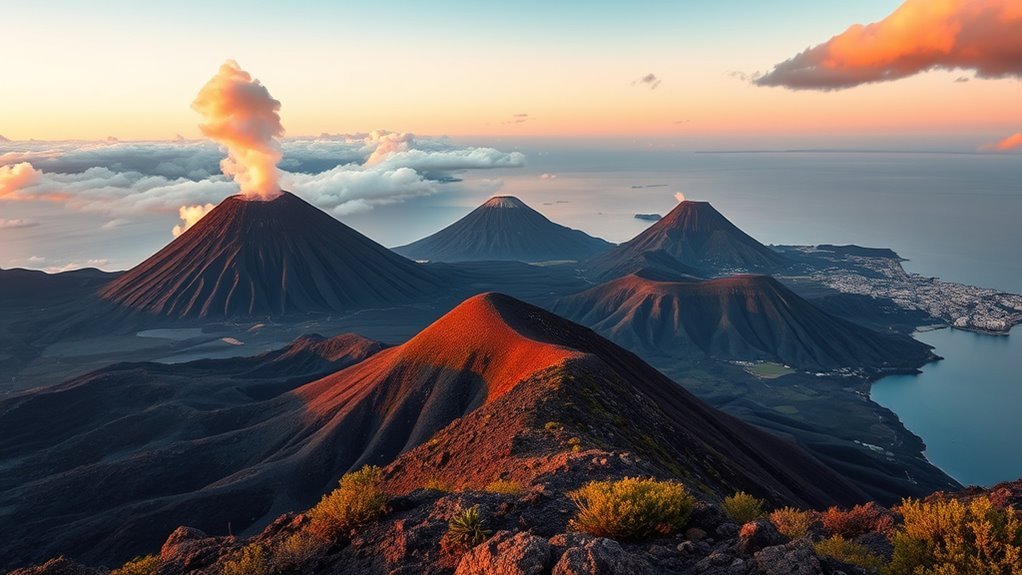
Italy brings active and dormant volcanic systems unusually close to cities, islands, farms, archaeological sites, and established hiking routes. You can walk across old lava on Etna, look into the Gran Cono of Vesuvius, see Stromboli’s glow from a legal viewpoint or boat route, and explore Roman remains inside the Campi Flegrei caldera.
The official Italian Civil Protection classification is more precise than the loose phrase “active volcano.” It lists Etna and Stromboli as active because they have erupted in recent years. Vesuvius, Campi Flegrei, Vulcano, Ischia, and several other systems are classed as dormant, meaning they have erupted within roughly the last 10,000 years but are currently in a period of rest. Dormant does not mean extinct or harmless. See the Italian Civil Protection overview of volcanoes in Italy.
Best Volcanoes in Italy at a Glance
| Volcano | Best For | Typical Visit | Main Caution |
|---|---|---|---|
| Mount Etna | Lava scenery and varied hiking | Half day to full day | Altitude, weather, and changing summit limits |
| Stromboli | Visible explosive activity and island atmosphere | Day trip or overnight | Sudden explosions, tsunamis, and restricted summit access |
| Vesuvius | Pompeii history and Naples views | Two to four hours | Online ticketing, heat, and weather closures |
| Vulcano | Aeolian views and sulfurous terrain | Half day to full day | Heat, volcanic gas, and local restrictions |
| Campi Flegrei | Caldera geology and archaeology | Half day to two days | Earthquakes, CO2 emissions, and site closures |
Warning: Volcano alert colors describe the state of activity, not a promise that dangerous events cannot happen. Follow local authorities, guides, trail closures, sirens, and evacuation instructions. Never cross barriers, approach fumaroles, enter closed summit areas, or rely on an old blog post for same-day access.
Current Alert Levels and Access Notes
At the time of this review on July 24, 2026, Italian Civil Protection listed Etna and Stromboli at yellow alert, Campi Flegrei at yellow alert, and Vesuvius and Vulcano at green alert. These levels can change, and municipal hiking rules may be stricter than the national alert color.
- Etna: Yellow alert was declared on June 26, 2026. High-altitude access depends on current activity and municipal ordinances.
- Stromboli: Yellow alert remains in force. INGV states that access to the summit elevations is currently prohibited.
- Vesuvius: Green alert indicates no abnormal change from its ordinary quiescent state, but it remains an active volcanic system.
- Vulcano: Green alert does not remove gas hazards around fumaroles and low-lying areas.
- Campi Flegrei: Yellow alert reflects ongoing unrest and bradyseism. Some areas may be restricted because carbon dioxide can collect in low or enclosed spaces.
Before leaving, check the latest pages for Etna, Stromboli, Vulcano, Vesuvius, and Campi Flegrei.
Mount Etna: Europe’s Highest Active Volcano
Mount Etna rises on Sicily’s eastern side near Catania. Its summit height changes after eruptions and collapses, but Italian Civil Protection currently lists it at about 3,350 meters. Etna combines summit craters, side cones, lava tubes, forest, vineyards, broad ash fields, and the Valle del Bove depression.
UNESCO added Mount Etna to the World Heritage List in 2013 because of its exceptional volcanic activity, long documented eruptive history, scientific importance, and accessible volcanic features. The protected high-altitude area is also a major natural laboratory. Read the UNESCO Mount Etna listing.
Mount Etna’s Best Trails and Viewpoints
Etna is not limited to one “Gran Cratere route.” The park has a network of named trails across different sides of the mountain. Good lower and mid-elevation choices include Monti Sartorius for old crater cones, Schiena dell’Asino for views toward Valle del Bove, and routes from Rifugio Citelli or Piano Provenzana. The official Etna Park trail page marks routes that are open and those that are not in service.
Rifugio Sapienza is the main southern access point. A cable car and authorized excursion services can reduce the climb, but they do not guarantee access to the summit zone. At higher elevations, volcanic activity, snow, wind, fog, and municipal orders determine where visitors may go and whether a guide is required.
Pro Tip: Choose an Etna route by altitude and conditions, not by a single “best trail.” A clear lower viewpoint can be more rewarding than a cold, cloudy high-altitude excursion.
Stromboli: The Island That Never Sleeps
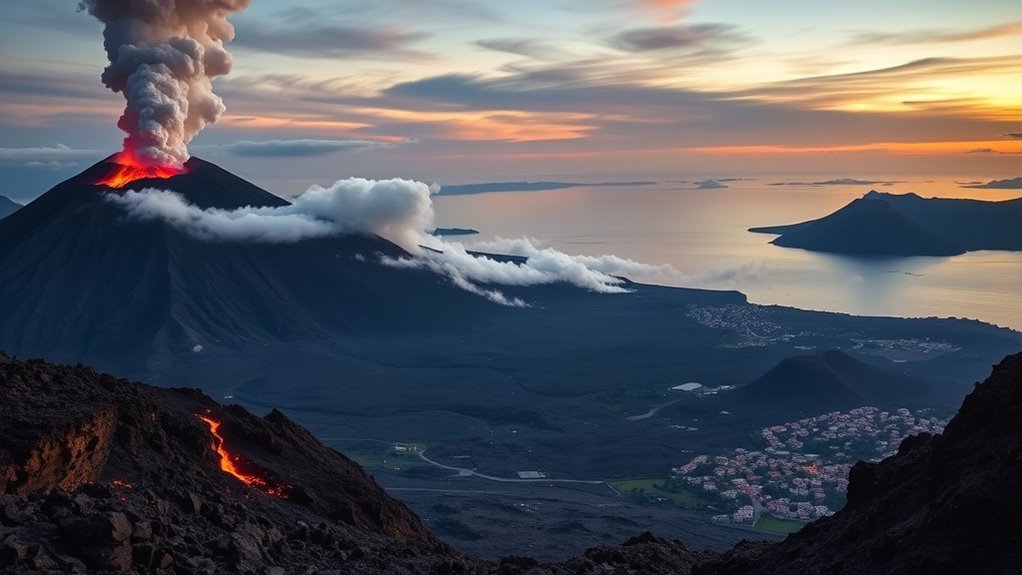
Stromboli is known for persistent Strombolian activity: short explosions from summit vents that may throw incandescent material above the crater terrace. The frequency and intensity vary. A burst is never guaranteed every 20 or 30 minutes, and larger explosions can occur with little warning.
The safest way to plan is around permitted viewpoints and official restrictions, not around reaching the summit. As of July 2026, INGV reports that summit elevations are closed. Visitors can still experience the island from approved lower routes, settlements, and lawful boat excursions that respect maritime exclusion zones.
Stromboli’s Eruptive Rhythm
Ordinary activity may produce several explosions per hour, but the hourly rate changes. INGV bulletins are the best source for recent activity. The Sciara del Fuoco channels much of the falling material and lava toward the sea, but landslides on this slope can also generate tsunamis.
Stromboli’s beauty comes from an active system that can change without following a tourist schedule.
Night Views Without Ignoring the Rules
Darkness can make incandescent bursts easier to see, but night access depends on the current ordinance. Use an authorized local guide where required, stay within the permitted altitude, carry a headlamp, and learn the difference between the explosion siren and tsunami siren. Do not walk into a restricted zone because other visitors are doing it.
How to Reach Stromboli by Sea
Stromboli has no airport. Ferries and hydrofoils connect it seasonally with ports such as Milazzo, Messina, Naples, and other Aeolian islands. Travel times and direct routes vary by vessel, season, weather, and operator, so confirm the schedule shortly before departure and leave extra time for cancellations.
On the island, most visitors move on foot or use locally available small vehicles and transfer services. Book accommodation early if you want to stay after dark, because a rushed day trip may leave little time for a permitted evening viewpoint.
Vulcano: Sulfur, Steam, and a Scenic Crater
Vulcano, the southernmost major Aeolian island, is a dormant volcanic system with strong fumarolic and gas activity. The La Fossa cone rises about 400 meters above sea level and has a direct, exposed trail with broad views across the archipelago.
The climb is often described as easy, but the loose ground, steep sections, summer heat, and gas make it more demanding than a normal beach walk. The Municipality of Lipari regulates access, and conditions can change. Follow the mapped route, avoid the hottest hours, and never linger inside dense fumarolic gas.
Do not plan a trip around guaranteed access to the famous mud pool. The site has faced closures and legal or safety restrictions, and sulfur mud is not a proven cure-all. Check local notices before arrival and avoid using any pool when access is closed or water quality is not officially confirmed.
Why Vesuvius Still Attracts Visitors
Vesuvius places a famous crater above one of Europe’s most densely settled historic regions. The eruption of AD 79 buried Pompeii, Herculaneum, and other Roman communities. Its last eruption occurred in 1944, and it is now quiescent, not extinct.
Italian Civil Protection says roughly 700,000 people live on the volcano’s slopes, which explains the extensive monitoring and emergency planning. For visitors, the appeal is the combination of archaeology, geology, and views across the Gulf of Naples.
Hiking Mount Vesuvius in the National Park
Vesuvius National Park has 11 marked routes totaling about 54 kilometers. The most popular is Trail No. 5, the Gran Cono, which climbs from the visitor entrance toward the crater rim. The surface is dusty and uneven, with little shade.
Gran Cono tickets are sold online through the official park system and may sell out. Access can close because of weather alerts, trail damage, or safety work. Buy the crater ticket before arranging parking or transport, wear closed shoes, carry water, and check the official Gran Cono visitor page on the day of your visit.
Campi Flegrei: Naples’ Vast Volcanic Caldera
Campi Flegrei, or the Phlegraean Fields, is a wide caldera west of central Naples rather than one cone-shaped mountain. It includes crater lakes, thermal areas, gas emissions, archaeological sites, and coastal landscapes around Pozzuoli and Baia.
Good visitor experiences include the Flavian Amphitheatre, the Temple of Serapis or Macellum at Pozzuoli, Lake Avernus, Monte Nuovo, and authorized visits to the submerged Roman remains at Baia. Access to gas-rich areas such as parts of Solfatara and Pisciarelli may be limited, so do not assume every fumarole field is open.
Campi Flegrei is currently at yellow alert and is experiencing bradyseism, a pattern of ground uplift or subsidence accompanied by earthquakes. Carbon dioxide is colorless and odorless and can collect in low or enclosed places. Follow local closures and leave any area where authorities, alarms, or staff tell you to move.
Best Time to Visit Italy’s Volcanoes
Late spring and early autumn usually offer the best balance of mild temperatures, clearer hiking conditions, and fewer crowds. Summer gives longer daylight and more island transport, but Etna and Vesuvius can be hot, exposed, and crowded. Winter can bring snow, ice, strong wind, reduced ferry service, and sudden trail closures.
- Etna: May to October is popular for hiking, but clear winter days can be beautiful at lower elevations.
- Stromboli and Vulcano: May, June, September, and early October are often more comfortable than peak summer heat.
- Vesuvius and Campi Flegrei: Spring and autumn are best for combining outdoor sites with Pompeii, Naples, and Pozzuoli.
What to Pack for a Volcano Visit
- Closed hiking shoes with grip
- Water, snacks, sun protection, and a light warm layer
- A windproof or waterproof jacket for Etna’s higher elevations
- A headlamp only for an authorized evening excursion
- A charged phone, offline map, tickets, and operator contact details
- Any medicine you normally need, especially for asthma or heart conditions
Note: Volcanic ash and sulfurous gas can irritate the eyes and lungs. People with respiratory or cardiovascular conditions should ask a clinician whether a high-altitude or gas-prone excursion is suitable and should avoid restricted fumarolic areas.
Which Italian Volcano Is Best for You?
- Choose Mount Etna for the most varied hiking and lava landscapes.
- Choose Stromboli for island scenery and a chance to observe frequent activity from legal areas.
- Choose Vesuvius for a short crater visit combined with Pompeii or Herculaneum.
- Choose Vulcano for a compact Aeolian island trip with a scenic crater hike, when open.
- Choose Campi Flegrei for archaeology, caldera science, and a multi-site day around Pozzuoli and Baia.
You do not need to choose only one. Etna pairs naturally with eastern Sicily, Stromboli and Vulcano can fit an Aeolian island itinerary, and Vesuvius and Campi Flegrei work well from Naples.
Frequently Asked Questions
What are the most important volcanoes in Italy?
The best-known systems are Mount Etna, Stromboli, Vesuvius, Campi Flegrei, and Vulcano. Ischia, Pantelleria, Lipari, Panarea, and several submarine systems are also volcanically important.
What are the seven active volcanoes in Italy?
There is no single official list of exactly seven active Italian volcanoes. Italian Civil Protection currently classifies Etna and Stromboli as active and lists systems such as Vesuvius, Campi Flegrei, Vulcano, Ischia, Lipari, and Pantelleria as dormant rather than extinct.
What are the four supervolcanoes?
There is no universally accepted list limited to four. The term usually refers to volcanic centers that have produced a VEI 8 eruption of more than 1,000 cubic kilometers of material. Yellowstone, Toba, Taupo, and Long Valley are common examples, while Campi Flegrei is often described informally as a supervolcano but is better understood as a large active caldera.
Which Italian volcanoes can be visited?
Visitors can usually access permitted parts of Etna, Vesuvius, Stromboli, Vulcano, and Campi Flegrei. The exact route, altitude, ticket, guide, and boat rules depend on current alerts, weather, and local ordinances.
Can you see lava at an Italian volcano?
Sometimes, but never on demand. Stromboli often produces incandescent bursts, and Etna may produce lava during eruptive periods. Visibility depends on activity, clouds, distance, daylight, and access restrictions. Never enter a closed area to get a closer view.
Is it safe to visit an active volcano in Italy?
A visit can be managed safely when you use open routes, follow official instructions, and accept that conditions can change. No active or dormant volcano is risk-free. Sudden explosions, falling rock, gas, heat, earthquakes, landslides, and severe weather are possible hazards.
Sources
- Italian Civil Protection: Volcanoes in Italy — official activity classifications and volcanic-risk context.
- UNESCO World Heritage Centre: Mount Etna — World Heritage status, geology, and scientific importance.
- Etna Park: Trails — official trail network and route-status information.
- INGV: Stromboli Activity Status — current activity notices and summit-access warning.
- Vesuvius National Park: Gran Cono — official ticketing and visitor rules.
- Italian Civil Protection: Phlegraean Fields — alert level, bradyseism, gas hazards, and emergency planning.
Conclusion
For the strongest all-around volcano experience, Mount Etna is the best choice. Vesuvius is ideal for history and a shorter crater visit, while Stromboli offers the greatest chance of seeing frequent volcanic activity from approved areas. Vulcano and Campi Flegrei reward travelers who value island scenery, caldera geology, and archaeology. Whichever you choose, treat official access rules as part of the trip, not as an obstacle to it.
