
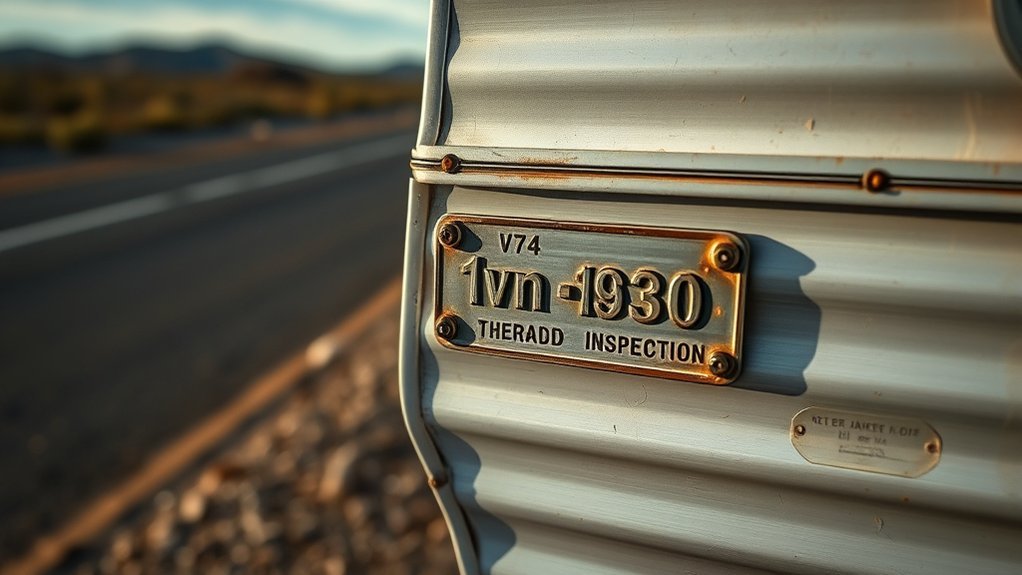
Last Updated on September 11, 2026 by Ethan Caldwell
If the paperwork for a 1974 travel trailer lists the make as “TRLR” or “Make Trlr,” do not assume that wording identifies the original manufacturer. Begin by checking the trailer’s tongue, front crossmember, permanent frame rails, manufacturer plate, cabinets, entry area, and original documents for a stamped or printed identification number. Older trailers often use manufacturer-specific serial or chassis numbers rather than today’s standardized 17-character format.
Quick Answer
Start at the trailer tongue and front frame, checking the top, sides, and underside with a flashlight. Then inspect beneath the LP-cylinder tray, near the entry door, inside cabinets, and around the electrical panel. A 1974 trailer may have a shorter manufacturer serial number instead of a modern 17-character VIN.
Key Takeaways
- Treat “TRLR” as an unconfirmed make until you find a manufacturer plate or matching ownership document.
- Check the tongue, front crossmember, frame rails, LP-tray area, entry area, cabinets, electrical panel, and original paperwork.
- Photograph the surface before cleaning and use the least abrasive method first.
- A 1974 serial number does not have to contain 17 characters.
- Never stamp a replacement number yourself. Ask your state motor-vehicle agency about inspection and assigned-VIN procedures.
At a Glance
| Time Required | 20 to 60 minutes for an initial inspection |
| Difficulty | Easy to moderate |
| Tools Needed | Flashlight, phone camera, clean cloth, mild cleaner, nylon or soft brass hand brush, wheel chocks, and basic hand tools if the LP tray blocks access |
| Cost | Usually $0 to $20, excluding a professional inspection or DMV fee |
Disclosure: As an Amazon Associate I earn from qualifying purchases. Some links on this page are affiliate links, at no extra cost to you.
Where Is the 1974 Make TRLR VIN or Serial Number?
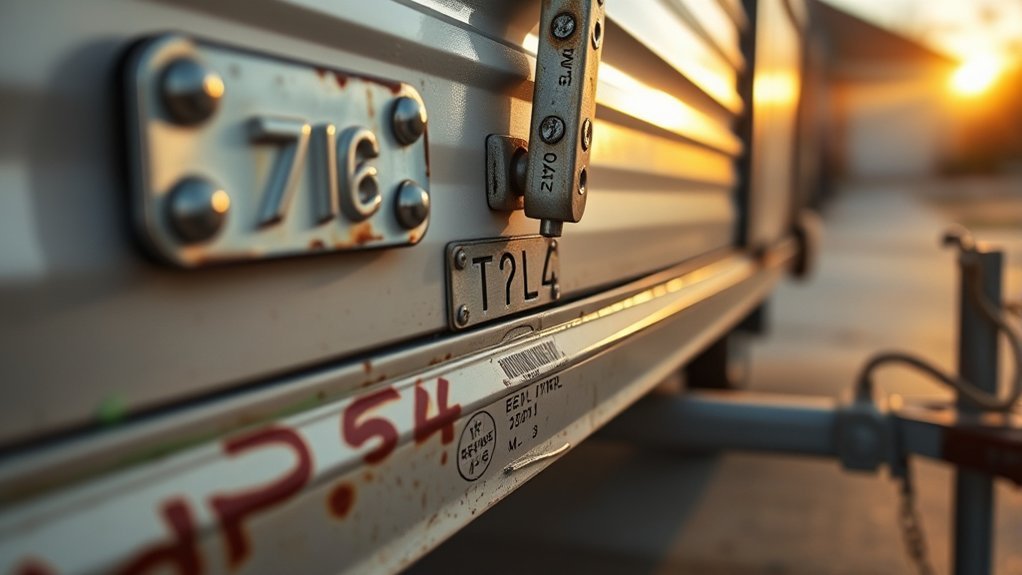
The exact location depends on the company that built the trailer. Federal rules for modern vehicles require an identification number to appear clearly and indelibly on a permanent vehicle part or on a permanently attached plate, but they do not establish one universal tongue location for every vintage trailer.
Inspect these areas in order:
- Trailer tongue: Examine the top, outer sides, inner sides, and underside of both A-frame rails.
- Coupler and tongue junction: Look where the coupler meets the frame and around welded brackets.
- Front crossmember: Inspect the metal member running across the front of the trailer body.
- LP-cylinder tray area: Look beside and beneath the tray after making the propane system safe.
- Main frame rails: Follow both rails rearward, especially around crossmembers and suspension mounting points.
- Entry area: Check the door frame, screen-door frame, step area, and nearby interior wall.
- Cabinets and electrical panel: Look inside cabinet doors, under sinks, inside closets, and near the breaker or converter panel.
- Original records: Review the title, old registration, insurance paperwork, bill of sale, warranty documents, and appliance or owner manuals.
On a 1974 trailer, a short manufacturer serial or chassis number may be the correct identifying number even though it does not resemble a modern 17-character VIN.
Note: “TRLR” may be a shortened trailer description in a title, auction, insurance, or registration record. Confirm the actual manufacturer from a physical data plate or reliable ownership document before trying to decode the number.
Check the Tongue and Frame
Park the trailer on firm, level ground, disconnect it from the tow vehicle, apply the parking brake if equipped, and chock the wheels. Wipe away loose dirt before using any brush or abrasive material.
Inspect With Light Before Cleaning
Use a bright flashlight at a low angle across the metal instead of pointing it directly at the surface. Side lighting creates shadows in shallow stamped characters that may disappear under direct light.
Inspect each area from several directions. A stamp may run vertically, face inward toward the center of the tongue, or sit close to a weld. Look for a complete sequence rather than assuming that the first few visible digits are the entire number.
Pro Tip: Take close photographs with the flashlight positioned from the left, right, top, and bottom. Increasing contrast on a copy of the photograph may reveal characters that are difficult to see in person.
Record the Number Exactly
Write down every character in its original order. Preserve spaces, dashes, prefixes, and suffixes because they may be part of the manufacturer’s format. Mark an uncertain character with a question mark in your notes rather than guessing.
Also record:
- The exact location of the stamp or plate.
- Whether the number is stamped, embossed, engraved, printed, or attached on a plate.
- The manufacturer or trade name shown nearby.
- Any model, weight, production-date, or axle information on the same plate.
- The trailer’s length, axle count, body style, and distinctive construction details.
Look Under the LP Tray
The frame beneath or beside the LP-cylinder tray is worth inspecting because the tray can conceal part of the tongue and front crossmember. However, you should not begin by operating a drill or another spark-producing tool in this area.
Warning: Close the propane-cylinder valves, disconnect and cap the cylinders as appropriate, and move them away from the work area before removing the tray or cleaning the frame. Stop immediately if you smell propane. Do not use a power brush, grinder, flame, or other possible ignition source around leaking gas or propane vapor.
LP Tray Inspection
Photograph the tray, brackets, hoses, regulator, and frame before disassembly. If the tray is removable, use the correct hand tools and support it so it cannot fall or strain a gas line.
- Remove loose items and confirm that the cylinders are out of the work area.
- Check the exposed top and sides of the frame with angled light.
- Inspect the underside of the tray for a label or plate.
- Look behind mounting brackets without bending or breaking them.
- Clean only the small areas that appear to contain characters.
- Photograph any number before further cleaning.
Hidden VIN Tags
A manufacturer plate may be partly hidden by paint, sealant, a replacement bracket, an added battery box, or later repairs. Do not pry off a plate simply to read its reverse side. A permanently attached plate is part of the trailer’s identification evidence.
If a plate is loose, damaged, painted over, or appears to have different fasteners from the surrounding hardware, photograph it and ask the DMV or an authorized vehicle inspector how to proceed.
Clean Rust to Reveal the Serial Number
Use the least destructive method that makes the characters readable. The goal is to remove loose contamination without changing the stamped metal or creating marks that could be mistaken for altered characters.
Rust Removal Tools
Begin with these tools:
- Dry microfiber cloth or soft shop towel.
- Mild degreaser applied to the cloth rather than poured over a plate.
- Nylon hand brush.
- Soft brass hand brush used with light pressure.
- Wooden or plastic pick for packed dirt around raised characters.
- Flashlight and phone camera.
- Fine artist’s chalk for highlighting an intact stamped surface after cleaning.
Avoid aggressive grinding discs, rotary wire wheels, coarse sandpaper, chisels, punches, and chemical rust removers unless a qualified restorer or vehicle inspector has confirmed that they will not damage the identification area.
Expose Hidden Stamping
Work on a small section and inspect it after every pass. Stop as soon as the outline of a character becomes visible.
| Area or Condition | What to Look For | Safest First Action |
|---|---|---|
| Loose dirt | Shallow lines or straight character edges | Wipe with a dry cloth |
| Grease or road film | Dark patches hiding a stamp | Use mild cleaner on a cloth |
| Flaking surface rust | Repeated character spacing | Use a nylon or soft brass hand brush |
| Thick paint | Raised or recessed lines beneath coating | Photograph it and consult an inspector before stripping |
| Severe corrosion | Only partial characters remain | Stop cleaning and request professional or DMV inspection |
Clean Carefully First
Follow this sequence:
- Photograph the untouched area.
- Remove loose dirt with a dry cloth.
- Use angled light to check for characters.
- Apply mild cleaner to the cloth and wipe gently.
- Use a nylon hand brush on loose rust.
- Switch to a soft brass hand brush only when needed.
- Wipe the area and photograph it again.
- Stop if the metal begins to scratch, shine, flatten, or lose its original surface texture.
Warning: Do not deepen faint characters with a punch, engraver, stamp set, grinder, or marker intended to create permanent lines. Federal and state laws restrict altering or replacing vehicle identification numbers. A replacement number should be issued or restored only through an authorized process.
How to Decode a Vintage Trailer Serial Number
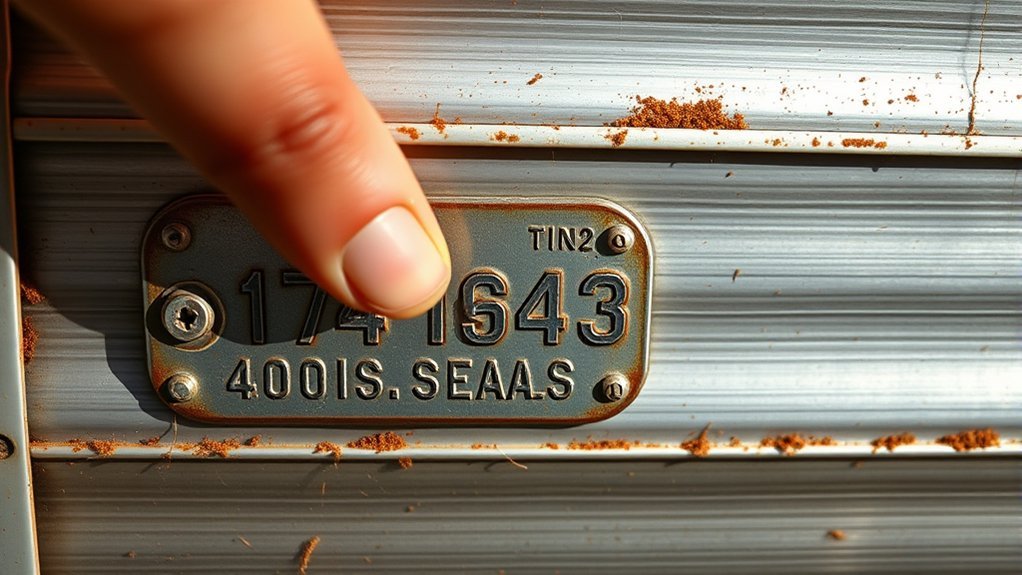
There is no universal decoding formula for every 1974 trailer. Before the standardized 17-character VIN format, manufacturers used their own serial, chassis, and production-number systems. One builder might encode the model and year, while another might use only a sequential production number.
Use this process:
- Identify the manufacturer: Look for a trade name or company name on the data plate, title, registration, appliance documents, cabinet labels, or exterior emblems.
- Copy the entire number: Preserve letters, digits, spaces, and punctuation exactly.
- Compare multiple records: Check the physical number against the title, prior registration, bill of sale, insurance documents, and old service receipts.
- Research the builder: Search for factory literature, archived brochures, owner-club records, historical registries, or manufacturer decoding information.
- Confirm uncertain results: Ask your state DMV or an authorized inspector before using an interpreted number for a title application.
The NHTSA VIN Decoder is useful for modern standardized VINs, but it may return no result for a manufacturer-specific 1974 serial number. A failed online decode does not prove that the number is false.
Serial Number vs. Other Numbers
| Marking | What It Usually Describes | Can It Identify the Trailer? |
|---|---|---|
| VIN or chassis number | The individual vehicle or chassis | Usually, after verification |
| Manufacturer serial number | A specific production unit | Possibly, especially on a pre-standard trailer |
| Model number | A trailer design or product series | No, because multiple trailers may share it |
| Patent number | A protected invention or component design | No |
| Appliance serial number | A refrigerator, furnace, air conditioner, or other component | No, but it may help estimate age |
Verify the Number Before Registration
Finding a sequence of characters is only the first step. The physical number should be compared with the ownership documents before you submit a title or registration application.
When the Number Matches
Take clear photographs showing both the number and its location on the trailer. Keep copies of the title, registration, bill of sale, and any manufacturer information that supports the identification.
When One Character Is Unreadable
Do not guess the character or write a cleaner-looking version over the original. Photograph it under several lighting angles and compare it with every available document. An authorized inspector may be able to verify the number from its location, spacing, surviving characters, and related records.
When the Title Does Not Match
Stop the registration or purchase process until the discrepancy is explained. A mismatch may result from an old clerical error, a misread character, a replacement frame, incorrect paperwork, or a more serious identification issue.
Contact your DMV or vehicle-identification unit and ask what inspection and ownership documents are required. Do not alter either the trailer or the paperwork to force a match.
What If Your Make TRLR Has No Visible VIN?
A missing visible number does not automatically mean the trailer is stolen or homebuilt. The original plate may be concealed, corroded, lost during repairs, or located somewhere you have not yet inspected.
Gather as much evidence as possible:
- Current or previous title and registration.
- Bill of sale and seller contact information.
- Old insurance, tax, storage, or repair records.
- Photographs of the tongue, frame, body, suspension, and interior.
- Manufacturer emblems, labels, and construction details.
- Any partial number or plate found on the trailer.
- The trailer’s approximate weight, length, axle count, and body type.
Then contact the motor-vehicle agency in the state where you plan to title the trailer. Procedures vary. For example, the California DMV describes assigned VIN plate procedures, while the Texas DMV requires an authorized identification-number inspection for many assigned or reassigned VIN applications.
Note: The required inspection, ownership evidence, forms, fees, and trailer classifications differ by state. Follow your own state’s current procedure rather than copying another state’s forms.
Do not purchase a blank VIN plate, stamp your own number, move a plate from another trailer, or recreate a number from memory. An assigned or replacement number must be handled through the legally authorized process.
Frequently Asked Questions
Where is the hidden VIN number on a vintage trailer?
Start with the tongue, coupler area, front crossmember, permanent frame rails, and the frame beneath the LP-cylinder tray. Then inspect the entry area, cabinets, electrical panel, closets, and original documents. The location varies by manufacturer, so there is no guaranteed passenger-side or roadside position.
How many characters should a 1974 trailer VIN have?
There is no universal character count for every 1974 trailer. A legitimate manufacturer serial or chassis number may be shorter than 17 characters because manufacturers used different systems before the standardized VIN format. Verify the number through manufacturer records, ownership documents, or your DMV.
Where is the VIN number on a vintage travel trailer?
Common inspection areas include the A-frame tongue, front crossmember, main frame rails, manufacturer plate, entry-door area, cabinets, and electrical-panel area. Some trailers use a stamped chassis number, while others have a riveted or permanently attached data plate.
What changed about VINs around the 1981 model year?
The major change was adoption of the standardized 17-character VIN system for applicable vehicles. Trailers already had manufacturer identification and serial numbers before that transition, but the older formats were not uniform across all builders.
Is “Make TRLR” the trailer manufacturer?
Not necessarily. “TRLR” can function as a shortened trailer description in a record. Treat the manufacturer as unconfirmed until you find a company name on the trailer or in reliable ownership documents.
Can I stamp my own VIN on an old trailer?
No. Do not create, replace, deepen, move, or restamp an identification number yourself. Contact your state DMV or authorized vehicle-identification unit for an inspection and, when appropriate, an officially assigned number.
What should I do if the trailer number does not match the title?
Do not change the number or paperwork. Photograph the physical identifier, gather all ownership records, and ask the DMV or an authorized inspector to resolve the discrepancy before you buy, register, sell, or insure the trailer.
Conclusion
Finding the identification number on a 1974 trailer requires patience because the manufacturer and original numbering system may not be obvious. Start with the tongue and permanent frame, inspect beneath the LP tray safely, and then check the entry area, cabinets, electrical panel, and old paperwork.
Use angled light and gentle hand-cleaning methods before trying anything abrasive. Record every character exactly and compare it with the title and registration. If the number is missing, unreadable, altered, or different from the paperwork, stop cleaning and contact your state DMV or an authorized vehicle inspector. That approach protects the original evidence and gives you the best chance of obtaining accurate ownership records.
Sources
- National Highway Traffic Safety Administration VIN Decoder — explains modern VIN decoding and manufacturer-reported vehicle information.
- 49 CFR § 565.13, General VIN Requirements — supports the 17-character standard, check digit, and permanent-placement requirements for regulated VINs.
- California DMV VIN Plate Assignments — provides an official example of state-assigned VIN procedures.
- Texas DMV VIN Assignment and Reassignment Process — explains inspection and ownership-evidence requirements for assigned numbers.
- 18 U.S.C. § 511 — covers federal restrictions on altering or removing motor-vehicle identification numbers.
- OSHA Standard 1910.110 for LP Gas — supports precautions concerning propane and possible ignition sources.

