

Last Updated on July 27, 2026 by Daniel Globe
London in October feels distinctly autumnal, with mild afternoons, cool mornings, shorter days, and a greater chance of rain than in September. The weather can change during the day, so flexible layers and rain protection are more useful than heavy winter clothing. Knowing the typical temperatures, rainfall, sunshine, and daylight hours will help you plan your trip with fewer surprises.
Quick Answer
London in October is cool, changeable, and often damp rather than bitterly cold. Heathrow’s 1991–2020 averages show a daytime high around 15.8°C (60°F), nighttime low around 8.8°C (48°F), about 65 mm of rain, and roughly 115 hours of sunshine. Pack layers, a waterproof outer layer, and comfortable shoes.
Key Takeaways
- Typical October afternoons are in the mid-teens Celsius, while mornings and nights are noticeably cooler.
- Rain is common enough to plan for, but a rainy day does not necessarily mean nonstop rain from morning to night.
- October averages about 115 hours of sunshine at Heathrow, while daylight falls quickly as the month progresses.
- Layers, a waterproof jacket, comfortable walking shoes, and a small umbrella are the most useful items to pack.
Disclosure: As an Amazon Associate I earn from qualifying purchases. Some links on this page are affiliate links, at no extra cost to you.
Average Temperatures and Seasonal Changes

In October, London’s temperatures begin to fall as autumn becomes established. It is generally cool rather than wintry, especially during the first half of the month.
According to the Met Office’s 1991–2020 averages for Heathrow, October has an average daily maximum of 15.81°C (about 60°F) and an average daily minimum of 8.78°C (about 48°F). Individual days can be warmer or colder than those long-term averages.
That means a range around 13°C to 17°C is common territory for daytime sightseeing, while mornings and evenings can feel much cooler. Later in October, the combination of lower temperatures, earlier sunsets, wind, and damp conditions can make the air feel chillier than the thermometer suggests.
Heavy winter clothing is usually unnecessary for a typical October visit. A better approach is to wear several light layers that can be added or removed as conditions change.
At Heathrow, the 1991–2020 October averages are 15.81°C for the daily maximum and 8.78°C for the daily minimum.
Rainfall and Humidity Levels
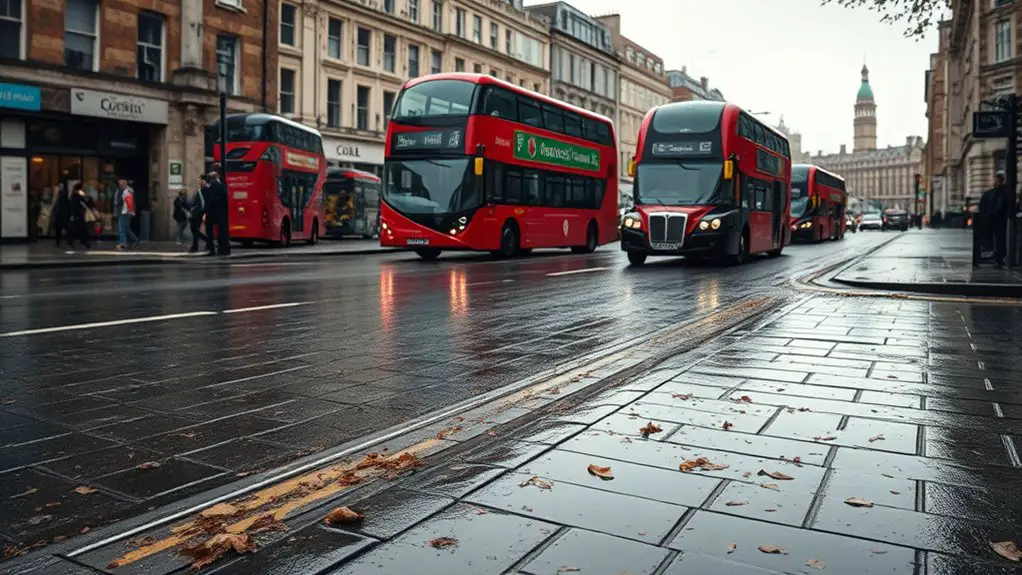
October is noticeably wetter than late summer, although London’s rainfall totals vary depending on where they are measured. The Met Office’s 1991–2020 normal for Heathrow is 65.07 mm of October rainfall, while Greenwich Observatory records 58.34 mm.
At Heathrow, October averages 10.8 days with at least 1 mm of rain. That definition is important: it does not mean that rain falls continuously for nearly 11 full days. A qualifying day may contain a period of rain followed by several dry hours.
The air can often feel damp, especially during cool mornings, evenings, and rainy spells. Relative humidity changes considerably through each day, however, so a fixed monthly humidity percentage is less useful to travelers than the temperature, rainfall, wind, and short-range forecast.
Carry a compact umbrella or wear a lightweight waterproof jacket when spending a full day away from your accommodation. Waterproof or water-resistant footwear can also make long sightseeing days more comfortable when pavements stay wet.
Note: Climate averages describe long-term patterns, not the weather you will experience on a particular trip. Rainfall and temperature also vary across Greater London, so check a current forecast shortly before each sightseeing day.
Sunshine Hours and Cloud Cover
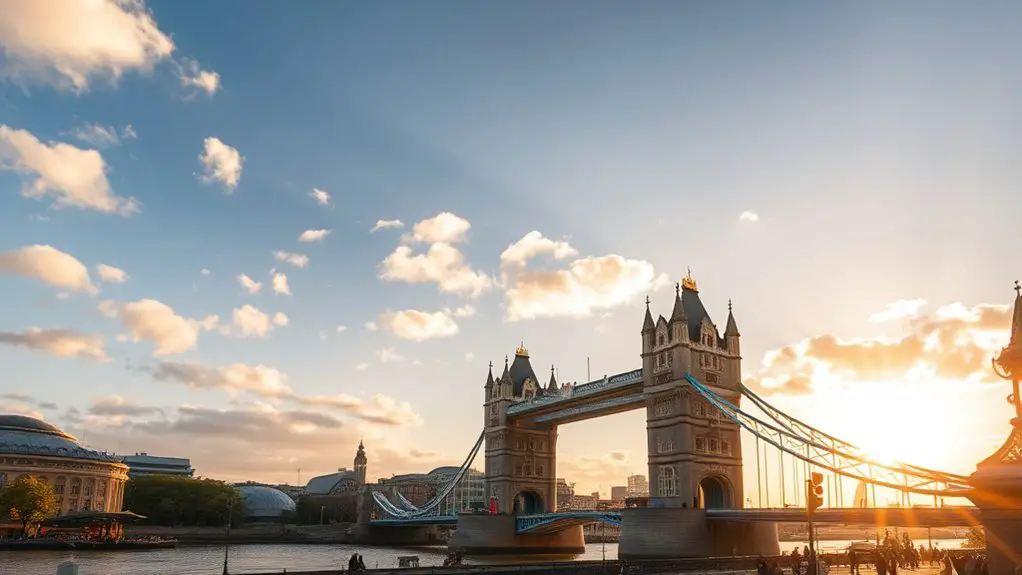
October brings much less sunshine than London’s summer months, and overcast periods become more common. Heathrow’s 1991–2020 climate normal is 115.17 hours of sunshine during October, equivalent to about 3.7 hours per calendar day when averaged across the month.
That does not mean every day contains exactly three or four sunny hours. Some October days can be bright for long periods, while others remain mostly cloudy. Long-term monthly totals are more meaningful than assigning a fixed number of “sunny days” or “cloudy days.”
| October climate measure | Heathrow 1991–2020 average |
|---|---|
| Average daily maximum | 15.81°C (about 60°F) |
| Average daily minimum | 8.78°C (about 48°F) |
| Monthly rainfall | 65.07 mm (about 2.6 in) |
| Days with at least 1 mm of rain | 10.8 days |
| Monthly sunshine | 115.17 hours |
| Air-frost days | 0.33 days |
Daylight Hours and the October Clock Change
Daylight decreases quickly through October. In 2026, London has about 11 hours 37 minutes of daylight on October 1 and about 9 hours 43 minutes on October 31, according to London sunrise and sunset calculations.
There is also a noticeable change in clock time late in the month. The UK moves from British Summer Time to Greenwich Mean Time on the last Sunday in October. GOV.UK confirms that in 2026 the clocks go back one hour on October 25.
The clock change does not suddenly shorten the astronomical day by an hour, but it does shift daylight to an earlier clock time. In 2026, sunset is around 5:48 p.m. BST on October 24 and around 4:46 p.m. GMT on October 25.
Pro Tip: If you are visiting late in October, schedule parks, viewpoints, walking tours, and outdoor photography earlier in the day. Save museums, galleries, shopping, restaurants, and shows for the darker late afternoon and evening.
Typical Weather Patterns and Variability
London’s October weather can change quickly. A mild, bright morning may be followed by cloud, a passing shower, and a cooler evening, while another day may stay dry for hours despite an unsettled forecast.
Atlantic weather systems regularly influence the UK, bringing alternating spells of cloud, rain, wind, and clearer weather. For a visitor, this makes the short-range forecast far more useful than relying on a monthly average alone.
You should therefore plan for a mixture of conditions rather than expecting every October day to be cold or wet. Outdoor sightseeing is still practical, but clothing that works across several conditions will make the trip easier.
Early October vs. Late October Weather
October is a transition month, so a visit during the first week can feel different from a visit during the final week.
- Early October: Daylight lasts longer, and mild afternoon weather is more likely to feel comfortable without heavier layers.
- Mid-October: Cool mornings, variable cloud, showers, and mild intervals are all common possibilities.
- Late October: Days are shorter, evenings become cooler, and the clock change moves sunset to an earlier clock time.
Cold snaps are possible at any point, but persistent winter weather is not the October norm. Frost becomes more likely as autumn progresses, yet it remains uncommon in London during October compared with the winter months.
Packing Tips and Outdoor Activity Considerations
Because London’s October weather is changeable, versatile clothing is more useful than packing for one fixed temperature.
What to Wear in London in October
- Light layers: Long-sleeve tops, a sweater or fleece, and a layer you can remove indoors.
- Waterproof outer layer: A lightweight rain jacket is useful for showers and windy conditions.
- Comfortable walking shoes: Choose shoes that remain comfortable on wet pavements and during long sightseeing days.
- Compact umbrella: Handy for passing rain when winds are not too strong.
- Light scarf: Useful during cooler mornings and evenings without taking up much luggage space.
A heavy winter coat is generally unnecessary for typical October conditions, although travelers who feel the cold easily may appreciate a warmer jacket late in the month.
Planning Outdoor Activities
Check the Met Office London forecast close to your travel date and again each morning. When showers are expected, consider attractions that let you alternate between indoor and outdoor spaces rather than cancelling an entire sightseeing day.
Gardens, markets, river walks, and walking tours can still be enjoyable in October. Starting outdoor plans earlier also gives you more usable daylight, particularly after the late-October clock change.
Note: London’s long-term climate averages cannot predict a specific October week. Check the forecast a few days before departure before deciding whether you need extra warm or waterproof clothing.
Frequently Asked Questions
How does London’s weather in October compare with other autumn months?
October is cooler and wetter than September but milder than November. At Heathrow, 1991–2020 averages show September at 20.22°C for the daily maximum and 49.61 mm of rain, October at 15.81°C and 65.07 mm, and November at 11.47°C and 66.63 mm. October therefore sits clearly between early and late autumn conditions.
Are October events in London affected by the weather?
Most major museums, shows, exhibitions, festivals, and scheduled attractions continue regardless of ordinary October rain. Outdoor events, markets, walking tours, and sightseeing may be less comfortable during heavy showers, so check event information and the daily forecast. London’s official visitor guide also maintains an updated October events and activities guide.
When are the earliest signs of winter weather in London?
Cooler nights and occasional cold spells can arrive during October, but frost is still uncommon in London. Heathrow’s 1991–2020 normal is only 0.33 air-frost days in October. Frost becomes more frequent later in autumn and during winter, so an October visitor should prepare for cool weather rather than assume true winter conditions.
How do daylight hours vary throughout October?
Daylight decreases steadily throughout the month. In 2026, London has about 11 hours 37 minutes of daylight on October 1 and 9 hours 43 minutes on October 31. The UK also puts the clocks back on October 25, 2026, moving sunset to an earlier clock time during the final week of the month.
What are the best indoor activities during rainy October days?
Museums, art galleries, historic interiors, covered markets, afternoon tea, cafes, shopping, theatre, and cinema are easy rainy-day options. Because showers may be temporary, you can also combine an indoor attraction with a nearby outdoor sight instead of giving up an entire day of sightseeing.
Does it snow in London in October?
Snow is unusual in London in October. Typical temperatures remain well above freezing during the day, and even air frost is uncommon at Heathrow during the month. Travelers should prepare primarily for cool temperatures, rain, and wind rather than snow.
Is October a good time to visit London?
Yes, October can be a good time to visit if you are comfortable with cool, changeable weather. Outdoor sightseeing remains practical, autumn scenery can be attractive, and London’s large number of indoor attractions makes it easy to adjust plans when rain arrives. The main trade-offs are shorter daylight hours and a greater chance of wet weather than in September.
Conclusion
London in October is generally cool, changeable, and increasingly autumnal. Expect afternoons in the mid-teens Celsius on average, cooler mornings and evenings, periodic rain, and noticeably shorter days as the month progresses. Pack light layers, rain protection, and comfortable walking shoes, then check the forecast close to each sightseeing day. With a flexible plan, October weather should not prevent you from enjoying the city.
Sources
- Met Office — Heathrow Location-Specific Long-Term Averages — 1991–2020 temperature, rainfall, sunshine, rain-day, and frost averages.
- Met Office — Greenwich Observatory Long-Term Averages — additional London rainfall data showing how totals vary by station.
- GOV.UK — When Do the Clocks Change? — official UK British Summer Time and Greenwich Mean Time change dates.
- Timeanddate — Sunrise and Sunset in London — October 2026 sunrise, sunset, and day-length calculations.
- Visit London — Things to Do in London in October — current October visitor planning and seasonal activity information.
