
Last Updated on July 27, 2026 by Daniel Globe
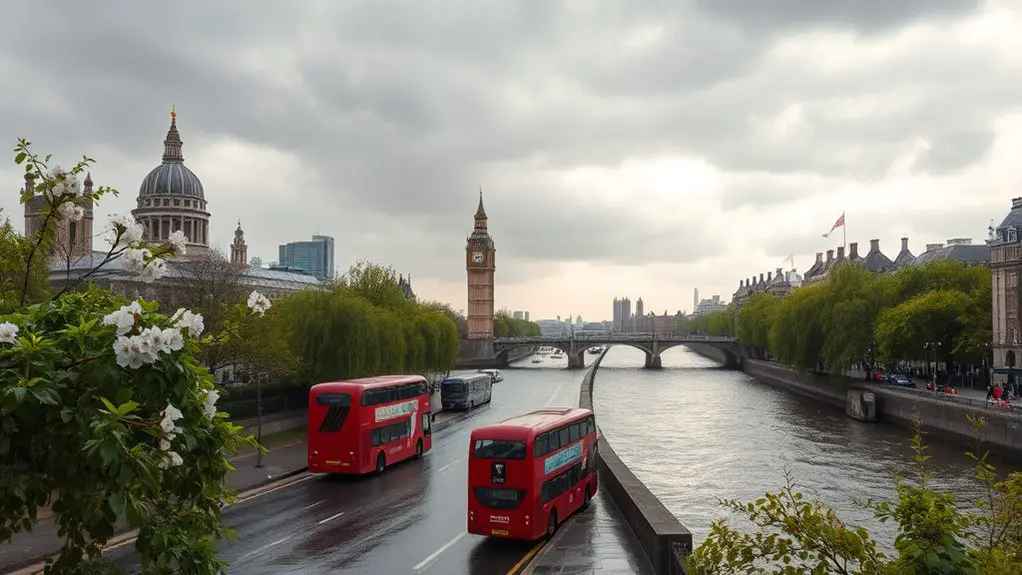
April is a classic spring month in London: mild enough for long days of sightseeing, but changeable enough that a light coat and rain protection still earn their place in your bag. Long-term Met Office averages show daytime highs around 15°C (59°F), cool nights around 6°C (43°F), moderate rainfall, and considerably more sunshine than winter. The key is to use those averages for packing, then check the forecast for your actual travel dates.
Quick Answer
London in April is generally mild but changeable. At Heathrow, 1991–2020 averages show a daily high of about 15°C (59°F), a low near 6°C (43°F), roughly 42 mm of rain for the month, and almost six hours of sunshine per day. Pack layers, comfortable shoes, and a light waterproof jacket.
Key Takeaways
- Typical April afternoons are mild, with an average high around 15°C (59°F), while nights average about 6°C (43°F).
- London averages about 42 mm of April rain and roughly nine days with at least 1 mm of rainfall, so a wet day does not necessarily mean an all-day washout.
- April sunshine averages almost six hours a day at Heathrow, but individual years can be much sunnier, wetter, warmer, or colder.
- Dress in layers and carry a compact umbrella or lightweight waterproof jacket.
- Use climate averages for packing, but use a current Met Office forecast for deciding what to do on a particular day.
London April Weather at a Glance
| Average Daily High | 15.0°C (59°F) |
| Average Daily Low | 6.03°C (43°F) |
| Average Monthly Rainfall | 42.31 mm (1.67 in) |
| Days With ≥1 mm Rain | About 8.8 days |
| Average April Sunshine | 176.67 hours, about 5.9 hours per day |
Figures are 1991–2020 climate averages for Heathrow from the Met Office. Conditions in central London can differ slightly, and individual Aprils can vary considerably.
Note: Climate averages describe what April has been like over many years. They do not predict whether the first, second, or final week of a particular April will be sunny or wet.
Disclosure: As an Amazon Associate I earn from qualifying purchases. Some links on this page are affiliate links, at no extra cost to you.
Typical Temperature Range Throughout the Month
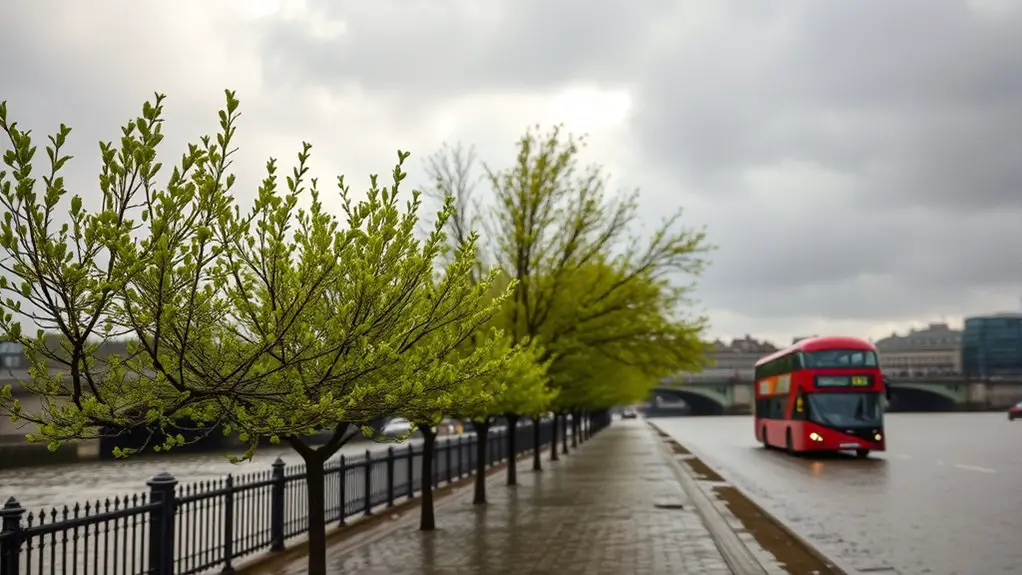
April marks a clear step toward warmer spring weather in London. At Heathrow, the Met Office 1991–2020 climate average is 15.0°C (59°F) for the daily maximum and 6.03°C (43°F) for the daily minimum.
That does not mean every day stays between 6°C and 15°C. Warm spells can push afternoon temperatures well above the average, while clear nights or northerly winds can still make mornings feel cold.
During the day, mild sunshine can feel comfortable for walking, parks, outdoor markets, and sightseeing. Mornings and evenings are usually cooler, which is why layers work better than one heavy coat.
Temperatures generally rise as spring advances, so late April has a higher seasonal baseline than the start of the month. However, weather systems can easily override that trend. A chilly late-April day can be colder than a sunny afternoon at the beginning of the month.
London has also experienced exceptional April warmth. The Met Office lists 29.4°C (84.9°F) at Camden Square on 16 April 1949 as the United Kingdom’s April maximum-temperature record. Such heat is an extreme, not something visitors should expect during a normal April.
For most trips, plan around mild daytime temperatures, chilly evenings, and the possibility of both warmer and colder spells.
Rainfall Patterns and Precipitation Chances
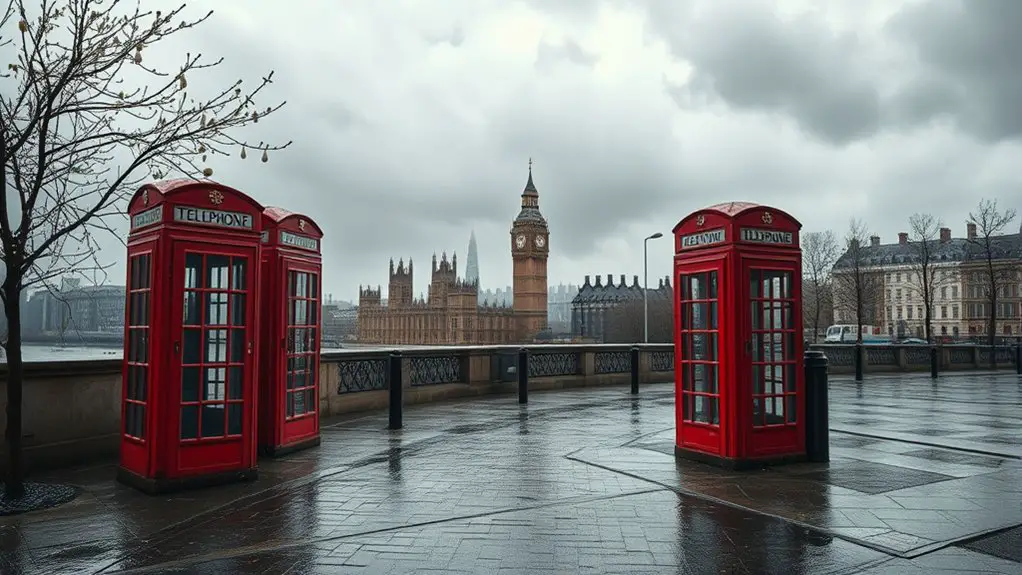
Rain is part of London’s April weather, but the month is not normally a continuous washout. Heathrow’s 1991–2020 average is about 42.31 mm of rain for April, spread across roughly 8.8 days with at least 1 mm of precipitation.
Those figures are more useful than assuming that rain becomes steadily more or less frequent as April progresses. There is no dependable rule that the first, middle, or final third of April will be the wettest.
One April can contain frequent showers, while another can be unusually dry. April 2026, for example, was much drier than average across southern England, and Greater London recorded one of its driest Aprils in the long-term series, according to the Met Office.
April Rainfall Variability
April rainfall can arrive as brief showers, longer periods of light rain, or an occasional heavier spell. A rainy morning can be followed by a dry afternoon, while a day that starts bright may develop showers later.
The long-term rainfall total is moderate, but year-to-year variation is significant. This is why monthly averages are useful for packing but much less useful for choosing a specific outdoor day.
Carry a compact umbrella or lightweight waterproof layer when you will be outside for several hours. More importantly, check the current Met Office forecast shortly before your trip and again each morning.
Precipitation Frequency Trends
There is no reliable long-term pattern in which rain consistently increases or decreases week by week through April. The exact pattern depends on the position of high- and low-pressure systems during that particular year.
Some Aprils begin unsettled and become dry. Others do the opposite. A settled high-pressure spell can provide several consecutive dry days, while an Atlantic weather system can produce wind and repeated showers at any point in the month.
For trip planning, treat each week as potentially variable rather than assuming early April is wetter or late April is safer for outdoor activities.
The best strategy is to keep one or two indoor alternatives available and move outdoor plans to the best forecast day when your itinerary allows it.
This forecast-based approach is much more dependable than trying to choose dates from historical monthly averages.
Typical Shower Patterns
London’s April rain can take several forms. Short showers are common in spring, but longer periods of rain can occur when a weather front crosses the region.
| Shower Type | What It Can Be Like |
|---|---|
| Light Drizzle | Fine rain that may be brief or linger under low cloud. |
| Heavy Shower | A short period of heavier rain, sometimes followed quickly by brighter weather. |
| Intermittent Rain | Rain and dry intervals alternating over several hours. |
| Steady Rain | A weather front can occasionally bring a longer spell of continuous rain. |
The practical lesson is simple: waterproof protection is useful, but April rain does not automatically mean losing an entire sightseeing day.
Average Sunshine Hours per Day
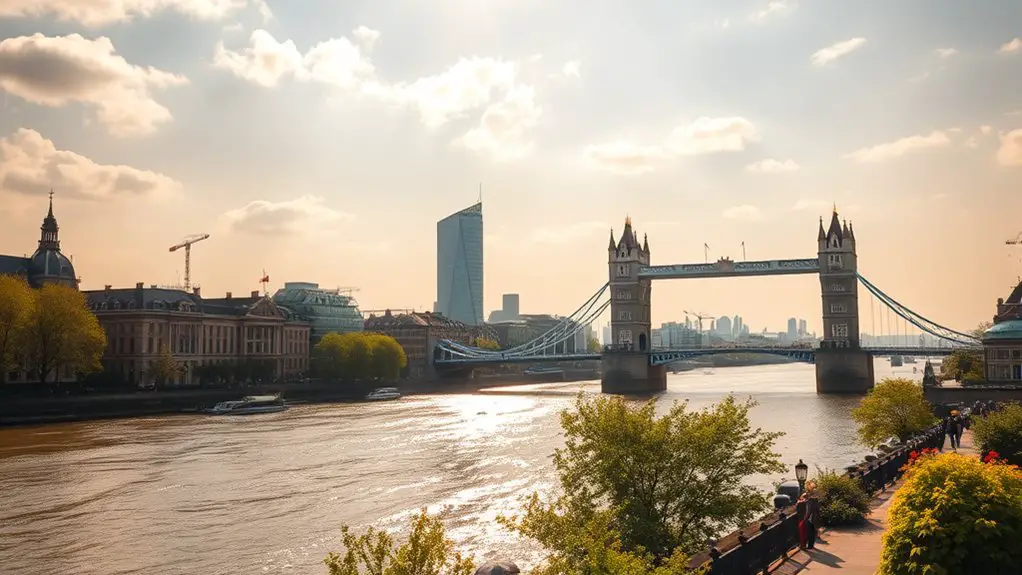
April brings a noticeable increase in sunshine compared with winter. Heathrow’s 1991–2020 average is 176.67 sunshine hours for April, equivalent to roughly 5.9 hours a day across the month.
That figure is an average, not a daily guarantee. A cloudy day may record little direct sunshine, while a settled spring day can be bright for many hours.
April can also be exceptionally sunny. The Met Office reported that April 2026 was the UK’s fourth-sunniest April in the national series, illustrating how far an individual month can depart from the long-term average.
At Heathrow, April averages about 176.7 hours of sunshine—nearly six hours per day—but individual Aprils can be much cloudier or much sunnier.
Wind Conditions and Their Impact
Wind is another reason the same temperature can feel very different from one April day to the next.
A mild 14°C afternoon can feel pleasant in sunshine and light winds but noticeably colder when exposed to a brisk breeze. Stronger gusts can also make umbrellas harder to use and exposed attractions less comfortable.
There is no dependable rule linking a certain April wind speed with a particular wind direction, so it is better to check the daily forecast than rely on a fixed wind-direction table.
Spring Wind Variability
Spring weather systems can bring everything from calm, settled conditions to blustery days. Exposed bridges, riverfront paths, viewpoints, and open parks tend to feel windier than sheltered streets.
| Wind Situation | Likely Effect on Your Day |
|---|---|
| Light breeze | Usually comfortable for walking, parks and sightseeing. |
| Breezy | Can make temperatures feel cooler, especially beside the Thames. |
| Strong or gusty | May affect exposed attractions, cycling, river activities and umbrella use. |
The Met Office’s April record book shows that severe spring gusts are possible in the UK, but those records represent extremes rather than normal London conditions.
Wind’s Effect on Comfort
Wind can make exposed skin feel colder even when the measured air temperature is mild. This matters most early in the morning, after sunset, and beside open stretches of the Thames.
Light breezes can be pleasant during sunny weather, especially after hours of walking. Stronger winds, however, can make an otherwise mild afternoon feel chilly.
A lightweight wind-resistant outer layer is therefore useful even when no rain is forecast.
On a particularly windy day, choose more sheltered routes and keep loose hats, scarves, and umbrellas secure.
Checking wind as well as temperature gives you a better idea of how comfortable the day will actually feel.
Wind-Driven Weather Changes
Changing wind direction can bring different air masses across London, helping temperatures and cloud cover change quickly. A sunny spell can therefore give way to cooler cloud, showers, or gustier weather.
| Calmer Conditions | Windier Conditions |
|---|---|
| More comfortable in exposed parks | Exposed areas can feel colder |
| Umbrellas easier to manage | A hooded waterproof may work better |
| Outdoor seating more comfortable | Riverfront and rooftop venues may feel chilly |
Wind is therefore worth checking alongside rain probability when you plan outdoor attractions.
Variability in Weather From Week to Week
April’s long-term temperature trend is upward, but the actual weather can change substantially from one week to the next.
One week may bring clear skies and mild afternoons, while another can turn cooler, wetter, or windier. April 2026 is a good example: the month began unsettled in the UK before high pressure produced much more settled weather later.
That variability means historical averages cannot tell you that April 1–10 will be wetter or April 21–30 will be sunnier. They describe the month as a whole.
For a real trip, use the averages to build your packing list, then adjust your daily itinerary with the latest forecast.
Pro Tip: Put weather-sensitive plans such as gardens, long walks, viewpoints and river cruises on flexible days. About 24–48 hours beforehand, move them to the driest and calmest forecast period and use museums or indoor attractions as backup options.
Daylight, Pollen, and Other Spring Conditions
April’s longer days are one of the month’s biggest advantages for sightseeing. British Summer Time is already in effect by April, so evenings remain light noticeably later than during winter.
More daylight gives you extra flexibility for parks, river walks, outdoor viewpoints, and neighbourhood sightseeing. Sunshine strength is also increasing, so sun protection can be useful on clear days even when the air still feels cool.
April is also an important tree-pollen month. According to the Met Office, the UK tree-pollen season typically runs from late March to mid-May, with birch, oak, and ash among the common sources. The main grass-pollen season normally becomes more important from around mid-May.
Pollen levels can rise quickly during warm, dry weather. Anyone affected by seasonal allergies should check the current Met Office pollen forecast along with the weather forecast.
How to Dress for April in London
The most reliable way to dress for London in April is to wear several light layers rather than one bulky winter outfit.
A waterproof or water-resistant outer layer is useful for showers, while comfortable walking shoes matter because visitors often spend many hours on foot.
Choose pieces you can remove and carry easily when a cool morning turns into a mild or sunny afternoon.
Layering Essentials for Weather
Start with a lightweight T-shirt, shirt, or long-sleeve top. Add a sweater, cardigan, or light fleece for cooler periods.
Finish with a lightweight jacket that blocks wind and can handle at least light rain. A hood is useful when a shower arrives in breezy conditions.
Fast-drying fabrics can be convenient if you will spend a lot of time outdoors, but ordinary comfortable city clothing is enough for most visitors.
A practical April packing list includes:
- Lightweight waterproof or water-resistant jacket
- Sweater, cardigan, or fleece
- T-shirts or long-sleeve tops for layering
- Comfortable walking trousers or jeans
- Comfortable shoes with reasonable grip
- Compact umbrella
- Light scarf for cooler evenings
- Sunglasses for bright spring days
Waterproof Gear Recommendations
You do not need expedition-style waterproof clothing for a normal London sightseeing trip. A compact umbrella and lightweight waterproof jacket are usually more practical.
A hooded jacket gives you another option when wind makes an umbrella awkward to use.
Choose comfortable footwear that can tolerate wet pavement and occasional puddles. Heavy rain boots are rarely necessary for ordinary city sightseeing, but shoes with slick soles can be uncomfortable on wet streets.
Waterproof trousers are optional and make most sense if you expect to spend hours outside in a wet forecast. A water-resistant bag or small cover can also protect electronics and travel documents.
Best Days for Outdoor Activities
The best April day for an outdoor activity is determined by the actual forecast, not by a fixed date range. Mild temperatures, low rain probability, and light winds are ideal for parks, walks, cycling, outdoor markets, viewpoints, and river activities.
| Forecast | Good Choices | What to Remember |
|---|---|---|
| Dry, mild, light wind | Parks, gardens, cycling, long walks | Keep one light layer with you |
| Sunny but cool | Sightseeing, markets, viewpoints | Wind can make exposed areas feel colder |
| Scattered showers | Walking tours mixed with cafés, markets, museums | Carry a compact umbrella or waterproof |
| Wet or very windy | Museums, galleries, covered markets, theatre | Move flexible outdoor plans to another day |
Staying flexible gives you a much better chance of enjoying London’s spring outdoors than booking activities according to assumed early- or late-April weather.
Effects of April Weather on London’s Parks and Gardens
April is an attractive month for London’s parks because longer days, milder temperatures, and spring growth bring increasing colour to gardens and green spaces.
The Royal Parks lists tulips among the flowers that are typically at their best from April into May, with displays in places including The Regent’s Park, St. James’s Park, and Greenwich Park.
Rain helps spring growth but can also leave lawns and unpaved paths muddy. After a wet spell, shoes with reasonable grip are useful if you plan to spend much of the day in parks or gardens.
On a dry, mild day, April is well suited to walks, picnics, photography, and garden visits. On a wet day, many parks remain open, but paved paths and nearby indoor attractions make a more comfortable combination.
Notable Weather Events in Past Aprils
London and the wider UK have experienced unusually warm, cold, sunny, wet, and windy Aprils, which shows why long-term averages should never be treated as a guarantee.
One of the clearest London examples is the UK’s April heat record. The Met Office records 29.4°C (84.9°F) at Camden Square, London, on 16 April 1949.
April 2011 was another remarkable warm month. Met Office historical comparisons identify it as the warmest April in the UK mean-temperature series cited in its recent climate reporting.
Recent Aprils also demonstrate large swings in rainfall and sunshine. April 2025 became the UK’s sunniest April on record at the time, while April 2026 ranked as the country’s fourth sunniest and seventh warmest.
April 2026 was also especially dry across parts of southern and eastern England. Greater London recorded its sixth-driest April in the Met Office series used for that assessment.
Cold and wintry outbreaks are still meteorologically possible in April as well. The Met Office’s national April records include substantial snow depths and severe frost in parts of the UK, although significant settling snow in central London is uncommon.
These extremes are useful reminders of April’s range, but they should not replace the long-term averages when deciding what to pack.
Tips for Staying Comfortable During Unpredictable Days
April sightseeing is much easier when you expect conditions to change instead of dressing for one fixed temperature.
Carry a light waterproof layer or compact umbrella. Wear layers you can remove when the sun appears, and keep a sweater or jacket available for the evening.
Comfortable shoes with good grip are useful on both dry and wet streets. Sunglasses can be just as useful as rain protection on a bright spring day.
Check the forecast each morning rather than relying only on the forecast you saw before leaving home. Conditions and timing can change as your trip approaches.
For outdoor attractions, look at rain, wind, and temperature together. A dry but very windy day can be less comfortable than a mild day with one brief shower.
Warning: If the Met Office issues a weather warning, follow the official advice and check transport before leaving. Transport for London provides live service information through its website and TfL Go app.
Frequently Asked Questions
How does London’s weather in April compare to other spring months?
April is usually milder than March but cooler than May. Heathrow’s 1991–2020 averages rise from an 11.73°C maximum and 4.14°C minimum in March to 15.0°C and 6.03°C in April, then 18.37°C and 9.08°C in May. April therefore sits in the middle of London’s spring warming trend, while still allowing occasional cold or unusually warm spells.
Are there any specific weather-related events or festivals in April?
London does not have a major festival devoted specifically to April weather, but spring conditions support many outdoor events. Depending on the year, the April calendar commonly includes Easter activities, the Boat Race, cultural events and the London Marathon. Dates change, so check the current official London events calendar before travelling.
How does April weather affect London’s transportation systems?
Ordinary April showers usually do not stop London’s transport network, but severe rain, flooding, strong winds or other adverse weather can cause disruption. Wet surfaces can also be slippery. Check Transport for London’s live status information or the TfL Go app if poor weather is forecast.
What are common allergy triggers during London’s April weather?
Tree pollen is the main seasonal concern in April. Birch, oak, and ash are common UK sources, and levels can rise during warm, dry weather. The Met Office says the main tree-pollen season typically runs from late March to mid-May, while the main grass-pollen season usually begins later, around mid-May.
How does April weather influence tourist crowds and visitation patterns?
Mild weather and spring blooms make outdoor sightseeing attractive, but weather is only one factor behind April crowds. Easter holidays, school breaks, weekends, the London Marathon and other major events can create larger local crowds even when the weather is poor. Popular attractions are usually quieter on ordinary weekdays than on major event or holiday dates.
Does it snow in London in April?
Snow is possible during an unusual late cold spell, but significant settling snow in central London is uncommon in April. Frost and chilly mornings are more realistic cold-weather concerns. Pack for cool spring weather rather than normal winter conditions, then check the forecast shortly before travelling.
Is April a good time to visit London?
Yes. April offers longer evenings, spring flowers, milder daytime temperatures and many outdoor events. The trade-off is changeable weather, so flexible plans and layered clothing help. Easter and major event weekends can be busier than ordinary April weekdays.
Conclusion
London in April is usually mild, brightening, and changeable rather than simply rainy. Long-term averages point to highs around 15°C (59°F), lows around 6°C (43°F), about 42 mm of monthly rain, and almost six hours of sunshine per day. Pack layers, comfortable shoes, and light rain protection, then let the current forecast decide which days you spend outdoors. With longer evenings and spring flowers appearing across the city, April can be an excellent time to explore London as long as your plans leave room for the weather to change.
Sources
- Met Office — Heathrow location-specific long-term averages — 1991–2020 temperature, rainfall and sunshine normals.
- Met Office — April 2026 climate statistics — recent April temperature, rainfall and sunshine context.
- Met Office — April weather records and extremes — historic April heat, rain, wind and snow records.
- Met Office — UK pollen-season guidance — timing of tree and grass pollen seasons.
- Transport for London — live status updates — current transport disruption and service information.
- The Royal Parks — spring blooms — April and spring flowering information for London’s Royal Parks.
